REVIEW · WARSAW
Warsaw: Old Town Guided Walking Tour
Book on GetYourGuide →Operated by Walking Poland Group · Bookable on GetYourGuide
Warsaw’s Old Town tells two stories at once. I like the way this walk links Royal Castle Gardens with the WWII memorial stops so the city feels readable, not like a list. You’ll see big-picture Warsaw, from pageantry to tragedy, but a possible drawback is that the Second World War sections can feel heavy even when the guide keeps the pace light.
I also appreciate the practical setup: you meet in Castle Square at Sigismund’s Column, and the guide carries a white umbrella so you can find them fast. The group stays small, capped around 25 to 30 people, which helps you ask questions and actually hear the answers.
One more thing I’d count on: the tour is designed to cut through the crowds with smarter walking routes, so you spend more time looking at buildings and less time stuck behind other groups. And because the guide is local, you’ll get real suggestions too, like where to eat Polish food and where to buy a classic pastry inside the Old Town.
In This Review
- Key highlights to look for
- Old Town in Two Hours: Why This Walk Works
- Meeting at Sigismund’s Column and the Smart Route Plan
- Market Square, Mermaid Photos, and the Narrowest House
- St. John’s Cathedral, Jesuit Church, and the Barbican Wall Walk
- Royal Castle Gardens and the Terrace Over the River View
- New Town Stops: Marie Curie’s Birthplace
- Ghetto Wall Boundary Markers and Jewish Uprising Context
- Warsaw Uprising Monument: Remembering 1944 Without Losing the Thread
- Small-Group Comfort and the Guide’s City Tips
- Price and Value: What $13 Gets You in a Licensed 2-Hour Tour
- Should You Book This Warsaw Old Town Tour
- FAQ
- How long is the Warsaw Old Town guided walking tour?
- Where do I meet the guide?
- What will I see during the tour?
- What languages is the live guide available in?
- How big are the groups?
- How is the tour priced and does it include pay-as-you-wish?
- What’s the cancellation option?
Key highlights to look for
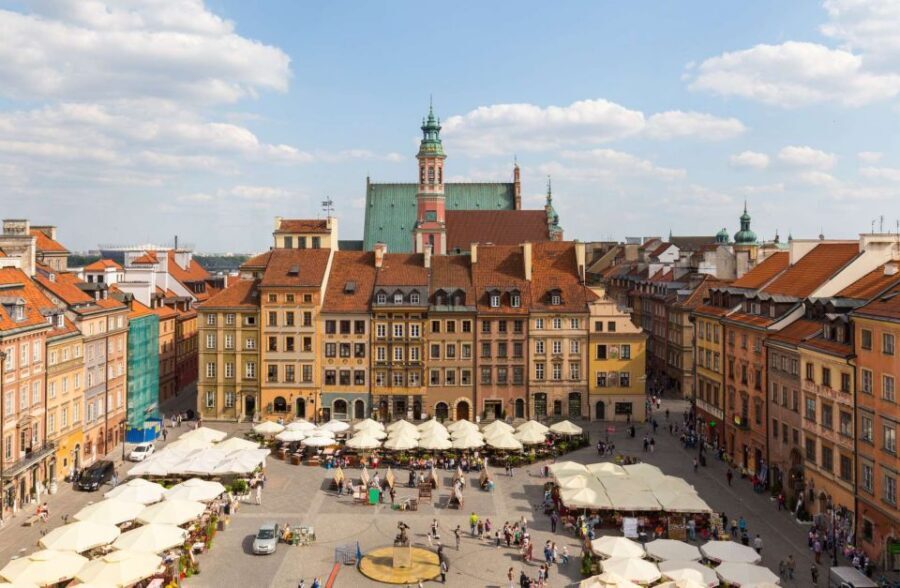
- UNESCO Old Town on foot with a clear storyline you can follow
- Market Square photo moment at the Warsaw Mermaid statue
- Royal Castle area + gardens for the royal side of Warsaw
- Cathedrals, Jesuit Church, and the Barbican for the defensive city look
- Ghetto Wall markers and the 1943 uprising context to understand the Jewish experience
- Warsaw Uprising Monument to connect the city’s modern identity to 1944
Old Town in Two Hours: Why This Walk Works
This is the kind of tour that helps you get your bearings fast. You start in the classic postcard core of Warsaw Old Town, then you move outward just enough to feel how the city was shaped by power, war, and rebuilding.
What makes it work is the balance of sights and meaning. You’re not just standing in front of pretty façades; you’re learning why each place matters, including the heroic Warsaw Uprising of 1944 and the dramatic WWII story involving Warsaw’s Jewish community.
You should also know what kind of time you’re buying. Two hours sounds short, but it’s packed with major points: market squares, churches, the Barbican, a panoramic terrace, New Town, Jewish heritage markers, and an uprising monument.
You can also read our reviews of more walking tours in Warsaw



Meeting at Sigismund’s Column and the Smart Route Plan
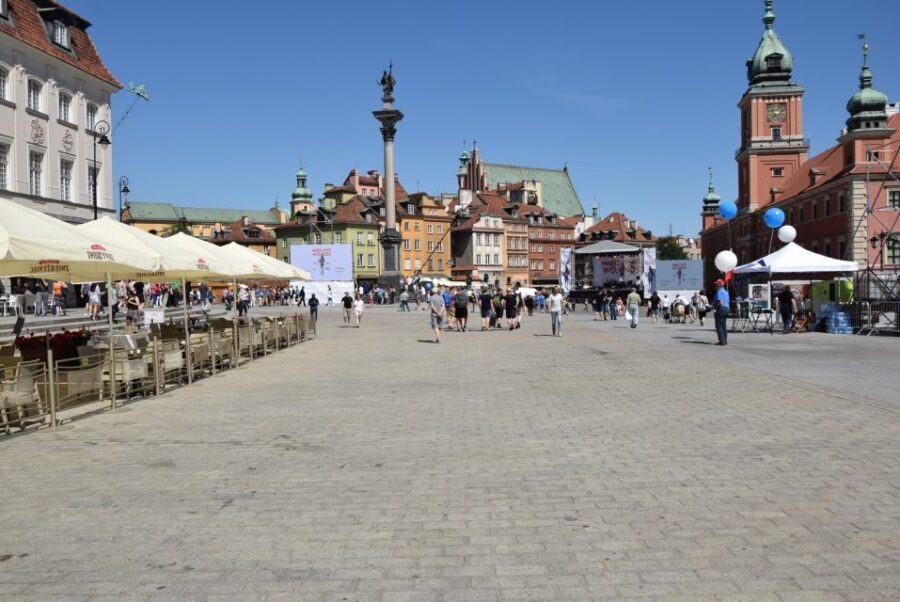
Your tour begins at Sigismund’s Column, a 22-meter landmark in Castle Square. It’s a strong starting point because everything from the Royal Castle area to the Old Town grid feels connected from here.
The guide uses a white umbrella, which sounds small until you’re in a crowd and trying to match faces to instructions. With English or German interpretation available, you can expect explanations in the language you choose, not a slow translation chain.
The route is built to keep moving. You’ll walk through Old Town highlights first, then extend to New Town and the Jewish heritage boundary markers, before finishing near plac Krasińskich. That “progression” matters: it mirrors how Warsaw’s center evolved.
Market Square, Mermaid Photos, and the Narrowest House
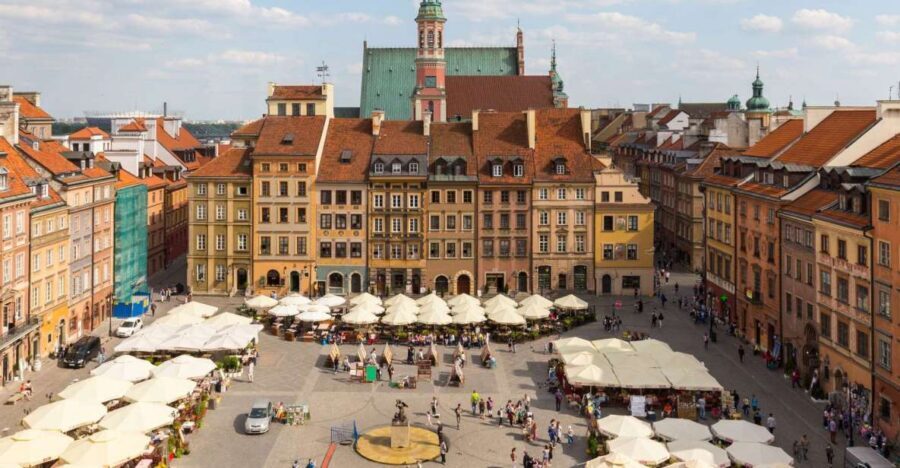
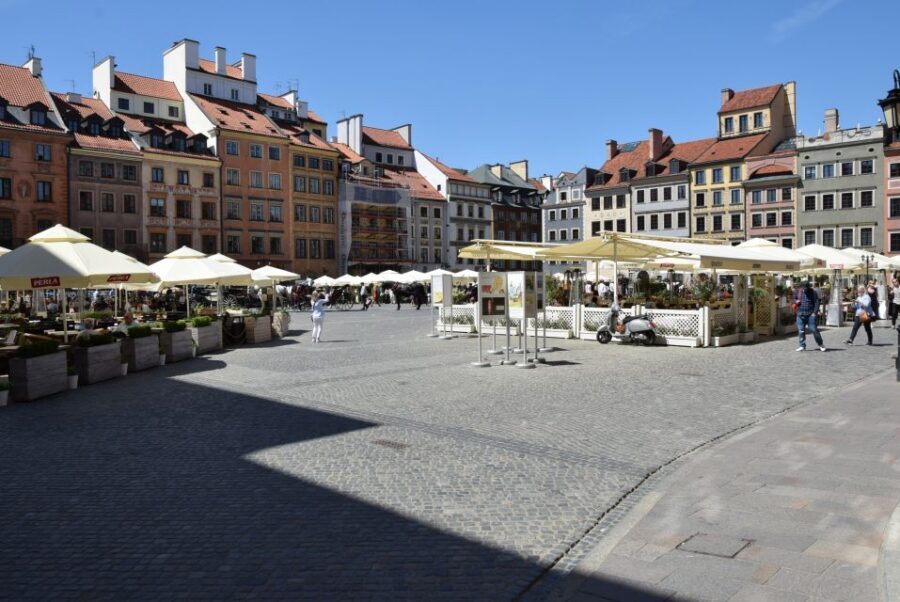
Rynek Starego Miasta, Warsaw’s Old Town Market Square, is where the atmosphere tends to click into place. This is the main square with the postcard corners, and the star photo stop is the Warsaw Mermaid statue.
Go for the picture, yes, but also take a few seconds to notice the square’s architecture around the statue. It’s a reminder that this area wasn’t just rebuilt once; it was restored in a way meant to keep memory visible in everyday life.
You’ll also see the narrowest house façade, an architectural oddity that feels like a practical joke the city tells itself. I love stops like this because they break the “only big monuments” pattern and show how Warsaw’s street life has long included clever design.
And if you like taking photos while still learning, this section hits a good pace. You get the recognizable hits early, without the tour turning into a sprint.
St. John’s Cathedral, Jesuit Church, and the Barbican Wall Walk
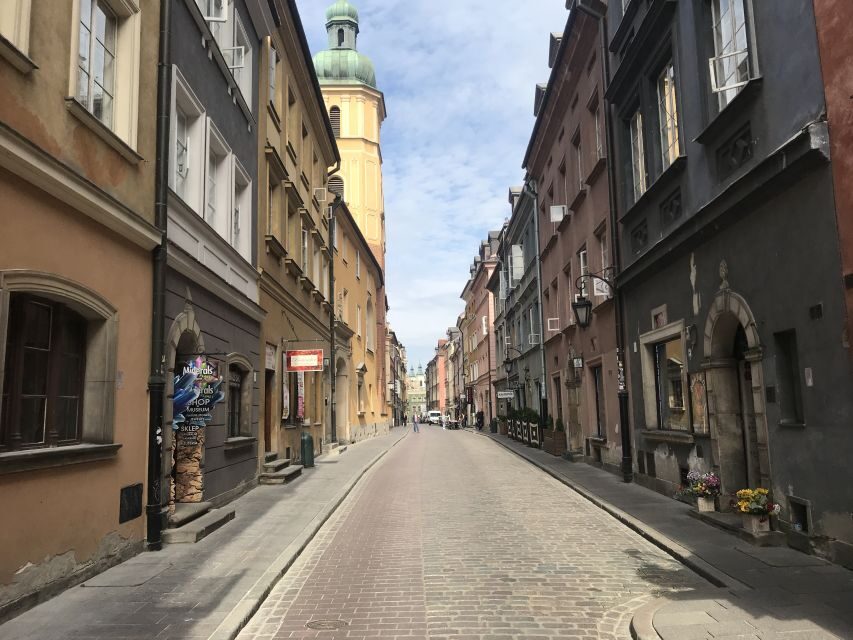
As you leave the square, the tour leans into architecture with personality. St. John’s Cathedral and the Jesuit Church both bring big visual presence, and the guide’s job is to connect the buildings to what was happening in Warsaw when they were rising and shaping public space.
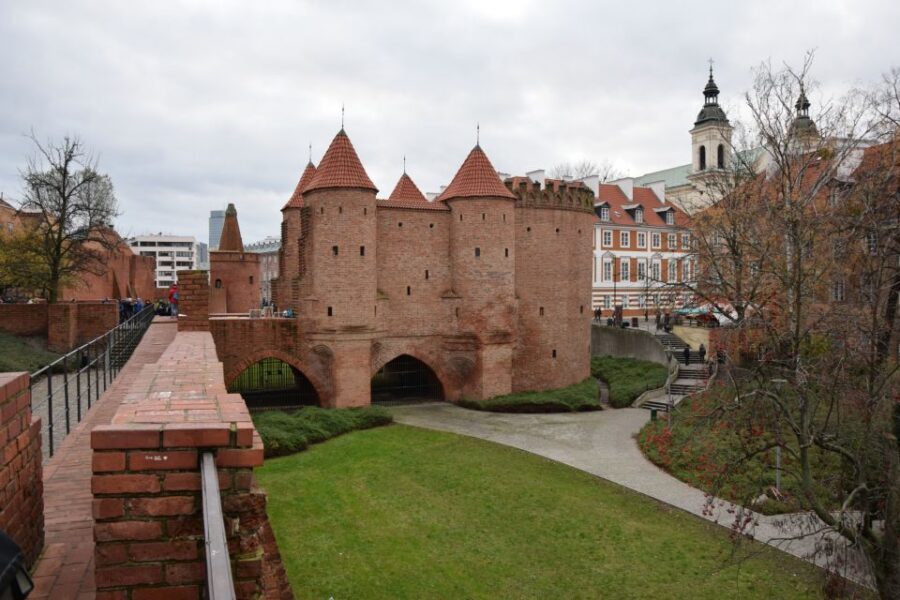
Next comes the city wall remnants and the Barbican. This is one of the most important “why” stops on the walk, because it shows Warsaw as a city that had to protect itself, not just admire itself.
Here’s what I’d pay attention to: defensive structures are easier to understand when you walk past them at street level. You can see how entrances, angles, and walls create a defensive logic. Even if you’re not a history buff, the Barbican gives you a physical feeling for the word protection.
If you’re sensitive to heights or tight edges, keep an eye on your footing here. It’s mostly straightforward walking, but older urban layouts can mean uneven surfaces and narrow stretches.
Royal Castle Gardens and the Terrace Over the River View
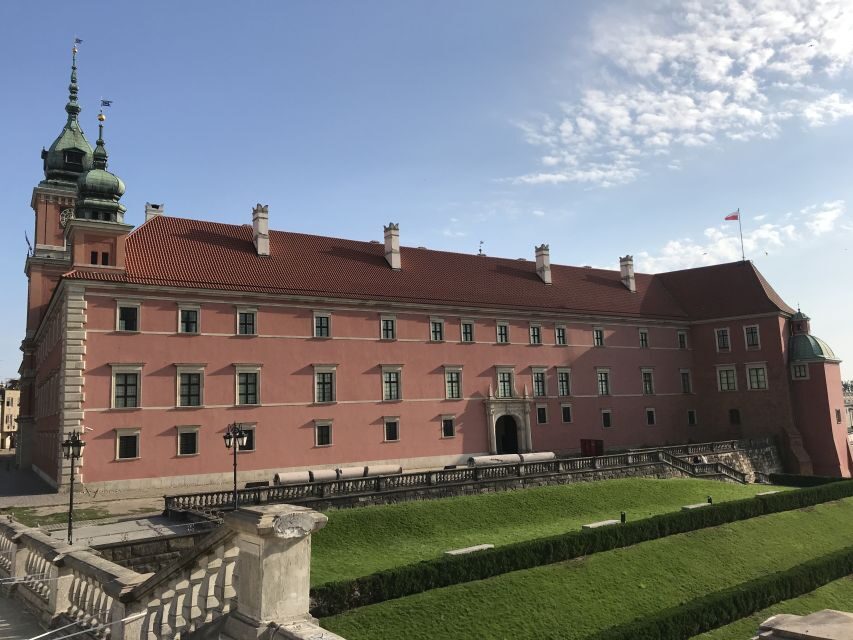
After the Old Town core, you head into the Royal Castle and Royal Gardens zone. This is where Warsaw shows its ceremonial face: formal space, palace grandeur, and garden calm.
Even if you don’t go inside the Royal Castle itself on this walk, the guided focus on the gardens helps. Gardens are different from monuments because they slow you down. You get a sense of how court life and public life intersected around these areas.
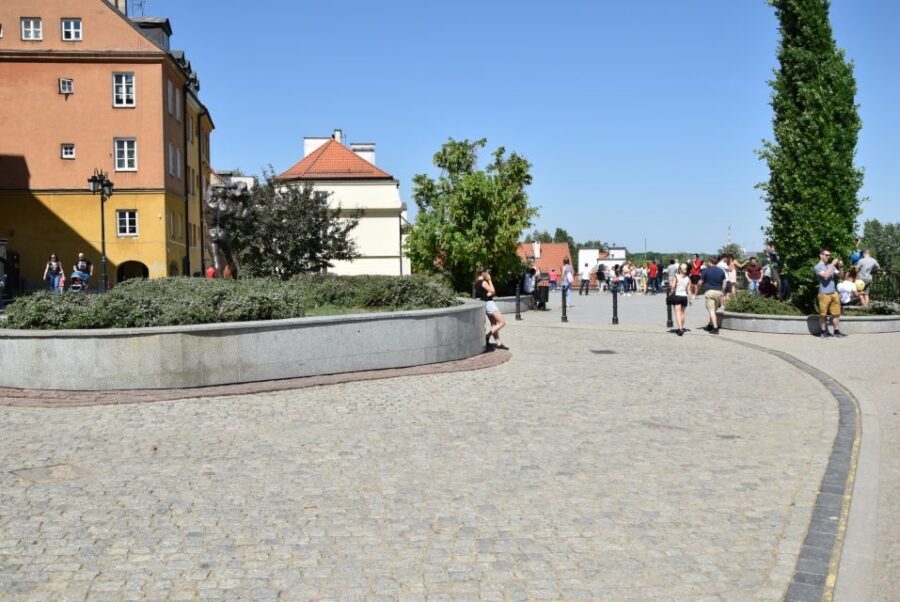
Then you’ll reach a viewing terrace in the Old Town. This is a payoff moment. You’re rewarded with a panoramic view over the river and the wider cityscape, and it’s the kind of view that makes the walking route feel worth it.
I always like terraces on walking tours because they give you a mental map. After you look outward, the next streets make more sense.
You can also read our reviews of more guided tours in Warsaw


New Town Stops: Marie Curie’s Birthplace
The tour doesn’t stay stuck in the centuries of kings and churches. It moves to New Town and includes Marie Curie’s birthplace.
This stop changes your angle on Warsaw. Instead of only looking at architecture and war, you get a science lens—proof that the city also produced ideas that mattered globally.
In a two-hour tour, adding Marie Curie is smart. It prevents the experience from becoming only memorial-focused and helps you remember Warsaw as a living place, not only a destroyed-and-rebuilt backdrop.
If you’re a museum person, you’ll likely want to follow up after this walk. If you’re not, you’ll still come away with a simple, memorable anchor for Warsaw’s modern identity.
Ghetto Wall Boundary Markers and Jewish Uprising Context
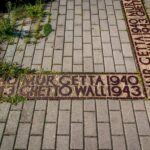
The hardest, most necessary part of the walk is the Jewish heritage section. You’ll visit ghetto boundary markers and the Ghetto Wall Monument, with the guide explaining the Jewish Uprising of 1943.
This isn’t framed as a detached lesson. The guide’s job is to place the markers in context so you understand what those boundary lines meant for real people.
If you’re wondering how to handle the emotion, I suggest going slow at the monument. Let the information land, then ask a question if you have one. A good guide won’t rush you past the meaning of the place.
Also, expect this section to be one of the most memorable. It’s a place where the city’s history is not abstract, and your understanding of later WWII events gets sharper after this.
Warsaw Uprising Monument: Remembering 1944 Without Losing the Thread
You’ll stand at the Monument of the Warsaw Uprising of 1944, with a guided explanation that ties together the city’s WWII experience and the idea of heroic resistance.
The reason this stop matters is that it gives your earlier walking context a finish line. You’ll have already seen places tied to Jewish heritage and the ghetto story, then you move to the uprising monument, which shifts the frame to the wider Polish experience during the war.
The best guides handle this section with care: clear facts, respectful tone, and pacing that keeps the group together. In past departures, guides have been praised for blending humor with seriousness in a way that keeps the tour humane instead of morbid.
Even if you don’t know much going in, you should be able to leave understanding what the uprising represents in Poland’s modern memory.
Small-Group Comfort and the Guide’s City Tips
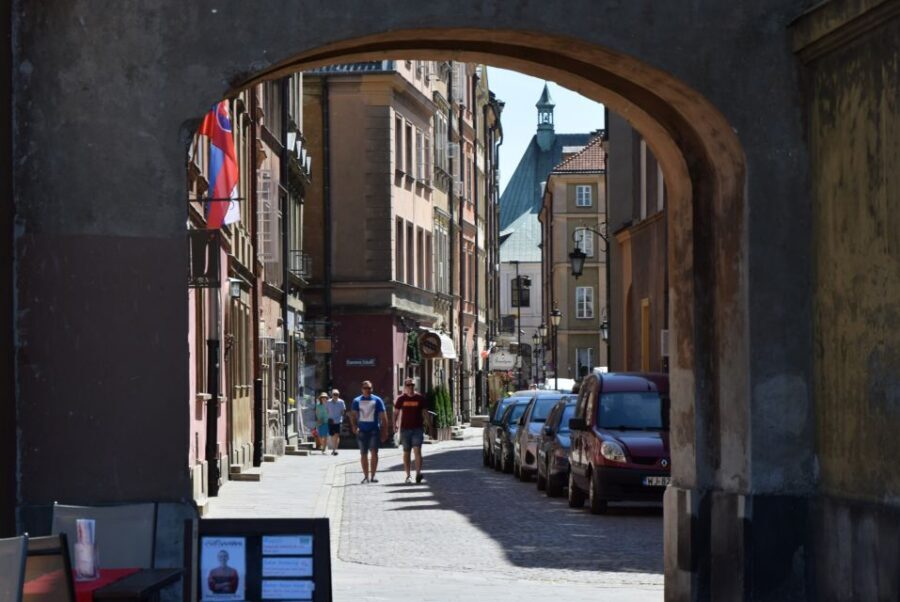
The group size cap (about 25 to 30) is more than a number. It affects the whole experience: you can hear the guide without fighting for position, and you get enough time to ask questions when something sparks your interest.
I also like that the tour doesn’t feel trapped in only the busiest camera lanes. The route includes quieter side paths, described as “secret paths,” which matters for both comfort and photo opportunities.
One of the most practical extras is the food guidance. The guide shares recommendations for Polish restaurants and cafés, plus a traditional pastry shop inside the Old Town. On your first day in Warsaw, that kind of advice can save you time and help you choose something you’ll enjoy rather than something convenient.
If you want an easy next step after the tour, ask the guide what to try for a first Polish meal. You’ll get answers tied to the neighborhoods you just walked through.
Price and Value: What $13 Gets You in a Licensed 2-Hour Tour
This tour is priced at $13 per person for a 2-hour walk. That’s good value considering how many major stops you cover in that time: UNESCO Old Town core, the Royal Castle and gardens area, market squares, churches, the Barbican and city wall remnants, a terrace view, New Town with Marie Curie’s birthplace, Ghetto Wall markers, and the Warsaw Uprising monument.
The other value point is that you’re getting a licensed city guide. In places like Warsaw, having someone connect architecture to events like the 1943 Jewish uprising and the 1944 Warsaw Uprising is the difference between seeing buildings and understanding the city.
One note about the payment style: this booking places you in a pay-as-you-wish format. The amount you pay covers the reservation fee and the guide’s payment. That means you should consider any extra rewarding based on how the tour feels to you, especially if your guide answers lots of questions and keeps the group on track.
Bottom line: for $13, you’re buying structure, context, and a walk that you wouldn’t easily assemble on your own in two hours.
Should You Book This Warsaw Old Town Tour
Book it if you want a first-day Warsaw orientation that doesn’t ignore the hard parts. It’s ideal when you want Old Town highlights plus the meaning behind WWII memorials, all without a long day.
I’d also recommend it if you enjoy humor in guided history, because guides have a reputation for keeping the mood lighter while still honoring tragic events. That balance can make the experience easier to digest, especially in cold weather when you’re grateful for pacing and comfort.
You might rethink if you know you struggle with emotionally intense topics. The tour includes the heroic Warsaw Uprising of 1944 and the Jewish Uprising of 1943 context, and those sections are a real part of the walk.
Finally, if you like to move efficiently but still want time to ask questions and take photos, the small-group size works in your favor.
FAQ
How long is the Warsaw Old Town guided walking tour?
The tour runs for 2 hours.
Where do I meet the guide?
Meet in Castle Square in front of Sigismund’s Column, which is 22 meters high. The guide holds a white umbrella.
What will I see during the tour?
You’ll cover highlights in Warsaw Old Town (including Market Square and the Warsaw Mermaid), Royal Castle and Royal Gardens, church landmarks, the city wall remnants and Barbican, a viewing terrace, New Town and Marie Curie’s birthplace, Jewish heritage markers including the Ghetto Wall Monument, and the Monument of the Warsaw Uprising of 1944.
What languages is the live guide available in?
The live tour guide is available in English and German.
How big are the groups?
The tour keeps groups small, with a maximum of about 25 to 30 people, even for public walking tours.
How is the tour priced and does it include pay-as-you-wish?
The price is listed as $13 per person. The booking is part of a general pay-as-you-wish tour format, where the amount you pay covers the reservation fee and the guide’s payment.
What’s the cancellation option?
You can cancel up to 24 hours in advance for a full refund.