REVIEW · WARSAW
Small-Group Historical Guided Tour of Warsaw with pick up/drop off. Public Tour.
Book on Viator →Operated by Warsaw Guided Bus City Tours · Bookable on Viator
Warsaw in three hours feels surprisingly deep. I like this tour because it handles the annoying part for you: hotel pickup in an air-conditioned minivan, then a guided loop through Warsaw’s key sights. It also keeps things comfortable with a maximum of 20 people, so the guide can actually explain what you’re looking at (and yes, I’ve seen names like Chris and Olaf leading this one with serious passion).
You’ll also get the kind of WWII context that makes the city make sense, from the Warsaw Ghetto Heroes to the square of Umschlagplatz, and then into the rebuilt Old Town core. One possible drawback: this is a highlights-style pace, and some stops can feel tight—especially if you’re easily slowed by crowds near Old Town Square.
In This Review
- Key highlights at a glance
- The “3-hour loop” mindset: why this tour works
- Pickup and the minivan comfort game (up to 20 people)
- Łazienki Royal Gardens: seeing Warsaw before the ruins
- Warsaw Ghetto Heroes and POLIN: heavy material, well timed
- Umschlagplatz: the square with the weight in its meaning
- Into the rebuilt city: Old Town with the Royal Route in the background
- St. John’s Archcathedral and Rynek Starego Miasta: where architecture tells the story
- Barbican and the Uprising monument: defensive walls and civic memory
- Time management: how to get the most out of a short Warsaw visit
- Value for money: what $60.49 buys you in real terms
- Who this tour fits best (and who should adjust expectations)
- Should you book this Warsaw historical guided tour?
- FAQ
- What’s the duration of the Warsaw historical guided tour?
- Is the tour offered in English?
- How large is the group?
- Do I get hotel pickup and drop-off?
- What time does the tour start?
- Is admission included at the stops?
- Will I be able to visit POLIN with the guide?
- Do you see the Royal Castle inside?
- Is the tour suitable for children?
- Can I cancel for a refund?
Key highlights at a glance
- Hotel pickup and drop-off: you start close to home and don’t have to fight buses or taxis.
- Small-group size (up to 20): better question time and easier navigation on foot.
- Łazienki Royal Gardens: a rare chance to see parts of Warsaw that largely survived WWII.
- Ghetto Heroes + POLIN area: heavy sites, explained clearly, with POLIN you can explore on your own after.
- Old Town loop with major landmarks: Royal Castle area, St. John’s Archcathedral, Barbican, and the Uprising monument.
The “3-hour loop” mindset: why this tour works
If your time in Warsaw is short, this tour is built for you. You get a sweep through the places people go to first—Old Town, the Royal Route highlights, and the most important WWII memorial sites. The trick is that it’s not just a drive-by. The pacing is designed so you can understand what you’re seeing, then decide what deserves your extra hours later.
I also like that the route mixes tone. Łazienki Royal Gardens offers a calmer start, with monuments tied to the 18th century and an area that wasn’t destroyed in WWII. Then the tour moves into the heavy historical stops around the Warsaw Ghetto, and finally lands in the Old Town, where you can literally see the city’s rebuild story in architecture.
That rhythm matters because Warsaw can feel contradictory at first glance. One block you’re looking at careful restoration. The next you’re confronting a memorial that explains what was lost. Having it structured in one guided session helps you connect the dots fast—and helps you plan the rest of your trip without guessing.
You can also read our reviews of more guided tours in Warsaw



Pickup and the minivan comfort game (up to 20 people)
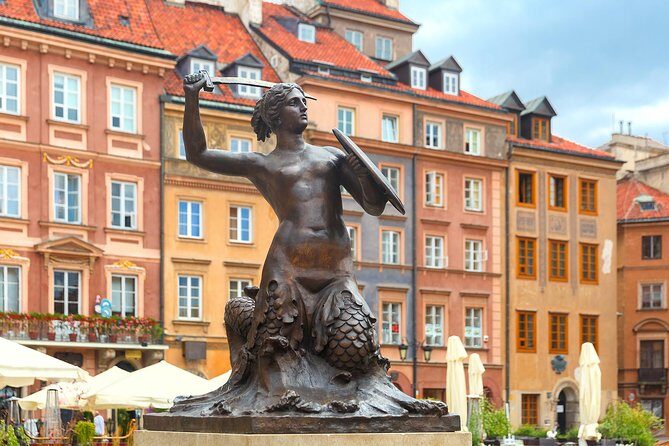
Starting at 10:00 am with pickup from hotels and apartments in the city center is a big deal. Warsaw’s Old Town is popular, parking is limited, and public transit can be fine but time-consuming if you’re switching lines. This tour solves that by dropping you where you need to be and then getting you back afterward.
The transport is an air-conditioned minivan, and you’re also provided small refreshers—still water, Coca Cola, and Polish traditional chocolate candies. It’s the kind of touch that makes the day tour feel less like a sprint.
Small-group size (maximum 20) is the real upgrade. In a big group, guides rush. Here, the pace is still efficient, but it’s easier to keep up, ask questions, and regroup when you’re walking through tight areas like Old Town Square. Guides you might meet include Chris and Olaf, both of whom have been praised for delivering clear, fact-based explanations and staying responsive.
Practical tip: wear shoes you don’t mind walking in. Even when stop times are short, you’re moving between locations and crossing busy areas.
Łazienki Royal Gardens: seeing Warsaw before the ruins
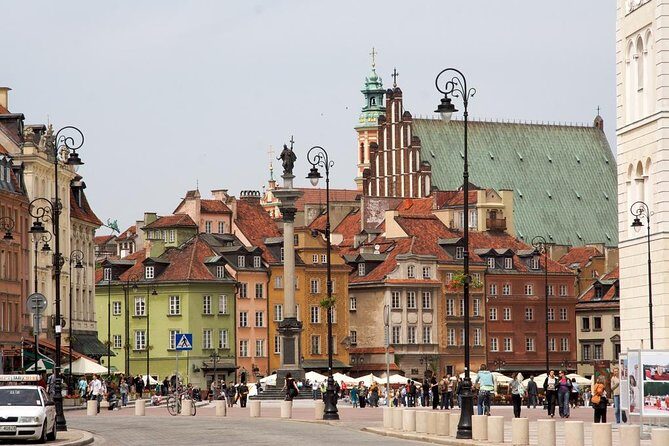
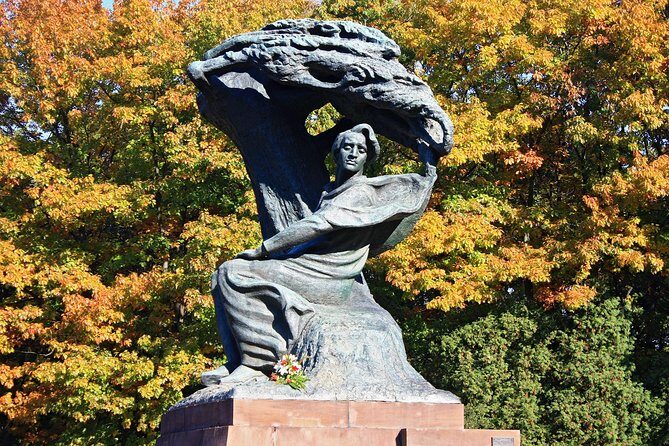
The tour begins at Łazienki Królewskie w Warszawie, the Royal Gardens. This stop works especially well as a “warm-up” because it offers an immediate contrast. You’re in a district described as largely not destroyed during the Second World War, so many monuments you’ll see are original and date back to the 18th century.
What you’re really absorbing here is continuity. Warsaw wasn’t only rebuilt after WWII; parts of the pre-war city survived, and Łazienki is where you get to feel that continuity in a visible way. It’s also a pleasant break from the intensity of the memorial stops that come later. You get about 45 minutes—enough time to slow down, notice architectural details, and reset your brain for what’s ahead.
A consideration: this is a garden stop, not a long museum visit. If you expect a guided deep walk for every monument, you’ll want to treat this as orientation—then return later if something grabs you.
Warsaw Ghetto Heroes and POLIN: heavy material, well timed
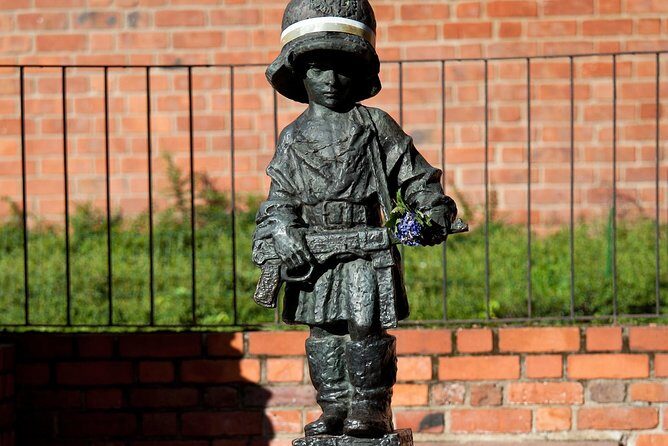
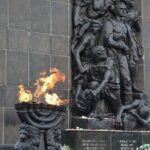
Next comes the Monument to Warsaw Ghetto Heroes, which commemorates the Warsaw Ghetto Uprising during World War II. This is one of those places where the meaning lands quickly, but the context is what makes it stick. The guide’s job here is crucial: explain what the uprising was, why Warsaw’s story matters, and how the sites you’ll visit next connect to it.
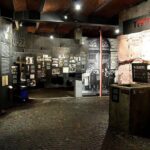
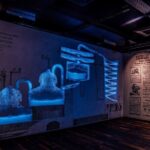
Right nearby is POLIN, the Museum of the History of Polish Jews. The tour doesn’t require you to do everything with the guide. You’ll have time in the area (around 20 minutes), and then you can visit POLIN on your own afterward. The important part is that it’s presented as interactive, and you won’t need a guided talk inside to follow what’s going on.
This setup is good value for your time. If you want a museum experience, you can turn it into your own focused stop. If you need a breather—this history is intense—you can stay at the memorial area and choose how much you want to absorb in one sitting.
Where this tour is especially thoughtful: it offers the option to be dropped off around POLIN after the city segment. That means you don’t waste time backtracking.
Practical tip: if you’re sensitive to WWII-related content, pace yourself. Even short memorial stops can feel emotionally loud.
Umschlagplatz: the square with the weight in its meaning
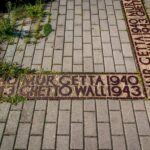
After POLIN, you reach Umschlagplatz, a square tied to the deportations. This is described as the heartbreaking place where Nazis loaded Jewish people onto carriages and transported them to Treblinka.
The stop is brief (about 5 minutes), but it’s not meaningless. In many cities, memorials are spread out and easy to rush past without understanding what happened. Here, the guide’s narrative helps you treat even a short visit as part of a connected story: uprising → deportations → what Warsaw endured → how the city remembers now.
A consideration: because the stop is short, you don’t get time to wander or linger like you might in a dedicated museum. If you want more time here, you’ll have to plan an extra visit on a separate day.
If this is your first time facing these sites, I’d treat this tour as your groundwork—then follow up with more time in the museum spaces you find most compelling.
You can also read our reviews of more historical tours in Warsaw



Into the rebuilt city: Old Town with the Royal Route in the background
Then you move into Old Town, with the guide pointing out the most memorable parts. The idea is to give you the orientation that helps you enjoy Old Town rather than just stare at buildings.
Two key messages shape this part of the tour:
- Old Town isn’t just pretty. It’s proof of rebuilding.
- Several major landmarks in the wider area were destroyed and later reconstructed.
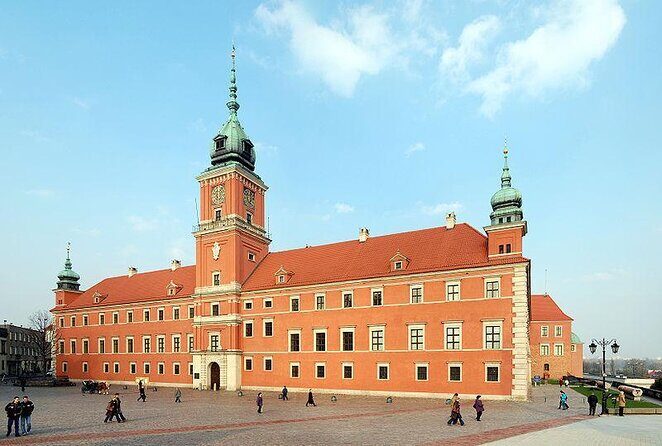
You’ll also get the Royal Castle angle, but with an important nuance: this tour includes seeing the Royal Castle from the outside. The castle was blown up during the Warsaw Uprising in 1944 and rebuilt in 1984. From the street, you get the scale and the significance; from inside, you’d need a separate plan.
So if a palace interior is on your must-do list, consider treating the outside view as a teaser.
A practical note: Old Town can get crowded, especially around Rynek Starego Miasta. Keep an eye on where your guide is moving, and plan to take photos quickly rather than stopping to reframe every shot.
St. John’s Archcathedral and Rynek Starego Miasta: where architecture tells the story
Next up is Archcathedral Basilica of St. John the Baptist. It’s a major church in Warsaw, built in the specific Masovian Gothic style. The building was completely demolished during the Warsaw Uprising by Nazis and then rebuilt again in 1960. That demolition-and-rebuild story isn’t a footnote here—it’s part of why the architecture feels purposeful.
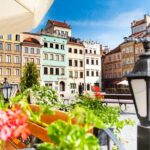
After that, you’ll walk the Old Town Square (Rynek Starego Miasta), and the tour gives you time—about 20 minutes—to feel the atmosphere. The striking point is that the square was also destroyed during the Warsaw Uprising and then rebuilt. Even if you know nothing about the city before you arrive, the space communicates that recovery.
This part is ideal for photos and for “slow looking,” even if you’re on a schedule. Old Town Square is where you can pause, grab a quick snack nearby later (your tour time is limited here, but the square is set up for it), and compare what you see on the street to what the guide has explained.
If you’re someone who likes architecture, this section is one of the best payoff moments of the tour. The rebuilding timeline makes the buildings feel like evidence.
Barbican and the Uprising monument: defensive walls and civic memory
The walk continues to the Warsaw Barbican (Barbakan Warszawski)—a defensive structure in Gothic style made with red bricks. It’s described as handmade, and it’s a striking reminder that this city has long been shaped by defense, occupation, and conflict.
Then you head to the Monument to Warsaw Uprising Fighters. This is described as one of the most expressive and symbolic monuments in Warsaw. The tour gives you a short walk here (around 5 minutes), enough to take it in and connect it with what you saw earlier—especially the ghetto and deportation sites.
What I like about ending with a civic monument is that it helps balance the emotional load. You started with royal gardens, went through devastating WWII history, and then returned to public memory—how a city communicates resilience through monuments and spaces you can actually visit.
If you want to keep exploring after the tour, you can stay in Old Town. Otherwise, you’ll be offered drop-off back to your accommodation.
Time management: how to get the most out of a short Warsaw visit
This tour is about highlights with meaning, not about spending half a day at one location. That can be a plus if you want a broad overview quickly.
Here’s a smart way to use it:
- Book this near the beginning of your Warsaw trip. You’ll learn the geography and history enough to choose what to revisit with your spare time.
- If POLIN is high on your list, treat this as your permission slip. The tour specifically leaves you room to enter POLIN on your own after.
- Decide in advance how much walking you can handle. There’s a bit of movement in every segment: park paths, memorial areas, Old Town streets, and the Barbican zone.
Also, the guide’s pace can matter. Some people have noted guides can move quickly. If you’re the sort who likes to take your time, bring a flexible attitude—or plan a follow-up visit where you slow down on your own.
Value for money: what $60.49 buys you in real terms
At about $60.49 per person, you’re paying for three practical things that add up fast in a city like Warsaw: guided interpretation, transportation, and not having to manage the order of sites yourself.
You get:
- A professional guide (in English)
- Hotel pickup and drop-off (from city-center locations)
- Transport in an air-conditioned vehicle
- Small onboard comforts: water, Coca Cola, and Polish chocolate candies
- Visits to major landmarks, many of them with admission described as free for this tour’s stops
The “value” part isn’t only the ticket price. It’s the fact that you compress a lot of geographically separated sights into one controlled morning. If you tried to stitch this together solo, you’d spend time deciding routes, waiting for transit, and figuring out where to place stops. Here, someone else handles the sequencing, and you just show up.
The one thing to double-check: the Royal Castle is outside-only on this tour. If castle interior matters to you, you’ll likely want a separate ticket and time.
Who this tour fits best (and who should adjust expectations)
This is a strong fit if you:
- Want a first-day overview of Warsaw’s Old Town core
- Appreciate history that connects sites together (especially WWII events)
- Prefer a small-group format and hotel pickup over public transit planning
- Plan to add extra time later at places like POLIN
It’s less ideal if you:
- Want a long, unhurried deep museum experience at every stop
- Need lots of free time for wandering and shopping during the walk
- Struggle with crowded, photo-heavy areas in Old Town
If you’re traveling with kids, the tour notes children must be accompanied by an adult. Also, because the duration is about 3 hours with walking, you’ll want to judge whether the group pace works for your child’s attention span.
Should you book this Warsaw historical guided tour?
Book it if you want to get your bearings fast and still leave with more than postcard photos. The biggest win is the mix: Royal Gardens to reset your mood, Ghetto and deportation memorials that explain Warsaw’s hardest chapter, and then Old Town rebuilt landmarks that show how the city endured.
Skip or adjust your expectations if you’re looking for extended time inside museums and palaces. This tour is built for an efficient overview, with the best “extra time” option being POLIN afterward.
If you’re deciding between doing everything yourself and taking a guided loop, this one tends to be the easier choice: pickup, English guiding, and a route that helps you understand what you’re seeing before you wander off on your own.
FAQ
What’s the duration of the Warsaw historical guided tour?
The tour runs for about 3 hours.
Is the tour offered in English?
Yes, it’s offered in English.
How large is the group?
The tour is capped at a maximum of 20 travelers.
Do I get hotel pickup and drop-off?
Yes. Pickup and drop-off are included, and pickup is offered from hotels, hostels, apartments, and B&Bs in the city centre.
What time does the tour start?
The start time is 10:00 am.
Is admission included at the stops?
The stop information provided says admission tickets are free for each listed stop during the tour.
Will I be able to visit POLIN with the guide?
You won’t need a guide to enter POLIN. The tour allows you to visit inside on your own after the city tour, and the plan also includes dropping you off near POLIN.
Do you see the Royal Castle inside?
This tour includes seeing the Royal Castle from the outside.
Is the tour suitable for children?
Children must be accompanied by an adult.
Can I cancel for a refund?
Yes, you can cancel up to 24 hours in advance for a full refund.