REVIEW · WARSAW
Old Town Warsaw Walking Tour
Book on Viator →Operated by Walkative! TOUR · Bookable on Viator
A stroll through Warsaw’s rebuilt heart.
This walking tour strings together Krakowskie Przedmieście, the Old Town (Stare Miasto), and New Town Square with a guide who turns big history into something you can picture. I like the way the route mixes grand streets with key sites, including St Cross Church and the Royal Castle area, without dragging you all day.
Two things I really like: the 2.5-hour pace and the focus on meaning, not just names. You’ll also get a mobile ticket and a small-to-medium group size (up to 40), which makes it easier to ask questions and keep moving. One thing to consider is that English quality can vary by guide, so if you’re sensitive to accents or microphone volume, plan to stand where you can hear clearly.
In This Review
- Key highlights to look for on this walk
- Starting point: Copernicus Monument to the royal boulevard feel
- Krakowskie Przedmiescie: palaces, monuments, and Chopin in St Cross Church
- Old Town (Stare Miasto): the UNESCO core rebuilt so well it fools your eye
- New Town Square and the Barbican: Maria Skłodowska-Curie plus Warsaw’s defensive spine
- What you actually get in 2 hours 30 minutes (and how to use it well)
- Price and value: $26.60 for a guided route that hits real anchors
- Meeting points, pickup style, and how not to lose time
- Guides and language: English works, but positioning helps
- Who should book this tour (and who might want a different style)
- Should you book it?
- FAQ
- How long is the Old Town Warsaw walking tour?
- What is the price per person?
- Is the tour offered in English?
- Where does the tour start and end?
- Do I need a printed ticket?
- Is pickup included?
- Will the tour run in bad weather?
- How big is the group?
- What if I cancel last minute?
- Is there any pay-what-you-wish component?
Key highlights to look for on this walk
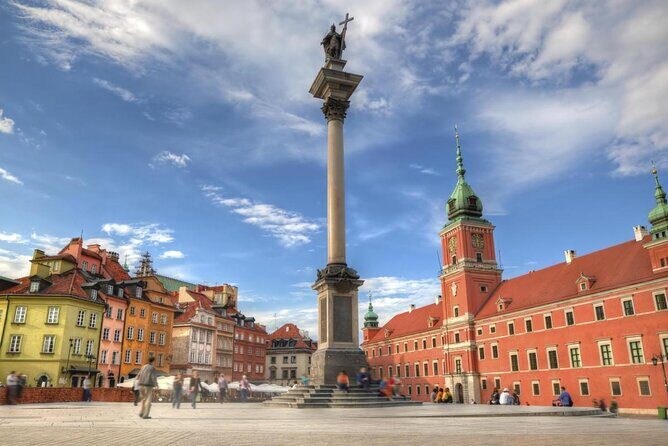
- Krakowskie Przedmieście boulevard with palaces, monuments, and a direct line to Poland’s cultural legacy
- St Cross Church and Chopin’s resting place as a human anchor for the city’s story
- Old Town’s careful post-WWII reconstruction that still feels convincingly old
- Royal Castle area as the visual centerpiece of Stare Miasto
- New Town Square and the Barbican connection, plus Maria Skłodowska-Curie’s birthplace
- Small group feel with up to 40 people and time built in for questions
Starting point: Copernicus Monument to the royal boulevard feel
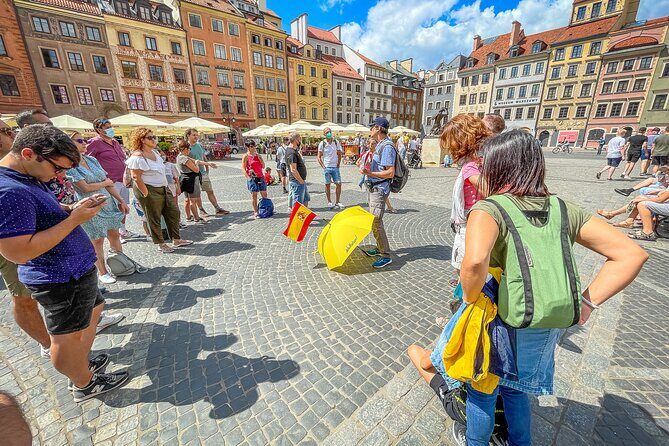
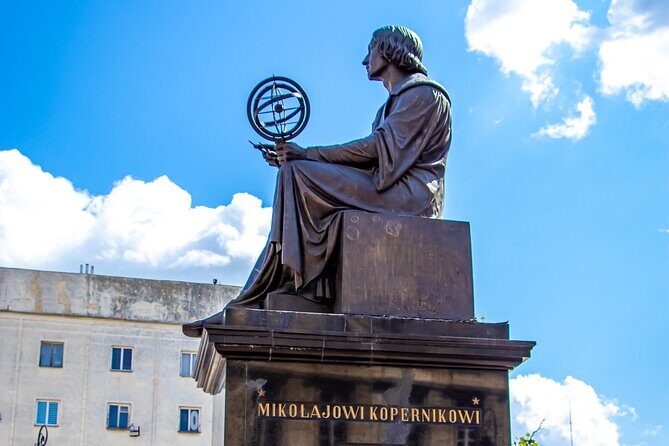
Your tour begins at the Nicolaus Copernicus Monument on Krakowskie Przedmieście (00-333 Warszawa). The vibe right away is classic Warsaw: wide sidewalks, big buildings, and a street that instantly signals royal-era ambition.
This opening stretch matters because it sets context. You’re not just walking past pretty facades; you’re getting the road’s role in the city’s story before you reach the walled-off Old Town zone.
You can also read our reviews of more walking tours in Warsaw



Krakowskie Przedmiescie: palaces, monuments, and Chopin in St Cross Church
The first stop is Krakowskie Przedmiescie, a main boulevard that reads like a timeline in stone. You’ll see how the street reflects the royal past, with parks and monuments close by, and you’ll get your bearings for the rest of the walk.
A big reason this stop works is St Cross Church, where the heart of Chopin is interred. It’s one of those details that makes history feel personal. Instead of abstract dates, you get a tangible connection to a composer who became part of national identity.
Along the way, you’ll also pass notable landmarks such as the Presidential Palace and the Bristol Hotel. These aren’t just photo stops. They help you understand how Poland’s modern institutions sit on top of much older layers of power and culture.
Time on this section: about 1 hour.
What to watch for: stand where your guide can address the whole group, especially when pointing out architectural clues.
Old Town (Stare Miasto): the UNESCO core rebuilt so well it fools your eye
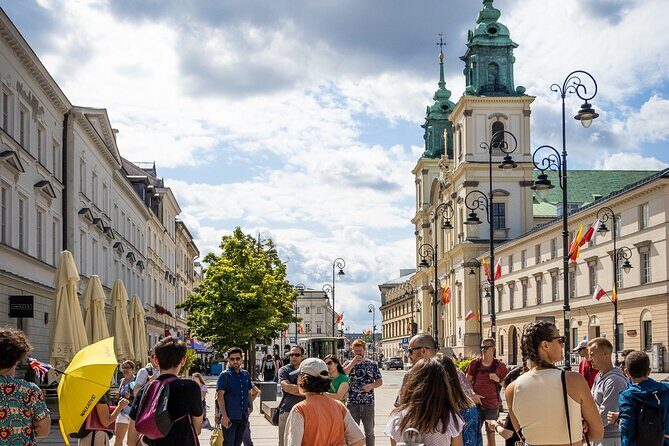
Next comes the medieval core of Warsaw, Old Town. This area is famous for its red roofs, colorful houses, and the overall look of a city center that seems centuries old. The twist is that much of it was destroyed during World War II, then reconstructed in a way that was so meticulous that it can be hard to tell what’s original at first glance.
That reconstruction story is one of the best parts of this tour, because it gives you a way to see what you’re looking at. When you understand the rebuilding effort, every restored frontage and recreated street plan stops being decoration and becomes evidence of resilience.
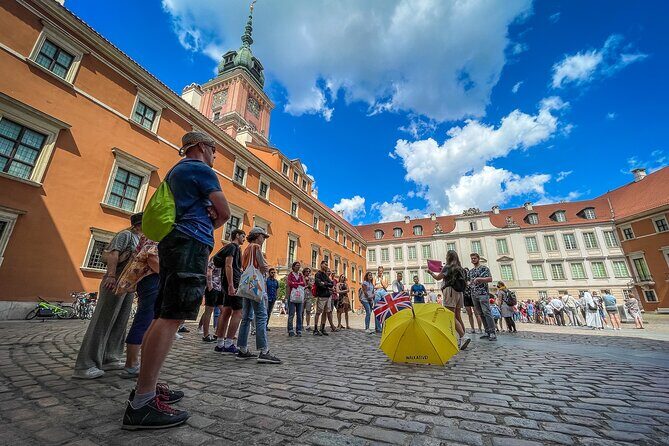
The walk here also centers on the Royal Castle area. Even if you don’t go inside during this tour, the exterior role is important: it anchors the Old Town’s sense of authority and national identity, and it helps explain why this part of Warsaw became an icon of continuity after rupture.
Time on this section: about 1 hour.
Practical note: this portion is visually dense. Give yourself a moment to stop looking like a tourist with a camera and start looking like a detective—listen for the guide’s clues about what signals the original design versus later reconstruction.
New Town Square and the Barbican: Maria Skłodowska-Curie plus Warsaw’s defensive spine
The final leg focuses on the New Town Square area, a name that can sound odd until you learn it’s also part of the medieval fabric. You’ll connect the city’s earlier growth to later periods, and you’ll pick up a landmark tied to science and culture.
Here’s the highlight: New Town Square is the place of birth of Maria Skłodowska-Curie. That’s a strong contrast after the Old Town’s royal mood. It widens your sense of what Warsaw means, not only as a seat of power, but as a home for ideas that reshaped the world.
You’ll also cover the Barbican, positioned between Old Town and New Town. Think of it like the city’s defensive punctuation mark—a reminder that this was once a protected edge, not an open promenade.
This ending works because it ties the tour together spatially. You start on a grand boulevard, you move into a symbolic rebuilt core, and you finish at a structure that explains the city’s protective mindset.
Time on this section: about 30 minutes.
Where you end: Warsaw Barbican (Nowomiejska 15/17, 00-257 Warszawa).
What you actually get in 2 hours 30 minutes (and how to use it well)
The total duration is about 2 hours 30 minutes, and that length is a sweet spot for first-time orientation. You get enough time to learn what you’re seeing at each stage, without turning the walk into an endurance test.
A few things to keep in mind so you get the most out of the pace:
- You’ll be moving through three distinct zones, so your brain is doing a lot of organizing. If you’re the type who likes to take notes, bring a small notebook or keep your notes simple (street names, key figures like Chopin and Curie).
- The tour is designed to be interactive. Expect questions to come up naturally, and plan to stand close enough to hear when your guide points things out.
- It runs in all weather. That means you should dress for the conditions rather than counting on perfect skies.
Also, this walk is capped at 40 travelers. In practice, that usually means you can get answers in real time without feeling swallowed by a huge crowd.




Price and value: $26.60 for a guided route that hits real anchors
The price is $26.60 per person, and that’s not just about buying entry fees—there aren’t paid admissions included for these stops. In fact, each segment lists free admission where applicable.
So what are you paying for? You’re paying for the guide’s structure and storytelling—the part that helps you understand why places matter. This tour earns its value by covering the big identity markers of Warsaw in a compact format: Chopin’s heart in St Cross Church, the Royal Castle area, the Old Town reconstruction concept, Maria Skłodowska-Curie, and the Barbican.
There’s also a pay-what-you-wish element to be aware of. The booking amount covers a reservation fee and the guide’s payment. If you think the guide did an excellent job, you can reward them separately through the pay-what-you-wish approach. If you want a smaller private tour, you can ask, and the operator may arrange it.
Meeting points, pickup style, and how not to lose time
This tour includes pickup and drop-off from designated meeting points, but it does not include hotel pickup or transportation to and from the attractions. That’s a big deal for planning: it means you should arrive at the meeting area on your own, then use the tour route to handle the guided movement.
Start at Nicolaus Copernicus Monument on Krakowskie Przedmieście and finish at the Warsaw Barbican. Since both areas are tied into central Warsaw, you can usually connect via public transit without too much hassle.
You’ll get a mobile ticket, which is handy for last-minute logistics. Just make sure your phone has battery and signal when you meet.
Guides and language: English works, but positioning helps
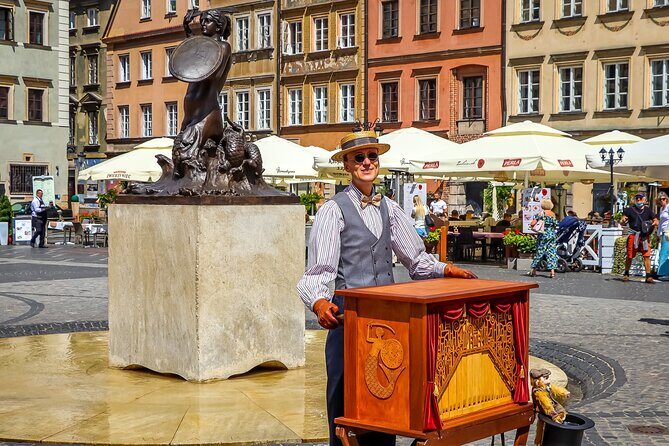
The tour is offered in English, and many guides are described as funny and engaging while explaining complex Warsaw history in a clear, story-driven way. Names that come up for this route include Aga, Andrzej, Jack (Jacek), Andres, Ania, Oliwia, and Josek.
One caution: there can be variation in how easy a guide is to understand depending on accent and microphone setup. If you rely on audio clarity, pick a spot near the front or where the group isn’t scattered, and don’t be shy about asking for repetition during quieter moments.
If you’re traveling in winter, pack like a realist. One recurring tip is to bring thermals, warm clothing, hats, and gloves. A two-and-a-half-hour outdoor walk can feel longer when the air turns sharp.
Who should book this tour (and who might want a different style)
This is a great fit if you want a guided orientation to Warsaw’s most important visual and cultural zones in one go. It’s especially useful if you’re short on time and want a narrative thread that connects what you see—from royal boulevard grandeur to Old Town rebuilding to the science-and-defenses ending.
You’ll likely enjoy it more if you like structured walking tours where the guide gives you context before you move on. The stop design also suits people who want a balance of listening and short bursts of looking.
You should think twice if you prefer ultra-custom sightseeing or long, slow museum-style exploration. This is a walking route with set stops, not an open-ended wander.
Kids can join, but children must be accompanied by an adult, and the walk is best suited for people with moderate physical fitness.
Should you book it?
Yes, I’d book it if you want a fast, high-impact way to understand why Warsaw’s Old Town looks the way it does and what it stands for. For $26.60, you’re getting a guided route that ties together major anchors: Chopin at St Cross Church, the Old Town reconstruction idea, the Royal Castle area, Curie’s birthplace, and the Barbican finish.
If you’re the kind of traveler who hates stopping for stories, skip it. If you want your photos to have meaning and your first day in Warsaw to feel organized, this is a smart choice.
FAQ
How long is the Old Town Warsaw walking tour?
It runs for about 2 hours 30 minutes (approximately).
What is the price per person?
The price is $26.60 per person.
Is the tour offered in English?
Yes, it is offered in English.
Where does the tour start and end?
It starts at Nicolaus Copernicus Monument, Krakowskie Przedmieście, 00-333 Warszawa and ends at the Warsaw Barbican, Nowomiejska 15/17, 00-257 Warszawa.
Do I need a printed ticket?
No. You’ll use a mobile ticket.
Is pickup included?
Pickup and drop-off from designated meeting points are included. Hotel pickup and transportation to/from attractions are not included.
Will the tour run in bad weather?
Yes. It operates in all weather conditions, so dress appropriately.
How big is the group?
There is a maximum of 40 travelers.
What if I cancel last minute?
You can cancel for a full refund up to 24 hours before the start time. If you cancel less than 24 hours before, the amount you paid is not refunded.
Is there any pay-what-you-wish component?
Yes. This booking joins a general pay-what-you-wish format. The amount you pay covers the reservation fee and the guide’s payment, and you can reward the guide as you wish.