REVIEW · WARSAW
Warsaw Morning, Guided, Panoramic View, public city tour with hotel pick up
Book on Viator →Operated by Warsaw Guided Bus City Tours · Bookable on Viator
Three hours in Warsaw, and the city clicks. You’ll ride by some of the big-name landmarks, then step out for short walks that make the story feel real, from Łazienki Royal Park to the Old Town and back.
I especially like the free hotel pickup and drop-off, which saves you the stress of timing buses and trams. I also love the WWII context: the tour doesn’t just point at sites, it connects what happened to what you’re seeing now.
One thing to plan for: there’s some walking spread through the route. Even though most time is spent on the bus, comfortable shoes matter, especially in colder or wet weather.
In This Review
- Quick hits before you go
- Getting picked up at 9:45 and set loose by 3 hours
- Łazienki Royal Park: starting in a part of Warsaw that survived
- The ghetto story in three steps: Heroes, POLIN, then Umschlagplatz
- Monument to Warsaw Ghetto Heroes
- POLIN Museum (and a smart self-guided option)
- Umschlagplatz: the hardest stop
- Old Town on a guided loop: Market Square, St. John’s, Barbican
- Walking the Old Town Square atmosphere
- Archcathedral Basilica of St. John the Baptist
- The Barbican defensive wall walk
- Royal Castle outside views and the Warsaw Uprising monument
- Royal Castle in Warsaw (outside)
- Warsaw Uprising Monument
- Price and value: what $60 buys you in a short morning
- What to wear, and how to make the guide easier to hear
- Who should book this Warsaw morning tour
- Should you book it?
- FAQ
- How long is the Warsaw morning city tour?
- What time does the tour start, and when do I need to be ready for pickup?
- Is the tour in English?
- What group size is used?
- Does the tour include hotel pickup and drop-off?
- What’s included in the price?
- Is lunch included?
- Are entrance fees included for the main stops?
- Is the tour suitable for most travelers?
- Does the tour require good weather?
- Cancellation is free—how far in advance do I need to cancel?
Quick hits before you go
- Hotel pickup included: the tour collects you around 9:45 a.m. and returns you after the Old Town.
- Small group (max 15): easier conversation on a bus than big-group tours.
- Łazienki Royal Park start: you begin in an area that was not destroyed in WWII, so many monuments are original.
- POLIN stop opportunity: after the tour, you can go in on your own since it’s interactive.
- Ghetto sites covered in sequence: the Monument to Warsaw Ghetto Heroes, POLIN, and Umschlagplatz are all in one morning.
- Old Town highlights with short stops: Market Square, the Archcathedral of St. John the Baptist, and the Barbican.
Getting picked up at 9:45 and set loose by 3 hours
This is a morning tour built for people who want fast orientation without cramming in transfers. Pickup is scheduled for about 9:45 a.m. from central hotels, hostels, apartments, and similar spots. You wait in the lobby about 5 minutes early, and you’ll spot the guide/driver with a small yellow board with red signs.
The ride itself is part of the value. You’re in an air-conditioned bus for a small group (up to 15), so you get commentary while moving between areas that are not right next door. Start time is 10:00 a.m., and the tour runs about 3 hours. That timing works well if you’re planning museums later, or if this is your first morning in town.
At the end, you’re not forced into one fixed finish. You can stay around the Old Town or request drop-off back to your accommodation. That flexibility is a big deal when you’re trying to keep the rest of your day simple.
If you like a smooth pace, this tour tends to hit it. In many departures, guides such as Christopher and George are praised for making history understandable, and Kristof/Olaf for keeping things lively. Just keep in mind that some departures can mean you’re spread out in a way that makes hearing harder during walking parts, so do your part: stand where you can see the guide, and don’t be shy about asking to move a bit.
You can also read our reviews of more guided tours in Warsaw

Łazienki Royal Park: starting in a part of Warsaw that survived
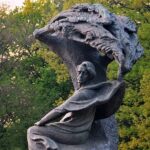
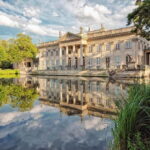
The tour begins at Łazienki Krolewskie w Warszawie, the Royal garden in a district that—this is the key point—was not destroyed during WWII. That means a lot of what you see is original, including monuments dating to the 18th century.
Why this matters for you: it prevents the morning from feeling like only war and loss. Starting here gives your brain an “okay, I get the geography” moment before the tour moves into the heavier ghetto and uprising sites later.
You’ll spend about 45 minutes here. The time is enough to take photos, wander the garden paths a bit, and get your bearings. If you’re the type who always wants one extra viewpoint, this is also where you’ll feel tempted to stay longer—just be aware that the schedule keeps moving.
Practical tip: if the weather is chilly or rainy, you’ll still be walking on paths in the park. Dress for the outdoors, not the bus. Bring a small umbrella if you like, or a hood you trust.
The ghetto story in three steps: Heroes, POLIN, then Umschlagplatz
After the park, the tour shifts tone quickly—and in a meaningful way.
Monument to Warsaw Ghetto Heroes
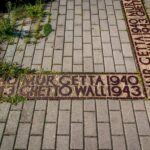
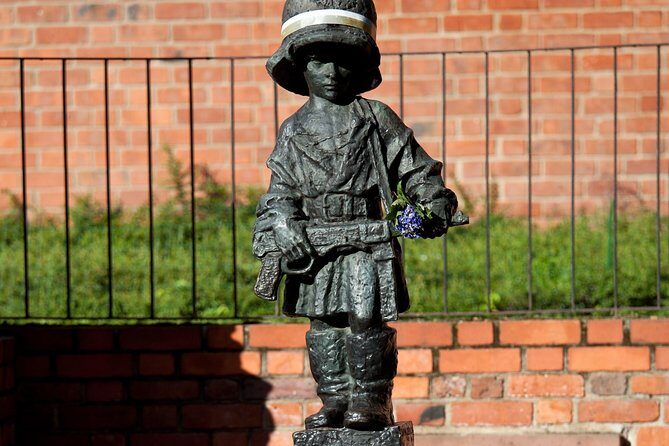
Your next stop is the Monument to Warsaw Ghetto Heroes, which commemorates the Warsaw Ghetto Uprising during WWII. This stop acts like a hinge in the tour: it’s where the city’s modern form meets the reality of what was destroyed and fought over.
What I like about the pacing here is that you’re not just hearing details while riding past. You pause, read the meaning of the moment, and then continue.
POLIN Museum (and a smart self-guided option)
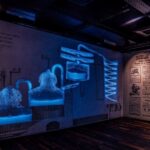
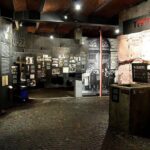
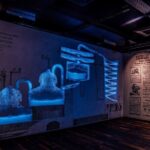
Right next to the monument is POLIN — Museum of the History of Polish Jews. The tour includes about 20 minutes at this area, and the big practical perk is what happens after: you can visit inside on your own because it’s interactive and doesn’t require a guided tour to enjoy.
That’s a real advantage for you if you want to control your own pace. Spend as little or as much time as you like. Interactive museums also help if you’re traveling with mixed interests, since everyone can find their own entry points.
This museum choice also signals a more respectful style of storytelling. It doesn’t treat the ghetto only as tragedy; it frames Jewish history and culture across about a 100-year span, using a modern presentation.
You can also read our reviews of more city tours in Warsaw


Umschlagplatz: the hardest stop
Then comes Umschlagplatz, described as one of the most heartbreaking places in Warsaw. It’s where Nazis loaded Jewish residents into carriages and began transporting them to Treblinka.
This part of the tour is short—about 5 minutes—but the emotional weight is huge. In my view, that’s actually part of why it works: a short, focused stop prevents the site from turning into a rushed blur, while still keeping the morning’s schedule manageable.
If you tend to get overwhelmed easily, it helps to prepare yourself mentally for this sequence. The tour doesn’t tiptoe around it, and it shouldn’t.
Old Town on a guided loop: Market Square, St. John’s, Barbican
After the ghetto sites, you’ll head into the Old Town area for the lighter-sounding part of the morning—though “light” is the wrong word in Warsaw, because even beauty here carries scars.
Walking the Old Town Square atmosphere
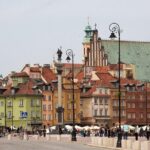
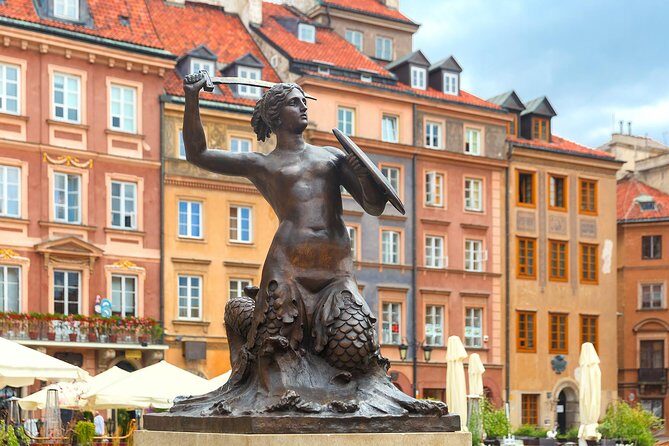
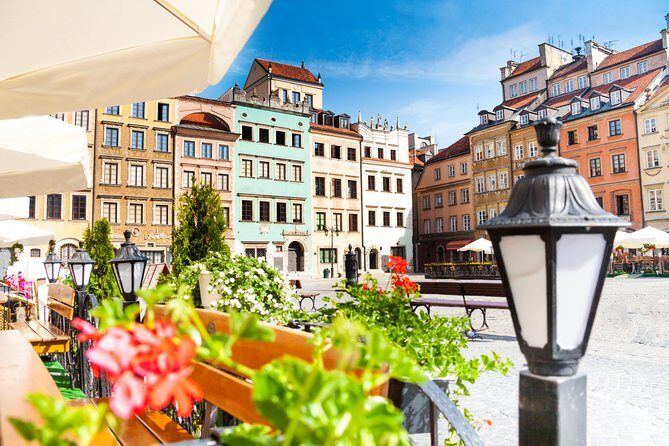
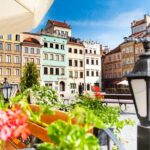
You’ll get a walk through Rynek Starego Miasta (Old Town Square). It’s typically around 20 minutes, with your guide showing you the most notable corners. The atmosphere is often described as magical, and the important context is why that matters: the Old Town was also destroyed during the Warsaw Uprising, then rebuilt.
So when you stand in the square, you’re not just seeing what postcards look like. You’re seeing reconstruction done on purpose—turning a place of survival and loss back into a functioning public space.
Archcathedral Basilica of St. John the Baptist
You also stop at Archikatedra Sw. Jana Chrzciciela, the Archcathedral Basilica of St. John the Baptist. This church is known for Masovian Gothic style. During the uprising, the building was completely demolished by Nazis, then rebuilt again in 1960.
This makes the cathedral a strong “why rebuilding matters” lesson. A building can look centuries-old, yet still be a post-war creation. That’s one of those Warsaw moments that rewires your sense of time.
The Barbican defensive wall walk
Next is the Warsaw Barbican (Barbakan Warszawski), a defensive structure made with red bricks in a Gothic style. It’s a quick stop (about 5 minutes), but it’s one of the most visually distinctive parts of the Old Town perimeter.
If you like architecture, the Barbican gives you something different from the church and square rhythm. It’s also a nice mental break after the heavier WWII stops—without turning the tour into a distraction.
Royal Castle outside views and the Warsaw Uprising monument
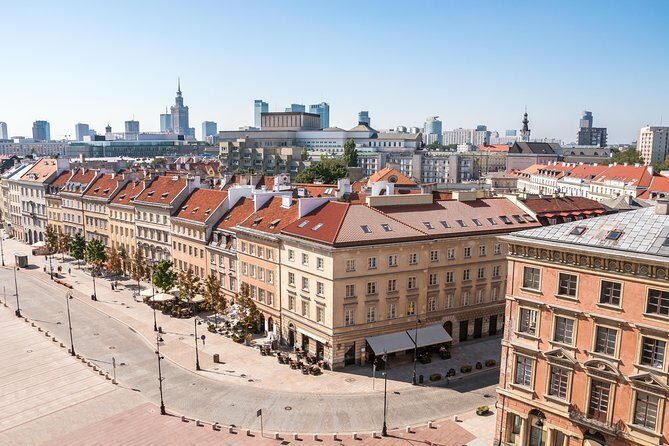
Your Old Town circuit also includes two additional WWII touchpoints and a major landmark.
Royal Castle in Warsaw (outside)
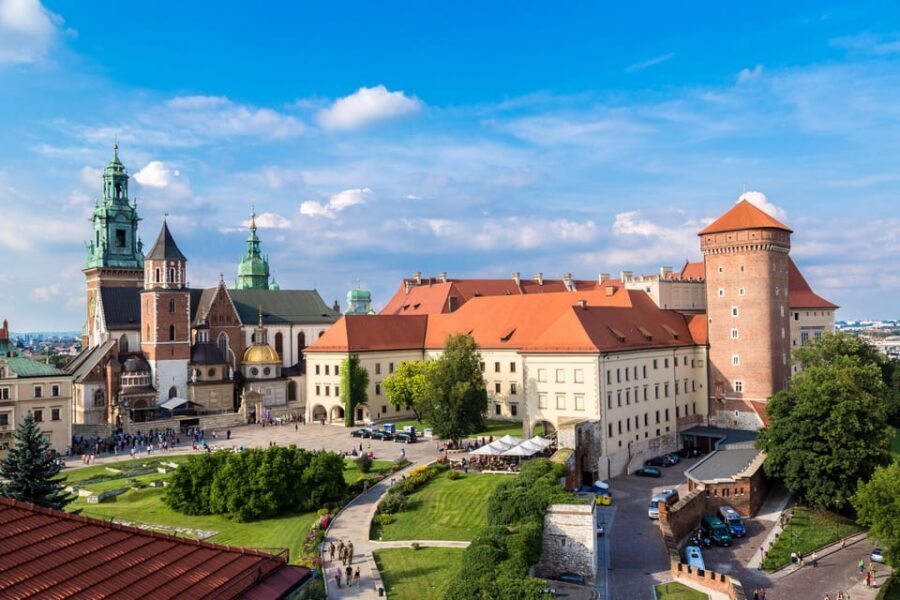
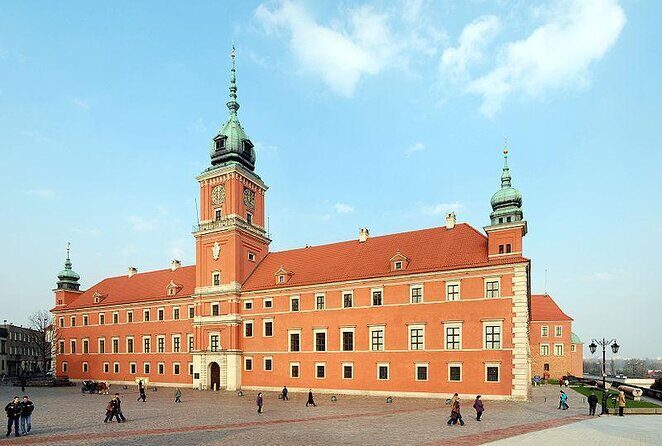
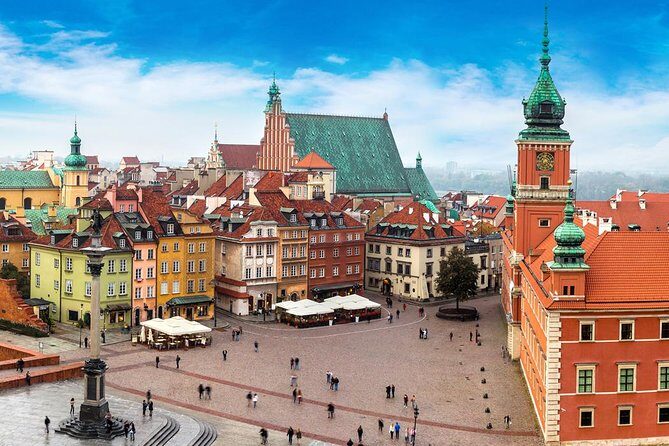
You’ll see the Royal Castle from the outside, with the big note being that it was blown up during the Warsaw Uprising in 1944 and later rebuilt in 1984. The stop is about 10 minutes, mostly for orientation and photo time.
What you get here is scale and context. The castle is a central symbol in Warsaw identity, so seeing it even from outside helps you understand why the city treats certain sites as more than monuments.
Warsaw Uprising Monument
Finally, you’ll reach the Monument to Warsaw Uprising Fighters. It’s described as one of the most expressive and symbolic monuments in Warsaw, with a short walk time (about 5 minutes).
This stop ties the morning together. You’ve been moving from ghetto uprising memory to uprising aftermath to rebuilt Warsaw. The monument gives that last “okay, here’s the meaning” punctuation.
After the tour, you either hang around the Old Town or go back to your accommodation. If you’re traveling with limited time, I like that choice: finish where you’ll actually spend more time later.
Price and value: what $60 buys you in a short morning
The price is about $60.34 per person for roughly 3 hours. That sounds like a lot until you weigh what’s included.
Here’s what you’re paying for:
- A professional English-speaking guide
- An air-conditioned small bus (up to 15)
- Hotel pickup and drop-off
- Still water, Coca Cola, and Polish traditional chocolate candies
Also, the itinerary lists admission tickets for the stops as free. That’s meaningful value because some city tours force you into paying for entrances just to see basics.
So the value pitch is pretty clear: you get structure and context without extra museum ticket costs, plus the pickup convenience that’s often the hidden time-sink in Warsaw.
At the same time, you should read the fine print with your expectations. Some refreshment details can be uneven in real life. One experience noted water and soft drinks didn’t get served until near the end, and chocolate candies weren’t exactly what was advertised. None of that ruins the tour, but it does affect the “included perks” feeling. In other words: don’t book this expecting a full snack service at every stop.
What to wear, and how to make the guide easier to hear
This tour mixes bus time with several short walks—park paths, Old Town corners, monuments, and cathedrals. The walking isn’t long, but it adds up across the morning.
So, I’d plan for:
- Comfortable shoes (especially if it’s wet or cold)
- Weather protection for outdoor stops in Łazienki and the Old Town
- A bit of flexibility in how fast you move, since you may need to keep up when the group is coming together again
Hearing is the one “quality of life” issue you should prepare for. Some experiences described the guide as difficult to hear during walking segments. If you know you struggle with background noise, consider bringing your own hearing aid solution (or anything you typically use in busy streets). And if you can, position yourself where you can see the guide’s face when they speak.
Also, because the tour is short, the guide can talk continuously. In a well-run morning, it feels efficient. In a less ideal one, it can feel rushed. If you have questions, try asking them at bus stops or at times when the guide pauses between locations.
Who should book this Warsaw morning tour
This is a great fit if:
- You want a first-timer orientation that actually includes the WWII story in a respectful sequence
- You prefer short stops over long museum sessions
- You value hotel pickup and drop-off to protect your time
- You’re traveling with limited time and want to see a lot without building a route yourself
It’s also a decent choice on a less-than-perfect weather day, since transportation between areas is built in. The bus helps you stay warm while still getting your feet on the pavement for key moments.
If you’re the kind of traveler who wants one big panoramic viewpoint moment (beyond the general “panoramic view” label), do a quick reality check with the guide on the bus before you arrive at viewpoints. The tour name includes panoramic viewing, but the exact viewpoint isn’t spelled out in the stop list here. You don’t want to assume.
Should you book it?
Yes—if you want a structured morning that covers Warsaw’s most important landmarks while linking them to the city’s WWII history. The combination of small-group size, pickup convenience, and the sequence through ghetto sites into the rebuilt Old Town is exactly the kind of “get your bearings fast” experience that makes the rest of your trip easier.
Skip or reconsider if:
- You hate walking across multiple short stops (even if each is brief)
- Hearing the guide is a deal-breaker for you
- You need a specific “panoramic viewpoint” to be guaranteed and clearly identified
If you fall into the middle, you’ll likely do fine. Wear good shoes, show up a few minutes early for pickup, and keep your expectations aligned with what this tour is: a focused morning overview, not a long museum day.
FAQ
How long is the Warsaw morning city tour?
It runs for about 3 hours.
What time does the tour start, and when do I need to be ready for pickup?
The start time is 10:00 a.m., and pickup is typically around 9:45 a.m. You should wait about 5 minutes in your hotel lobby before pickup.
Is the tour in English?
Yes, it’s offered in English.
What group size is used?
The tour is for a maximum of 15 travelers.
Does the tour include hotel pickup and drop-off?
Yes. Pickup and drop-off are included.
What’s included in the price?
A professional English guide, an air-conditioned bus, still water, Coca Cola, and Polish traditional chocolate candies are included.
Is lunch included?
No, lunch is not included.
Are entrance fees included for the main stops?
The itinerary lists admission tickets for the stops as free.
Is the tour suitable for most travelers?
The information says most travelers can participate.
Does the tour require good weather?
It requires good weather. If it’s canceled due to poor weather, you’ll be offered a different date or a full refund.
Cancellation is free—how far in advance do I need to cancel?
You can cancel up to 24 hours in advance for a full refund. If you cancel less than 24 hours before the start time, the amount paid is not refunded.