REVIEW · WARSAW
Private Tour: Warsaw’s Communist History by Retro Fiat
Book on Viator →Operated by WPT1313 Warsaw Private Tours · Bookable on Viator
Vintage Fiat, hard history, Warsaw in motion. This private tour threads together socialist-era landmarks, street-level evidence of how power shaped daily life, and a guide who can answer your questions in real time—all with hotel pickup to keep the day easy.
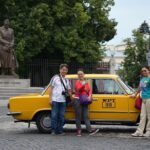
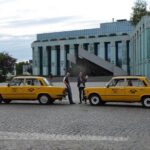
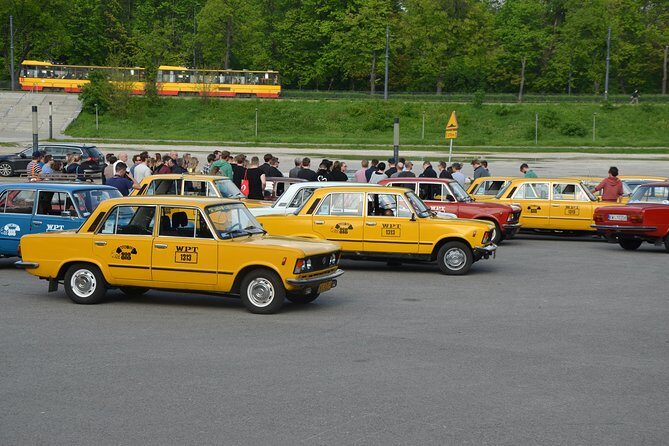
I especially like the Retro Fiat 125p ride. It turns transportation into part of the experience, and you also get the kind of pacing you can’t get on big buses. Second, the route hits both the iconic showpieces (like the Palace of Culture and Science) and the smaller, more telling stops such as Constitution Square and the black-market legend at Bazar Rozyckiego.
The one thing to keep in mind is tickets and add-ons. The Palace of Culture and Science requires an admission ticket you pay on your own, and one booking mention also hints at an expected extra photo/vodka/snack that isn’t clearly listed—so if those details matter to you, confirm ahead of time.
In This Review
- Key highlights at a glance
- How the Retro Fiat 125p changes the whole feel
- Price and what $108.24 per person buys you
- What your 4-hour timing really looks like (driving + short walks)
- Stop 1: Palace of Culture and Science, socialist realist showpiece
- Constitution Square (Plac Konstytucji): the Stalin-era housing statement
- The Communist Ministerial District: socialist realism for power
- Monument of the Free Word: censorship, explained in real life
- Statue of Charles de Gaulle: the Party House behind the facade
- Praga-Północ: a district shaped by communism and war
- Bazar Rozyckiego: Warsaw’s famous black market stop
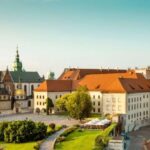
- Mariensztat Square (Rynek Mariensztacki): communist-era housing blocks
- How to get more out of your private guide (a quick checklist)
- Who should book this tour (and who should think twice)
- Should you book Warsaw’s Communist History by Retro Fiat?
- FAQ
- How long is the Retro Fiat communist history tour?
- Is this tour private or shared?
- What language is the tour offered in?
- Do I get hotel pickup and drop-off?
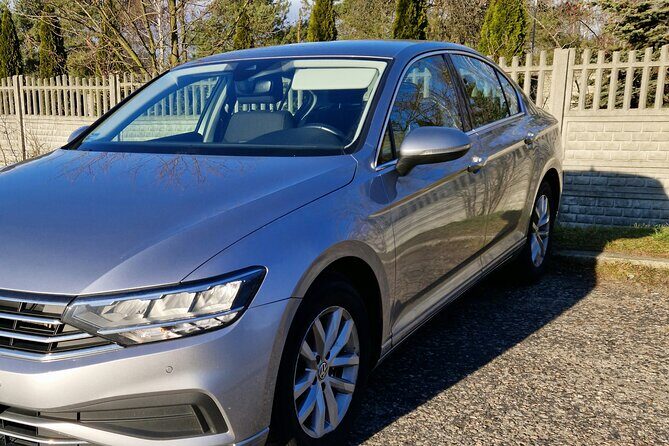
- What vehicle is used?
- Are tickets included for the stops?
- What is the cancellation policy?
Key highlights at a glance
- Private guide + your pace means you can steer the conversation, not just follow a script
- Retro Fiat 125p transport makes the ride itself part of the storytelling
- Hotel pickup and drop-off helps if you don’t want to crisscross town with bags
- A mix of big monuments and everyday contrasts from grand state buildings to black-market life
- English-led tour keeps the context clear for first-timers to Polish Cold War history
How the Retro Fiat 125p changes the whole feel
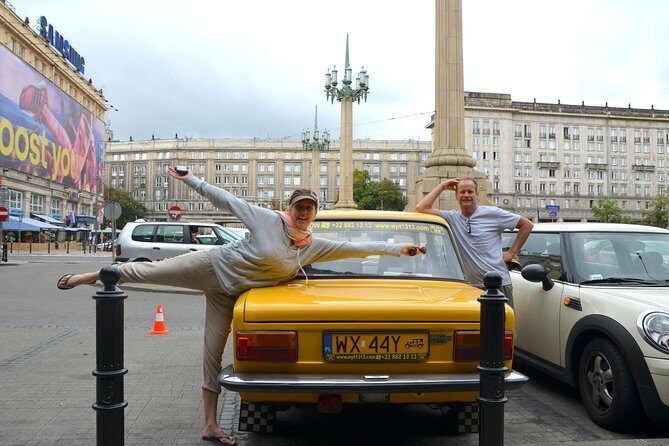
A vintage car isn’t just a cute detail here. In Warsaw, a drive-by stop can feel like a blur—unless your guide slows things down and points out what to look for. In this case, the Fiat 125p does two jobs: it breaks the normal “walk-and-read” rhythm, and it gives you a comfortable bubble to talk history without rushing.
In several accounts of the tour, guides like Jacob, Karol, Konrad, and Olga were praised for strong direction and the ability to shape the route based on questions. That matters because communist-era Warsaw can be emotional and complicated. When your guide can explain not only what you’re seeing, but why it was built that way, the day feels less like a checklist and more like a real education.
The main practical upside: you’ll spend less energy navigating transit on your own. The quieter upside: the novelty of the car often helps people pay attention—yes, even on a topic that isn’t light.
You can also read our reviews of more private tours in Warsaw
Price and what $108.24 per person buys you
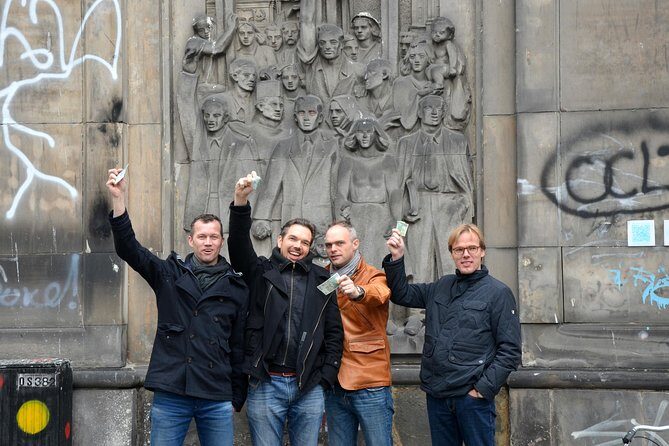
At $108.24 per person, the big value isn’t the “cheap ticket to see monuments.” It’s the package: private guiding plus private transportation, with hotel pickup and drop-off included. For a 4-hour tour, that combination is often where the money makes sense—especially if your hotel is far from major landmarks.
You’re also paying for targeted context. Instead of generic city sightseeing, you’re focusing on a specific slice of Warsaw’s story: the socialist- and communist-era imprint on architecture, public spaces, and daily life. The stops include several free-to-enter sites, so you’re not paying constantly on top.
One thing to sanity-check: the Palace of Culture and Science stop specifically notes that admission isn’t included. Budget extra for that single entrance, and you won’t get surprised when you arrive.
What your 4-hour timing really looks like (driving + short walks)
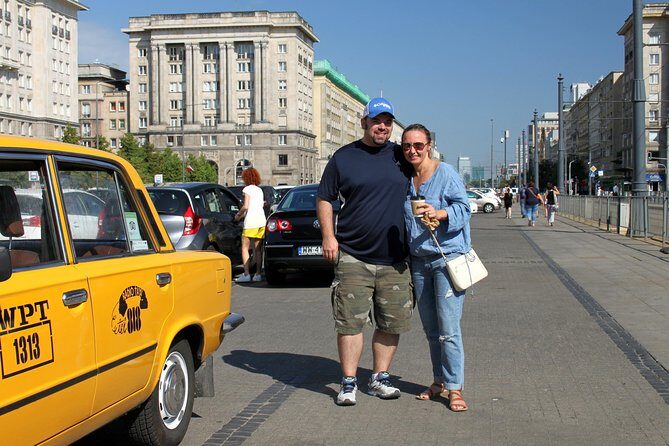
This tour runs about 4 hours and typically alternates between driving and brief, focused sightseeing. Some stops are around 15–30 minutes, which keeps things moving without turning it into a sprint. You’ll also get enough time at key points to look up close at details—especially on buildings where style is the message.
Practically, it helps to wear shoes you can walk in comfortably. Even when a stop is short, you’ll likely be stepping out to see the surroundings and take in the architecture. And because it’s private, you can ask your guide to spend more time on a topic you care about—housing style, censorship, or the black-market economy.
Another timing detail: your schedule will depend on where you’re staying and how smooth traffic is. That’s normal for Warsaw drives, and it’s one reason the hotel pickup is such a quality-of-life win.
Stop 1: Palace of Culture and Science, socialist realist showpiece
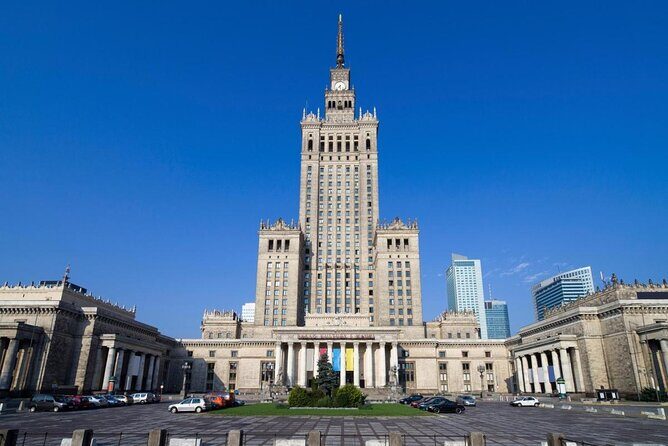
This is the headline building for a reason. The Palace of Culture and Science is described as the most recognizable structure in Warsaw, built in socialist realist style, and currently used as a hub with theatres, museums, a cinema, and even trendy pubs. Your guide will point out its history and you’ll also get to see it as the city’s most famous vertical landmark.
Two practical notes. First, this stop includes a time block of about 30 minutes, so you’ll have a short window to absorb both exterior impact and the guide’s context. Second, the listing notes that the admission ticket is not included. If you want to go inside, plan to pay separately.
What makes this stop worth your time is that it’s not just about the building. It’s about how regimes use architecture for visibility and authority—turning state power into something you can’t miss. In this tour, your guide’s job is to connect that design to the political atmosphere of its era.
Constitution Square (Plac Konstytucji): the Stalin-era housing statement
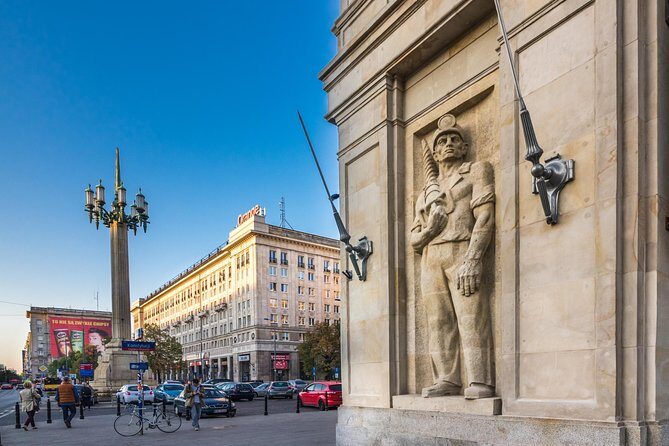
Next up is Plac Konstytucji, tied to Stalin-era architecture and described as a representative communist housing district. Even if you only see it from streets and viewpoints, it’s the kind of place where your guide’s framing makes a big difference.
This stop is about 30 minutes, and it tends to work well for first-timers because you can clearly see the architecture’s “logic”: simplified forms, planned space, and a sense that daily life was designed to fit the system. Since the stop is marked free, you don’t have to juggle tickets to make the time count.
If you like architecture and want to understand how ideology shows up in everyday structures, this is one of the most directly relevant stops. It’s also where you’ll probably start spotting the contrasts that still exist across Warsaw—grand state-built environments versus the lived reality around them.
You can also read our reviews of more historical tours in Warsaw

The Communist Ministerial District: socialist realism for power
You’ll also see the Communist Ministerial District, described as being created in socialist realism style. This is one of those stops where the “why” matters as much as the “what.”
Even without going into deep detail, the takeaway is clear: government buildings under communism weren’t only functional spaces. They were designed to project stability, permanence, and control. Your guide will connect what you see to that purpose, and you’ll likely hear explanations about how the architecture supported the political system rather than just housing institutions.
Because this segment is shorter in the overall plan, you’ll want to treat it as a concentrated context stop. If you care about how propaganda works in the built environment, ask your guide to point out specific features tied to the socialist realism idea.
Monument of the Free Word: censorship, explained in real life
Censorship is part of the communist story in Poland, and the Monument of the Free Word is directly used to tell that theme. The stop notes the point bluntly: censorship was on a daily basis in communist Poland.
Time here is about 5 minutes, so it’s not meant to be a long museum-style stop. Instead, it’s a quick but powerful moment to anchor the day. Your guide’s narration is what makes the monument land.
If you’re expecting purely architectural sightseeing, this stop pivots you back to human experience—how rules shaped what people could say, print, or even think in public. It’s also the kind of stop that invites questions. A guide with a personal perspective—like the ones highlighted in different accounts of the tour—can make the story feel grounded rather than abstract.
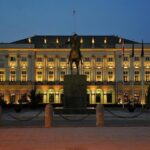
Statue of Charles de Gaulle: the Party House behind the facade
This stop mixes a famous name with a local layer of meaning. You’ll see the statue of Charles de Gaulle and learn about the former Communist Party House, often referenced as the Polish White House. You’ll hear about the leaders in communist Poland as part of the story.
The time here is about 15 minutes, and it works as a bridge from architecture to power politics. The key value: your guide can explain how buildings and symbols tied to leadership were meant to look confident and legitimate—whether or not they matched reality for ordinary people.
If you enjoy Cold War history, this is a good moment to ask for clarifications. Who held real influence? How did the leadership shape policies? The tour’s private format makes those questions easier to answer than in a group setting.
Praga-Północ: a district shaped by communism and war
Praga Północ is described as the vibrant district during the communist period, and it’s also noted that it was not badly destroyed during WWII. That combination—communism-era life layered on top of a district that survived much of the wartime damage—adds texture to the day.
This stop is about 30 minutes and is free. It’s not just a sightseeing drive; it’s a chance to see how different parts of the city kept functioning and evolving rather than being reduced to one era.
One practical thing to watch: because this is a real urban area, the view is more about context than a single landmark. Your guide can help you read the street-level cues: building types, the feel of the neighborhood, and how that environment related to the communist period.
Bazar Rozyckiego: Warsaw’s famous black market stop
The tour takes you to Bazar Rozyckiego, noted as the most famous black market in communist Poland. Time is about 15 minutes, and it’s also marked free.
This is one of the most fascinating stops in the plan because it shows a different side of the system. When official supply and prices don’t meet everyday needs, people build alternative ways to get what they need. A black market stop helps explain how life functioned beyond official slogans.
Don’t expect a long deep-dive museum stop here. Instead, treat it like a snapshot. The payoff is in your guide’s explanation—how the black market fit into the bigger economic and social pressure of the era.
If you care about everyday history, this one deserves your full attention, even if you’re usually more interested in monuments.
Mariensztat Square (Rynek Mariensztacki): communist-era housing blocks
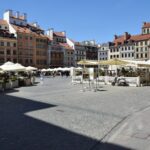
You’ll finish with Mariensztat Square (Rynek Mariensztacki), with a focus on communist-era housing blocks. Time here is about 20 minutes, and it’s free.
This is a fitting endpoint because it brings the story back to where most people spent their time: homes. The architecture at the square is your clue to how the regime shaped living arrangements. And by the time you reach this stop, you’ll have already seen the state-level symbols—so the housing blocks will hit harder.
It’s also a good place to ask your guide about contrasts. How did grand projects differ from what people actually experienced? The best answers usually come from guides willing to share honest perspective, like the ones named across accounts of the tour.
How to get more out of your private guide (a quick checklist)
Since this is private, you’ll get more value if you steer the conversation. I’d come prepared with a couple of topics, like:
- How socialist realism was used to project power (on buildings you can actually see)
- How censorship affected daily life, not just politics
- Whether the tour time allows more detail at any one stop you care about
Also, if you have specific questions—about leaders, architecture details, or daily life—know that some guides (like Jacob, Konrad, and Olga in different accounts) were praised for flexibility and for answering lots of off-script questions.
One caution from a reported issue: one booking mentioned a missing snack/vodka shot and a souvenir photo that was expected to be emailed. The tour data you have doesn’t clearly list those items, so if that matters to you, ask before you go and confirm what’s included.
Who should book this tour (and who should think twice)
This tour is a strong fit if you:
- Want a focused, theme-based Warsaw history outing rather than general sightseeing
- Like architecture and want to understand it as political communication
- Prefer private guiding so you can ask questions and change the emphasis on the fly
- Don’t mind short stops and a driving-first route through multiple areas
It’s worth thinking twice if you want a long, slow museum-style experience. This plan is built around several quick hits—five to thirty minutes each—so you’ll get context fast, but not hours of one site.
Also, if you’re sensitive to the darker side of history, this is exactly that kind of tour. The censorship theme and black-market story are not “soft” topics, so go in with the expectation of learning how power worked.
Should you book Warsaw’s Communist History by Retro Fiat?
If you like history that connects buildings to real life, this is an easy yes. The private format, hotel pickup, and the vintage Fiat 125p make it both practical and memorable, and the route is clearly built to cover more than one angle of the communist era—from socialist realist landmarks to housing districts and the black market stop at Bazar Rozyckiego.
My main recommendation tip: book it if you want structure plus flexibility. You’ll likely get the most value if you arrive ready to ask questions, and if you confirm upfront whether you should expect any extras beyond what’s listed (especially anything like photos or snacks).
FAQ
How long is the Retro Fiat communist history tour?
It runs for about 4 hours (approx.).
Is this tour private or shared?
It’s private. Only your group participates.
What language is the tour offered in?
The tour is offered in English.
Do I get hotel pickup and drop-off?
Yes. Hotel pickup and drop-off are included.
What vehicle is used?
Transport is by a private vehicle: Fiat 125p.
Are tickets included for the stops?
Admission ticket details vary by stop. The Palace of Culture and Science notes that its admission ticket is not included, while the other listed stops are marked as free.
What is the cancellation policy?
You can cancel up to 24 hours in advance for a full refund.