REVIEW · WARSAW
Private Tour: Warsaw’s Jewish Heritage by Retro Fiat
Book on Viator →Operated by WPT1313 Warsaw Private Tours · Bookable on Viator
A vintage Fiat brings Warsaw’s Jewish story to life. This private 4-hour ride traces the city through key places tied to the Jewish community, from fragments of the Warsaw Ghetto wall to the surviving Nożyk Synagogue. I love the private driver-guide attention and the Retro Fiat 125p feel, which makes the history feel less like a checklist and more like a guided walk through real streets.
The big thing to plan around: the Nożyk Synagogue and the Jewish Cemetery are closed from Friday evening through Saturday due to Sabbath. If you’re traveling during that window, you can still tour the exterior sites and monuments, but you may miss the inside access that many people hope for.
Hotel pickup and drop-off are included, so you spend less time negotiating transport and more time learning. And if you have film in your head, you can ask your guide about Warsaw locations from The Pianist as you go.
In This Review
- Key highlights that make this tour worth your time
- Warsaw’s Jewish Heritage, paced for a real 4-hour visit
- The ghetto wall fragment and Chłodna Street: small plaques, huge gravity
- Muranów and the Large Ghetto area: reading the city as a document
- Ghetto Heroes Monument and the moments after: rebellion memorialized in place
- Nożyk Synagogue: the surviving prewar house of prayer you’ll remember
- Jewish Cemetery: where 200,000+ names become hard to forget
- POLIN Museum area: see it from outside, then add entry if you want
- Vintage car logistics: comfort, flexibility, and the group-size twist
- Price and value: what you’re really paying for
- The guides: what makes the explanations feel human
- Who should book this Retro Fiat Jewish Heritage tour
- Should you book? My honest take
- FAQ
- How long is the Warsaw Jewish Heritage tour by Retro Fiat?
- What’s included, and what do I pay for separately?
- Will I be able to enter the Nożyk Synagogue and the Jewish Cemetery?
- Do I need to bring anything for visiting Jewish sites?
- What vehicle will I ride in?
- Can I get a refund if I cancel?
Key highlights that make this tour worth your time
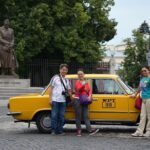
- Retro Fiat 125p ride (and when a vintage minivan may replace it for groups of 4+)
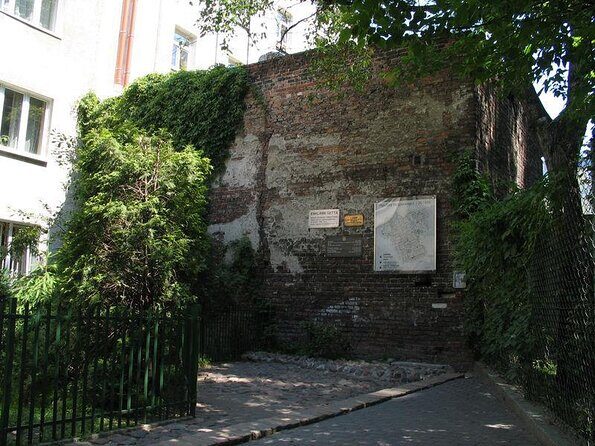
- Ghetto wall fragments and plaques in their actual street setting, not behind glass
- Chłodna Street stops tied to the Judenrat and Adam Czerniaków
- Nożyk Synagogue: the only surviving prewar Jewish house of prayer in Warsaw
- Jewish Cemetery access option, with emotional scale you feel fast
- POLIN Museum: you see it from the outside, and you can add entry on your own schedule
Warsaw’s Jewish Heritage, paced for a real 4-hour visit
This tour is built for people who want more than photos and captions. You start with hotel pickup (in the city center), then set off in a private retro Fiat 125p with your driver-guide. The car matters here—not just for nostalgia. It slows the whole experience down. You’re not sprinting between stops; you’re sitting in a small space with one person guiding you, connecting what you see to what happened.
The route focuses on places linked to Warsaw’s Jewish community through many eras: prewar religious life, the ghetto period, WWII occupation, and the way memory lives in monuments and street patterns today. It’s also private, meaning you can ask your own questions and steer toward the angle that matters most to you—WWII history, family-history curiosity, or the way Polish Jewish life evolved over centuries.
One practical note: this is offered in English, and you get a mobile ticket. You’ll also be asked to cover your head at some Jewish sites. It’s a small step that helps you avoid last-minute scrambling.
You can also read our reviews of more private tours in Warsaw
The ghetto wall fragment and Chłodna Street: small plaques, huge gravity
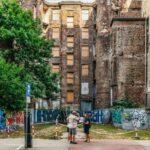
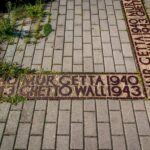
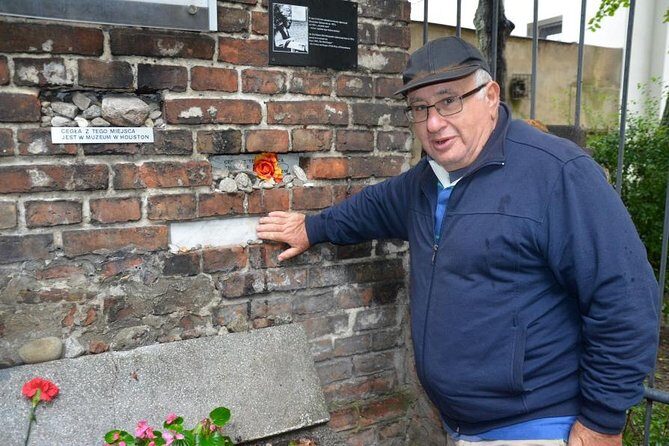
Your first stop is a fragment of the Warsaw Ghetto wall where commemorative plaques mark the site. Even if you’ve read about the ghetto, seeing a remaining piece of wall in context changes the scale. You can stand there and picture the ordinary street life that once existed around it—then picture the enclosure built in 1940 that held more than 400,000 Jews.
Next comes Chłodna Street. You’ll pass the Footbridge of Memory and a building linked to Adam Czerniaków, who was president of the Jewish Community, also known as the Judenrat. This is one of those stops where a guide’s wording can make a big difference. The aim isn’t only names and dates. It’s understanding what leaders faced under impossible pressure—and why daily decisions during the occupation could be life-and-death.
Timing here is tight by design. The wall fragment and Chłodna Street stops are brief, and that’s fine, because the real payoff is what your guide teaches while you’re still in that mental frame.
Muranów and the Large Ghetto area: reading the city as a document
After the early stops, you head to Muranów, described as the former Large Ghetto area. This is where the tour shifts from specific memorials to the bigger pattern: how the ghetto area looks now, with modern buildings and street art layered over older history.
The value of Muranów is that you get the contrast. You’re not just studying destruction. You’re seeing how Warsaw rebuilt, and how the city carries evidence of the past without turning everything into a museum. This can help you grasp why the Holocaust in Warsaw isn’t just a single event, but a system with locations you can still trace.
If your mind goes to The Pianist, tell your guide. Many guides are happy to tie filming locations to the real places you’re seeing, so you can connect a familiar story to the map in front of you.
Ghetto Heroes Monument and the moments after: rebellion memorialized in place
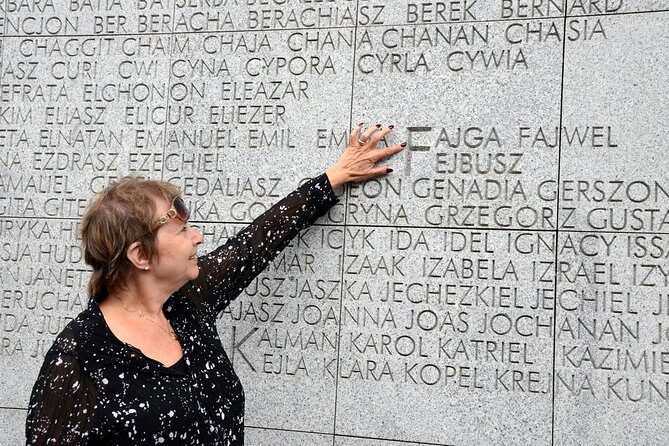
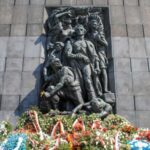
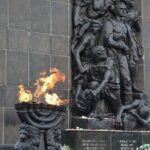
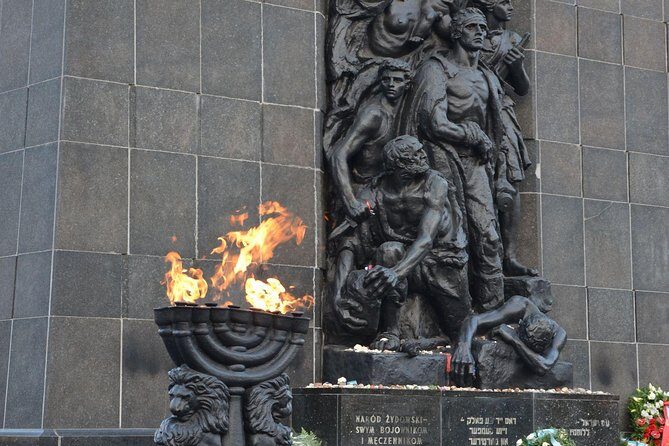
You then visit the Pomnik Bohaterów Getta, the Ghetto Heroes Monument. It commemorates the Warsaw Ghetto Uprising in 1943, and it’s the kind of stop that changes your tempo. The tour keeps moving, but your guide’s explanations help you understand that this wasn’t a mythic gesture. It was a decision under extreme terror, and the monument is there to hold that truth in a visible, public way.
From here, your route includes additional WWII-associated points on the path—like a spot associated with deportations to Treblinka (gas chambers are referenced in the tour description), a memorial for group suicide during the uprising, and a street that survived from both sides in the larger ghetto area. Even without long breaks, these stops make the story feel less linear and more like a chain of choices, betrayals, and brutal outcomes.
This part can be emotionally heavy. If you want control over pacing, ask your guide to pause and slow down at any point that hits you hardest. A private guide can actually do that.
Nożyk Synagogue: the surviving prewar house of prayer you’ll remember
One of the strongest stops on this tour is the Nożyk Synagogue. The description is clear: it’s the only surviving prewar Jewish house of prayer in Warsaw. You spend about 30 minutes here, and it’s a real access stop rather than a quick drive-by.
That matters because synagogues are living spaces, not just sites. Even if your visit is brief, being inside (when open) gives you a sense of scale and continuity that you don’t get from exteriors.
Important timing warning: the synagogue is closed from Friday evening through the whole Saturday due to Sabbath. If your tour lands during that window, you should expect an adjustment in what you can enter. This is the most common “why doesn’t the tour include what I expected” issue, so check your day carefully.
Also plan for head covering when you visit.
You can also read our reviews of more historical tours in Warsaw



Jewish Cemetery: where 200,000+ names become hard to forget
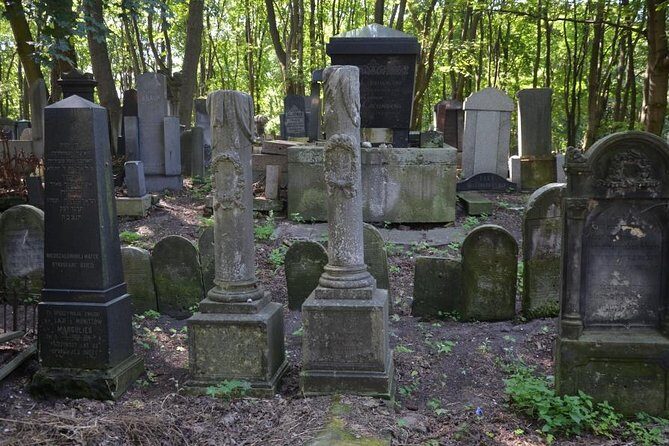
The last major access stop is the Jewish Cemetery. You’ll see the remains of graves of over 200,000 people—spiritual and political leaders, creators of Jewish culture, and thousands of nameless victims of the ghetto. Many generations of Jewish Varsovians were buried here.
You spend about 30 minutes, and that’s both short and not. Cemetery time changes you. You’ll likely feel like you need more time, but the tour is structured so you get the overview and the emotional impact without leaving you exhausted.
Just like the synagogue, the cemetery is closed from Friday evening through Saturday due to Sabbath. If you want cemetery access, schedule your tour for a weekday or a day when opening hours allow entry. If you’re visiting during the closed window, you can still experience the route, but you’ll miss what many people consider the most meaningful part.
If you care about planning well, this is the stop I’d optimize for. Ask your guide if you should prioritize it if you’re choosing between synagogue and cemetery time on your schedule.
POLIN Museum area: see it from outside, then add entry if you want
At POLIN Museum, you see the museum from the outside for about 15 minutes. If you want to go in, the museum entry is not included, and your guide can leave you there after the tour.
This is a smart setup for two kinds of visitors:
- If you want the full heritage arc from the car and stops, you can keep it simple.
- If you want deep museum time, you can tack it on without rushing.
It also helps with budgeting. Museum tickets can add up, and this tour lets you decide based on your interests and energy level.
Vintage car logistics: comfort, flexibility, and the group-size twist
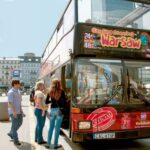
The Retro Fiat element is part of the fun. Photos happen on their own—people notice the car as you turn corners. Inside, it’s an old-school way to move through a city that changes block by block.
One thing to watch: for groups of 4+, the tour may be driven in a vintage minivan instead of the Fiat 125p. If you’re booking for the car experience itself, make sure you’re with a group size that keeps the Fiat option.
You’ll also get your trip back to the original departure point at the end. That’s useful when you’re trying to keep your day smooth.
Price and value: what you’re really paying for
At $108.28 per person for about 4 hours, the ticket price might seem high if you compare it to a bus ride. But you’re not buying a bus ride. You’re buying:
- Private time with a driver-guide
- Hotel pickup and drop-off
- A dedicated vehicle (retro Fiat, or a vintage minivan for larger groups)
- Efficient routing between sites that are emotionally important and not always easy to connect on your own
This is especially good value when you want context at every stop. One thing I like about this tour format is that you’re not wandering. You’re getting explanations tied to what you’re seeing, including details some people miss if they plan it independently.
There’s also strong booking signal: this is commonly booked about a month in advance, which often means popular guides and limited availability. If your dates are tight, don’t wait.
The guides: what makes the explanations feel human
The names I’ve seen associated with this tour include Alex, Alec, Max, Konrad, Karol, Marcin, Martin, and Conrad. The common thread in these guides’ styles is how they keep the story understandable without turning it into a lecture.
One guide, Karol, has even been described as a doctoral student in history, which lines up with the way some guides bring lots of context and photos. Another guide, Konrad, is praised for balancing the historical story with a friendly, honest approach. And more than once, guides have shown flexibility—taking your interests into account if you want extra stops or adjustments.
If you want the best experience, show up with a couple of priorities written down: one historical question, one personal-interest angle, and one must-see stop (like Nożyk Synagogue or the cemetery). Private means you can steer, but you’ll get the best results when you steer clearly.
Who should book this Retro Fiat Jewish Heritage tour
I think this tour is a great match if you:
- Want WWII and Jewish Warsaw history in a logical, location-based way
- Prefer a private guide over self-guided wandering
- Appreciate having time to ask questions during the drive
- Like the idea of pairing serious content with a memorable retro-transport experience
It’s also a good choice if you’re short on time and still want the key sites: ghetto wall area, major monuments, Nożyk Synagogue, and the Jewish Cemetery. And since pickup and drop-off are included, it works well for first-timers in Warsaw.
Should you book? My honest take
Book it if you want a private, structured tour that hits the major Jewish heritage sites in Warsaw and explains what you’re seeing in plain language. The combination of hotel transfers, a retro Fiat ride, and a guide who can adapt to your interests makes it more than a set of stops.
Skip or re-think if your schedule falls during Friday evening through Saturday, because the synagogue and cemetery are closed during Sabbath. If those access moments are central to your plans, it’s worth adjusting your dates rather than hoping for flexibility.
If you want the most satisfying version of the tour, plan your day around those two closures, bring something to cover your head, and arrive ready to ask questions.
FAQ
How long is the Warsaw Jewish Heritage tour by Retro Fiat?
It runs for about 4 hours.
What’s included, and what do I pay for separately?
Hotel pickup and drop-off are included, along with a professional driver-guide and transport by private retro Fiat 125p. Optional museum entry is not included, and tickets for the Nożyk Synagogue and the Jewish Cemetery are not included either.
Will I be able to enter the Nożyk Synagogue and the Jewish Cemetery?
Entry depends on the day. The synagogue is closed from Friday evening through Saturday, and the Jewish Cemetery is also closed from Friday evening through Saturday.
Do I need to bring anything for visiting Jewish sites?
You should be prepared to cover your head when visiting some Jewish sites.
What vehicle will I ride in?
You’ll ride in a retro Fiat 125p on the private tour, but for groups of 4+ the tour may use a vintage minivan instead.
Can I get a refund if I cancel?
Yes. Free cancellation is allowed up to 24 hours before the experience start time for a full refund. If you cancel less than 24 hours before, the amount paid is not refunded.