REVIEW · WARSAW
Warsaw for WWII Buffs – private tour with hotel pickup
Book on Viator →Operated by Warsaw Behind the Scenes · Bookable on Viator
A broken city has a pulse, and Warsaw tells it plainly. This private, 3-hour WWII tour uses a retro Żuk minibus to connect the dots between 1939, the Warsaw Ghetto, and the 1944 Uprising.
I especially like the tight pacing (it fits a busy day) and the way the guide can customize the story to what you care about. One thing to weigh: the vintage minibuses are cozy in winter but may lack modern comfort like air conditioning, and some vehicles may have limited seat-belt options or roomy/step-in access for older travelers.
If you want a high-impact history walk that still feels human—talk, questions, and all—you’re in the right place. The route centers on key sites across central Warsaw, with short stops plus walking segments so you don’t just stare at plaques from the sidewalk.
In This Review
- Key takeaways before you go
- Price and Logistics: what you’re really paying for
- Riding in a vintage Żuk through central Warsaw
- Stop-by-stop: the WWII route that makes sense fast
- Stop 1 and Stop 2: Warsaw before the invasion, and what that changed
- Stop 3 (Waliców): ghetto wall fragments you can actually see
- Stop 4 (Chłodna Street): where street traffic split two worlds
- Stop 5 (Waliców tenement): the ruin that still lingers
- Stop 6 (Muranów): the neighborhood that looks ordinary until you know why
- Stop 7: Ghetto Heroes Monument and POLIN-area symbolism
- Stop 8: the Monument to the Fallen and Murdered in the East
- Stop 9: Warsaw Uprising Monument and the end of the old city
- What the guides do that turns facts into a real experience
- Comfort and practical tips that actually matter
- Should you book Warsaw for WWII Buffs?
- FAQ
- How long is the Warsaw WWII private tour with hotel pickup?
- Is hotel pickup included?
- Is this a private tour?
- What language is the tour offered in?
- Do I have to pay admission fees for the stops?
- Is gratuity included in the price?
- What vehicle do you ride in?
- Can children join the tour?
- What if my hotel is just outside the pickup area?
- Is free cancellation available?
Key takeaways before you go
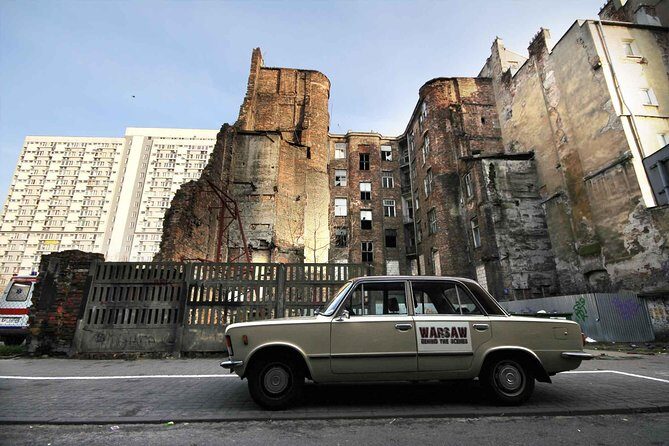
- Retro Żuk transport keeps the ride fun while still moving you fast between major WWII locations.
- Hotel pickup within 3 km of the center saves time, but remember transfers count in the 3-hour total.
- Ghetto boundaries explained on-site, including preserved wall fragments and street divisions that shaped daily life.
- A full story arc from the 1939 invasion and Soviet occupation to the ghetto area and the 1944 Uprising.
- English-speaking local guides are central to the experience, and many guests highlight strong English and flexibility.
- Intensity warning: this route is historically real and emotionally heavy, especially around the ghetto.
Price and Logistics: what you’re really paying for
At $169.38 per person for about 3 hours, you’re not buying a generic drive-by. You’re buying three things: a private format (only your group), a professional English-speaking local guide, and transportation that actually gets you across central Warsaw efficiently.
That transport matters here. Warsaw’s WWII story is spread out. If you try to do it alone, you’ll spend time routing, crossing traffic, and finding the exact street-level remnants that give the history its punch. This tour solves that for you.
A smart heads-up: pickup/drop-off is offered within a 3 km radius of the city center, and the transfer time counts inside the tour duration. If your lodging is at the edge of that range, you may lose time that could be spent walking at a memorial or preserved ghetto wall section. If you want maximum time at the sites, ask for a meeting point closer to the center when your pickup is far or inconvenient.
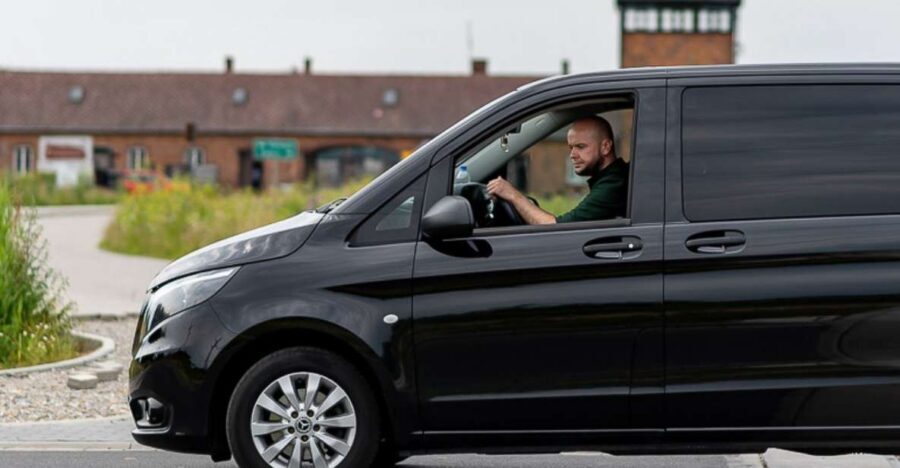
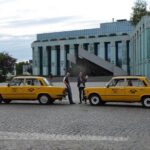
Also note the ride is in a classic vintage Żuk vehicle. It can be a blast—bumpy, characterful, and very Warsaw—but it’s not a modern tour bus. Some vehicles don’t have air conditioning, and some may have limited seat-belt availability because of how historic vehicles are built. Heating is available for winter.
You can also read our reviews of more private tours in Warsaw
Riding in a vintage Żuk through central Warsaw
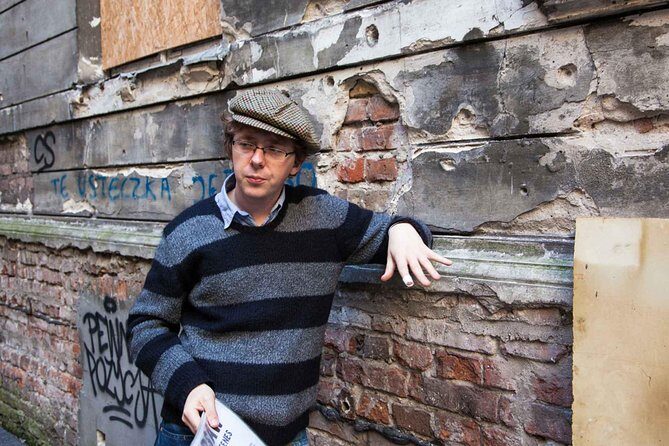
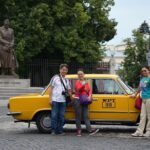
The vehicle is part of the story. The Żuk minibus keeps things lively, and it also helps you cover more ground without turning your day into a bus-to-subway scavenger hunt.
The tour typically works like this: you travel by vehicle between key points, then you step out for short walking segments at each stop. Those walking minutes are where the guide’s narrative clicks—because you’re standing where something happened or where a physical remnant still exists.
Vehicles accommodate up to 8 passengers, and since this is a private tour, it’s just your group in the van. That smaller scale is one reason the tour can feel like a conversation instead of a lecture.
Practical comfort tip: wear comfortable shoes. The tour is mostly outdoors with some walking, and you’ll want solid footing for memorial areas and street-level sights.
Stop-by-stop: the WWII route that makes sense fast
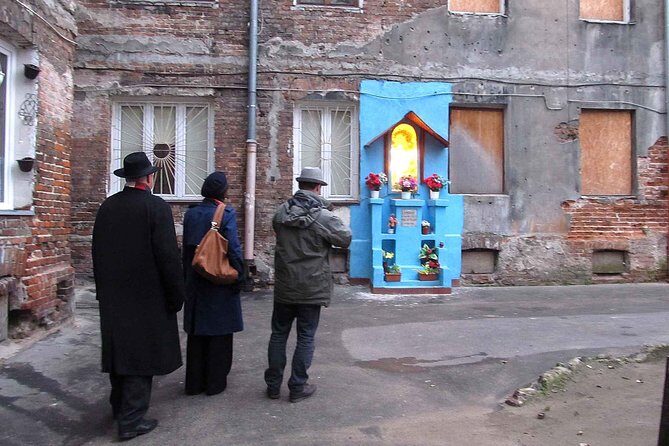
Stop 1 and Stop 2: Warsaw before the invasion, and what that changed
You start in central Warsaw, where the cityscape still carries scars from the WWII era. The guide sets the tone with the late-1930s political climate, then moves into the German invasion of Poland in 1939. The story doesn’t stop there—your guide also covers the simultaneous Soviet occupation of eastern Poland and how these overlapping forces reshaped life for people in Warsaw.
Why this first section is valuable: it gives you the timeline your brain needs before the tour becomes very real and very specific. If you already know the basics, you’ll still benefit from hearing it connected to what you’ll see next—because the ghetto story doesn’t start with a fence. It starts with occupation, repression, and how policy changed daily routines.
Stop 3 (Waliców): ghetto wall fragments you can actually see
Then the tour turns to the tragedy of Warsaw’s Jewish community under Nazi persecution and murder. The guide points out that before the war, Poland had around three million Jews, including roughly 300,000 in Warsaw. In 1940, the Nazis established the Warsaw Ghetto, forcibly confining close to half a million people.
At Waliców, you get something rarer than a museum panel: the guide takes you to a preserved section of the former ghetto wall, tucked between buildings and along older pre-war property lines. Seeing the boundary in context is a gut punch, because it explains how the ghetto shaped movement, work, and even where people could stand in relation to the city.
This stop is one of the most important on the route. It’s not long, but it lands hard.




Stop 4 (Chłodna Street): where street traffic split two worlds
Next is Chłodna Street, a key detail many people miss when they only skim the major headlines. In 1941, the ghetto was divided into two parts by Chłodna street, and the street served as an East–West transfer route.
You’ll learn about a wooden bridge built near the intersection of Chłodna and Żelazna streets. That bridge reached the third floor of nearby buildings so that the “Aryan” trams, German military transports, and cars could pass underneath. It’s one of those facts that turns history into something architectural and painfully practical.
Stop 5 (Waliców tenement): the ruin that still lingers
Back in the Waliców area, the guide shows the tenement house that remains a ruin—described as a kind of lingering remnant of the ghetto since it’s still standing in ruined form. You’ll also see a fragment of the ghetto wall preserved in the same place.
This stop matters because it shows the city isn’t just a memory. Some buildings didn’t reset. They stayed broken, and that changes how you read the streets as you walk later on your own.
Stop 6 (Muranów): the neighborhood that looks ordinary until you know why
Then you head to Muranów. From a distance, it can look like standard urban housing blocks—square shapes, flat streets, an everyday neighborhood rhythm.
But with the guide’s context, you start noticing what you wouldn’t know otherwise. This is one of those stops where the value is the guide’s ability to interpret the city. You’re not just sightseeing; you’re learning how historians read locations that have changed.
Stop 7: Ghetto Heroes Monument and POLIN-area symbolism
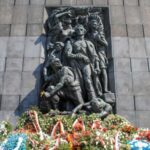
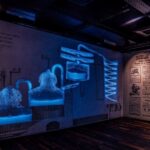
The tour includes the area around the Monument to the Ghetto Heroes and the POLIN Museum of the History of Polish Jews. Both are tied to major moments during the ghetto uprising period, near where the first armed clashes of the 1943 Ghetto Uprising occurred.
What I like here is the framing: the area represents decades of remembrance and dialogue among Polish, Jewish, and German communities. It’s not just about suffering; it’s also about how people have chosen to remember and talk.
If you’re a serious WWII student, you might appreciate that the tour can connect this remembrance space to the specific uprising story. Some guides may take you close to sites connected with the uprising command bunker, such as the Mila 18 area, depending on route flow and your interests.
Stop 8: the Monument to the Fallen and Murdered in the East
The tour continues beyond the ghetto to September 17th, 1939, when Poland was attacked by the Soviet Union, losing its eastern regions. After the USSR fell, the Monument to the Fallen and Murdered in the East was erected for Poles deported to Gulags in Siberia, killed in executions, and victims of the Katyń massacres.
This stop keeps the tour from becoming a single-topic story. It places the war in its full brutal complexity: Nazi occupation and Soviet repression both shape what happened to Poland.
Stop 9: Warsaw Uprising Monument and the end of the old city
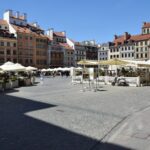
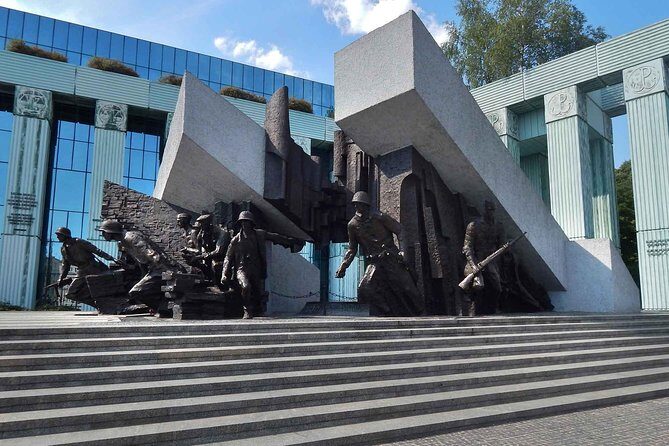
Your final stop focuses on the Warsaw Uprising of 1944—the city’s last attempt to regain independence before the Red Army arrived. After the uprising failed, Nazi forces systematically destroyed much of Warsaw.
Then you finish with what that destruction meant physically and politically: the Soviet army entered the ruins in January 1945, beginning a new era of communist rule.
This closing chapter works because it reframes the emotional arc. You start with occupation and repression, pass through the ghetto, and end at the moment the city tried to fight back—and then suffered for it.
What the guides do that turns facts into a real experience
The biggest difference in tours like this is the human delivery. People often praise guides such as Konrad, Tom, Marcin, Karol, Martin, Lucas, Marek, and Lukas for strong English, flexibility, and clear storytelling.
Here’s what you should look for when you meet your guide:
- They answer questions without rushing you.
- They keep the timeline tight, so you understand how each place connects.
- They adjust the emphasis if you’re more interested in ghetto details, Soviet-era consequences, or the Warsaw Uprising narrative.
This is also why a private format helps. If you want to linger around a preserved ghetto wall section longer, you can usually ask. If you’d rather move faster and just hit the key points, you can do that too.
And yes, the tour can get very moving. The best guides don’t turn it into a dramatic performance. They keep it factual, human, and respectful—then let the sites do the emotional work.
Comfort and practical tips that actually matter
This tour is short, but it’s not passive. You’ll be stepping out for multiple stops, and the subject matter is intense.
Here are the practical points that will help you enjoy it:
- Bring comfortable shoes and dress for walking between memorial areas.
- Expect no modern bus comfort in some vehicles: vintage setup, possible lack of air conditioning, heating available in winter.
- If you’re sensitive to strong history topics, mentally prepare for Holocaust-era persecution details and the Soviet repression chapter.
- If you’re booking with kids, note the tour is for children over 150 cm (with booster seats required under Polish law for younger kids; you need to check availability).
One more tip: keep your schedule flexible afterward. A tour like this tends to make you want to keep reading or re-watching the story with new eyes once you step away.
Should you book Warsaw for WWII Buffs?
Book it if:
- You want a 3-hour route that covers the core WWII story in Warsaw without spending your day planning transport.
- You care about the Warsaw Ghetto beyond the headline-level version—especially preserved wall sections and street-level divisions like Chłodna.
- You like learning from a local guide who can explain what you’re seeing and answer questions in English.
- You’d enjoy traveling in a retro Żuk instead of a standard van.
Skip it or choose a different option if:
- You need guaranteed modern vehicle comfort (like air conditioning) or require specific accessibility accommodations not stated in the details.
- You dislike emotionally intense WWII content. This route includes ghetto persecution and Soviet repression sites, and the tone is not light.
- You want a self-paced experience. This tour is designed for guided interpretation.
If you want a fast, meaningful crash course that respects the real geography of WWII-era Warsaw, this one is a strong pick.
FAQ
How long is the Warsaw WWII private tour with hotel pickup?
The tour is about 3 hours.
Is hotel pickup included?
Yes. Pickup and drop-off are offered within 3 km of the city center. If your hotel/apartment is farther or inaccessible by car, the operator will suggest a closer meeting point.
Is this a private tour?
Yes. It’s a private tour/activity, so only your group participates.
What language is the tour offered in?
The tour is offered in English.
Do I have to pay admission fees for the stops?
Admission tickets are listed as free for the stops included.
Is gratuity included in the price?
No. Tip or gratuity is not included.
What vehicle do you ride in?
You travel by a retro Żuk minibus. These are historic vintage vehicles, so some may not have air conditioning, and some may not have seat belts.
Can children join the tour?
Adults and children over 150 cm can join. For a child under 150 cm, you need to contact the operator in advance to check availability of required seat boosters.
What if my hotel is just outside the pickup area?
If it’s farther than the stated pickup radius or hard to reach, your advisor will suggest the closest and most comfortable meeting point. Note that transfers also count toward the tour time.
Is free cancellation available?
Yes. You can cancel for a full refund up to 24 hours before the experience start time.