REVIEW · WARSAW
Warsaw Highlights of Old & New Town Private Guided Tour
Book on Viator →Operated by Rosotravel - Things to do in Warsaw · Bookable on Viator
Warsaw tells its story in layers. This private tour connects the Old Town rebuilds, the painful WWII memorial stops, and the newer city landmarks into one long, guided walk.
I especially like two things: a licensed guide who can steer you to the right corners and details, and a route that mixes top sights with local-style breaks along the way.
One drawback to plan for is the walking. It’s built from many short stops, and if you want to sit down often or you tire quickly, you may want a shorter version of the tour.
In This Review
- Key things that make this tour worth your time
- Why Warsaw’s Old and New Town works best on foot
- Starting at Museum of Warsaw and finishing at Plac Marszałka Jozefa Piłsudskiego
- Palace of Culture to Hala Koszyki: the quick hit of “real Warsaw” vibe
- The Warsaw Ghetto and its wall fragment: what to watch for on this part
- Royal Philharmonic, Old Town, and the core squares that anchor everything
- St. Anne’s bell tower and the view check you’ll actually remember
- Krakowskie Przedmiescie: the Road of Kings feel, without the tour bus chaos
- WWII monuments and the small statues that hit harder than you expect
- Barbakan, churches, and the Old Town details you’d otherwise miss
- Modern Warsaw in the middle: Vistula, fountains, science, and universities
- Chopin and classical culture: Holy Cross Church and the “sound” bench
- Opera, galleries, and statues: how the route keeps you from feeling like you’re trapped in monuments
- Curie, Copernicus, and the “science” thread in Warsaw’s public spaces
- Old Town side stops: New Town Square, Carmelite Church, and more royal street energy
- How long you’ll spend at each stop (and where to make smart choices)
- Price and value: what $137.33 is really buying you
- Who should book this tour, and who should think twice
- Should you book the Warsaw Highlights of Old & New Town private tour?
- FAQ
- How long is the Warsaw Highlights of Old & New Town private guided tour?
- What is the price per person?
- Is the tour private?
- Where does the tour start and end?
- Do you offer hotel pickup?
- Is the Royal Castle entry included?
- What language is the tour offered in?
- Can I cancel for a full refund?
Key things that make this tour worth your time
- A private guide means you can ask questions and adjust what matters to you, not just follow a script.
- Old Town highlights plus official memorials gives you context you’d miss if you only self-walk the highlights.
- Royal Castle can be included in the 6-hours option, so you can go beyond the exterior.
- Classic Warsaw culture stops pop up naturally, from the National Philharmonic to major churches.
- Modern Warsaw moments show up too, like the Vistula waterfront and the Copernicus Science Centre area.
Why Warsaw’s Old and New Town works best on foot
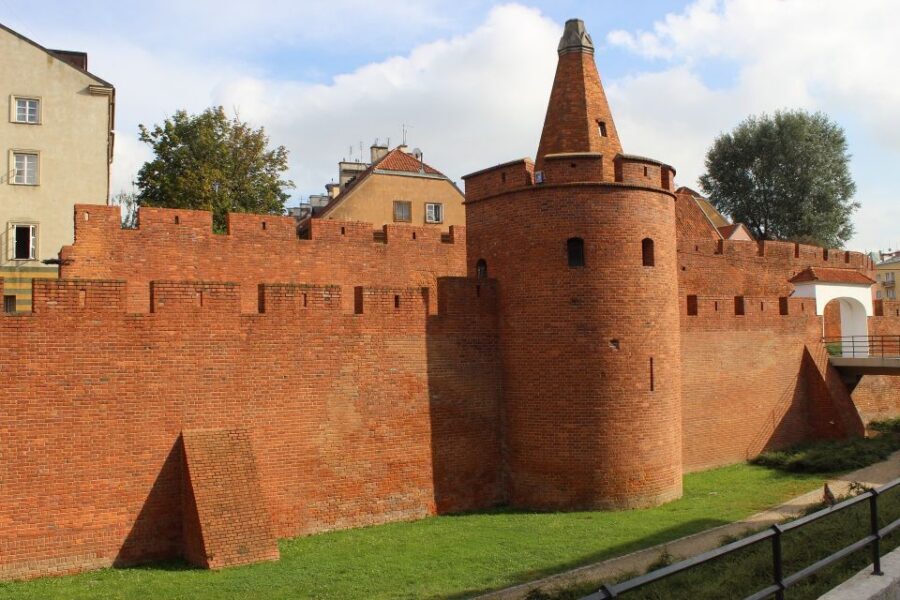
Warsaw can feel like two cities in one day. You start with grand landmarks and city-grid streets, then you peel back into reconstructed Old Town lanes, royal squares, and monuments that explain why this place matters.
I like that the guide doesn’t just list sights. You get a walking route where each stop answers the next one, so you leave with a clearer picture of how Warsaw has been shaped by politics, faith, and war.
And because it’s private, you can go slower near the emotional memorials and faster at viewpoints and photo stops. That matters when your group has different energy levels.
You can also read our reviews of more guided tours in Warsaw


Starting at Museum of Warsaw and finishing at Plac Marszałka Jozefa Piłsudskiego
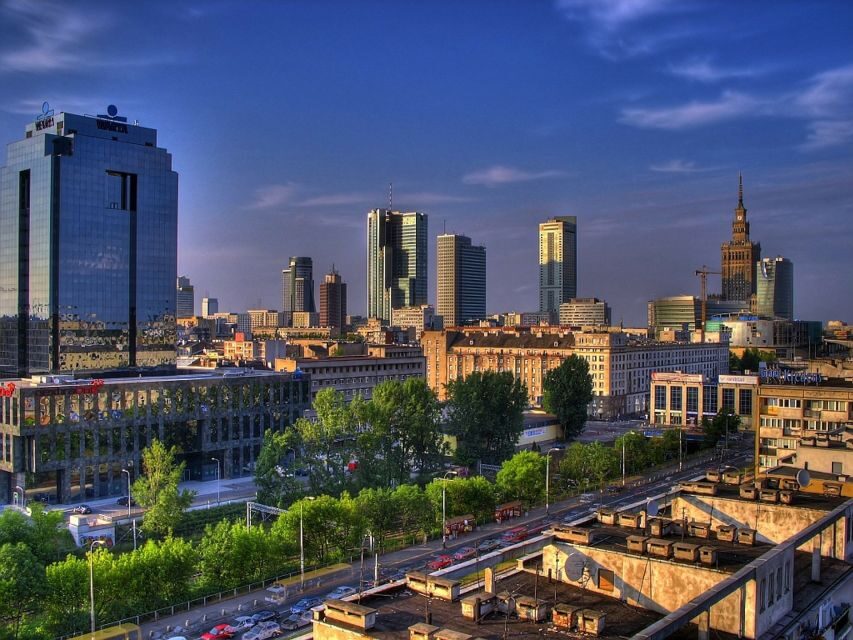
The tour starts at Museum of Warsaw, Rynek Starego Miasta 42 and ends at Plac Marszałka Józefa Piłsudskiego. That means you’re not just looping inside Old Town—you’re cutting across parts of the center, so the day has momentum.
If you’re getting yourself there, give yourself a little buffer time. One shared theme from real-world experience is that the meeting point can be tricky to find unless you’re already oriented to the Old Town streets.
Also note the pickup rule: pickup is only offered from Warsaw Old Town hotels. If you’re staying outside that area, arrange your own way to the start point.
Palace of Culture to Hala Koszyki: the quick hit of “real Warsaw” vibe
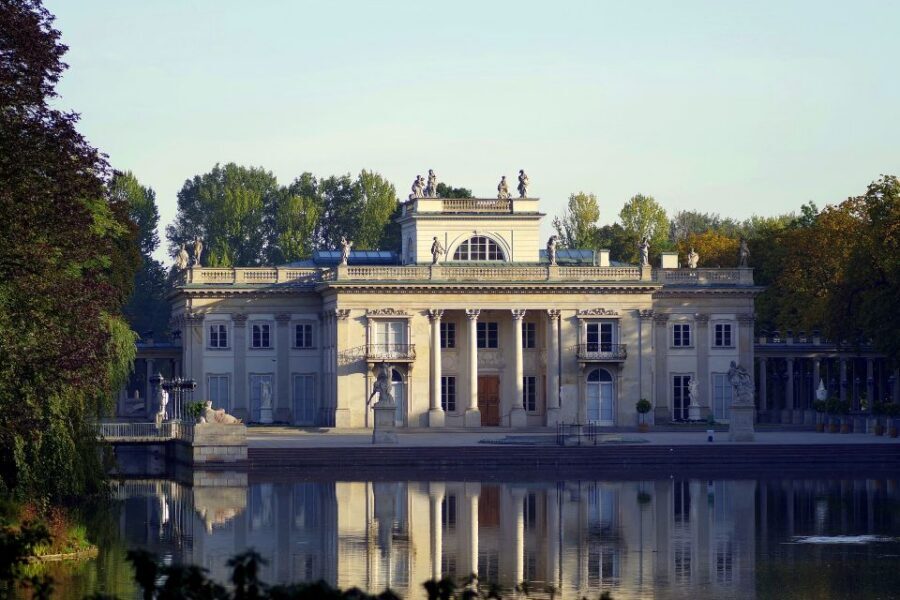
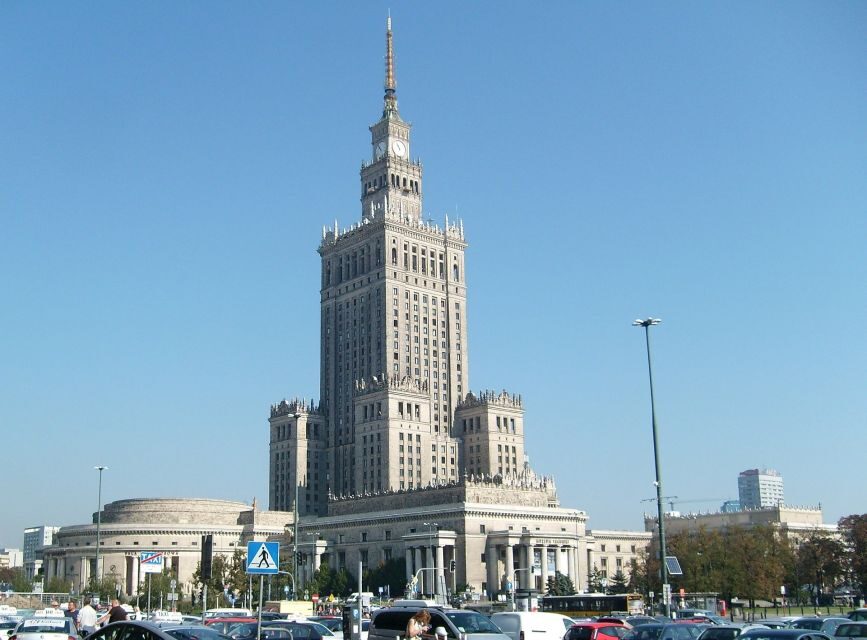
You begin with a landmark that instantly tells you the scale of the city. Palace of Culture and Science is Poland’s highest building, and its monumental presence gives you a sense of Warsaw’s grand, Soviet-era skyline style.
Next comes a completely different feeling at Hala Koszyki, a food hall under one roof where you can graze on flavors from around the world. Even if you don’t plan a full meal, it’s a great reset point in the middle of a history-heavy walk.
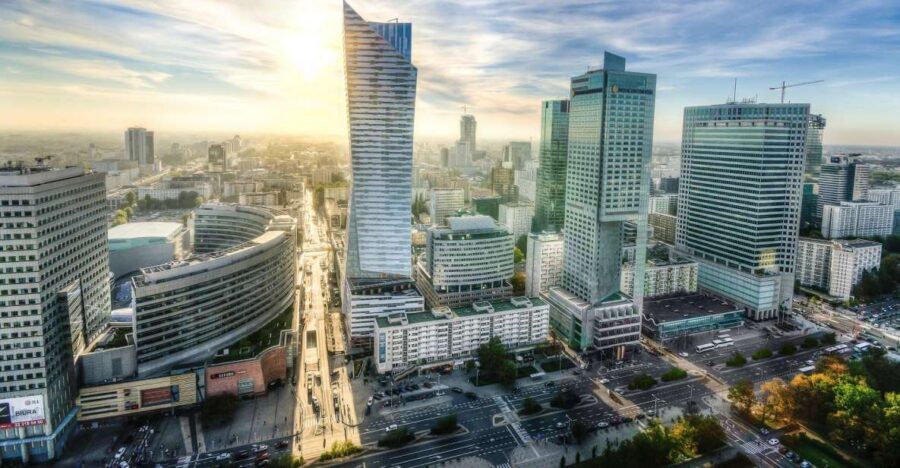
Then you move into “walk-and-breathe” territory with Nowy Swiat, a well-kept long street that connects major attractions and tends to be lined with coffee stops. After that, Zlote Tarasy gives you the other side of the city—big shopping mall architecture, plus that distinctive terrace shape that helps turn a shopping stop into a photo break.
Practical tip: this first stretch is where you can adjust the pace with the guide. If your group wants coffee early, now is the moment.
The Warsaw Ghetto and its wall fragment: what to watch for on this part
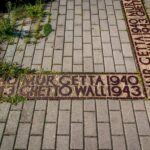
The mood changes fast when you reach the Fragment Of Ghetto Wall. It sits in a neighborhood setting between buildings, so it feels less like a museum object and more like a hidden scar you have to notice.
Then you reach the Warsaw Ghetto, established in late 1940, where more than 450,000 Jews were forced into a small district. This is one of those stops where the value of a guide jumps out—because you need the facts and the context to understand what you’re seeing, not just where you’re standing.
If your group tends to get quiet naturally during memorials, plan for that. This isn’t a “quick photo and go” section—it’s a “listen and absorb” section.
Royal Philharmonic, Old Town, and the core squares that anchor everything
After the ghetto sites, the tour swings back toward art and public life at National Philharmonic. It’s framed as Poland’s pride for classical music, and even a brief look helps you understand Warsaw’s cultural seriousness.
Then you enter the heart of the reconstructed story: Old Town. You’re walking cobblestone Gothic streets and alleys with baroque palaces, churches, and tiered burgher houses—reconstructed after the destruction of WWII. The key is that you’re not looking at “generic pretty streets.” You’re looking at a rebuilt identity.
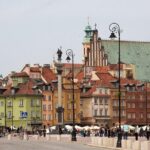
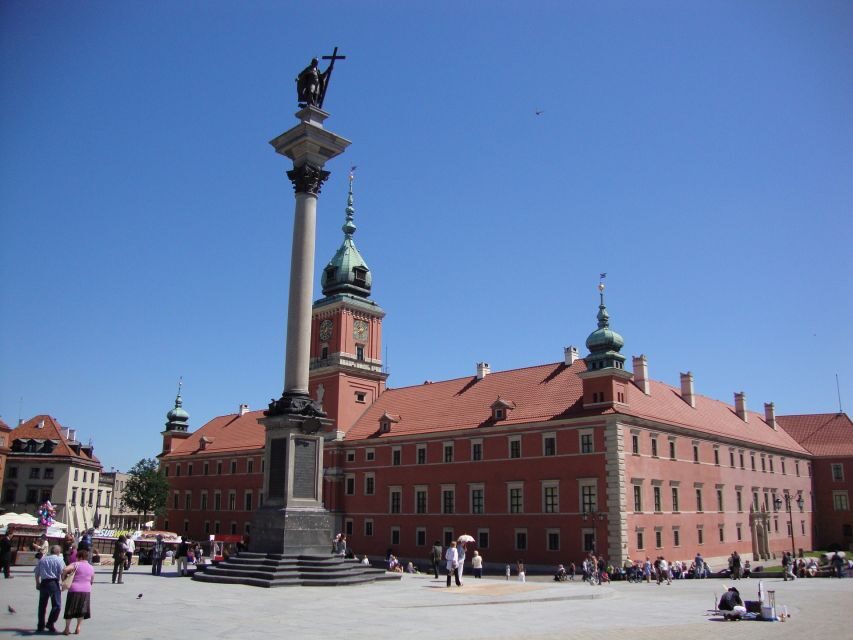
From there, the tour hits Rynek Starego Miasta, a lively square surrounded by 17th- and 18th-century merchant houses with cafes, shops, and top restaurants. Close by you’ll find Castle Square (Plac Zamkowy) and the King Zygmunt III column in the center—small enough to miss if you’re not pointed toward it.
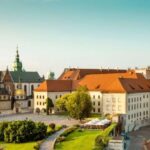
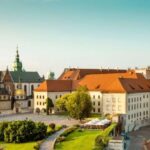
Next is Royal Castle in Warsaw – Museum. This castle served as a central building for the Polish Commonwealth for many centuries, and it was rebuilt after German troops dynamited it after the Warsaw Uprising. In the 6-hours version, you can have tickets to enter, which is the best way to go beyond the exterior.
If you’re picking between shorter and longer versions, this is the deciding point. Walking the square is nice; entering the castle is the “now I get it” moment.
You can also read our reviews of more private tours in Warsaw



St. Anne’s bell tower and the view check you’ll actually remember
Two of the most satisfying stops come as vertical perspective. Observation Terrace On The Bell Tower Of St. Anne’s Church is worth it because you climb for close-up views of Old Town and city-center distance.
Then you also have St. Anne’s Church (Kosciol Swietego Anny) itself. The church is described as having gorgeous structure and altars, with peaceful vibes inside, and there’s the option to enter on request.
What I’d do if you’re time-tight: prioritize the bell tower view first. It helps you “lock in” where you are spatially, so later squares and streets make more sense.
Krakowskie Przedmiescie: the Road of Kings feel, without the tour bus chaos
Next up is Krakowskie Przedmiescie, described as the Road of Kings and lined with old buildings. It stretches about 2.5 miles, so on a guided walk it works as a long, scenic spine that holds the center together.
This segment is also where you can spot how Warsaw blends serious architecture with pedestrian-friendly streets. You’ll likely want your guide to point out what to look at beyond the obvious façades.
A few steps away, Teatr Narodowy adds another “big Warsaw” moment. Even just viewing it from outside, by day or at night when lit up, you get a sense of scale that matches the capital-city feel.
WWII monuments and the small statues that hit harder than you expect
You’ll pass major memory markers like Warsaw Uprising Monument, described as one of the most moving in Warsaw, with architecture showing effort, strength, and sacrifice. Then the route continues with Pomnik Bohaterow Getta, positioned near the Museum of Jewish History, framed as a powerful monument for Polish Jews and persecution during WWII.
A little later, Monument to the Fallen and Murdered in the East commemorates the fate of 1.5 to 2 million Poles sent by the Soviet Union to labor camps. That’s a stark reminder that Warsaw’s WWII story isn’t only about one front.
Then there’s Statue of the Little Insurgent—a bronze statue specifically for children who lost their lives in the Warsaw Rising. It’s small, but that scale is part of why it lands.
And you finish this memory thread with Monument to the Heroes of Warsaw, sometimes called the Nike of Warsaw. It’s large and meant for impact, so expect your guide to set the tone before you reach it.
Practical advice: if your group is emotionally sensitive, tell your guide early. You can ask for a slightly slower pace here, or for a brief moment to regroup before moving on.
Barbakan, churches, and the Old Town details you’d otherwise miss
Old Town walls and gate defenses are represented by Warsaw Barbican (Barbakan Warszawski), a 16th-century fortress part of the medieval fortifications near the Novomejska Gate. It’s the kind of stop that makes the city feel like it had a real defensive logic, not only a pretty postcard look.
Next comes Statuary and legends. The Wishing Bell is a 17th-century bronze bell in a courtyard—small, but memorable. Warsaw Mermaid sits in a square and has a hidden legend attached to it, which is exactly the kind of detail a guide can explain in a satisfying way without turning it into a trivia contest.
For the “look up” side of Old Town, add Church of Jesuits (ornate inside) and Archikatedra Sw. Jana Chrzciciela, described as one of the most distinguished churches, originally built in the 13th century and linked to royal coronations.
If you have time for one interior request, pick based on interest:
- If you care about views, do the bell tower.
- If you care about art and ceremony, prioritize one church interior on request.
Also present: Museum of Warsaw (outside only), plus Krasinski Palace as an impressive outside reconstruction. These are “pause-and-notice” stops that help you understand how Warsaw rebuilds and repurposes historic spaces.
Modern Warsaw in the middle: Vistula, fountains, science, and universities
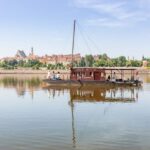
The tour expands beyond Old Town to show what Warsaw is becoming. Vistula waterfront is described as developing quickly, with new boulevards and waterside pubs creating a more laid-back atmosphere.
Then you reach Copernicus Science Centre. The tour notes it can be seen from outside, where the building itself stands out. If you like science architecture, this is your breather from solemn monuments.
You can also look for the quieter side at University of Warsaw Library. The rooftop garden is described as a peaceful break with great architecture, available to see on request.
For a visual “stop-the-walk” moment, check Multimedia Fountain Park, where music and light combine with fountains. Even without going deep, it’s the kind of place your group will remember because it feels different from everything else on the route.
Then the tour returns to the university area with University of Warsaw itself, described as the largest in Poland and known for decorated buildings, gardens, and balconies. It’s a strong way to get a sense of the city’s intellectual energy.
Chopin and classical culture: Holy Cross Church and the “sound” bench
This part of the day is built around music landmarks. Holy Cross Church (Kosciol Swietego Krzyza) is described as housing the heart of Chopin, with a rich decoration interior and an original entrance piece that survived bombings. That combination—cultural legend plus wartime survival—gives it serious weight.
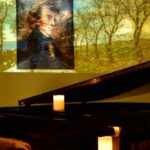
Not far away, you’ll also see Chopin’s Bench, described as using multimedia to present Chopin’s music. It’s an innovative way to connect music to place without needing a formal concert ticket.
Then there’s Teatr Wielki – Polish National Opera, framed as Poland’s leading opera, ballet, and concert venue. Even from the outside, it’s impressive enough to make you want to find out what’s playing.
And earlier, you already saw National Philharmonic, so by the time you reach the bench, the theme is fully formed: Warsaw didn’t just rebuild buildings—it rebuilt cultural life too.
Opera, galleries, and statues: how the route keeps you from feeling like you’re trapped in monuments
Between the solemn stops, the tour includes city-life punctuation. Zacheta Gallery (Galeria Zacheta) is described as a white building that’s just pure beauty outside, and it’s a good pause if your legs are getting stiff.
Adam Mickiewicz Monument gives you a classic “poet as architecture” moment: impressive decorations, steps, and surrounding sculptures. Nearby, Monument of Nicolaus Copernicus adds another major figure in a square, with the tour describing the landmark qualities clearly.
For a government-and-history look, you’ll reach Palac Prezydencki, a neo-classic building where the Polish president resides, heavily guarded, and described as worth seeing for exterior and surroundings.
Then there’s Church of St. Joseph of the Visitationists, said to have started as a wooden chapel and was rebuilt after a fire, with interior decor described as plain and austere. If you like quiet, simple interiors, it can be a good contrast to the baroque ones.
Curie, Copernicus, and the “science” thread in Warsaw’s public spaces
The route includes a named science figure in Muzeum Marii Sklodowskiej-Curie. The focus here is on exterior viewing, and the museum is framed around her life, work, and Nobel prizes, including her role as a pioneer in radioactivity.
Right after, the Monument of Nicolaus Copernicus reinforces the theme of Polish scientific legacy in public space. This pairing works well because it moves from museum storytelling to “stand-and-look” landmark storytelling.
It also helps the day feel balanced. You’re not only absorbing political tragedy and royal nostalgia; you’re seeing how Warsaw celebrates discovery and study.
Old Town side stops: New Town Square, Carmelite Church, and more royal street energy
Back in the Old Town area, you’ll reach New Town Square, created to celebrate John III Sobieski’s victory over the Turks in 1683. The square is described as quiet and open, with Renaissance architecture and a baroque church nearby.
Next is Carmelite Church – Our Lady of the Assumption, described as baroque and next to the presidential palace, with double pillars and grand stone lampions. It’s framed as particularly worth visiting.
Then you have Plac Marszalka Józefa Pilsudskiego, a large parade square that includes a memorial of the Unknown Soldier. It’s the kind of spot where a guide’s context can make the empty space feel purposeful.
You’ll also pass St. Mary’s Church (Kosciol Najswietszej Marii Panny), noted as one of the oldest buildings and one of the few remaining Gothic examples in the city. If you want a visual change near the Vistula, the description notes a small park with steps down toward the riverbanks.
Finally, the tour ends with neighborhood atmosphere at Grzybowski Square and its surroundings near renovated Prozna Street, offering multiple dining and drinking options.
How long you’ll spend at each stop (and where to make smart choices)
The stated length is 4 to 6 hours. In practice, this route works as a long walking day with frequent short moments—some quick photo stops, some short interior options, and a few longer “listen and absorb” memorial segments.
A helpful feature is that the tour program can be adapted to your preferences. Several stops are marked as possible on request, including interior entries for some churches and viewing options like the bell tower terrace.
If you’re booking the 4-hour version, don’t be surprised if the big entry moments are limited. The Royal Castle ticket is specifically mentioned as included in the 6-hours version, so the longer tour is the one to pick if you want inside time.
Price and value: what $137.33 is really buying you
At $137.33 per person, you’re paying for something you can’t easily replicate on your own: a private, guided narrative that connects Old Town reconstruction, WWII memory sites, major cultural landmarks, and newer Warsaw sights.
If you go solo with a phone and a map, you’ll see plenty of buildings. But you’ll likely miss why certain choices were made—what survived, what was rebuilt, and which monuments point to which chapters of the story.
This tour also includes real value for first-timers through practical guidance: tips about local restaurants, patisserie, and pubs, plus a guide who can recommend what to do after. That’s worth money because it saves you the guesswork when you’re hungry and tired.
One caution on value: if a guide’s English and organization don’t click, the same route can feel overpriced. The named guides I saw mentioned in real-world experience include Natalia, Ewa, Igor, Barbara, and Grace—many people praised strong explanations and good engagement. You should still treat this as a guide-dependent tour, and plan your expectations for walking and spacing.
Who should book this tour, and who should think twice
This is a great fit if you:
- Want a first-or-second-day Warsaw overview that connects Old Town with the WWII and music landmarks
- Like asking questions and getting restaurant guidance
- Prefer private walking to a big-group bus shuffle
This is a weaker fit if you:
- Need long seated breaks every hour
- Find meeting points difficult and hate arriving early to orientation
- Need highly polished spoken communication and don’t want any risk of language mismatch
If any of those apply, talk to the operator at booking about your needs, and consider choosing the version that matches your stamina.
Should you book the Warsaw Highlights of Old & New Town private tour?
If you want to understand Warsaw instead of just scanning it, this tour is a strong choice. The route is built around meaning—Old Town reconstruction, ghetto and uprising memorials, and the city’s music and science landmarks all placed so you can connect the dots.
I’d book it if you’re comfortable walking for a few hours and you want a guide to steer you through the best-known highlights plus the “wait, what is that?” details like the Wishing Bell and the Mermaid legend.
Skip it or adjust expectations if you’re time-tight, mobility-limited, or you’d rather self-explore at your own rhythm. Warsaw rewards both styles—but this one is specifically for people who want a guided storyline.
FAQ
How long is the Warsaw Highlights of Old & New Town private guided tour?
The tour runs about 4 to 6 hours.
What is the price per person?
The price is listed as $137.33 per person.
Is the tour private?
Yes. It’s described as a private tour/activity, with only your group participating.
Where does the tour start and end?
It starts at Museum of Warsaw, Rynek Starego Miasta 42, 00-272 Warszawa, Poland, and ends at plac Marszałka Józefa Piłsudskiego, Warszawa.
Do you offer hotel pickup?
Pickup is offered only for hotels in Warsaw Old Town. Pickup is not offered for hotels outside Warsaw Old Town.
Is the Royal Castle entry included?
Tickets to entry the Royal Castle are included in the 6-hours version.
What language is the tour offered in?
The tour is offered in English.
Can I cancel for a full refund?
Yes. Free cancellation is available if you cancel up to 24 hours in advance for a full refund.