REVIEW · KRAKOW
From Krakow: Auschwitz-Birkenau Guided Tour & Hotel Pickup
Book on GetYourGuide →Operated by Royal Cracow · Bookable on GetYourGuide
Auschwitz-Birkenau is heavy, but this tour keeps it organized. I like the hotel pickup and drop-off around Krakow, and I also like that you get licensed guidance at both sites. One drawback to plan for: the day is long, walking is involved, and the subject matter is emotionally intense.
This is a straightforward, bus-based outing with air-conditioned transport and timed guided sections at Auschwitz I and Auschwitz II-Birkenau. The structure matters here: you’re not left to figure things out, and you get help reading what you’re looking at—especially the famous gate marking Nazi deception, plus barracks, gas chambers, and museum objects tied to individual victims.
If you want a low-stress first visit, this setup is strong. If you’re looking for a relaxed, “light” day trip or you need accessibility options, you’ll want to consider something else.
In This Review
- Key things I’d focus on before you go
- Hotel pickup from Krakow: the day starts when you’re ready
- Getting tickets and skipping the wait: what it means for your schedule
- Auschwitz I: gate symbolism, museum rooms, and why the details hit harder
- The short break: 10 minutes to reset your brain
- Auschwitz II–Birkenau: scale, platforms, and the horror of logistics
- Your guide is the real difference: Nicholas, Ziggy, and respectful commentary
- Timing and total duration: why you should plan the whole day
- Price and value: how $21 can make sense (and when it might not)
- Drop-off locations: back to your comfort zone in Krakow
- What to bring (and what to leave at home)
- Who this tour fits best
- Should you book this Auschwitz-Birkenau guided tour from Krakow?
- FAQ
- How long is the Auschwitz-Birkenau guided tour from Krakow?
- Do I get pickup from my hotel in Krakow?
- Is the admission ticket included?
- Will I have to wait in line for tickets?
- How much guided time do I get inside the camps?
- What languages are the live guides offered in?
- What time do tours start from Krakow?
- What documents should I bring?
- Are there rules on photos, bags, or other items?
Key things I’d focus on before you go
- Pickup and returns across Krakow: get picked up and dropped off at many central hotel/meeting points, which saves you planning stress
- Two guided zones, not just one: Auschwitz I plus Auschwitz II-Birkenau, so you see how the system evolved
- Skip-the-line entry (most options): designed to cut waiting, though exceptions and ticket availability can affect it
- Respectful, structured time: tours run under the memorial’s visitor-service timing, not a loose schedule
- Real artifacts, not just explanations: period photos and personal belongings help turn facts into human stories
Hotel pickup from Krakow: the day starts when you’re ready
This tour is built around ease. You can choose options with pickup from your hotel or a nearby meeting point, and pickup can be possible from any address in Krakow (depending on what you selected). Either way, you’re not trying to solve trains or buses while your mind is already on a difficult day.
The ride itself is by modern air-conditioned bus/coach, and the travel time is about 1.5 hours each way. That matters because it gives you a buffer to mentally prepare before you walk into the memorial grounds. It also means you get something useful during the journey: the bus guide often adds context so the sites make more sense once you arrive.
One practical detail: the start time can fall anywhere between 5:00 AM and 1:30 PM (and in rare cases earlier). You choose a preferred time, but it’s not guaranteed. The operator communicates the exact start time the day before—so don’t plan anything tight for that evening.
You can also read our reviews of more guided tours in Krakow

Getting tickets and skipping the wait: what it means for your schedule
Auschwitz-Birkenau is popular. So the big question is whether you’re stuck in a long ticket line before your guided time even begins.
This offer includes a skip-the-line entry ticket to the Auschwitz-Birkenau Memorial and Museum for most tour options. There are exceptions—specifically for the Last Minute, Early Morning, and Roundtrip options—where you may need to wait. If online reservation isn’t available, you’ll have to wait in the line on-site, and the waiting time depends on visitor volume.
Here’s the value for you: even with a lower headline price, your time is the scarce resource. If you can avoid a multi-hour queue, you protect your ability to absorb the exhibits and attend both guided segments without rushing.
Auschwitz I: gate symbolism, museum rooms, and why the details hit harder
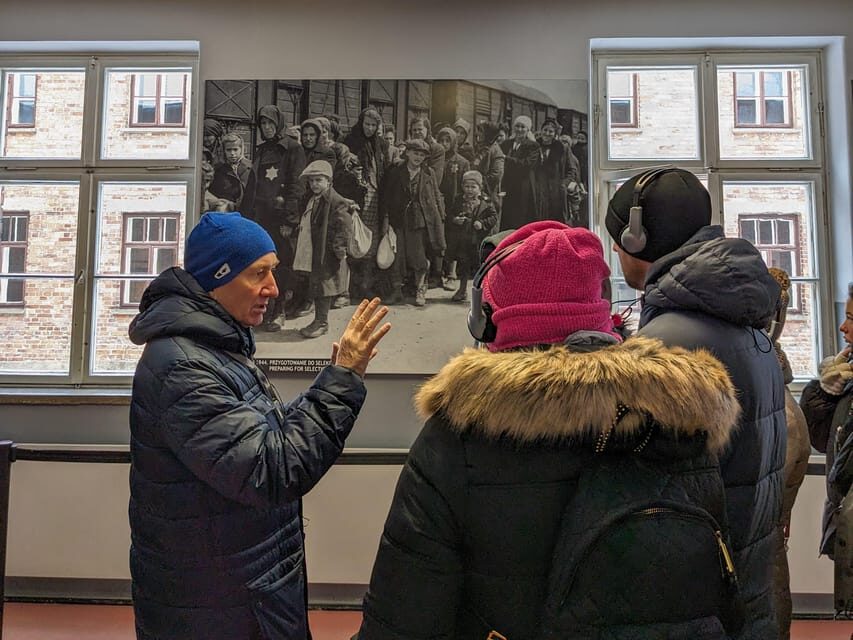
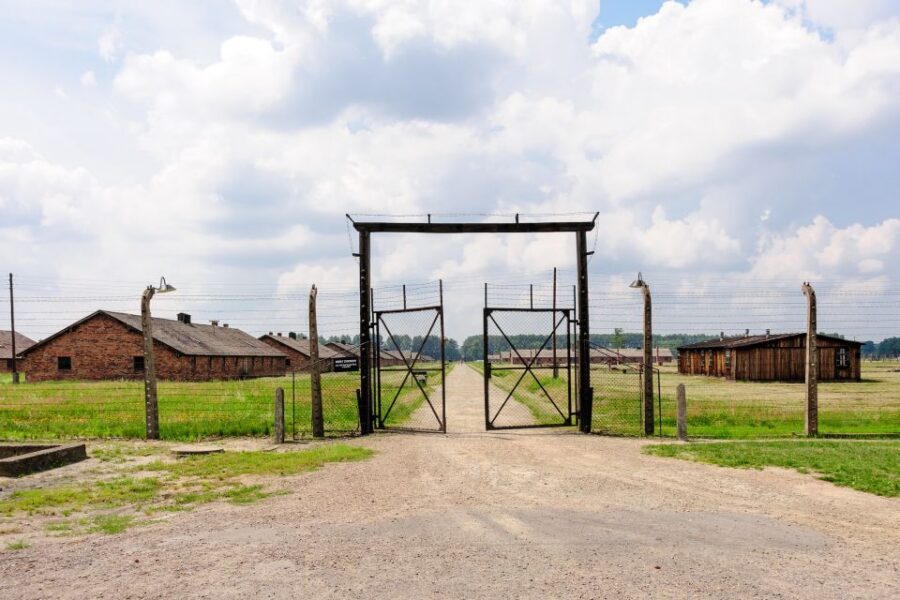
Auschwitz I is where the visit often feels the most immediate. Expect a guided walk through key areas that explain what the camp was, how it functioned, and what the Nazis did there.
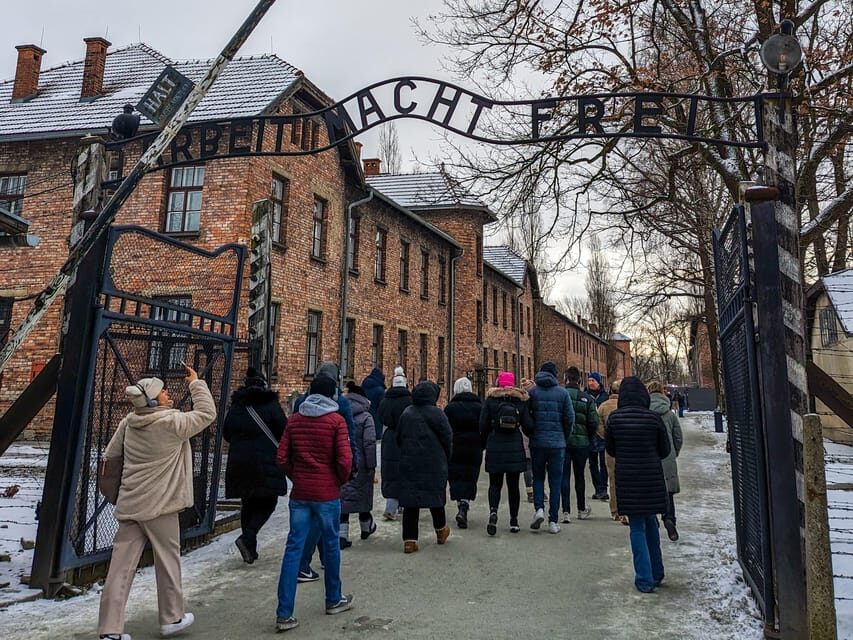
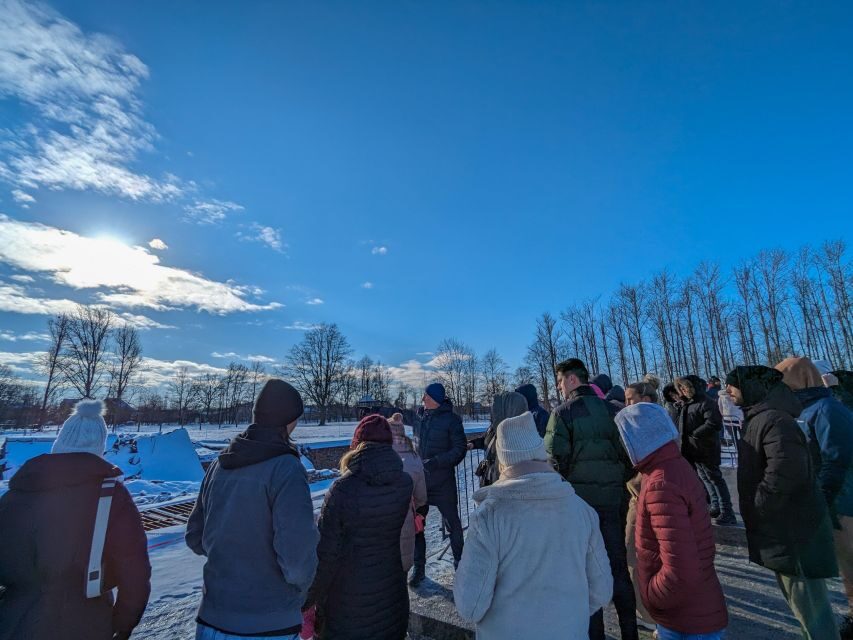
Your guided time at Auschwitz-Birkenau is split across the Auschwitz sites, with Auschwitz I taking about 2 hours. During this section, you’ll see the Arbeit Macht Frei gate (the chilling message placed at the entrance), and you’ll learn how the camp was developed and operated. This part is not just about seeing buildings—it’s about understanding the logic behind the cruelty.
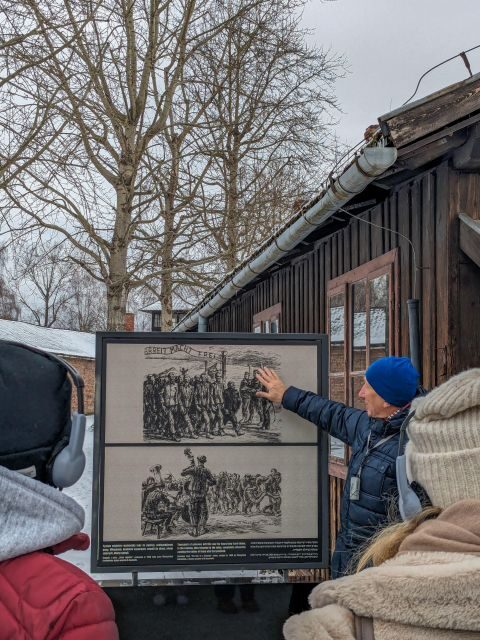
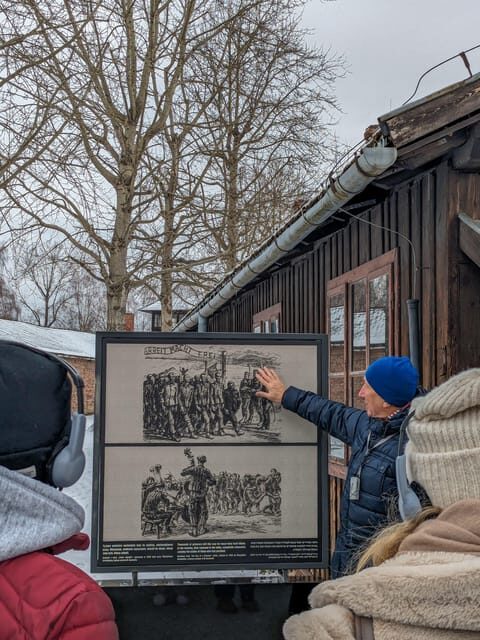
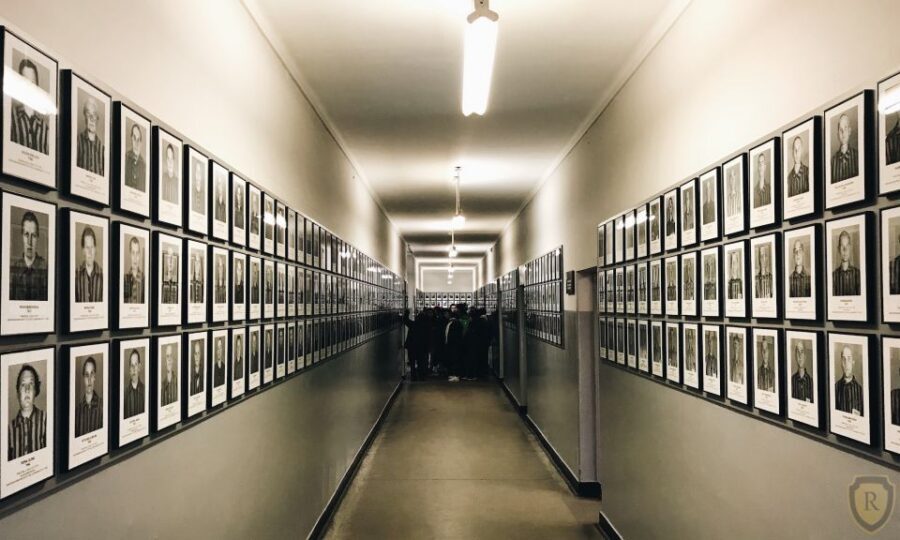
You’ll also spend time in areas with intact structures, including original barracks and sites connected to the camp’s killing system, such as gas chambers (as described in what this tour includes). Then the museum materials do their job: you’ll look at period photos and personal artifacts, which connect the system to individual lives rather than treating victims as numbers.
This is one of the biggest strengths of a guided format here. The memorial is enormous and layered. With a good guide, you’re not only looking—you’re learning what each element was used for and why it’s preserved.
The short break: 10 minutes to reset your brain
Between the Auschwitz I and Auschwitz II-Birkenau portions, there’s a 10-minute break. It’s brief by design. You shouldn’t rely on this as a meal slot, and you definitely shouldn’t use it to chase coffee like it’s a normal sightseeing day.
Use it for what it’s meant for: water, restroom if needed, and a mental reset. Think of it as time to steady yourself before you step into the larger, more open landscape of Birkenau—where the scale can feel even harder to process.
If you add a lunchbox (available as an add-on at checkout), plan around the fact that the day is structured. This is not the kind of outing where you should expect long stops for food.
Auschwitz II–Birkenau: scale, platforms, and the horror of logistics
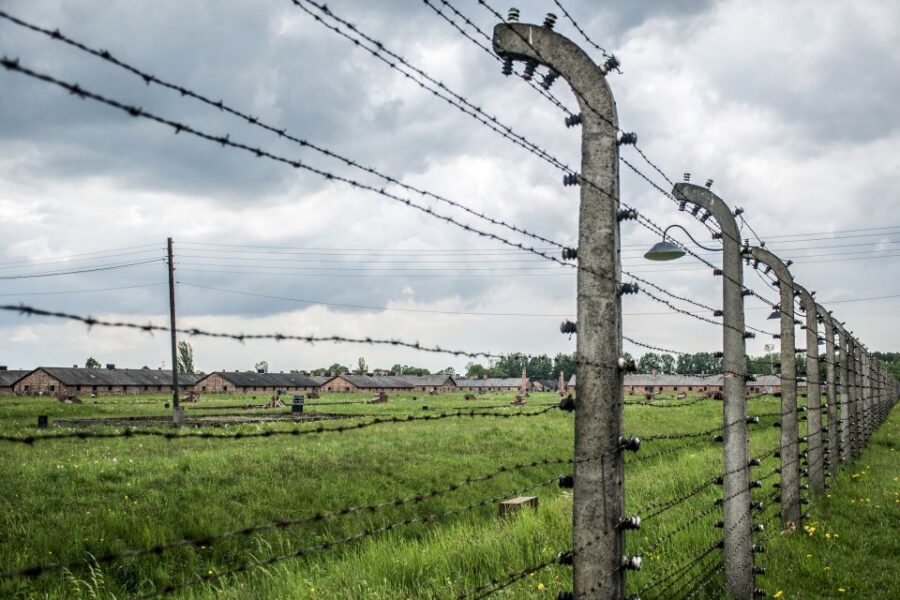
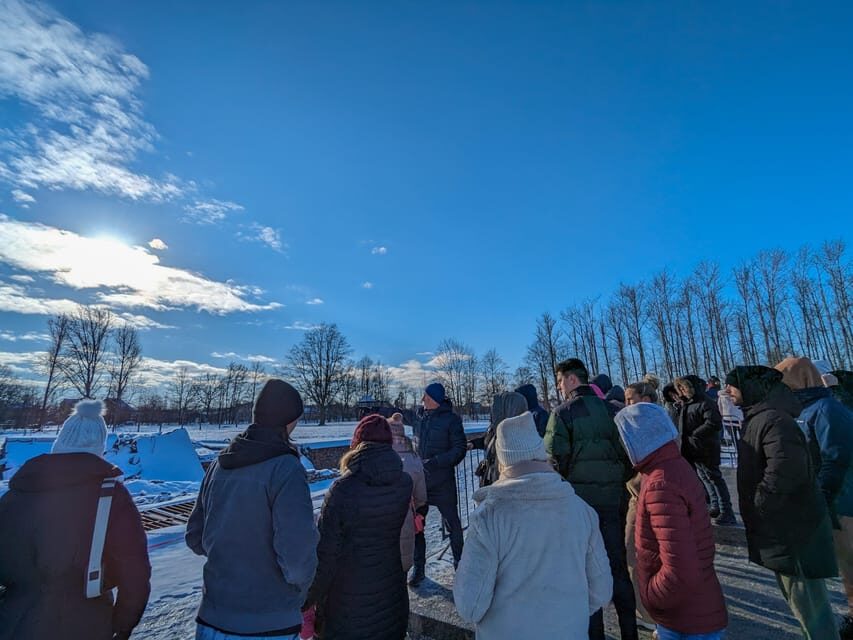
After the quick break, you’ll head to Auschwitz II-Birkenau, usually guided for about 75 minutes. This is the section where many people feel the camp’s size and layout more sharply.
You’ll see platforms and other sites that help explain how the system worked operationally—how people were processed, managed, and controlled, and how the Nazi machinery turned human beings into a workflow. The tour description specifically calls out viewing intact areas and gas chambers as part of the overall experience, so you’re not only hearing generalities.
Why this matters: at Birkenau, you can’t rely on a museum-like “quiet room” mindset. It’s an outdoor space where the distance between key points makes the reality feel different. A guided explanation helps you connect what you see—paths, locations, structures—to what you’re being told about the camp’s operation.
And because the guided time is relatively focused, you won’t wander randomly. That’s a good thing. You’ll get taken through the most meaningful viewpoints in a set order, which helps you avoid missing major elements or getting turned around.


Your guide is the real difference: Nicholas, Ziggy, and respectful commentary
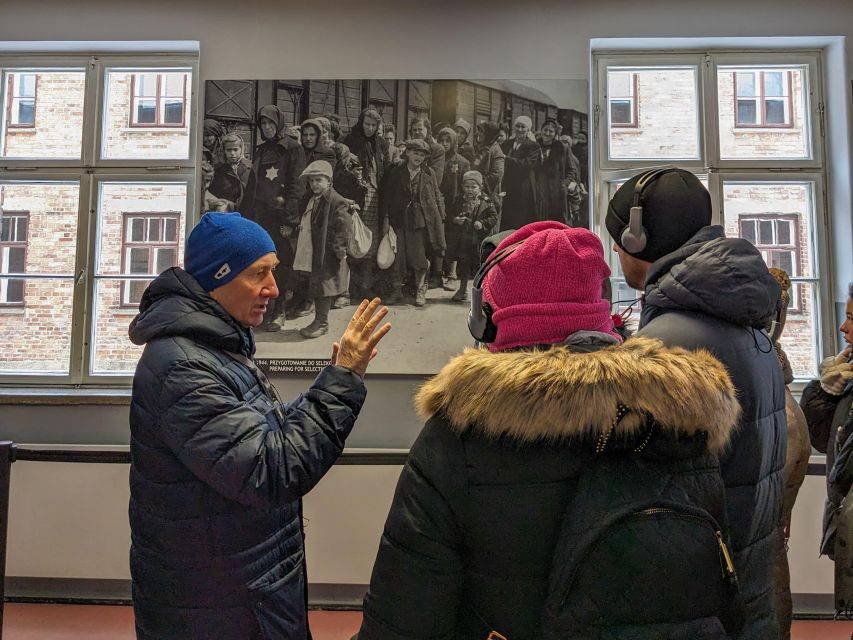
This tour is led by professional licensed guides at Auschwitz and Birkenau. That’s not a small detail—at a place like this, interpretation can make the difference between reading placards and actually understanding what you’re looking at.
In the experience you’re considering, guides can be in several languages: Dutch, Italian, Spanish, English, German, French. So you can usually match your comfort level.
From the examples included with this experience, guides like Nicholas and Ziggy are described as especially strong—friendly, informed, patient with questions, and careful in tone. That style matters: you’re going to have moments where the facts land emotionally, and you don’t want a guide bouncing off to the next topic too fast.
One practical tip: if you have questions, this kind of tour is the right place to ask. The guides here are described as explaining and answering, not just moving the group along.
Timing and total duration: why you should plan the whole day
The tour runs about 7 to 10 hours, depending on the memorial’s visitor-service timing. That means you should treat it like a full-day commitment, not a quick morning excursion.
You’re also dealing with a long, high-demand site schedule. Even if your pickup is smooth and the bus ride is efficient, your time inside the memorial is governed by how the visitor service sets the flow that day.
For you, the takeaway is simple:
- Plan a relaxed morning around pickup.
- Don’t book anything “must be on time” right after you expect to return.
- Wear shoes you can handle for a long day of walking and standing.
Price and value: how $21 can make sense (and when it might not)
At $21 per person, this tour is priced like a budget-friendly entry into a high-impact, high-demand destination. The value isn’t just the ticket—it’s what comes packaged with it: pickup, air-conditioned transport, licensed guides, and a guided visit across both Auschwitz I and Auschwitz II-Birkenau.
Where the value gets even better is if you can avoid queues through the skip-the-line portion. Your ticket isn’t just “included,” it’s included in a way that usually protects your day.
Where you should be careful: the lowest-friction version may depend on the option you choose. Some options can involve waiting in line (especially if you’re booking an option tied to early or last-minute patterns). Also, online ticket availability can change the real-world experience if reservations aren’t possible.
So I’d think of it like this: you’re paying for structure. At this price, structure is what makes the difference.
Drop-off locations: back to your comfort zone in Krakow
The tour includes drop-off at 28 locations around Krakow. That’s a big deal if you’re staying in a neighborhood that isn’t near the most obvious transport hubs.
Some examples listed include major hotel areas like Radisson Blu Hotel Krakow, Sheraton Grand Krakow, and Best Western Plus Krakow Old Town, plus other centrally placed hotels and pickup-style points like PURO Kraków Stare Miasto and Atrium Hotel.
In practice, it means you’re less likely to end the day stranded with long legs and a dead phone battery.
What to bring (and what to leave at home)
This is a place with clear rules, and you’ll feel it if you show up underprepared.
Bring:
- Passport or ID card
- Comfortable shoes
Not allowed:
- Flash photography
- Luggage or large bags
- Intoxication
Two other “know this before you arrive” points:
- Entry can be refused if the name on your booking doesn’t match the name on your ID.
- If online Auschwitz reservation is unavailable, you may wait for tickets (waiting time depends on visitor numbers, and the operator can’t control it).
None of this is meant to be difficult for fun. It’s about moving through security and keeping the experience possible for everyone that day.
Who this tour fits best
This guided trip is best for adults and older teens who want an organized, first-time visit that explains what you’re seeing rather than leaving you to interpret alone.
It’s also described as not suitable for:
- Children under 12
- People with mobility impairments
- Wheelchair users
- Babies under 1
- Hearing-impaired people
If you fall into any of those groups, I’d treat this as a clear signal to look for an alternative format designed for your needs. The memorial experience involves walking and on-site constraints, and the tour’s structure may not work for everyone.
Should you book this Auschwitz-Birkenau guided tour from Krakow?
If you want a straightforward way to get from Krakow to Auschwitz-Birkenau with hotel pickup, air-conditioned transport, skip-line entry (most options), and licensed guidance at both sites, then yes—this is the kind of tour that earns its place on your itinerary.
Book it if:
- You want the day to feel organized, not improvised.
- You care about understanding the sites beyond “seeing buildings.”
- You’d rather spend your mental energy absorbing the material than planning logistics.
Consider a different approach if:
- You’re hoping for a slow-paced day with lots of free time.
- You strongly prefer a different accessibility setup.
- You might not handle emotional content well, even with a sensitive guide.
My decision rule: if you can commit to a full, respectful day and you value guidance, this is good value for reaching both Auschwitz I and Auschwitz II-Birkenau without the headache of transport and ticket juggling.
FAQ
How long is the Auschwitz-Birkenau guided tour from Krakow?
The duration is listed as 7 to 10 hours, and the exact length can vary based on the memorial’s visitor service.
Do I get pickup from my hotel in Krakow?
Pickup is optional. Depending on the option you select, you can be picked up from your hotel/meeting point, and pickup may be possible from any address in Krakow.
Is the admission ticket included?
Yes. The offer includes a skip-the-line entry ticket to the Auschwitz-Birkenau Memorial and Museum for most options.
Will I have to wait in line for tickets?
Usually you skip the line, but Last Minute, Early Morning, and Roundtrip options may not include skip-the-line entry. Also, if online Auschwitz reservation is unavailable, you may have to wait, and the waiting time depends on visitor volume.
How much guided time do I get inside the camps?
You get guided time across the Auschwitz sites. The experience describes about 3.5 hours of guided touring at Auschwitz-Birkenau, with the Auschwitz I and Auschwitz II-Birkenau portions broken up during the day.
What languages are the live guides offered in?
Live tour guides are listed in Dutch, Italian, Spanish, English, German, and French.
What time do tours start from Krakow?
Starting times can be between 5:00 AM and 1:30 PM, and in rare cases even earlier. The exact start time is communicated the day before.
What documents should I bring?
Bring a passport or ID card. Entry may be refused if the name on your booking doesn’t match the name on your ID.
Are there rules on photos, bags, or other items?
Yes. Flash photography is not allowed, and you can’t bring luggage or large bags. Intoxication is also not allowed.