REVIEW · KRAKOW
Kazimierz Jewish Quarter Walking Tour
Book on GetYourGuide →Operated by INTERCRAC Ltd. · Bookable on GetYourGuide
A short walk, big layers of Kraków. The Kazimierz Jewish Quarter Walking Tour takes you through the streets, synagogues, and quieter corners where centuries of faith and everyday life overlap. I especially like the stop at the Old Synagogue (now a museum) and the way the guide turns landmarks into understandable stories. The district feels personal because the route doesn’t just name buildings, it explains what they meant to the people who used them.
The main drawback is timing can be tight. It’s a 90-minute walk, and on at least one occasion the tour ended about 20 minutes early due to another activity, so don’t plan on using the rest of your day for something that depends on an exact finish time. Also, this is weather-proof in the sense that the tour runs in all conditions, so bring comfortable shoes and dress for getting around outdoors.
Kazimierz tour highlights I think you’ll enjoy
- Old Synagogue museum visit that grounds the whole neighborhood in real Jewish history and later memory
- Remuh Synagogue and Cemetery as one of Poland’s key religious stops, with a focused sense of place
- Kupa Synagogue as a window into how different communities lived within Kazimierz
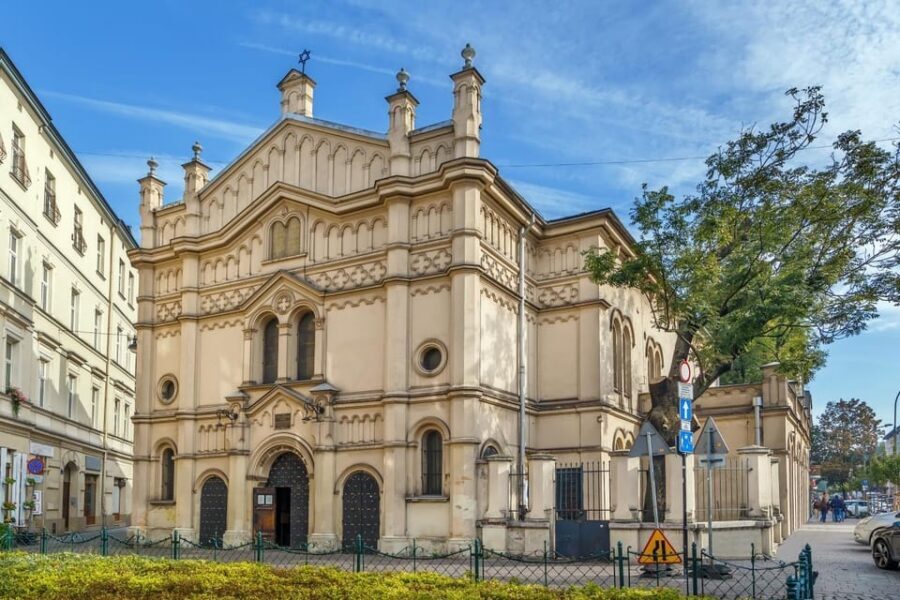
- Tempel Synagogue and its role today as an active cultural center, not just a past artifact
- Plac Nowy ending spot where you can naturally continue with cafés and local life right after the walk
In This Review
- Walking in Kazimierz Starts at the Old Synagogue
- Szeroka Street’s Story Rhythm: Synagogues, Townhouses, and Everyday Meaning
- Remuh Synagogue and Cemetery: A Key Religious Stop in Poland
- Kupa Synagogue: Learning Through Community Differences
- Tempel Synagogue and Placing the Present at Plac Nowy
- Why the Coexistence Story Belongs in Kraków’s Identity
- Guide Quality and Languages: What to Expect from a Licensed Tour
- Price and Value: Is $27 for 90 Minutes Worth It?
- Who This Tour Fits Best (and Who Might Want Something Else)
- Should You Book the Kazimierz Jewish Quarter Walking Tour?
- FAQ
- Where do I meet my guide for the Kazimierz Jewish Quarter Walking Tour?
- How long is the tour?
- How much does the tour cost?
- Is food or drinks included?
- What languages is the tour offered in?
- What should I wear or bring?
- Does the tour run in bad weather?
- What time should I arrive before the tour starts?
- What happens if I arrive late?
- Is there free cancellation?
Walking in Kazimierz Starts at the Old Synagogue
Kazimierz is Kraków’s historic Jewish quarter, and this tour is designed to give you structure right away. You meet on the steps of the Old Synagogue, where your guide holds a sign for the Kazimierz Guided Tour. That matters more than you might think: this isn’t a “wander and hope” kind of walk. The starting point helps you get oriented fast, and from there the neighborhood stays connected instead of feeling like a string of separate sights.
Right off the Szeroka Street area, you’re in the heart of Kazimierz, surrounded by synagogues and townhouses dating roughly to the 16th–18th centuries. Even if you don’t know a single term about Jewish architecture or ritual life, the street layout and building placement give you clues. It helps you understand how a community’s daily rhythms could line up with places for worship, learning, and gathering.
The Old Synagogue stop is the anchor. It’s the oldest preserved synagogue in Poland, and today it functions as a museum of Jewish history. That museum role changes how you’ll experience the building. You’re not only looking at something old—you’re seeing how history is interpreted and preserved. For many people, that’s the difference between a quick photo stop and a genuinely useful understanding of what you’re looking at.
Practical tip: wear shoes you trust. Kazimierz has the kind of streets where your feet do most of the work, and you’ll want them to do it comfortably.
Szeroka Street’s Story Rhythm: Synagogues, Townhouses, and Everyday Meaning
As the walk continues along and around Szeroka Street, the idea is to show you Kazimierz as a working neighborhood, not a theme park. You pass through areas framed by historic townhouses and synagogues, and the guide connects the architectural details to Jewish customs and daily life.
This is where a good guide makes or breaks the tour. The best versions of this walk are guided like conversation: the route gives you the facts, and the guide gives you interpretation. In the feedback I saw, guides were praised for answering lots of questions—sometimes even when the group wandered off the original thread. That’s exactly what you want in a history-heavy walk. You don’t want to feel shut down after one question.
If you enjoy history that has a human pace—how people lived, prayed, and celebrated—this part of the tour clicks. You’ll start to notice how the neighborhood contains religious spaces and social life in close proximity, which is a major theme in Kraków’s broader identity.
Possible consideration: if you’re the type who needs every minute to be predictable, remember this is still a walking tour with an end point at Plac Nowy and a fixed overall duration. The route covers meaningful stops, but it’s not a day-long deep exploration—more like a strong introduction with real landmarks.
You can also read our reviews of more walking tours in Krakow

Remuh Synagogue and Cemetery: A Key Religious Stop in Poland
Next comes Remuh Synagogue and the Cemetery, one of the most important Jewish religious sites in Poland. This stop tends to feel different from the others, because the cemetery setting shifts your attention from buildings-as-history to places-as-continuity. You’re not just learning dates and facts—you’re seeing a sacred landscape where memory is part of the physical space.
Why it matters for you: the tour doesn’t treat Kazimierz like a set of ruins. It frames the neighborhood as a place that carried religious practice through changing times. Remuh gives you that grounding. It also reinforces an important point: synagogues are not only architectural features; they are tied to how a community defines time, ritual, and respect.
At the same time, the tour approach keeps it understandable. You’re learning Jewish customs, traditions, and everyday life, and that context helps you avoid the common mistake of seeing synagogues as just impressive buildings. With the right guidance, you start to read them as functional and meaningful spaces.
If you tend to get overwhelmed by long explanations, don’t worry—the overall pacing is built into the 90-minute structure. This is a walk where you keep moving, but you also stop enough to actually take in what’s in front of you.
Kupa Synagogue: Learning Through Community Differences

The walk also includes Kupa Synagogue, which is described as having once served the poorest residents. That detail is valuable because it prevents Kazimierz from becoming a single-note story about wealth, culture, or elite institutions.
Instead, Kupa gives you a clearer sense of how different social levels existed within the same broader Jewish community. It’s a reminder that religious and communal life didn’t just belong to one class of people. Learning that helps you understand why synagogues and community buildings mattered beyond worship—they were part of support systems and shared belonging.
This stop can change how you interpret the earlier sights. If Old Synagogue gives you foundational history and Remuh gives you religious continuity, Kupa adds social texture. It nudges you to ask the practical question: Who could access what, and how did people find community support?
This is also where a guide who answers questions well can shine. If you’re curious about everyday life—who used which space, how people interacted, why certain areas mattered—the Kupa stop is often where those questions make the most sense.
Tempel Synagogue and Placing the Present at Plac Nowy
Then you reach Tempel Synagogue, now described as an active center of cultural life. This matters because it shifts the story away from only what was lost or preserved. Instead, you’re shown a place where culture continues to move forward.
From a reader’s point of view, that’s a strong way to end the thinking process. Many “heritage tours” accidentally trap you in the past. A stop like Tempel helps you leave Kazimierz understanding that the neighborhood’s identity isn’t frozen in time.
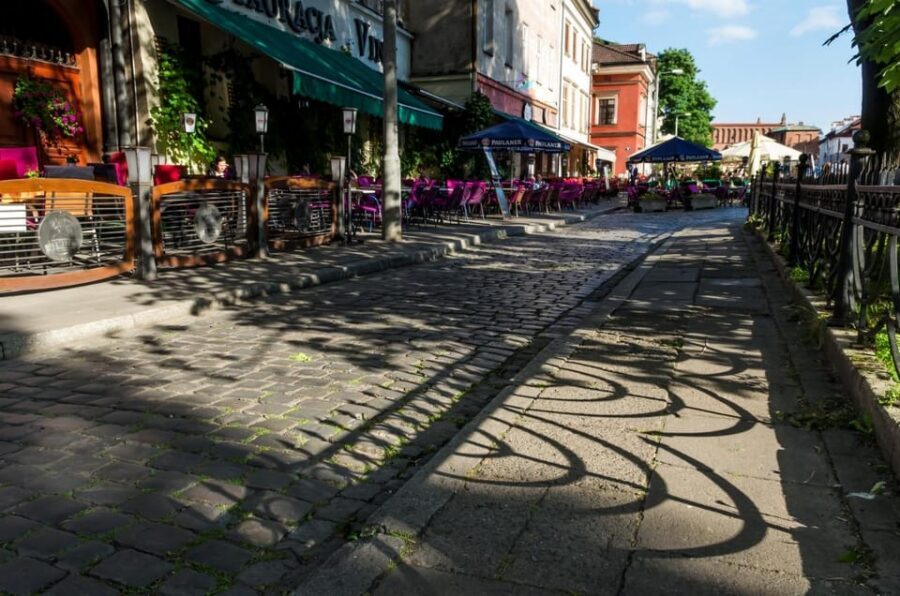
The tour concludes at Plac Nowy, a lively square with cafés, markets, and local art. Since food or drinks aren’t included, Plac Nowy is basically your built-in “go get something now” moment. It’s also a smart way to transition: you’ve been learning and walking for 90 minutes, and then you land in a place where you can slow down, watch daily activity, and decide what you want next.
Practical tip: don’t schedule a super-tight train or bus plan immediately at the end. If your goal is a smooth day, give yourself buffer time—especially because timing has been reported as occasionally finishing a bit early.
Why the Coexistence Story Belongs in Kraków’s Identity
One of the most interesting things about Kazimierz as a district is the idea of cultural overlap and coexistence. This tour frames it as Jewish and Christian cultures developing side by side, helping shape Kraków’s identity.
You might not think of Kraków as “coexistence geography” at first, but the neighborhood layout helps you understand why this matters. When different communities share streets, markets, and civic life, the influence isn’t theoretical—it becomes visible in how buildings are positioned and how communities interacted.
For you, the value here is interpretive. You’re not only collecting facts about Jewish landmarks. You’re also learning a lens for reading Kraków itself. It encourages you to see the city as layered and shared rather than separated into tidy boxes.
And because the tour is guided, you don’t need to be a specialist to grasp the point. The guide’s job is to connect the dots between synagogues, courtyards, and the everyday rhythms of people living in the same urban space.

Guide Quality and Languages: What to Expect from a Licensed Tour
This walk is led by a professional licensed guide, and the language options are generous: English, Spanish, French, German, and Italian. That’s a big deal for a tour like this, where you’ll benefit from nuance. Terms related to customs, community life, and historical context land better when explained cleanly.
From the strongest feedback I saw, the best guides are passionate and responsive. One guide was singled out for incredible storytelling and for answering questions even after the group went off-route in conversation. Another guide was praised for perfect English and a very engaging, enjoyable delivery.
There’s also a note you should take seriously: not every guide experience may match the highest standard. One report described explanations as a bit hesitant and mentioned the tour ended early due to another commitment. That doesn’t automatically mean your tour will be like that, but it’s a fair reminder that guide-to-guide quality can vary on any platform that runs many departures.
What you can do to tilt your odds: arrive on time, show curiosity, and come prepared with at least a couple of questions you truly want answered. Guides often respond best to groups that actively engage.
Price and Value: Is $27 for 90 Minutes Worth It?
At $27 per person for a 90-minute walking tour, the main value is what you’re paying for: a structured route through major landmarks with a licensed guide. In other words, you’re not paying only for access to buildings. You’re paying for interpretation—what the spaces meant and how the stories connect.
Also, the stops are meaningfully distributed. You get:
- the Old Synagogue area and its museum framing
- Remuh Synagogue and Cemetery as a key religious site
- Kupa Synagogue to highlight community differences
- Tempel Synagogue as active cultural life
- a natural landing zone at Plac Nowy afterward
Food isn’t included, so the tour’s cost is focused on guiding and time on foot, not meals. If you treat this as a foundation stop—then continue with your own snacks or drinks nearby—you’ll feel the value more strongly.
For a practical budgeting mindset: plan to spend additional money at Plac Nowy for coffee or a bite. That keeps your total day flexible and matches the tour’s design.
Who This Tour Fits Best (and Who Might Want Something Else)
This tour is a strong match if you:
- want a focused introduction to Kazimierz in a short time
- care about how people lived, prayed, and built community
- like guided walking tours over self-guided wandering
- want to understand Kraków through the Jewish-Christian coexistence lens
It may be less ideal if you:
- need a perfectly timed end to the minute
- prefer very long, slow museum time instead of moving outdoors between stops
- don’t enjoy walking on streets for about 90 minutes
A good middle ground: if you’re doing a few neighborhoods in one day, this tour gives you a clear hit of Kazimierz context without swallowing the entire schedule.
Should You Book the Kazimierz Jewish Quarter Walking Tour?
I’d book this tour if your goal is understanding, not just sightseeing. You’re getting a compact route through major Kazimierz landmarks—Old Synagogue, Remuh Synagogue and Cemetery, Kupa Synagogue, Tempel Synagogue—and you finish at Plac Nowy where real local life continues. The best guide experiences described here focus on storytelling that answers questions and makes the neighborhood feel coherent.
One note before you click confirm: treat the 90 minutes as your guide window, not as a rigid calendar promise. If your day includes an appointment that must be timed exactly, build in buffer.
If you want an efficient, landmark-based introduction to Kraków’s Jewish Quarter with licensed guidance and a clear ending point, this is the kind of tour that earns its place on your itinerary.
FAQ
Where do I meet my guide for the Kazimierz Jewish Quarter Walking Tour?
Meet your guide on the steps of the Old Synagogue. The guide will hold a Kazimierz Guided Tour sign.
How long is the tour?
The tour lasts 90 minutes.
How much does the tour cost?
The price is $27 per person.
Is food or drinks included?
No. Food or drinks are not included.
What languages is the tour offered in?
The tour guide offers live interpretation in English, Spanish, French, German, and Italian.
What should I wear or bring?
Bring comfortable shoes and dress for the weather.
Does the tour run in bad weather?
Yes. The tour takes place as planned in all weather conditions, so plan your clothing accordingly.
What time should I arrive before the tour starts?
Arrive about 10 minutes before the tour begins.
What happens if I arrive late?
Once the group has departed, latecomers will not be able to join and tickets cannot be refunded.
Is there free cancellation?
Yes, you can cancel up to 24 hours in advance for a full refund.