REVIEW · KRAKOW
From Krakow: Wieliczka Salt Mine Tour
Book on GetYourGuide →Operated by Cracow Visit Tours & Transfers · Bookable on GetYourGuide
A trip below ground in Krakow can be more than sightseeing. The Wieliczka Salt Mine is a working mine turned underground art show, and I love the skip-the-line entry plus a live guide who brings the place to life. You’ll also get real moments of surprise, like hearing Chopin in the mine’s acoustics and spotting the chapels carved from salt. The main drawback to plan for is the physical side: you’ll climb a lot of steps—about 800 total—and this is not a good fit for mobility limits.
From the moment you descend to 135 meters, the mine feels like its own city: chambers, statues, old machinery, and carefully staged lighting. I like that the tour is structured (about 3 hours) and covers around 20 chambers, so you don’t just wander in the dark. One consideration: headsets are provided, but if you drift too far from the guide, audio can cut out—so stay close if you want every part of the story.
In This Review
- Key highlights
- Wieliczka Salt Mine from Krakow: what you’re really paying for
- Getting to Wieliczka: transfers vs. going on your own
- The stairs to 135 meters: the part you cannot ignore
- Entering the underground city: chapels, chambers, and salt art
- Mining history and working machinery: what the guide connects for you
- Sound and light: hearing Chopin where the mine was made for steel and salt
- Headsets, pacing, and group management (and why it affects your enjoyment)
- Breaks, shopping, and food reality underground
- What to pack for a 3-hour underground visit
- Getting back to Krakow: exit walking and finding your pickup
- Who should book this Wieliczka tour, and who should reconsider
- Should you book this Wieliczka Salt Mine tour from Krakow?
- FAQ
- How long is the Wieliczka Salt Mine tour from Krakow?
- How deep do you go, and how many steps are there?
- What is the temperature inside the salt mine?
- Does the tour include entry tickets and skip-the-line access?
- What languages are the live guides available in?
- Is food and drinks included?
- Is hotel pickup available from Krakow?
- Is this tour suitable for wheelchair users or people with mobility impairments?
Key highlights
- Skip-the-line entry so you lose less time standing around
- 800 steps and 135 meters down for a truly underground experience
- Salt chapels and sculptures carved into the walls across multiple chambers
- Chopin acoustics and underground lighting for a memorable, sensory stop
- Old mining machinery and extraction history that explains what you’re seeing
- Guides like Eva, Magda, Kuba, and Maria who keep the pacing clear and fun
Wieliczka Salt Mine from Krakow: what you’re really paying for
At around $33 per person, this tour is priced like a mid-range day trip because you’re buying three things: an entry ticket, the guided walkthrough, and a shortcut through the worst of the lines. The big value is the guide. The mine is huge, and without someone steering you, you can miss the meaning behind what you’re looking at—why certain chambers matter, what the machinery was doing, and how the art fits into the mining story.
Also, you get a time-managed visit. The experience runs about 3 hours (listed up to 270 minutes). That may sound short until you remember the walking plus the stairs down to the depths—this is not a quick photo stop.
What you should expect, in plain terms: you’ll spend most of your time underground walking through chamber after chamber. You’ll learn how salt mining worked, then you’ll watch the space shift from industrial to artistic.
You can also read our reviews of more tours and experiences in Krakow.


Getting to Wieliczka: transfers vs. going on your own
This offer can include two-way transfer from Krakow if you select that option, and pickup may be available from your hotel or apartment (depending on your location). The practical point for you: if your accommodation is in Krakow’s Old Town or Kazimierz, pickup may be limited because those areas are restricted traffic zones. In that case, you’ll be told the nearest possible meeting point.
If you choose no transport, you’re responsible for getting yourself to the mine area. Either way, the tour provider is designed to keep the day simple: you arrive, you check in, and you join the guided group.
From a comfort angle, I think the transfer option is worth it if you don’t want to deal with timing and directions. The mine is a long day when you add your own transit, especially if you’re carrying winter layers.
The stairs to 135 meters: the part you cannot ignore
The mine visit is built around descent and movement. You’ll go 800 steps total, with about 350 steps at the beginning as you get down into the mine. You also descend to around 135 meters below ground.
Here’s what that means for you day-of:
- Wear shoes with grip. It’s not a museum-floor situation.
- Expect your legs to do work even if you’re otherwise fit.
- Build a little patience into your morning, because groups move at a steady pace and you’ll have moments where you’re standing in a line-like flow.
One helpful detail: underground temperature is listed as 14–16°C. So even in Polish winter, you’ll likely want warm layers. The cold can hit before you even enter, too, if you arrive early. I’d rather you plan to arrive close to your start time than freeze waiting.
Also note: the tour is not suitable for wheelchair users, people with mobility impairments, or pregnant women. The stairs are central to how the mine experience works.
Entering the underground city: chapels, chambers, and salt art
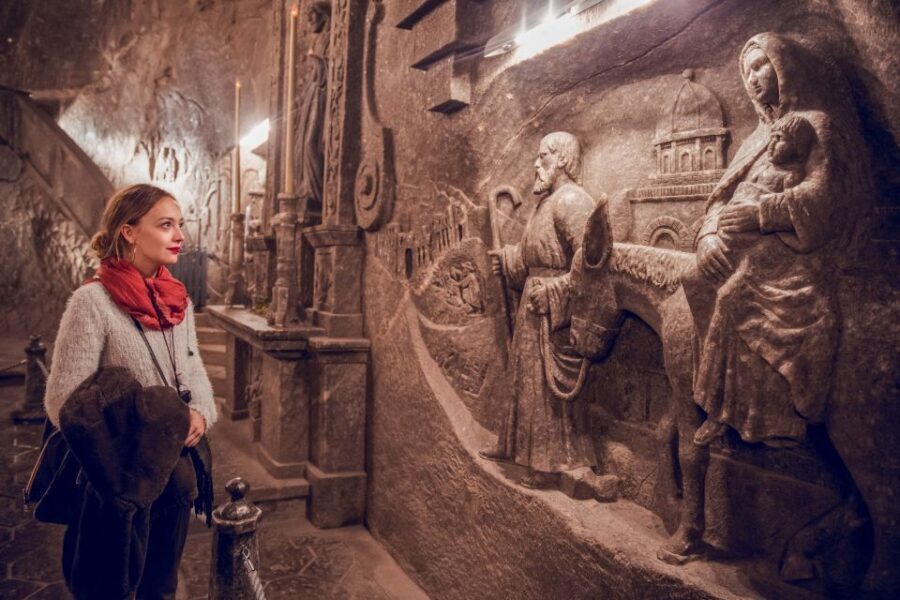
Once you’re in, the mine quickly stops feeling like a single attraction and starts feeling like a place with neighborhoods. The tour covers about 20 chambers, and you’ll walk through corridors that open into larger spaces.
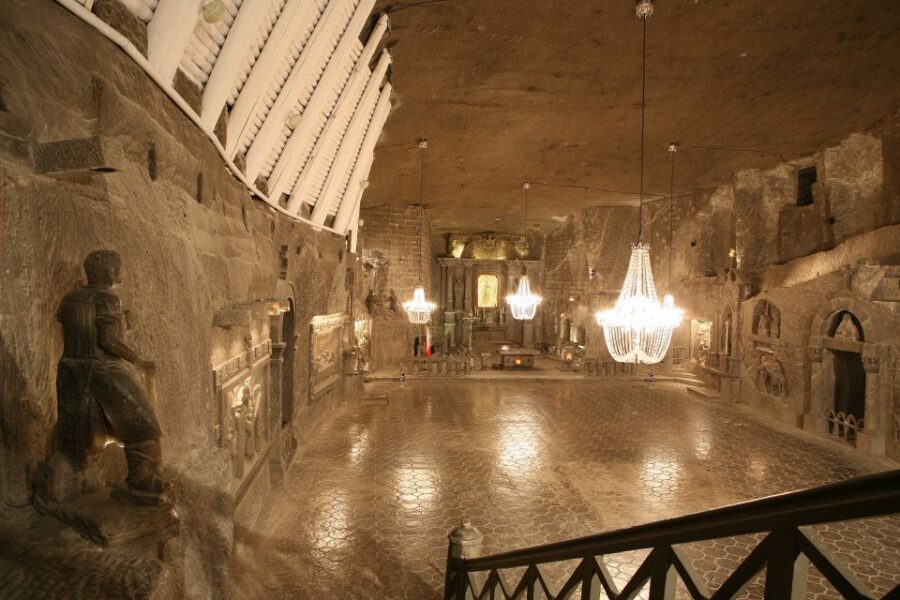
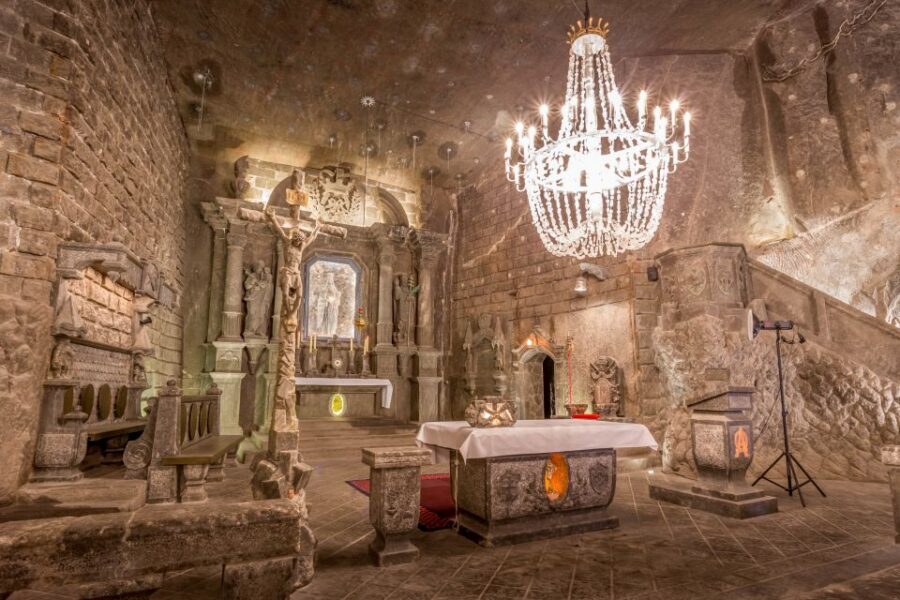
This is where the Wieliczka Salt Mine earns its reputation. The salt sculpting isn’t just decoration—it’s storytelling. You’ll see salt statues and installations integrated into the architecture. You’ll also run into chapels and religious-style spaces made from salt, which is a big reason people come in the first place.
The art and sculpted spaces also change your sense of scale. In wider halls you’ll notice open zones, and some guides point out features like salt formations that look different as light shifts across surfaces. If you’re hoping for dramatic photos, take them early when the lighting and crowds are still manageable, and then accept that some areas will be busier.
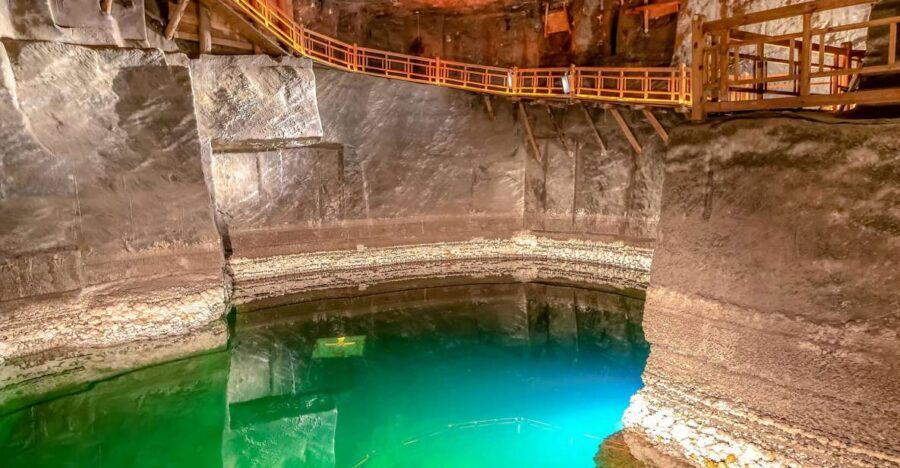
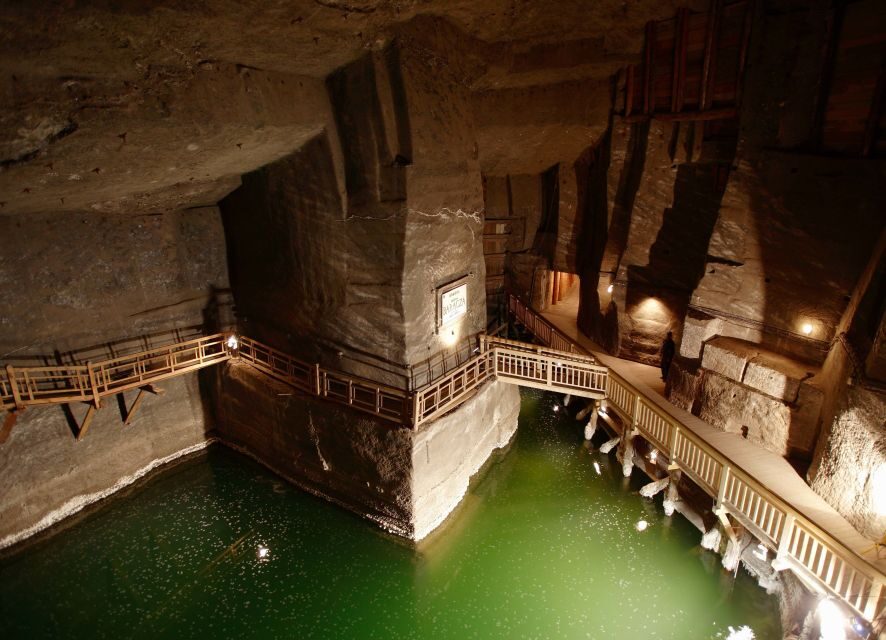
There may also be lakes and open areas inside the complex, depending on where the route goes. Keep your eyes up and forward; it’s easy to focus on the floor when you’re negotiating steps.
Mining history and working machinery: what the guide connects for you
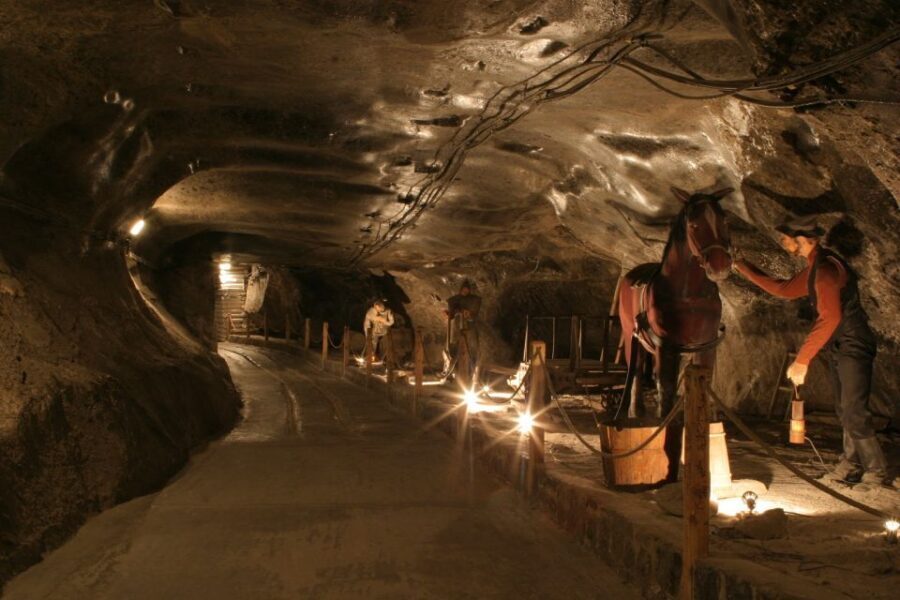
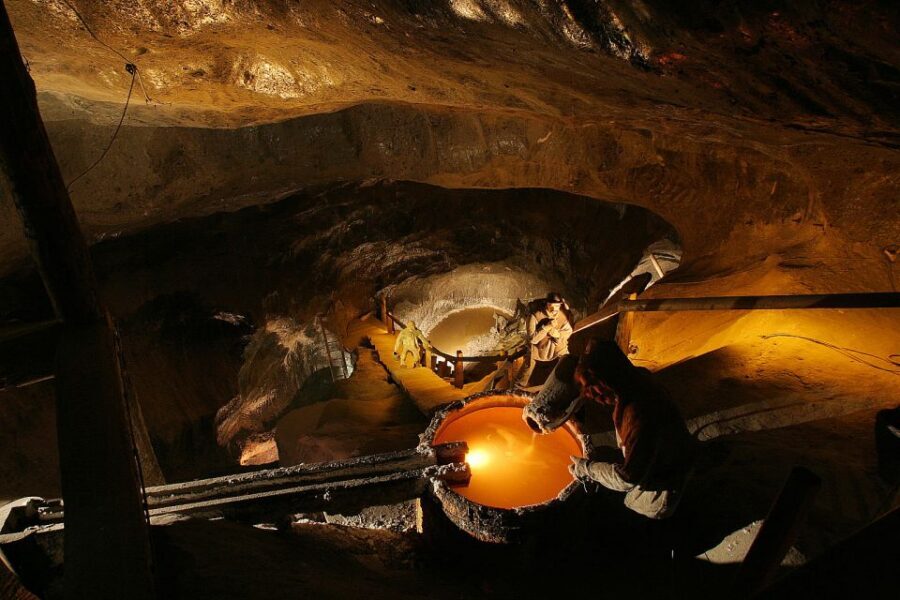
The mine isn’t only art. It’s also an industrial site that became a world-class exhibition space. As you walk, the tour explains how salt was extracted and how the mining operation worked historically.
That history matters because it changes how you read what you’re seeing. When you know why certain tools were there, or how the depth and transport inside the mine influenced production, the chambers feel less like sets and more like an actual production system.
You’ll also see old machinery from the days when this was a functioning salt mine. This is the part that can surprise you, even if you expected a purely artistic tour. The best moments happen when the guide connects a piece of machinery to a chamber you’re standing in, so the “why” clicks.
The mine also includes information about the health properties associated with salt. I’d treat this as educational context rather than a medical claim, but it’s part of the overall tour narrative, and it’s one more layer to what you’re experiencing underground.



Sound and light: hearing Chopin where the mine was made for steel and salt
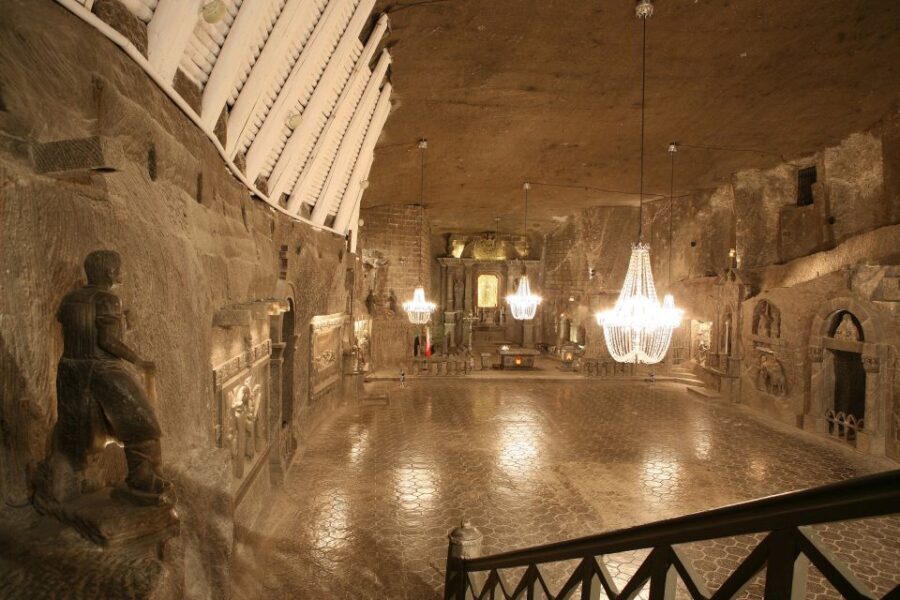
One of the signature moments here is the mine’s acoustic properties. You’ll pause to listen, not just walk past. And then there’s the highlight that many people remember long after: Chopin sounds in this environment, accompanied by a light installation.
This is one of those rare attractions where “how it works” becomes a show. The sound carrying in stone and salt creates a different feel than a normal concert hall. Even if you’re not a music person, it’s a powerful way to understand how the mine’s physical design affects sound.
The lighting is also part of the effect. Underground, the same space looks totally different when light is focused rather than dim and uniform. The result is that chambers that were just “pretty” become atmospheric.
Plan to slow down at those moments. If you’re rushing for photos, you’ll miss the point.
Headsets, pacing, and group management (and why it affects your enjoyment)
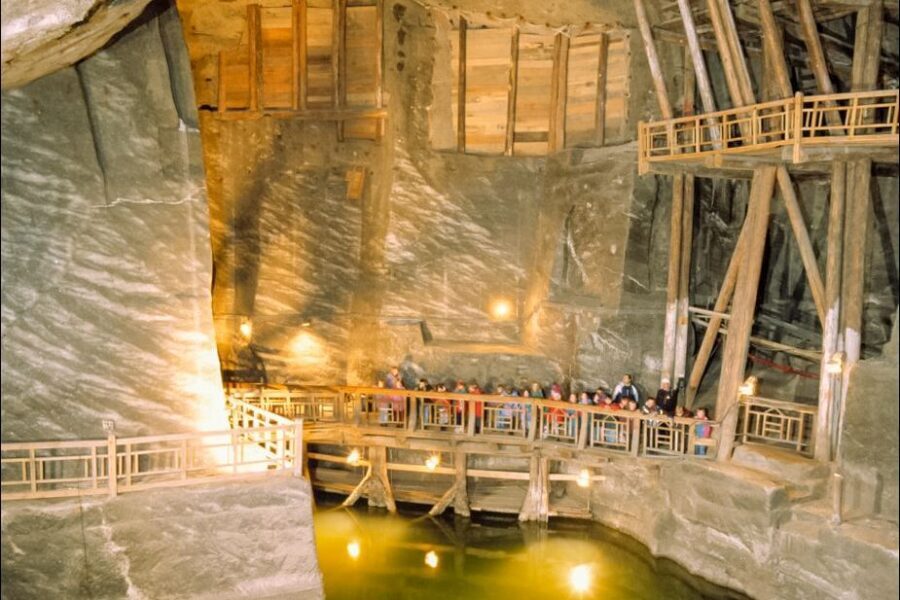
Most tours here provide headsets/earphones, which makes the commentary easier to hear in busy areas. I appreciate this because the mine can be noisy and echoing, and you don’t want to miss the guide’s explanation of chapels, sculptures, or machinery.
That said, there are two practical rules:
- Stay fairly close to the guide. One recurring issue is that audio can cut out if you wander too far, especially with larger groups.
- Keep your receiver positioned well. When people complained about audio, it was usually about signal drop-offs and being at the back.
Guides like Eva, Magda, Kuba, Alexandria, Margaret, Michael, and Maria are specifically named in the experiences you provided, and the common thread is that the best guides manage group pace and attention. If the group is around 30 people, it can still feel controlled—but you need to follow the leader closely.
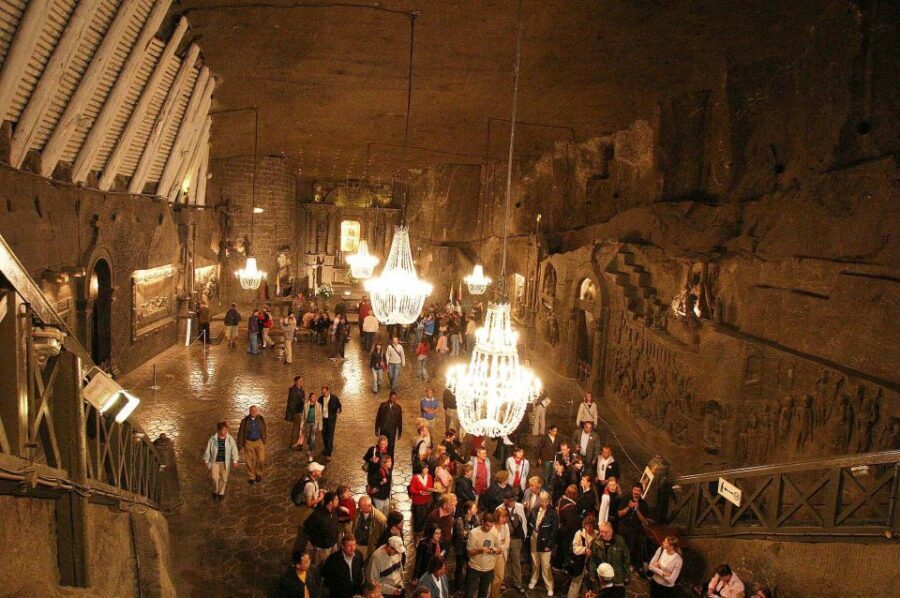
Also be aware that some halls can feel busy and even a bit rushed. That doesn’t mean the tour is bad; it means the mine has crowd flow. If you get impatient with crowds, keep your expectations realistic and focus on the big stops.
Breaks, shopping, and food reality underground
You’re usually underground for a large chunk of the tour, so plan your energy. The listing notes no food or drinks included, and you should bring your own mindset about snacks.
In practice, you may find opportunities to buy small things inside the complex. One review note included items like chocolate salt and salt-based face cream. That’s a fun souvenir angle, and it’s easier to justify spending there than dragging goodies from Krakow.
About breaks: the tour often includes short pauses for the main highlights. Some groups report the timing can feel a bit tight in the largest hall, so you may not get tons of free time at every photo spot. If you want calm, aim to be quick about your shots when you first reach an attraction.
What to pack for a 3-hour underground visit
Your “packing list” here is really about comfort and warmth, not fashion. The basics from the info:
- Comfortable shoes with grip
- Warm clothing (14–16°C underground)
- Comfortable clothes for stairs and long walking
A few extra practical tips based on the real-world flow:
- If you’re wearing a bulky coat, consider layers you can remove. Underground can feel warmer once you’ve started moving.
- Bring a small bag you can handle while walking down stairs.
- If you’re planning photos, keep your phone accessible so you aren’t fumbling while the group is moving.
One more note: pets are not allowed, smoking is not allowed, and making fire is not allowed.
Getting back to Krakow: exit walking and finding your pickup
When the tour ends, you’ll head back toward exit points. The main transport plan depends on what you booked. If you selected transfers, you’ll return to Krakow by vehicle.
One thing to keep in mind from the experience data: after the guided route, there can still be a walk back to exit via lift. That walk can take around 15 minutes, and the exit location may be far from where you entered, so it’s smart to pay attention to directions and don’t assume you’ll instantly see the coach waiting.
If you’re staying near pickup restrictions like Old Town or Kazimierz, you’ll want to confirm the nearest meeting point in advance so you don’t waste time hunting for your ride.
Who should book this Wieliczka tour, and who should reconsider
This is a great match if:
- You want a guided walkthrough that explains salt mining history and connects it to what you’re seeing.
- You like art with a strong physical craft behind it—salt sculptures and chapels are the centerpiece.
- You’re comfortable with a lot of walking and stairs.
You should reconsider if:
- You need wheelchair access or mobility support. The tour is not suitable for wheelchair users and people with mobility impairments.
- You’re pregnant or claustrophobia is a concern. Even with a guide checking in, the underground space and stairs can feel intense.
If you’re traveling solo or as a couple, a group tour can still work well because the guide narration and headset system keep you anchored. Just remember: your best experience comes when you stay with the group, listen, and let the mine’s staging do its job.
Should you book this Wieliczka Salt Mine tour from Krakow?
Yes, if you want a structured, high-impact day trip with skip-the-line entry and the kind of guided commentary that turns salt chambers into a story. The price is reasonable for what you get: ticket access, a live guide in multiple languages, and a route designed to show you the core highlights in about 3 hours.
Book it with extra caution if you know you’ll struggle with stairs. About 800 steps total and 350 early on is the reality. Also, if you’re sensitive to audio issues, plan to stay close to the guide for the best headset clarity.
Finally, if you love the idea of art, sound, and history all in one place, this mine nails that mix. The Chopin moment and the salt-carved spaces are the kind of details that make a Krakow day trip feel like a full experience, not just a stop on a checklist.
FAQ
How long is the Wieliczka Salt Mine tour from Krakow?
The duration is listed as 3 hours, with a range up to 270 minutes depending on the starting time and museum flow.
How deep do you go, and how many steps are there?
You descend to about 135 meters below ground and climb roughly 800 steps total, including about 350 steps at the beginning when you go down.
What is the temperature inside the salt mine?
The temperature underground is listed as between 14°C and 16°C.
Does the tour include entry tickets and skip-the-line access?
Yes. The tour includes the entry ticket and skip-the-line entry.
What languages are the live guides available in?
Live tour guides are available in Italian, Polish, Spanish, German, English, and French.
Is food and drinks included?
No. Food and drinks are not included.
Is hotel pickup available from Krakow?
Pickup is optional. The supplier may pick you up from your hotel or apartment, though pickup can be limited in restricted traffic zones like the Old Town and Kazimierz.
Is this tour suitable for wheelchair users or people with mobility impairments?
No. It is listed as not suitable for pregnant women, people with mobility impairments, and wheelchair users. Pets, smoking, and making fire are also not allowed.