REVIEW · KRAKOW
Krakow: Jewish Ghetto Guided Tour
Book on GetYourGuide →Operated by EXCURSIONS CITY EUROPE · Bookable on GetYourGuide
Ghetto streets stay with you. This 1-hour walk through Kraków’s former Jewish ghetto feels compelling because you’re led by an expert licensed guide and you stop at the Chair Memorial in Ghetto Heroes Square; the main drawback is that the subject matter is intense, and it’s not for slow, lingering sightseeing.
You’ll start in Podgórze, the district reshaped by Nazi authorities into the Kraków Ghetto, then follow the story through the streets where daily life was crushed by fear, hunger, and overcrowding. The pacing is steady, and you’ll be walking most of the time.
The tour ends at the Schindler’s Factory site, which you can view but not enter. Bring comfortable shoes and dress for the weather, because you’ll want to keep your feet happy during a very serious walk.
In This Review
- Key things that make this tour worth your time
- Entering Podgórze: why the walk starts where it hurts
- The 1-hour pace: short time, real walking
- Through the streets: from ghetto wall fragments to daily repression
- Ghetto Heroes Square and the Chair Memorial: when memory becomes a shape
- Under the Eagle Pharmacy: Tadeusz Pankiewicz’s rescue work
- Schindler’s Factory site finish: seeing the outside, not the museum
- Price and value: what $15 buys you in Kraków
- What kind of traveler should book this
- Practical notes that make the experience smoother
- Should you book the Kraków Jewish Ghetto guided tour?
- FAQ
- How long is the Jewish Ghetto guided tour in Kraków?
- What sites will I see during the tour?
- How much does the tour cost?
- What is included in the price?
- What isn’t included?
- Where do I meet the guide?
- What languages are available?
- Is the tour accessible for wheelchair users?
- What should I bring?
- Are there any restrictions during the tour?
- What’s the rule about arriving late?
Key things that make this tour worth your time
- Licensed guide, real storytelling that explains what happened to families, not just dates and numbers
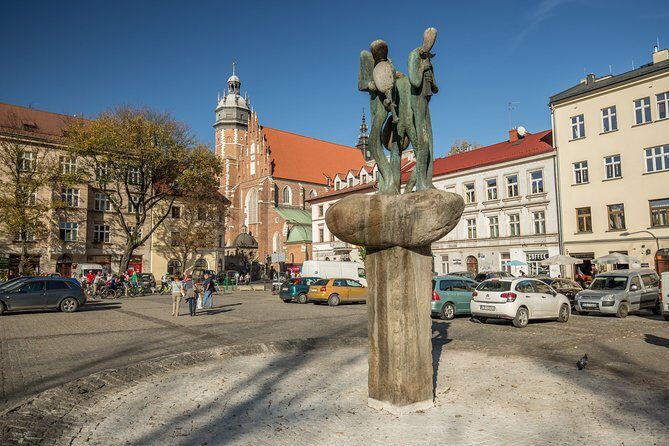
- Ghetto Heroes Square + the Chair Memorial, a haunting visual that turns history into something you feel
- Fragments of the original ghetto wall, a physical reminder of both confinement and control
- Under the Eagle Pharmacy and Tadeusz Pankiewicz’s rescue efforts, where aid came with real risk
- A focused 1-hour route, good when you want maximum impact without burning your whole day
- Schindler’s Factory site viewing only, so you’ll plan around seeing rather than touring
Entering Podgórze: why the walk starts where it hurts
If you only know Kraków from postcard views, this tour changes your angle fast. The walk is centered on Podgórze, the area the Nazis transformed into the Kraków Ghetto. That shift matters because it’s not “Holocaust history in general.” It’s the history of specific streets and specific people forced to live under a system designed to break them.
The tour focuses on everyday life under occupation: crowded housing, hunger, fear, and the constant threat of violence. You’ll also hear about moral courage—moments of solidarity that didn’t erase terror, but proved people still chose each other when they had every reason to give up.
One thing I appreciate is that the guide’s job isn’t to keep it vague. The route is arranged so you can connect the human stories to the places you’re standing in.
You can also read our reviews of more guided tours in Krakow
The 1-hour pace: short time, real walking
This is a compact tour: about one hour, and it’s built for a group to stay together. That means you’re not meant to treat it like a relaxed stroll. You’ll move between stops, listen, and then walk on.
A practical heads-up: meeting points may vary, and you’re expected to arrive at least 10 minutes early. Once the group starts, joining late isn’t possible. Also, the tour runs in a single language chosen at booking, so pick carefully if you’re multilingual and want the best fit.
If you’re the type who likes to stop and read every plaque, you might wish it had more time. But for many visitors, the value is that the tour stays focused and doesn’t drag you through your whole afternoon.
Through the streets: from ghetto wall fragments to daily repression
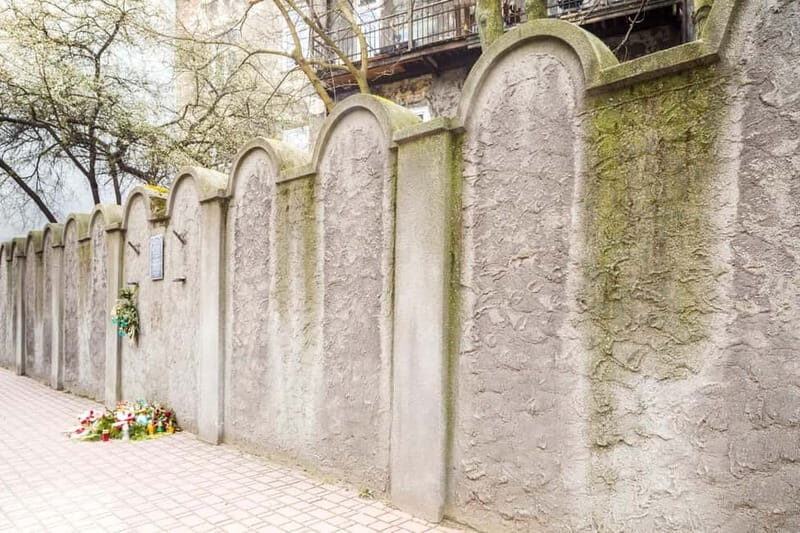
As you walk, you’ll pass surviving remnants of the original Kraków Ghetto wall. Seeing even partial sections is powerful, because it makes the confinement physical. It’s easy to talk about persecution in theory. It’s harder to ignore the reality when the stone and layout still shape the scene.
Your guide explains how the ghetto system worked on people’s bodies and routines: overcrowding that left no breathing room, hunger that narrowed choices, and fear that sat over everything. The details matter. They turn the Holocaust from an abstract event into a lived environment—tight, tense, and constantly monitored.
At the same time, the tour doesn’t treat victims only as victims. It includes stories of families trying to survive and individuals who helped when they could. That balance is important. Without it, you only get tragedy. With it, you get context: how people endured, how some resisted, and how courage showed up in small, risky ways.
Ghetto Heroes Square and the Chair Memorial: when memory becomes a shape
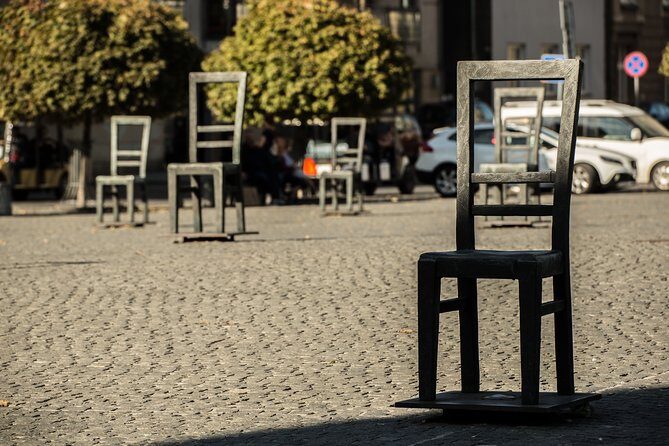
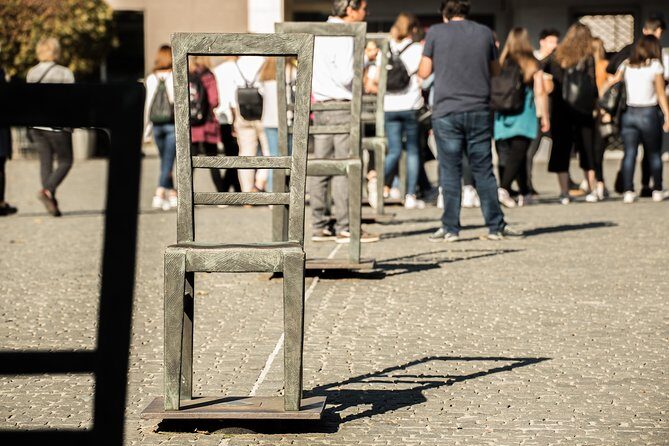
Ghetto Heroes Square is one of the emotional high points. Historically, it was a central deportation point to extermination camps. Today, it has a memorial that uses rows of empty metal chairs—an image that lands quickly and stays with you.
The effect is simple and devastating. Chairs belong to everyday life: waiting rooms, meals, ordinary pauses. Here, they become a visual interruption—proof of lives erased mid-routine. It’s the kind of memorial that doesn’t need a lot of explanation to work, but your guide’s context helps it mean more than a photo.
This is also where I’d encourage you to slow down mentally. You don’t need to stare at every chair like it’s a puzzle. Just let the idea settle: a place designed to move people away, now used to remember them.
Under the Eagle Pharmacy: Tadeusz Pankiewicz’s rescue work
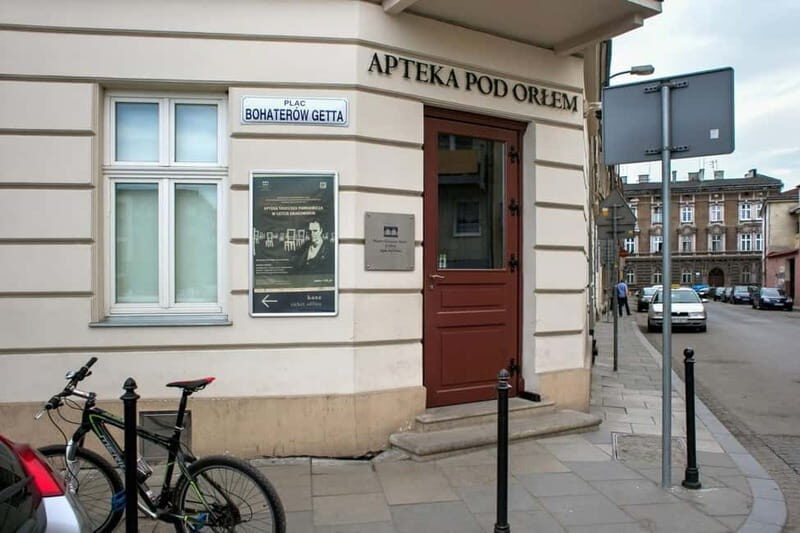
Another stop you’ll remember is Under the Eagle Pharmacy. This is tied to Tadeusz Pankiewicz and his staff, who helped ghetto prisoners by defying Nazi orders. You’ll hear about the medicine, shelter, and assistance they provided, and the fact that this help carried huge personal risk.
What makes this stop valuable is that it gives you a different flavor of moral courage. Resistance wasn’t only dramatic or armed. Often, it was stubborn compassion in the face of terror—organizing care, finding resources, and keeping people alive long enough for tomorrow.
The guide places the story within the broader wartime narrative, including references to Oskar Schindler as part of the larger context of rescue and survival. Even if your stop is brief, the message sticks: systems built for destruction couldn’t fully block human decency.


Schindler’s Factory site finish: seeing the outside, not the museum
The tour ends at the Schindler’s Factory site. You’ll be able to see the location, but there’s no entry. That matters for your expectations. If you’re hoping for a museum-style experience right after the walk, plan another visit separately.
Still, as a closing move, it works. You’ve spent the hour on confinement, deportation, and the fragility of life under Nazi rule. Finishing at a rescue-linked site gives your brain somewhere to go after the darkest images. It helps you leave with a fuller picture, not just one emotional note.
Price and value: what $15 buys you in Kraków
At about $15 per person for a one-hour guided walk, this is strong value if your goal is understanding, not just seeing. The cost is low compared with how many guided experiences charge for shorter, lighter content—and here the guide’s role is doing real work: turning places into meaning.
You’re getting a licensed expert guide and a focused route through major ghetto-related locations. It’s also efficient. Instead of spending hours piecing together self-guided stops, you get a structured storyline that connects streets, walls, memorial space, and rescue.
If your main interest is only light sightseeing, the emotional tone might feel like too much for a short window. But if you want Kraków’s history explained with care, this price-to-impact ratio is hard to beat.
What kind of traveler should book this
This tour is best for you if you:
- want an organized walk focused on the Kraków Ghetto in Podgórze
- prefer a guide who explains both suffering and survival, not just the basics
- like short tours that still hit meaningful locations like Ghetto Heroes Square and Under the Eagle Pharmacy
It may not be the right fit if you:
- have mobility limitations or need wheelchair access (the walk isn’t suitable for people with mobility impairments)
- want a casual, photo-heavy stroll (this route moves and stays serious)
- need frequent stops or extra time at each memorial
Also, it’s worth saying clearly: this is a harrowing subject. Dress comfortably, bring a respectful attitude, and accept that you’ll likely feel affected.
Practical notes that make the experience smoother
A few small things can help you get the most from the hour:
- Wear comfortable shoes. You’ll be walking through historic streets and memorial areas.
- Dress for the weather, since you’re outdoors.
- Bring no alcohol or drugs. These aren’t allowed on the tour.
- You’re not getting food or drinks included, so if you’re out all day, plan your snack break around the tour rather than expecting one during it.
Language can also make a big difference. The tour runs in one language per group (Italian, English, French, Spanish, Russian, Swedish, Slovak, German). Your guide’s ability to answer questions clearly matters a lot on a topic like this, and past visitors have specifically praised guides like Annetta for warm, knowledgeable explanations and Chiara for being prepared and helpful with questions.
Should you book the Kraków Jewish Ghetto guided tour?
If you’re visiting Kraków and you want to understand what happened in the former Jewish Ghetto in Podgórze, I think this tour is a strong booking choice. It’s short, guided by a licensed expert, and it targets a handful of places that carry real weight: ghetto wall fragments, Ghetto Heroes Square with the Chair Memorial, and Under the Eagle Pharmacy tied to Tadeusz Pankiewicz’s rescue work. The Schindler’s Factory site finish adds context without pretending it’s a museum visit.
Skip it only if your mobility is limited, you can’t handle intense historical topics right now, or you’re looking for something light and easy.
FAQ
How long is the Jewish Ghetto guided tour in Kraków?
The tour lasts 1 hour.
What sites will I see during the tour?
You’ll walk through the former Kraków Ghetto area in Podgórze, see fragments of the ghetto wall, visit Ghetto Heroes Square with the Chair Memorial, stop at Under the Eagle Pharmacy connected to Tadeusz Pankiewicz, and finish at the Schindler’s Factory site (with no entry).
How much does the tour cost?
It costs $15 per person.
What is included in the price?
The tour includes an expert licensed guide and a walking tour of the former Kraków Ghetto.
What isn’t included?
There is no hotel pickup and drop-off, and food and drinks are not included.
Where do I meet the guide?
The meeting point may vary depending on the option booked, so you’ll need to check your specific booking details.
What languages are available?
The live tour guide is available in Italian, English, French, Spanish, Russian, Swedish, Slovak, and German.
Is the tour accessible for wheelchair users?
No. It is not suitable for people with mobility impairments, and it is not for wheelchair users.
What should I bring?
Bring comfortable shoes and weather-appropriate clothing.
Are there any restrictions during the tour?
Yes. Alcohol and drugs are not allowed.
What’s the rule about arriving late?
You should arrive at the meeting point at least 10 minutes before the scheduled start. After the group has set off, joining late isn’t possible and refunds aren’t available.