REVIEW · KRAKOW
Jewish Quarter Kazimierz Guided Walking Tour in Krakow
Book on Viator →Operated by excursions.city · Bookable on Viator
Synagogues and street stories in Kazimierz. This guided walk stitches together several of the neighborhood’s most meaningful sites, with an English-speaking guide who knows how to make the place feel human. I especially like how the route keeps you moving through Szeroka Street’s old setting without turning it into a museum lab.
I also like the pace: about 1.5 to 2 hours with short stops that give you time to look up, ask questions, and get your bearings fast. And Kazimierz isn’t just “Jewish sites only” here—you get a real town mix with streets, a market square, and even a nearby church stop.
One thing to plan around: admission tickets aren’t included for the synagogues. If you’re hoping to go inside every synagogue building for a long look, you may need extra time and extra tickets.
In This Review
- Key highlights at a glance
- Kazimierz on foot: why this route works
- Price and value: what $27.69 buys you
- Timing and meeting points: start strong, don’t get locked out
- Stop 1: Szeroka Street—where the quarter feels like a storybook
- Stop 2: Muzeum Krakowa – Stara Synagoga—Poland’s oldest preserved synagogue
- Stop 3: Remuh Synagogue—spiritual heritage with real gravity
- Stop 4: Kupa Synagogue—The Poor Synagogue connection
- Stop 5: Tempel Synagogue—19th-century building, active cultural life
- Stop 6: Market Square / Plac Nowy—history meets daily life
- Stop 7: Corpus Christi Church (Kosciol Bozego Ciala)—a golden interior contrast
- What you’ll likely notice about the guide experience
- Logistics that affect comfort (more than you’d think)
- How to plan your own synagogue entry time
- Who should book this Kazimierz walking tour?
- Should you book this Kazimierz walking tour?
- FAQ
- How long is the Jewish Quarter Kazimierz guided walking tour in Krakow?
- How much does the tour cost?
- Is the tour offered in English?
- Do I need to buy admission tickets for the synagogues and museums?
- Where does the tour start?
- Where does the tour end?
- How many people are in the group?
- What should I do if I’m late?
- Does the tour run in bad weather?
- Is free cancellation available?
Key highlights at a glance
- Szeroka Street first: you start right in the heart of the old Jewish quarter’s story.
- Stara Synagoga stop: the oldest preserved synagogue in Poland is central to the narrative.
- Remuh and Kupa synagogues: two sacred stops that show different sides of Kazimierz.
- Tempel Synagogue: you’ll see how a 19th-century synagogue connects to Jewish culture today.
- Plac Nowy and Market Square energy: you finish the “history” feeling with modern street life.
- Corpus Christi Church contrast: Gothic-Baroque meets gold-colored interiors nearby.
Kazimierz on foot: why this route works
Kazimierz is the kind of neighborhood where it’s easy to wander for hours and still feel like you missed the plot. This walk helps you get the plot—fast. You cover major landmarks in a tight, logical loop, and your guide ties the architecture and locations to what happened there and why it mattered.
You also get a useful mix of “holy” and “everyday.” Some stops are clearly spiritual. Others are about community life—streets, squares, and the pulse of the area now. That combination is what makes Kazimierz feel real instead of staged.
And the fact that the group stays small (up to 25 people) matters more than you’d think. In a place made for questions, you’ll want a guide who can answer without talking over everyone. The format here makes that more likely.
You can also read our reviews of more walking tours in Krakow

Price and value: what $27.69 buys you
At about $27.69 per person, this isn’t a bargain that replaces thinking. It’s a guided walking experience built around interpretation and route flow. The tradeoff is simple: the walking tour gives you context, but it doesn’t include museum or synagogue entry fees.
So what value are you actually paying for?
- A guide who can connect places like Stara Synagoga and Remuh Synagogue to the meaning of their roles in Krakow.
- A sequence that prevents the common mistake of seeing five synagogues but understanding nothing.
- Time-efficient stops (roughly 10 minutes per site) so you can keep moving and still absorb details.
If you’re traveling on a tight schedule or you want the fastest way to understand Kazimierz’s geography, the price makes sense. If you want long interior visits, you’ll likely add separate ticket time later—because the synagogue stops are listed as admission not included.
Timing and meeting points: start strong, don’t get locked out
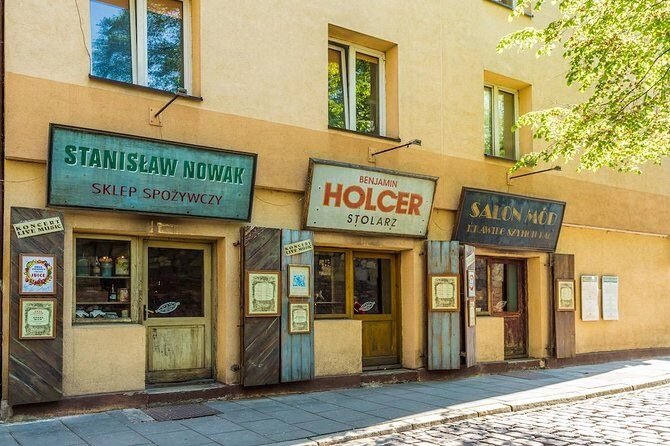
You’ll meet at Szeroka 24 and end at Lipowa 4. Plan to arrive 10 minutes early. Once the group leaves, late arrivals won’t be able to join, and tickets won’t be refundable.
That may sound strict, but it’s practical. Kazimierz streets can be busy, and a 1.5 to 2 hour walking loop needs tight coordination. If you’re the type who likes to take photos at every corner (you are, if you’re in Kazimierz), give yourself a little buffer.
The tour also goes ahead in all weather—rain or shine—so bring footwear that can handle slick sidewalks. Also check the forecast, because you’ll be walking.
Stop 1: Szeroka Street—where the quarter feels like a storybook
You begin on Szeroka Street, and that’s a smart opening move. This road is surrounded by major synagogues and older townhouses dating to roughly the 16th–18th centuries. Even from the street, you can sense why this area became a center of Jewish life.
What I like about starting here is that it sets your expectations for the whole walk. You’re not arriving at Kazimierz already exhausted and confused. You step into the “main stage” and then your guide walks you forward with context.
A good way to use these early minutes: look up. The buildings here aren’t just backdrops. They’re part of the message—scale, age, and placement all matter.
Stop 2: Muzeum Krakowa – Stara Synagoga—Poland’s oldest preserved synagogue
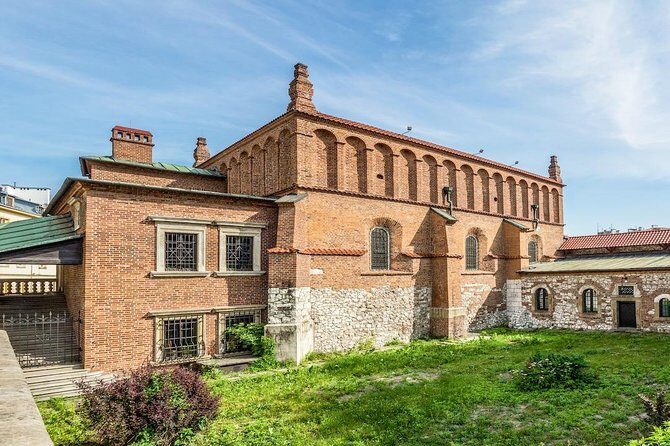
Next is Muzeum Krakowa – Stara Synagoga, described as the oldest preserved synagogue in Poland. It now houses a museum of Jewish heritage.
The museum stop is valuable because it turns “sacred building” into “preserved memory.” Instead of only hearing stories about the past, you also have a tangible place where heritage is collected and explained. But remember: admission tickets aren’t included, so if you want to enter, plan to buy the ticket separately.
If you’re short on time inside, here’s a strategy: treat your entry like a guided highlight session. You don’t need to read every single plaque. Focus on the parts that match what your guide sets up during the walking portion.
You can also read our reviews of more guided tours in Krakow

Stop 3: Remuh Synagogue—spiritual heritage with real gravity
Then you reach Remuh Synagogue (Synagoga Remuh). This is one of the most sacred Jewish sites in Poland, and your guide frames it as a symbol of Kraków’s spiritual heritage.
Even if you only view the site from outside, it lands differently than purely historical landmarks. This stop feels like it’s still carrying meaning—because sacred places do that. If you do plan on admission, it’s worth approaching with patience. These places are slower by nature.
One practical note: the tour’s time at each stop is short (about 10 minutes). If you want more than a quick look, you’ll have to decide whether to extend your time after the group moves on, or choose a ticketed interior experience you care about most.
Stop 4: Kupa Synagogue—The Poor Synagogue connection
Kupa Synagogue (Synagoga Kupa) is next, described as the last synagogue built in the Jewish town. It also comes with a name that hints at the social side of community history: it was once known as the Poor Synagogue.
That’s an important detail. Jewish history in a city is not just about institutions and prominent families. It’s also about how communities organized support, belonging, and worship for different groups of people. A site like this helps you see that “religious architecture” can also reflect economics and social structure.
Again, admission isn’t included. So if your goal is a deeper interior visit, plan for that cost and plan your time.
Stop 5: Tempel Synagogue—19th-century building, active cultural life
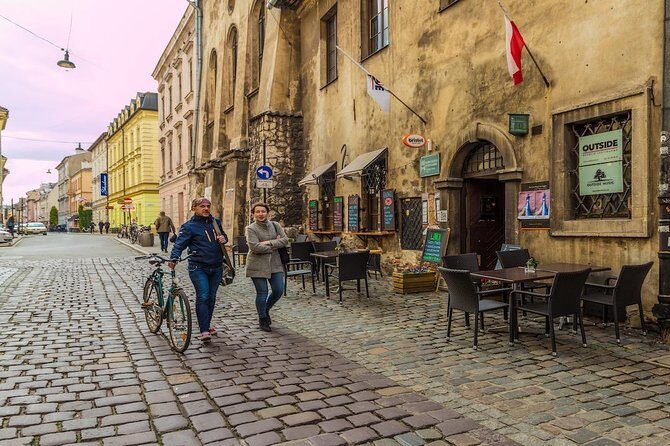
The walk continues to Tempel Synagogue, a beautiful 19th-century synagogue that’s now used as a center for Jewish culture and concerts.
This is the stop that helps Kazimierz feel current. The building isn’t frozen in time; it’s still used. That matters because it reminds you that history lives in people and routines, not only in old stones.
I also like that this stop connects visual beauty to a modern purpose. If your tour experience is mostly about information, adding a living cultural center helps your brain file the story under “still happening.”
Stop 6: Market Square / Plac Nowy—history meets daily life
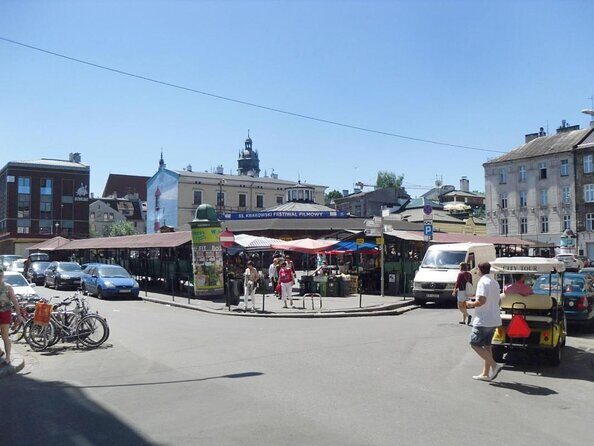
Then comes Plac Nowy, a lively square with markets, cafés, and street life, described as the heart of modern Kazimierz.
This is a smart pivot. You’ve been moving through sites of memory. Now you get a place where locals and visitors mingle, grab a drink, and do normal human things.
Use this time well: sit for a moment if you can, even if it’s just 10 minutes. Eat something small if you skipped lunch. And look at how the neighborhood functions now. You’ll start to understand Kazimierz not as a “theme,” but as a working district with layers.
A quick tip: this is often the best point for questions that you held back earlier. Want to know where to go next on your own? Ask here.
Stop 7: Corpus Christi Church (Kosciol Bozego Ciala)—a golden interior contrast
Finally, you stop at Corpus Christi Church (Kosciol Bozego Ciala), a Gothic-Baroque church noted for stunning golden interiors.
This is the contrast move that helps the tour breathe. You move from Jewish sites to a major Christian church landmark nearby. Even if you don’t go inside, the exterior stop sets up what you’ll likely see if you decide to visit more after the walk.
It also gives you an extra lens. Krakow’s religious story is layered and shared across communities in physical space. A nearby church stop reminds you that neighborhoods can hold multiple traditions side by side.
What you’ll likely notice about the guide experience
A lot of the tour’s success is about the guide. The strongest notes emphasize guides who are engaging, detailed, and able to answer questions. You’ll want someone who doesn’t just recite facts but explains why these places mattered.
You may even hear a special shout-out to a guide named Eva in some runs, described as very well spoken and available. Since you can’t always predict your guide, focus on the format: short site stops, plus room for Q&A, plus walking time where explanation stays active.
One caution from a practical perspective: the tour is built around short stop times. That means if you’re hoping for very long inside-the-synagogue commentary at multiple buildings, you might need to prioritize. Pick what matters most to you and consider adding separate museum/synagogue visits on top of the walk.
Logistics that affect comfort (more than you’d think)
A few details can make or break a walking tour:
- Language: the tour runs in one language, English here. If you need a different language, pick the right offering when booking.
- Group size: max 25 travelers helps keep the experience conversational.
- Mobility: most people can join, but it’s still a walking route. Wear shoes you trust.
- Weather: it goes in rain or shine, so pack accordingly.
- Service animals: service animals are allowed.
Also, this is popular. On average, it’s booked about 14 days in advance, so if your dates are fixed, don’t wait until the last minute.
How to plan your own synagogue entry time
Since synagogue admissions aren’t included, you get to decide how your day works around the tour.
Here’s a practical approach:
- Decide which synagogue stop matters most to you for an interior visit (often Stara Synagoga or Remuh).
- Budget additional time after the tour or add a ticket stop strategy during the walking window, if the schedule allows.
- Bring patience. Religious sites and museums tend to have ticket lines and security rules.
If you prefer a “see it, understand it, move on” style, you might only do quick looks at some sites during the walk. If you’re more in “I want to sit and read everything,” be ready to extend your day beyond 2 hours.
Who should book this Kazimierz walking tour?
This tour is a strong match if:
- You want an efficient orientation to Kazimierz.
- You like guided storytelling that connects architecture to meaning.
- You’re comfortable paying separate admission fees to go inside specific buildings later.
- You want a small group experience in English.
It’s less perfect if:
- Your top priority is spending lots of time inside every synagogue building.
- You need extremely detailed deep-dive commentary at every stop within a tight schedule.
But even then, it can still work. Think of it as a map with explanations. The “extra” can come from what you choose to visit after.
Should you book this Kazimierz walking tour?
Yes, if you’re looking for the smartest way to understand Kazimierz in under two hours. The route makes practical sense: start on Szeroka Street, hit key synagogue landmarks like Stara Synagoga and Remuh, then end with the real-life feel of Plac Nowy and the nearby Corpus Christi Church contrast.
Book it if you want value from a local guide, clear pacing, and a small group that can handle questions without chaos. Just don’t assume the price covers synagogue entry. If you want interiors, plan those tickets and time.
If you want, tell me your travel month and whether you’re more into museums or architecture. I can help you choose which synagogue stop to prioritize for separate admission.
FAQ
How long is the Jewish Quarter Kazimierz guided walking tour in Krakow?
The tour lasts about 1 hour 30 minutes to 2 hours.
How much does the tour cost?
It costs $27.69 per person.
Is the tour offered in English?
Yes, it’s offered in English.
Do I need to buy admission tickets for the synagogues and museums?
Admission tickets are not included for the listed sites, including Stara Synagoga and the synagogues.
Where does the tour start?
The meeting point is Szeroka 24, Kraków, Poland.
Where does the tour end?
The tour ends at Lipowa 4, Kraków, Poland.
How many people are in the group?
The group size is capped at a maximum of 25 travelers.
What should I do if I’m late?
You should arrive 10 minutes before the tour begins. Latecomers will not be able to join once the group has departed.
Does the tour run in bad weather?
Yes. The tour goes ahead in all weather, rain or shine.
Is free cancellation available?
Yes. You can cancel up to 24 hours in advance for a full refund.