REVIEW · KRAKOW
Krakow to Auschwitz Birkenau Guided Tour with Transfer and Ticket
Book on Viator →Operated by Hello Cracow · Bookable on Viator
One bus ride. One history lesson you can’t forget.
This guided trip from Krakow to Auschwitz-Birkenau is built around one simple goal: get you there, get you through timed entry, and give you enough context to understand what you’re seeing—without sound problems. I like the licensed guide approach and the headsets that keep the story clear at Auschwitz I, and I appreciate that the day is organized with real-world pacing. One watch-out: the museum time slots mean the guide’s pace can feel a bit quick if you want to stare longer at every exhibit.
From Krakow, you’re looking at about 1 hour 15 minutes each way by air-conditioned vehicle, with a buffer for logistics. You’ll pass through an airport-style security check at the museum, then split your visit between Auschwitz I and the much larger Birkenau site at Brzezinka. And yes, it’s emotionally heavy—smart casual clothes and respectful behavior are part of the deal.
At $36.28 per person (about 7 hours total), the value is mostly in what’s included: round-trip transfer, entry fees for Auschwitz I and Birkenau, a licensed local guide, and headsets where they matter. Food isn’t included, and the lack of on-site meal time is the main practical drawback—so plan snacks and water, especially if you’re going in cold weather.
In This Review
- Key things I’d zero in on before booking
- What You’re Really Paying For: Tickets, Transfer, and a Guide That Holds the Thread
- Krakow Pickup and the 1h15 Ride: Roadworks, Restricted Zones, and Meeting Points That Change
- Auschwitz I: Gate Reality, Headsets for Clear Audio, and a 2-Hour Focused Walk
- Birkenau at Brzezinka: Vast Open Ground, More Cold Air, and the Same Story in Different Scale
- What Makes the Day Work: Timing, Walking Over Uneven Ground, and the Snack Reality
- Price and Value: Why $36.28 Can Be a Smart Move (If You Plan for Food)
- Choosing the Right Slot: Earlier Departures, Smaller Pickup Options, and Group Size Caps
- Who Should Book This Tour (and Who Might Want a Different Style)
- Should You Book This Krakow to Auschwitz-Birkenau Guided Tour?
- FAQ
- How long does the Krakow to Auschwitz-Birkenau guided tour take?
- Are Auschwitz I and Birkenau entry tickets included?
- Are headsets included, and do they cover both camps?
- Do I get pickup in Krakow, or is there a meeting point?
- What documents do I need to bring?
- Is there a security check at Auschwitz-Birkenau?
- Is food included during the tour?
- Can I take photos during the tour?
- How much of the tour is outdoors, and what should I wear?
Key things I’d zero in on before booking
- Headsets at Auschwitz I: clear commentary without raising your voice in a place that asks for quiet.
- Small group flow: the museum visit runs up to 30 people, with a group size that helps you stay together.
- Two camps, one guide: Auschwitz I first, then Birkenau with the same storyline thread.
- Real transfer planning: hotel/area pickup exists, but roadworks and traffic rules can shift the exact pickup point.
- Time-slot entry at the museum: it’s controlled, not casual—expect a structured day.
- Bring warm layers and snacks: lots of outdoor walking, and there’s no full meal break.
What You’re Really Paying For: Tickets, Transfer, and a Guide That Holds the Thread
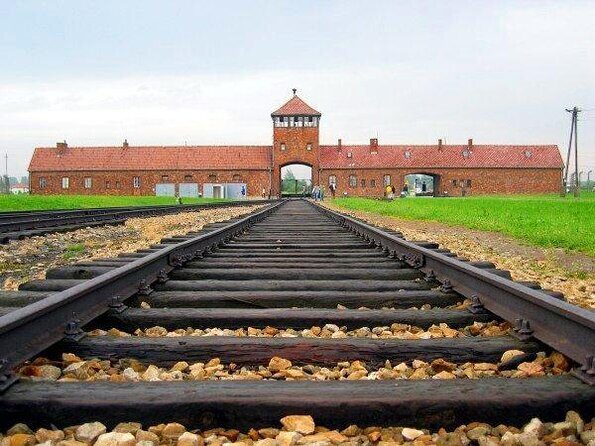
This tour is not just transportation to Auschwitz-Birkenau. You’re buying three practical advantages that make the day less stressful and more meaningful.
First, you get admission tickets included for both Auschwitz I and Auschwitz II (Birkenau). That’s important because the museum experience is time-managed. Second, you get round-trip transport from Krakow in an air-conditioned van or mini-bus, which handles the long road (about 65 km one way) for you. Third, you get a licensed local guide who can connect names, dates, and the layout of each camp—so you don’t just see buildings and objects, you understand what they represented.
I also like the small-group cap. The museum visit follows a limit of up to 30 people, and that matters when you’re moving through tightly scheduled areas. It’s not a huge crowd sprint; you stay in a workable pack with time to process what the guide explains.
The “catch,” if you can call it that, is that this isn’t a food-and-coffee day. Lunch and drinks aren’t included, and there’s no time for a full meal between visits. If you show up hungry or underprepared, the day feels longer and harder than it needs to.
A few more Krakow tours and experiences worth a look
Krakow Pickup and the 1h15 Ride: Roadworks, Restricted Zones, and Meeting Points That Change
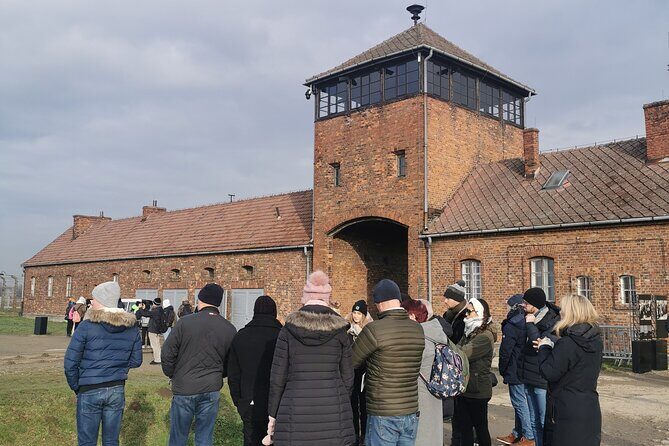
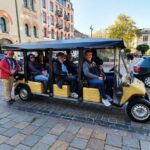
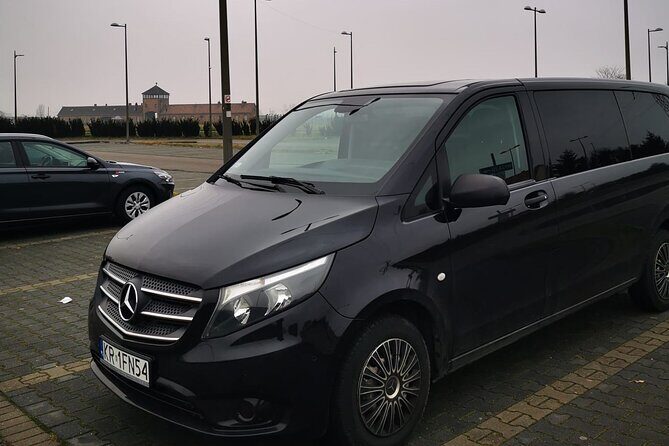
Your day starts in Krakow with either hotel pickup or a meeting point you choose depending on your option. Pickup exists across the city, but the exact point can shift due to two things: traffic-restricted hotel zones and current roadworks in western Krakow.
A few practical details to know:
- If you’re near the Main Square, you’ll get the nearest possible pickup point.
- If you’re farther out, you may be asked to wait at a designated location.
- Some areas have no pickups currently because of roadworks.
- The meeting point at Floriana Straszewskiego 19 (near the Philharmonic) is temporarily closed, so an alternative nearby pickup location is arranged.
In day-of coordination, I appreciate the human touch you sometimes see in this kind of operation: in real cases, pickup coordinators like Norbert have met people outside hotels, and a coordinator named Eric has been reported as calling someone who was running late so they could still find the right group. You should still arrive early, but that kind of follow-up is genuinely helpful when you’re traveling with strangers and a strict schedule.
The bus ride itself is straightforward. Expect a comfortable, air-conditioned trip to Oswiecim (about 1 hour 15 minutes), then you’ll turn around for the return to Krakow after your two-part museum visit.
Auschwitz I: Gate Reality, Headsets for Clear Audio, and a 2-Hour Focused Walk
After you arrive in Oswiecim, there’s a short break built in—enough to grab a coffee or take a minute near outdoor exhibitions while you wait for the flow into Auschwitz. Then the visit begins with a local licensed guide and the museum’s required security check.
Auschwitz I is where the day feels most tightly “structured.” You’ll spend about 2 hours here, and you’ll use headsets. That isn’t a luxury in this setting—it’s practical respect. It lets you hear the guide clearly without shouting over other visitors in a space that expects quiet.
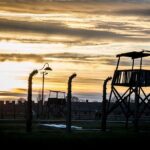
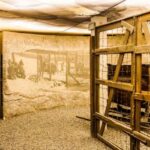
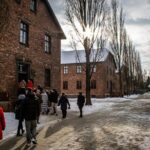
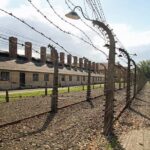
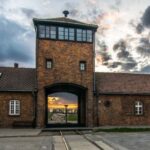
You start at the gate and move through the core of Auschwitz I, including the famous entrance phrase Arbeit Macht Frei (Work Makes You Free), plus original wooden buildings, fortified walls, and barbed wire. The tour also covers gas chambers and crematoria. The guide’s job is to keep the narrative from turning into disconnected facts, and that’s where a licensed Auschwitz-linked guide adds real value.
The timing is real-world, not slow and leisurely. You’ll be moving through museum areas under their rules. If you like to stop and read every board line-by-line, you may feel the pace is a bit fast—one common complaint is that the Auschwitz I section can feel like it moves quickly for personal digestion.
Still, that’s also the trade you make for going with a guided structure on timed entry days.
Birkenau at Brzezinka: Vast Open Ground, More Cold Air, and the Same Story in Different Scale
Next comes the transition to Birkenau (Auschwitz II) at Brzezinka. You’ll get a short break first—up to about 15 minutes—and then you’re taken just a few minutes away.
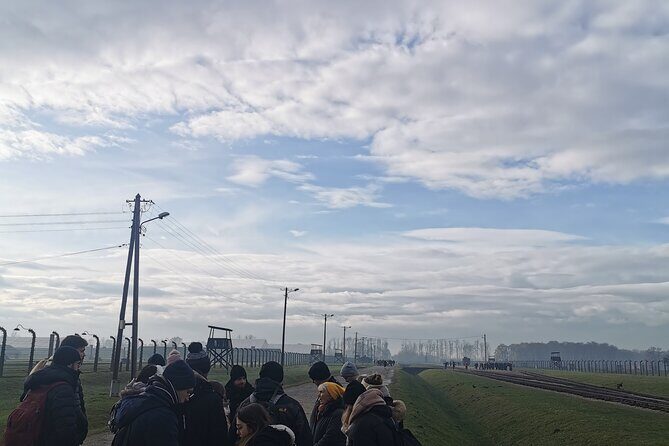
Birkenau is a different kind of experience. Auschwitz I feels enclosed and compressed. Birkenau is expansive—built for the horrific goal of making Europe Judenrein (free of Jews). You’ll spend about 1 hour here, and the guide keeps the explanation going as you move through the scale of the site.
This is where you’ll hear about:
- the construction ordered in 1941 by Heinrich Himmler,
- the capacity described as up to around 90,000 prisoners,
- cruel selection processes,
- and pseudo-scientific medical experiments linked to prominent Nazi doctors such as Josef Mengele.
You’ll also end this portion with the liberation context: opening of the gates on January 27, 1945, associated with the 60th Army of the First Ukrainian Front.
One more practical point: headsets are not available for the Birkenau part in this format. Birkenau is outdoors and the site’s setup affects audio equipment use. The result is that this section leans more on the group pace, visibility, and the guide’s spoken direction.
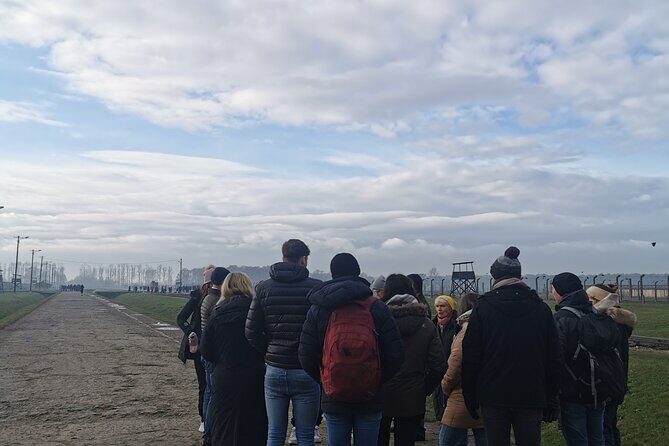
Because a large chunk of the overall visit is outdoors (the tour runs in all weather, and a big share is outside), Birkenau is also where layers matter most. In winter, plan like you’re going for a long walk outdoors, not a museum errand.
What Makes the Day Work: Timing, Walking Over Uneven Ground, and the Snack Reality
This is a long day, and it’s long in the way that matters: you’ll be walking, standing, and moving on real ground that can be uneven. Several notes point out lots of walking on uneven surfaces, so your footwear matters more than your “outfit photos.”
If you’re doing an early departure (and some options run very early), the most useful advice is simple: eat breakfast first. A hungry start makes the emotional weight harder to carry. Bring water, too—especially in warm weather, but also in winter where dry air and cold effort sneak up on you.
Here’s the food reality:
- Food and drinks aren’t included.
- There’s no time for a full meal between Auschwitz I and Birkenau.
- The site doesn’t offer time for a long lunch plan, so bring snacks.
- Some people have used a packed lunch/lunch box option when available, which can take the edge off the day.
Also, the tour includes a return break: when you’re heading back to Krakow, there’s at least about 20 minutes before your ride ends, giving you a chance to rest, visit a bookstore, or do quick errands before the final 1 hour 15 minutes travel back.
One more pacing note: guided tours work on museum scheduling. If you want maximum quiet reading time in each room, a group format can feel a little rushed. That doesn’t mean it’s careless—it means the day is designed to cover the required narrative within set time blocks.
You can also read our reviews of more guided tours in Krakow
Price and Value: Why $36.28 Can Be a Smart Move (If You Plan for Food)
At $36.28 per person, this tour is priced like a budget day trip—but it includes several items that usually cost extra if you DIY.
You get:
- round-trip transport from Krakow,
- entry tickets for both Auschwitz I and Auschwitz II,
- licensed local guiding,
- headsets at Auschwitz I,
- and insurance/taxes included in the package.
What you don’t get is food and drinks. So the real “cost” isn’t just dollars; it’s what you bring to cover your energy. If you show up with snacks and a water bottle, you’ll feel like you got a deal. If you arrive relying on buying meals on-site, you’ll feel squeezed.
I also like that the tickets are handled as part of the operation. Several people report things staying organized at boarding and entry. That matters because waiting for tickets or figuring out entry lines on the day you’re under time pressure is not how you want to spend your attention in a place like this.
Choosing the Right Slot: Earlier Departures, Smaller Pickup Options, and Group Size Caps
Departure time is tied to museum availability, and it’s confirmed the day before. The tour notes also mention that it’s been booked well in advance (often around weeks ahead), so earlier planning helps.
If you have a choice, consider your day goals:
- Some early start options can help you get back to Krakow earlier, which reduces the “whole day gone” feeling.
- If you’re staying near the city center, pickup logistics can feel smoother.
Group size also plays a role:
- The overall tour cap is up to 30 travelers.
- A hotel pickup option is described as available only in a more limited setup (the one capped at 15 pax).
That smaller format can help if you want a calmer meeting point and potentially less jostling at pickup. But with either setup, the museum visit still follows official time-slot rules.
Who Should Book This Tour (and Who Might Want a Different Style)
This tour fits best if you want:
- a structured, guided explanation of Auschwitz I and Birkenau,
- clear audio through headsets at Auschwitz I,
- and a day planned around transport and timed entry.
It’s also a good match if you’re short on time in Krakow. Instead of worrying about timing, lines, and how to interpret what you’re seeing, you’ll get a guided narrative and a smooth logistics wrapper.
You might reconsider the tour format if:
- you need extra time to read every exhibit without feeling pressure from a group schedule,
- you’re sensitive to long outdoor walking in cold weather,
- or you expect food to be part of the plan.
Emotionally, it’s not light. It’s hard on purpose, because the site is hard. But the guides here are reported to handle the tone with respect, and the whole operation seems built to keep the experience organized rather than chaotic.
Should You Book This Krakow to Auschwitz-Birkenau Guided Tour?
Yes—with a big “prepare well” note.
If you want an efficient day with tickets included, transport handled, and a licensed guide explaining what you’re looking at, this is a solid way to do it. The inclusion of headsets at Auschwitz I is especially practical, and the up-to-30 group cap helps keep the flow manageable.
Book it if you can handle:
- a long day (about 7 hours),
- lots of walking over uneven ground,
- and an emotionally serious subject that asks for quiet attention.
Skip it (or at least rethink your expectations) if you’re hoping for maximum personal pacing. Museum time slots and group schedules do set the tempo.
If you do book: pack comfy shoes you don’t mind getting dirty, layer up for the outdoor sections, and bring snacks so you’re not fighting hunger while you’re trying to absorb something unforgettable.
FAQ
How long does the Krakow to Auschwitz-Birkenau guided tour take?
The tour runs about 7 hours total (approx.), including travel time to and from Krakow and the guided visits at Auschwitz I and Birkenau.
Are Auschwitz I and Birkenau entry tickets included?
Yes. Admission tickets for Auschwitz I and Auschwitz II (Birkenau) are included in the tour price.
Are headsets included, and do they cover both camps?
Headsets are included for the Auschwitz I part so you can hear the guide clearly. Headsets are noted as not available for the Birkenau portion in this tour format.
Do I get pickup in Krakow, or is there a meeting point?
Pickup is offered, depending on the option you choose. You may also have a meeting point. Pickup can be affected by restricted traffic zones and roadworks. One stated meeting point (Floriana Straszewskiego 19, near the Philharmonic) is temporarily closed, and you’ll be assigned an alternative pickup location.
What documents do I need to bring?
You must provide full names for all participants during booking exactly as on ID or passport, and ID/passport is mandatory for each person. Without it, entry is not possible.
Is there a security check at Auschwitz-Birkenau?
Yes. An airport-style security check is required before entering the Auschwitz-Birkenau Museum.
Is food included during the tour?
No. Food and drinks aren’t included, and there’s no time for a full meal between visits. You should bring snacks (and the tour notes encourage bringing water, especially on warm days).
Can I take photos during the tour?
Photography is allowed except in marked areas. Flash is not permitted inside buildings.
How much of the tour is outdoors, and what should I wear?
The tour runs in all weather, and up to 70% of the visit takes place outdoors. Bring weather-appropriate clothing—warm layers in cold seasons—and plan for walking on uneven ground.