REVIEW · WARSAW
Historical Walking Tour of Jewish Warsaw
Book on Viator →Operated by Warsaw UnDiscovered · Bookable on Viator
Warsaw remembers, street by street. This 3-hour Jewish Warsaw walk puts WWII-era sites in order, so you can follow the story without getting lost in place names. I really liked the chance to stand at the still-standing Nozyk Synagogue and the way the guide uses visual aids to connect what you see with what happened.
One catch: you cover a lot of ground on cobblestones, and it is not ideal if you struggle with long walks. Also, the Nozyk Synagogue entrance is extra (20 PLN), so check your expectations before you go.
In This Review
- Key highlights
- A route that makes the story make sense in 3 hours
- Meeting at Sienna 53 and the quick start that helps you focus
- Nozyk Synagogue: the living survivor you build the rest around
- Fragment of Ghetto Wall: why the smallest remnant hits the hardest
- Warsaw Ghetto essentials: memorials, courthouse area, Muranów, and Miła 18
- Laweczka Jana Karskiego: monuments that carry the resistance forward
- Umschlagplatz: where transports began to Treblinka
- Price and what you truly pay for (not just the number)
- Small-group pacing: why the guide style matters on a hard day
- What to wear and bring on cobblestone ghetto streets
- Who should book this Jewish Warsaw walking tour
- Should you book? My practical take
- FAQ
- How long is the Historical Walking Tour of Jewish Warsaw?
- Where do I meet for the tour?
- Where does the tour end?
- Is the tour offered in English?
- What sites are included on the route?
- Is the Nozyk Synagogue entrance fee included?
- What is the group size limit?
- Is the tour suitable for most people?
- Are service animals allowed?
- Can I cancel for a full refund?
Key highlights
- Nozyk Synagogue survival story: see the only Warsaw synagogue that survived the war and is still there
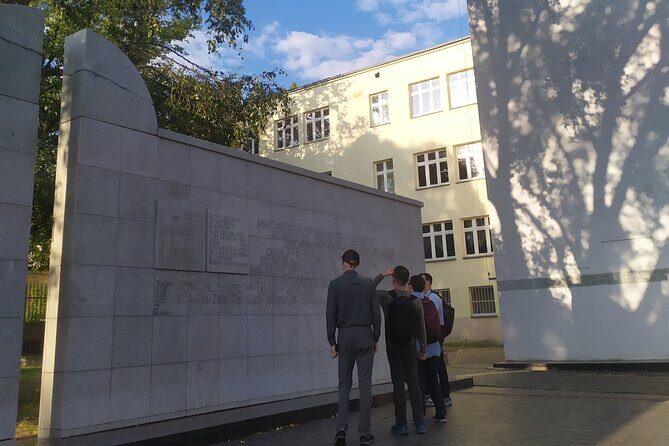
- A real fragment of the ghetto wall: a small remaining piece, with big meaning
- The ghetto core on foot: memorials, the courthouse area on Solidarności Street, and Miła 18 (Anielewicz’s Bunker)
- Umschlagplatz + Treblinka context: the transport point for about 300,000 Jews
- Small group size (max 10): more time for questions and a steadier pace
- Practical handouts: a pre-tour info pack plus visual aids and site reminders
A route that makes the story make sense in 3 hours
Jewish Warsaw can feel confusing if you try to do it solo. The city has reminders everywhere, but they don’t automatically explain the timeline. This tour is built to line up the key locations—so you understand what changed, what was destroyed, and what still survives.
I like that the focus stays on what is on the ground today: the surviving synagogue, remaining wall traces, and memorials placed where the ghetto lived and suffered. Since the pre-war neighborhood was almost erased, the best way to grasp it is through a guided sequence that links each stop to the bigger picture.
You’ll walk long enough to feel like you moved through a real area, but the guide keeps it paced for a group of up to 10 people. Expect short breaks, especially when there are spots to sit or cool off, which helps on a warm day or when the weather turns.
You can also read our reviews of more walking tours in Warsaw



Meeting at Sienna 53 and the quick start that helps you focus
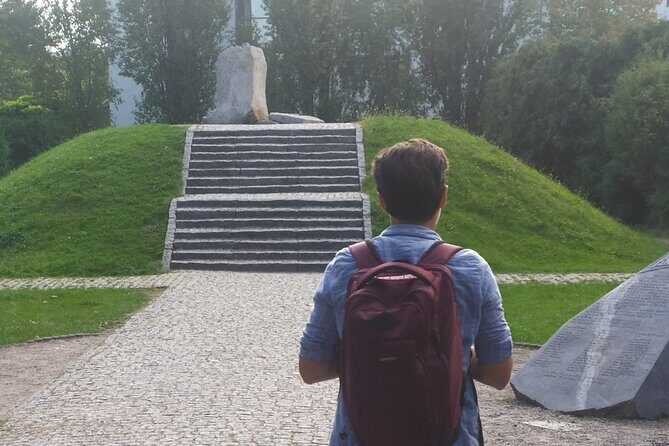
You begin at Sienna 53, on the corner with Jana Pawła II Avenue. The first stop is short—about 5 minutes—and it is designed to get you oriented before the heavier sites begin.
This matters more than it sounds. Jewish Warsaw has layers: old streets, new buildings, and memorials placed in modern layouts. A good start helps you notice details instead of just scanning plaques.
If you arrived early, this is also a good moment to get a feel for what’s nearby before you head into the historical cluster. The tour stop is named after a nearby eatery (Baguette Mi – Banh mi bistro), so you’ll likely have practical food options in mind once the tour ends.
Nozyk Synagogue: the living survivor you build the rest around
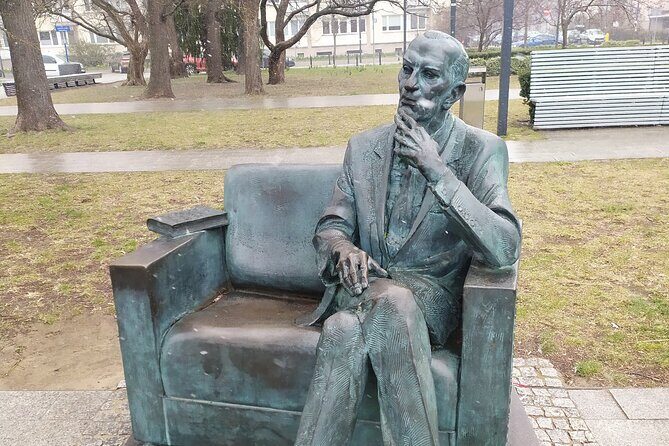
The second stop is Nozyk Synagogue. This is not just another building on a list—it is described as the only Warsaw synagogue that survived the war and remains standing today. That single fact changes how you experience everything else on the walk.
You’ll see it for about 10 minutes, and the entrance fee is not included in the tour price. The tour data says it costs 20 PLN, so plan for that extra. If you prefer inside-view time, arrive with a little extra patience for entry and exit.
Why this stop is so valuable: once you’ve seen a surviving place of worship, the rest of the route hits harder. The memorials and remaining traces don’t feel abstract. They feel like what’s left after something tried to erase an entire community.
Fragment of Ghetto Wall: why the smallest remnant hits the hardest
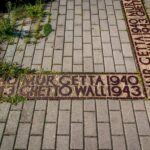
Next comes a fragment of the ghetto wall, with about 15 minutes here and no additional admission fee. This is one of those moments where you’re staring at something physical, but the meaning is emotional and historical.
A small surviving piece of wall can do more than a dozen museum photos because it shows scale and permanence. You’re not viewing a reconstruction. You’re looking at what endured—however little.
This stop is also useful for “reading the street.” Even after the tour, you’ll likely spot other hints in the urban fabric, because you now know what to look for: edges, boundaries, and the way memorials occupy specific places rather than just filling the city with generic markers.
Warsaw Ghetto essentials: memorials, courthouse area, Muranów, and Miła 18
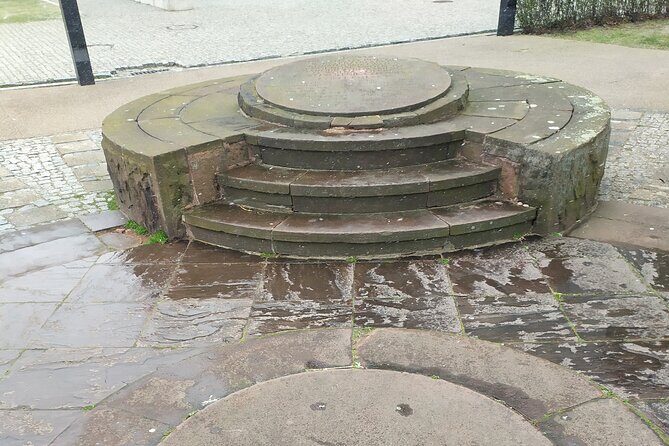
The biggest chunk of the walk is devoted to the Warsaw Ghetto area, about 2 hours 5 minutes. Here, the tour becomes a sequence of sites that explain daily life, oppression, resistance, and aftermath—without needing you to be a local historian.
You’ll cover a list of key stops that help you understand the ghetto as both a place and a system:
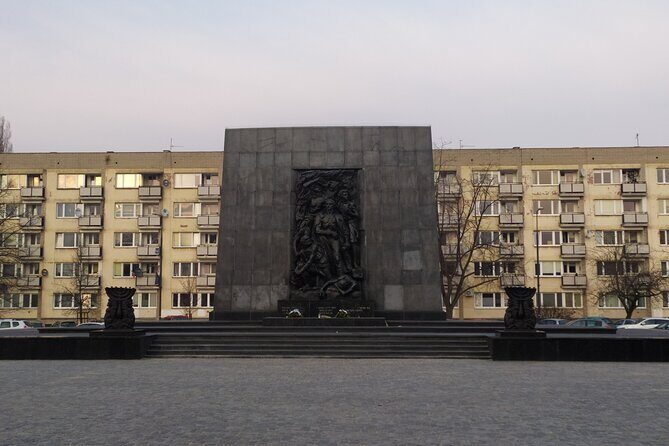
- the Jewish Ghetto memorial
- the courthouse on Solidarności Street
- the Muranów residential district (shown as part of the area where the ghetto shaped the neighborhood)
- the location connected to the discovery of Ringelblum’s archive
- Church of St. Augustine
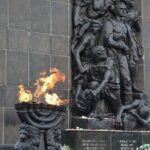
- the Heroes of the Jewish Ghetto memorial
- Miła 18 (Anielewicz’s Bunker)
What I like about this section is that it doesn’t only point at tragedy. It also shows resistance and memory. Sites like the Heroes of the Jewish Ghetto memorial and Miła 18 (Anielewicz’s Bunker) push the story beyond survival into action and refusal, even under impossible conditions.
A practical note: this is where you should slow down mentally. The ghetto area is full of signs, modern streets, and buildings that can distract you. The guide’s visual aids and explanations are meant to keep you anchored, so you connect the names on signs to the events behind them.
Also, cobblestones and urban footwork are real here. Wear sturdy shoes. If you’re prone to knee or foot pain, this is the part where you’ll feel it. The tour description says it is not recommended if you have problems walking long distances, and this section is a big reason why.
You can also read our reviews of more historical tours in Warsaw



Laweczka Jana Karskiego: monuments that carry the resistance forward
After the main ghetto sweep, you move to Laweczka Jana Karskiego, with about 15 minutes here and no added fee. The tour highlights several monuments that remind you of the Jews’ heroic struggle inside the Warsaw Jewish Ghetto.
Even though this is a shorter stop, it plays an important role. Memorial areas can sometimes feel like they only point backward. This one helps keep the story human—showing that people resisted, organized, and fought with the limited tools they had.
If you’re the type who likes to understand how memory works in a city, this stop is worth your full attention. Monuments are never neutral. They are a choice about what a society wants future generations to remember.
Umschlagplatz: where transports began to Treblinka
The final stop is Umschlagplatz, about 10 minutes. This is one of the most direct, chilling places on the itinerary, because it is identified as the spot from where 300,000 Jews were transported to Treblinka.
The end point is in front of the Umschlagplatz Monument at Stawki 10, so it is easy to plan your next move afterward. Because the stop is short, you can often take a minute for quiet photos and just absorbing the scale of what took place here.
If you’ve ever visited a memorial site and felt like your brain needed a stronger explanation, this is the part that tends to click. The tour ties earlier stops—synagogue, wall traces, ghetto memorials—into a final destination, so the route feels like a full arc rather than a random scatter of points.
Price and what you truly pay for (not just the number)
The tour price is $28.87 per person, about 3 hours (approx.), in English, and capped at 10 travelers. It is also a mobile ticket experience, which helps if you don’t want to juggle paper confirmations while walking.
For the money, you get more than walking access. The included package has a full info pack with FAQ-style help, plus visual aids and recommendations for more places to visit and where to eat afterward. That practical support is part of the value, because it helps you keep your Warsaw day from turning into a checklist you don’t understand.
The main extra cost you should plan for is the Nozyk Synagogue entrance fee (20 PLN), which is not included. So treat the headline price as the base and budget a bit more if you want the full site experience inside the synagogue.
One smart decision point: if you’re already visiting the POLIN Museum, you may wonder if this walking tour is redundant. The walking route focuses on what remains outside and how memorials occupy the real streets. The museum tends to give depth indoors; this tour gives you the street-level geography that explains how the ghetto sat inside the modern city.
Small-group pacing: why the guide style matters on a hard day
A tour like this lives or dies on delivery. You’re dealing with WWII sites, and the emotional weight is real. In the tour feedback, guides like Aga, Olivia, Agnieszka, and Oliwia are praised for being engaged and using photos and maps to support what you’re seeing.
I’d expect a similar approach when you book: the guide stops often, explains clearly, and helps you notice details you might miss alone. One person even noted how easy it was to talk with the guide and how she helped them get to the right tram afterward—those small logistics matter when you’re moving through a tight itinerary.
Pacing is also key. This is a long walk. Some people will need extra time to take photos or to process what they’re seeing, and reviews point out that the pace can be steady with room for a quick breather.
What to wear and bring on cobblestone ghetto streets
The walking is the obvious practical issue, and it’s worth taking seriously. Cobblestones can be slippery when wet, and they can be rough on your ankles if your shoes are worn out.
Bring:
- Sturdy shoes with good tread
- A small umbrella if rain is possible (the area is exposed and the ground can be uneven)
- A bottle of water, since pauses depend on where the group is at the time
If you’re planning a full day, keep in mind the “feet factor.” Even though the tour is about 3 hours, it can be taxing if you stack another museum visit immediately after. This is a good tour to pair with lighter plans nearby rather than a second long walk.
Who should book this Jewish Warsaw walking tour
Book it if you want:
- a focused route through the key remaining ghetto sites and memorials
- a guide-led timeline that helps you understand how the geography connects to the events
- a route that ends at Umschlagplatz, so you finish with the clearest reference point for the transports
Consider another option if:
- you know you struggle with long walks, because this itinerary is physically demanding on uneven streets
- you’re expecting many intact pre-war buildings, because the tour is designed to work with what Warsaw has left: survivors like Nozyk Synagogue, plus memorials and remnants like the wall fragment
Should you book? My practical take
I think this is a strong booking for first-timers in Warsaw who care about understanding WWII Jewish history in place, not just on a screen. You get a clear arc—from synagogue survival to ghetto remnants to Umschlagplatz—and the small-group format helps the guide keep you oriented as the city layout changes around you.
Just go in with two expectations set: plan for the Nozyk Synagogue entrance fee, and wear shoes you trust on cobblestones. If you can handle that, this walk is one of the more meaningful ways to understand Jewish Warsaw with your feet on the street.
FAQ
How long is the Historical Walking Tour of Jewish Warsaw?
It runs for about 3 hours.
Where do I meet for the tour?
The meeting point is Sienna 53, 00-820 Warszawa, Poland.
Where does the tour end?
The tour ends at the Umschlagplatz Monument, Stawki 10, 00-178 Warszawa.
Is the tour offered in English?
Yes, it is offered in English.
What sites are included on the route?
You’ll see Nozyk Synagogue, a fragment of the ghetto wall, multiple Warsaw Ghetto sites (including Miła 18/Anielewicz’s Bunker), Laweczka Jana Karskiego, and Umschlagplatz.
Is the Nozyk Synagogue entrance fee included?
No. Entry to Nozyk Synagogue costs 20 PLN and is not included in the tour price.
What is the group size limit?
The tour has a maximum of 10 travelers.
Is the tour suitable for most people?
Most travelers can participate, but it is not recommended for those who have problems walking long distances.
Are service animals allowed?
Yes, service animals are allowed.
Can I cancel for a full refund?
Yes. You can cancel up to 24 hours in advance for a full refund.