REVIEW · WARSAW
Historic Heart of Warsaw Walking Tour
Book on Viator →Operated by Warsaw UnDiscovered · Bookable on Viator
Warsaw’s Old Town moves fast, but this tour slows it down. You get a guided hit list of key places in about 2 hours, with explanations that connect the Royal Castle area to Warsaw’s toughest 20th-century story. I like how the tour mixes famous landmarks with small, memorable stops you might miss alone, and I like the entertaining, question-friendly guides (I’ve seen names like Olivia and Agnieszka come up) who keep things lively. One possible drawback: two major indoor sites have separate admission, so you should budget a bit extra if you want to go inside.
This is a small group walk (max 15), offered in English, and it’s designed to work for different visitors, including wheelchair access and service animals. You’ll start at Sigismund’s Column and finish at the Warsaw Uprising Monument, walking through the historic core at an easy pace.
In This Review
- Key Highlights You’ll Actually Feel
- Why This Walk Is a Great First-Layer Warsaw Plan
- Price and Tickets: What You Pay For vs. What You Still Need
- From Royal Castle Area to Sigismund’s Column: Power, Symbol, and Setting
- Wishing Bell to Old Town Square: Small Stops That Make the Big Places Personal
- Barbican Walls and the Hard Lessons: Defense, Science, and Memory
- Guide Style Is the Real Value Here
- Who This Tour Fits Best (and Who Might Want Something Else)
- Should You Book the Historic Heart of Warsaw Walking Tour?
- FAQ
- How much does the Historic Heart of Warsaw Walking Tour cost?
- How long is the tour?
- Is the tour offered in English?
- Where does the tour start and where does it end?
- Is the Royal Castle ticket included?
- Is the Marie Curie Museum ticket included?
- Are other stops included without admission fees?
- Is this tour wheelchair-friendly?
- Is a mobile ticket provided?
- FAQ
- How large is the group?
- Is confirmation provided after booking?
- Are service animals allowed?
- How far in advance is this tour commonly booked?
- Can I cancel for a full refund?
Key Highlights You’ll Actually Feel
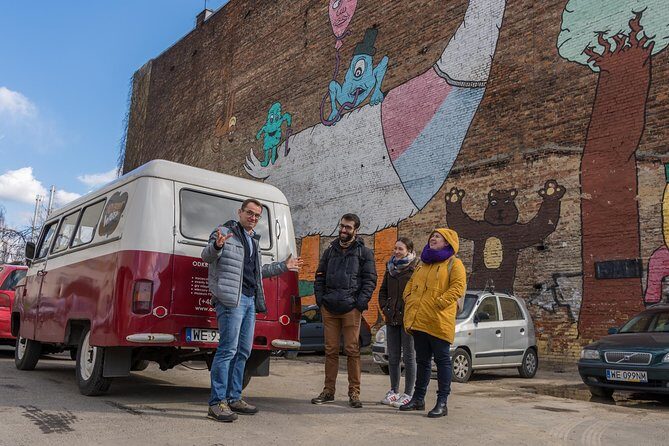
- A guide who explains more than facts, with humor and clear answers that help the city click
- Old Town sights plus quieter corners, from Kanonia’s square to the Wishing Bell
- Fantastic viewpoints at Gnojna Góra, with sightlines toward the Vistula River
- Warsaw’s 20th-century history handled in context, including the Ghetto boundary markers
- A practical info pack and visual aids before you set out, so you’re not starting blind
Why This Walk Is a Great First-Layer Warsaw Plan
If this is your first trip to Warsaw, you’ll love how efficiently this tour helps you get bearings. Warsaw’s Old Town looks like one big open-air museum, but the meaning behind the buildings can be hard to untangle when you’re just following signs. On this walking tour, each stop adds one piece to the puzzle—royal power, civic life, faith, defense, science, and resistance—so you start seeing patterns instead of just taking photos.
I also appreciate the pacing. It’s short enough that you don’t feel dragged, but long enough for the guide to steer you through why these places mattered. That matters a lot here, because Warsaw’s story isn’t linear or simple. You’ll go from grand monuments to solemn memorials without it feeling random.
Finally, the small group format changes the vibe. When there are fewer people, the guide can adjust explanations on the fly and answer questions without rushing. In the case of guides like Olivia and Agnieszka, the tone tends to be friendly and a bit playful, so the tour feels less like a lecture and more like a guided wander.
You can also read our reviews of more walking tours in Warsaw



Price and Tickets: What You Pay For vs. What You Still Need
At $28.75 per person for about 2 hours, this is priced like a guide-driven city orientation. You’re not paying for entry fees bundled into the ticket—you’re paying for interpretation: the timeline, the connections, and the “why this spot, not that spot?” guidance.
Two stops require separate admission:
- The Royal Castle museum portion (admission ticket not included)
- The Marie Curie birthplace museum portion (admission ticket not included)
Everything else is free to view as you walk. That’s a smart setup because you can decide whether you want to spend time and money going inside. If you’re on a tight schedule or budget, you can still get a lot out of the exterior viewing and the explanations.
One practical tip for your planning: these two admission stops sit within a tight walking loop. If you want indoor time, give yourself a little flexibility rather than assuming you’ll rush through everything like a checklist. If you’re not going in, you can keep the tour moving at full speed and still get the narrative.
From Royal Castle Area to Sigismund’s Column: Power, Symbol, and Setting
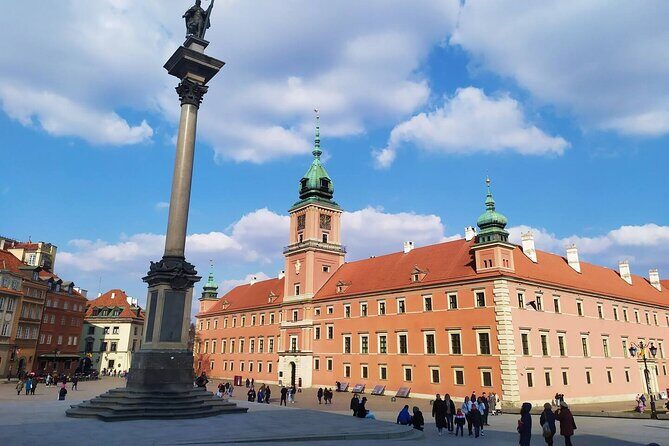
The tour opens in a very “Warsaw” place: by Sigismund’s Column, with the Royal Castle area close by. This is the kind of start that helps you orient fast. You’re in the historic core, and the guide can frame what you’re seeing without you needing to read a wall of information first.
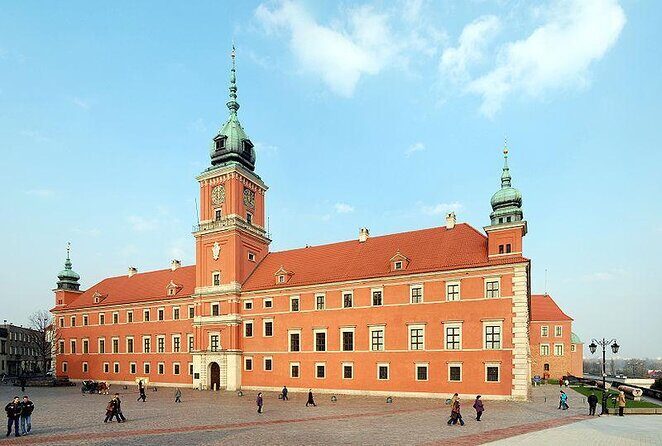
Stop 1: Royal Castle (museum area). The castle is a major anchor point for Warsaw’s identity, and you’ll get context for how the site ties into the city’s changing fortunes. The important practical note: you’ll be at the castle, but entry to the museum isn’t included. So think of this as a guided introduction to the place plus pointers for what’s worth your attention if you do buy a ticket.
Stop 2: King Sigismund’s Column. This is quick but memorable. You’ll pause for the monument and the statue of one of Poland’s kings. It’s the sort of stop that feels small on paper, but it helps you understand why rulers and symbolism mattered in shaping the look and politics of central Warsaw.
From there, the tour shifts into calmer territory.
Stop 3: Kanonia. This is a charming square tucked around the rear side of the Cathedral of Saint John the Baptist. It’s the kind of place that makes you realize Warsaw isn’t only grand squares and big monuments. It’s also small urban moments where daily life and sacred spaces overlap. If you like photographing architecture without the crowds, you’ll appreciate this pause.
Wishing Bell to Old Town Square: Small Stops That Make the Big Places Personal
After the first stretch of monuments, the tour adds a few short stops that feel like secret knowledge—without requiring you to go off-script.
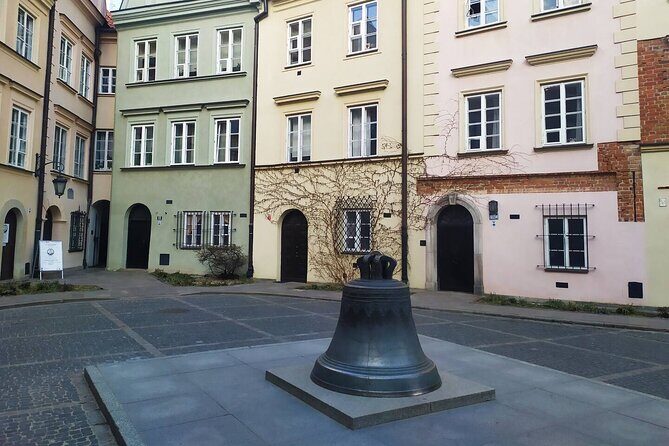
Stop 4: The Wishing Bell. It’s an old bell from the 17th century, and it still draws people today. Even if you’re not into rituals, you’ll get why this object became part of the public story and why tourists keep returning to it. It’s also a great reset: a 5-minute stop that keeps the tour from feeling like pure “look and move.”
Stop 5: Gnojna Góra lookout. This is one of the stops that can surprise you. You’re in the Old Town, but suddenly you’re looking out and making sense of the wider geography. The view is toward the Vistula River and the opposite side of the river, which gives you a real mental map of the city. If you’re the type who struggles to understand where things are until you see them from above, this stop helps a lot.
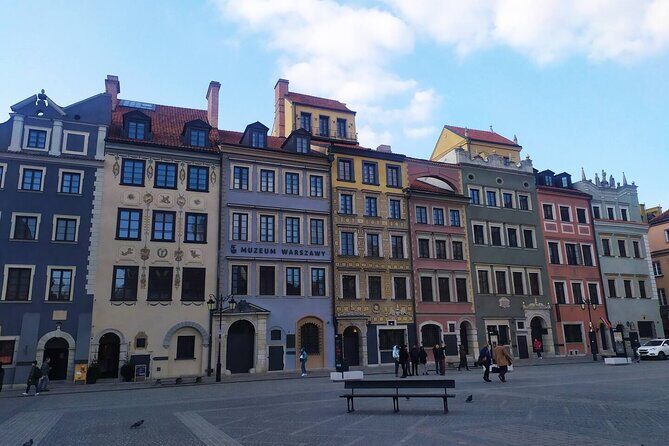
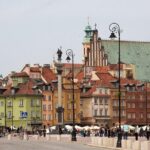
Stop 6: Rynek Starego Miasta. Now you’re in the heart of Old Town. You’ll take in the colorful tenement-house look and the symbol of Warsaw: the mermaid monument. The guide’s value here is in connecting the details—what you’re seeing and how the square functioned—so it doesn’t just become pretty scenery. You’ll leave with a stronger sense of how this area operated as a public center.
Stop 7: Archikatedra Sw. Jana Chrzciciela. The tour then moves into the city’s most important church setting (as presented on the walk). This is where you’ll appreciate the guide’s pacing. You don’t just stand there for a photo. You get context that helps the building feel like a living part of Warsaw’s culture, not just a landmark you pass by.
Barbican Walls and the Hard Lessons: Defense, Science, and Memory
Warsaw’s story includes fortifications, rebuilding, and survival. This tour nudges you through those themes in a way that feels respectful and organized.
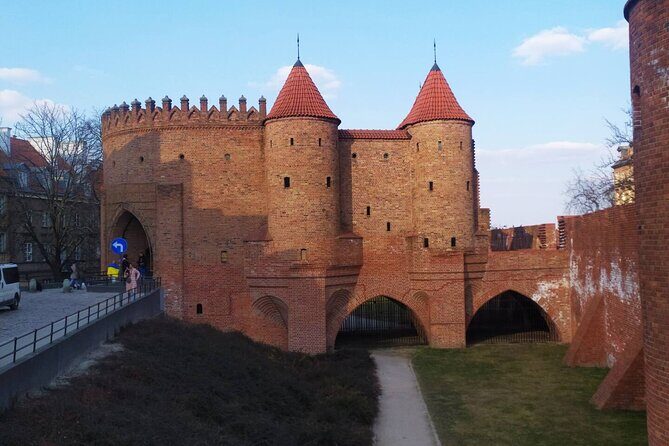
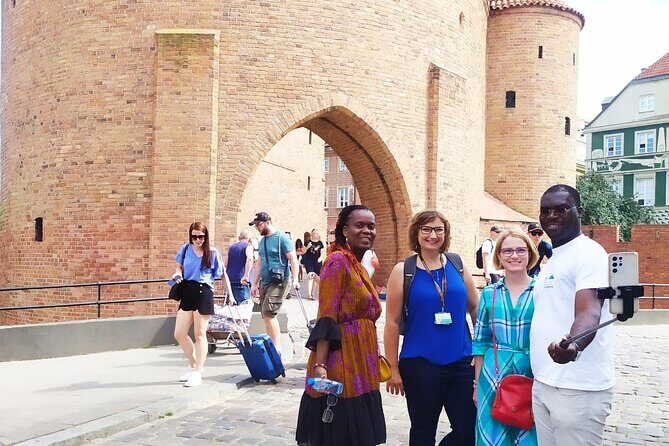
Stop 8: Warsaw Barbican. You’ll see defensive medieval walls that once encircled Warsaw. It’s a short stop, but it’s visual history at its best. The guide helps you understand what these walls were protecting and how the city’s shape was shaped by conflict. It’s an effective contrast after the religious and civic stops.
Next comes one of the most interesting science detours in the whole route.
Stop 9: Marie Curie Museum area (birthplace). You’ll hear about Maria Skłodowska-Curie, a double Nobel prize winner, connected to her birthplace. Admission isn’t included, so you’re not forced into paying for an indoor visit. Still, this pause gives you enough context that buying a ticket later feels more meaningful, not like wandering into a random museum room.
Then the tour turns to history you shouldn’t treat casually.
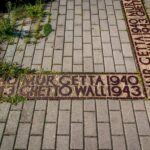
Stop 10: Warsaw Ghetto boundary markers. You’ll stop at the memorial plaques that mark the maximum perimeter of the former ghetto, established in 1940. This part of the walk is intentionally direct: the goal is to place you on the actual boundary lines so the story feels grounded in geography, not vague dates. It’s also a good moment to slow down mentally and let the guide’s framing do its work.
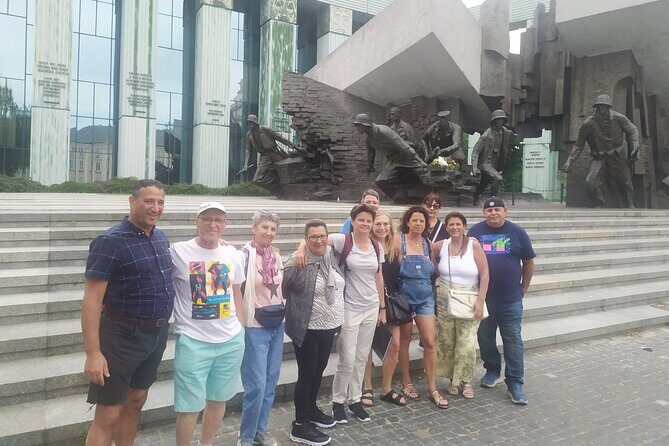
Stop 11: Warsaw Uprising Monument (finish). The tour ends at a monument dedicated to the Warsaw Uprising of 1944. Finishing here creates closure for the arc of the walk: you start with royal symbolism, move through city life and built form, then you end with resistance and memory.
If you’re the type who likes your walking tours to end with something that makes you think, this ending lands hard—in a good way.
You can also read our reviews of more historical tours in Warsaw




Guide Style Is the Real Value Here
Yes, you get a route packed with major sights and a few special pauses. But the reason this tour earns such consistently strong feedback is how the guide delivers it.
When a guide brings humor and a clear sense of storytelling, the city becomes easier to picture. You’ll notice it at the small stops: the Wishing Bell makes more sense after you hear how people have treated it over time; the mermaid in the square feels more meaningful after you understand why it became the symbol of Warsaw.
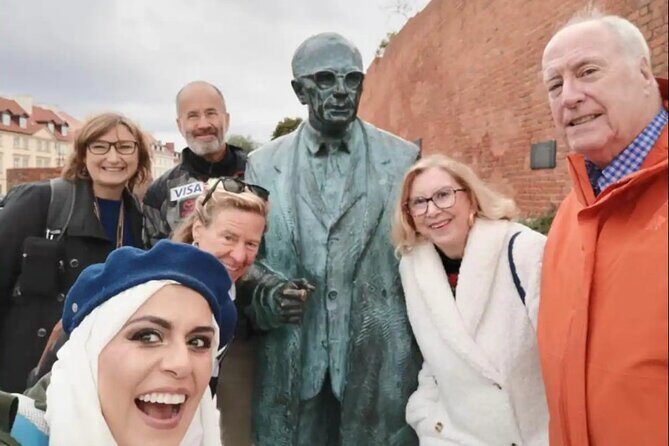
You’ll also likely appreciate the Q-and-A energy. In the small-group setup, you’re not stuck with canned explanations. If you ask what something meant historically or why Warsaw looks the way it does, the guide can connect it back to what you’re seeing in front of you.
Based on the guides commonly seen for this route—names like Olivia and Agnieszka—the tone tends to be friendly, conversational, and organized. That means you don’t just leave with photos. You leave with a mental map of the city’s past and how it shaped the present.
Who This Tour Fits Best (and Who Might Want Something Else)
This walking tour is ideal if you:
- Want a first-pass orientation that covers Old Town plus key historical themes
- Like short stops with explanations rather than long museum marathons
- Prefer small groups and guides who actually answer questions
- Want an English tour with a strong storytelling focus
It may be less ideal if you:
- Only want indoor museum time (because entry to the Royal Castle and Marie Curie museum isn’t included)
- Want a fully flexible itinerary where you linger at your own pace at every stop (this is a guided walk with a set flow)
For most people, though, it’s a solid “start here” experience. You get structure, context, and a route that makes the city easier to explore afterward.
Should You Book the Historic Heart of Warsaw Walking Tour?
If you’re trying to decide whether to book, I’d say yes—especially for a first or second day in Warsaw. The price is reasonable for the amount of interpretation you get, and the route hits the right mix of iconic sights and shorter, memorable stops. The guide experience matters a lot here, and the tour’s track record suggests you’re likely to get an entertaining, well-organized storyteller.
The only real caution is practical: plan for separate admissions if you want to enter the Royal Castle and Marie Curie museum. If you’re okay with that trade-off, this tour becomes a high-value way to understand Warsaw without spending your whole trip reading history panels.
FAQ
How much does the Historic Heart of Warsaw Walking Tour cost?
It costs $28.75 per person.
How long is the tour?
The tour lasts about 2 hours.
Is the tour offered in English?
Yes, it is offered in English.
Where does the tour start and where does it end?
The tour starts at Sigismund’s Column on Plac Zamkowy, and it ends at the Warsaw Uprising Monument on Plac Krasińskich.
Is the Royal Castle ticket included?
No. Entry to the Royal Castle is not included.
Is the Marie Curie Museum ticket included?
No. Entry to the Marie Curie Museum is not included.
Are other stops included without admission fees?
Yes. The other listed stops are free to view (including the King Sigismund’s Column, Kanonia, the Wishing Bell, Gnojna Góra, Rynek Starego Miasta, the cathedral stop, Barbican, the Warsaw Ghetto markers, and the Warsaw Uprising Monument).
Is this tour wheelchair-friendly?
Yes, the tour is wheelchair-friendly.
Is a mobile ticket provided?
Yes, a mobile ticket is included.
FAQ
How large is the group?
The tour has a maximum of 15 travelers.
Is confirmation provided after booking?
Yes, confirmation is received at the time of booking.
Are service animals allowed?
Yes, service animals are welcome.
How far in advance is this tour commonly booked?
On average, this tour is booked 68 days in advance.
Can I cancel for a full refund?
You can cancel for a full refund up to 24 hours before the experience’s start time.