REVIEW · KRAKOW
From Krakow: Auschwitz-Birkenau Tour with Transportation
Book on GetYourGuide →Operated by Krakow Tours by Krakowdirect · Bookable on GetYourGuide
Auschwitz is heavy, but the logistics help. I like the pickup and round-trip transport from Krakow, and I also appreciate the documentary film on the way that gives you a baseline before you arrive. One thing to plan for: your time inside is paced by the museum rules, so the schedule can feel fixed and tight.
This is one of those tours where the value is in the structure. You’ll go as a group (max 30 per guide), meet an English-speaking host, and then move through Auschwitz I and Auschwitz II-Birkenau with either professional guidance or self-guided materials, depending on your option. The better you prepare mentally and physically (comfortable shoes), the more you’ll get from the day.
In This Review
- Key Things I’d Focus On Before You Go
- Krakow Pickup and the Ride That Turns Up the Volume on History
- The Documentary Film: Your Head Start Before Auschwitz-Birkenau
- Entering the Grounds: Rules, Names, and How the Day Stays Organized
- Judenrampe Stop: Where the Transport Story Gets Real
- Auschwitz I: The First Camp and the Places That Show the System Up Close
- Auschwitz II-Birkenau: The Scale, the Ruins, and the Hard Math of Numbers
- Guided vs Self-Guided: Pick the Learning Style That Helps You Stay Present
- Guided options
- Self-guided options
- One more detail to double-check
- Price and Value Around $22: What’s Included (and What It Isn’t)
- Pacing, Walking, and the Small Rules You Should Respect
- Who Should Book This Auschwitz-Birkenau Tour From Krakow?
- Should You Book This Auschwitz-Birkenau Tour From Krakow?
- FAQ
- Where do I meet the tour in Krakow?
- How long is the trip?
- Is pickup included, and where does it happen?
- What do I need to bring to enter?
- Is a documentary film included?
- Do I get a guide during the visit?
- Are skip-the-line tickets included?
- Is the Judenrampe stop self-guided?
- Is this tour suitable for wheelchair users or mobility impairments?
- What’s not allowed during the tour?
Key Things I’d Focus On Before You Go
- Early-morning pickup happens: pickup times run between 5:00 AM and 11:00 AM, and they may shift.
- Judenrampe is short but specific: you get a dedicated stop and you can see the original camp train car.
- Auschwitz I comes first: it’s the founding camp area, tied to early mass deportations and key sites like Block 11.
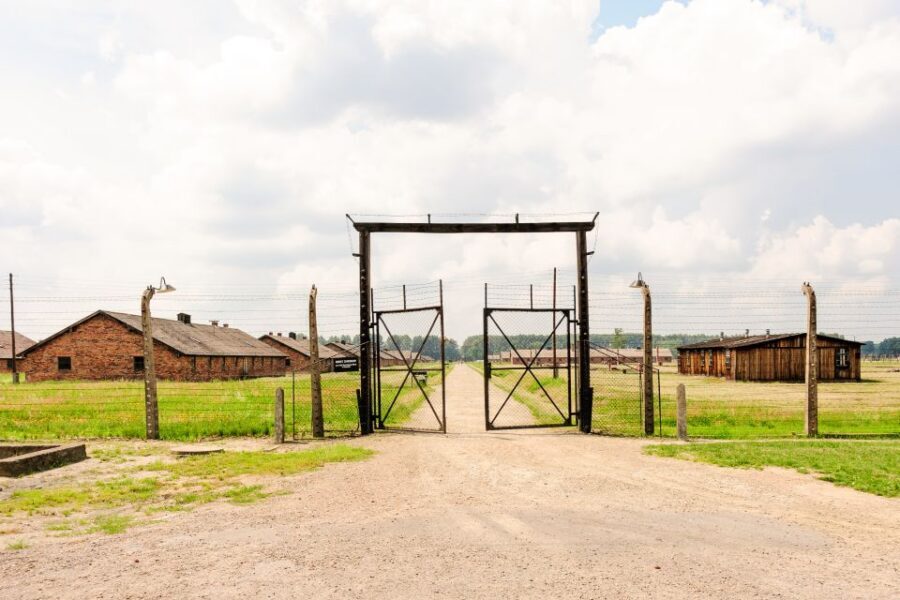
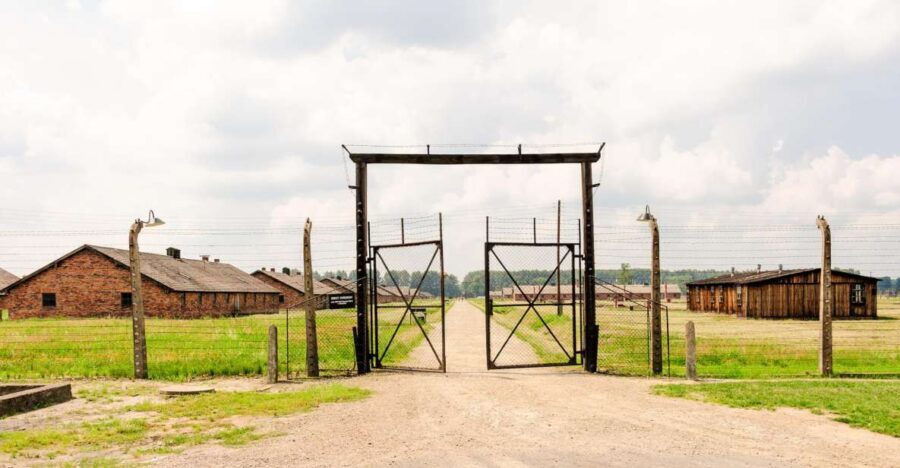
- Birkenau is where the scale hits: ruins, fencing, roads, and mass-extermination facilities across nearly 200 hectares.
- Choose your format based on how you want to learn: guided options add a professional guide and sometimes skip-the-line access.
Krakow Pickup and the Ride That Turns Up the Volume on History
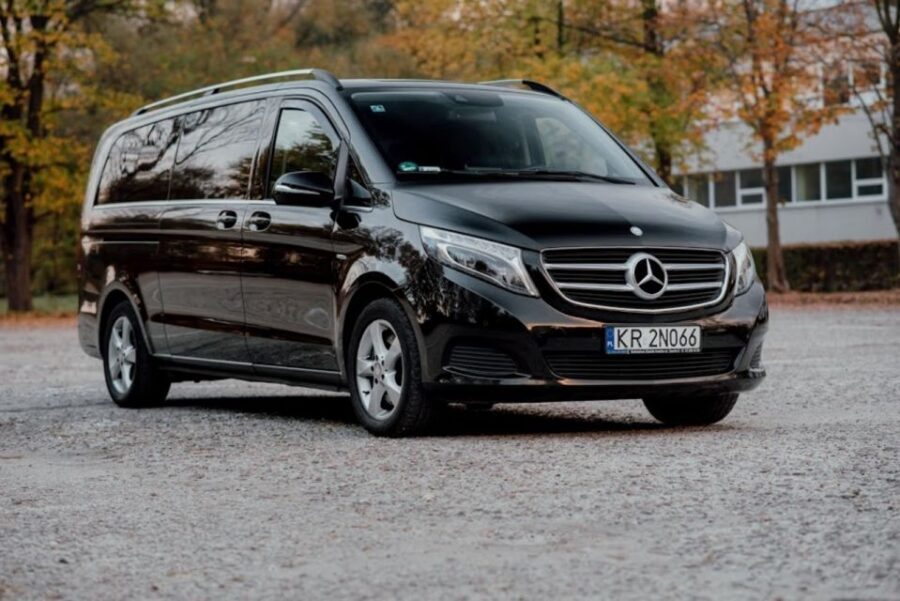
The day starts in Krakow at the Radisson Blu Hotel (Tourist Bus Stop). You’ll want to arrive 15 minutes early, because the group boarding needs to stay on schedule. From there, you’re on a modern coach/vehicle for about 75 minutes to Auschwitz, with an English-speaking host coordinating the group.
What I like here is that you’re not left figuring things out on the ground. The ride also tends to be more comfortable than DIY travel: seats, seat belts on minibuses in past runs, and a straightforward route that keeps the day from turning into a logistics puzzle.
One practical thing: pickup times can change. They’ll notify you by email and/or WhatsApp 12–24 hours before if they need to move things, usually by 30–60 minutes but sometimes more. That means I’d plan your morning in Krakow like it’s flexible—shoes ready, breakfast quick, and no long “I’ll stroll to the hotel café” plans.
You can also read our reviews of more tours and experiences in Krakow.
The Documentary Film: Your Head Start Before Auschwitz-Birkenau
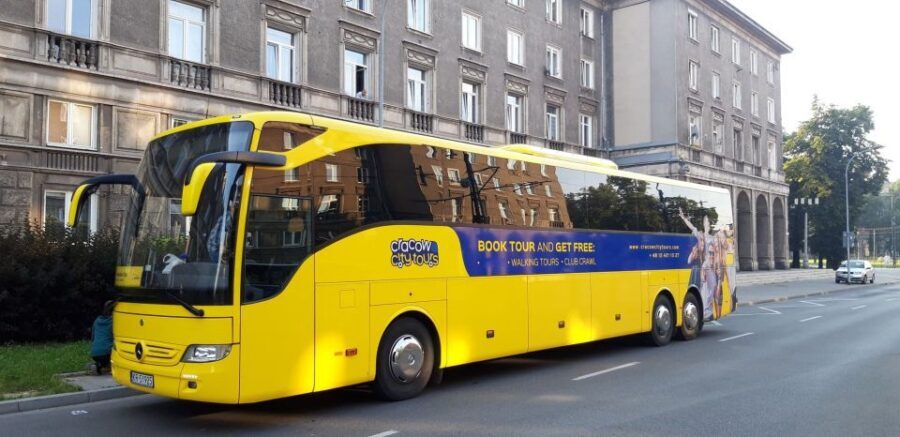
On the drive, you’ll watch an educational documentary film about Auschwitz and Birkenau. This is not “entertainment.” It’s a prep tool.
Here’s why I think it matters: Auschwitz is not just one site. It’s a complex system of camps, deportations, prison blocks, forced labor, and extermination infrastructure. A short documentary before arrival helps you avoid the common feeling of walking in cold, like you’re staring at pieces without the bigger connections.
You’ll still experience the museum’s own framing once you arrive, but the film gives you vocabulary. Then the guides/route can attach meaning faster—especially when you’re moving between Auschwitz I and Auschwitz II-Birkenau.
Entering the Grounds: Rules, Names, and How the Day Stays Organized
When you reach Auschwitz, you’ll get the essentials on rules and procedures before you begin. The memorial has very clear requirements, and this tour is built around respecting them.
Two details I would not ignore:
- You must provide your full name and contact details as part of the booking requirements.
- Entrance may be refused if the name on your booking doesn’t match the name on your ID.
For your day to run smoothly, I’d bring the same ID you used for booking (passport or ID card) and keep it easy to grab. Also, pack light: no luggage or large bags are allowed. That can affect your morning routine—so if you’re staying in Krakow with a big suitcase, sort that out before you head to the meeting point.
Judenrampe Stop: Where the Transport Story Gets Real
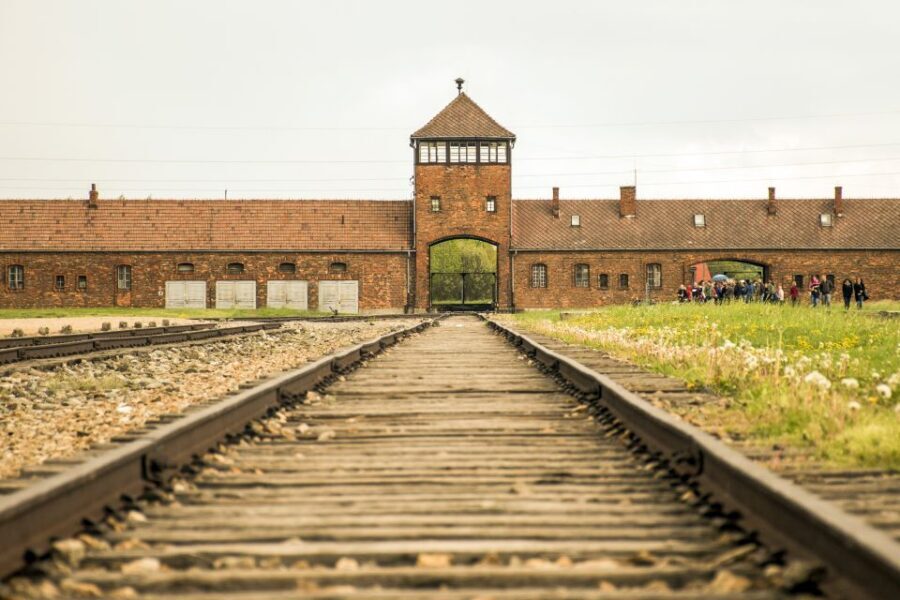
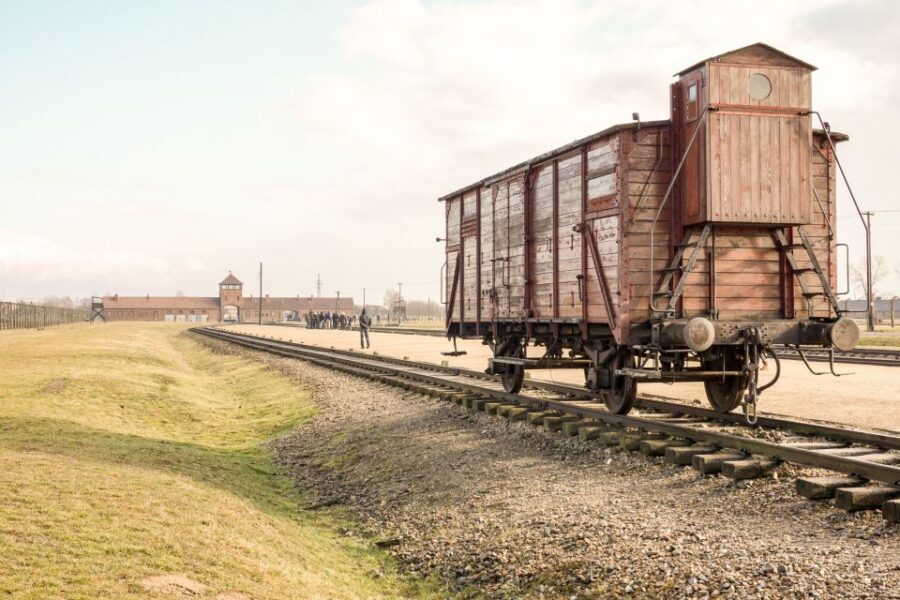
After the start of your Auschwitz visit, you’ll have time at the Judenrampe area. This part is self-guided (around 30 minutes), and it’s designed as a focused moment.
You’ll be able to see the original camp train car. That single object can do a lot of work for your understanding because it anchors the history in a very physical way. You’re not just reading about deportations—you’re standing near the setup that helped make those deportations happen.
Because it’s self-guided, you’ll want to move steadily and read what’s available. Don’t treat it like a quick photo stop. If you rush, you’ll miss the point. If you slow down too much, you may feel squeezed when the day moves on, so I’d find a pace that lets you take in the information without getting stuck.
Auschwitz I: The First Camp and the Places That Show the System Up Close
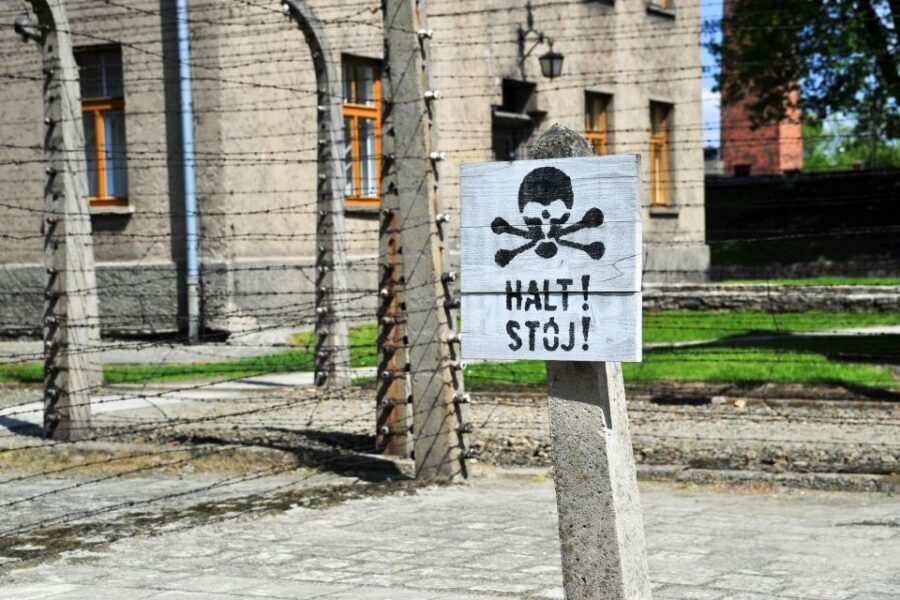
Your visit begins at Auschwitz I, the earlier camp area. This matters because it’s where the Nazis established the first concentration camp complex, and where some of the first large-scale killing methods were implemented.
Here are a few specific, important elements you’ll encounter:
- The Nazis carried out first experiments with killing using Zyklon B.
- Early mass transports of Jews were murdered here.
- Prisoners faced criminal experiments, and many executions were carried out by shooting.
- Block 11 housed a central prison for prisoners from across the camp complex, including the camp’s high-control environment.
- The main camp commandant’s office and many SS offices were in this area.
Why I think the tour starts here: it sets up how Auschwitz functioned like an administrative machine, not just an isolated tragedy. Even if you already know the basics, seeing Block 11 and understanding the command-and-control aspect tends to make the site feel more methodical—and more horrifying for that reason.
Timing can feel emotional and physical at the same time. You’re doing a serious amount of walking, and you don’t want sore feet cutting your attention. Comfortable shoes are genuinely not optional.


Auschwitz II-Birkenau: The Scale, the Ruins, and the Hard Math of Numbers
Next comes Auschwitz II-Birkenau, the larger complex and the place where most of the mass extermination facilities were built.
This is where the day really changes. The memorial preserves ruins and sites across nearly 200 hectares. You’ll see:
- Ruins of gas chambers and areas connected with ashes
- Primitive wooden prisoner barracks (nearly 300, mostly wood)
- The huge fenced layout and the internal roads that structured forced movement
- Sites that help you understand why this camp became the largest concentration camp in the complex
The numbers provided by the memorial context are immense: about one million Jews murdered, and in 1944 Birkenau had over 100,000 prisoners including Jews, Poles, and Roma, among others.
The practical takeaway: Birkenau is more open-air, and it can feel longer than you expect because the space is huge. If you’re choosing between options, guided formats often help here because the guide can keep you oriented while you take in a very large grid of ruins and preserved infrastructure.
There’s also a short break built into the flow before you return to Krakow.
Guided vs Self-Guided: Pick the Learning Style That Helps You Stay Present
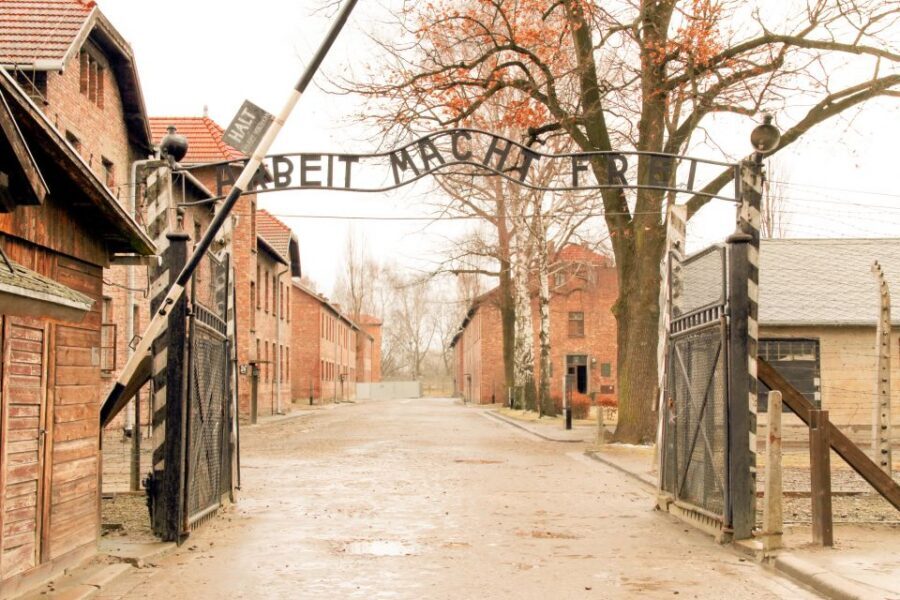
You have different ways to do this, and the best choice depends on how you process history.
Guided options
If you choose a guided format, you can get a 3.5-hour guided tour of Auschwitz-Birkenau. Professional guiding is helpful when you want someone to connect details across Auschwitz I and Auschwitz II, rather than trying to stitch everything together yourself.
The tour can also include skip-the-line tickets only if that specific guided/skip-the-line option is selected.
In real-life terms, you’ll often be guided by a professional who explains respectfully and keeps the group moving. In past groups, names like Paweł, Marcin, Lucaz, Gregory, and Micheal (sometimes called Walker) came up in positive feedback for clear English and helpful pacing.
Self-guided options
If you choose self-guided, you’ll spend time with the materials provided—like a brochure with maps, descriptions, and a suggested route (if that booklet option is selected). You also get defined self-guided segments, such as Judenrampe (about 30 minutes) and time for the memorial area (listed as around 2.5 hours).
This can work well if you like reading at your own speed and you don’t need constant explanation. The tradeoff is orientation: you’ll depend more on the route materials, and less on someone answering questions in real time.
One more detail to double-check
Some options mention that the entry ticket for a certain “transport + tour host assistance” setup is not included. So if you’re comparing prices, make sure you’re matching like with like: transport and host help vs transport plus memorial entry.
Price and Value Around $22: What’s Included (and What It Isn’t)
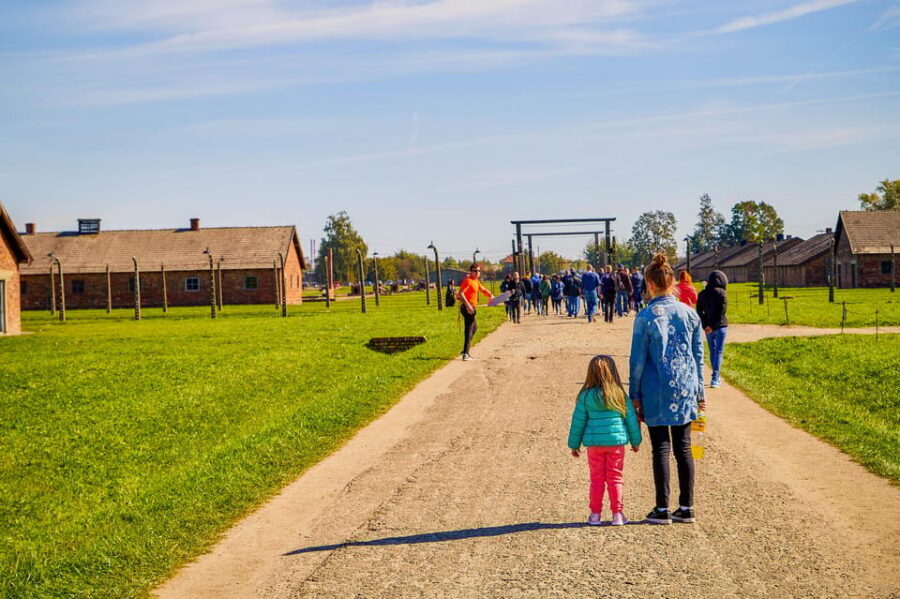
At about $22 per person, the basic value is the heavy lifting. You’re paying for:
- Round-trip transportation from Krakow by coach/modern vehicle
- A documentary film on the way
- An English-speaking host throughout the trip
- A structured Auschwitz visit format (guided tour or self-guided segments, depending on your option)
The price rises in value—not necessarily in dollars—when the option includes the professional guide and skip-the-line tickets. Skip-the-line matters because this site draws huge crowds, and it helps you start your visit without losing precious time.
The best “value check” I’d do:
- Choose the option that includes the guiding and ticketing you want.
- If you’re in an option where entry ticket isn’t included, factor that cost into your total.
Pacing, Walking, and the Small Rules You Should Respect
This experience is tightly managed. The memorial’s visitor service and regulations determine the pace, and the time you spend out there should be considered approximate, not exact.
Here’s what I’d plan for realistically:
- You’ll be walking a lot on uneven grounds.
- You’ll need ID (passport or ID card).
- You won’t be bringing large bags or suitcases.
- You must keep your name consistent with booking details.
- It’s a group format with a maximum group size of 30 visitors per guide (when a guide is involved).
Also note: the tour is not suitable for people with mobility impairments and wheelchair users as stated. If mobility is a concern, I’d look for an alternative arrangement built for accessibility before you book.
Who Should Book This Auschwitz-Birkenau Tour From Krakow?
This works best if you want:
- A simple way to get from Krakow to the camps without stress
- A planned route that covers both Auschwitz I and Auschwitz II-Birkenau
- A learning format that matches your style (guided or self-guided materials)
- An English-speaking host to help with the “what happens next” moments
If you’re the type who likes structure—clear timing, group coordination, and someone to answer questions—guided options are likely the better fit. If you prefer quieter processing and reading, self-guided can still work well because you get defined time blocks like Judenrampe.
And if you’re hoping for a casual sightseeing day… this isn’t that. It’s a solemn, weighty visit where comfort comes from good preparation, not from trying to rush.
Should You Book This Auschwitz-Birkenau Tour From Krakow?
Yes—if your priority is getting there smoothly and seeing the key parts of Auschwitz I and Auschwitz II in a well-run group format. The price can be strong for what you receive: transport, documentary context, and a structured visit, with guided options that add professional explanation and sometimes skip-the-line access.
Book it when:
- You want a straightforward Krakow pickup at Radisson Blu
- You’re okay with a longer day and museum-set pacing
- You can handle early timing (pickup can start as early as 5:00 AM)
Skip or rethink it if:
- You need wheelchair-accessible transport and site access (this one states it’s not suitable)
- You’re expecting lots of free flexibility inside the memorial (the schedule is regulated)
If you do book, bring your ID, wear good shoes, and treat the day like it deserves your full attention. That’s the best way to make the trip meaningful.
FAQ
Where do I meet the tour in Krakow?
You meet in front of the entrance to the Radisson Blu Hotel (Tourist Bus Stop). Arrive 15 minutes early and look for a van, minibus, or coach with KrakowDirect markings.
How long is the trip?
The trip duration is listed as 7 hours (570 minutes), and it may run longer depending on the selected option. The pace is also influenced by the memorial’s visitor regulations.
Is pickup included, and where does it happen?
Round-trip transportation is included, and pickup is available from selected meeting points. Your pickup time can change and is usually between 5:00 AM and 11:00 AM.
What do I need to bring to enter?
Bring your passport or ID card and wear comfortable shoes.
Is a documentary film included?
Yes. A documentary about Auschwitz-Birkenau is shown on the way to the camp.
Do I get a guide during the visit?
That depends on your chosen option. Guided options include a 3.5-hour guided tour and a professional guide, while other options offer self-guided time with provided materials.
Are skip-the-line tickets included?
Skip-the-line tickets are only included if you choose an option that includes guided and skip-the-line access.
Is the Judenrampe stop self-guided?
Yes. Judenrampe is listed as self-guided (about 30 minutes), and you can see the original camp train car.
Is this tour suitable for wheelchair users or mobility impairments?
No. The tour is stated as not suitable for people with mobility impairments and wheelchair users.
What’s not allowed during the tour?
You should not bring luggage or large bags, and alcohol and drugs are not allowed.