REVIEW · WARSAW
Warsaw’s Muranów: Jewish Heritage Exploration Game and Tour
Book on Viator →Operated by Questo · Bookable on Viator
A puzzle walk through Muranów saves your feet. This self-guided city game turns Warsaw’s Jewish heritage sites into a clue-by-clue route, with you solving small puzzles as you go. I like that it gives you built-in direction and mini context at each stop, so you’re not just wandering and hoping you picked the right streets.
Two things I really like: the price is low (about $6.03 per person for roughly an hour), and the experience is flexible enough that you can start, pause, and resume. The route also mixes places where admission is free with a couple of paid stops, which helps you control your total cost.
One possible drawback: the puzzles may feel too easy or repetitive for people who want a tougher brain workout, and the path can end up making you retrace steps to keep the story flowing.
In This Review
- Key highlights of the Warsaw Muranów heritage quest
- Why this puzzle-walk works for Jewish heritage in Warsaw’s Muranów
- Starting at Błękitny Wieżowiec: how the 1-hour flow really feels
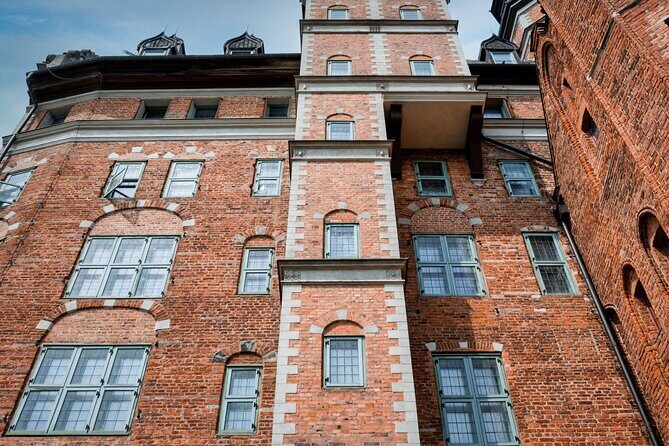
- Stop 1: Błękitny Wieżowiec and the puzzle that sets your pace
- Stop 2: Park Praski and how the game keeps you oriented
- Stop 3: Most Slasko-Dabrowski and the value of route-based learning
- Stop 4: Pawiak Prison Museum and the one ticket stop you must plan for
- Stop 5: Monument Battles of Monte Cassino and staying respectful with fast pacing
- Stop 6: Krasinski Palace and how to plan for the final admission
- Mobile ticket, offline play, and why this feels low-stress
- Who this suits best (and who might not love it)
- Price and value: what $6.03 buys you in real travel terms
- Pacing tips so you don’t get rushed by the game
- Should you book this Warsaw Muranów Jewish heritage puzzle quest?
- FAQ
- How long is the Warsaw’s Muranów: Jewish Heritage Exploration Game and Tour?
- Where does the game start and end?
- Do I need an internet connection to play?
- What does the price include?
- Is there a physical tour guide with you?
- Can I cancel for a full refund?
Key highlights of the Warsaw Muranów heritage quest
- Offline city game: you don’t need an internet connection to play
- Private by design: no human contact, so you avoid crowds
- Clues and puzzles between landmarks: you get directions while learning the sites
- Mobile ticket included: no printing needed
- 6 stops in about 1 hour: a tight route in the Muranów area
- Part free, part ticketed: some stops are free, while Pawiak and Krasinski Palace are not included
Why this puzzle-walk works for Jewish heritage in Warsaw’s Muranów
Warsaw’s Muranów is the kind of neighborhood where you want to slow down, pay attention, and connect names to places. The tricky part is that many heritage visits can feel either too rushed (if you’re in a group) or too vague (if you’re wandering on your own).
This experience hits a useful middle ground. You move through six specific stops using a clue-and-puzzle format, and at each location you get instructions for what’s next plus information about what you’ve found. That structure does two things for you: it keeps you oriented in a real walking route, and it nudges you to learn instead of just taking photos.
Another big reason I like it: it’s designed to be private. You’re not waiting for a guide, not stepping aside for tour groups, and not feeling pressure to keep pace with strangers. If you’re the type who learns better by going at your own speed, this format fits well.
The overall vibe is practical rather than theatrical. It’s a city game, not a staged show. And that’s often a good thing—especially for a sensitive topic—because you can focus on what you see without added performance.
You can also read our reviews of more historical tours in Warsaw


Starting at Błękitny Wieżowiec: how the 1-hour flow really feels
You begin at Błękitny Wieżowiec, plac Bankowy 2, 00-095 Warszawa and finish near plac Krasińskich 3/5, 00-207 Warszawa. The experience is about 1 hour, but it’s built to stay flexible: you can start at any time and you can take a break and resume later.
Here’s the real benefit of that flexibility: Warsaw walking can be unpredictable. Weather changes. Trams show up late. You might want to read more slowly at one stop and speed up at another. Being able to pause without losing your place makes this feel less like a timed quiz and more like a self-paced walk that happens to have a finish line.
You’ll also want to plan around the stated hours: the experience operates daily from 5:00 AM to 9:00 PM. Booking is available 24/7, but the play window follows those daily hours.
One more practical point: it’s near public transportation. Even if you don’t know the neighborhood well, you shouldn’t have trouble getting in and out. And since the tour is private with no human contact, it’s also one of the safer ways to explore without crowd friction.
Stop 1: Błękitny Wieżowiec and the puzzle that sets your pace
Your first location is Błękitny Wieżowiec. You don’t just arrive and start reading a sign—you follow a clue, solve a puzzle, and then reach the place.
At this stop, you get two things:
- quick guidance on how to continue the game
- information that helps you understand what you’ve discovered
This is a smart way to start because it gets you moving right away. You also get an immediate sense of what the experience expects from you: you’ll be solving simple logic steps, not doing anything physically intense.
Admission at this stop is listed as free, which matters for your budgeting. It’s one less thing to worry about when you’re testing whether you like this style of experience.
If you’re new to city games, Start 1 is usually where you either get the hang of it or get frustrated. Here, the time at this stop is about 5 minutes, so you won’t be stuck long if you need a moment to understand the format.
Stop 2: Park Praski and how the game keeps you oriented
Next you head to Park Praski. Again, you’ll reach it by following a clue and solving a puzzle, then you’ll receive directions for the next step plus information about the location.
This part is valuable because parks are where self-guided tours often fall apart. You arrive, you see a lot of space, and you’re left wondering where the story goes next. A clue-based route reduces that problem by telling you what to look for and what to do.
Time here is also about 5 minutes, and admission is free. So this stop is likely light on overhead cost while still adding variety to the walk.
A small practical suggestion: since you’re moving from stop to stop quickly, keep your phone charged and your attention on the next clue. If you wander off in the wrong direction here, you may lose time because the game expects you to follow the route it builds.
Stop 3: Most Slasko-Dabrowski and the value of route-based learning

Your third stop is Most Slasko-Dabrowski. Like the previous stops, you reach it by working through another clue and puzzle. Once you’re there, you get another set of directions plus information tied to the place.
This is the point where the experience shifts from “getting oriented” to “staying in rhythm.” The route has been telling you how the story moves across the neighborhood, and you’re now learning by following the path.
Admission at this stop is listed as free, and you’re allotted about 10 minutes here, which is notably longer than stops 1 and 2. That extra time can matter if you want to read carefully or take a slower look without feeling like you’re falling behind.
If you’re someone who likes to understand geography—how places connect across streets or crossings—this is a good moment to pay attention. Even without a traditional guide, the route structure helps you form mental links between the sites.
A few more Warsaw tours and experiences worth a look



Stop 4: Pawiak Prison Museum and the one ticket stop you must plan for

Stop four is Pawiak Prison Museum. You still get there via clue and puzzle, and you still get guidance for what’s next and information about what you’ve found.
The key difference: admission is listed as not included here. So your budget needs a little extra room if you plan to enter or pay for anything at the museum itself.
This matters because it’s the stop that could change the tone of the entire experience. A prison museum is heavy by nature, and self-guided formats can be either respectful and steady—or too rushed—depending on how you pace. Since the game structure includes information at the location, you’ll likely get enough to understand why this stop is part of the heritage route, but you should still decide what level of museum entry you want.
You’re allotted about 5 minutes for this stop in the game flow. If you expect to spend time inside a museum exhibit, that’s an important mismatch to notice ahead of time. You might find it best to use the game’s stop visit for context, then decide on your own time whether you want deeper entry.
Stop 5: Monument Battles of Monte Cassino and staying respectful with fast pacing

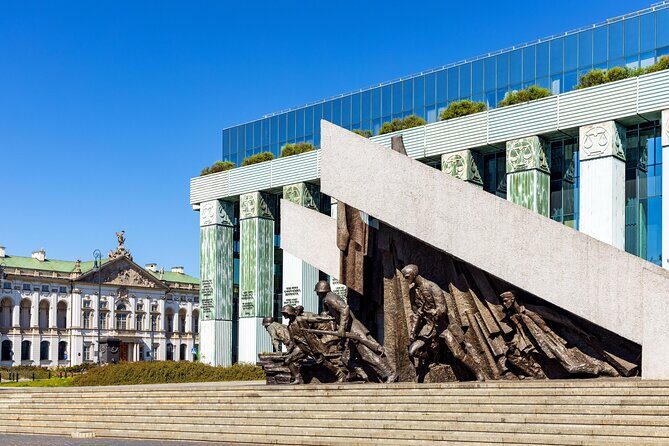
Next up is the Monument Battles of Monte Cassino. Again, the pattern continues: clue, puzzle, then directions plus information at the location. Admission is listed as free here, and the stop time is about 10 minutes.
Why this stop is a good fit for a game format: monuments can be meaningful without requiring long ticket time. You can take in the site, read what you can, and keep moving. The game’s time allocation nudges you to be present without turning the experience into a half-day commitment.
At this stage, you may also feel that the route is compressing more than one “kind” of learning: heritage sites one minute, remembrance through monuments the next. That can be emotionally uneven, but the clue-based navigation helps you stay focused on the next point instead of getting lost in indecision.
As always, quick advice: don’t treat this like a scavenger hunt where speed is the goal. The game wants you to read the information you’re given. Use the built-in prompts to slow down just a little.
Stop 6: Krasinski Palace and how to plan for the final admission
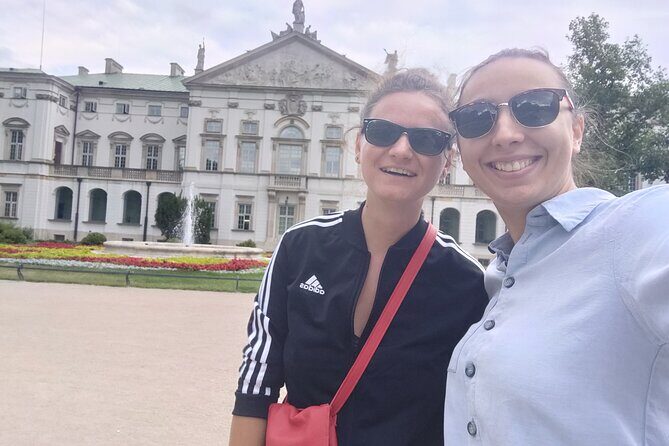
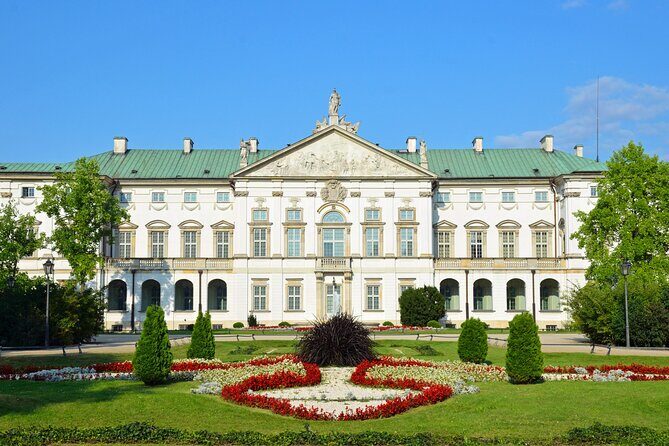
Your final stop is Krasinski Palace. You reach it using one last clue and puzzle, then you get the instructions for your finish plus information about what you’ve discovered.
Admission here is listed as not included, so again you’ll want to be ready for possible extra cost if you want to go inside or access paid areas.
Stop time is about 10 minutes, and the whole experience ends at plac Krasińskich 3/5. Since you’re finishing near a specific public square, the end point is helpful for planning onward travel. You’ll have an easy place to locate yourself, rather than wandering until you find your route home.
If you’re considering whether to book, this is one of the biggest practical decisions: do you want to pay for entry at Pawiak and/or Krasinski Palace, or do you mainly want the game’s on-the-ground context? The experience is built to give you value either way, but your total spending depends on what you choose to do at the two stops with admission not included.
Mobile ticket, offline play, and why this feels low-stress
The experience includes a mobile ticket, which is a small but real convenience in Warsaw. You’re not sorting through paper or trying to remember where you put a printout. If you’re traveling with limited luggage space or you just don’t want more things in your day, this helps.
The offline part is the bigger deal. You don’t need an internet connection to play. That means you’re not stuck if you lose signal in a park area or if your data plan is unreliable. It also makes the experience feel safer and more self-contained.
This is also why I think it’s a strong choice for people who like predictability. You can download nothing in advance only if the game supports offline play as stated, then you just start and go. If you’re the type who spends vacation energy fighting tech, you’ll appreciate that the game doesn’t demand constant connectivity.
And because it’s private with no human contact, you avoid a common travel problem: the awkward pause where you’re trying to keep up with a guide in a group while also trying to listen. Here, your pacing is the guide.
Who this suits best (and who might not love it)
This quest is set up for most travelers to participate, and it allows service animals. It’s also near public transportation, which makes it easy to slot into a day.
You’ll probably love it if you:
- want an intro to Muranów’s Jewish heritage sites without the pressure of a full guided tour
- like self-paced learning with built-in clues
- prefer a quieter experience that avoids crowds
- enjoy puzzles, even if they’re not meant to be expert-level challenges
It may not be ideal if you want a deeply guided narrative with lots of human explanation. This is designed to operate without a physical tour guide, and the game’s pace is built for movement, not lingering. Also, the one critique worth paying attention to is that some people may find the challenges too easy and repetitive, and the route may feel a bit like it tightens the loop back on itself instead of creating endless new variations.
Price and value: what $6.03 buys you in real travel terms
At about $6.03 per person, this is priced like an entry-level walking activity rather than a traditional guided tour. That’s good news because it lowers the risk. If you find the game format clicks with you, you get multiple stops, clue-based navigation, and on-the-spot information without paying a big premium.
But here’s the honest value math:
- Some stops list admission free, so you’re not paying at those points.
- Two stops list admission as not included (Pawiak Prison Museum and Krasinski Palace). If you choose to enter paid areas, your total spend will rise.
So the true question isn’t just the base price. It’s how you want to experience those two sites. If you’re mostly looking for the outdoor context and the game’s guidance, the low base cost is a great deal. If you plan to go deep inside both places, you’ll likely spend more than the game fee—but you’d spend that on any visit anyway.
The 1-hour duration also matters for value. This isn’t a half-day project. It’s a tight, doable segment that you can pair with other Warsaw sights.
If you’re traveling as a group, there’s also mention of group discounts, which can bring the per-person total down further.
Pacing tips so you don’t get rushed by the game
Even with a flexible “start anytime and pause anytime” setup, the game still has an internal stop-by-stop rhythm. If you want to keep it feeling thoughtful, here’s how I’d pace it:
First, treat each stop like a reading break, not just a checkpoint. Use the information you receive at the location and then move on when you understand what the next clue is asking.
Second, if you hit a point where you’re tempted to speed through, slow down instead. The biggest risk with heritage walks is missing context. The game format is fast by design, but you control how much you absorb.
Finally, if puzzles start to feel repetitive, don’t fight them. Just keep your momentum. Your goal is learning the places, not winning a competition.
Should you book this Warsaw Muranów Jewish heritage puzzle quest?
Book it if you want a low-cost, private, offline way to explore Muranów with structure. It’s especially appealing if you don’t want to join a crowd, you like self-guided walking, and you enjoy puzzles even when they’re not mind-bending.
Skip it or approach with eyes open if you’re hunting for a tough challenge or a highly creative route with lots of branching. The puzzle style here is built to keep you moving, and some people may find it easy and a bit repetitive. Also, if you plan to enter Pawiak Prison Museum and Krasinski Palace, budget for admission at those stops since it’s not included.
If your ideal day is calm, self-paced, and meaningfully connected to place, this is a strong fit.
FAQ
How long is the Warsaw’s Muranów: Jewish Heritage Exploration Game and Tour?
It’s about 1 hour.
Where does the game start and end?
It starts at Błękitny Wieżowiec, plac Bankowy 2, 00-095 Warsaw, and ends at plac Krasińskich 3/5, 00-207 Warsaw.
Do I need an internet connection to play?
No. You can play offline, so you do not need an internet connection.
What does the price include?
The experience includes the mobile ticket and the self-guided clue-and-puzzle format across the stops. Admission at some stops is free, but admission at Pawiak Prison Museum and Krasinski Palace is not included.
Is there a physical tour guide with you?
No. This is a private experience with no human contact.
Can I cancel for a full refund?
Yes. You can cancel up to 24 hours in advance for a full refund. If you cancel less than 24 hours before the start time, you won’t get a refund.