REVIEW · WARSAW
Warsaw at War 1939-1945: A Self-guided Audio Tour
Book on Viator →Operated by VoiceMap Audio Tours · Bookable on Viator
War has a sound in Warsaw. This self-guided VoiceMap walk turns the city streets into a clear, story-driven timeline from 1939 to 1945, using tightly produced narration and period-appropriate sound. I like that you can follow along while still moving at your own pace, because the route is set up as a 3 km, about 90-minute walk that you can pause and explore whenever you want.
Two things I especially like: the audio is described as crisply engineered, with sound effects and music that make the history easier to track, and you get offline access to audio, maps, and geodata. One consideration: navigation can be a little fussy if you wander even slightly off the intended line, and the app’s route alert can feel too sensitive for some walkers.
In This Review
- Key things to know before you go
- Starting at Kościół Akademicki św. Anny: make the app your guide
- The Old Town approach: 3 km of history you can walk at human speed
- Mały Powstaniec: meeting Warsaw’s child soldier memorial on your way through the story
- How the WWII narrative connects: fighting for heritage against two powers
- Pausing at the Tomb of the Unknown Soldier: ashes and soil from every battlefield
- The finish at Piłsudski: why 1920 still matters in a WWII story
- Price and value: $9.99 for an offline, 90-minute self-guided story
- What to bring and how to plan your timing
- Who this self-guided Warsaw at War walk is best for
- Should you book this Warsaw at War 1939–1945 tour?
- FAQ
- How long is the Warsaw at War 1939–1945 self-guided audio tour?
- What is the walking distance for the route?
- How much does it cost?
- What language is the audio tour offered in?
- Where does the tour start and end?
- Is the audio and map content available offline?
- Can I cancel for a refund or make changes?
Key things to know before you go

- Professionally engineered audio with sound effects and music, built for earbuds, headphones, or even a small speaker
- Offline audio and maps in the VoiceMap app, so you are less dependent on mobile data
- A walk of about 3 km in 90 minutes, with the flexibility to pause for photos or breaks
- Memorial-focused stops, including Mały Powstaniec and the Tomb of the Unknown Soldier
- A strong ending at Józef Piłsudski’s statue, tying the wartime story to earlier fights for independence
- Small experience size (up to 10), even though it is self-guided
Starting at Kościół Akademicki św. Anny: make the app your guide
Your walk begins at Kościół Akademicki św. Anny, on Krakowskie Przedmieście 68. The format is simple: start the tour in the app, put your phone away as you go, and let the narration direct you.
Because the route is designed for an easy-to-follow walk, it helps to start with a quick mindset shift. You are not just sightseeing Old Town. You are walking a sequence of places that explain what happened and why it mattered.
If you like to stop often, you can. The tour is built so you can pause anytime, step away for lunch, or hang around in nearby spots like Saxon Garden for a breather.
You can also read our reviews of more guided tours in Warsaw



The Old Town approach: 3 km of history you can walk at human speed
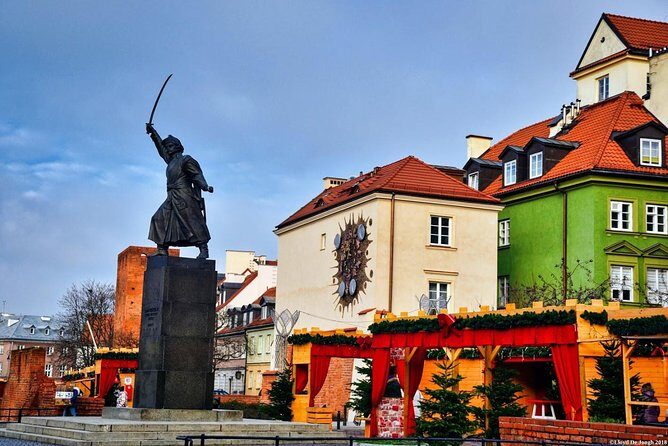
The core of the experience is a 90-minute exploratory route that stays walkable and not exhausting. The walking distance is about 3 km, which is ideal for fitting into a day in Warsaw without turning the rest of your plans into a recovery mission.
I like how the narration is paced for real city walking. The app is aimed at helping you keep moving while still taking in the details around you—street corners, viewpoints, and the feeling of being in the places where history unfolded.
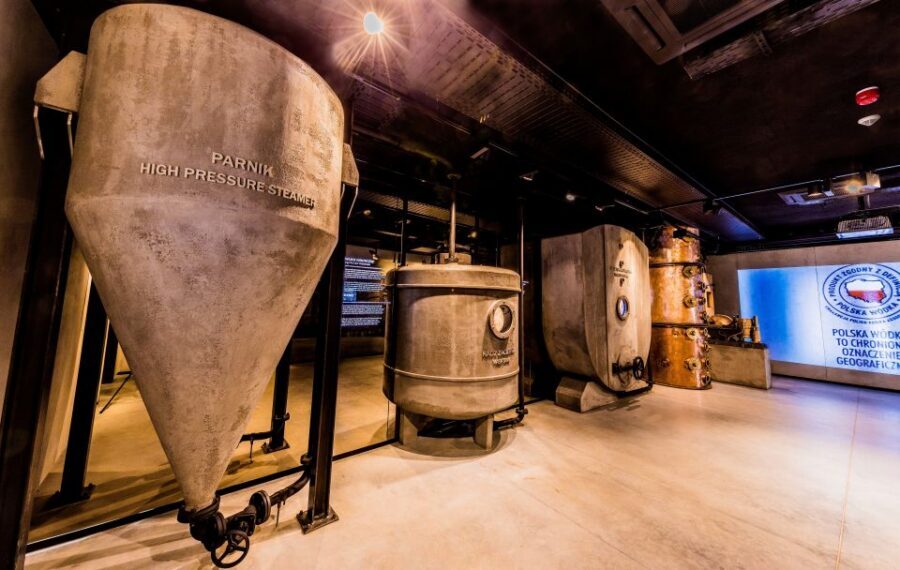
This is also where you can make your day smarter. You might want to stop for photos, grab food at one of the many restaurants nearby, or detour toward places like the Vodka Museum if that fits your interests. Since the tour is self-guided, you stay in control.
Mały Powstaniec: meeting Warsaw’s child soldier memorial on your way through the story
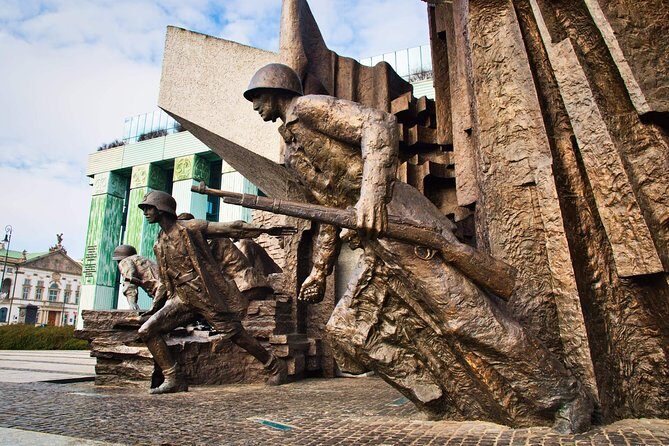
One of the most striking stops is the memorial to Mały Powstaniec, the Little Insurgent. This is dedicated to child soldiers who fought and died during the Warsaw Uprising of 1944.
What makes this stop hit is the way it reframes the conflict. Instead of treating 1944 as a distant headline, you meet it through a very specific and painful human reality. The audio framing helps you connect the uprising to the broader WWII story you are hearing as you walk.
Practical tip: stand where the audio cues you, then take a few extra seconds before you move on. This kind of memorial is often more meaningful when you slow down for a moment instead of just passing through.
How the WWII narrative connects: fighting for heritage against two powers
As you continue, the tour positions Warsaw as a city that fought hard to keep its identity. You get a clear storyline about struggles during WWII against Nazi Germany and also the pressures that came later from Communist Russia.
The tone here matters. It is not just about battles in the abstract. The narration frames the idea that Poland was trying to hold onto heritage and freedom while facing crushing forces.
I also like that the tour keeps you walking through the city while it builds context. That matters because in Warsaw, the physical layout and the postwar rebuilding are part of the lesson.
And yes, you get the big-picture theme spelled out: Warsaw is described as a phoenix, rising from WW2 ashes into the culture and beauty you see today.
Pausing at the Tomb of the Unknown Soldier: ashes and soil from every battlefield
Another key moment comes at the Tomb of the Unknown Soldier. The tour encourages a respectful pause, with the narration explaining the history of the monument.
The centerpiece detail is the one that sticks: today, it contains ashes and soil from every 20th-century battlefield where Polish soldiers lost their lives. That is a powerful way to understand the scale of loss without needing a classroom or a museum ticket.
If you are the type who tends to rush, this is where you should resist. Give yourself a minute or two longer than you think you need. The story works better when you take in the stillness.
A few more Warsaw tours and experiences worth a look




The finish at Piłsudski: why 1920 still matters in a WWII story
The walk ends face-to-face with Marshall Józef Piłsudski at the statue on plac Marszałka Józefa Piłsudskiego (00-073). The narration wraps up by describing him as a political and military hero who fought to free Poland from Russian control.
This ending also connects you to 1920. You hear how Piłsudski’s forces defeated Lenin’s red Army at the gates of Warsaw. Even if your main interest is WWII, this last section gives the “why” behind the long fight for independence.
It also makes the whole experience feel like one arc instead of a list of stops. You start in the Old Town area, you move through memorials tied to 1944, and you finish with a figure linked to earlier battles that shaped what Poland could become.
Price and value: $9.99 for an offline, 90-minute self-guided story
At $9.99 per person, this is priced like a low-stress add-on to your Warsaw day. The value comes from what you actually get: lifetime access to the Warsaw at War: 1939–1945 tour, plus the VoiceMap app with offline access to audio, maps, and geodata.
You also do not need to budget for museum admission along the route. The tour is built for outdoor walking with free entry moments and narration, so the $9.99 covers the experience, not a chain of tickets.
One more angle: the experience supports audio through multiple setups. You can wear ear buds, use headphones, or even carry a speaker for a small group. That flexibility makes it easier to travel the way you want.
For me, the “value” test is simple. If you enjoy self-guided walking that tells a story, this fits your style. If you only like guided talks with live interaction, you may feel the difference—but the audio production is designed to compensate.
What to bring and how to plan your timing
Think of this as a solid 1.5-hour block you can plug into a sightseeing day. Since the walk is about 3 km, wear comfortable shoes. You’ll be moving through city streets and stopping at memorials, so you want your feet to be happy.
Plan around the start location near public transportation. That matters because you might want to combine this with other Old Town activities before or after without a complicated commute.
Before you set off, make sure your audio setup is ready. Test your headphones or earbuds so you do not waste your first minutes fiddling with settings while you are trying to follow the route.
Who this self-guided Warsaw at War walk is best for
This tour is a good match if you want history on your feet, not boxed into a museum. It is also a nice fit for travelers who like to move independently, because you control pauses, detours, and photo stops.
It works for many ages, and the content is clearly built for broad audiences. If you want a respectful, reflective walk as well as a narrative guide, this combination is a strong reason to book.
On the other hand, if you are the type who gets easily frustrated by route alerts, pay attention to how the app handles navigation. One concern that comes up is that the alarm can trigger if you step off the intended path, even when you are still close by, like on the other side of the street. In that case, keep a calm pace and treat the route line as guidance rather than a strict lane.
Should you book this Warsaw at War 1939–1945 tour?
Book it if you want a compact way to understand Warsaw during WWII and its aftermath—through memorials, not just dates. The offline VoiceMap setup and lifetime access make it easy to use on the day you go and revisit later.
Skip it or rethink if you need ultra-simple navigation with zero alerts. The route guidance is generally helpful, but it may not feel perfectly forgiving if you walk slower, stop more often, or tend to wander without following the line precisely.
If your travel style is independent and you like story-led walks, this one is worth the $9.99.
FAQ
How long is the Warsaw at War 1939–1945 self-guided audio tour?
The tour is approximately 1 hour 30 minutes.
What is the walking distance for the route?
The total walking distance is about 3 km.
How much does it cost?
It costs $9.99 per person.
What language is the audio tour offered in?
The tour is offered in English.
Where does the tour start and end?
It starts at Kościół Akademicki św. Anny on Krakowskie Przedmieście 68, and it ends at the Statue of Józef Piłsudski at plac Marszałka Józefa Piłsudskiego.
Is the audio and map content available offline?
Yes. You get offline access to audio, maps, and geodata in the VoiceMap application.
Can I cancel for a refund or make changes?
No. This experience is non-refundable and cannot be changed for any reason.