REVIEW · WARSAW
Warsaw in World War 2 Walking Tour
Book on Viator →Operated by Orange Umbrella Free Tour · Bookable on Viator
Walking Warsaw’s WWII scars makes history feel close. This 2.5-hour route strings together major WWII sites across central Warsaw, from Castle Square to the Warsaw Ghetto area, with an easy-to-follow story told in English. I especially like how the stops are short and focused, so you get context fast without getting lost in long lectures.
I love the practical extras: a free city map and admission that’s ticket-free at each scheduled stop. And when the group gets bigger, the guide’s delivery helps you hear the details clearly, including the use of a voice amplifier on some days.
One thing to consider: the subject matter is heavy, and there aren’t planned breaks for restrooms, so plan ahead if you need that sort of pause during the 2 hours 30 minutes.
In This Review
- Key things to love on this Warsaw in World War 2 walk
- How this 2.5-hour route gives you the wartime Warsaw you came for
- Start at Sigismund’s Column and Plac Zamkowy: the stage before the break
- Presidential Palace area: Deutsches House and staged power
- Plac Marszalka Józefa Pilsudskiego: offices, control, and the paperwork of oppression
- Tomb of the Unknown Soldier: multiple fronts and the Saxon Palace loss
- Reduta Bank Polski: partially destroyed walls and the Warsaw Uprising
- Warsaw Ghetto: the wall memorial and daily life under confinement
- Ogrod Krasinskich and Nalewki street: a local route through the uprising in miniature
- Warsaw Uprising Monument at Krasinski Square: why 1944 still pulls people in
- Price and value: what $19.20 buys you in Warsaw
- Timing, meeting point, and the practical stuff that saves your day
- What the guide style feels like on the walk
- Who this tour suits best (and who may want a different pace)
- Should you book Warsaw in World War 2?
- FAQ
- How much does the Warsaw in World War 2 Walking Tour cost?
- How long is the tour?
- What language is the tour offered in?
- Where does the tour start?
- Where does the tour end?
- What time does the tour begin?
- What’s included in the ticket price?
- Are there admission tickets needed for the stops?
- What’s the group size limit?
- What is the cancellation policy?
Key things to love on this Warsaw in World War 2 walk
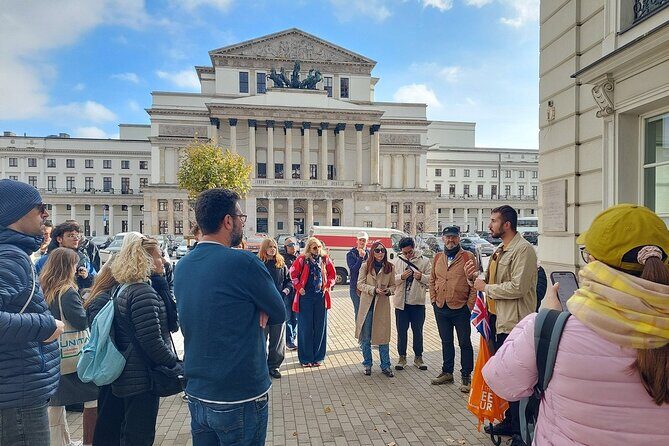
- Ticket-free visits at every stop so you’re not juggling entry lines
- A tight 2.5-hour WWII storyline that moves from occupation to uprising
- English guide with audio support when needed, including voice amplification
- Short, scene-by-scene segments that keep your attention while walking
- A meaningful route ending at the Warsaw Uprising Monument in Krasinski Square
How this 2.5-hour route gives you the wartime Warsaw you came for
Warsaw’s WWII story can feel huge. This walk helps because it stays disciplined: you move through key places tied to occupation policies, Jewish life in the ghetto, and the build-up to the Warsaw Uprising. Each stop is timed like a chapter, so you get a clear sequence without needing a degree in Polish history to keep up.
You’ll also get a built-in structure for exploring afterward. Once you know why these places matter, you can look at the city differently: what survived, what was destroyed, and what the postwar memory choices try to teach.
The group is capped at 25 people, which is a sweet spot for questions while still keeping the pace moving. If you’re sensitive to crowds or noise, you’ll still want to show up on time and stand where you can see and hear the guide.
You can also read our reviews of more walking tours in Warsaw



Start at Sigismund’s Column and Plac Zamkowy: the stage before the break
Your tour meets by Sigismund’s Column in Castle Square (Plac Zamkowy). The guide’s opening sets you up with the idea that Warsaw wasn’t just a backdrop; it was a living city with institutions, routines, and street-level reality. That matters because WWII in Warsaw isn’t only about big dates. It’s about how a city’s normal flow gets twisted, then crushed.
At this first stop, you should expect a quick orientation: where you are in the city center, why the square matters, and how the war era reshapes the meaning of landmarks. The guide usually keeps it to about 20 minutes, which is a good length to get your bearings without front-loading everything.
Tip: if the weather is harsh, use this opening stop to get your coat sorted and your phone charged. You’ll be outside for most of the tour, and you don’t want to spend later segments dealing with distractions.
Presidential Palace area: Deutsches House and staged power
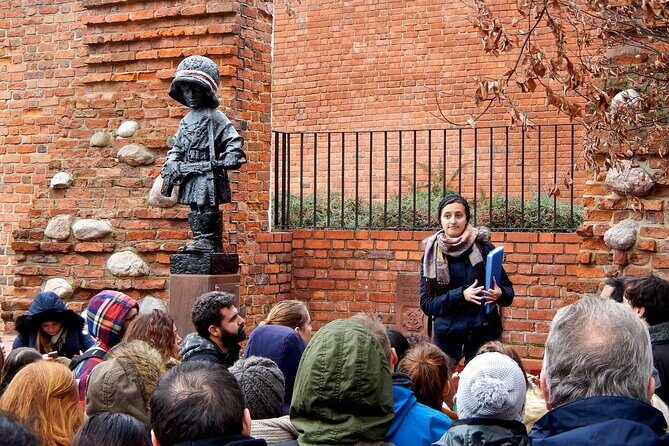
Next, you’ll head to Palac Prezydencki (Presidential Palace area). This stop focuses on the Nazi-German occupation period, when a building known as the Deutsches House stood here. The guide talks about Nazi ceremonies linked to that setting, which is chilling because it shows how power used public performance to enforce control.
This is one of the most uncomfortable parts of any WWII walk: not because the facts are unclear, but because the intent is so obvious. Ceremonies weren’t just decoration. They were messaging. And the buildings that hosted them become part of the psychological landscape of occupation.
Practical note: this segment is also about 20 minutes, so listen closely early on. Later stops cover the personal side of survival and resistance, and the contrast lands harder when you already understand what the occupiers tried to project here.
Plac Marszalka Józefa Pilsudskiego: offices, control, and the paperwork of oppression
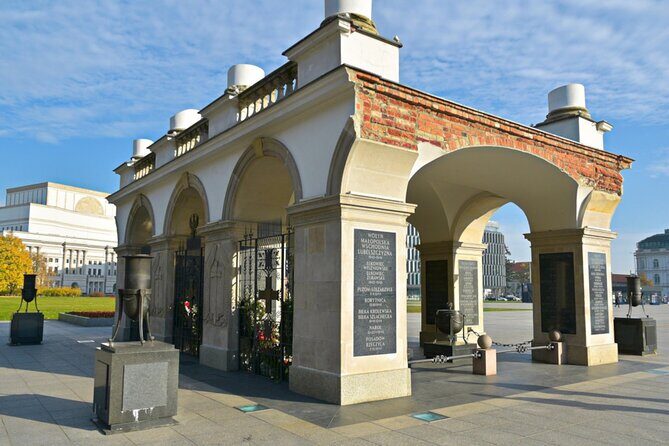
At Plac Marszalka Józefa Pilsudskiego, you’ll hear about the square as the center of the former Nazi-German district. The guide points out how offices and administrative functions clustered around this area, turning parts of Warsaw into a machine for governance, exploitation, and repression.
This stop is valuable because it reminds you of a basic truth: oppression often runs on systems. You’re not just walking past monuments. You’re walking through the geography of enforcement—where decisions get made, orders get issued, and cruelty gets processed.
The tour keeps the timing around 20 minutes, which gives the guide enough room to connect the physical space to the human impact. It’s also where you’ll likely start asking your own questions, since the story naturally opens up topics like how occupation laws shaped daily life.
Tomb of the Unknown Soldier: multiple fronts and the Saxon Palace loss
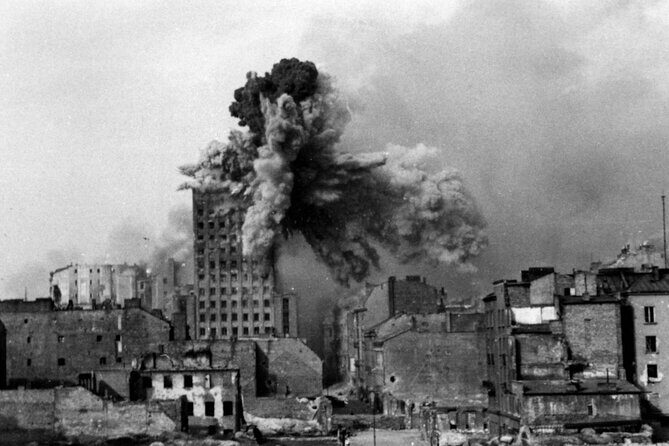
Then you reach the Tomb of the Unknown Soldier. Here the guide shifts toward Polish sacrifice on different fronts during WWII and connects that to the destroyed Saxon Palace in the last days of the occupation.
This stop works because it’s symbolic, but not vague. The guide ties meaning to specific loss: the way Warsaw was damaged not only by battles but also by a late-war decision to erase. If you’ve only been thinking about 1944, this stop widens your view—showing that the war’s reach affected many directions at once.
You’ll get about 20 minutes here. It’s long enough for you to absorb why this monument still matters, and for the guide to connect Polish soldiers’ experience across different theaters to what was happening right in Warsaw.
If you’re the type who likes to pause and read plaques, this is a good moment to slow down—just don’t let your reading time shrink the rest of the walk. The tour is built as a chain.





Reduta Bank Polski: partially destroyed walls and the Warsaw Uprising
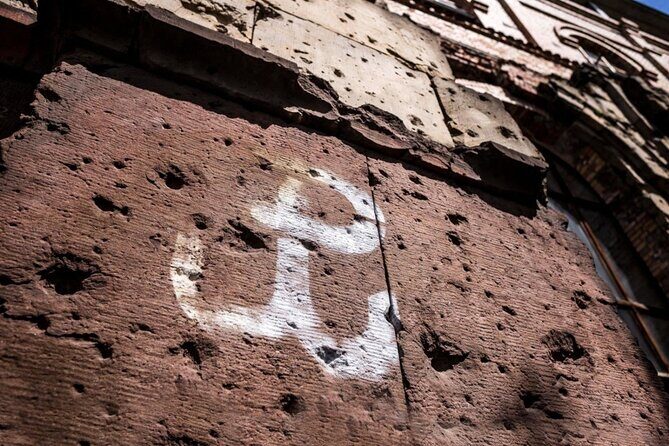
Next is Reduta Bank Polski, one of the last partially destroyed buildings still standing in Warsaw’s city center. This stop zeroes in on the Warsaw Uprising, and the building itself becomes part of the lesson. You’re seeing a scar you can still walk around.
The guide explains how this area connects to the uprising, and why even damaged structures can function like memory tools. They don’t just represent the past. They show you what the city chose not to fully erase.
It’s one of the shorter segments at about 15 minutes, which makes it easy to miss if you drift mentally. Pay attention because the takeaway is strong: destruction wasn’t a side effect. It shaped what survived, what was rebuilt, and what became official remembrance.
If you’re sensitive to the scale of loss, this is where your emotions might spike. That’s normal. Just remember the goal isn’t to soak in misery—it’s to understand how Warsaw lived through it.
Warsaw Ghetto: the wall memorial and daily life under confinement
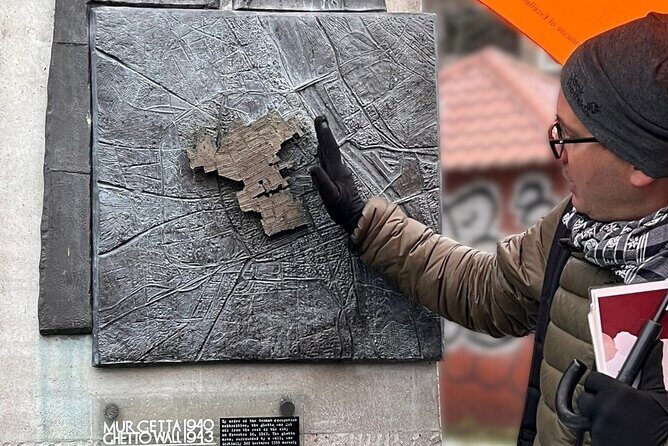
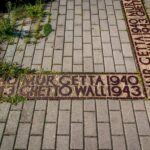
At Warsaw Ghetto, you’ll stand at a memorial connected with the Ghetto Wall. Here the guide talks about life in the Jewish Ghetto, focusing on what confinement meant in practice rather than only describing events at a distance.
This stop is about 15 minutes, and that brevity forces clarity. You’ll get key context: how people were trapped, what daily routines looked like when movement and safety were stripped away, and why the ghetto became central to later resistance.
This part of the walk is not a debate about history. It’s about human scale: the difference between a name on a memorial and the lived reality behind it.
Practical tip: if you’re photographing, do it early. Near memorials, light can shift and your position matters. Also, keep your voice low; the tone here is meant to be respectful and steady.
Ogrod Krasinskich and Nalewki street: a local route through the uprising in miniature
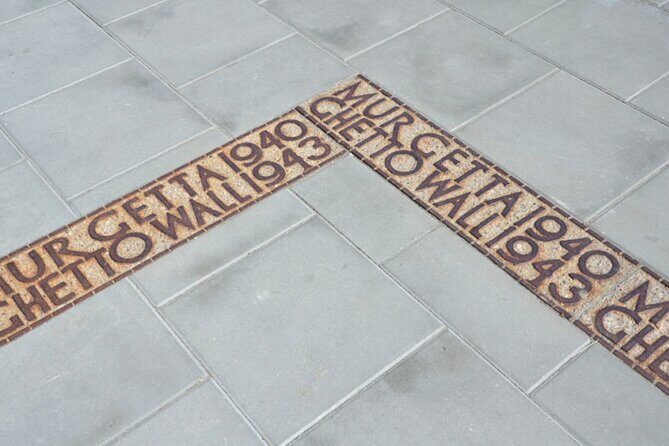
Next comes Ogrod Krasinskich, described as a relic area connected to Nalewki street, running along the park. The guide uses this space to talk about the uprising in the Warsaw Ghetto, showing how resistance wasn’t abstract—it happened in specific neighborhoods with specific streets.
This stop works well because it gives you a sense of geography. When you hear about uprising planning or desperation, it can sound like it happened everywhere at once. Here, you’re reminded that it was rooted in particular streets and communities.
You’ll spend about 20 minutes in this area. It’s long enough for the guide to connect what you saw at the ghetto wall memorial to the lived geography of resistance. And it’s also a slightly different sensory experience: parks and open space change the pace of your body even if the story stays intense.
Warsaw Uprising Monument at Krasinski Square: why 1944 still pulls people in
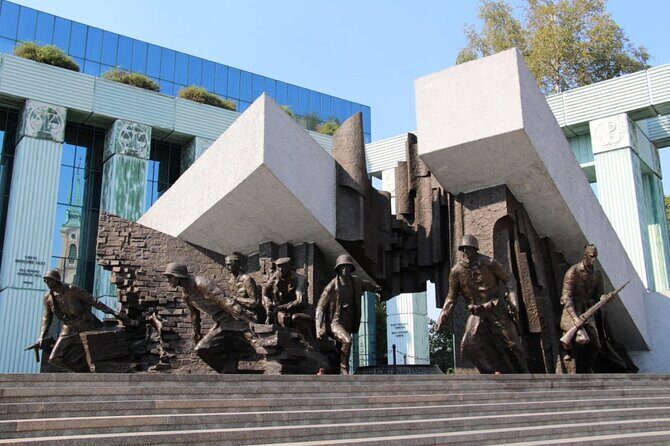
You finish at the Warsaw Uprising Monument in Krasinski Square. This is the big endpoint, the place that centers the story. The guide discusses preparations, the odds, the outbreak in 1944, and the eventual suppression.
This stop is about 20 minutes, and it’s where the tour’s emotional arc lands. Earlier stops show the machinery of occupation and the lived reality of ghetto life. Here, the guide ties it together with the decision to resist—what people hoped for, what they faced, and why the uprising became such a lasting symbol.
The route ends roughly half a mile from where you started, but don’t think of that distance as a quick stroll. It adds up because the tour keeps steering your attention to meaning, not just motion.
If you want to continue exploring afterward, this is a smart end point. You’ll be right by a major memory space and you can branch off in multiple directions from there.
Price and value: what $19.20 buys you in Warsaw
At $19.20 per person, this is a low-risk way to get an overview of WWII in Warsaw without spending hours piecing sources together. You’re paying for a guide who can connect sites, explain the context, and keep the route coherent in 2 hours 30 minutes.
A big value factor is the free city map included in the experience. Maps are only useful if you know what to look for, and this tour gives you that first layer of direction.
Another value win: the scheduled stops are admission ticket free as part of the plan. That matters in a city where entry fees and timed tickets can pile up fast on a short trip.
If you’re in Warsaw for one or two days and want your bearings fast, this tour is a practical starting point. If you have more time, it also works as a foundation before you go deeper on your own.
Timing, meeting point, and the practical stuff that saves your day
Start time is 1:30 pm, and the tour meets at the Sigismund’s Column area in Castle Square (Plac Zamkowy). The tour ends near Krasinski Square, around half a mile from the start point.
It also runs with a mobile ticket, which is handy if you don’t want to juggle printouts. The tour is offered in English, and the group size stays at a maximum of 25.
Show up a bit early. You want to be lined up before the guide starts, especially because this tour is built for listening and moving on schedule.
And because there aren’t planned longer pauses, you’ll get the most out of the experience if you grab water beforehand and keep a steady pace through the whole route.
What the guide style feels like on the walk
You’ll feel the guide working in short segments, moving you from stop to stop with clear direction. The pace is designed to cover major events and locations, not to linger so long that you miss later context.
On some days, guides have used a voice amplifier to keep the story audible with a larger group. That’s a comfort detail you’ll appreciate if you ever struggle to hear on walking tours.
You’ll also have opportunities to ask questions while you’re moving between stops. That matters because WWII details often raise your own curiosity: why a specific building was chosen, what a monument represents, or how ghetto life connects to later uprising plans.
Who this tour suits best (and who may want a different pace)
This walking tour is ideal if you want an organized introduction to Warsaw in WWII: occupation, ghetto life, and the 1944 uprising. It’s also a good fit for first-timers, because the route hits major anchors you can build on right away.
If you prefer lightweight sightseeing, you might find this emotional territory challenging. The story here is heavy, and the tour keeps moving without long breaks.
If you’re traveling with limited mobility, the tour notes say most people can participate and it’s near public transportation, but the walk is still a walking tour. Wear shoes you trust and plan for standing outside most of the way.
Should you book Warsaw in World War 2?
Book it if you want a structured, English-language introduction to the places that define Warsaw’s WWII memory. At $19.20, with a free city map and ticket-free stops, it’s good value for a short schedule.
Skip it or choose a slower option if you need frequent pauses, or if you know you handle intense historical topics better with more time to decompress between sites. This one is built as a continuous arc.
If you do book, do this one favor: go in with one question in mind, like how the occupation changed daily life, or why the uprising happened when it did. The guide will give you the pieces—you’ll just be ready to connect them.
FAQ
How much does the Warsaw in World War 2 Walking Tour cost?
The price is $19.20 per person.
How long is the tour?
The duration is approximately 2 hours 30 minutes.
What language is the tour offered in?
The tour is offered in English.
Where does the tour start?
It starts at Sigismund’s Column, Plac Zamkowy, 00-001 Warszawa, Poland.
Where does the tour end?
It ends at plac Krasińskich, Warsaw, Poland, near the Warsaw Uprising Monument (around half a mile from the start).
What time does the tour begin?
The start time is 1:30 pm.
What’s included in the ticket price?
You get a mobile ticket and a free city map.
Are there admission tickets needed for the stops?
The scheduled stops are listed as admission ticket free.
What’s the group size limit?
The tour has a maximum of 25 travelers.
What is the cancellation policy?
You can cancel for a full refund up to 24 hours in advance of the experience’s start time.