REVIEW · WARSAW
Life Behind the Iron Curtain Warsaw Walking Tour
Book on GetYourGuide →Operated by Warsaw UnDiscovered · Bookable on GetYourGuide
Cold War Warsaw has a strange sense of humor.
This walking tour turns big political ideas into very real street corners, with socialist realism details and censorship topics you can actually point at. I especially liked how the guide uses sharp, funny storytelling to explain daily life under communist rule, and how the route hits major landmarks without feeling like a textbook.
The best part is getting the personal, on-the-ground feel from guides like Olivia and Agnieszka, who keep the pace easy to follow and welcome questions. One drawback: this is still a longish walk (about 3 km), so it’s not ideal if you struggle with walking distances.
In This Review
- Key Highlights You’ll Feel on the Walk
- Why This Tour Works Better Than a Museum Visit
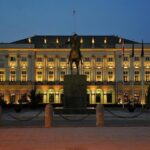
- Getting Your Bearings: Constitution Square as the Opening Scene
- Marszałkowska Street: Power Looks Like a Parade Route
- Socialist Realism: When Style Was Political
- Memoriał Wolnego Słowa: Free Speech as a Real Scar
- Centrum Bankowo Finansowe: Modern Looks, Old Machinery
- Cedet Department Store: The Joke Behind Empty Shelves
- Dworzec Centralny: Where Mobility Meets State Limits
- Palace of Culture and Science: The Monument That Carried Arguments
- Finishing Point at Emilii Plater 54: Leave With a Mental Map
- Price and Time: Is $32 Good Value for a 2.5-Hour Walk?
- Who This Tour Suits Best (And Who Might Want to Skip It)
- A Note on Guides: Olivia’s Family Stories and Agnieszka’s Q&A Pace
- Should You Book Life Behind the Iron Curtain in Warsaw?
- FAQ
- How long is the Life Behind the Iron Curtain Warsaw Walking Tour?
- What distance will I walk?
- Where do I meet the guide?
- Is the tour in English?
- Is the tour wheelchair accessible?
- What is included in the tour price?
- Is there an entry fee included for the Palace of Culture and Science terrace?
- Who is the tour not recommended for?
- Can I get a refund if plans change?
Key Highlights You’ll Feel on the Walk
- Constitution Square as the starting lens for Warsaw under communist planning
- Marszałkowska Street and why its width mattered for parades and power
- Memoriał Wolnego Słowa and the practical story behind censorship and espionage
- Socialist realism examples, plus why it looked nice to officials but not always to locals
- Party HQ area and the way control shows up in architecture and location
- A route that mixes major monuments with the “how people really lived” angle
Why This Tour Works Better Than a Museum Visit
Warsaw can feel like a city of layers: old Europe, war scars, rebuilds, and then the Cold War years. Most tours cover the dates. This one covers the texture of life—what it meant when the state told you where to go, what to say, and what you could buy.
I like that the tour stays grounded in physical places you can revisit later on your own. You’ll walk past buildings that look normal today, then hear how they functioned when politics ran everything. And you’ll hear about the absurd parts—because communism wasn’t just brutal. It was also, for many people, ridiculous in daily life.
The humor is real, but it never hides the point. The message is clear: people survived through smarts, improvisation, and plenty of sideways thinking. If you enjoy stories that connect architecture to everyday choices, this is a strong fit.
You can also read our reviews of more walking tours in Warsaw

Getting Your Bearings: Constitution Square as the Opening Scene
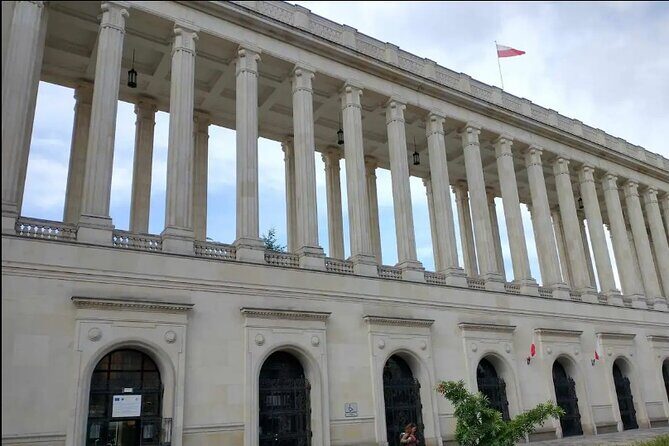
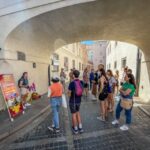
You start at Constitution Square. It’s a good first stop because it frames Warsaw as a planned, reshaped city—not just a place that happened to grow.
From the start, you get an explanation of how communist power tried to present itself as modern and inevitable. That makes the later stops click. When you see the grand, official-looking spaces later, you’ll have the context for why they were built the way they were.
Practical note: this is where your guide sets tone, pace, and expectations. You’ll want to be there a few minutes early to find the guide with the white and green umbrella.
Marszałkowska Street: Power Looks Like a Parade Route
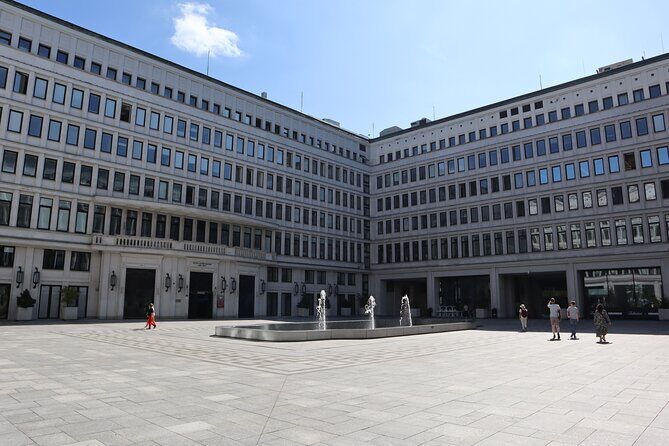
Next comes Marszałkowska Street, famous for its wide, showy stretch through central Warsaw. Here’s the key idea: width is not an aesthetic accident. It’s built for movement—marches, parades, and the kind of mass visibility that makes the state feel all-present.
Walking this corridor, you can understand the emotional trick of power. A wide avenue lets crowds stretch, banners read clearly, and uniforms become the message. Even when you’re not imagining a march, you’ll feel why planners cared so much about the geometry.
This is also where the tour leans into the “absurdity” theme. The story isn’t only repression. It’s also the mismatch between official slogans and the real experience of living there.
Socialist Realism: When Style Was Political
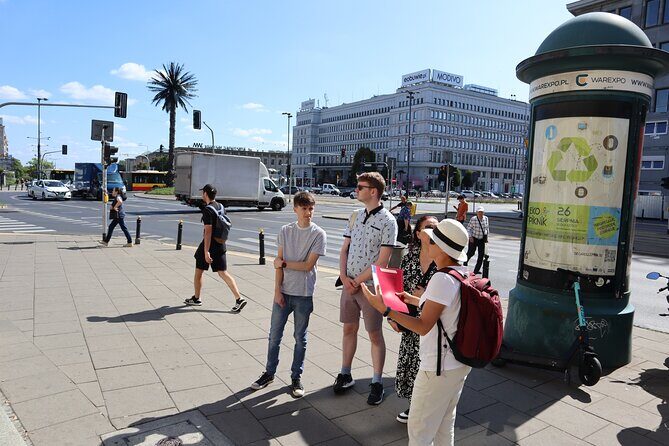
Then you turn to socialist realism—the official art and propaganda style that communist states pushed as the look of the future. The tour includes “perfect examples,” which is useful because you’re not just hearing opinions. You’re looking at specific design choices: heroic faces, polished labor scenes, and an insistence on optimism.
Here’s what I found most useful: you learn why it could look pleasant at first glance while still being contested in real life. The guide explains the difference between what was supposed to feel uplifting and what people actually experienced.
And yes, that contrast matters. If you only judge socialist realism by how it looks today, you miss the point of why it was used. This tour helps you connect visual language to control.
Memoriał Wolnego Słowa: Free Speech as a Real Scar
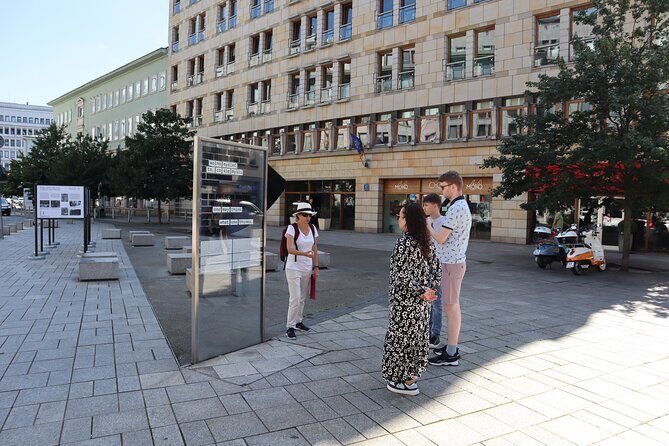
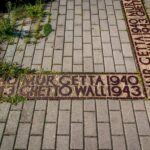
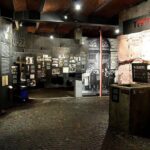
One of the most memorable parts of the walk is Memoriał Wolnego Słowa (the Free Speech Memorial). This is where the tour gets into censorship and espionage in a way that feels practical rather than abstract.
You’ll talk about how information wasn’t “free” in the way we mean it now. The state didn’t just punish actions. It managed messages. That meant fear, self-censorship, and constant uncertainty about who was watching.
I like that the guide keeps bringing things back to how ordinary people adapted—how you learned what to say, when to say it, and how to keep relationships safe. It’s heavy material, but the tour’s tone stays intelligent and human.
This stop is also a good reminder that freedom of speech isn’t only about laws. It’s about everyday risks.


Centrum Bankowo Finansowe: Modern Looks, Old Machinery
Next you pass Centrum Bankowo Finansowe. Even without any special entry, it becomes a useful waypoint for understanding how power and institutions present themselves.
The theme here is continuity in the way major services and decision-making show up in the city. When you hear the story behind communist-era control, it’s easier to notice how later systems can still rely on the same kind of “big presence” feel.
The tour doesn’t pretend every later building is communist. Instead, it shows how location and institutions influence power—then helps you spot those patterns while you walk.
Cedet Department Store: The Joke Behind Empty Shelves
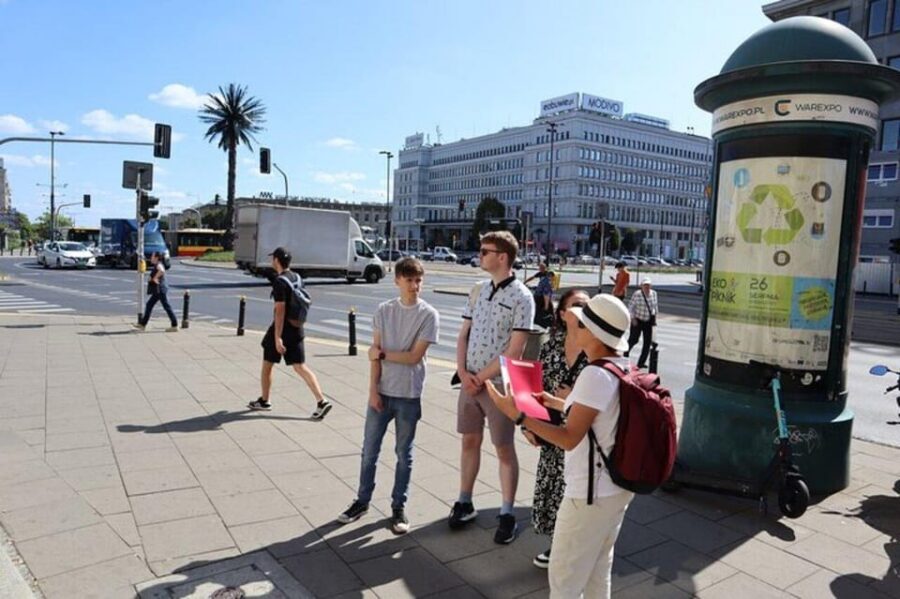
Then comes Central Department Store Cedet, one of the most entertaining stops on the route because it’s where absurd policy becomes visible in plain sight.
The guide connects the dots between how the state managed the economy and why shops could look open while being effectively empty. That mismatch between expectation and reality is one of those communist-era absurdities that sticks with you.
If you’ve ever wondered how people handled shortages, rationing, and the daily hassle of “will there be anything today?” this is where you get the answer style the tour focuses on: practical adaptation plus humor. People learned to game the system, plan around supply, and treat shopping like a strategic mission.
And it gives you an emotional lesson too. When resources are controlled, even small purchases become political moments.
Dworzec Centralny: Where Mobility Meets State Limits
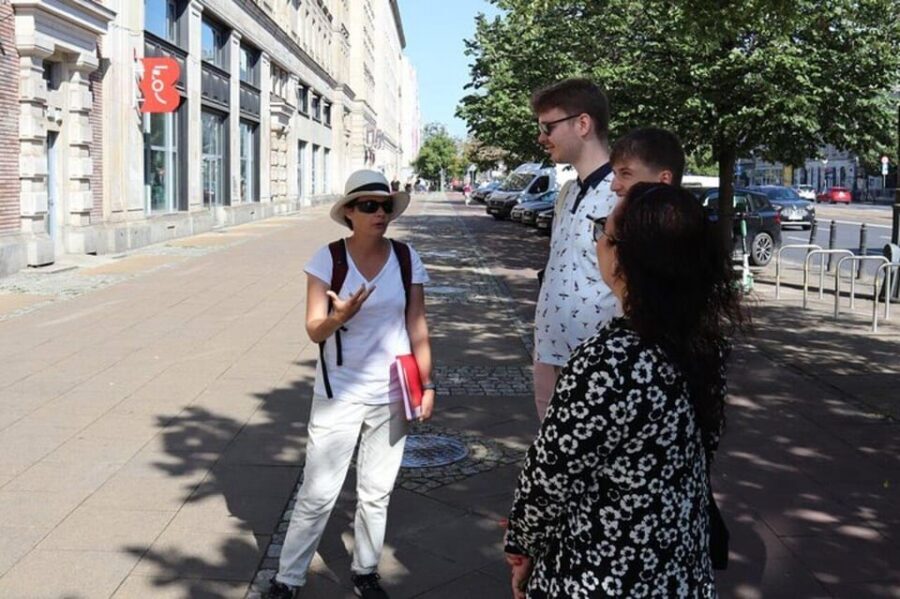
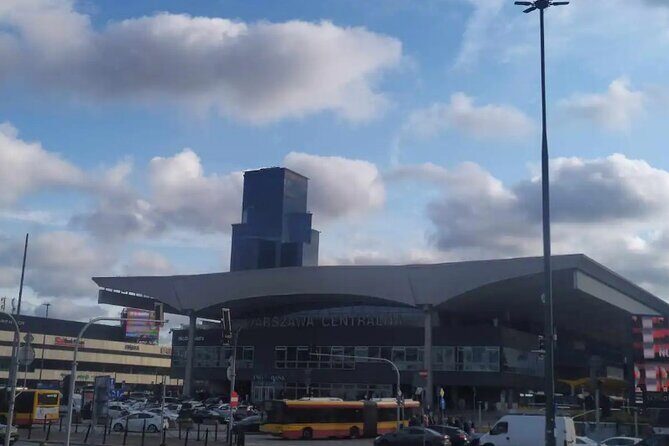
Next is Dworzec Centralny Warszawa. Stations are usually about freedom of movement in our minds. Here, the tour reframes mobility as something the state monitored and shaped.
You’ll learn how communist control worked to limit travel and reduce exposure to ideas from outside. That doesn’t mean no one traveled. It means travel wasn’t simple, and it wasn’t fully yours to choose.
Walking near the station with this context makes it easier to notice the difference between a modern transport hub and what mobility meant under repression. It’s a good stop for turning the “life was hard” idea into a clearer story about risk and restrictions.
Palace of Culture and Science: The Monument That Carried Arguments
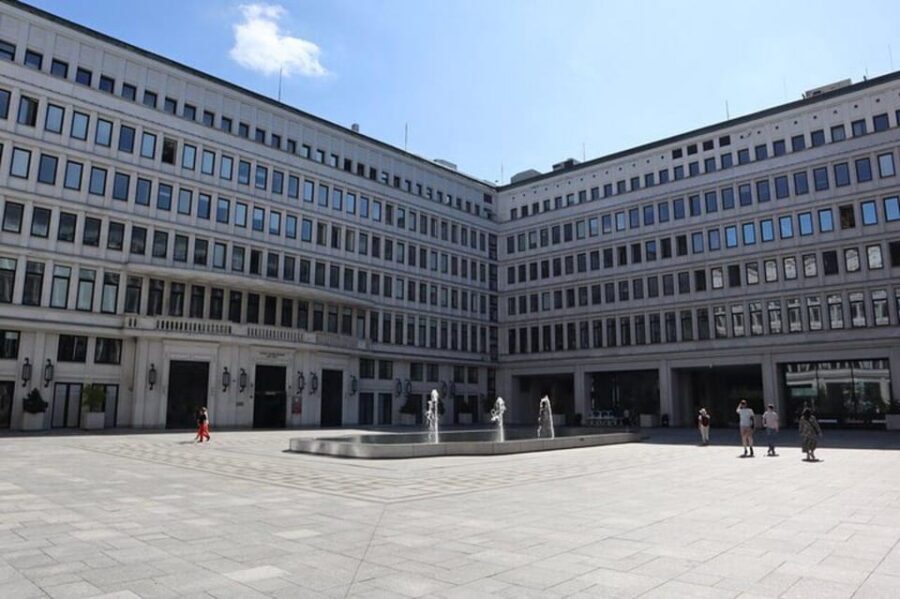
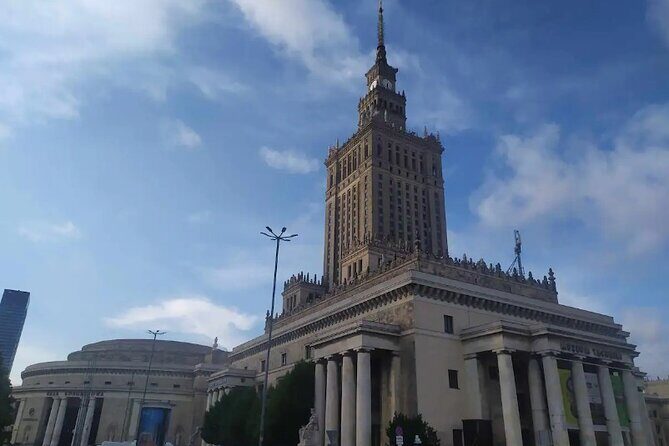
The tour then heads to the Palace of Culture and Science. This is one of Warsaw’s most visible structures, and it’s also one of the most loaded.
The guide uses it as a case study in how the communist state tried to project prestige, legitimacy, and control all at once. It’s not just “a big building.” It’s a message in stone and steel that influenced what people felt was possible.
You’ll also hear practical guidance on the viewing terrace option: the terrace entry fee is not included, but you can plan for it if you want the higher-angle perspective. Even if you skip the terrace, the exterior area works for understanding the monument’s role.
This stop is where I’d recommend you slow down and actually look. The building’s scale does part of the storytelling for you.
Finishing Point at Emilii Plater 54: Leave With a Mental Map
The tour ends at Emilii Plater 54. That matters because by the finish, the route has done its job: you now have a mental map of how Warsaw communicated power through streets, art, institutions, and even shopping behavior.
If you plan to spend more time in central Warsaw afterward, you’ll be better at choosing what to revisit. You won’t just see “pretty buildings.” You’ll notice which ones were part of the state’s performance.
And if you like asking questions, keep them for the final stretch. Many guides are best when they sense you’re actively tying what you saw to what you want to understand next.
Price and Time: Is $32 Good Value for a 2.5-Hour Walk?
At $32 per person for about 150 minutes on roughly 3 km of walking, I think this is fair value—especially for a city where guided context can save you a lot of guesswork.
Here’s why: this isn’t just sightseeing. It’s an organized explanation of censorship, espionage, socialist realism, and daily-life absurdities tied to specific places. That kind of “meaning per minute” is hard to replicate on your own unless you already know Warsaw’s Cold War geography well.
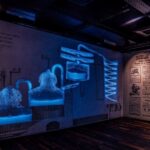
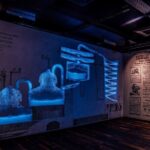
Also, you get a full info pack with useful links and an FAQ, plus visual aids that help you follow along. Those details matter because some of this subject can feel abstract until you see it tied to a building or an address.
One more practical factor: the tour offers private or small groups (and an English live guide), which usually helps with the Q&A feel. If you like a conversation rather than a lecture, that matters more than it sounds.
Who This Tour Suits Best (And Who Might Want to Skip It)
This tour fits you if you want a clear, street-level understanding of communist Warsaw. It’s ideal for people who like:
- history that’s explained through everyday life, not only dates
- architecture as evidence
- stories with wit, especially when the topic is heavy
It may be less ideal if:
- you have trouble with longer walking distances (the tour is about 3 km)
- you want a purely uplifting “good vibes” walk (this has real oppression themes)
If you’re the kind of traveler who likes to ask why things are shaped the way they are, you’ll get more out of it.
A Note on Guides: Olivia’s Family Stories and Agnieszka’s Q&A Pace
The tour is led by English-speaking guides connected to Warsaw’s story. I saw strong consistency in the feedback around Olivia and Agnieszka—both described as funny, informative, and very willing to answer questions.
What stands out is the way guides personalize the material. When the guide shares family history or personal connections, the Cold War stops being a distant event. It becomes something that shaped real people’s choices and risks.
That personal angle is also why this tour earns repeat praise. It doesn’t feel like a generic script.
Should You Book Life Behind the Iron Curtain in Warsaw?
Book it if you want the Cold War to make sense through actual locations. For me, the biggest reason is that the tour does something rare: it connects propaganda style, street planning, and day-to-day survival into one coherent story.
Skip it only if walking 3 km is a dealbreaker for your body or if you prefer history without political tension. Otherwise, this is a smart way to use about 2.5 hours in Warsaw and come away with a clearer, more human picture of what those decades felt like.
If you’re already planning other Warsaw sights, this tour is the one that gives you the context lens. It makes the city’s visible landmarks start telling their real stories.
FAQ
How long is the Life Behind the Iron Curtain Warsaw Walking Tour?
The tour duration is about 150 minutes (around 2.5 hours).
What distance will I walk?
The total walking distance is approximately 3 km.
Where do I meet the guide?
Meet at Constitution Square, and look for the guide holding a white and green umbrella.
Is the tour in English?
Yes. The live tour guide speaks English.
Is the tour wheelchair accessible?
Yes, the tour is listed as wheelchair accessible.
What is included in the tour price?
The price includes a full info pack (FAQ, useful links, and more), visual aids, and recommendations about additional places to visit and where to eat or drink.
Is there an entry fee included for the Palace of Culture and Science terrace?
No. Entry fee to the viewing terrace in the Palace of Culture and Science is not included.
Who is the tour not recommended for?
It is not recommended for travelers who have problems walking long distances.
Can I get a refund if plans change?
Yes. You can cancel up to 24 hours in advance for a full refund.