REVIEW · WARSAW
Warsaw: 2.5-Hour Dark Side – Praga District by a Retro Bus
Book on GetYourGuide →Operated by Warsaw Private Tours WPT1313 · Bookable on GetYourGuide
Praga has a darker story on wheels. I love the retro Jelcz cucumber ride plus the live English guide who talks you through what you’re seeing as you roll through neighborhoods most people skip.
I also really liked the tour’s mix of culture and flavor—Praga street art by the window, then a warm break with hot chocolate after you cross the Vistula. One consideration: there’s a small amount of walking, and the tour is not suitable for wheelchair users.
In This Review
- Key things you’ll notice on this Praga Dark Side bus tour
- Why Praga feels different from the postcard Warsaw
- Meeting point: Palace of Culture and Science, then get on the correct bus
- The retro Jelcz experience: comfort, timing, and group size
- Stop for hot chocolate: why the chocolate lounge break is a smart move
- Sacred Heart Basilica and Koneser: architecture plus the industrial-era punch
- The Basilica of the Sacred Heart of Jesus
- Koneser vodka factory: what was made here, and what now fills the space
- The Praga Bermuda Triangle: courtyards, shrines, and the feel of old Warsaw
- The marketplace stop: what’s open now?
- The live guide is the main event (Max, Konrad, and more)
- Price and value: is $41 worth 150 minutes in Praga?
- Who should book, and who should skip
- Should you book the Warsaw 2.5-Hour Dark Side: Praga bus tour?
- FAQ
- How long is the Praga Dark Side bus tour?
- What day and time does the tour start?
- Where is the meeting point?
- What does the tour cost?
- Is the tour offered in English?
- Is hot chocolate included?
- Is there walking involved?
- Is the tour wheelchair accessible?
- Are pets allowed on the tour?
- Can I cancel and get a full refund?
Key things you’ll notice on this Praga Dark Side bus tour
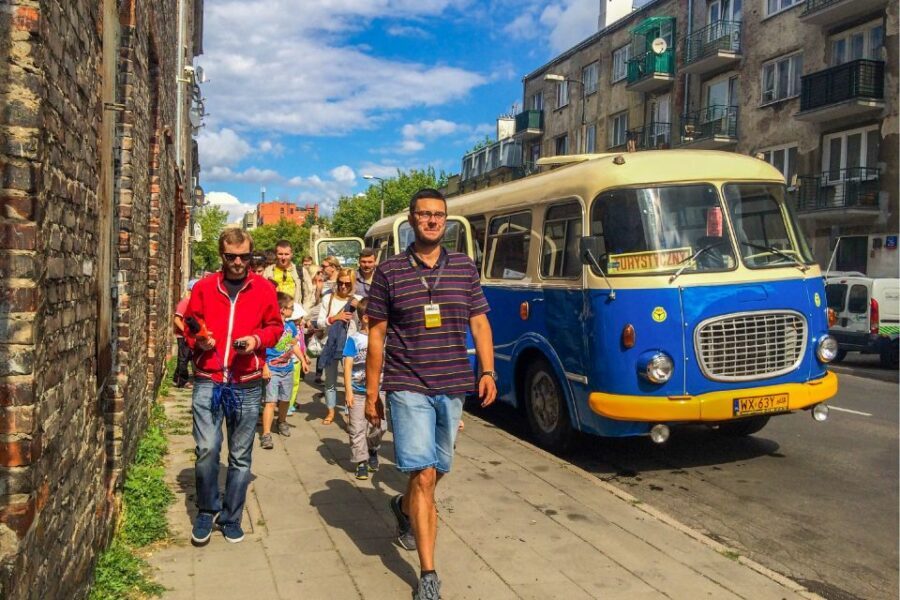
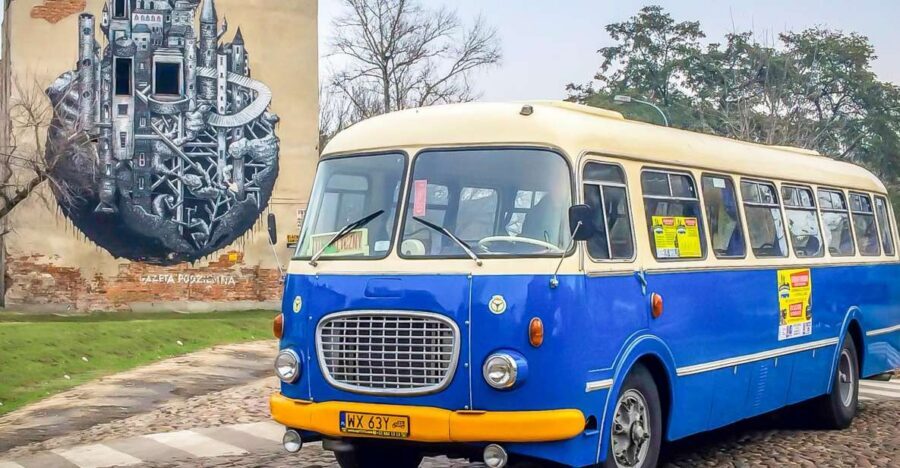
- Retro bus factor: You’ll ride a 1980s-style coach (Jelcz cucumber for larger groups).
- Live commentary: Your guide narrates from the bus, so you’re not just looking at buildings.
- E. Wedel hot chocolate stop: A planned chocolate lounge break to refuel mid-tour.
- Praga street art routes: You’ll see examples along streets like Zabkowska, Brzeska, and Stalowa.
- Koneser vodka factory stop: A major former industrial site, now part of a larger complex.
- Praga Bermuda Triangle streets: Pre-war courtyards, shrines, and real neighborhood atmosphere.
Why Praga feels different from the postcard Warsaw
If Warsaw is often packaged as palaces, monuments, and grand avenues, Praga is the side that feels more like a lived-in city. This tour leans into that contrast. You’re not chasing a single landmark photo spot. Instead, you’re getting a guided walk-through of how Praga gained its reputation and how that shows up in streets, buildings, and street-level life.
The best part for me is that it’s not just “here’s the dark history.” The guide frames the story with context as you move around. That matters because Praga’s look can be confusing if you only know the headlines. With live narration, you start noticing details you would otherwise miss: why certain streets are discussed the way they are, what the industrial era left behind, and how pre-war architecture still shapes the neighborhood.
And yes, you still get entertainment. The retro bus helps. The format helps. People in the reviews consistently mention guides like Max and Konrad (and other English-speaking guides) bringing the story to life with energy and humor. It turns what could be a heavy subject into something you can actually listen to for 2.5 hours.
You can also read our reviews of more tours and experiences in Warsaw.


Meeting point: Palace of Culture and Science, then get on the correct bus
You meet at the Palace of Culture and Science, at the tourist information point. If you use GPS, it helps to be extra careful. Some visitors report that directions can be slightly off, and the bus may be in the car park area rather than right at the main front you expect.
Practical tip: arrive 10–15 minutes early. Look specifically for the person running the check-in and the group forming at the tourist information area. If you’re standing in the wrong spot, don’t panic—just ask at the tourist info desk where the tour group boards.
The scheduled start is every Saturday at 11:00 AM. The tour duration is 150 minutes, so treat it like a half-day commitment, not a quick stop.
The retro Jelcz experience: comfort, timing, and group size
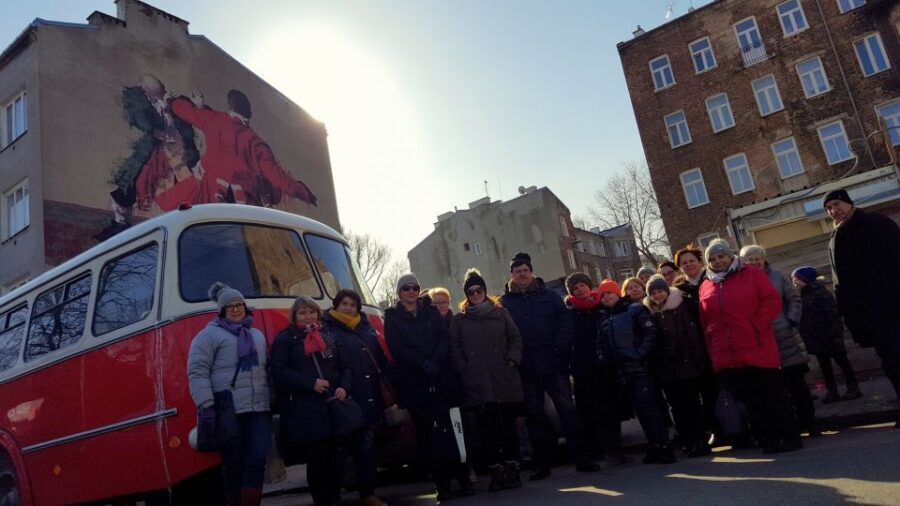
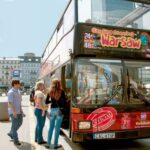
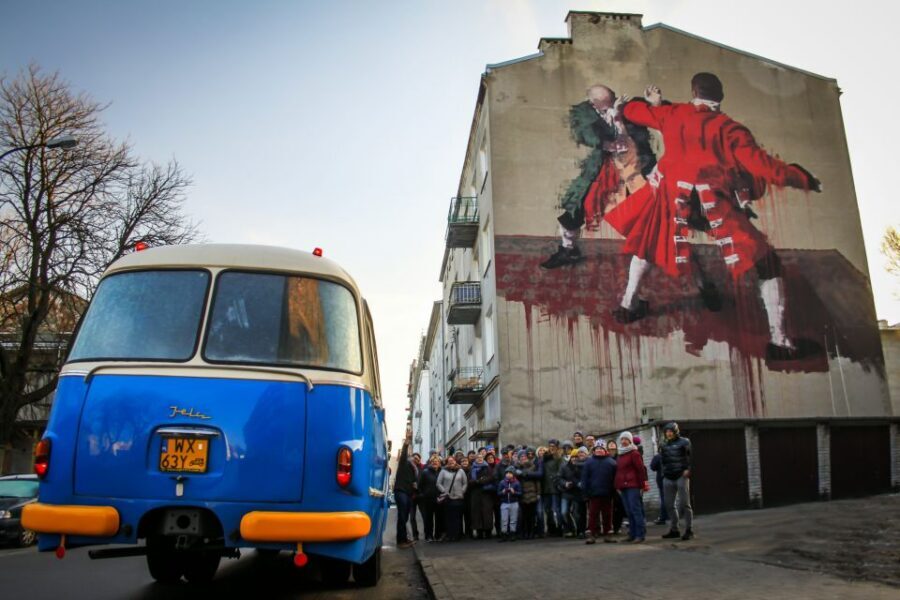
This isn’t a modern coach with quiet air conditioning and polite silence. It’s a working piece of Warsaw nostalgia, which adds fun right away. The tour uses a 1980s coach, and the bus changes based on group size:
- For groups up to 8 people, you may ride in a smaller Nysa mini retro bus.
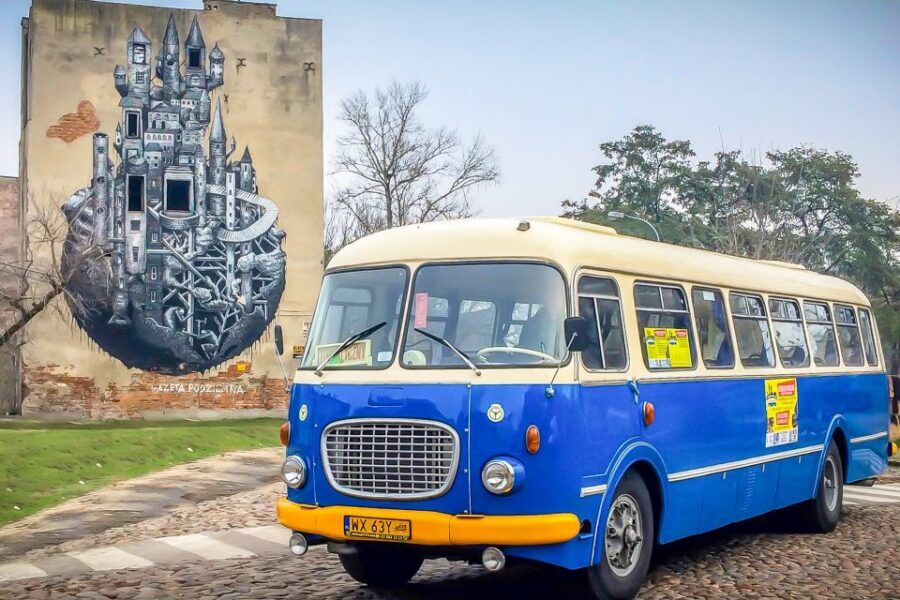
- If the group is larger, you’ll use the Jelcz cucumber retro bus.
In the feedback, people repeatedly call out the bus as part of the charm—old-school, characterful, and more comfortable than they expected. One small note: a few reviews mention sound system issues and one driver who seemed rushed. That doesn’t mean the tour is bad, but it’s worth understanding the reality of shared buses. If you sit where it’s noisy, you’ll miss some commentary, so try to find a seat with clear listening.
The pace also matters. You’ll do some walking, described as small, but it’s still enough that you’ll want comfortable shoes.
Stop for hot chocolate: why the chocolate lounge break is a smart move
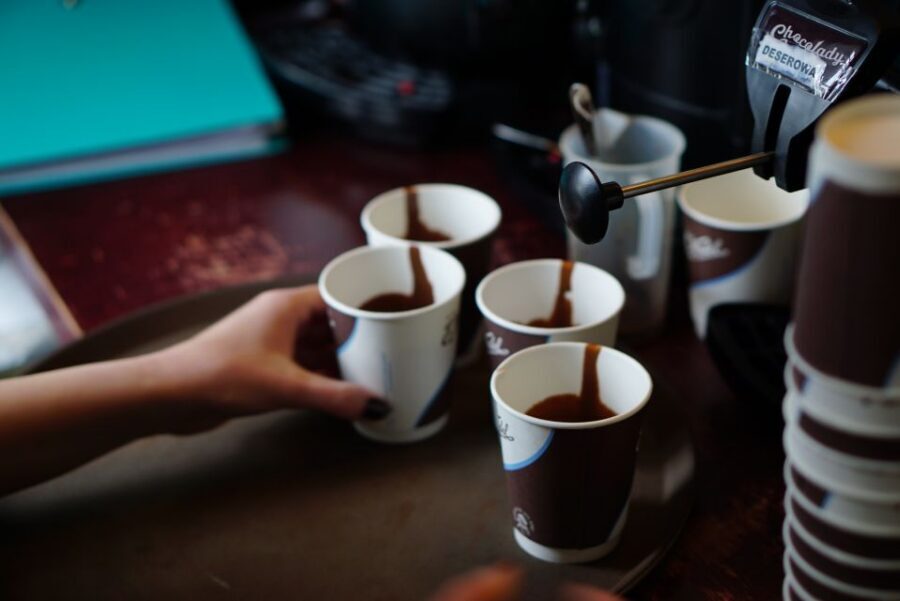
After you cross the Vistula River, your first real stop is a chocolate stop—there’s a story behind the company producing sweets in Warsaw since the mid-1800s, and you get a cup of hot chocolate.
This break does three things for you:
- It settles your mood before you head into the tougher, grittier streets.
- It gives you an easy reset so the next stops don’t blur together.
- It turns the tour into more than “look at buildings,” which is a big win on a 2.5-hour format.
Some visitors specifically mention E. Wedel and call the hot chocolate stop a standout moment. Even if you’re not a hardcore chocolate person, it’s a pleasant way to experience Praga with something warm in your hands, especially on cooler mornings.
If you want a photo, use the moment. People tend to focus on the city sights after this, and you might forget to capture the street vibe right away. Take one or two quick shots while you’re still fresh.
Sacred Heart Basilica and Koneser: architecture plus the industrial-era punch
The tour doesn’t jump straight to street art and courtyards. It builds in layers.


The Basilica of the Sacred Heart of Jesus
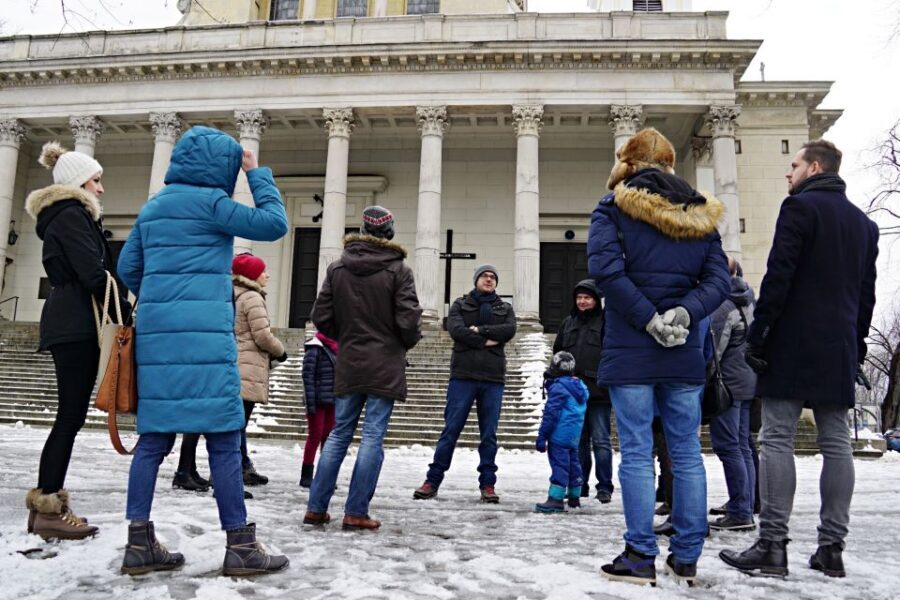
You’ll visit the Basilica of the Sacred Heart of Jesus, a major religious building with architecture inspired by the Roman basilica of St. Paul. Even if you don’t plan to go inside for long, the stop helps you understand how Praga isn’t just “the rough edge” of Warsaw. It also has monumental landmarks that shape the skyline and neighborhood identity.
Koneser vodka factory: what was made here, and what now fills the space
Next comes Koneser, a former vodka factory. The idea here is simple and effective: you’ll learn what was produced there and then see what occupies the complex today.
This stop is valuable because it connects the old Warsaw economy to the present-day city. A lot of tours mention history like it’s a museum label. This one treats it like a living transformation—factories that closed or changed, and buildings that found new roles. It’s a reminder that cities keep recycling their shells.
The Praga Bermuda Triangle: courtyards, shrines, and the feel of old Warsaw
This is where the tour earns its reputation.
You’ll cover the area nicknamed the Praga Bermuda Triangle, a name tied to local stories about confusion, danger, and the feeling of getting lost in a place that’s different from Warsaw’s “official” center. Your guide shares the origin of the name and then points out what makes the area distinctive.
What you should look for in the neighborhood:
- Pre-war architecture that still shows up in the street fabric
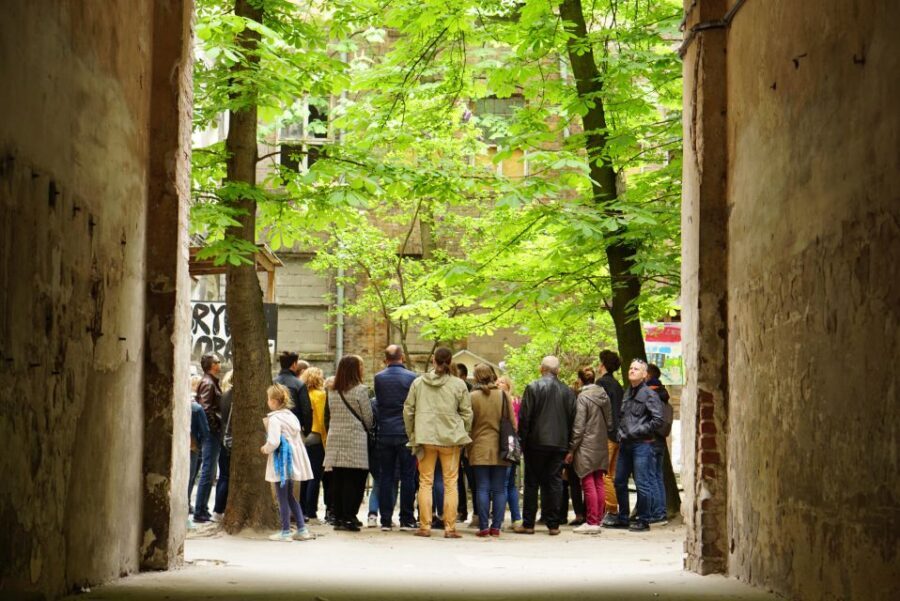
- Scenic courtyards tucked behind façades
- Colorful shrines inside these courtyards
One of the best parts of Praga is that it feels like you’re watching everyday Warsaw happen at human scale. In the tour context, that matters because the guide often references how film makers connect to this area. Roman Polański and The Pianist are mentioned as examples tied to the neighborhood’s look and atmosphere, which helps you understand why this district appears in culture in the first place.
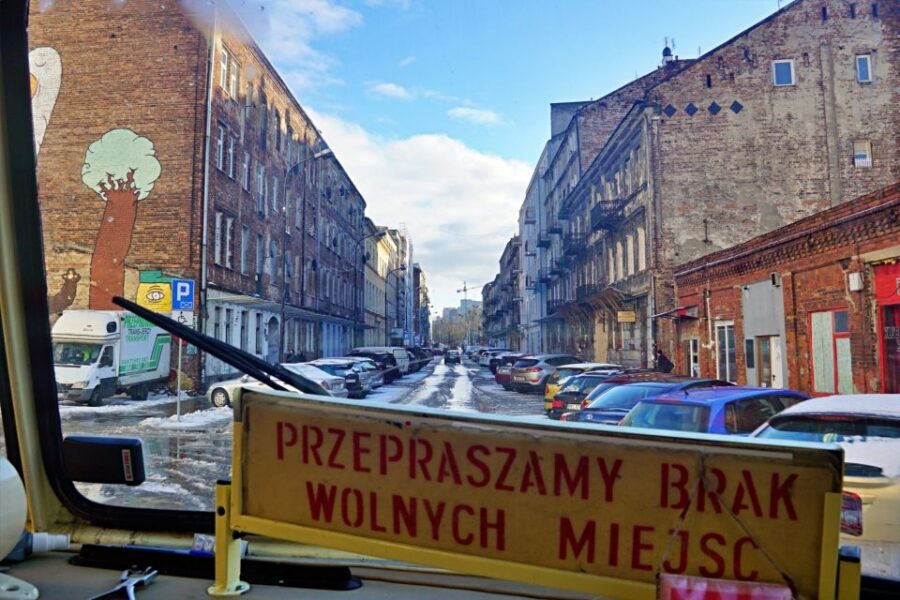
Also, you’ll pass through streets such as Ząbkowska, Brzeska, and Stalowa, and you’ll see street art examples along the route. This isn’t a “street art museum” stop where you circle one wall. It’s more like a walking-less route through the neighborhood’s creative side.
The marketplace stop: what’s open now?
The tour description mentions seeing a marketplace where you could buy everything from everyday items to more surreal goods—and then you’re encouraged to check whether it’s still open. I like this approach. It turns a story into a reality check. You get to compare past reputation with the present-day scene instead of treating the old details like a rumor.
The live guide is the main event (Max, Konrad, and more)
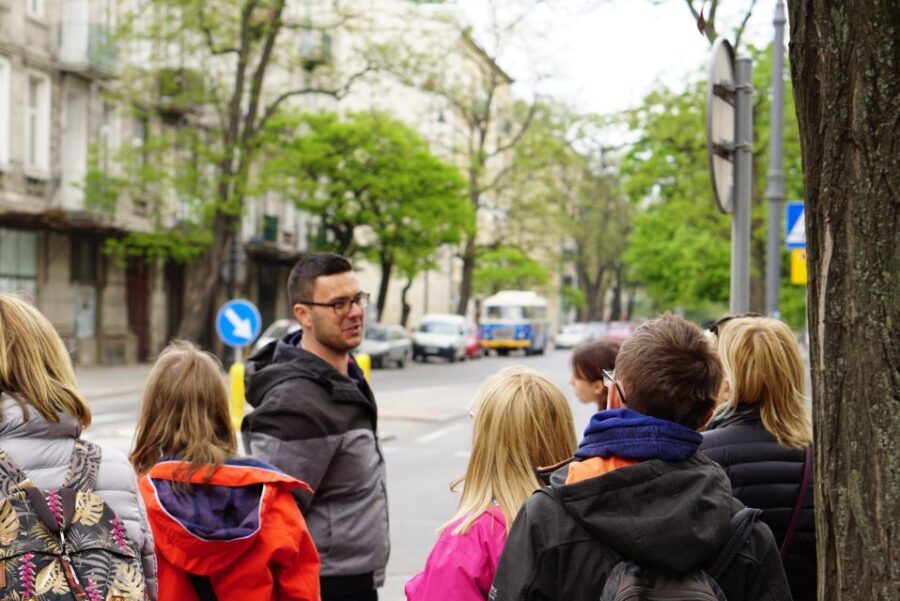
The single most praised aspect is the guide experience. Many reviews name guides such as Max and Konrad, plus others like Paweł, Rafal, and Marcin. The common thread is how they handle the balance: history without turning it into a lecture, plus humor without making light of real events.
If you’re choosing between this kind of tour and a standard hop-on route, this is why it wins. You’re not just moving through Praga. You’re interpreting it while you’re there.
A good guideline for your listening: don’t treat the bus commentary as background noise. If you want the tour to pay off, sit where you can hear, and be ready to look up when the guide names a street or building. The stories are tied to visible details, not just abstract facts.
Price and value: is $41 worth 150 minutes in Praga?
At $41 per person for 150 minutes, the value is mostly about what you get included:
- Transport by a retro 1980s-style coach
- A live English guide with on-board commentary
- A hot chocolate stop
- Multiple Praga focal points: architecture, industrial history, street art, and the Bermuda Triangle area
In plain terms, you’re paying for guided interpretation plus a built-in break. If you tried to replicate this yourself, you’d spend time figuring out what to see in Praga, how to connect the stops efficiently, and where the best chocolate break fits. You’d also miss the storytelling angle unless you’re doing serious pre-reading.
So I’d call it fair value if you want a guided half-day that feels different from the typical Warsaw checklist.
Who should book, and who should skip
This tour is a strong match if you:
- want an easy way into Praga without planning a complicated route
- enjoy street art and neighborhood atmosphere
- like guided history presented as stories, not speeches
- appreciate a warm break built into the middle of the outing
It’s not a match if:
- you use a wheelchair or need fully accessible routing, since it’s not suitable for wheelchair users
- you want almost zero walking, even though it’s described as small
- you get frustrated if bus audio isn’t perfect everywhere (a few reviews mention sound issues)
If you’re traveling with mixed interests—architecture lovers, photo people, and history fans—this tour tends to satisfy all of them because it mixes streets, buildings, and human-scale storytelling.
Should you book the Warsaw 2.5-Hour Dark Side: Praga bus tour?
I’d book it if you’re bored with the usual Warsaw loop and want a guided look at a district that feels rawer and more specific. The combination of retro bus fun, a live English guide, a hot chocolate stop, and the Praga street art + courtyards approach is exactly the kind of “second side of the city” experience that makes your trip feel complete.
Skip it only if mobility needs are a hard limit. Otherwise, go with the mindset that this is a neighborhood tour. You’ll learn more by paying attention to what the guide points out, not by trying to tick off every stop like a checklist.
FAQ
How long is the Praga Dark Side bus tour?
It runs for 150 minutes (about 2.5 hours).
What day and time does the tour start?
It runs every Saturday at 11:00 AM.
Where is the meeting point?
Meet at the Palace of Culture and Science, at the Tourist Information point.
What does the tour cost?
The price is listed as $41 per person.
Is the tour offered in English?
Yes. The tour guide provides live commentary in English.
Is hot chocolate included?
Yes. You get a cup of hot chocolate as part of the tour.
Is there walking involved?
Yes, there is a small amount of walking.
Is the tour wheelchair accessible?
No. The tour is not suitable for wheelchair users.
Are pets allowed on the tour?
No. Pets are not allowed.
Can I cancel and get a full refund?
Yes. You can cancel up to 24 hours in advance for a full refund.