REVIEW · KRAKOW
Krakow Jewish Ghetto and Quarter Audio Guided Walking Tour
Book on Viator →Operated by WalknTours · Bookable on Viator
Grit and hope, told step by step. This Krakow Jewish Ghetto and Quarter Audio Guided Walking Tour lets you follow GPS-guided narration at your own speed, with music and sound effects along the way. I like that it is set up for an outdoor walk you can start when you want, day or night, using your smartphone as your guide.
What I really like is how the route mixes major memory sites with street-level details you might miss on your own. You end at the Galicia Jewish Museum—a bookstore and museum stop with a big mural—so the story doesn’t just cut off when your phone’s directions end. It also feels like a thoughtful way to connect the ghetto history to the everyday places of the Jewish quarter.
One consideration: it is all outside and there is no human guide, so you need decent phone battery and comfort with walking while the subject matter stays heavy.
In This Review
- Key highlights you will actually feel on the route
- Starting at Plac Bohaterów Getta: how this audio tour really plays
- Key sites on the route: ghetto squares and memorial stops
- The pharmacy story and what it adds to the neighborhood view
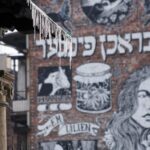
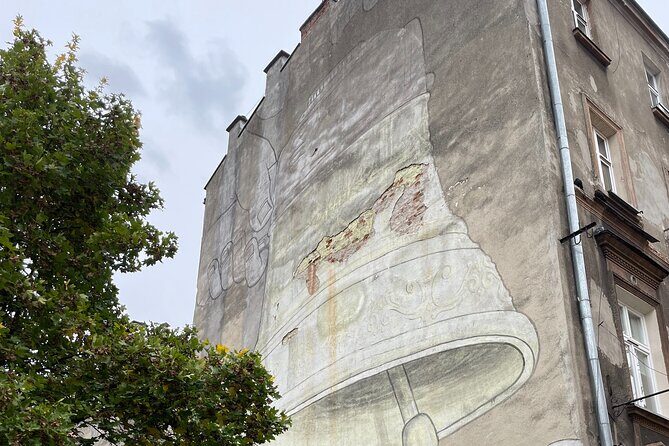
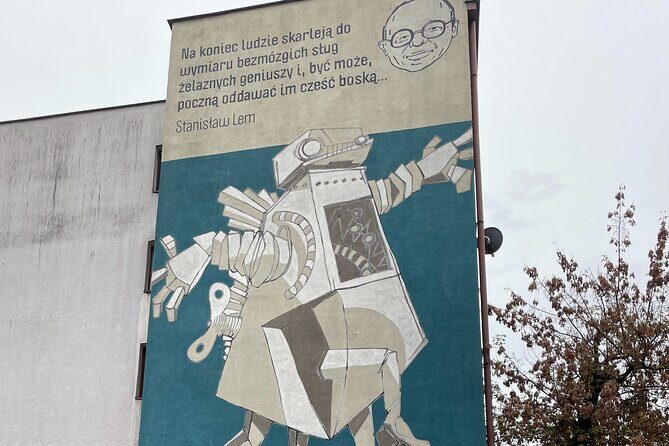
- Murals that make history visible: Robot and Blu’s Never Follow
- Father Bernatek’s Bridge and Wisła River crossing into Kazimierz
- Plac Wolnica, the Jewish Quarter, and Szeroka Street: where everyday life becomes the lesson
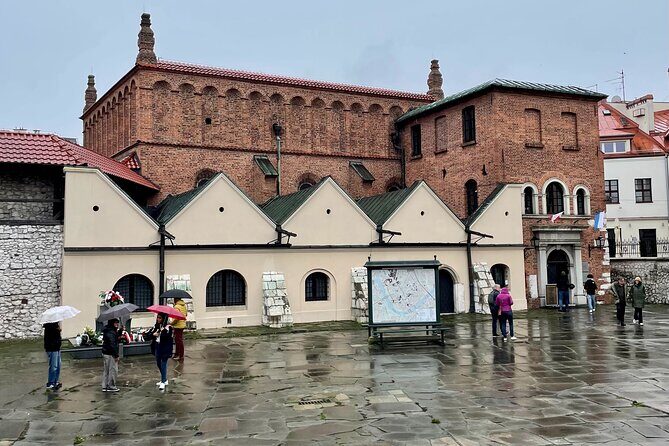
- Old Synagogue area and Mateo Gucci: surviving architecture with a twist
- Schindler’s List Passage: film history with real names behind it
- Tempel Synagogue outside and JCC Krakow: past and present in the same breath
- Jan Karski: the tour’s reminder that information was life-or-death
- Ending at Galicia Jewish Museum: bookstore, mural, and a good place to restart
- Price and pace: why $9.99 can feel like good value here
- Getting the most out of it: practical tips before you press play
- Should you book the Krakow Jewish Ghetto and Quarter audio walk?
Key highlights you will actually feel on the route
- GPS, location-aware audio that guides you step by step through the ghetto and Jewish Quarter
- Start any time, go 24/7, and the tour never expires so you can repeat it
- Murals with meaning, including the Robot mural and Blu’s Never Follow
- Major local landmarks on foot, from Father Bernatek’s Bridge to Szeroka Street
- A strong film-history stop at the Schindler’s List Passage
- A high-impact ending at Galicia Jewish Museum with a bookstore and mural
Starting at Plac Bohaterów Getta: how this audio tour really plays
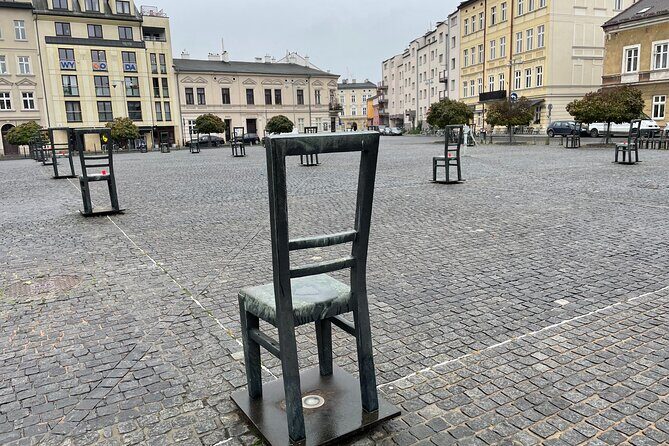
The tour begins at Plac Bohaterów Getta in Krakow. Right away, the audio sets the tone: you are standing on the site connected to the murder of thousands of people, and the narration explains how the ghetto functioned—how people were trapped, killed, and tortured. The pacing here matters. A walking tour like this works best when the audio doesn’t rush, and this one is broken into short segments so you can pause where you need to.
Then you move on to the next key point, the Jewish Ghetto Memorial, where the story widens to include the atrocities and also the bright lights of hope that showed up even inside a system designed to crush people. You will hear about the Holocaust and more, but it is delivered as part of the walk rather than a lecture in one place.
Because it is an app-based guide, you control the tempo. If a stop hits you hard, you can linger. If you want to speed up between locations, you can. The trade-off is that you are doing it solo. There is no human guide to answer your questions on the spot.
You can also read our reviews of more walking tours in Krakow
Key sites on the route: ghetto squares and memorial stops
Your first section is built around two places that act like anchors. At Plac Bohaterów Getta, the narration frames the ground under your feet as more than just a square—it is a site where people were brutalized and murdered. At Jewish Ghetto Memorial, you get the wider context: the audio talks about autrocities here, then pulls in hope and human resilience, and finally connects it to the broader story of the Holocaust.
These are not “quick photo stops.” They are designed to make the place feel real. And because the tour includes music and sound effects, the audio is more than facts on rails. It is meant to guide your attention.
A useful detail for your planning: the ghetto portion includes short time windows, around 10 minutes per major stop. That means you are unlikely to feel lost or trapped in an overlong segment. Still, in a topic like this, 10 minutes can feel like longer than you expect.
The pharmacy story and what it adds to the neighborhood view
One stop happens outside a museum connected to a specific rescue story: the audio explains the tale of a person who ran a pharmacy and did all he could to save people. That kind of stop is important because it changes the emotional angle from pure tragedy to moral action—someone using their position to help, not just to survive.
Since this is outside the museum, you do not need to line up for timed entry as part of the tour itself. You are using the physical location as a trigger for the narration. If you like learning through place rather than through a building ticket, this is a strong format.
If you want to make this moment land, slow down. Let the story play and then take a second to look around at what is around you now. That contrast—then versus now—is one of the tour’s quiet strengths.
Murals that make history visible: Robot and Blu’s Never Follow
The route then turns to street art, but it is not just about style. You will see the Robot mural and hear its connection to the Krakow Ghetto, along with its story. In practice, this is one of the best “breathers” on the walk, because you get something visually engaging while still staying tied to history.
Next comes mural Blu Never Follow. The audio explains why it was painted here, then connects it to stories about Jewish people being targeted and the myths that can grow up around those stories. This is a good reminder for you as a visitor: murals can be more than decoration, but you also want the context to keep the message accurate.
If you are the type who enjoys looking closely at symbols, this part will reward you. If you are rushing through photos, you may miss the point. Either way, it is worth not sprinting between stops—give the audio a chance to do its job.
Father Bernatek’s Bridge and Wisła River crossing into Kazimierz
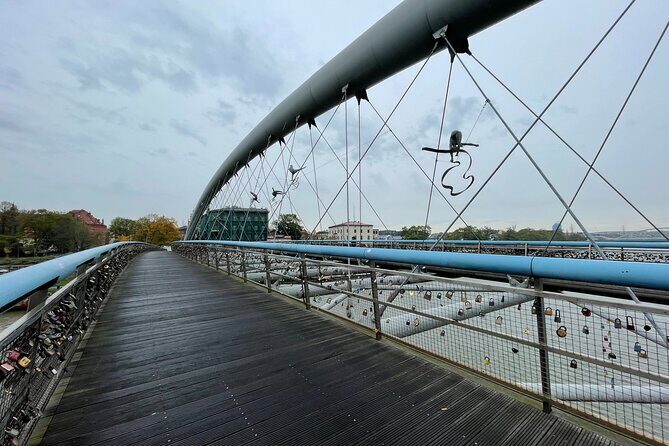
One of the most practical and atmospheric parts of the tour is the crossing over the Wisla River on Father Bernatek’s Bridge. The audio includes the bridge’s story and also mentions figures that hang on it as you move across to the Jewish Quarter.
Even if you already know Krakow’s geography, a river crossing changes the way a neighborhood feels. You go from one chunk of history to the next, physically crossing into the spaces connected with the Jewish Quarter. The tour uses that movement well: the bridge becomes both a literal transition and a narrative one.
When you are crossing, keep your footing in mind. You are outdoors for the whole experience, and it is easiest if you treat it like a walk first and a viewpoint second. But yes, stop long enough to let the audio finish its thought.
You can also read our reviews of more guided tours in Krakow

Plac Wolnica, the Jewish Quarter, and Szeroka Street: where everyday life becomes the lesson
After the bridge, the audio brings you to Plac Wolnica. Here, you will hear the square’s history—how it was founded and how it developed. Then the tour opens up into the Jewish Quarter itself, where you explore many locations. Some are described as hidden gems, some as more popular, but the key is that each stop is tied to stories about the Jewish people who lived here and continue to live here.
If your goal is to understand place beyond tragedy, this is where you start getting that. The ghetto stops are heavy and focused. The Jewish Quarter stops show continuity—what survived, what changed, and how the community is present in the city’s fabric today.
Next is Szeroka Street, which the audio describes as historic and deeply connected to Jewish life, including the mikveh and synagogues. This is one of those segments where you can build a mental map. You start to see the neighborhood as a network of religious, community, and daily-life locations rather than a single list of sights.
There is also a stop outside an area described as over 500 years old, and the audio explains what happened in WW2 and what the Nazis did with headstones. That detail is stark, and it is placed here for a reason: the tour wants you to see how history clings to ordinary streets, not just to museums.
Old Synagogue area and Mateo Gucci: surviving architecture with a twist
The tour includes a stop tied to the Old Synagogue, rebuilt in 1570 by the Italian architect Mateo Gucci. It also notes that this synagogue is a rare surviving example of a Polish fortress synagogue. That phrase matters because it describes how community needs, conflict, and survival shaped architecture.
The audio also points out hidden history—specifically a mention of a “sunken” history element. You do not need to invent details to appreciate the point. You are being asked to look at the building as something layered, not just a standalone landmark.
If you like architecture but hate dry facts, this works better than a straight building tour. It turns stone into story.
Schindler’s List Passage: film history with real names behind it
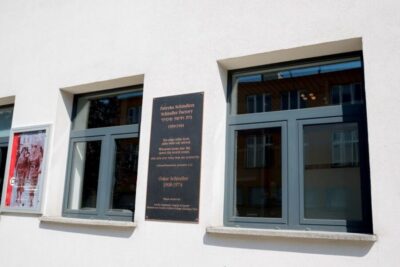
Then you reach Schindler’s List Passage, a site connected with where Schindler’s List was filmed. The audio explains the film connection and also brings in the story of Schindler and how he saved so many people.
This stop is valuable even if you have seen the movie. The tour aims to anchor film memory in real street-level geography. You get to stand in the city where part of the story was translated to screen—then hear how the real-life actions mattered beyond the plot.
If you are a movie fan, you might enjoy this more than you expected. If you are not, the moral story still makes sense because it is tied to how the neighborhood held people and risked safety.
Tempel Synagogue outside and JCC Krakow: past and present in the same breath
You will see the outside of the Tempel Synagogue, Kraków. The narration focuses on its history and how it impacted the community in the past and present. This “outside only” style keeps the tour moving, but it still gives you meaning for the building you are passing.
After that, you reach the Jewish Community Centre of Krakow (JCC Krakow). The audio says it was founded by the current King of England and explains how it unites the community and welcomes visitors. This is a nice shift because it ties the story to modern life instead of leaving you stuck in only one era.
You may find yourself slowing down at these later stops, because by then you have built context. Earlier, you learned what happened. Now you see how community life continues.
Jan Karski: the tour’s reminder that information was life-or-death
The route includes the Statue of Jan Karski, described as a spy who risked his life to gather and share information about the Nazis. This stop adds a different kind of lens: not rescue through action, and not only survival through community, but survival through knowledge and warning.
It also matches the tour’s overall structure. It never stays in one lane. You get tragedy, rescue, symbolism, daily life, and the struggle to get the truth out.
Ending at Galicia Jewish Museum: bookstore, mural, and a good place to restart
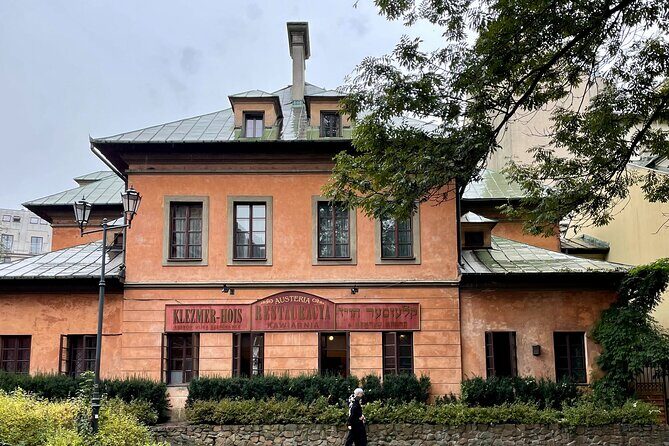
The tour ends at Galicia Jewish Museum at Dajwór 18, 31-052 Kraków. This is described as a bookstore and museum with a great mural. The end point is a smart design choice. You finish with an option to keep your momentum—whether you want to browse, read, or take in the mural again with more time.
The museum’s listed hours show Monday–Sunday: 12:00AM–11:30PM. That’s an unusually wide window, so it’s still a good habit to sanity-check the current schedule before you rely on late-night plans.
Price and pace: why $9.99 can feel like good value here
At $9.99 per person, this tour sits in the budget zone where you often get very little. Here, you actually get a lot for the money because the deliverable is a professionally produced audio guide with narration plus music and sound effects, and it includes multiple stops tied to both the ghetto and the Jewish Quarter.
The bigger value play is how the format works:
- It is GPS location-aware, so you do not have to keep checking a map like a full-time navigator.
- It is go anytime, it never expires, so you can fit it around your Krakow schedule instead of forcing your day into one fixed time slot.
- It is mobile ticket based, so you are not relying on paper or a meeting point with a guide waiting in the cold.
In other words, the cost is paying for a well-structured route and a story you can revisit.
The only real downside on value is the same as the overall concept: there is no entrance fee included in the tour and no human guide. If you want real-time Q&A or a guided lecture inside buildings, this is not that type of experience. If you want to learn while walking outdoors, it is a strong deal.
Getting the most out of it: practical tips before you press play
A tour like this works best when your tech is ready:
- Charge your phone beforehand. The experience depends on your smartphone.
- Wear shoes that handle cobblestones and uneven sidewalks.
- If you can, use daylight at least for the murals and longer streets like Szeroka Street. You’ll still get the story at night, but visuals are easier when your eyes aren’t fighting darkness.
- Give yourself time to stop. This tour is timed in sections, but your feelings won’t follow a stopwatch.
Also, keep expectations grounded: because it is outside and self-guided, you get less spontaneity than a live guide. Still, you get something live guides often cannot provide—repetition. You can take the same tour more than once at your own pace.
Should you book the Krakow Jewish Ghetto and Quarter audio walk?
You should book this if you want a self-paced, GPS-guided English way to understand Krakow’s Jewish Ghetto and Jewish Quarter from street-level locations. It is especially worth it if you like learning through place, want to see murals with context, and you appreciate an ending that sends you to the Galicia Jewish Museum to continue at your own pace.
Skip it if you strongly prefer a live guide, or if you dislike audio narration without a person to clarify or answer questions. Also, keep in mind the subject matter is intense; plan a day when you have enough mental space to absorb it.
Overall, at 4.7 average with 9 reviews, and with an app that is designed to be easy to download and operate, this is a solid value way to see Krakow with understanding—not just photos.