REVIEW · KRAKOW
Krakow: Auschwitz Guided Tour with Pickup and Optional Lunch
Book on GetYourGuide →Operated by Cracow Visit Tours & Transfers · Bookable on GetYourGuide
Hard history, guided with pickup and comfort. This 7–8 hour day trip pairs professional guidance with skip-the-line entry, so you spend less time on logistics and more time on the real story.
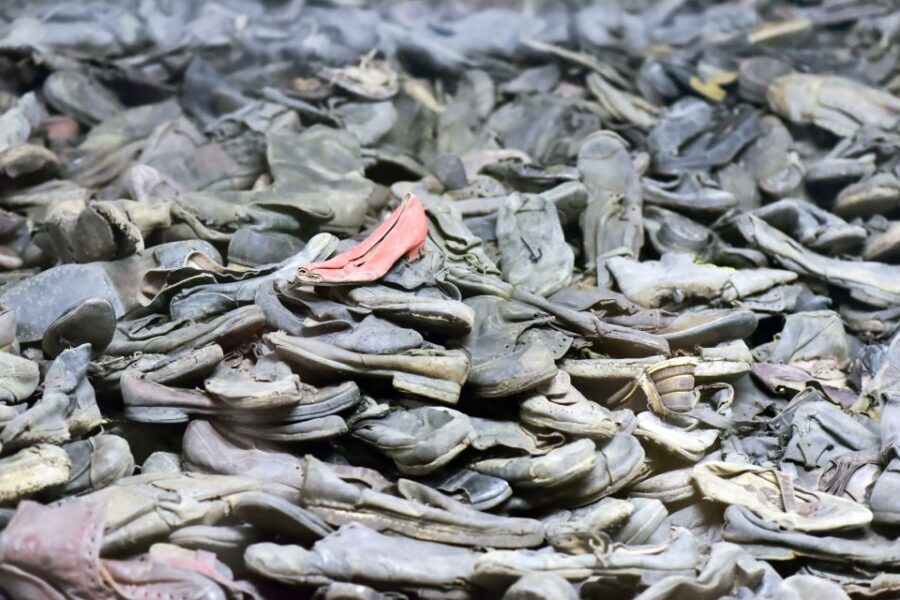
I like the simple plan: comfortable bus transfers, clear camp timing, and a guide who keeps the day flowing. I also like that you visit both Auschwitz I and Auschwitz II-Birkenau with proper time for context, including a look at personal belongings displayed in the memorial exhibits.
One thing to consider: it’s a long, emotionally heavy day with lots of walking and short breaks, so you’ll want to pace yourself.
In This Review
- Quick hits before you go
- Auschwitz from Krakow: what this 7–8 hour schedule really feels like
- Getting picked up in Krakow: convenient start, smoother security
- Auschwitz I: why the buildings and artifacts hit so hard
- The “short break” phase: lunch timing and how to use it well
- Auschwitz II-Birkenau: what you’ll see on the 1-hour guided walk
- Skip-the-line tickets: worth it, even when the day is busy
- Guides on this tour: compassion plus clarity
- Price and value: where the $54 really goes
- Packing and pacing: practical tips that matter here
- Who should book this Auschwitz day trip from Krakow?
- Should you book this Krakow Auschwitz guided tour?
- FAQ
- How long is the Auschwitz guided tour from Krakow?
- Is hotel pickup available in Krakow?
- Does this tour include lunch?
- Are the tickets skip-the-line?
- What ID and bag rules should I follow?
- Is the tour suitable for kids or wheelchair users?
Quick hits before you go
- Hotel pickup in Krakow Old Town and Kazimierz keeps the start simple
- Skip-the-line tickets help you avoid the worst waiting swings
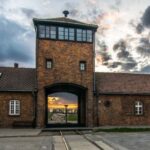
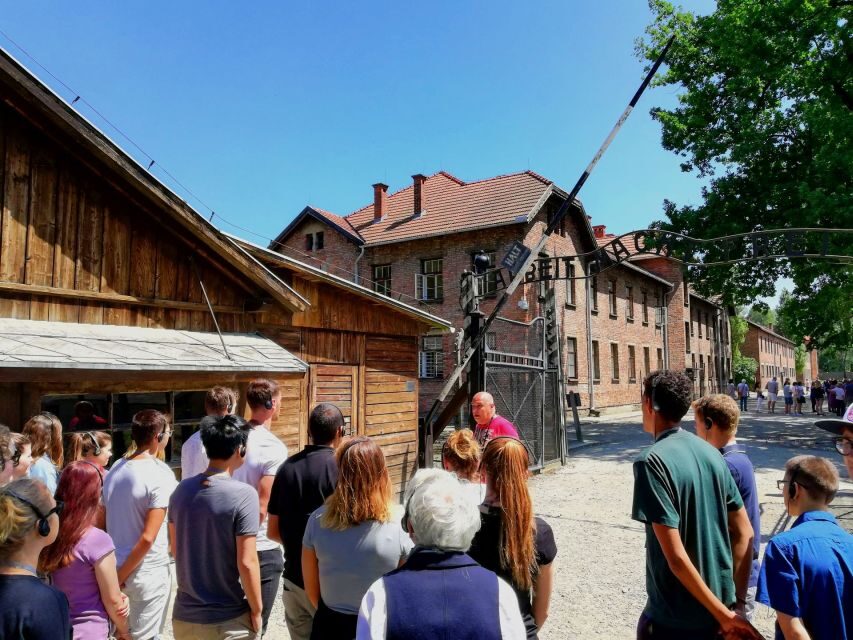
- Auschwitz I highlights include the Arbeit macht frei gate area, administration buildings, and the gas chamber exhibit
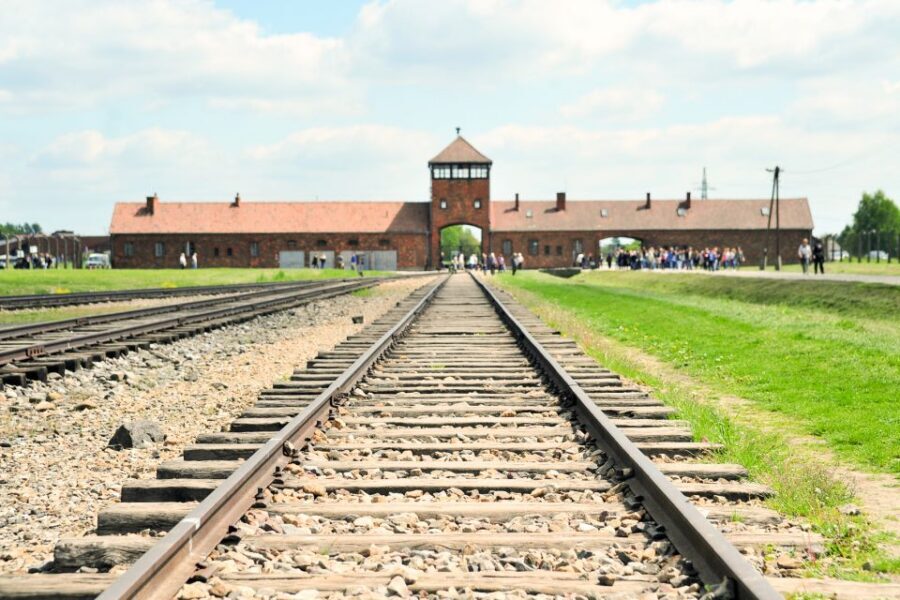
- Auschwitz II-Birkenau tour focuses on how prisoners entered and the wooden barracks
- Optional lunchbox (ham, hummus, and cheese) is built into the day flow
- A tight 7–8 hour schedule means you’ll be tired, but you won’t feel lost
Auschwitz from Krakow: what this 7–8 hour schedule really feels like
This isn’t a casual sightseeing day. It’s structured, guided, and intentionally paced by the memorial itself. The day usually runs about 7–8 hours, including roughly 1.5 hours each way by bus, plus time for the two sites and short stops.
That timing matters because both Auschwitz I and Auschwitz II-Birkenau cover different kinds of spaces. Auschwitz I feels more enclosed and documentary, with many exhibits and buildings. Birkenau is more exposed—flat, wide, and open—so your legs and your head both take a hit. Expect a heavier experience than you can comfortably “power through” on pure energy.
I’d treat this like a full-day appointment with history: you don’t squeeze it in. You show up early, you stay present, and you give yourself grace if your emotions run the show.
You can also read our reviews of more guided tours in Krakow

Getting picked up in Krakow: convenient start, smoother security
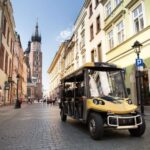
The biggest practical win here is that pickup is optional and aimed at visitors staying in Krakow Old Town or the Old Jewish Quarter (Kazimierz). If the driver can’t stop right at your exact address, you’ll get an alternate spot as close as possible.
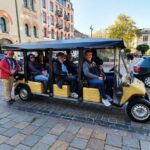
Once you’re with the group, the ride out is done on a comfortable, air-conditioned bus. That may sound basic, but on a day that includes a lot of walking, getting to Auschwitz without stress makes a real difference.
You’ll also go through security and entry procedures. The provided plan includes skip-the-line tickets (with an exception only if you book a specific last-minute style option), which typically reduces the chaos factor. Even so, plan for checks to take time—because the memorial runs on its own rules, not your bus schedule.
Tip: bring your passport or ID card, because admission can be refused if the name on your booking doesn’t match your ID exactly. It’s a small detail that can turn into an annoying problem.
Auschwitz I: why the buildings and artifacts hit so hard
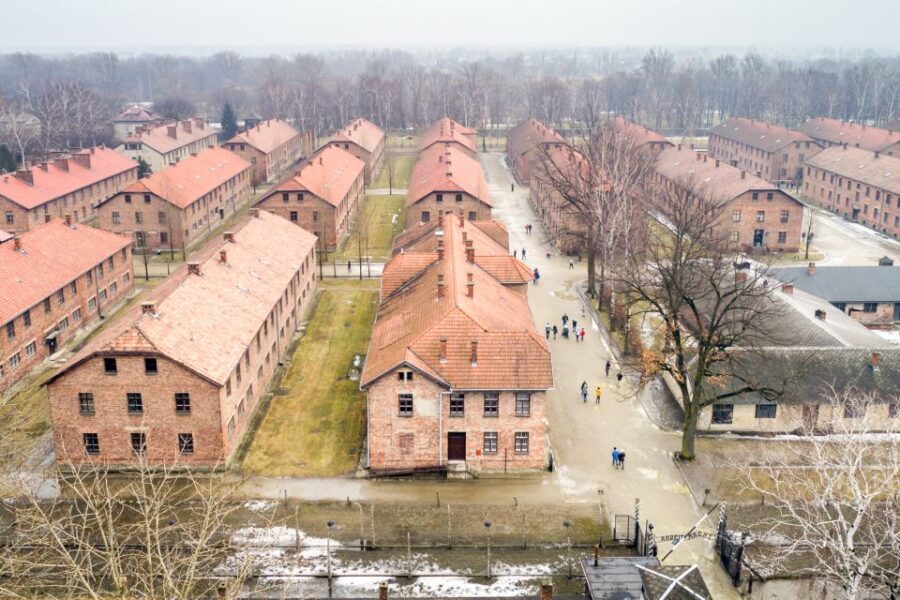
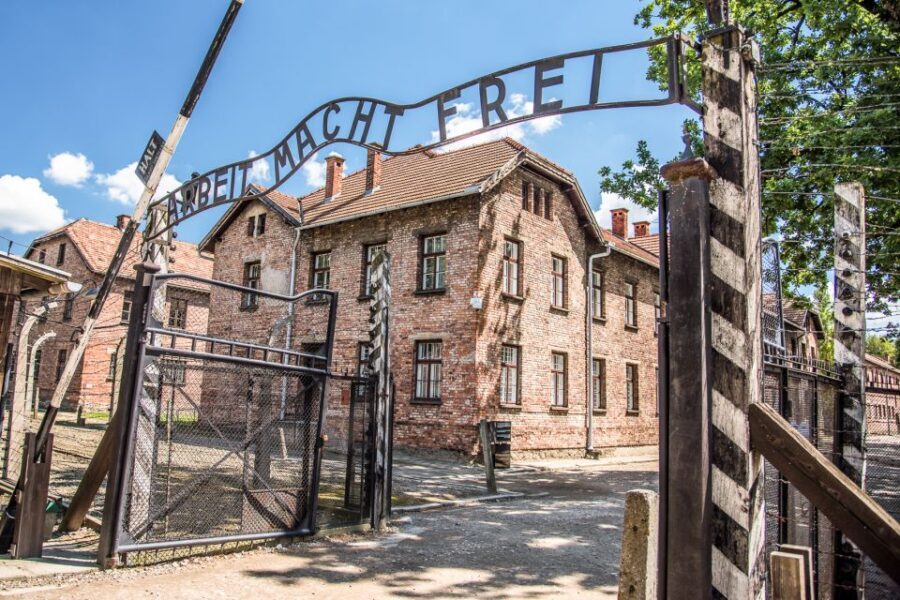
Auschwitz I is where the day can feel most “close-up.” You’ll get a guided tour through the camp’s key areas, including the famous Arbeit macht frei sign near the entrance.
From there, the tour generally moves through administration buildings where the machinery of persecution was planned and carried out. This section can be hard to process because you’re seeing places that look like offices or institutional spaces, not battlefields. That mismatch—normal-looking buildings holding unimaginable crimes—is part of why Auschwitz I sticks with you.
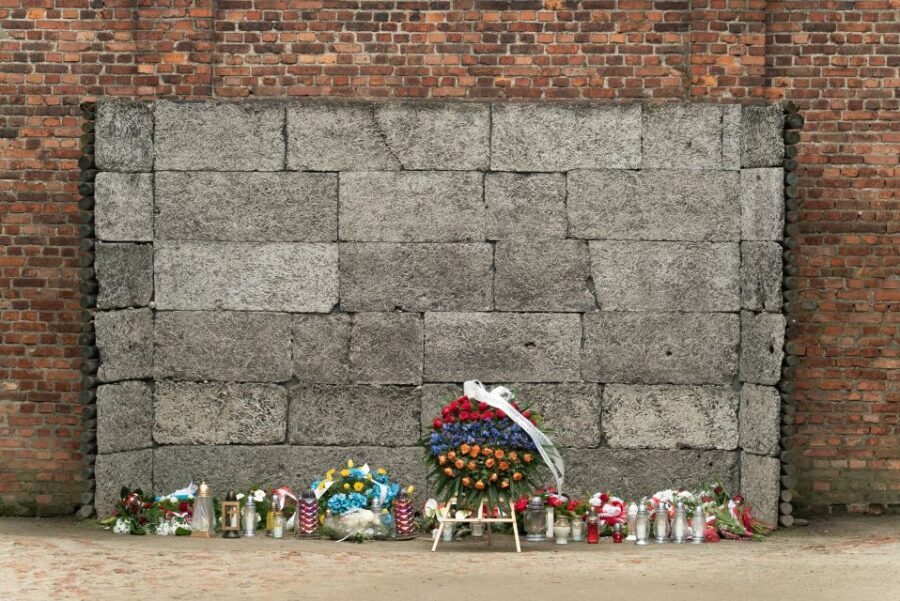
The tour also includes one of the most emotionally difficult segments: you’ll be shown the gas chamber area and the memorial’s context around genocide. The exhibits also include personal artifacts belonging to victims. That’s where the story shifts from numbers to people—objects that force you to imagine real lives cut short.
One practical note: there’s typically a short break during the day (the plan mentions a brief pause before moving to Birkenau). Use it. Even if you don’t feel tired, your body will appreciate a reset before the open-air walking starts.
The “short break” phase: lunch timing and how to use it well
Between Auschwitz I and Auschwitz II-Birkenau, the schedule builds in a brief pause—about 15 minutes for transition time. That’s not a long lunch break, so don’t plan on making it a personal picnic.
If you choose the optional lunchbox, it’s typically provided as a simple meal with ham, hummus, and cheese. Based on what people describe, it’s the kind of practical food you can actually eat on a schedule without hunting down a café with limited time.
Here’s how I’d use your break time effectively:
- Drink water before you head out again (especially in warmer months).
- Use the restroom when you can, not when you “think you’ll be fine.”
- Keep your bag situation tidy. The day has no luggage or large bags allowed, so you’ll want to travel light.
This is also where I’d give yourself permission to slow down mentally. Auschwitz I is intense. Birkenau is different intensity. Don’t rush your internal switch.
Auschwitz II-Birkenau: what you’ll see on the 1-hour guided walk
Birkenau is the bigger, more open site, and it works on you differently. Your guided segment there is about 1 hour, focused on the most important elements of how the camp functioned.
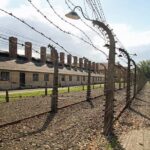
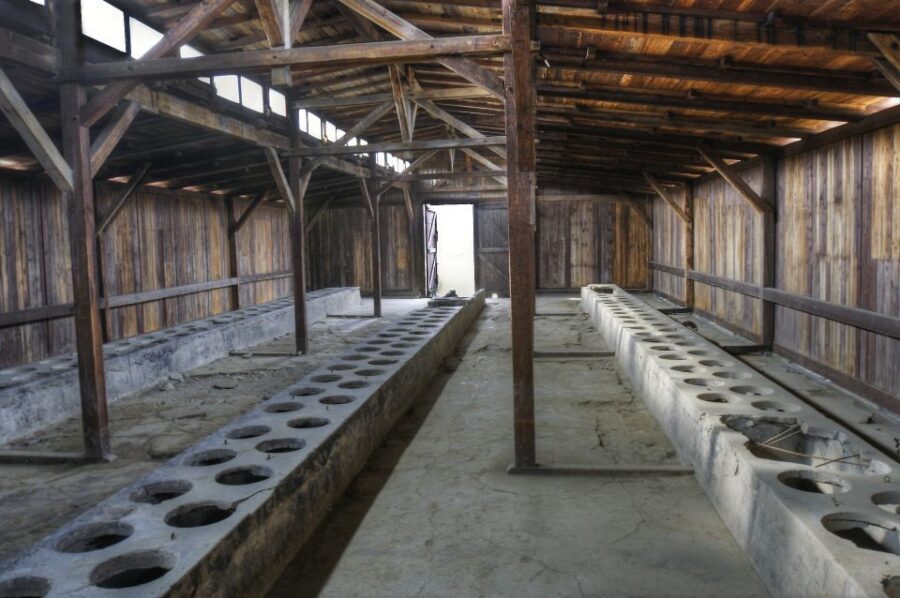
The tour includes seeing where prisoners entered the camp—an area that explains how the system processed arrivals. You’ll also be guided to wooden barracks, which help you understand the living conditions that people were forced into.
Why the walking matters: Birkenau’s layout is exposed. Even on a calm day, it can feel like you’re walking across a wide, unforgiving space, with long visual lines and very little cover. People often underestimate this part because the tour is only an hour on the clock, but the site still makes you move.
Also, expect that there’s less shelter and fewer opportunities to step away. That’s why comfy shoes are not optional for this kind of trip. It’s the only way you’ll stay steady enough to absorb what you’re seeing.
A few more Krakow tours and experiences worth a look



Skip-the-line tickets: worth it, even when the day is busy
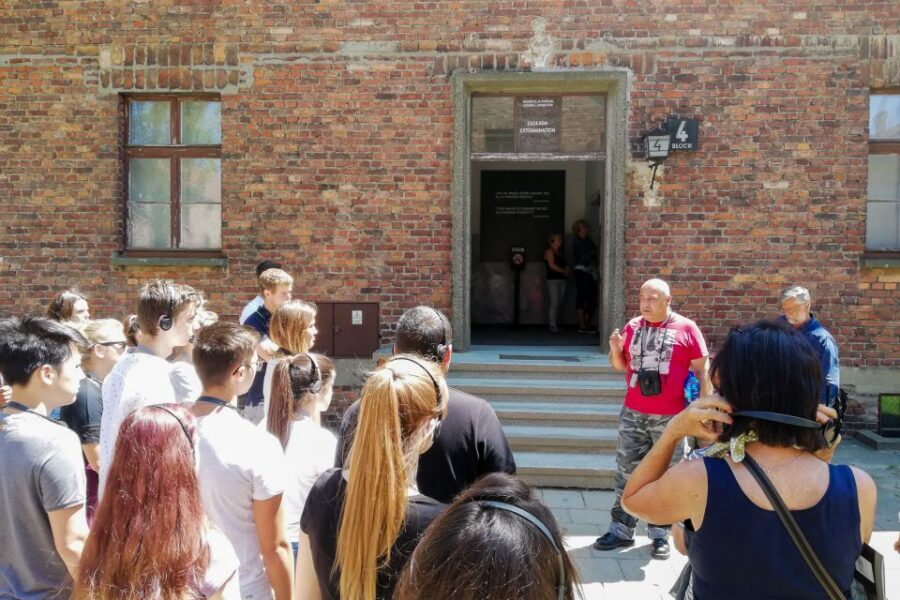
For Auschwitz day trips, the real enemy is wasted time. Lines can stretch, and wait times can balloon depending on the season and visitor flow. This tour’s value comes largely from skip-the-line entry tickets paired with guided context.
That combination changes your day. Instead of waiting and guessing what to do first, you get a direction and a plan. You still have to go through entry and security, but the tour is designed to reduce the big uncertainty.
One more benefit: when you’re in the camps, you don’t want to keep checking your phone. You want to keep your attention where it belongs. A live guide gives you the thread through the sites so you don’t lose the meaning between buildings and exhibits.
Guides on this tour: compassion plus clarity
The guide component is a core reason this trip works. You’re not just looking at objects and structures—you’re receiving an explanation that ties the visuals to what happened and why it mattered.
People describe guides who bring empathy and seriousness to the narration, and who handle questions with care. Names that come up in feedback include guides such as Jacek, Jarek, Vanessa, Damian, Nicholas, Ziggy, and Jacek again in different recollections. Even if you don’t get the exact same guide, the main point is that the tour aims for that mix: clear structure, thoughtful delivery, and room for questions.
The best guides also adjust pacing. Some visitors mention needing breaks or a place to sit, and the guide approach can make the experience feel more manageable without changing the respect or seriousness of the content.
Small caveat: with any bus-tour group, you’re listening in a real-world setting where crowd and sound levels vary. If you’re sensitive to hearing, you might want to bring your usual hearing aids or devices, and plan on getting as close to the guide as you can.
Price and value: where the $54 really goes
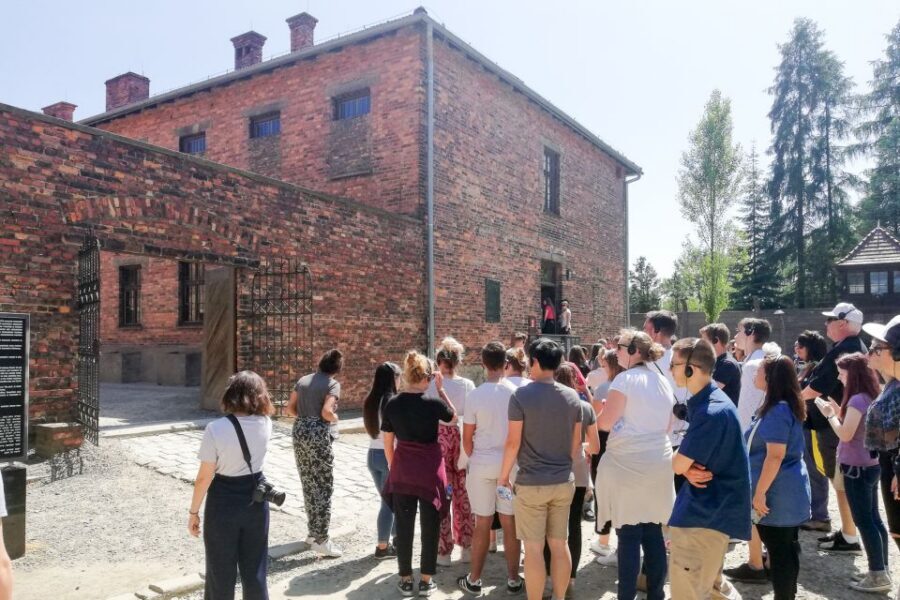
At $54 per person, you’re paying for a package—not just a ticket. The included items that drive value are:
- Round-trip transportation on an air-conditioned bus
- A live guide for the camp touring
- Pickup from Krakow Old Town or Kazimierz (when your option includes it)
- Skip-the-line entry tickets (except in specific last-minute/no-entry situations)
- Optional lunchbox with ham, hummus, and cheese
When you compare that to the cost of trying to do this on your own—transport, tickets, and then coordinating a guided experience—it starts to look like a fair deal. Especially because Auschwitz days can be chaotic. This reduces the “figuring it out” part so you can put your attention into the actual visit.
If you want the day to feel organized and respectful, this price point makes sense. If you prefer total independence and you’re good at planning timed entries, you might be able to build a DIY route cheaper. But you’ll spend more of your mental energy on logistics instead of history.
Packing and pacing: practical tips that matter here
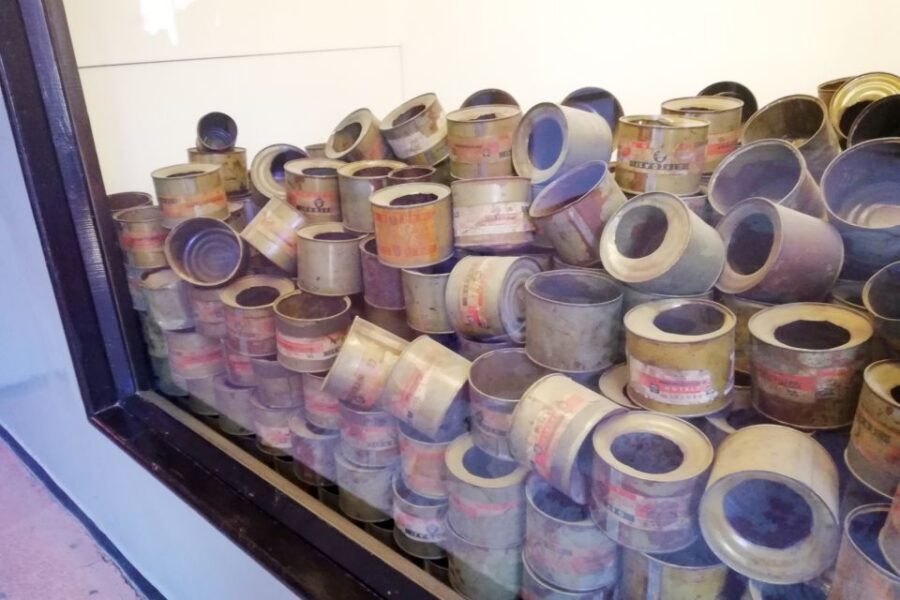
This isn’t the day for a heavy backpack. The tour rules say no luggage or large bags. Keep what you bring minimal, because you’ll be checked and moved along a route.
You should also plan for:
- Passport or ID card (required for entry with name matching)
- Comfortable walking shoes (you’ll spend significant time on your feet)
- Water, especially in warm weather and in the open Birkenau areas
- Layers, because morning and afternoon temperatures can feel very different
One review note worth taking seriously: some people found restroom timing tight during parts of the day. That’s not the tour’s fault—it’s just how the sites work with schedules. Your best move is to use restroom chances you’re offered instead of waiting for the next obvious break.
And remember: you can feel shocked and upset and still do the visit well. A heavy day doesn’t mean you’re failing. It means the site is doing its job.
Who should book this Auschwitz day trip from Krakow?
This tour is best if you want structure and a guided thread through Auschwitz I and Birkenau. If you care about context, and you prefer someone else to handle timing and entry logistics, you’ll likely feel grateful you booked.
It’s also best for visitors who:
- Want pickup and a no-hassle bus ride
- Prefer a guided interpretation rather than a self-guided experience
- Are okay with a serious, emotional day
It is not suitable for children under 12, and it’s also listed as not appropriate for wheelchair users or people with certain mobility impairments. The day involves walking and access constraints that you can’t easily outsmart. If you’re traveling with accessibility needs, you’ll want to pick a plan that explicitly matches your situation.
Should you book this Krakow Auschwitz guided tour?
Yes, if you want the day to run smoothly and you value a live guide tying the visuals to what you’re seeing. With pickup, comfortable transport, and skip-the-line entry, you’re mostly buying peace of mind. And with the guided visits to both Auschwitz I and Auschwitz II-Birkenau, you’re getting the full arc rather than a half-day snapshot.
No, if you need a lighter pace, lots of frequent breaks, or you’re not able to handle extended walking and an emotionally intense setting. This is not a “quick tour and photos” kind of day. It’s a guided remembrance.
If you decide to go, do it with one simple intention: show up early, travel light, wear good shoes, and be kind to your own mind while you’re there.
FAQ
How long is the Auschwitz guided tour from Krakow?
The duration is listed as 7 to 8 hours, depending on the memorial’s visitor service timing.
Is hotel pickup available in Krakow?
Pickup is available as an option, primarily from Krakow Old Town and the Old Jewish Quarter (Kazimierz). If the driver can’t stop exactly at your hotel, an alternate nearby meeting point is arranged.
Does this tour include lunch?
Lunch is optional. If you select it, you’ll receive a lunchbox with ham, hummus, and cheese.
Are the tickets skip-the-line?
The tour includes skip-the-line entry tickets, except for specific options labeled Last Minute and No Entry Tickets, which may differ.
What ID and bag rules should I follow?
Bring your passport or ID card. Luggage or large bags are not allowed.
Is the tour suitable for kids or wheelchair users?
The tour is not suitable for children under 12, wheelchair users, and people with mobility impairments.