REVIEW · KRAKOW
Self-Guided Tour of Auschwitz-Birkenau Museum with Transportation
Book on Viator →Operated by Krakow Tours by KrakowDirect · Bookable on Viator
Two camps, one late-afternoon timeline. This Auschwitz-Birkenau self-guided tour from Krakow mixes skip-the-line entry with round-trip transfers, so you can focus on what you’re seeing at your own pace.
You also get a headset-style narration during the Auschwitz I portion and a route-based guidebook, plus a short pre-visit documentary titled The liberation of Auschwitz on the ride in. The big plus for me is the structure: you’re not left wandering, but you also aren’t rushed by a live guide.
One drawback to plan for: entry timing and closing-time pressure can squeeze your time inside, especially with a 2:30 pm start.
In This Review
- Key things to know before you go
- Auschwitz-Birkenau from Krakow: what self-guided really feels like
- Price and value: where your $40.51 really goes
- Timing and logistics: the biggest make-or-break factor
- Stop 1 at Auschwitz: the Judenrampe memorial you can’t ignore
- Auschwitz I: passing under Arbeit Macht Frei with headset narration
- Auschwitz II-Birkenau: why this camp story hits hardest at the end
- The documentary movie: a quick way to set context before the walking starts
- Transportation from Krakow: comfort helps when the day turns long
- What I’d do to get the most out of your limited time
- Who this tour is best for (and who may want a different option)
- Final verdict: should you book this Auschwitz-Birkenau tour from Krakow?
- FAQ
- Is this tour fully guided?
- What’s included in the price?
- What’s the duration and starting time?
- Where do I meet the group and where does it end?
- How long do you spend at each site?
- Is food provided?
Key things to know before you go
- Judenrampe memorial stop gives you a lesser-known piece of the deportation story right between Auschwitz I and Birkenau
- Headset audio at Auschwitz I helps you hear the narration clearly without needing a live guide
- Skip-the-line tickets for both camps reduce waiting at the most chaotic points
- Short Birkenau slot means you should keep moving and prioritize the areas you most want to understand
- Round-trip Krakow transportation is included, with pickup at Radisson Blu Hotel Krakow
Auschwitz-Birkenau from Krakow: what self-guided really feels like
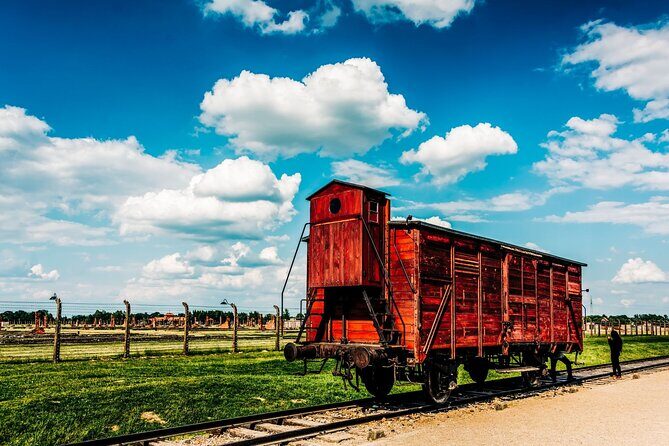
Auschwitz is not the kind of site where you want to “wing it.” At the same time, it’s hard to relax into a rigid tour schedule when you need a quiet moment to process what you’re seeing. This is why I like the self-guided approach here: it gives you independence, but it still supplies a clear flow between Auschwitz I and Auschwitz II-Birkenau.
The rhythm works like this. You start with transport from central Krakow (pickup at the Radisson Blu Hotel), then the program moves you through the camp areas in the right order. At Auschwitz I, the experience shifts from silent wandering to narration-by-headset, so you’re not trying to read every plaque while also watching your bearings.
That blend matters because these grounds are huge, and the details can feel endless. The tour’s “hands-off, but not lost” style is a practical compromise.
You can also read our reviews of more guided tours in Krakow
Price and value: where your $40.51 really goes
At about $40.51 per person, this option sits in the “budget-friendly but serious” zone for Auschwitz. You’re paying for transportation, time management, and entry access, not for a private guide.
Here’s what that money buys you:
- Skip-the-line admission for Auschwitz I and Auschwitz II (Birkenau)
- Round-trip transportation from central Krakow
- A guidebook in your language with the route and detailed descriptions
- A pre-visit documentary on the way to the museum
What I consider good value is the transportation + skip-the-line combo. Without it, you’d be piecing together your own transit and then fighting the ticket lines when you’re most likely to be stressed by time. The self-guided setup also helps you stretch the experience to match your pace, as long as you don’t let the pace turn into dithering—more on timing below.
Food and drinks are not included. That’s normal for this kind of trip, but it does affect value. If you’re doing this from Krakow at 2:30 pm, plan on eating either before you start or after you get back.
Timing and logistics: the biggest make-or-break factor
This tour starts at 2:30 pm and runs about 7 hours. That means you’re doing Auschwitz in the later part of the day, which sounds fine until you hit two realities:
1) Entry windows and waiting can happen. One common complaint is that guests didn’t realize their ticket time slot and had to wait outside for about 50 minutes before entering.
2) Closing-time pressure can compress Birkenau. Several people reported arriving at Birkenau not long before it closed, which shortened the time available.
So here’s my practical advice: before you go, treat your entry time like it’s as important as your pickup time. If your tickets have a timed entry, make sure you know what that time is. If communication from the tour company is vague, confirm it early—before you’re standing there in the cold with your day evaporating.
Also, accept that Birkenau visits can be short depending on the day and the late-afternoon schedule. If you want certain sections more than others, decide on priorities before you get there. That one decision can save you from feeling rushed once the clock starts squeezing.
Stop 1 at Auschwitz: the Judenrampe memorial you can’t ignore
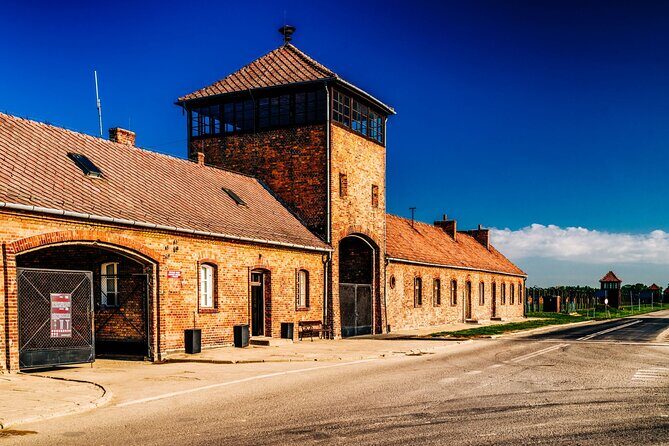
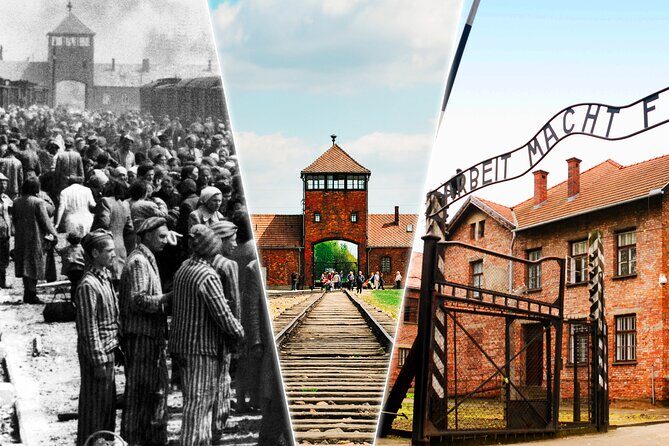
The trip begins with a visit to the Judenrampe (Jewish Ramp), a railway unloading platform used during the Holocaust between 1942 and 1944. It sat between Auschwitz I and Auschwitz II-Birkenau, and it played a critical role in the mass deportations.
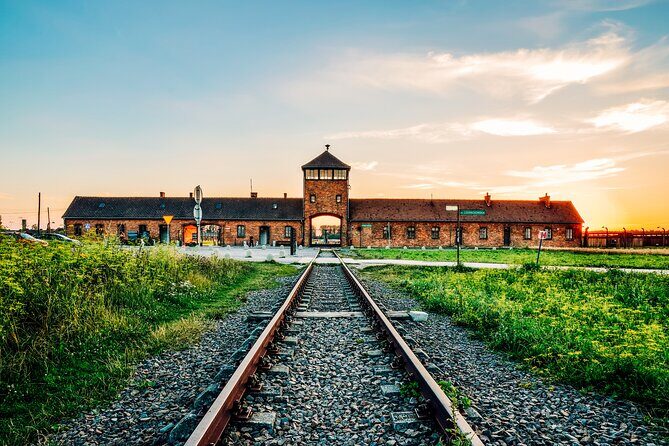
This is one of the most meaningful inclusions of the whole experience because it teaches you something many people miss. Most visitors focus on the better-known Birkenau “Gate of Death,” but the Judenrampe helps you understand how deportations moved in real time—how people arrived, how the system processed them, and how logistics supported terror.
The stop is about 30 minutes, and admission for this memorial area is listed as free. What you’ll do with that time is up to you: read the plaques, walk the small area calmly, and connect it to what you’ll later see in the camp sections. Even if the stop feels brief, it can shift how the rest of Auschwitz makes sense.
Auschwitz I: passing under Arbeit Macht Frei with headset narration
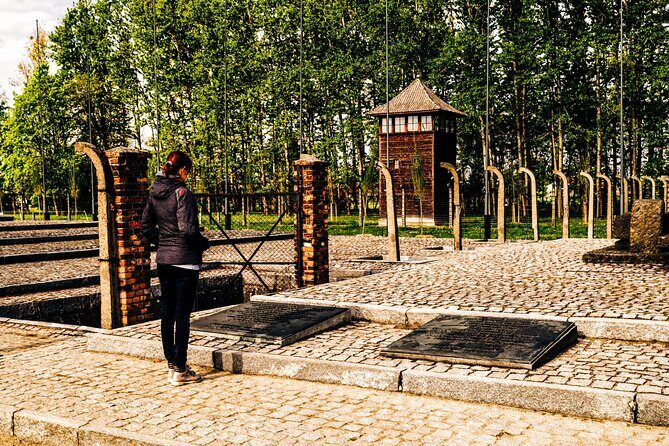
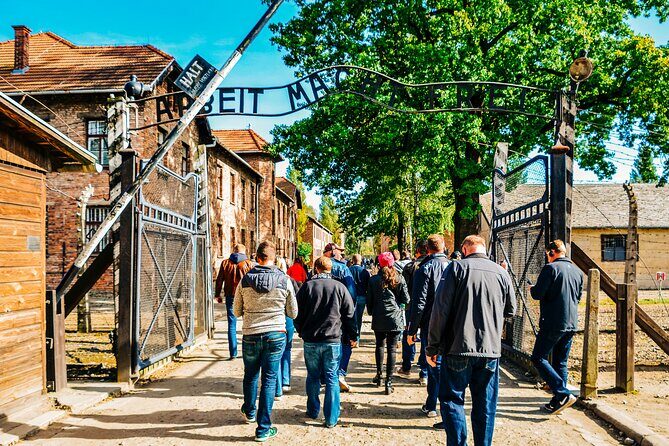
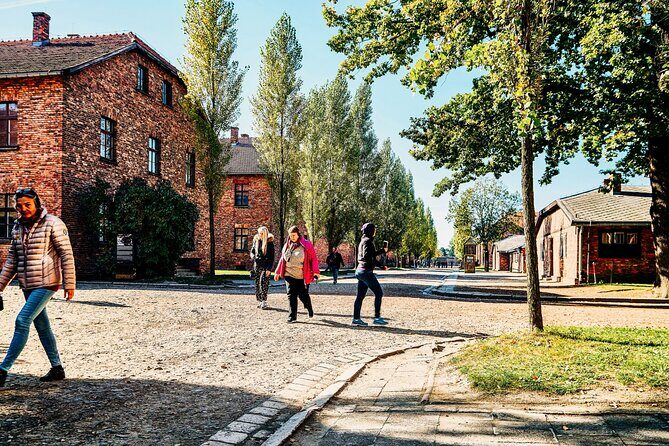
Next you enter Auschwitz I by walking through the main gate—the one with the infamous sign Arbeit Macht Frei (Work Makes You Free). You’ll learn that Auschwitz I began as a concentration camp for Polish citizens arrested after Germany annexed Poland in 1939.
This portion takes about 2 hours as a typical block, and during it you use a headset so you can hear the narration clearly. The headset approach is a big deal for comfort and comprehension. You’re reading plaques with your eyes and listening with your ears, which helps when the site is busy or when English labels are limited.
Inside Auschwitz I, you’ll see some of the camp’s most haunting physical features, including:
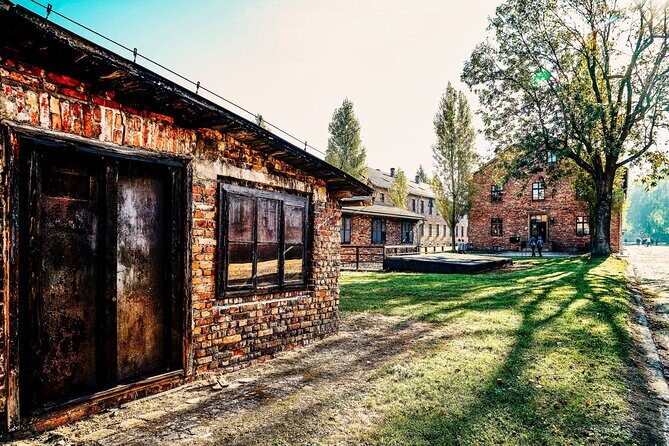
- original wooden barracks
- fortified walls
- barbed wire fences
- gas chambers and crematoria
These are not “photo ops,” obviously. But I like that the tour nudges you toward structure. A headset script keeps you anchored when it’s easy to get overwhelmed by scale.
One more detail that matters: the group size is kept to 30 people (as set by museum regulations). That isn’t tiny, but it’s small enough that you’re less likely to feel swallowed by a wall of bodies.
You can also read our reviews of more museum experiences in Krakow

Auschwitz II-Birkenau: why this camp story hits hardest at the end
After Auschwitz I, you move on to Birkenau (Auschwitz II). The transfer is short—about 3 minutes away—so you aren’t losing the thread of the story.
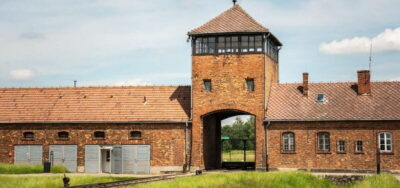
Birkenau was built and operated with the purpose of making Europe Judenrein (free of Jews). The tour narrative describes how it was ordered in 1941 under SS commander Heinrich Himmler, and it notes the camp’s capacity of around 90,000 prisoners. That context helps you understand why Birkenau feels so sprawling.
You’ll also hear about:
- brutal living conditions
- the selection process
- pseudo-scientific medical experiments conducted by Nazi doctors, including Josef Mengele
Then the tour closes with a liberation story: on January 27, 1945, soldiers from the 60th Army of the First Ukrainian Front opened the gates of Auschwitz.
Here’s the honest reality: Birkenau is emotionally heavy, and it’s easy to spend your limited time staring rather than learning. Since the Birkenau portion is listed at about 30 minutes, you’ll want to “budget your attention.” Pick a few areas you most want to understand and commit to them. If you try to see everything, you may end up rushing through the parts that need time.
And based on real-world timing issues people reported, this is where you should be alert to closing pressure. If you notice the day is tightening, it’s better to know what you’re skipping than to be forced into skipping.
The documentary movie: a quick way to set context before the walking starts
On the ride into the museum, you’ll watch a documentary titled The liberation of Auschwitz. I think this is smart because it gives you a mental framework before you step onto the grounds.
It also makes the experience feel less like “random stops” and more like a timeline. When you later hear about deportations, selections, and liberation, the pieces connect faster.
You don’t need extra emotional prompts or shock value. Context is what reduces confusion, and less confusion helps you actually absorb what the site is trying to teach.
Transportation from Krakow: comfort helps when the day turns long
Round-trip transportation is included, and the pickup point is very specific: Radisson Blu Hotel, Krakow (Floriana Straszewskiego 17). That clarity matters, because late-day tours can become stressful fast if pickup is vague.
From the experience perspective, the bus time isn’t “dead time.” Between the documentary and the transition between Auschwitz I and Auschwitz II, the travel supports the flow of the day. Plus, a comfortable bus ride helps—because Auschwitz visits don’t just use your eyes. They use your mind.
Some people described the driver as friendly and professional, which lines up with what you want from a service role: calm, safe driving, and clear handling of the schedule.
Still, the big caution remains timing communication. If you want this to feel smooth, confirm key hours ahead of time so you’re not surprised by a wait outside an entrance.
What I’d do to get the most out of your limited time
If you book this, plan for the fact that you’re working with a later start and a schedule that can tighten. Here’s how you can make that work for you:
- Decide your “must-see” items before you go. If Birkenau is short on the day, you’ll be glad you chose priorities.
- Keep your headset listening focused at Auschwitz I. That portion is where narration can prevent you from missing major context.
- Don’t treat the Judenrampe stop as an optional detour. Those 30 minutes can change how you read the rest of the camp story.
- If you hear anything about ticket times or waiting outside, act fast: confirm the entry window before you queue.
These aren’t tricks. They’re the simplest ways to avoid the most common frustration points people reported—waiting that could have been avoided and last-minute compression of Birkenau time.
Who this tour is best for (and who may want a different option)
This self-guided Auschwitz-Birkenau tour is a strong fit if you:
- want skip-the-line entry and included transportation from Krakow
- prefer your own pace instead of being guided at a constant speed
- value audio support through a headset when walking Auschwitz I
- like the idea of having a guidebook route in your language and then choosing when to pause
It’s less ideal if you:
- need a live guide to manage timing and answer questions in real time
- get easily flustered by entry-window confusion or schedule changes
- want a long, unhurried visit to Birkenau with no risk of being near closing
For many people, the trade-off is worth it. But Auschwitz is one of those places where “good enough” can feel unfair if you’re rushed at the wrong moment.
Final verdict: should you book this Auschwitz-Birkenau tour from Krakow?
I’d book this if you want a practical, structured self-guided day with transportation and skip-the-line tickets, and if you’re comfortable managing time at a heavy site. The Judenrampe stop and the Auschwitz I headset narration are smart inclusions, and the overall value at around $40.51 is hard to beat for what’s included.
I’d think twice if you’re the type who needs a lot of time flexibility or if you know you’re sensitive to late-day schedule compression. In that case, spending more for an option with a less time-tight plan might feel better.
If you do book it, the key is simple: confirm your entry timing, stay aware of closing pressure near Birkenau, and plan your priorities before you arrive.
FAQ
Is this tour fully guided?
It’s self-guided, and it does not include a live guide. At Auschwitz I, you’ll use a headset to hear the narration clearly. You’ll also receive a guidebook in your language with the route and detailed description.
What’s included in the price?
The tour includes skip-the-line entrance tickets for Auschwitz I and Auschwitz II (Birkenau), round-trip transportation from Krakow, a guidebook in your language, and a documentary movie titled The liberation of Auschwitz on the way to the museum.
What’s the duration and starting time?
The tour is about 7 hours and starts at 2:30 pm.
Where do I meet the group and where does it end?
You meet at the Radisson Blu Hotel, Krakow (Floriana Straszewskiego 17, 31-101 Kraków, Poland). The activity ends back at the same meeting point.
How long do you spend at each site?
The Judenrampe stop is about 30 minutes. Auschwitz I is described as about 2 hours (headset narration included). Birkenau is described as about 30 minutes.
Is food provided?
No. Food and drinks are not included.