REVIEW · KRAKOW
Krakow: Auschwitz-Birkenau and Wieliczka Salt Mine Day Trip
Book on GetYourGuide →Operated by Discover Cracow · Bookable on GetYourGuide
Two icons. One demanding day.
From Krakow, this small-group trip threads the hardest part of 20th-century history through Auschwitz-Birkenau, then switches gears to the underground wonder of the Wieliczka Salt Mine. It’s the kind of day that makes your brain work, your legs move, and your perspective broaden in a hurry.
I especially like the live English guide format. At Auschwitz, you get careful context (not just dates on a screen), and the tone stays respectful. In the Salt Mine, the same guide approach makes the underground storytelling easier to follow, and you may even meet drivers/guides reported like Ilona, Bohdan, or Barbara in other bookings.
The main drawback to plan for is timing and ticket reality. Pickup can run very early, and if Auschwitz reservations aren’t lined up online, you might still face a wait despite the tour’s skip-the-ticket-line promise.
In This Review
- Key takeaways before you go
- From Krakow at Dawn: How the Day Trip Really Runs
- Auschwitz-Birkenau: What You See and How to Read It
- Auschwitz I and Auschwitz II-Birkenau: Why the Split Works
- Wieliczka Salt Mine: Cold Air, 800 Steps, and the Chapel of St. Kinga
- Transportation and Guides: The Difference Between a Smooth Day and a Messy One
- Lunch Timing and What to Pack for Real Life
- Price and Value: Is $196 Worth It?
- Who This Tour Fits Best (and Who Should Rethink It)
- Should You Book This Auschwitz and Wieliczka Day Trip?
- FAQ
- How long is the Krakow Auschwitz-Birkenau and Wieliczka Salt Mine day trip?
- How big is the group, and is the tour guided in English?
- Does this tour include transportation from Krakow?
- Will I be able to skip the Auschwitz ticket line?
- What time will pickup happen?
- Is pickup always at my hotel?
- What are the physical demands at the Salt Mine?
- How cold is it underground at Wieliczka?
- Is this tour refundable if plans change?
Key takeaways before you go
- Small group (up to 8) means fewer people to manage and more room for questions.
- English live guidance keeps both sites understandable and structured.
- Auschwitz visits in two parts (Auschwitz I plus Auschwitz II-Birkenau) helps you connect the full story.
- Wieliczka underground is cold and stair-heavy (14–16°C and 800 steps total).
- Lunch time can be tight depending on the day’s flow, so plan for quick meals if you need food on demand.
- Ticket availability can affect waiting time at Auschwitz, even with a planned tour route.
From Krakow at Dawn: How the Day Trip Really Runs
This is not a “sleep in, stroll around” day. It’s a 12-hour push, built around access windows at Auschwitz and a timed descent schedule for the Salt Mine. You’ll start with a hotel/meeting-area pickup in Krakow, but the exact time isn’t always the time you first pick. The tour can begin anywhere from 5:00 AM to 1:30 PM (and sometimes earlier in rare cases), with the actual start time confirmed the day before.
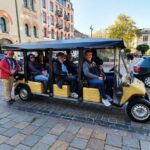
That early start is your trade-off for getting a full day’s coverage without you having to coordinate trains, buses, and timed entries on your own. You’ll ride in a van to Auschwitz, with the trip taking about 1.5 hours. Expect a couple of built-in pauses for break time and movement between key areas.
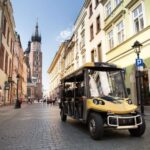
One practical note: Krakow’s Old Town and Kazimierz are restricted traffic zones, so if you’re staying there, you may be asked to meet closer to where vans can go. That’s normal. Don’t assume the driver can pull right up to your exact door.
A few more Krakow tours and experiences worth a look
Auschwitz-Birkenau: What You See and How to Read It
Auschwitz-Birkenau is one of the most important places on earth to understand the Holocaust. It’s also emotionally heavy in a way no photo can prepare you for. The trip is designed around a guided visit, which matters because the site is large and the details can feel overwhelming on your own.
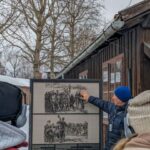
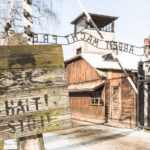
When you enter the grounds, you’ll pass through the gate with the words Arbeit macht frei. The point of going with a guide is not to “make it lighter.” It’s to help you understand what you’re looking at: how the camp system worked, how the victims were targeted, and how the memorial preserves evidence rather than turning it into a simple story.
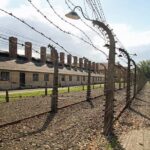
You’ll spend real time at both Auschwitz I and Auschwitz II-Birkenau. Auschwitz I gives you the more administrative and early camp layout, while Birkenau is where the scale becomes hard to grasp. Seeing them in one day can be intense, but it also makes the bigger system feel connected instead of fragmented.
And yes, there’s memorial space and reflection built into the visit flow. Your guide sets a respectful tone and helps you move through the material without treating it like a checklist.
Auschwitz I and Auschwitz II-Birkenau: Why the Split Works
This day trip doesn’t treat Auschwitz like one long walk. It breaks it into the two major sections, which helps your brain organize what you see.
At Auschwitz I, you’ll get about 2 hours with a guided tour. This part is typically where you’ll focus on the original structures and the camp’s framework. It’s easier to understand Auschwitz I first, because it gives you the “how” behind the system.
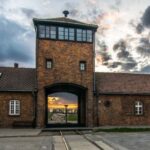
Then you transfer to Auschwitz II-Birkenau by coach for a short ride (around 10 minutes). From there, you’ll have about 75 minutes for the guided tour at Birkenau. Birkenau can feel like an entirely different scale. You’re looking at more expansive remnants—barracks, guard towers, and memorial areas that mark where victims were harmed and where history is preserved.
Why this matters: going to both sections in one organized day prevents the common mistake of treating Auschwitz as either only a “building tour” or only a “field of ruins” experience. The split helps you see how the camp evolved and how the tragedy was carried out at multiple levels.
Wieliczka Salt Mine: Cold Air, 800 Steps, and the Chapel of St. Kinga
After Auschwitz, the Salt Mine feels like a different planet. That’s not because it’s frivolous. It’s because it’s a different kind of human story: skill, labor, and a strange beauty created underground.
You’ll travel from Auschwitz to Wieliczka by van, again about 1.5 hours. You’ll get a short break and then go into the mine. The Salt Mine tour is about 2.5 hours with a guided visit, with some time set aside for entry and orientation.
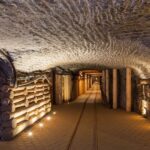
Here’s the reality check you’ll want to plan around. The mine is cool year-round, typically 14–16°C underground. You’ll also climb 800 steps in total, including about 350 steps at the beginning. That first descent is the part that surprises people most, especially if you arrive wearing slick shoes or you’re not used to stairs.
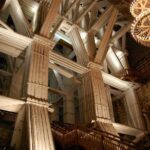
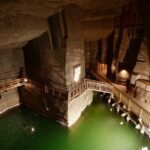
Still, it’s worth it. The guides are good at pointing out what makes the place special: corridors carved into salt, chambers shaped by both nature and human workmanship, and one showpiece you don’t want to miss—the Chapel of St. Kinga, a major underground sanctuary carved entirely from salt.
One more practical detail: the air underground is cooler and can feel refreshing after Auschwitz’s open cold. You’ll likely notice the change immediately, which helps psychologically too. It’s a shift from mourning-focused space to a more awe-and-craft-focused environment.
Transportation and Guides: The Difference Between a Smooth Day and a Messy One
The backbone of this tour is the transport plan. It’s organized by van between Krakow and Auschwitz and again to the Salt Mine, with a coach hop between Auschwitz I and II. That structure matters because it reduces your stress. You’re not hunting down schedules. You’re following a guide who knows the route and the timing.
The other big factor is the people. In strong bookings, the day runs like a well-rehearsed machine: clear communication, punctual pickup, and guides who can explain difficult material without rushing. Some drivers reported in feedback include Ilona, Bohdan, and Gabriel, and guide names have included Barbara. Those names are a sign of consistency when everything goes right.
But here’s the balance you should keep in mind. Not every day is perfect. One verified booking described issues like late pickup, a vehicle heater not working in extreme cold, and a long wait for Auschwitz tickets when they weren’t ready as planned. The takeaway isn’t to panic. It’s to go into the day with realistic expectations: you’re trusting a tight schedule, and cold weather makes delays feel harsher.
If you can, dress for the worst moment—even if the tour aims to be smooth. Warm layers matter, and having a plan for waiting outside can save your mood.


Lunch Timing and What to Pack for Real Life
This day is structured around memorial entry times and a guided schedule below ground, so lunch doesn’t always feel like a leisurely mid-day sit-down. Some people noted that there wasn’t a comfortable lunch window, while others felt the day included time to eat.
So I treat lunch as a “don’t count on it” category. If you have any dietary needs, consider bringing a small snack you can manage quickly. A sandwich you can eat in a pinch beats being hungry while you wait for the schedule to catch up.
What to pack (practical, not fancy):
- Comfortable shoes with grip. The steps at Wieliczka are no joke.
- Weather-appropriate layers for Krakow mornings and potential waits.
- Passport or ID card (Auschwitz entry is strict about identity matching).
- A jacket you can handle even when it’s cool underground.
Also note: there’s a specific temperature shift underground (14–16°C), so even in summer, plan for cool air once you descend. A light warm layer makes the mine feel less like a chore.
Price and Value: Is $196 Worth It?
At $196 per person for a 12-hour day that includes transportation, a professional guide, and visits to both Auschwitz-Birkenau and the Wieliczka Salt Mine, the value is solid when the schedule runs cleanly.
Here’s what you’re paying for:
- Time saved. Coordinating two major sites from Krakow is hard work.
- Guided interpretation, especially at Auschwitz where context improves understanding.
- Logistics coverage, including van/coach transfers and timed pacing within the sites.
- Small-group handling (up to 8), which is a big quality difference compared to cattle-car tours.
The only reason the value can dip is when conditions break your expectations—especially at Auschwitz. The tour aims to skip ticket lines, but the rules change if Auschwitz reservations aren’t available online. In that case, waiting can last up to a few hours for last-minute situations, and the operator has no control over that.
If you want the best value outcome, choose a day where your plan feels stable and your body is ready for a long, step-heavy itinerary. If that’s you, $196 starts to look like a fair price for two heavyweight experiences handled with guidance and transport.
Who This Tour Fits Best (and Who Should Rethink It)
This trip is best for people who want a guided, structured day that covers both Auschwitz and Wieliczka without you piecing it together yourself.
It’s a strong fit if you:
- Want English guidance and clear pacing through both sites
- Prefer a small group rather than large crowds
- Can handle a long day and lots of walking
It’s not suitable for:
- People with mobility impairments
- People with claustrophobia, given the underground nature of the Salt Mine
If stairs and confined spaces are a concern, don’t force it. Wieliczka includes 800 steps total, with a steep early descent. That’s part of the experience, not an optional extra.
Should You Book This Auschwitz and Wieliczka Day Trip?
I’d book this if you want one well-managed day that pairs a guided Auschwitz-Birkenau visit with the major highlights of the Wieliczka Salt Mine, including the Chapel of St. Kinga. The small-group size and live English guides are the kind of details that usually make the difference between “I checked boxes” and “I understood what I saw.”
Skip it or consider alternatives if:
- You’re very sensitive to schedule changes and early pickups
- You need guaranteed long meal breaks
- You know you can’t handle stairs or confined underground spaces
One last tip: plan your day like you’re dressing for both cold air and walking stamina. When everything clicks, this is a powerful, unforgettable Krakow day trip. When conditions shift, the same preparation helps you weather the rough edges without losing the overall experience.
FAQ
How long is the Krakow Auschwitz-Birkenau and Wieliczka Salt Mine day trip?
The total duration is about 12 hours.
How big is the group, and is the tour guided in English?
The group is small, limited to 8 participants, and the tour includes a live English guide.
Does this tour include transportation from Krakow?
Yes. Transportation from Krakow is included, using van and coach segments during the day.
Will I be able to skip the Auschwitz ticket line?
The tour is described as skip-the-ticket-line, but if online Auschwitz reservation isn’t available, you may have to wait in line for tickets. The tour operator can’t control this.
What time will pickup happen?
Pickup can start between 5:00 AM and 1:30 PM, or sometimes even earlier in rare cases. The exact start time is communicated the day before, and your preferred time is not guaranteed.
Is pickup always at my hotel?
If your accommodation is in Krakow’s Old Town or Kazimierz (restricted traffic zones), the operator may confirm a nearby possible pickup point instead of a direct hotel pickup.
What are the physical demands at the Salt Mine?
You should expect about 800 steps total, including 350 steps at the beginning as you go down into the mine.
How cold is it underground at Wieliczka?
Underground temperatures are typically between 14°C and 16°C.
Is this tour refundable if plans change?
Yes. Free cancellation is offered up to 24 hours in advance for a full refund.