REVIEW · OSKAR SCHINDLER S FACTORY
Krakow: Schindler’s Factory Private Guided Tour
Book on GetYourGuide →Operated by excursions.city · Bookable on GetYourGuide
A museum visit that sticks with you. This private, licensed guide experience at Schindler’s Factory is one of Krakow’s most meaningful ways to understand how everyday life broke under Nazi occupation, and I also really like the skip-the-line admission that gets you into the heart of the exhibition fast. One consideration: the setting uses tight spaces and the content is emotionally heavy, so this isn’t the kind of outing you do casually between shopping stops.
You’ll spend 90 minutes following a clear storyline through the exhibition on Krakow under Nazi Occupation 1939–1945, with your guide shaping the pace toward what you care about most. If you want historical context, personal stories, or the “how did this happen” of survival and resistance, you’ll have time to ask and get straight answers.
In This Review
- Key things that make this tour worth your time
- Schindler’s Factory: why this museum hits harder in a guided setting
- Meeting Point and getting inside quickly (without the tourist-time tax)
- Inside the exhibition: how the story of occupation unfolds
- The Oskar Schindler part: from factory work to lives saved
- The 90-minute private pace: perfect for questions, not information overload
- Language choices that actually matter for understanding
- Price and value: what you’re really paying for at $126
- Practical tips so your visit feels respectful and easy
- Who should book this private tour (and who might prefer another option)
- Should you book the Schindler’s Factory private guided tour?
- FAQ
- How long is the Schindler’s Factory private guided tour?
- Is this a private tour or a group tour?
- Do I get skip-the-line admission?
- Where do I meet the guide?
- What languages are available for the tour?
- What information do I need to provide for entry (especially after 2026)?
Key things that make this tour worth your time
- Licensed private guide inside Schindler’s Factory: You’re not just reading labels; you’re getting explanations designed for real questions.
- Skip-the-line entry to save your time: The tour starts quickly, which matters in a popular museum.
- Tight, life-like exhibition layout: Narrow corridors and staged atmosphere help you feel the pressure of wartime Krakow.
- Focus on both Jewish and non-Jewish residents: The occupation story isn’t one-note.
- Oskar Schindler’s use of the factory to save over 1,000 Jewish workers: You’ll leave with the human meaning behind the headlines.
- A personalized pace for reflection and discussion: You can slow down where your brain needs time.
Schindler’s Factory: why this museum hits harder in a guided setting
Schindler’s Factory Museum is housed in the original administrative building connected to Oskar Schindler’s enamelware plant. That’s important because you’re not visiting a detached, “history-themed” site. You’re walking into a real workplace context, and the exhibition builds on that physical starting point.
I also like that this tour doesn’t try to be a quick highlight reel. The museum’s main exhibition covers Krakow under Nazi Occupation 1939–1945 and moves through rooms built around documents, photographs, and wartime records. A guide helps translate what you’re seeing into a timeline your mind can hold.
One practical note: the building today is a museum, and it does not have the original machinery. So you won’t get an industrial “factory tour” with working equipment. What you do get is the meaning—through artifacts and the story structure—without the distractions that can dilute impact.
You can also read our reviews of more guided tours in Oskar Schindler S Factory

Meeting Point and getting inside quickly (without the tourist-time tax)
You meet your guide at the main entrance to Schindler’s Factory Museum, on the right-hand side. The guide will be holding an excursions.city sign, so you can spot them even if the entrance area is busy.
The big advantage here is skip-the-line admission. In a top-stop museum, waiting is often the difference between feeling rushed and actually paying attention. With a private format, arriving prepared matters: you’ll want to be at the meeting point on time so the guide can get you in smoothly and start the story right away.
Also keep in mind the meeting point is at the museum itself. That’s good for your itinerary: you don’t have to add transfers or coordinate multiple stops just to learn what happened here.
Inside the exhibition: how the story of occupation unfolds
The core of the tour is the exhibition Krakow under Nazi Occupation 1939–1945. The experience is designed to show how war changed daily life for Jewish and non-Jewish residents—not only through big events, but through the way normal routines were disrupted.
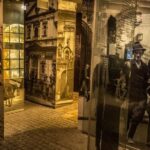
Expect to move through a series of rooms with documents, photographs, and interpretive displays. The museum uses narrow corridors and tight, life-like staging to recreate the feeling of wartime Kraków. That physical design can be a plus because it forces attention. You’re not wandering wide-open galleries; you’re being guided along a controlled path.
Here’s where a private guide really matters. Your guide adjusts the pace depending on what you want:
- If you want context, you’ll get the “why this mattered” explanation behind what you’re seeing.
- If you want the personal side, you’ll focus more on individual stories and the human stakes of policies and violence.
- If you prefer the big narrative, you’ll get a clearer chronological frame.
This is also where the tone of the tour tends to feel more thoughtful than self-guided. You’ll have space to ask questions without feeling like you’re slowing down a group that’s rushing toward the exit.
The Oskar Schindler part: from factory work to lives saved
Schindler’s Factory is famous for one reason that’s both simple and complex: Oskar Schindler used his factory to save people. During your visit, the guide ties that storyline directly into the larger story of occupation and survival.
You’ll learn how Schindler’s enamelware plant became part of the machinery of rescue. The tour specifically highlights that Schindler saved over a thousand Jewish workers, and it explains this action as courage remembered worldwide.
I like how the museum doesn’t treat this as a stand-alone miracle story. It connects Schindler’s choices to the conditions around him—so you understand what made survival possible and what made it dangerous. A guide helps you keep those connections clear, especially when the exhibition covers many different angles of the occupation.
If you only take one thing from the visit, aim for this: the story isn’t just about one man. It’s about how ordinary decisions under extreme pressure could still change outcomes for real people.
The 90-minute private pace: perfect for questions, not information overload
This tour is 1.5 hours, which is a sweet spot for a museum that deals with traumatic history. Long enough to build understanding, short enough that you don’t feel like you’re trapped inside the same message for the entire afternoon.
Because it’s private, the guide can slow down where you need it and speed up where you’re already following. That flexibility is especially valuable in a museum built with tight corridors and a staged flow—if you’re the type who reads carefully, you won’t get bullied by a group schedule.
You’ll also have time for reflection and questions. That’s not a minor detail. In a place like this, a thoughtful pause helps your brain connect the documents and photographs into something meaningful rather than just “things you saw.”
Language choices that actually matter for understanding
A lot of tours promise “multilingual,” but what you care about is whether the guide can explain clearly in the language you choose. This private tour runs exclusively in the language of your choice, with options including Slovak, English, Italian, Spanish, Swedish, Russian, Portuguese, German, Dutch, French.
That matters here because the exhibition includes original documents and a tight narrative structure. Even if you can read the basics in English, you’ll likely understand more quickly in your stronger language—especially when the guide is answering your questions.
The reviews also point to strong clarity and even a bit of personality from guides. For example, one Italian-speaking guide named Margherita was highlighted for making the visit wonderful, and French-language explanations were praised for being clear, with humor and the ability to answer questions.
Price and value: what you’re really paying for at $126
At $126 per person, this is not a budget add-on. So you should ask: what value are you gaining?
You’re paying for four things:
- A licensed expert guide who can explain what you’re seeing and keep the story coherent.
- Skip-the-line admission, which saves time and helps you avoid feeling rushed.
- Private group format, meaning you’re not boxed into the pace of strangers.
- A guided pace built for questions and reflection, not just narration.
If you’re the kind of traveler who likes to understand causes and consequences, this price can feel fair. If you’re mostly fine reading signs and moving fast, you might feel the cost more.
I’d use this rule of thumb: choose private here if you want context and guided interpretation in a place where details matter. Choose a self-guided visit only if you’re comfortable doing all the connecting yourself and you prefer moving at your own speed without a translator-guide in your ear.
Practical tips so your visit feels respectful and easy
A few small details help you have a smoother, calmer experience:
- Bring credit card and cash: The tour info specifically lists both.
- No pets: Pets aren’t allowed.
- Wear shoes you can walk in: The museum uses narrow corridors and a constrained layout.
- Bring your patience for a heavy topic: Even with a smooth guide, the subject matter is difficult.
Also, if you’re traveling with more than one person, plan to coordinate so everyone’s name is ready at booking. The tour notes that starting January 1, 2026, personalized ticket entry requires the names of all participants, and entry may be denied without that.
Who should book this private tour (and who might prefer another option)
This tour is best for you if:
- You want a guided explanation rather than reading alone.
- You prefer a private pace where you can ask follow-up questions.
- You care about understanding how Krakow changed under occupation, including daily-life impacts for different communities.
- You want the Oskar Schindler story explained with clear context.
It might be less ideal if you’re looking for a light, casual museum stop. The exhibition deals with Nazi occupation and survival, and the physical layout is tight. Plan for an emotionally serious visit, not a quick culture break.
Should you book the Schindler’s Factory private guided tour?
I’d book this tour if you want more than facts—you want meaning connected to real documents and a story that makes sense in your head. The combination of licensed guidance, skip-the-line entry, and a 90-minute private format is a strong value if you care about understanding rather than rushing.
If you’re sensitive to intense historical material or you know you don’t like narrow, constrained spaces, consider whether the museum format will feel too intense for your comfort level. But if you can handle that (and you want clarity), this is one of the most effective ways to experience Schindler’s Factory in Krakow.
FAQ
How long is the Schindler’s Factory private guided tour?
It lasts about 90 minutes.
Is this a private tour or a group tour?
This is a private group tour, led by a licensed expert guide.
Do I get skip-the-line admission?
Yes. Skip-the-line admission to Schindler’s Factory is included.
Where do I meet the guide?
Meet in front of the main entrance to the Schindler’s Factory Museum, on the right-hand side, with the guide holding an excursions.city sign.
What languages are available for the tour?
The live tour guide is available in Slovak, English, Italian, Spanish, Swedish, Russian, Portuguese, German, Dutch, and French.
What information do I need to provide for entry (especially after 2026)?
From January 1, 2026, you’ll need to provide the names of all participants during booking, or entry may be denied.
If you want, tell me what language you’d prefer and roughly what time you’re visiting Krakow, and I’ll suggest how to fit this into your day (nearby sights and timing) with minimal stress.