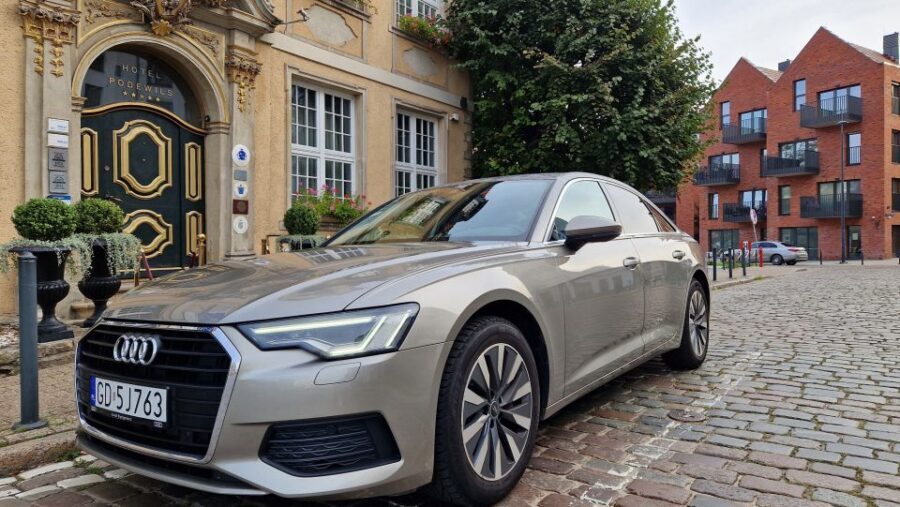
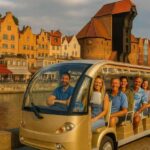
Gdansk, zipped by golf cart. In about 60 to 75 minutes, this live-guided loop helps you check off major Old Town sights without wrestling with maps, and you’ll hear the stories behind what you’re seeing. I especially like the convenience of the golf cart format for covering lots of ground fast, and the fact it’s geared as a private-style outing for your group.
One thing to plan for: the stops are short (often around 5 minutes), so it’s best if you want orientation and highlights rather than long, slow museum time. Also, this experience runs best with good weather, since you’ll be outside a lot.
In This Review
- Key Things I’d Focus On
- Gdansk in One Hour: Why This Golf Cart Format Makes Sense
- Pickup, Meeting Point, and the Logistics That Actually Matter
- The Route: How Each Stop Helps You Read the City
- Długa Street and the WWII-Survivor Detail
- Main Town Hall and the Museum of Gdańsk
- Katownia: Old Prison and the Dark Side of City Life
- Langgasser Tor, or the Golden Gate
- Jan III Sobieski Monument: A Link to Vienna
- Great Armoury (Wielka Zbrojownia): Weapons and Power
- Zuraw Miniatura: The Harbor Crane and How It Worked
- Swietopelk II Monument: Who Started the City Story
- Royal Chapel (Kaplica Królewska): Baroque Catholic Contrast
- St. Mary’s Church: Brick Gothic at Full Scale
- Motława River Embankment: Port Life Feeling
- Wyspa Spichrzów: Granaries Island and the Modern Side
- St. Bridget’s Church (Kościół św. Brygidy): Solidarity Roots and Amber Art
- The Great Mill and a First Water-Mill Story
- Bonus Photo Stops: Bridge of Love, Oldest Church, Town Hall, Central Station
- What This Tour Costs, and Why It Can Still Be a Smart Value
- The Big Win: A Live Guide You Can Actually Follow
- Weather, Timing, and How to Prep Like a Pro
- Who This Tour Fits Best (And Who Should Skip It)
- Should You Book This Gdańsk City Tour?
- FAQ
- FAQ
- How long is the Gdańsk city tour by golf cart?
- How much does this tour cost?
- Is the tour private or shared?
- Does the tour offer pickup?
- What language is the live guide?
- Is St. Bridget’s Church included, and do I need to plan ahead?
- What if the weather is bad?
- Do I need to buy tickets for the stops?
Key Things I’d Focus On
- A fast, landmark-heavy route that’s perfect for a short day in Gdańsk
- No map work for you since the driver handles the navigating
- Architecture stops with real context, from WWII-survivor houses to harbor-era engineering
- Extra time saved at the big-name churches and squares thanks to smart routing
- St. Bridget’s Church included, but you’ll want to coordinate in advance
Gdansk in One Hour: Why This Golf Cart Format Makes Sense
If your day in Gdańsk feels packed, a guided cart tour is one of the smartest ways to get your bearings fast. You cover a lot of Old Town in a short window, and you’re not stuck deciding which streets to walk first. The vibe is practical: hop on, enjoy the ride, then stop long enough to look, listen, and snap a few photos.
What I like most is the mix of big “you must see this” landmarks and smaller details that explain how the city worked. You’ll also appreciate the pacing: short pauses keep things moving, which is ideal when you’re trying to fit Gdańsk’s key highlights into limited time.
The tour is also set up so you can relax. Once you’re onboard, the driver handles navigation, so you’re free to focus on what you’re seeing. That matters in a place where streets and routes can feel confusing if you don’t already know the area.
You can also read our reviews of more guided tours in Gdansk


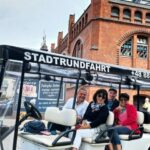
Pickup, Meeting Point, and the Logistics That Actually Matter
The tour starts at Pocztowa, Gdańsk, Poland, and it returns there at the end. If pickup is part of your plan, you’ll need to confirm the address in advance, since pickup details are handled by contacting the provider. Plan to wait in the lobby about 10 minutes before pickup.
This is offered with a mobile ticket, and the guide runs the show in English. The group size is capped at 21, but it’s described as a private tour/activity, meaning it’s for your group rather than a mixed tour crowd.
Here’s the main practical takeaway: bring your confirmation details and show up on time. When a tour is built around tight stop durations, being late can squeeze your viewpoints instead of adding them.
The Route: How Each Stop Helps You Read the City
This kind of tour works best when you understand what you’re collecting. Think of each stop as a visual clue: a building style, a power source, a civic role, a religious statement, or a defensive detail.
Below is how the experience typically feels as the cart rolls through the center—what you’ll look at, and why each moment helps your understanding.
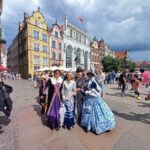
Długa Street and the WWII-Survivor Detail
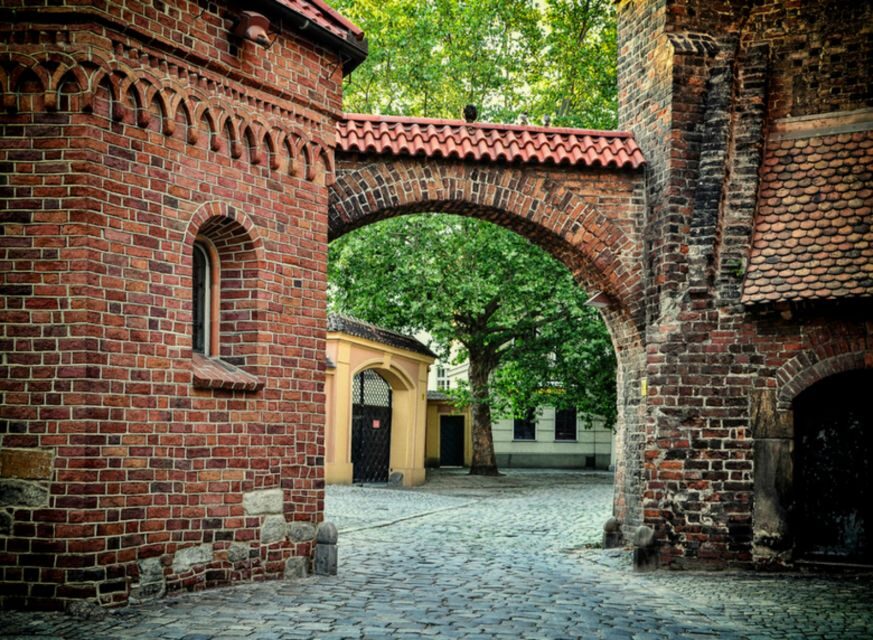
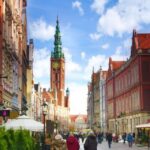
Długa Street is where you start to see why Gdańsk’s Old Town looks like it has multiple lives. You’ll get a close look at historic-looking houses that resemble their pre-1945 appearance, including mention of a particular building that survived WWII. Even if you’re not a history buff, this kind of survival detail gives the architecture emotional weight.
The stop is brief, around 5 minutes, so your best move is to angle yourself for a clear view of the façade and listen to the guide’s framing before you move on.
Main Town Hall and the Museum of Gdańsk
Right on the Royal route, the Main Town Hall area gives you civic scale. You’ll have a short window (about 5 minutes) to admire the architecture and understand why the town hall sits at the center of local pride and governance. The stop also ties into the idea of Gdańsk as a city with organized power, not just pretty streets.
This is a good pause for orientation because it helps you anchor where you are relative to the historic core.
You can also read our reviews of more city tours in Gdansk
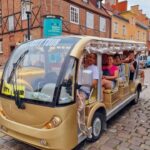



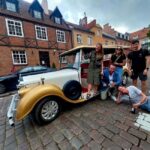
Katownia: Old Prison and the Dark Side of City Life
Katownia is the turn toward the harsher side of urban history. You’ll see an old tortured house and a prison tower, which is a reminder that cities didn’t run on monuments alone. The mood here is different, and the guide’s explanation is what makes it more than a quick look.
It’s still a short stop (around 5 minutes), so the takeaway is about atmosphere and function: what the building was made to do.
Langgasser Tor, or the Golden Gate
The Golden Gate is one of those landmarks that instantly feels like a “main entrance” even if you’re just passing through. You’ll have only about 2 minutes here, but it’s enough for a photo and a quick listen. It also helps you connect Długa Street to the larger idea of access and movement into the Old Town.
If you like urban design, this is the quick-hit you’ll remember later.
Jan III Sobieski Monument: A Link to Vienna
A cart stop at the Jan III Sobieski Monument adds a geopolitical thread. You’ll see a monument associated with the Battle of Vienna in Austria, which broadens the story beyond Gdańsk itself. It’s a reminder that the city’s identity wasn’t isolated—it was part of wider European history.
With around 5 minutes allocated, it’s best to use this as a photo moment plus one focused listen.
Great Armoury (Wielka Zbrojownia): Weapons and Power
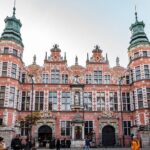
The Great Armoury gives you a physical sense of how a medieval city prepared for conflict. You’ll get to know medieval weapons and also take in the building’s architectural appeal. The stop is brief (about 5 minutes), but it’s timed so you’re not stuck waiting while others move ahead.
If you’ve ever wondered why cities invested in visible security infrastructure, this is the kind of stop that answers the question.
Zuraw Miniatura: The Harbor Crane and How It Worked
Now you start moving from defense and governance toward the city’s economic engine: the harbor. Zuraw miniatura is presented as one of the oldest harbor cranes in Europe, including details on how the structure was powered. That’s the kind of explanation you usually miss when you just walk by waterfront landmarks.
This stop also helps you understand why Gdańsk’s shape and wealth were tied to trade and shipping.
Swietopelk II Monument: Who Started the City Story
The Swietopelk II Monument is another short stop (about 5 minutes), but it adds a foundational name to your mental map. You’ll learn about the first lord of the city, which makes the earlier civic and defensive landmarks feel less random. Even if the names don’t stick right away, the idea of origin matters for how you read the rest of the route.
Royal Chapel (Kaplica Królewska): Baroque Catholic Contrast
The Royal Chapel brings a different architectural language into the mix. You’ll see a unique Catholic chapel with baroque style that’s described as different from other chapels in the area. That contrast is useful: it helps you spot that religious buildings aren’t all built from the same template.
Plan to spend your short time here looking closely at the style cues the guide points out, since the stop is about 5 minutes.
St. Mary’s Church: Brick Gothic at Full Scale
St. Mary’s Church is the big visual moment for many people—described as the world’s largest Gothic church built with brick. Expect around 5 minutes to take it in while the guide frames the medieval religious role of the city.
This is one of those stops where you’ll get a better view if you pause before you rush for photos. The guide’s explanation helps you see why this building wasn’t just a church; it was a statement.
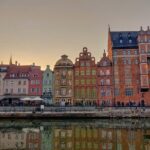
Motława River Embankment: Port Life Feeling
The Motława River embankment (Długie Pobrzeże) is where the air feels different. You’ll get around 5 minutes to feel the ambiance and hear about port life during medieval times. This stop works because it ties the harbor infrastructure you saw earlier to the real-world setting.
Use this moment as a mental reset: trade, water, movement, and the work of everyday city life.
Wyspa Spichrzów: Granaries Island and the Modern Side
Wyspa Spichrzów gives you a look at Granaries Island, connecting the city’s storage-and-shipping story to what you can see today. The tour describes it as showing both the granaries and a modern side of the city. That dual perspective helps your brain connect past and present without needing extra research.
Again, it’s quick—about 5 minutes—so focus on the overall view and the relationship between buildings and waterfront.
St. Bridget’s Church (Kościół św. Brygidy): Solidarity Roots and Amber Art
This is the one stop where you’ll get more purposeful time, about 10 minutes, and it’s described as included admission. The guide will explain the monument and you’ll visit the church where the Solidarity movement began, plus there’s mention of beautiful amber art.
One key practical note: the experience advises letting them know in advance so the guides can plan the church visit. If you care about seeing inside at the right time, do that early when you book.
The Great Mill and a First Water-Mill Story
The Great Mill is a very short stop, around 1 minute, focused on jobs in a mill and the history of the first water mill in the city. It’s the quick “how people worked” intermission—small in time, meaningful in context.
Use it as a bridge between the harbor and the city’s everyday labor systems.
Bonus Photo Stops: Bridge of Love, Oldest Church, Town Hall, Central Station
Your route may also include pauses for a Bridge of Love, a view of one of the city’s oldest churches, the town hall of the old city, and a look at the central station and its architecture. These tend to work best as photo and orientation moments—nice additions when you want your mental map to feel complete.
Because these are short, don’t treat them as standalone attractions. Treat them like bookmarks along a bigger guided storyline.
What This Tour Costs, and Why It Can Still Be a Smart Value
At $30.92 per person for about 1 to 1.25 hours, you’re paying for speed, guiding, and transportation in one bundle. This isn’t a long, slow day tour. Instead, it’s built to help you move between key sights without the hassle of navigation.
Most admissions on the stops are described as free, which lowers the risk of surprise fees. The included church visit at St. Bridget’s is also built into the experience, so you’re not scrambling to figure out entry on the fly.
Where value really shows up: when you arrive in Gdańsk without a clear plan. The tour gives you a curated route, keeps you from walking in circles, and supplies the story links that make the streets feel more than postcard scenery.
The Big Win: A Live Guide You Can Actually Follow
Live guidance is the heart of this experience. You’ll get explanations at each stop, and it’s paced so you can listen while you look. That’s especially important at places like Katownia and the harbor-area landmarks, where it’s easy to miss the point if you’re only scanning photos.
From the experiences shared by past participants, you may get a guide like Magic Mike, described as lively and very knowledgeable about Old Town Gdańsk history. One person also said the guide took them to places that cars couldn’t get to, which is a strong hint that the route uses practical access beyond what you’d assume from the main streets. That kind of small advantage can be the difference between a generic highlight walk and a real orientation loop.
You can also benefit from local tips during the ride. One review mentioned advice for visiting around Gdańsk and even a beer taste brought by the guide—those sorts of extras can make the tour feel friend-level, not just transactional.
Weather, Timing, and How to Prep Like a Pro
Because the route spends a lot of time outside, this experience requires good weather. If conditions aren’t right, the tour may be canceled and you’d be offered a different date or a full refund. That’s one reason I suggest booking with flexibility if your schedule allows.
Timing is the other prep point. With short stops throughout, you’ll enjoy the tour most if you’re ready to move and look quickly. If you prefer long museum visits or you want to linger for 30+ minutes at each site, this format may feel tight.
What to bring is simple: comfortable clothes and shoes for walking short distances around stops, plus a camera/phone that’s ready to use quickly. You’re on a cart, but you’ll still be stepping off often enough to need comfortable footing.
Who This Tour Fits Best (And Who Should Skip It)
This cart tour is great if you want:
- A fast way to learn the key landmarks of Old Town Gdańsk
- A guided story thread that connects architecture, ports, and civic life
- A private-style outing for your group with a comfortable ride
It may not be your best choice if you want:
- Deep museum time or long indoor stays
- A slow, wandering day where you control every stop and linger as long as you want
If you’re visiting for a short time, arriving for the first day, or simply want a highlight map before you explore on your own afterward, this tour can act like your personal orientation tool.
Should You Book This Gdańsk City Tour?
I’d book it if you value efficiency and guided context. For roughly an hour, you get a guided tour of the city’s most recognizable landmarks and the “how it worked” story behind them—especially the harbor and the architecture. The inclusion of the St. Bridget’s Church visit is a real bonus, as long as you coordinate in advance so the guide can plan properly.
I’d think twice only if you dislike short stops or you want extended time inside churches and museums. In that case, you might prefer a longer walking tour or separate tickets for the places you want to spend more time on.
FAQ
FAQ
How long is the Gdańsk city tour by golf cart?
The tour runs about 1 hour to 1 hour 15 minutes (approx.).
How much does this tour cost?
It costs $30.92 per person.
Is the tour private or shared?
It’s described as a private tour/activity, meaning only your group participates. The maximum group size is listed as 21.
Does the tour offer pickup?
Yes, pickup services are offered. For pickup, you need to contact and confirm your address.
What language is the live guide?
The tour is offered with a live guide in English.
Is St. Bridget’s Church included, and do I need to plan ahead?
Yes, the St. Bridget’s Church visit is included with admission (about 10 minutes). You’re asked to let the guides know before the trip so they can plan the church visit.
What if the weather is bad?
This experience requires good weather. If it’s canceled due to poor weather, you’ll be offered a different date or a full refund.
Do I need to buy tickets for the stops?
Many stops are listed with free admission, and St. Bridget’s Church admission is included. You should still plan that gratuities are not included.