REVIEW · GDANSK
Main Town Gdańsk Walking Tour
Book on Viator →Operated by Walkative! TOUR · Bookable on Viator
Old Town turns into a story in 2.5 hours. You start at Langgasser Tor (Golden Gate) and end near the Monument to the Defenders of the Polish Post Office, with a guide who links buildings to the people and events that shaped Gdańsk. The route mixes postcard sights with heavy WWII context, so the walk feels like more than a photo stop.
I especially like how the tour gives you clear historical context while still moving at a comfortable pace. You’ll see big hitters like St. Mary’s Church (the massive brick church) and the Long Market details such as the Neptune fountain and the unusual Fahrenheit scale. One drawback to plan for: this is a group walk (up to 35 people) and it’s mostly outdoors, so weather matters—and the tour asks you to look for a yellow umbrella.
In This Review
- Key Highlights I’d Prioritize
- Why This Main Town Gdańsk Walk Works on a First Visit
- Getting There: Start at Targ Węglowy and End at the Post Office Defenders
- Langgasser Tor (Golden Gate) to Dluga Street: Medieval Entry Meets Human Stories
- St. Mary’s Church and Długi Targ Square: Big Brick Power and Tiny Details
- Żuraw Crane: Why Gdańsk’s Wealth Looked Like This
- Museum of the Polish Post Office: The WWII Moment You Can’t Un-See
- Price, Value, and the Pay-as-You-Wish Note
- Timing, Pace, and What to Expect While You’re Walking
- Who This Tour Fits Best in Your Trip
- Should You Book This Main Town Gdańsk Walking Tour?
- FAQ
- How long is the Main Town Gdańsk Walking Tour?
- Where do I meet the guide, and where does the tour end?
- Is the tour offered in English?
- What’s the group size limit?
- Are admission fees included for the sights?
- Can I cancel and get a refund?
Key Highlights I’d Prioritize
- Golden Gate to Long Market: A tight loop through Gdańsk’s main medieval core
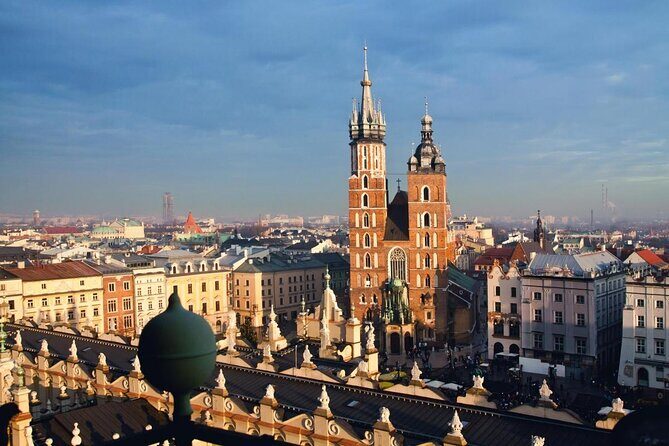
- St. Mary’s Church: You get the wow factor of the world’s biggest brick church
- Neptune Fountain + Fahrenheit scale: Oddball, fun details you’d miss on your own
- Żuraw (Crane): A strong stop that explains Gdańsk’s wealth and maritime past
- Polish Post Office WWII stop: A somber moment tied to 1 September 1939
- Yellow umbrella meeting point: Easy to find your group quickly
Why This Main Town Gdańsk Walk Works on a First Visit
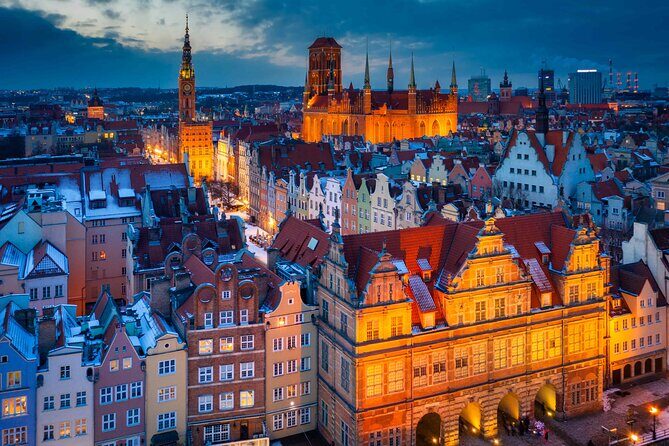
If it’s your first time in Gdańsk, this kind of guided Old Town loop is a smart move. In about 2.5 hours, you get oriented—where the Royal Route runs, which squares matter, and what each major landmark represents.
I also like that the tour doesn’t treat history like trivia. The guide connects architectural landmarks to the people who lived there and the turning points that changed the city. That matters in Gdańsk, because the Old Town looks beautiful—and underneath that, the story can be very real.
Finally, the format is practical. It’s a walking tour with a defined route, offered in English, and designed so most people can participate. If you’re short on time, it’s a high-efficiency way to see the essentials without burning half a day.
You can also read our reviews of more walking tours in Gdansk


Getting There: Start at Targ Węglowy and End at the Post Office Defenders
The walk begins at Targ Węglowy 1 in Gdańsk. You’ll end at the Monument to the Defenders of the Polish Post, which is listed as about 15 minutes from the beginning area, so you’re not dropped into a far corner of the city.
Public transportation is close by, which helps if you’re staying anywhere near the center. And yes, you should plan on spotting your group: the tour asks you to look for a yellow umbrella, so don’t be shy about checking the meeting point quickly.
One more practical note: it’s a group of up to 35 travelers. That usually means you’ll hear the guide well enough, but you’ll still want to stand where you can see during the stops—especially in busy-looking areas.
Langgasser Tor (Golden Gate) to Dluga Street: Medieval Entry Meets Human Stories
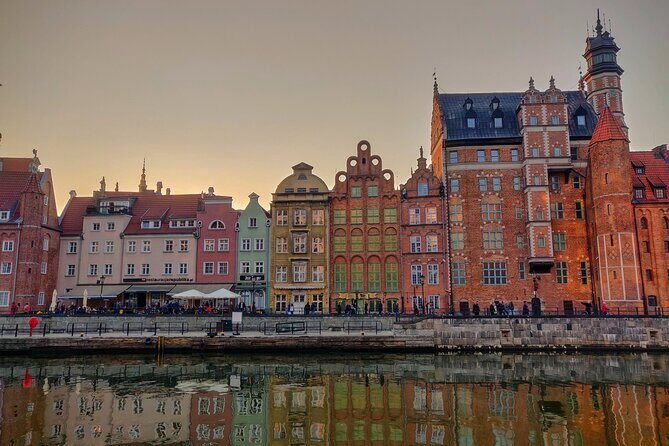
Stop one is Langgasser Tor (Goldenes Tor). Even before you move into the Old Town core, this is a great “set the stage” moment. You start with the basics of the city’s history, so later details make more sense.
Then you head down Gdańsk’s Dluga Street—the Long Street, part of the Royal Route. Here’s where the tour becomes more than sightseeing. The guide uses famous inhabitants and city stories to explain why this street and its buildings became so important.
What I like about this early section is the rhythm. It’s near the beginning of the walk, so you’re still fresh, and the guide’s context helps you understand what you’re seeing rather than just reading plaques.
A small consideration: street-level walking can be slow when groups stop for photos. If you hate pausing for pictures, you’ll still be fine—you’ll just want to keep moving with the group so you don’t get separated during transitions.
St. Mary’s Church and Długi Targ Square: Big Brick Power and Tiny Details
Next comes St. Mary’s Church, described as the biggest brick church in the world. Even if you don’t linger inside, the scale alone hits. And because the guide frames it in the story of the city, it feels like a landmark with a job, not just architecture for architecture’s sake.
After that, you reach Długi Targ (Long Market) Square, the medieval heart of Gdańsk. This stop is loaded with “how did I miss that?” elements. You’ll see the Arthur’s House (not just the facade—something that ties into the merchants’ world), plus the Neptune fountain and the exceptional Fahrenheit scale.
This is one of the best stretches for your own exploration after the tour. Once you’ve had the guide point out these features, you’ll start noticing symbolism and design choices on surrounding buildings.
One thing to watch: Long Market is a main public area. Even on a guided walk, you’ll want to stay alert for foot traffic when the group gathers around the guide. It’s not a problem, just something to expect.
Żuraw Crane: Why Gdańsk’s Wealth Looked Like This
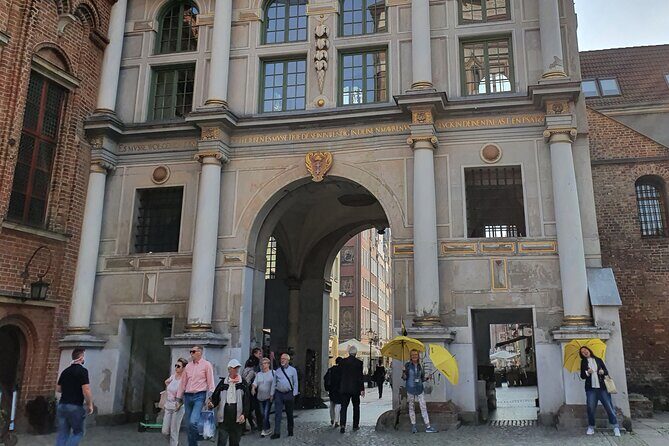
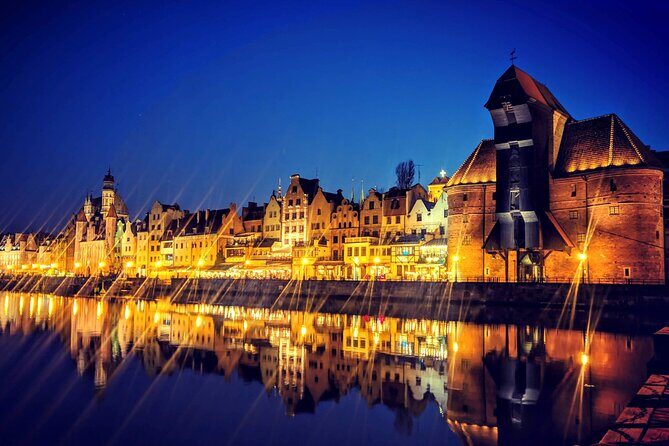
The tour’s next highlight is the Crane (Żuraw)—described as the largest medieval crane of its kind. This stop is short, but it’s meaningful. It’s an obvious visual link to a practical reality: trade and shipping made Gdańsk wealthy, and the city’s buildings and infrastructure reflect that.
I find crane stops work well on walking tours because they teach you “what the object was for” instead of treating it like a decorative monument. Here, the guide connects the crane to the city’s past role in moving goods.
If you’re the type who likes understanding how a city worked day-to-day, this stop is worth your attention even if you’re moving on quickly.





Museum of the Polish Post Office: The WWII Moment You Can’t Un-See
The final major stop is the Museum of the Polish Post Office – Museum of Gdańsk, tied to the Monument to the Defenders of the Polish Post Office. The tour highlights the significance of 1 September 1939, when the first strikes of Germany against Poland contributed to the outbreak of WWII.
This is the emotional pivot of the walk. Up to this point, you’ve been seeing city beauty, civic pride, and maritime history. Now you see how a specific place—an institution with mail and communications—became a flashpoint.
I appreciate that the tour doesn’t rush past the meaning. Even if you only spend about 15 minutes here, it adds weight to everything else you saw earlier, because Gdańsk isn’t just old buildings—it’s a city shaped by conflict and resilience.
Price, Value, and the Pay-as-You-Wish Note
The tour price is listed at $26.59 per person for approximately 2 hours 30 minutes. That’s not just a “cheap walking tour” price—what you’re really paying for is a guided interpretation of the Old Town’s key landmarks, plus the time the guide spends connecting stories from Golden Gate to the Post Office WWII site.
One important detail: the tour description says you’ll be joining a general pay as you wish tour, where the amount you pay covers the reservation fee and the guide’s payment. That means it’s not purely a flat “you pay once and you’re done” setup.
So how do you decide if it’s good value? Think about what you usually do. If you like a guide who can explain why the Neptune fountain matters or why St. Mary’s is important beyond its size, you’ll likely feel the value quickly. If you only want quiet walking and don’t care about historical context, you might prefer to self-guide with a map and slower time.
Timing, Pace, and What to Expect While You’re Walking
The tour is scheduled for about 2 hours 30 minutes. The stop durations are short and purposeful—roughly 10 to 20 minutes at the major points—so you won’t get stuck for long in one area.
Most of the time, the pacing feels designed for first-timers: you get enough time to see each landmark, but the walk keeps moving so the group doesn’t drift. That also helps if you’ve got other plans after—lunch, the next museum, or simply wandering the Old Town streets under your own steam.
Weather can be the wild card in Gdańsk, especially for early bookings. The route is mostly outdoors, so dress like it might be cooler than you expect, and bring layers. If rain shows up, at least the yellow umbrella instruction gives you a heads-up that weather-proofing is part of the experience.
Who This Tour Fits Best in Your Trip
This is a great fit for:
- First-time visitors who want a fast, guided orientation to Gdańsk’s Old Town
- People who enjoy history with context tied to real buildings and places
- Anyone who wants both the postcard sights and a serious WWII reference point in one outing
It’s also practical for different travel styles because it’s offered in English and aimed at “most travelers” rather than being built around heavy museum time. The tour notes that service animals are allowed, which is helpful if you travel with one.
If you’re traveling with kids or teens, it can work well because the guide points out memorable details—like the Fahrenheit scale—along with the bigger story beats. Just be ready for a steady walk and brief stops rather than long indoor breaks.
Should You Book This Main Town Gdańsk Walking Tour?
Yes, I’d book it if your goal is to understand Gdańsk quickly and see the biggest hits in a guided route. The blend of Golden Gate, Long Market details, Żuraw, and the Polish Post Office WWII stop creates a tour that feels both fun and meaningful.
I’d think twice only if you strongly dislike pay-what-you-wish style expectations or you need long seated breaks. Otherwise, this is a smart “start here” experience—especially if you want your later self-guided wandering to make sense.
If you want to get your bearing fast, look for the yellow umbrella, stand where you can see your guide, and treat the last stop at the Polish Post Office as the emotional anchor of the walk. That’s when the city’s story clicks into place.
FAQ
How long is the Main Town Gdańsk Walking Tour?
It runs for about 2 hours 30 minutes (approx.).
Where do I meet the guide, and where does the tour end?
You start at Targ Węglowy 1, 22-100 Gdańsk and end at the Monument to the Defenders of the Polish Post Office in Gdańsk.
Is the tour offered in English?
Yes, the tour is offered in English.
What’s the group size limit?
The tour has a maximum of 35 travelers.
Are admission fees included for the sights?
The tour’s stop details list admission ticket as free for each mentioned stop.
Can I cancel and get a refund?
Yes. Free cancellation is available up to 24 hours in advance for a full refund.