REVIEW · GDANSK
Historic City Center Tour Gdansk in German
Book on GetYourGuide →Operated by Walkative Tours · Bookable on GetYourGuide
Strolling Gdańsk’s old town feels like turning pages. This Historic City Center Tour mixes major landmarks with the kind of local stories that make a city’s layout click. I especially loved the first dramatic views around the Golden Gate and the scale shock of St. Mary’s Church. One catch: the guide can pack in a lot of dates and background, so if you prefer fewer facts, keep a mental shortlist of what you want to remember.
The tour runs about 150 minutes and stays firmly on foot, through cobbled streets and classic terrace-town scenery. It’s led in German by a live guide (I saw praise for a guide named Sandra, including how she kept things engaging even in cold January weather). Since it happens rain or shine, wear layers and plan to move.
In This Review
- Key highlights you will actually notice
- Meeting at Złota Brama: what to find on the street in the first five minutes
- Golden Gate and High Gate: entrances that explain the whole layout
- Polish Post Office in the Free City of Danzig: where everyday communication meets power
- Right-Town Town Hall and Arthur’s Court: reading civic buildings like a map
- St. Mary’s Church: how the largest brick church in the world feels up close
- The medieval crane: the landmark once moved by human muscle power
- The 150-minute pace: who this tour fits best (and how to make it smoother)
- Price and value: is $26 for a German walking tour a fair deal?
- Should you book this Historic City Center Tour in German?
- FAQ
- FAQ
- How long is the Historic City Center Tour Gdansk?
- What language is the tour guide?
- Where do I meet the group?
- Is hotel pickup included?
- Does the tour run in bad weather?
- What is included in the price?
- Is the tour wheelchair accessible?
- Can I cancel for a full refund?
- Are there any special booking options mentioned?
- What major sights does the tour include?
Key highlights you will actually notice
- Golden Gate (Złota Brama): the starting point and a true visual headline on your first minutes
- High Gate: another historic entry that helps you read the city’s defensive logic
- Polish Post Office in the Free City of Danzig: a built reminder that messaging and politics have always shared streets
- Right-Town Town Hall: civic power you can trace through the old-town plan
- St. Mary’s Church: the largest brick church in the world, built to dwarf your expectations
- The medieval crane: Europe’s largest medieval crane, once moved by human muscle power
Meeting at Złota Brama: what to find on the street in the first five minutes
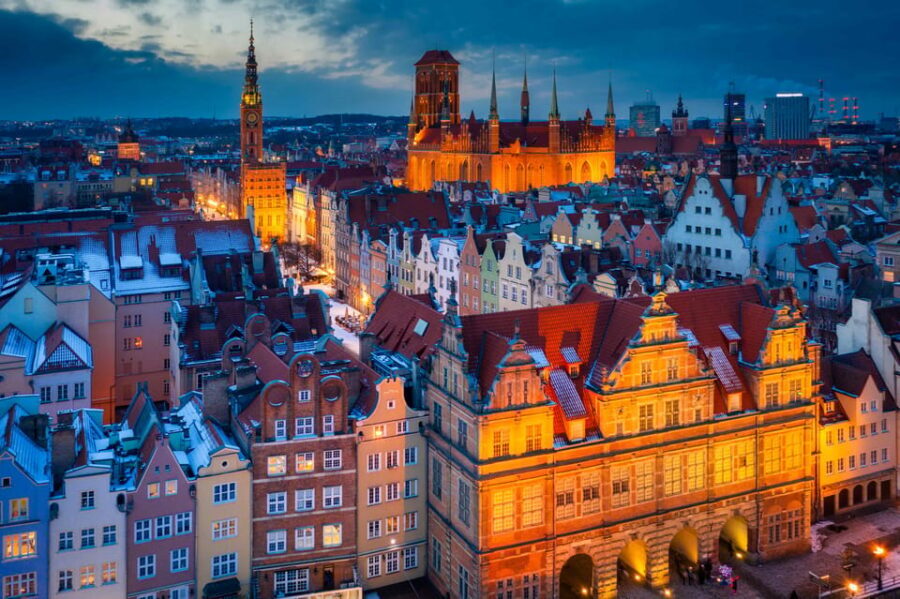
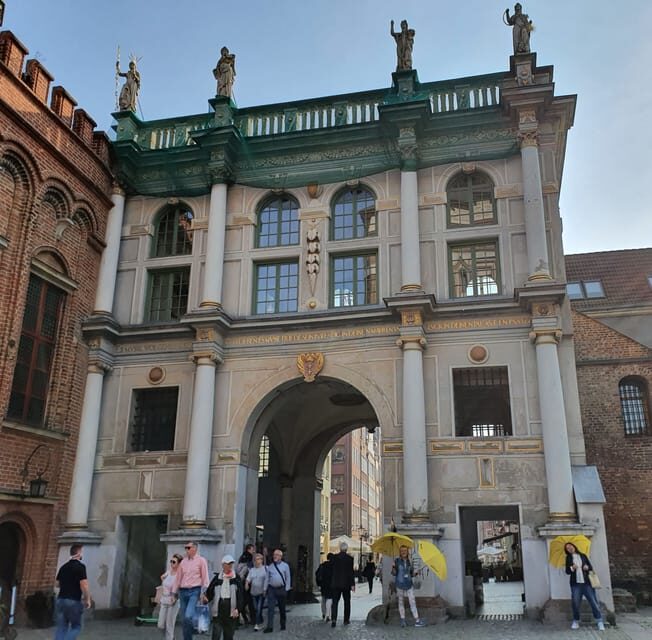
You meet at the Golden Gate (Złota Brama), and the easiest trick is to look for the group’s yellow umbrellas. That matters more than it sounds. Old-town Gdańsk has enough “pretty and confusing” corners that a clear meeting point saves you stress, especially in winter or rain.
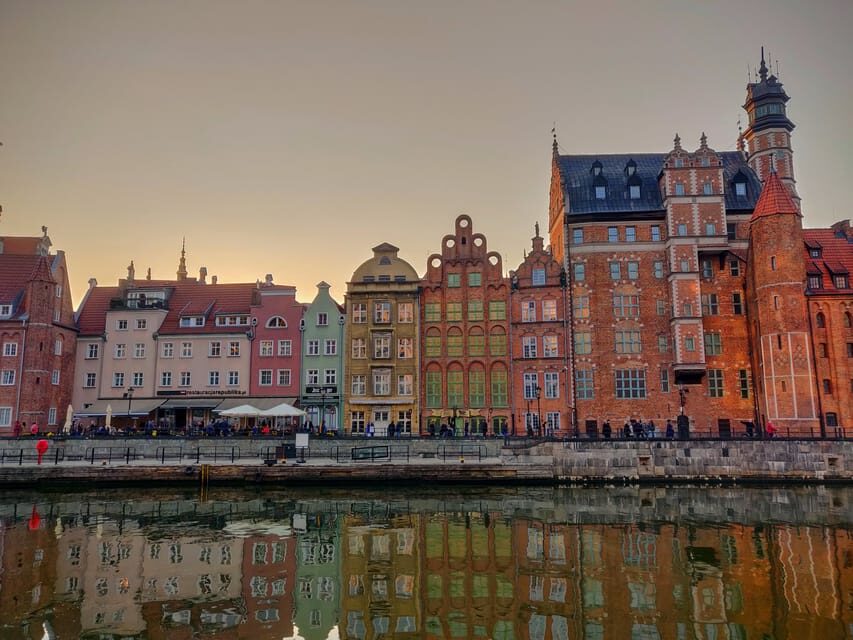
From the start, you’re oriented to the city like a local would: entrances, streets, and sightlines. You’ll walk through the law-town feel of Gdańsk’s old center, where slender buildings and cobblestones create a natural rhythm for the tour. The guide keeps you moving while connecting what you see to why it matters.
Because the tour is wheelchair accessible, you should still expect a real walking experience. Cobblestones can be uneven, so bring the right footwear and plan for a slower pace on certain patches of street.
You can also read our reviews of more city tours in Gdansk


Golden Gate and High Gate: entrances that explain the whole layout
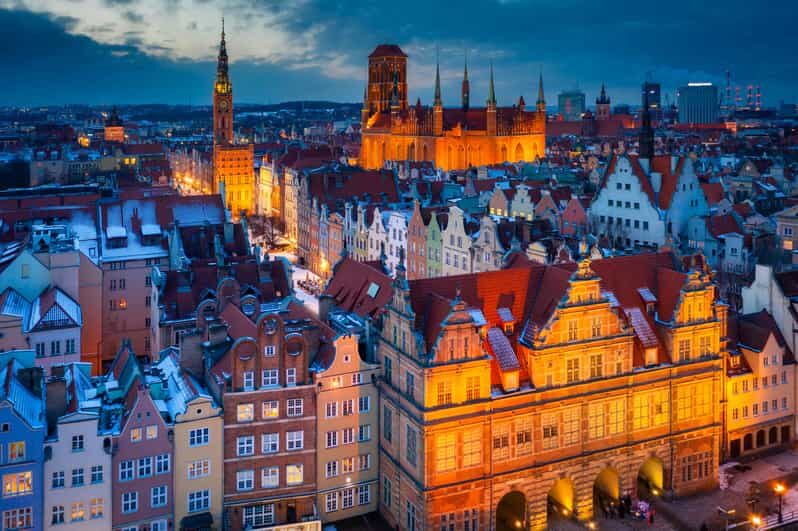
After meeting at the Golden Gate, you’re primed to see the city as a place with controlled access, not just a photo spot. The Golden Gate isn’t just decorative—it frames the idea that this area was designed to funnel people and attention. You also get the High Gate as a second “entry” moment, which helps you understand why the old town feels like it has boundaries you can read.
What I like about starting with these gates is that it gives you a simple mental model: streets aren’t random. They follow history, trade patterns, and security needs. Even if you’re not a pure history nerd, you’ll feel the logic quickly because the tour starts with the urban basics—where people would enter and how they would circulate once inside.
If you’re the type who takes photos constantly (we all do), this is a good section to do it. The gates give you strong visual anchors for later stops like the crane and the church. You’ll remember where everything sits because the tour builds from “big entrance” to “big institutions.”
Polish Post Office in the Free City of Danzig: where everyday communication meets power
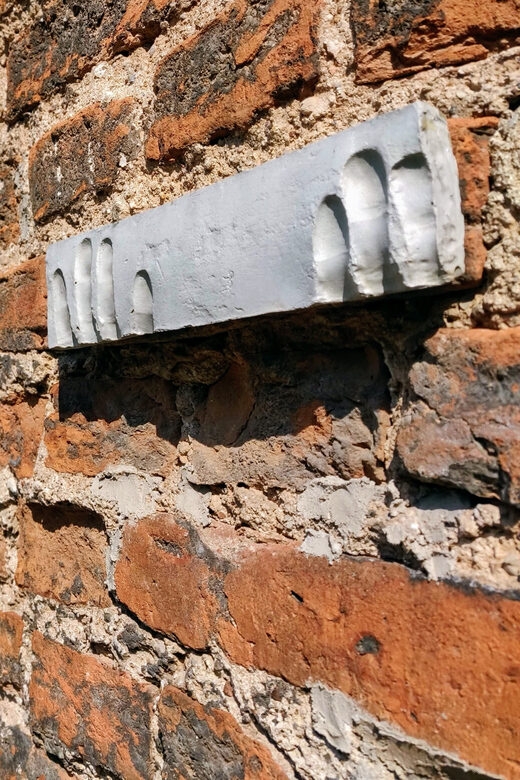
One of the smartest stops is the Polish Post Office in the Free City of Danzig. Even though it sounds like a niche location, it’s a very practical way to understand how big political shifts show up in ordinary places.
Here’s what you gain from a stop like this: it turns the old town from architecture into lived infrastructure. A post office is built for regular movement of messages and documents. That means it belongs to the city’s daily life, not only its grand ceremonies. When a guide ties it to local stories and the era called the Free City of Danzig, it stops being a vague label and becomes something you can locate on the map in your head.
I also appreciate that the tour doesn’t only chase dramatic stones. It gives you a human scale stop that still connects to big themes—ideas, communication, and how communities organize themselves.
Practical tip: take one minute here to slow down and look at surroundings. You’ll get more from this stop if you notice how the post office sits among the streets you’re walking through.
Right-Town Town Hall and Arthur’s Court: reading civic buildings like a map
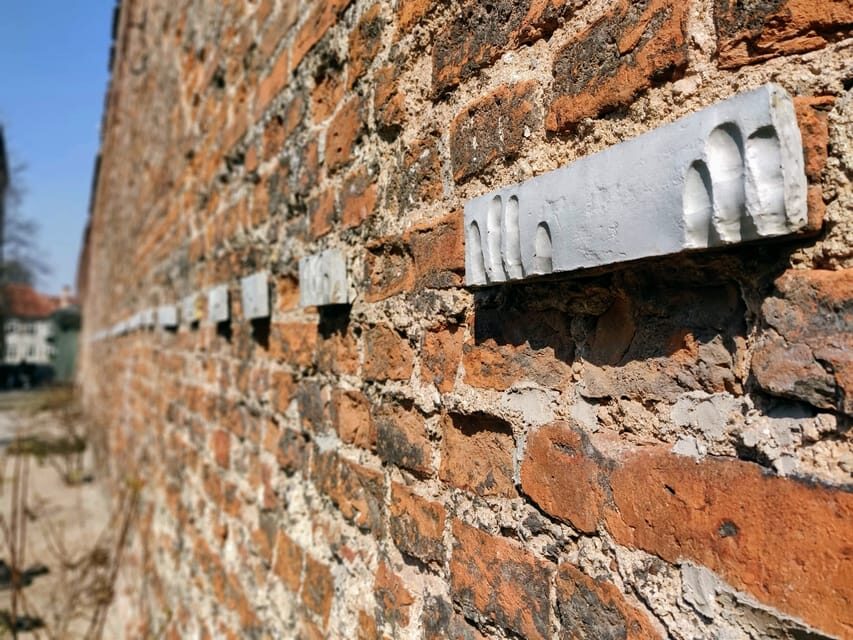
Next comes the Right-Town Town Hall and Arthur’s Court. These stops do something many landmark tours skip: they explain how governance and public life shaped what you see.
Town halls and courtyards can look similar in the dark corners of your memory. The value here is that the guide uses them as story nodes. You’re not just standing in front of pretty facades. You’re learning how the city functioned—who made decisions, where public activity gathered, and why certain buildings matter even today.
Arthur’s Court is especially useful because it’s a name you might not understand at first. When you hear it framed within the tour’s broader theme of “ideas created by the indigenous people of Gdańsk,” the stop becomes more than a label. It becomes a reminder that local identity didn’t appear overnight. It was built through the way people organized daily life—commercial, social, and civic.
One small drawback to keep in mind: since some reviews mention a lot of dates and background, this is a section where you might feel information density rise. If you want to reduce that pressure, pick one guiding question for yourself, like: What role did civic spaces play in everyday life here?
St. Mary’s Church: how the largest brick church in the world feels up close
Then you hit St. Mary’s Church—described on the tour as the largest brick church in the world. Honestly, “largest” is the kind of word that can turn into marketing. Here, the size is the point you can’t ignore. Even before you analyze details, your body registers scale: height, mass, and the way the space dominates the surroundings.
This stop is where a guided explanation matters. The church is not only impressive; it’s also easy to misread if you treat it as one big monument instead of a structure with a story. The guide’s job is to give you hooks you can remember later—why it looks the way it does and how it ties into the city’s long arc.
There’s also a subtle pacing benefit. After gates and civic buildings, the church gives you a “pause” moment. You can stand longer, take photos, and let the tour’s narrative breathe.
I’ll add a balanced note based on the feedback I saw: one person felt the church history went too far. That doesn’t mean the stop is wrong—it just means you’ll want to listen selectively. If you like short, visual explanations, you’ll probably enjoy the parts that connect function and community rather than the densest timeline segments. And if the guide starts leaning heavily into background, you can keep yourself oriented by focusing on one thing at a time: size first, then story, then details.
You can also read our reviews of more historical tours in Gdansk


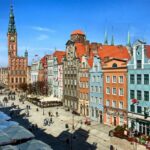
The medieval crane: the landmark once moved by human muscle power
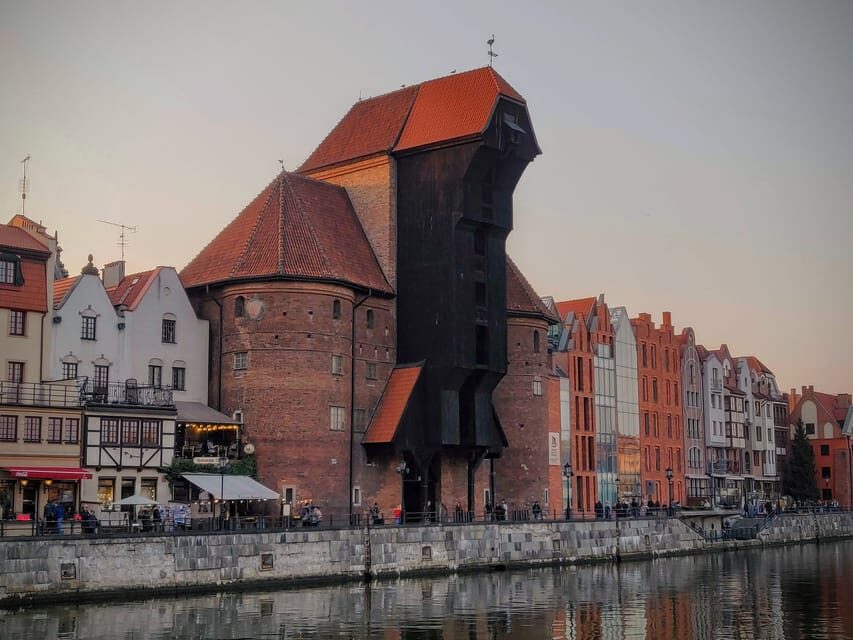
After St. Mary’s Church, the tour moves to the medieval crane, noted as the largest medieval crane in Europe and one that was once moved by human muscle power. This is the kind of fact that flips your perspective instantly.
A crane is usually a word you associate with modern construction. Here it’s a reminder that labor and engineering used to be hands-on. You’ll likely find yourself imagining how people worked the mechanism—how slow, deliberate, and physical the effort would have been.
That physical imagination is the real value of this stop. It turns a monument into a lived process. When a guide brings in stories linked to local ideas and community effort, the crane becomes more than a silhouette on the skyline. It becomes a signal of the city’s working life—how goods and industry moved in an earlier era.
If you’re the type who loves practical details, this is one of the better parts of the tour to pay full attention, because the human-muscle angle makes the history feel tangible instead of abstract.
The 150-minute pace: who this tour fits best (and how to make it smoother)
This tour is designed to cover a lot of ground in 150 minutes, which is about right for a focused old-town walk. You’re not touring museums with long indoor breaks. You’re walking, stopping, listening, and looking.
That makes it ideal if you want:
- a structured way to see major Gdańsk landmarks without planning every turn yourself
- a German-language guide that connects buildings to stories
- enough time to grasp themes like civic life and communication—not just “checkpoints”
It might feel less ideal if you strongly dislike history-heavy narration. Since some feedback mentions that there can be a lot of dates and info, plan for the reality that you won’t memorize everything. The best strategy: don’t aim to remember every year. Aim to remember the places and the main connections between them.
Also, it runs rain or shine, so bring a hooded jacket or umbrella solution and shoes you trust on wet cobblestones. In cold months, layers are essential—one review highlighted how a guide still made the tour enjoyable in winter, which tells me the experience is built for real outdoor conditions.
Language note: it’s German throughout. If you understand German comfortably, you’ll get more from the story flow. If you’re only basic-level, you might still enjoy the visuals, but the narrative details could be harder to track.
Price and value: is $26 for a German walking tour a fair deal?
At $26 per person for roughly 2.5 hours with a live guide, this lands in the “good value if you like guided context” category.
Here’s why. The stops aren’t random: Golden Gate, St. Mary’s Church, the crane, and key institutional buildings (like the post office and town hall) are exactly the kind of places where a guide can help you interpret what you’re looking at. Without guidance, you can still enjoy the views, but you’ll miss the connecting stories that make the tour feel like a coherent walk rather than a list of photos.
The trade-off is the density of information. Some people want more breathing room between historic facts. Others love it. If you know you prefer lighter commentary, consider arriving ready to filter what you hear: listen for one or two main themes per stop, then let the rest wash over you.
I’d recommend this tour most strongly to you if you:
- want a German-language introduction to Gdańsk’s old center
- like big landmarks with local meaning
- don’t mind winter walking and you want a plan that runs about 150 minutes
Should you book this Historic City Center Tour in German?
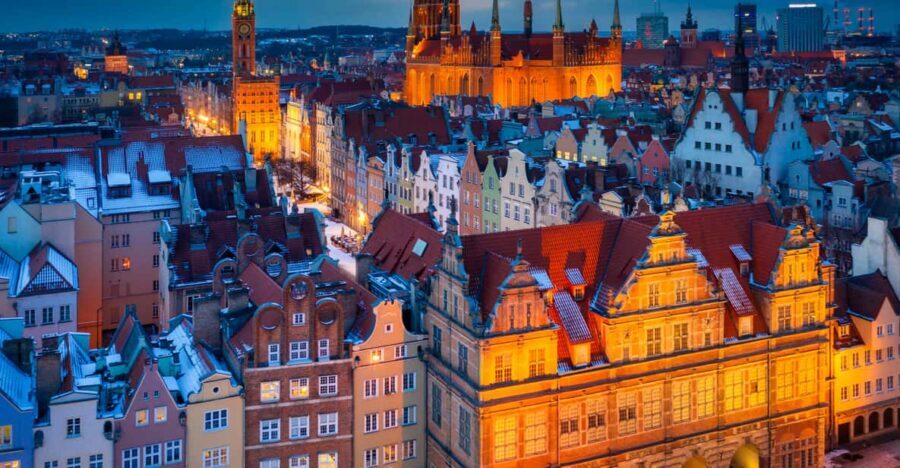
If you’re looking for a fast, coherent way to see Gdańsk’s headline sites—Golden Gate, St. Mary’s Church, the medieval crane, plus major civic and communication buildings—this is an easy yes. The $26 price makes sense because you’re paying for interpretation, not just walking through pretty streets.
Book it if you enjoy story-driven sightseeing and you’re comfortable with German narration. Pass or choose something else if you want fewer facts, more silence, or a slower museum-style rhythm.
FAQ
FAQ
How long is the Historic City Center Tour Gdansk?
The tour lasts about 150 minutes.
What language is the tour guide?
The live tour guide speaks German.
Where do I meet the group?
You meet at the Golden Gate (Złota Brama). Look for the group with yellow umbrellas.
Is hotel pickup included?
No, hotel pickup and drop-off are not included.
Does the tour run in bad weather?
Yes. The tour takes place rain or shine.
What is included in the price?
The included items are the walking tour and a guide.
Is the tour wheelchair accessible?
Yes, the tour is listed as wheelchair accessible.
Can I cancel for a full refund?
Yes. You can cancel up to 24 hours in advance for a full refund.
Are there any special booking options mentioned?
Yes. There is a reserve now & pay later option, so you can book your spot and pay nothing today.
What major sights does the tour include?
The tour includes Golden Gate, Polish Post Office in the Free City of Gdansk, Right City Town Hall, St. Mary’s Church, and also stops such as Arthur’s Court and the crane.