REVIEW · WARSAW
From Warsaw: Guided Tour of Treblinka Camp
Book on GetYourGuide →Operated by AB Everest Travel · Bookable on GetYourGuide
Treblinka hits before you even arrive. This 6-hour, hotel-pickup day trip from Warsaw takes you northeast into the forest where the Nazi killing system operated as part of Operation Reinhard. It’s a stark place, and the setting matters: the camp sits near the Treblinka train area, but almost everything you’ll see today is memorial, reconstructed, and interpretive.
I love two things most about this tour. First, the skip-the-line entry and smooth pickup-and-drive keeps your focus where it should be. Second, the museum tour doesn’t stop at big facts. You’ll see a walkthrough of inmates’ daily life, plus a miniature model that helps you understand the camp’s layout instead of just staring at ruins.
One possible drawback to plan for: your day can include time that’s not spent inside the camp itself. If you want maximum minutes strictly on-site, you may wish you had a bit more camp time and less on related Warsaw context.
In This Review
- Quick hits before you go
- From Warsaw to the site: the drive that frames what you’ll see
- Treblinka’s forest setting and why little remains
- The museum visit: daily life, architecture, and the miniature model
- Penal Labour Camp ruins and the “shoes” experience for 20,000 inmates
- August 1943: the rebellion story centered on 840 prisoners
- Skip-the-line entry and why your guide’s style changes the day
- Time on the road: a true 6-hour day, then back to Warsaw
- Price and value: what $134 buys you for Treblinka
- What to bring (and what to eat) so the day doesn’t fall apart
- Who this Treblinka tour suits best
- Should you book this Treblinka tour from Warsaw?
- FAQ
- Where is Treblinka located from Warsaw?
- How long is the tour?
- Does the tour include hotel pickup and drop-off?
- Is skip-the-line entry included?
- Is food included?
- Is the tour accessible and offered in English?
Quick hits before you go
- Hotel pickup and drop-off in Warsaw, so you don’t wrestle with transit
- Forest drive to Treblinka from the city, with time for basic context first
- Skip-the-line tickets to Treblinka, plus a guided visit in English
- Museum + miniature camp model to understand what you’re looking at
- Penal Labour Camp ruins tied to about 20,000 people held there
- August 1943 rebellion story centered on 840 prisoners
From Warsaw to the site: the drive that frames what you’ll see
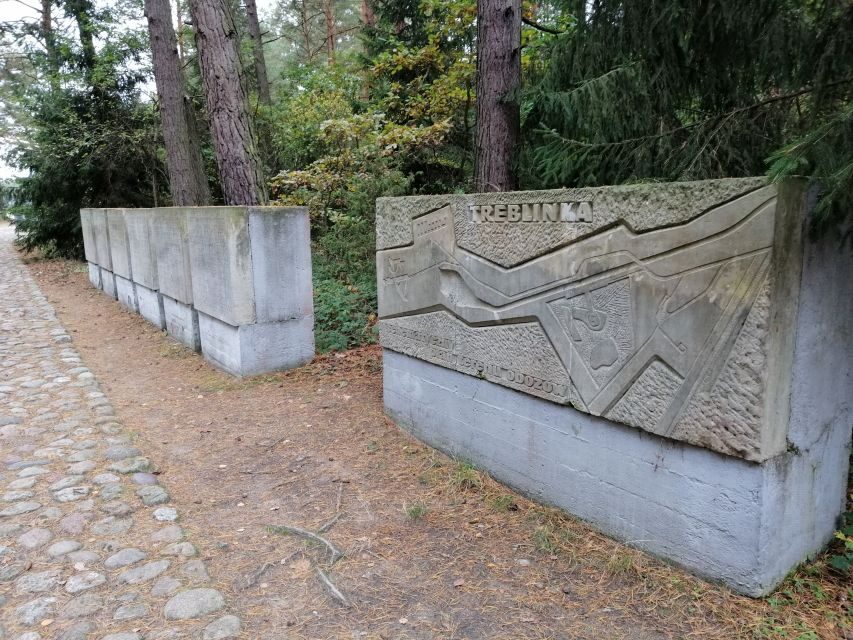
This tour starts with a pickup from your accommodation in Warsaw. You meet your driver/guide, get oriented, then climb into a comfortable, air-conditioned vehicle for the trip out of the city. That first stretch matters. When you arrive without context, the site can feel like a museum display. When you arrive with context, it becomes a place where history has weight.
As you head toward Treblinka, you’re not just commuting. You’re building the map in your head. The camp is located in the forest northeast of Warsaw, and it sits about 4 kilometers south of the Treblinka train station in today’s Masovian Voivodeship. You’re going from a modern city to a site that was created for mass murder in Nazi-occupied Poland.
And yes, the day is emotionally heavy. But the logistics are kept simple on purpose: you’re returned to your accommodation the same evening, so you can process without scrambling for transportation after a long, difficult visit.
You can also read our reviews of more guided tours in Warsaw



Treblinka’s forest setting and why little remains
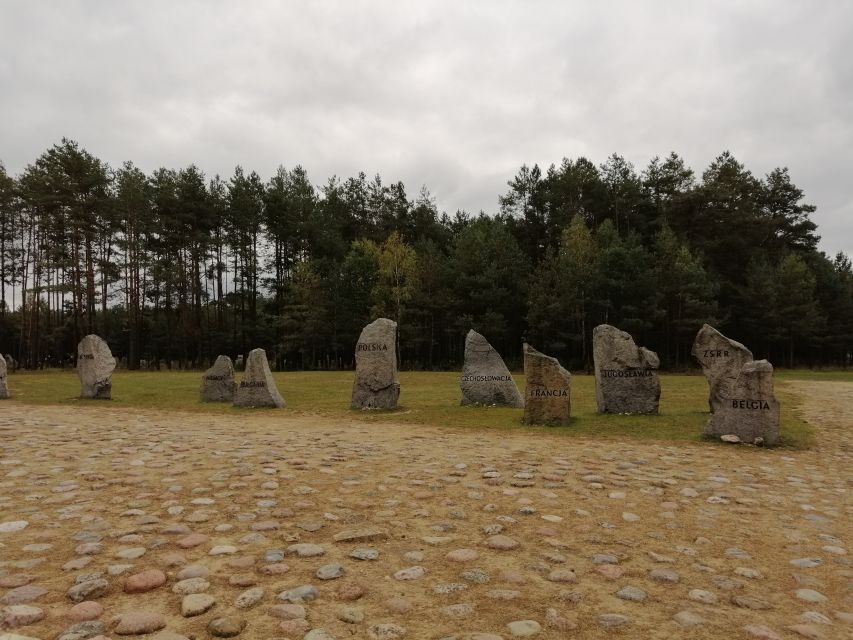
Treblinka was an extermination camp built and operated by Nazi Germany during World War II. It operated from 22 July 1942 to 19 October 1943 and formed part of Operation Reinhard, the deadliest phase of the Final Solution. During that period, estimates place the killings of 700,000 to 900,000 Jews there, plus around 2,000 Romani people. The camp is described as the site where more Jews were killed than at any other Nazi extermination camp apart from Auschwitz.
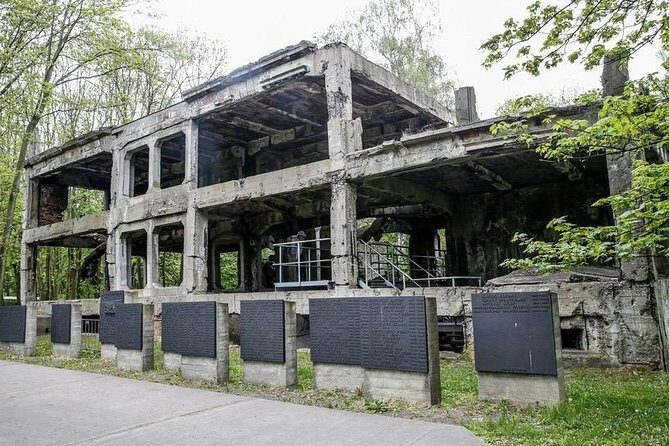
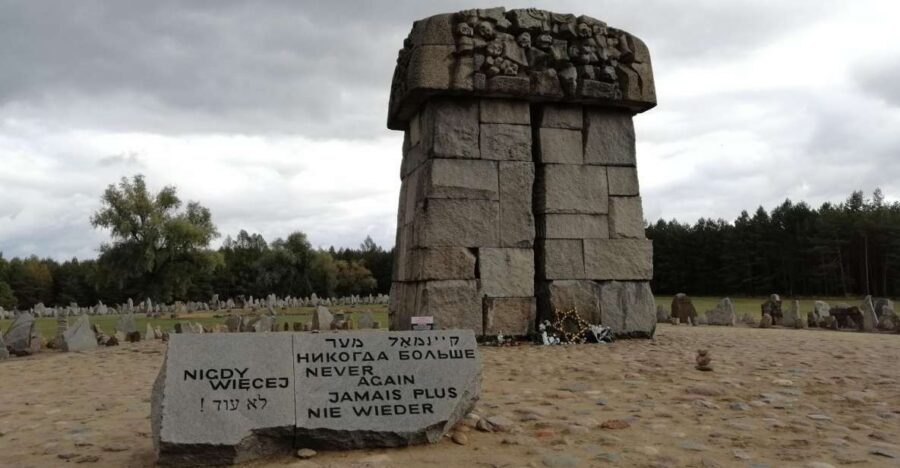
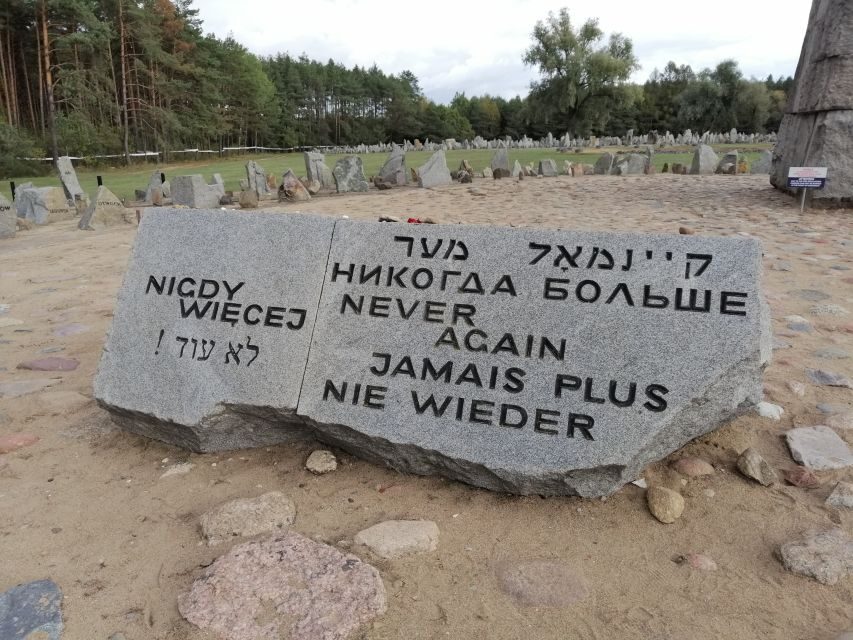
Here’s the reality you have to face when you visit: the camp was not preserved as a “live” site with intact buildings to walk through. Today, you’ll encounter memorial works and reconstructed areas (including the train station area), alongside ruins. In other words, you’re reading the camp through what has been left behind and what has been reconstructed from testimony.
That can feel strange at first. You might expect walls, fences, or barracks. Instead, you often get absence: the outline of a place built for erasing evidence and human lives. That’s exactly why the guided component matters. A good guide helps you connect the dots—so you’re not just looking at emptiness, you’re understanding function, movement, and the system that made genocide possible.
The museum visit: daily life, architecture, and the miniature model
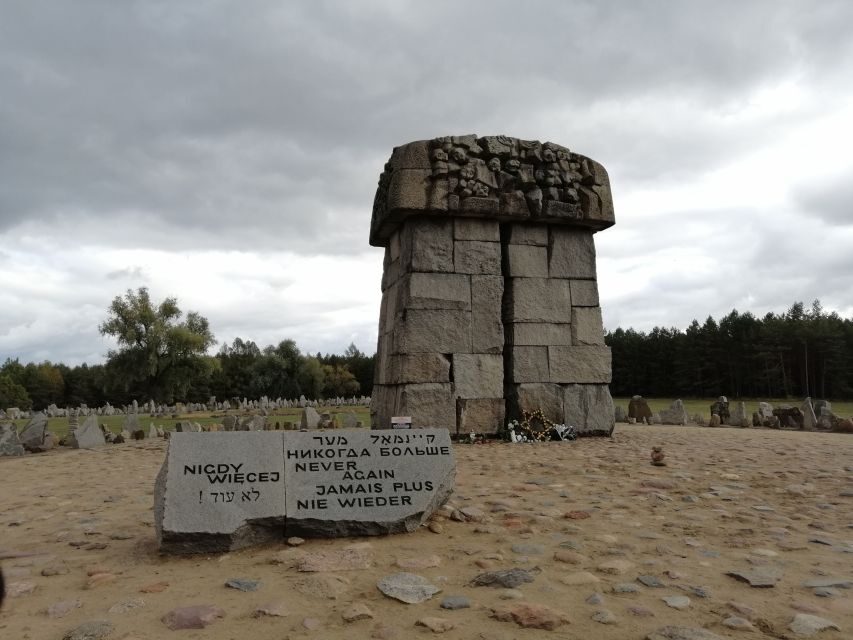
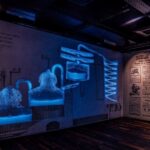
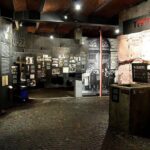
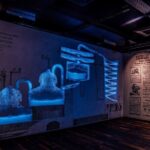
The museum is where the tour starts turning facts into a mental picture. You’ll get insights into the daily life of inmates at the camp. It’s not the kind of display that only gives you dates and numbers. It’s designed to help you grasp how people lived—and what the camp was built to do to them.
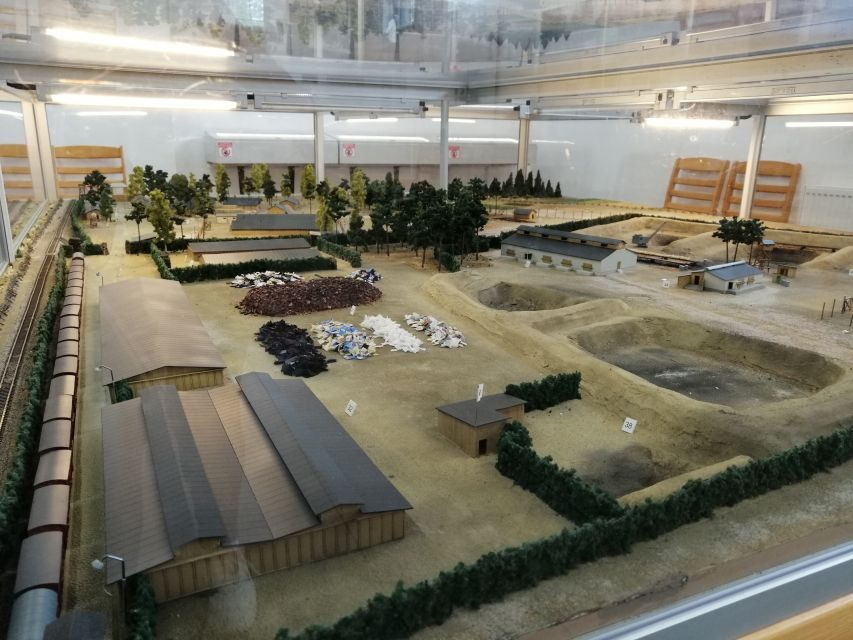
Then comes one of the most practical parts of the visit: the miniature version. If you’ve ever toured ruins and thought, I can’t tell where anything was, this is your fix. The miniature model helps you understand the camp’s architecture and layout. It’s much easier to process the site when you know how things were arranged.
One more tip: this is not a rushed stop. You’ll have time to listen, take in the exhibits, and walk the grounds afterward. A few visitors specifically mentioned the value of watching museum films during their visit—if they’re available in the time you’re there, give them your attention. Anything that adds context in a structured way can help you make sense of what your eyes are seeing.
Penal Labour Camp ruins and the “shoes” experience for 20,000 inmates
After the museum, you’ll walk among the ruins of the Penal Labour Camp. This part is built around a stark idea: getting in the shoes of about 20,000 inmates who were held there between 1941 and 1944.
That date range is important. Treblinka’s extermination period (1942–1943) isn’t the whole story. You’re also seeing how forced labor fit into the broader system before and alongside the killing operations. Even if the structures are ruined, the interpretive route pushes you to understand the flow from imprisonment to labor exploitation, and then to mass murder.
This “shoes” approach isn’t meant to be comfortable or clever. It’s meant to translate scale into something your brain can hold. You’re walking through space while the guide explains what the numbers represent. It’s one of those rare museum-to-ground experiences where the interpretation actually changes how you see the site.
Bring comfortable shoes. The grounds include walking and ruin areas. If you go in wearing sandals or thin soles, you’ll spend the whole time thinking about your feet instead of the meaning of the place.
August 1943: the rebellion story centered on 840 prisoners
One of the most powerful moments of the tour is the story of resistance. You’ll hear accounts of the desperate courage of 840 prisoners who dared to rebel in August 1943.
This part is handled through narration and guided explanation, not just an isolated panel of text. The reason it works is simple: you’re learning that people were not only victims of an engineered system. They also acted inside it, even when the outcome was almost unimaginable.
When I’m choosing a Holocaust memorial tour, I look for how they present agency. Treblinka is often discussed in terms of mechanics—transport, layout, extermination. This tour also keeps the human story in the foreground, especially through the rebellion narrative.





Skip-the-line entry and why your guide’s style changes the day
Treblinka is not the place for a one-size-fits-all audio guide. This tour includes guided time in English and skip-the-line tickets, plus help from the guide throughout the experience. That matters because the site is complex, and “what am I looking at?” can easily become “I’m lost.”
And the guide quality seems to be a real strength here. Names that come up in standout accounts include Jan, Janusz, Leszek, Marek, Mark, and Mateusz (as a driver in a few cases). Visitors praised guides for being personal rather than robotic, for giving clear answers to questions, and for adding depth through maps, memoirs, and careful explanation.
There’s also a practical listening note. One review mentioned the guide could have used a small microphone so it was easier to hear during parts of the drive. That’s not universal, but if you’re sensitive to sound or you’re hard of hearing, pick a seat where you can clearly see and hear the guide when they talk.
Time on the road: a true 6-hour day, then back to Warsaw
The duration is 6 hours, starting with pickup. The tour includes the drive to Treblinka, guided time inside the memorial and museum areas, and then return transfer back to your accommodation for the evening.
That “returned the same day” detail is more important than it sounds. Treblinka is heavy. If you try to stack another activity afterward, you’ll feel it. This format gives you a built-in off-ramp: you can eat, shower, and process before the next day starts.
Also, remember that the camp visit is part walking and part museum viewing. That means you’ll want to be ready for a mix of standing time, slow moving through exhibits, and time outdoors among ruins.
Price and value: what $134 buys you for Treblinka
At $134 per person for a 6-hour guided day trip, the value is less about “cheap” and more about what’s included.
You get:
- Hotel pickup and drop-off
- An English-speaking driver (and English-guided visit)
- Skip-the-line tickets to Treblinka
- A guided tour inside the camp/memorial areas
What you don’t get: food and drinks.
So the money is paying for three big wins: reduced stress, expert context, and protected time. Skipping the line sounds minor until you’re at a site where your brain is already overloaded. Waiting around while your emotional energy drains is the last thing you want. The guided portion is what turns the visit into real understanding instead of a checklist.
One small caveat shows up in a comment about the trip being pricey for a solo traveler. If you’re traveling alone and watching your budget closely, the price can feel steep. But if you’re going with someone, it’s easier to justify because you’re splitting the value of transportation + guide guidance across a shared experience.
What to bring (and what to eat) so the day doesn’t fall apart
The tour specifically asks you to bring:
- Comfortable shoes
- Food and drinks
Food and drinks are not included, so plan a simple snack or a packed meal. Even if you don’t feel hungry during the first part of the day, you’ll appreciate having something ready later.
Also, dress for walking on memorial grounds. Think practical layers. You’ll be outside some of the time, and you’ll want to move without fuss. One visitor mentioned water bottles provided in the vehicle, but don’t count on that as your plan. Bring your own water if you can.
Who this Treblinka tour suits best
This is a good fit if you want:
- Holocaust history with clear explanations
- A guided visit that connects layout to what happened
- A day trip that doesn’t require you to figure out timing and transit
It’s also ideal if you like the “how did it work” side of history—particularly because the museum miniature model and the guided walk help you understand architecture and function.
If you’re the kind of visitor who asks lots of questions, you’ll likely appreciate guides who can answer thoughtfully. Several standout accounts praised guides for handling questions patiently and clearly, including guides described as doing map-based briefings and using materials like memoirs.
Should you book this Treblinka tour from Warsaw?
Book it if you want a guided, English-speaking day trip with pickup, skip-the-line entry, and interpretation that helps you understand a place where so little remains intact. It’s the kind of tour where logistics matter because you’re there for meaning, not sightseeing.
Consider thinking twice if you have a strong need for maximum time strictly inside the camp grounds. One possible tradeoff is that the day may include related context in Warsaw alongside the Treblinka visit. If that doesn’t fit how you want to spend your minutes, look closely at what timing you can expect and aim for a departure that gives you the longest on-site feel.
Finally, go in prepared for emotion. This is not a casual history stop. It’s a reverent memorial visit where respectful pacing and good guidance make the difference between seeing a site and understanding it.
FAQ
Where is Treblinka located from Warsaw?
Treblinka is in the forest northeast of Warsaw. It is about 4 kilometers south of the Treblinka train station, in what is now the Masovian Voivodeship.
How long is the tour?
The tour lasts 6 hours.
Does the tour include hotel pickup and drop-off?
Yes. Hotel pickup and drop-off are included.
Is skip-the-line entry included?
Yes. Skip-the-line tickets to Treblinka are included.
Is food included?
No. Food and drinks are not included. You’re advised to bring food and drinks.
Is the tour accessible and offered in English?
The tour is wheelchair accessible and the guide experience is offered in English.