REVIEW · KRAKOW
Krakow: Auschwitz-Birkenau Tour & Museum Expert Guide
Book on Viator →Operated by Discover Poland · Bookable on Viator
Waking up early is part of the deal. This Auschwitz-Birkenau day trip from Krakow pairs round-trip transport with an English-speaking guide and headsets so you can follow every stop at a solemn, historical pace. You’ll visit both Auschwitz I and Birkenau (Auschwitz II) plus a short break en route to keep the day manageable.
I love that the guide is officially approved by the Auschwitz-Birkenau Museum, so you get interpretation rooted in the site itself. I also like the small-group feel, with a maximum of 30 people, plus the practical extras like a professional team and clear in-vehicle support during the ride from Krakow.
The main drawback to plan around is timing. Departure times can move earlier due to Auschwitz-Birkenau policy, and that means very early pick-ups on some days.
In This Review
- Key things to know before you go
- From Pawia 18B to Oswiecim: how the Krakow-to-Auschwitz logistics feel
- Auschwitz I: your 2.5 hours and what to prioritize
- Birkenau (Auschwitz II) in Brzezinka: why the lecture matters
- Walking, heat, and the day’s breaks: staying functional when you’re not ready
- Price and value: is $30.23 really enough?
- When Auschwitz timings change: how to protect your day
- Who should book this Auschwitz-Birkenau tour from Krakow?
- The guide factor: what makes the experience click
- Should you book this tour? My practical take
- FAQ
- How long is the Auschwitz-Birkenau tour from Krakow?
- Does the tour include entrance tickets?
- What language is the guide?
- Where is the tour meeting point in Krakow?
- Do I need an ID or passport?
- Is food included?
Key things to know before you go
- Officially approved Auschwitz guides: You’ll be shown around by a licensed English-speaking guide designated by the museum.
- Two camps, one continuous story: Auschwitz I gets about 2.5 hours, then Birkenau follows for about 1.5 hours with the same guide continuing the lecture.
- Headsets included: You won’t have to strain to hear instructions over wind, crowds, or walking groups.
- Short breaks, outdoor walking risk: Breaks are kept to under 10 minutes during the tour, and Birkenau is outdoors, so bring weather gear.
- ID required before entry: You should carry your passport or ID because security asks for it before you enter.
- Food and drink are on you: Entry fees and transport are included, but you’ll want snacks and water for the long day.
From Pawia 18B to Oswiecim: how the Krakow-to-Auschwitz logistics feel
This tour starts in Kraków at Pawia 18B (31-154). The value here is that you don’t have to coordinate two separate things: getting to Oswiecim and finding an English guide once you arrive. You’re picked up in an air-conditioned van or mini-bus for the ride out to the camp area.
You’ll also have guide support during the journey. The day is set up with “you’re not figuring it out alone” energy: a friendly English-speaking tour leader is on hand, and the group is kept together. You’ll arrive and take a quick break around the Oswiecim area for coffee or to check out outdoor exhibits before meeting your museum guide for the structured part of the visit.
One detail worth treating seriously is timing. The tour notes that departure time may be adjusted due to Auschwitz-Birkenau policy, and you’re encouraged to confirm the exact departure time the day before. I’d treat that as your main homework step. If your schedule assumes a late morning start, plan for the day to begin much earlier than you expect.
And yes, queues can happen. Auschwitz can run with crowd lines even when everything is organized, so build in patience rather than expecting a frictionless arrival.
You can also read our reviews of more guided tours in Krakow
Auschwitz I: your 2.5 hours and what to prioritize
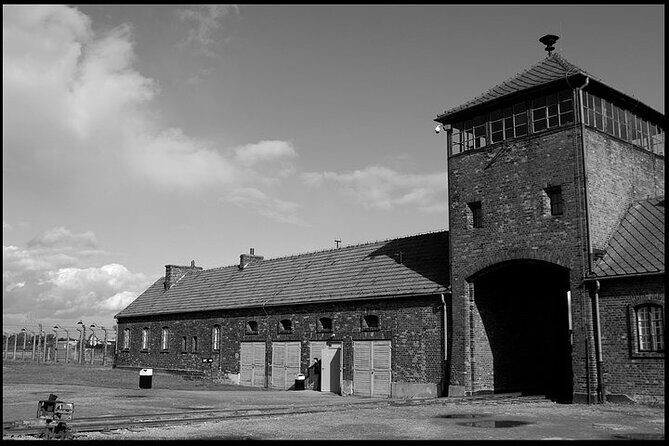
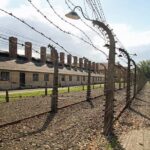
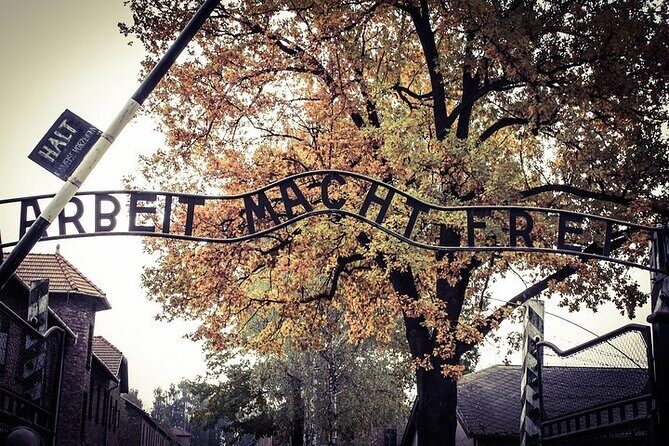
Auschwitz I is where the visit becomes intensely anchored in place. You’ll tour the museum section with a licensed guide who leads you through barracks, watchtowers, and the infamous entrance gate with the slogan Arbeit Macht Frei. The museum exhibits include personal belongings, photographs, and documents—things that turn the scale of atrocity into something painfully specific.
The guide’s job isn’t just to name buildings. It’s to connect what you see to the machinery of persecution: systematic oppression, imprisonment, and the human cost behind the records. The time at Auschwitz I (about 2 hours 30 minutes) gives you room to look without feeling like you’re on a sprint.
A big part of the emotional weight here is the memorial spaces. After the main museum walk, you’ll have time to pay respects at memorials and monuments dedicated to the victims of the Holocaust. This is one of those moments where the best “travel tip” is restraint: don’t rush. Let the silence do its work.
Practical note: even with a good guide, the quality of the experience depends on how your group behaves and how much you slow down to read and look. If you’re the kind of person who wants to understand rather than take photos, this stop can land very hard—in the best possible way.
Birkenau (Auschwitz II) in Brzezinka: why the lecture matters
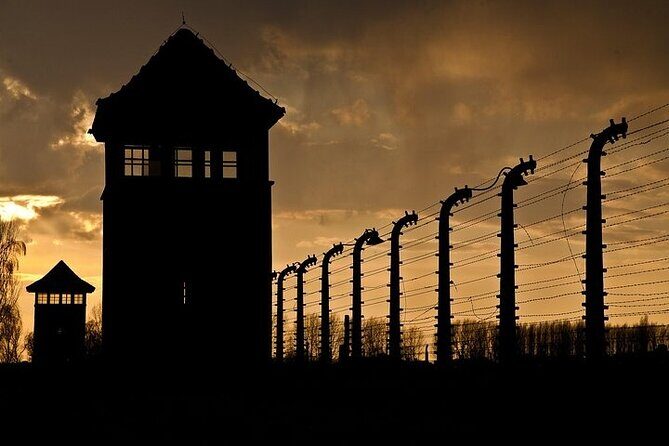
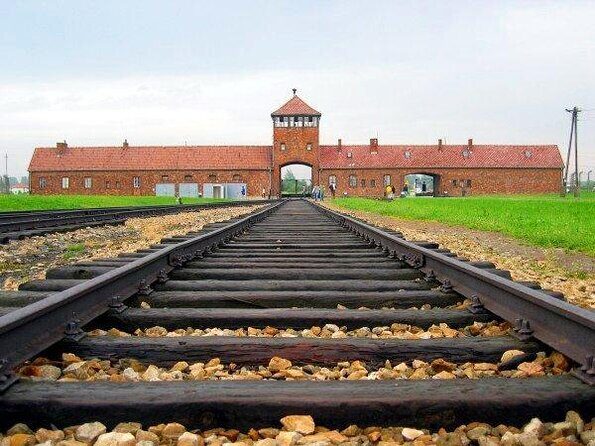
After Auschwitz I, you’ll get a short break—up to around 15 minutes—before heading to Birkenau (Auschwitz II), the second camp area. The tour describes it as only a few minutes away, which helps keep momentum. The same guide continues the story, and that continuity is a real advantage: Auschwitz I sets the framework, and Birkenau expands it into the camp’s scale and purpose.
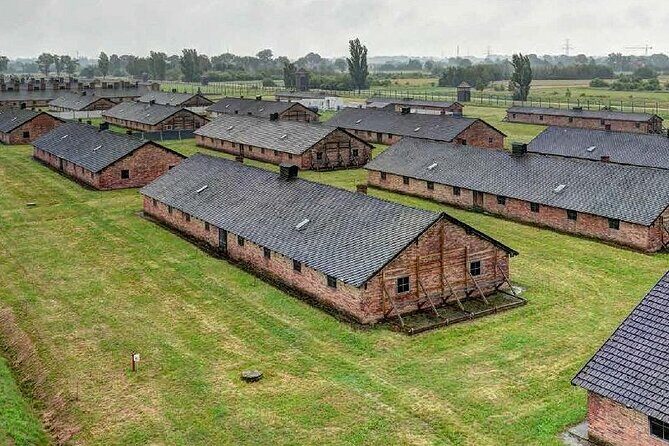
Birkenau is often the section that people remember most vividly, and your time there (about 1 hour 30 minutes) reflects that. The tour explains that Birkenau was constructed in 1941 on order of Heinrich Himmler and designed for the specific goal of making Europe “Judenrein.” The explanation covers capacity (the tour notes around 90,000 prisoners) and the brutal reality of living conditions.
You should also be prepared for the darkest material. The tour discusses cruel selection processes and pseudo-scientific medical experiments carried out by Nazi doctors, including Josef Mengele. This is not a light stop. The pacing can feel short compared to the scale of what you see, but the structure is built around keeping the day coherent and moving you through the essential places without losing the narrative.
The tour ends with the liberation context—January 27, 1945—when the gates were opened by soldiers of the 60th Army of the First Ukrainian Front. Leaving with that ending matters. It brings you out of description and into the historical fact that liberation did happen, and it reinforces the tour’s core message: these crimes should never happen again.
Walking, heat, and the day’s breaks: staying functional when you’re not ready
This tour is long, and it’s emotionally heavy. It’s also physically active. The itinerary is built around short gaps rather than full breaks, with breaks during the tour no longer than 10 minutes. That means you’ll want to treat your comfort like part of the experience, not an afterthought.
Here’s what you can expect for time-outs:
- A quick break for coffee or outdoor exhibits before the museum guide begins
- A short break between Auschwitz I and Birkenau
- An end-of-tour break of at least 20 minutes, where you can visit a bookstore, grab groceries, or simply relax
- Then you’ll travel back to Kraków (the ride back is noted as about 1 hour 15 minutes)
Food and drinks aren’t included. That’s a major practical consideration. If you wait until you feel terrible, you’ll have a harder time focusing in the exhibits. I recommend you bring a small pack of snacks and water. Even if you don’t want to eat during the most solemn rooms, you’ll be glad you can keep your energy steady before and between sections.
Also plan for weather. The tour encourages bringing umbrellas or raincoats, and with Birkenau being outdoors, you’ll feel the elements. Wear solid shoes. And if it’s hot, plan for sweat and sun: you’ll be grateful you didn’t assume it would be comfortable.
Price and value: is $30.23 really enough?
At $30.23 per person, this is priced like a budget day trip. The real question is what you get for that money—and the answer is more than just transportation.
Included highlights:
- Licensed English-speaking local guide
- Round-trip transfer from Kraków by air-conditioned vehicle
- Entry fees
- Headsets to hear the guide clearly
- Professional assistance if something goes wrong
Add up what that usually costs when you piece it together yourself—transport, timed entry logistics, and a real guide—and the value can make sense, especially if you’re staying in Kraków and want a simple plan for the day.
But don’t confuse low cost with guaranteed smoothness. A few negative experiences focus on last-minute timing shifts and long waits when entry timing changed. Those aren’t “museum surprises.” They’re an operational reality at Auschwitz, where scheduling and visitor capacity play a huge role.
So I see this tour as good value if you’re flexible with your morning, respectful of the structure, and ready to wait if the day requires it. If you need a predictable pick-up time to the minute, this is the part to double-check.
You can also read our reviews of more museum experiences in Krakow

When Auschwitz timings change: how to protect your day
The tour clearly warns that departure time can change because of Auschwitz-Birkenau policy. In the real world, that usually means earlier pick-ups or adjustments that ripple through your morning plans. That’s the kind of risk you can’t eliminate with any tour operator, because the site controls entry flow.
Your best protection is behavior and preparation:
- Confirm the departure time the day before
- Keep your morning schedule flexible
- Arrive with your ID/passport ready for security checks
- Bring weather gear and snacks so you’re not stuck waiting hungry or uncomfortable
- Don’t plan another major activity right after the tour ends
Also, keep expectations realistic about queues. The tour notes that there may be lines at the entrance due to high tourist traffic. Even with a guided plan, queues can still happen. The guide can help you manage what’s next, but they can’t erase crowd control.
One more practical point: several positive accounts credit strong day-of communication and a smooth-running host. If you want the best odds of that, make sure you can be reached and follow any instructions you receive close to departure time.
Who should book this Auschwitz-Birkenau tour from Krakow?
This tour is built for most visitors who want an English guide and transportation taken care of. It’s a good fit if:
- You want a structured visit to both Auschwitz I and Birkenau
- You appreciate headsets and a guided narrative rather than doing it on your own
- You like small-group organization (up to 30 people)
It may be a harder fit if you:
- Have serious health or mobility restrictions (the tour is not recommended for that)
- Need late mornings or sleep-ins, because departure times can shift earlier
- Are sensitive to long outdoor walking time and waiting in weather
If you’re traveling with kids, this can still work, especially with a good guide and calm group behavior. One account praised the operator for being accommodating to a tight schedule with children. That said, the content is heavy, so it’s smart to judge whether your kids can handle it emotionally.
The guide factor: what makes the experience click
The tour leans heavily on guide quality, and the model is clear: the guide is licensed and approved by the Auschwitz-Birkenau Museum. That matters because interpretation at these sites is not generic. The right guide helps you understand what you’re seeing without turning it into a lecture you can’t feel.
From past experiences shared publicly, guides such as Norbert, John, and Paulina were specifically mentioned for being friendly, knowledgeable in explaining the camps, and strong on English. Even if you don’t get those exact names, it’s a good sign that the operator attracts guides who can handle the tone of the site and communicate clearly.
One more thing I like: the guide continues through both camps. That means you’re not re-starting from scratch at Birkenau. You’re building one timeline in your head, which makes the whole day feel less fragmented.
Should you book this tour? My practical take
If you want an easy, guided, English-first Auschwitz day from Kraków, this is a reasonable option. The museum-approved guide, headsets, and inclusion of transport plus entry fees make it strong value.
I’d book it if you can handle an early morning and you’re willing to plan for queues and short breaks. I’d think twice if you’re the kind of traveler who needs exact timing locked in, or if you’re uncomfortable with limited meals and mostly outdoor walking.
Book with respect, come prepared, and keep your expectations honest. The site is heavy enough without adding frustration.
FAQ
How long is the Auschwitz-Birkenau tour from Krakow?
The tour runs about 7 to 8 hours.
Does the tour include entrance tickets?
Yes. Entry fees are included. The tour notes that Auschwitz I has an admission ticket included, and the Birkenau admission ticket is free.
What language is the guide?
The tour is offered in English, with a licensed English-speaking local guide and headsets provided.
Where is the tour meeting point in Krakow?
The meeting point is Pawia 18B, 31-154 Kraków, Poland.
Do I need an ID or passport?
Yes. You should bring your ID or passport because security asks for it before entrance.
Is food included?
No. Food and drinks are not included, and the tour has limited break time during the day.