REVIEW · WROCLAW
Wrocław’s Old Town: A Self-Guided History Tour
Book on Viator →Operated by VoiceMap Audio Tours · Bookable on Viator
Every corner tells a story here. This self-guided history walk turns Wrocław’s landmarks into an easy on-foot route, guided by VoiceMap GPS audio you can pause, repeat, and take at your pace. It’s built for a compact Old Town circuit, ending at Wrocław Cathedral.
I love that you’re not stuck in a rigid group schedule. You get offline audio and maps, so you can wander without constantly hunting for signal, and the route is designed to make stops feel connected instead of random photos.
One thing to consider: you’ll need your own smartphone and headphones. Also, since it uses GPS, you’ll do best if you start with your phone charged and ready to follow the map.
In This Review
- Key highlights at a glance
- What This VoiceMap Old Town Walk Is Really Like
- Price and Value: Why $8.99 Can Make Sense
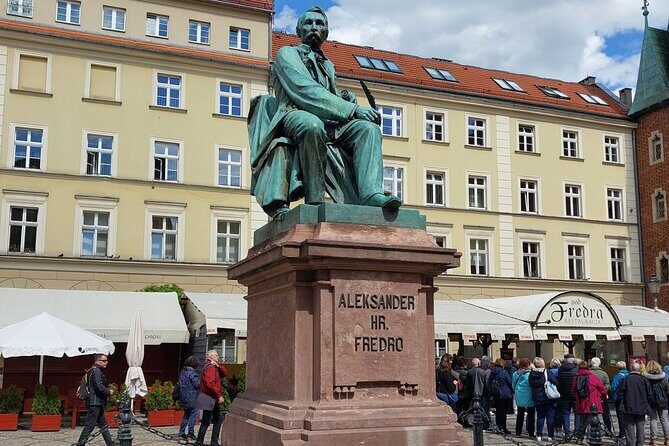
- Starting at the Monument of Alexander Fredro in the Rynek
- Rynek Market Square and Old Town Hall: The Power of the Center
- The Pillory: When Justice Was Public
- Jaś i Małgosia Twin Houses: Fairy-Tale Faces in Real Streets
- St. Elizabeth’s Church (Garrison Church): Climb for the Views
- Slaughtered Animals Monument and the University: History With Teeth
- Ossolineum Institute and Market Hall: Culture and Commerce in One Walk
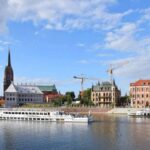
- Sand Bridge and Lovers’ Bridge: How Wrocław Earned the Bridges Name
- Wrocław Cathedral: Ending at a Gothic High Point
- Tips for a Smooth Self-Guided GPS Audio Walk
- Should You Book This Wrocław Old Town History Tour?
- FAQ
- How long is the Wrocław Old Town self-guided history tour?
- What does the tour cost?
- Is the tour available in English?
- Where does the tour start and end?
- Do I need a smartphone and headphones?
- Can I use the tour without cell service?
- Is this a guided group tour?
- Is the tower at St. Elizabeth’s part of the experience?
- Can I cancel for a refund?
- Does it work only on one trip date?
Key highlights at a glance
- Lifetime access to the tour before and after your booking date
- Offline GPS audio, maps, and geodata for low-stress wandering
- Go at your own pace with a walkable 1 to 1 hour 15 minute Old Town loop
- St. Elizabeth’s Church tower for panoramic city views
- Small “Dwarf Trail” moments plus stories tied to Wrocław’s folklore topics
- A bridge finale with Sand Bridge and Lovers’ Bridge padlocks, ending at Wrocław Cathedral
What This VoiceMap Old Town Walk Is Really Like
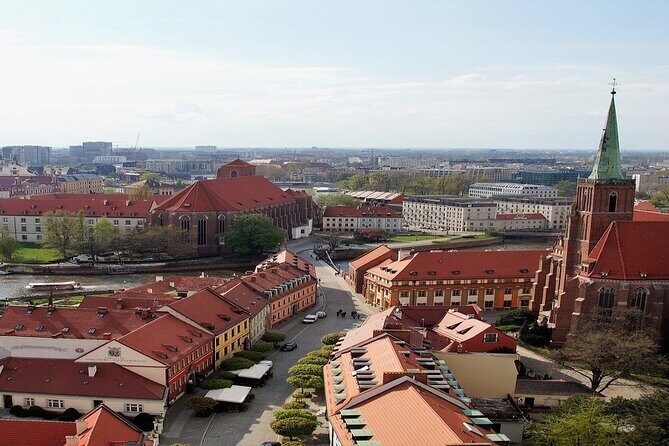
This is a self-guided audio tour, so you’re the schedule. The audio cues you when to move, then you choose how long to linger at each stop. The whole point is to make Wrocław’s center feel readable: why these buildings are here, how the city used to enforce rules, and how the river shaped daily life.
The tour runs in English and is designed to fit a brisk walk—about 1 hour to 1 hour 15 minutes for most people. It’s also private, meaning it’s just your group using the app, not a large shared headset circus.
I also like that the tour includes a virtual playback option, which means you can listen like an audiobook even if you’re resting, commuting, or waiting out weather. That’s surprisingly useful when you’re juggling a day of sightseeing and want the stories without rushing.
You can also read our reviews of more guided tours in Wroclaw



Price and Value: Why $8.99 Can Make Sense
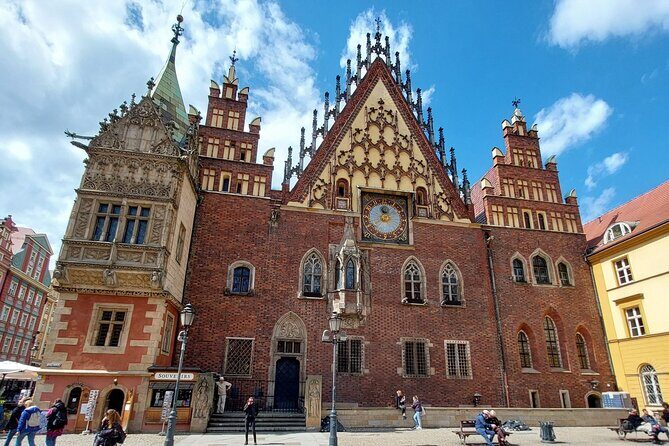
At $8.99 per person, the cost is low enough that you’re not taking a big risk—especially because you get unlimited, lifetime use of the tour before your booking date and after. So if your first attempt ends up being cut short, you can go back and finish later without paying again.
The value also comes from what you get besides the audio. You’re downloading offline access (audio, maps, and geodata), which matters in older city centers where phone signal can be patchy. Instead of relying on data, you rely on the tour package.
What’s not included is also clear: you bring your own smartphone and headphones. If you already travel with Bluetooth earbuds, this becomes a very smooth experience.
Starting at the Monument of Alexander Fredro in the Rynek
Your walk begins at the Monument of Alexander Fredro in Rynek. Starting here is smart because it puts you right in the heart of Old Town energy. Alexander Fredro is one of the anchors of Polish literature, and the audio sets you up to look past the postcard views and notice how culture shows up in street-level landmarks.
From the start, the guiding style is simple: listen for what you’re looking at, then look again. That helps you connect the dots between buildings, civic life, and how Wrocław tells its story in public spaces.
You’ll also get instructions geared toward the exact starting area, which is helpful because Rynek can feel like a single big square until you’re standing in the right spot.
Rynek Market Square and Old Town Hall: The Power of the Center
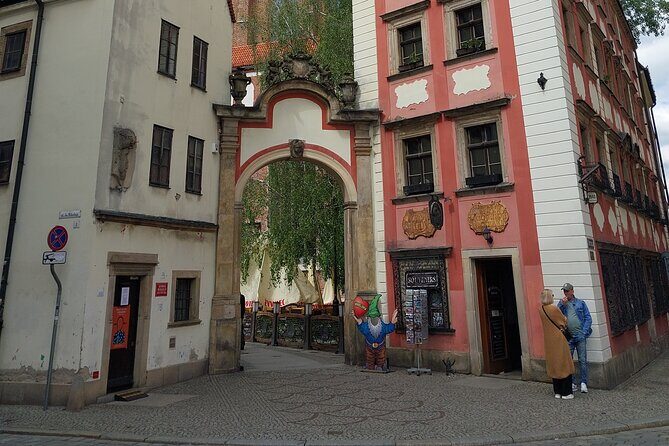
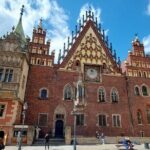
Next up is the Wrocław Market Square, one of Europe’s larger historic market squares. This is where the tour gives you a framework: this wasn’t just a pretty plaza. Market squares were the city’s daily stage—trade, announcements, and crowds gathering for everything from celebrations to trouble.
You’ll also focus on the surrounding architecture, including the Old Town Hall. Even if you don’t step inside, the audio helps you read the building as part of how the city organized power and routine.
Practical tip: give yourself an extra minute here. Market Square is the kind of place where you’ll naturally pause for photos and then realize you missed the key explanation. Let the audio finish the thought before you wander away.
The Pillory: When Justice Was Public
Then the route turns darker with the Pillory, an ancient site of public punishment. This stop is where Wrocław’s medieval justice system becomes real. The audio explains the role it played, and it changes how you see the stonework. You start noticing that public spaces weren’t only for trade and art—they were also where authority demonstrated consequences.
This is one of the more thought-provoking segments because it’s not just about architecture. It’s about social control and how communities enforced rules in plain sight.
If you like history that feels human and specific, this stop is worth your full attention. If you prefer lighter topics all the way through, you can keep moving, but don’t skip it entirely—you’ll miss a key piece of why the Old Town feels the way it does.
You can also read our reviews of more historical tours in Wroclaw



Jaś i Małgosia Twin Houses: Fairy-Tale Faces in Real Streets
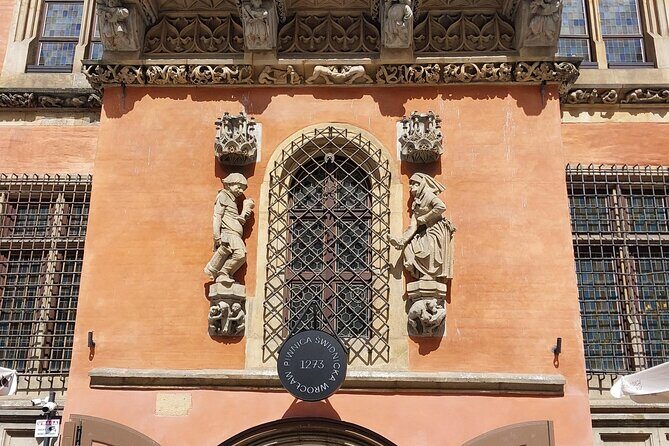
After the serious stop, the tour shifts to folklore with the Jaś i Małgosia twin houses, also known as the Hansel and Gretel buildings. These aren’t just cute. They’re a reminder that Wrocław wasn’t only serious and official—people also decorated, mythologized, and leaned into storytelling.
What I like here is the balance. After the Pillory, this feels like a breath of air, but it still keeps you thinking about local identity. The audio helps you see these buildings as part of a broader tradition of turning myths into landmarks.
If you enjoy street-level photo stops, this is a good moment to slow down. The buildings are built to be noticed up close.
St. Elizabeth’s Church (Garrison Church): Climb for the Views
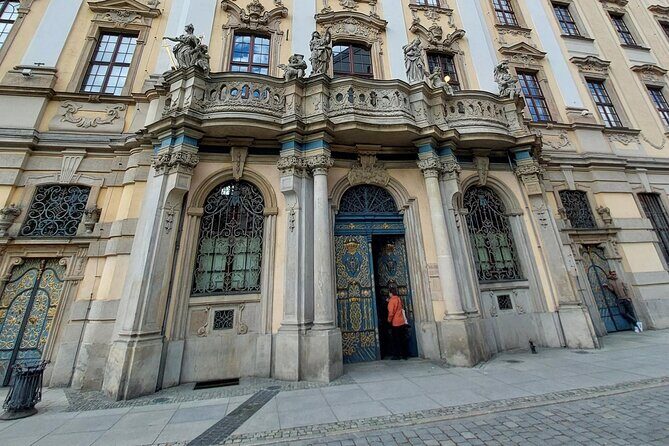
The route then heads to St. Elizabeth’s Church, sometimes called the Garrison Church. The audio highlights its historical significance and sets you up before you look upward.
The big win is the tower climb for panoramic views. Even if you’re not usually a tower person, this is one of the best opportunities in a short Old Town route to get a sense of scale: river, bridges, and the packed layout of streets.
Practical note: check your comfort level with stairs. The tour includes the tower visit idea, but it doesn’t list a specific entrance plan or time slot—so if you go at a busy moment, expect some waiting.
Slaughtered Animals Monument and the University: History With Teeth
From there, you’ll encounter the Slaughtered Animals Monument near the University of Wrocław. The story behind the sculpture is intriguing, and the way the audio connects it to the city’s past makes the monument feel less random.
Right after, you visit the University of Wrocław, described as one of the oldest universities in Central Europe. This stop adds another layer to the city’s identity: learning and public life don’t sit in separate worlds. They share the same streets.
One reason this pairing works: you go from a memorial object (with meaning tied to local history) into a major institution (with meaning tied to academic heritage). Together, they show how Wrocław preserves its past in different forms.
Ossolineum Institute and Market Hall: Culture and Commerce in One Walk
Next comes the Ossolineum Institute, a research and cultural institution. The audio explains its role in preserving Polish cultural and literary heritage. If you care about books, scholarship, and how a city keeps its memory alive, this stop clicks.
Then you move to the Market Hall, described by the tour as the Cathedral of Commerce. It’s a great reminder that culture and commerce are neighbors. Market halls are where daily needs met local character, and the audio helps you look at the building as a historic hub.
Even if you just pass through to browse, you’ll get more out of the place by knowing why it matters.
Sand Bridge and Lovers’ Bridge: How Wrocław Earned the Bridges Name
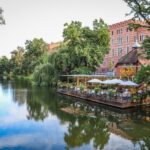
Now you hit the riverside mood with Sand Bridge and its views over the Oder River. Wrocław really does live up to its nickname because the bridges are part of how the city connects neighborhoods.
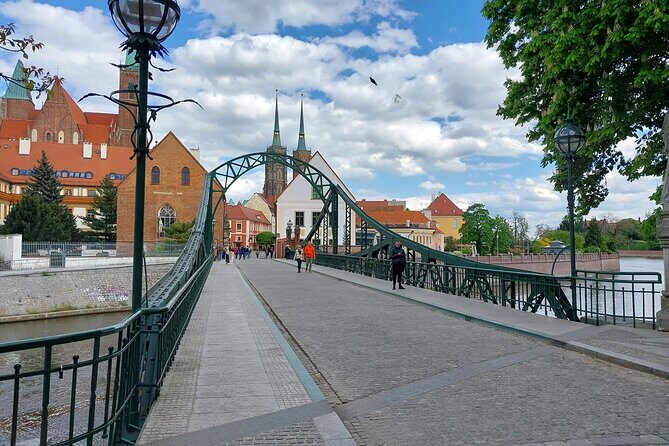
Then comes Tumski Bridge, also known as Lovers’ Bridge, famous for padlocks left by couples. The audio turns it into more than a photo moment by giving you context for why this kind of tradition appears in the first place.
This is also a nice pacing trick. After earlier stops that are mostly “look and listen,” the bridges let you “look, breathe, and keep walking.” If you’re traveling with family or anyone who gets restless, this section often keeps everyone happy.
Wrocław Cathedral: Ending at a Gothic High Point
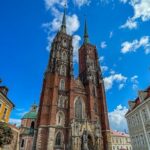
Your tour finishes at Wrocław Cathedral (Plac Katedralny 18). The audio frames it as a magnificent Gothic structure with architectural history and significance in Wrocław’s religious and cultural life.
Ending here works well because the cathedral is a natural stopping point. Even if you don’t enter anything, you’ll feel the change from street-level stories to a larger, long-term spiritual presence.
This is the kind of ending that makes a short tour feel complete. You start in the civic center, pass through justice, literature, folklore, education, and commerce—then land in a major landmark tied to identity.
Tips for a Smooth Self-Guided GPS Audio Walk
Here’s how to make the tech part feel invisible:
- Bring charged headphones and keep them connected before you start. If you use Bluetooth, you won’t have to hold your phone.
- Download the offline tour content before you leave the hotel, if your app prompts you. Offline access is included, but you’ll still want it ready.
- Use the map early. Once you’re oriented, the rest of the day tends to flow.
- Give the audio time to finish before you snap the next photo. The best explanations tend to land right before you move on.
One more thing: if you’re expecting lots of dwarf-focused material, pay attention during the audio segments that mention the dwarf theme. The tour does cover dwarf-related topics, but the main thread stays centered on Wrocław’s history. Think of it like history with side characters, not a dwarf-only walking quest.
Should You Book This Wrocław Old Town History Tour?
I’d book it if you want an easy, low-cost way to get oriented in Wrocław’s Old Town without committing to a timed group tour. The offline GPS audio, the short walk length, and the lifetime access make it a smart value for independent travelers.
I might pass if you’re uncomfortable with using a smartphone on your walk, or if you need every stop to be inside a ticketed venue. This experience is about outdoor landmarks and the stories around them, not museum tickets.
If you’re the type who likes to look up, slow down at the details, and end with a great view, this is an excellent match for your first visit to Wrocław.
FAQ
How long is the Wrocław Old Town self-guided history tour?
The tour takes about 1 hour to 1 hour 15 minutes.
What does the tour cost?
It costs $8.99 per person.
Is the tour available in English?
Yes, it’s offered in English.
Where does the tour start and end?
It starts at the Monument of Alexander Fredro, Rynek, 50-438 Wrocław and ends at Wrocław Cathedral, Plac Katedralny 18, 50-329 Wrocław.
Do I need a smartphone and headphones?
Yes. You’ll need your own smartphone and headphones. The tour includes directions and offline content, but it doesn’t provide the devices.
Can I use the tour without cell service?
Yes. It includes offline access to audio, maps, and geodata.
Is this a guided group tour?
No. This is a private, self-guided experience. Only your group participates.
Is the tower at St. Elizabeth’s part of the experience?
The itinerary includes climbing the tower for panoramic views, but the tour description notes that entry into attractions isn’t included.
Can I cancel for a refund?
Yes. You can cancel for free up to 24 hours in advance for a full refund. If you cancel less than 24 hours before the start time, the amount paid is not refunded.
Does it work only on one trip date?
No. You get unlimited, lifetime use of the tour before your booking date and after it.