REVIEW · WROCLAW
Wroclaw Old Town Guided Walking Tour
Book on Viator →Operated by Viadrina Tours · Bookable on Viator
Wrocław makes you fall in step, fast. This Old Town guided walk is a smart shortcut through the city’s highlights, with a guide who keeps things moving and explains what you’re seeing. I love the time-saver route and the way the sights connect into one story, plus the English-speaking local guide experience is handled with clarity and humor. One thing to consider: it’s a guided walk, so if you need extra time at the end, make sure you understand exactly where you finish and how you’ll get back.
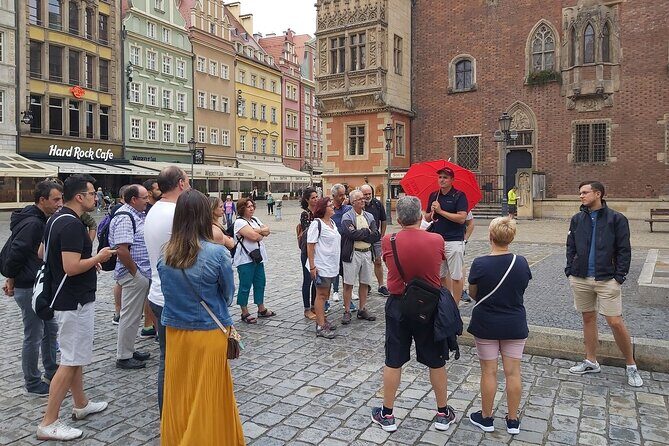
You’re looking at about 2 to 2 hours 40 minutes on foot, with a max group size of 30. All the listed stops are designed so you can spend your attention on buildings, details, and context instead of trying to map it all out alone.
In This Review
- Key Highlights to Know Before You Go
- Why Wrocław Old Town Works So Well With a Guide
- Rynek Market Square and Salt Square: where the story starts
- Jaś i Małgosia (Hansel & Gretel) houses: the archway detail you’ll want to spot
- Wrocław University campus: baroque architecture in a medieval setting
- Market Hall (Hala Targowa): real food textures, local rhythm
- Cathedral Island finale: St. John the Baptist and the WWII damage story
- Pace, timing, and what to wear for a 2–2h40 walk
- English guide style: what makes this tour feel worth it
- Value for about $42: what you’re paying for
- Who should book this Wrocław Old Town walk
- Should you book this Wrocław Old Town Guided Walking Tour?
- FAQ
- How long is the Wrocław Old Town guided walking tour?
- Where does the tour start and where does it end?
- Is the tour offered in English?
- What is the group size?
- Is tipping included in the price?
- Is the tour dependent on weather?
Key Highlights to Know Before You Go
- Rynek to Salt Square: start at late Gothic City Hall, then shift to the flower-market scene
- Jaś i Małgosia houses: a storybook archway-and-romance detail you’ll actually understand after the stop
- Wrocław University campus: baroque architecture from Habsburg times on medieval streets
- Market Hall (Hala Targowa): fresh fruit and vegetable stands give you a real local-food feel
- Cathedral Island finale: St. John the Baptist and the wartime damage story, tied to early Polish Christianity
- Small-ish group: up to 30 travelers means you’ll get answers as you go
Why Wrocław Old Town Works So Well With a Guide
Wrocław’s Old Town rewards slow looking, but you also need a plan if your time is short. This tour is built for that sweet spot: a couple of hours that covers major sights without turning into a frantic checklist.
What I like is the format. You get a guide who gives you context right away, then points out details as you pass them. Instead of reading plaques alone, you hear the why behind the what. That matters in Wrocław, where the mix of eras, damage from WWII, and shifting borders can feel confusing unless someone ties it together.
Also, the tour is in English and keeps the group at a maximum of 30. For a city walk, that’s a nice size: not too tiny, not too crowded, and usually easy to follow at a comfortable pace.
You can also read our reviews of more walking tours in Wroclaw


Rynek Market Square and Salt Square: where the story starts
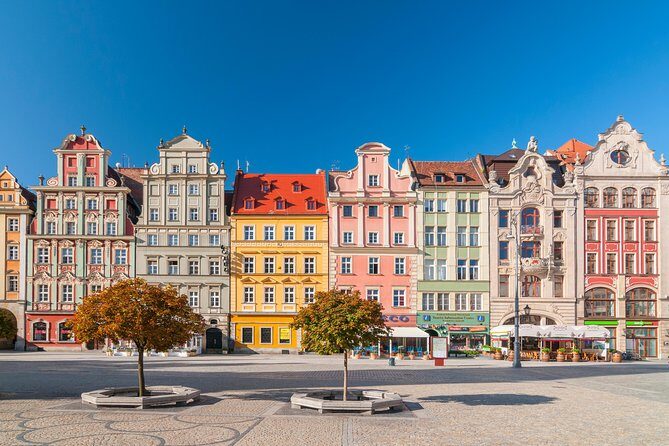
Your walk begins at Rynek 30, right in the heart of the Market Square (Rynek). This is where you get your bearings fast. The big visual moment here is the late Gothic City Hall, the kind of building that looks impressive even if you don’t know its timeline yet. The guide’s job is to translate the style and the setting into something you can remember.
From there you head toward Salt Square (Solny Square). Today it’s known for its flower market, which changes the mood. The streets still feel historic, but the scene is everyday and human. You get to compare how the square’s purpose has shifted over time, even while the architecture keeps the old atmosphere.
This part is about first impressions, and it’s timed well. You get a solid start without spending so long here that you miss the rest of the walk.
Practical note: Market Square is also an easy place to orient yourself later on your own. If you want to return for photos, you’ll know exactly where to head.
Jaś i Małgosia (Hansel & Gretel) houses: the archway detail you’ll want to spot
Next comes one of those Wrocław curiosities that sounds like a legend until you get the explanation. The John and Margaret House pair is locally known as Jaś i Małgosia. For English speakers, you’ll also hear Hansel & Gretel, mainly because of the symbolic connecting archway—described as a gesture of a couple holding hands.
This stop also gives you a lesson in how the city changed. These buildings are from different periods (the account here points to the 16th and 18th centuries), and they’re also what remains of a larger line of tenements that once circled the cemetery connected to St. Elizabeth’s.
Why this matters for your trip: Wrocław isn’t just a collection of pretty facades. It’s a city that has been reshaped, and these houses are like a breadcrumb trail. Once you understand that, you’ll notice more than before—rooflines, arch shapes, and what looks “surviving” versus “reconstructed.”
Time wise, it’s short (around 15 minutes), which is perfect. You get the story, you see the feature, and then you move on before your attention starts to fade.
Wrocław University campus: baroque architecture in a medieval setting
After the tenements, the walk threads through older streets toward the Wrocław University area. The highlight is the main building described as baroque architecture from Habsburg times.
That contrast is the whole point. Baroque can feel theatrical, even dramatic. Put it next to medieval street patterns and you start to understand how Wrocław absorbed new power and new styles over the centuries. A guide helps here because you’re not just staring at ornament. You’re learning how the timing and political connections shaped the built environment.
The stop is brief (about 15 minutes), but it’s long enough to notice the architecture and understand why it looks the way it does. If you’re a “walk and learn” person, this fits your style: you get enough context to keep the place from being just another impressive building.
If you’re the type who likes to ask questions, this is a good segment to do it. The tour format tends to encourage Q&A, and this is where that works naturally.
Market Hall (Hala Targowa): real food textures, local rhythm
Then you get a breather that’s also useful. The tour includes some wandering time inside the Market Hall (Hala Targowa), with colorful stands selling fresh fruits and vegetables.
Even if you don’t buy anything, this stop helps you see Wrocław as more than monuments. It’s one of the fastest ways to get a feel for daily life. And because it’s inside a market setting, you can slow down your pace a little without losing the tour’s momentum.
This is also where the tour offers something simple and practical. Some guides build in a timed pause that can include a coffee and bathroom break, and that makes the whole afternoon easier to enjoy. If you’re doing museums later, this helps you stay human.
The time here is around 15 minutes. That’s deliberate: you get the atmosphere without turning the tour into a full shopping visit.
You can also read our reviews of more guided tours in Wroclaw




Cathedral Island finale: St. John the Baptist and the WWII damage story
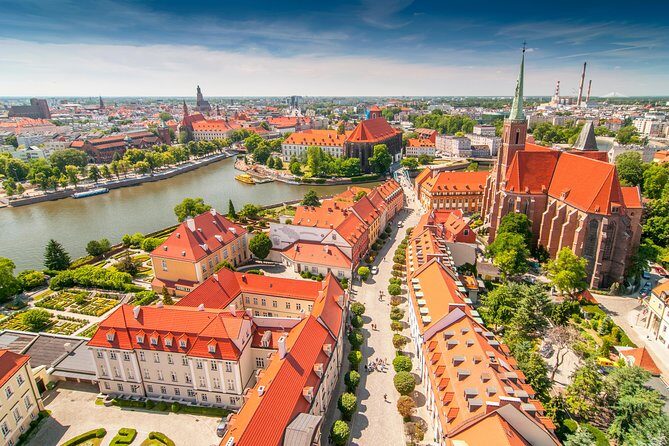
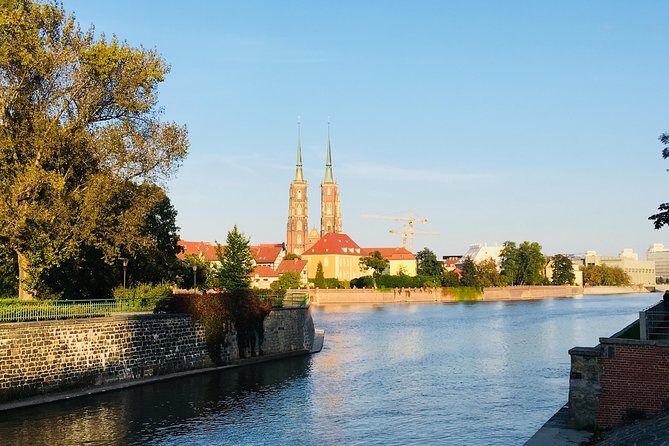
The tour ends in the oldest part of Wrocław—Ostrów Tumski, known for its religious setting. The final stop is the Cathedral of St. John the Baptist at Plac Katedralny 18.
This is more than a “see the church” stop. You’ll learn about the beginnings of Christianity in Poland, and you’ll also hear about the severe damage the cathedral suffered during World War II. That wartime history adds weight to what you’re seeing, and the guide’s narration helps you connect architectural recovery to a larger story of survival and rebuilding.
The cathedral segment is about 15 minutes. Short tours work here because you’ve already been learning all along. By the time you arrive, you’re primed to notice details: where damage occurred, what recovery changed visually, and why this site matters beyond its walls.
One consideration from the real-world experience: the ending is a fixed location, and you can’t assume your guide will automatically help you get back to your hotel. If you need help navigating afterward, plan to ask before you finish. It’s a small step, but it prevents the kind of frustration that can happen at tour end.
Pace, timing, and what to wear for a 2–2h40 walk
This walk is designed for most travelers, and it’s not described as a strenuous climb-and-suffer route. Still, it’s a walking tour. Give yourself the basic comfort advantages:
- Wear comfortable shoes with grip. Old Town streets can be uneven.
- Bring a layer. Weather in Poland can shift fast even when it looks fine in the morning.
- Keep a light plan for the end area. Since you finish on Cathedral Island, it’s smart to have your return route ready.
Duration sits around 2 to 2 hours 40 minutes, depending on how the group flows and how much time you spend at each stop. With a max group size of 30, you’re usually not waiting around for long stretches.
And because it’s dependent on good conditions, you should expect that the tour may shift if weather turns.
English guide style: what makes this tour feel worth it
The strongest pattern in the feedback is not just that the guides know facts. It’s that they tell the story in a way that keeps your attention while you’re walking.
Guides with names like Sean and Igor are repeatedly described as organized, humorous, and willing to answer questions. One guide approach also includes using maps, historical photos, and visuals to support explanations, which is a big help when you’re learning across a thousand years of change.
Another practical plus: the tour tends to keep the pace friendly. One review notes the pace as quick without feeling overloaded. That’s the balance you want on a short city walk: you get lots of information, but it lands as you go.
If you want to maximize your value, do one small thing: ask a question at the easiest spot, like Market Square. When the guide sets the framework early, every later stop makes more sense.
Value for about $42: what you’re paying for
At $42.33 per person, this is one of those tours that can feel inexpensive once you think about what’s included. You get a local expert and an English-speaking guide, plus a route that hits the big Old Town anchors in a short window.
The big value piece is time. If you tried to stitch this together yourself, you’d spend hours reading up, then cross-town navigating, then still miss the “why” behind architectural details. This tour saves that mental load.
It also helps that the tour plan lists admissions as free for the included sights. That means your money goes toward the guide’s direction and explanation, not toward entrance fees.
A final value note: it’s booked well in advance on average (about 106 days). That’s a hint of real demand. If you’re traveling in high season or on a tight schedule, book early so you’re not juggling late alternatives.
Who should book this Wrocław Old Town walk
Book it if:
- You want a fast, guided orientation to Wrocław’s Old Town
- You like history that’s tied to buildings you can actually see
- You’re short on time but still want multiple stops, not just one neighborhood
- You’d rather spend your energy learning than decoding a map
Skip it if:
- You hate group pacing and prefer long, slow wander time without a structure
- You want a deep-dive museum experience inside one venue (this is built for walking and stop-based storytelling)
- You expect the guide to handle every last detail after the official finish point
In between? This tour is a solid “start strong” choice, especially if you’re trying to understand Wrocław before you branch out for independent wandering.
Should you book this Wrocław Old Town Guided Walking Tour?
Yes, if you’re the type who benefits from a guide translating architecture into story. The route is efficient: Market Square and Salt Square set the scene, the Jaś i Małgosia houses teach you how remnants and legends live side-by-side, the university stop adds a power-era architectural shift, the Market Hall adds everyday texture, and Cathedral Island gives you a meaningful ending tied to early Christianity and WWII damage.
I’d book it for a first visit, or as a gentle reset after a travel day. Just go in with comfy shoes, a bit of curiosity, and one quick check before you finish about where you end and how you’ll head back.
FAQ
How long is the Wrocław Old Town guided walking tour?
The tour runs for about 2 hours to 2 hours 40 minutes.
Where does the tour start and where does it end?
It starts at Rynek 30, 50-102 Wrocław, Poland, and ends at Wrocław Cathedral, Plac Katedralny 18, 50-329 Wrocław.
Is the tour offered in English?
Yes, it is offered in English.
What is the group size?
The tour has a maximum of 30 travelers.
Is tipping included in the price?
No. Tips are not included.
Is the tour dependent on weather?
Yes. It requires good weather, and if it’s canceled due to poor weather you’ll be offered a different date or a full refund.