REVIEW · WROCLAW
Wrocław University: Tour with Audio Guide & Admission
Book on GetYourGuide →Operated by Viadrina Tours · Bookable on GetYourGuide
Wrocław University is not just a school. It’s a set of dramatic rooms where centuries of learning, politics, and faith show up in stone, paint, and ceremony. This tour pairs a short guided visit with an audio guide so you can actually follow what you’re seeing, especially inside the University’s most famous Baroque spaces like Aula Leopoldina and Oratorium Marianum.
Two things I especially like are the chance to see the grand interiors up close (sculptures, ceiling frescoes, ceremonial halls), and the way the audio guide connects the details to real historical forces like the Counter-Reformation and the university’s Austrian legacy. One consideration: rooms can be limited on the day due to university events, so you may not always see every space described.
In This Review
- Key highlights you’ll notice right away
- Why Wrocław University’s Baroque rooms feel different than typical sightseeing
- Meeting at plac Uniwersytecki 11 and finding your group without stress
- Museum time: Aula Leopoldina and Oratorium Marianum
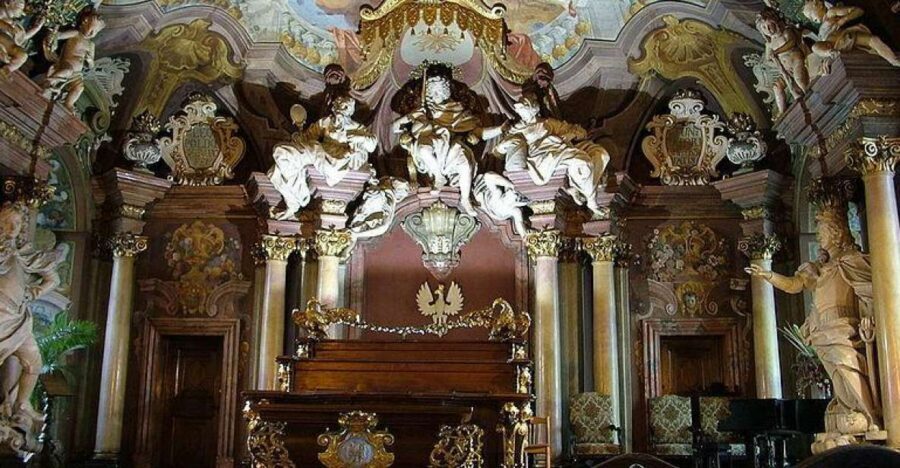
- Aula Leopoldina: Baroque ceremony you can walk through
- Oratorium Marianum: when faith and art share the same walls
- What you’ll learn while you walk
- The audio guide: multi-language support that keeps you moving
- Mathematical Tower after the guided portion: plan your on-your-own 30 minutes
- Price and value: what $18 buys in real terms
- Who this tour fits best (and who might feel constrained)
- Practical considerations: room access and timing on event days
- Should you book this Wrocław University tour?
- FAQ
- How long is the tour?
- Where do I meet the coordinator?
- What parts are included with admission?
- Is the tour guided in English?
- What languages are available for the audio guide?
- Is there a skip-the-line benefit?
- What if some rooms are closed due to university events?
- Is the tour suitable for wheelchair users?
- Can I cancel and get a refund?
Key highlights you’ll notice right away
- Aula Leopoldina’s Baroque theater-of-learning feel in under an hour
- Oratorium Marianum, with its ornate religious-ceremonial atmosphere
- Audio guide storytelling, available in many languages while you walk
- Mathematical Tower access, with panoramic city views after the guided part
- Skip-the-line entry, so you lose less time to paperwork
- A coordinator who can steer you in English or Polish at the start
Why Wrocław University’s Baroque rooms feel different than typical sightseeing
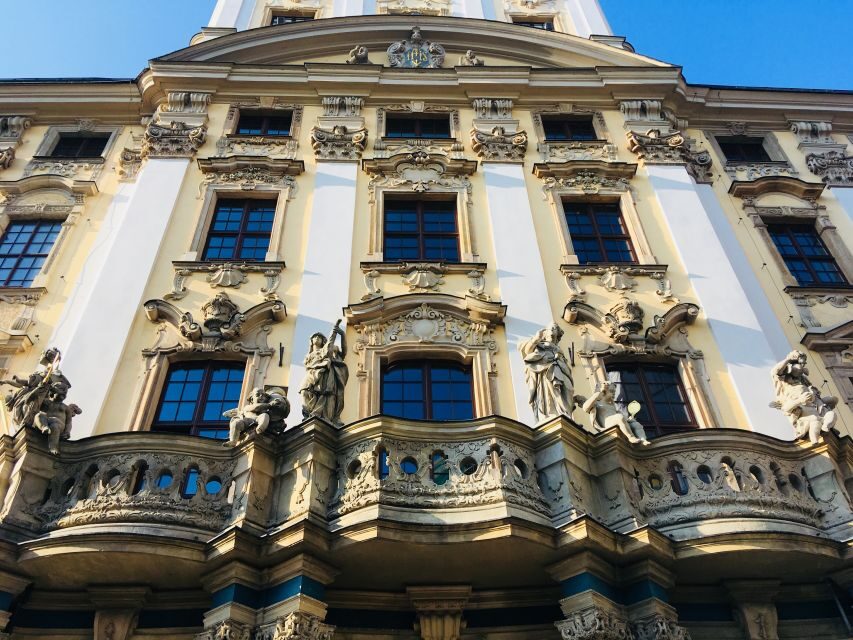
Wrocław’s University complex has a way of making you slow down. You’re not just looking at old buildings—you’re moving through halls built for speeches, music, teaching, and public display. The Baroque style here isn’t decorative fluff. It’s designed to impress, persuade, and control the mood, which is why the symbolism matters as much as the artwork.
What makes this experience practical is that you get the right amount of guidance: a short, focused tour plus time on your own afterward. You’ll come away understanding what the rooms were meant to do, and you’ll be able to point out the key features instead of treating everything as random ornament.
And yes, the setting helps. Even when you’re inside, you can feel the city’s layers—Austrian influence, later Polish identity, and the huge disruptions of the 20th century. That context hangs in the background of what you see.
You can also read our reviews of more guided tours in Wroclaw


Meeting at plac Uniwersytecki 11 and finding your group without stress
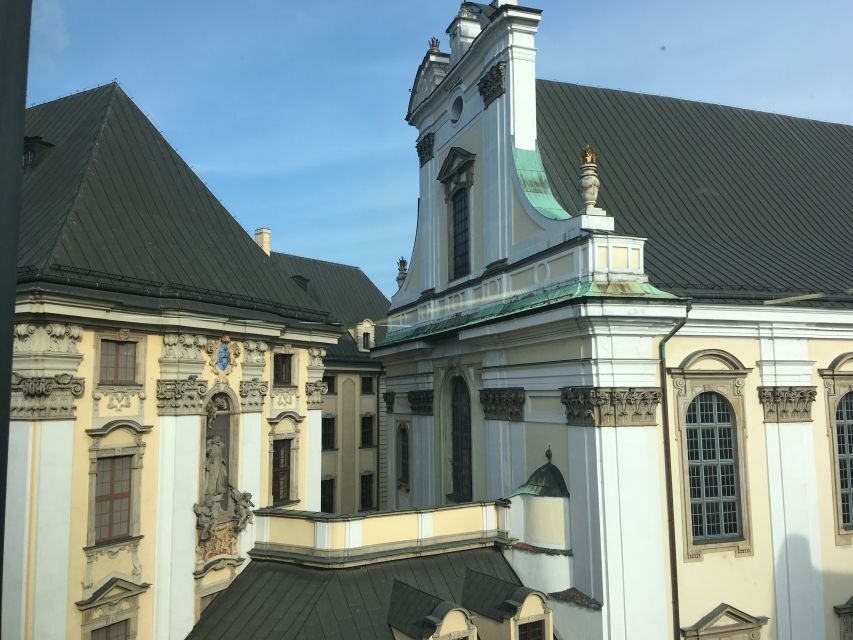
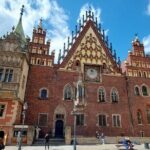
You’ll start at plac Uniwersytecki 11, at the University of Wrocław complex. The meeting point is in front of the Fencer Fountain, right in the middle of the grounds, and your coordinator will be waiting with a red umbrella.
This matters more than it sounds. University buildings can be easy to approach but confusing to navigate once you’re inside, and the whole point of this experience is that you move quickly into the rooms you came for. A clear meeting point also keeps you from wasting that first chunk of time—especially helpful if you’re arriving from other city stops.
The tour is run by Viadrina Tours. You’ll have access to an English- and Polish-speaking coordinator, and that’s useful if you have quick questions about the flow or where to head next. You also get skip-the-ticket-line entry as part of the experience.
Museum time: Aula Leopoldina and Oratorium Marianum
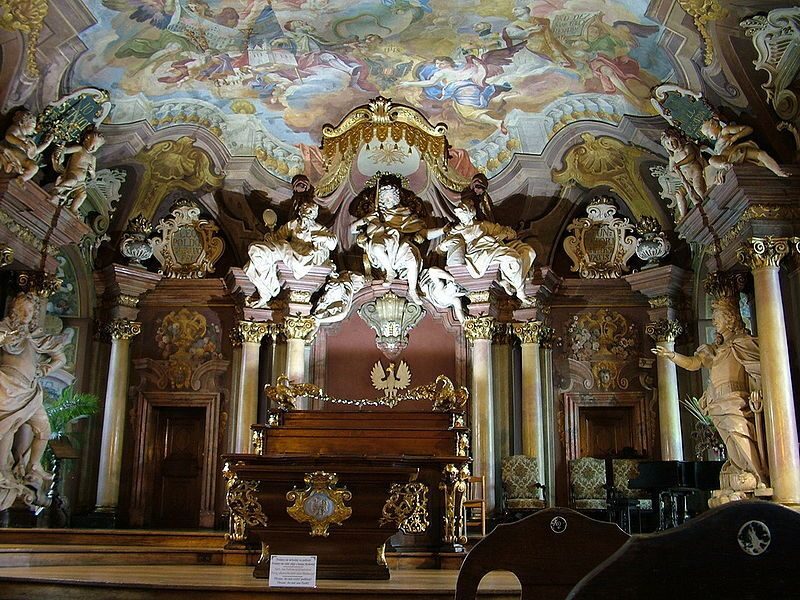
The main guided portion centers on the University’s museum spaces, with special focus on two standouts: Aula Leopoldina and Oratorium Marianum. Plan on about 45 minutes for this part, which is a good length. Long enough to take in details, short enough that you won’t feel trapped in an information overload.
Aula Leopoldina: Baroque ceremony you can walk through
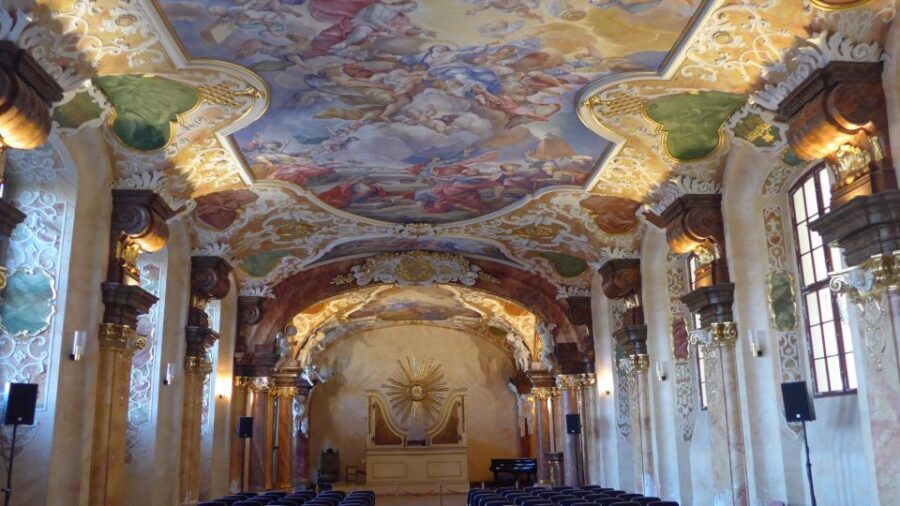
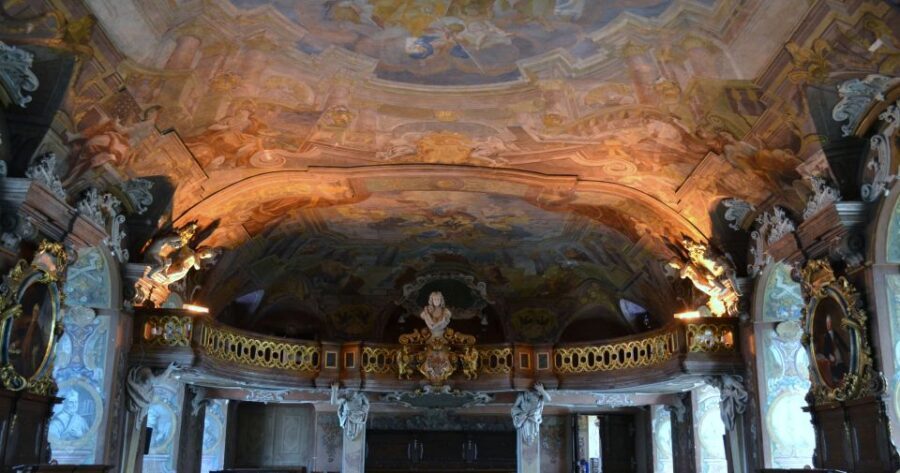
Aula Leopoldina is the one most people come for, and for good reason. This is where the University’s Baroque personality gets loud: sculptural work, ornate decoration, and a sense of stagecraft built into the room. You’ll also notice how the space was meant for more than casual gatherings. It’s set up for ceremonial moments—think academic prestige, public talks, music, and official events.
As you look around, the audio guide framing helps a lot. You’re not just seeing a gorgeous hall. You’re learning why this kind of grand design became important during periods when institutions competed for influence and legitimacy. The connection to religious and political pressure of the era gives the room a sharper meaning.
Oratorium Marianum: when faith and art share the same walls
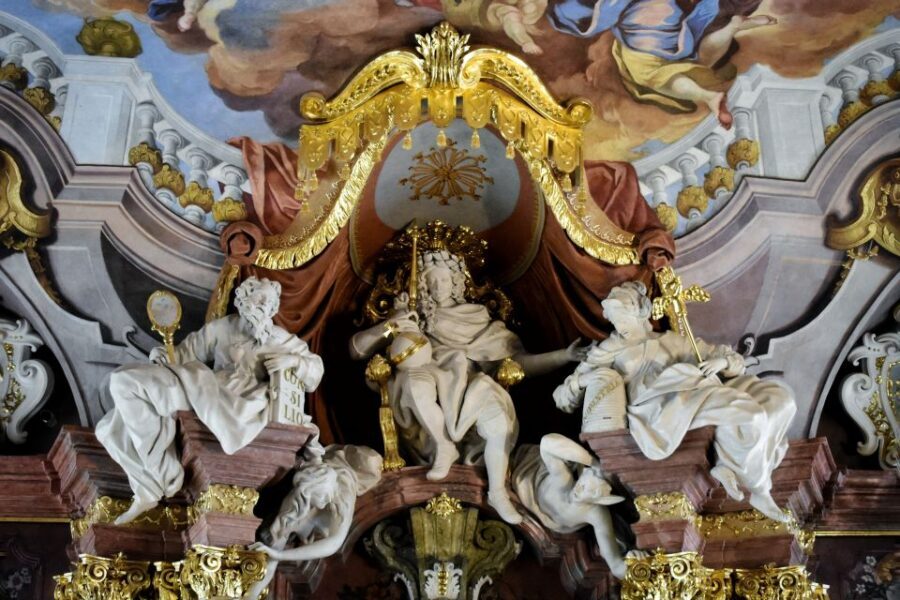
Then you shift into Oratorium Marianum, where the tone turns more devotional. It still has the Baroque love for drama—ornate sculpture and ceiling frescoes—but the mood is more about ritual and sacred atmosphere. If you’re the type of person who likes to match what you see to what it might have been used for, this stop clicks quickly.
Here’s the practical benefit: because the guide is audio-based and multi-language, you can match what you hear to what you’re standing in front of. That turns the room from background decoration into a story you can follow at your own pace.
A few more Wroclaw tours and experiences worth a look

What you’ll learn while you walk
The tour’s storytelling connects the architecture to key historical themes you might not expect to matter for a building tour:
- the university’s Austrian legacy
- the period of Counter-Reformation
- influential scholars and musicians, including Johannes Brahms, who once graced these spaces
That last point is a fun reality check. This wasn’t only an academic machine—it was also a cultural stage. Even if classical music isn’t your main interest, it helps you understand the rooms as living platforms, not museum props.
The audio guide: multi-language support that keeps you moving
You get an audio guide included, and you can choose among many languages: German, Polish, Portuguese, Spanish, French, Italian, Ukrainian, Czech, and Russian. You also have an English- and Polish-speaking coordinator for human help at the start.
Why I like this setup for visitors: audio guides work best when you’re not rushed and when the building lets you pause and look. These interiors reward that. You can stand back, listen, then step forward to match the story to the art.
Also, the tour’s length supports it. At around 45 minutes for the museum portion, the audio guide time feels intentional rather than padded. You’re not stuck listening forever before you get to the good visuals.
Mathematical Tower after the guided portion: plan your on-your-own 30 minutes
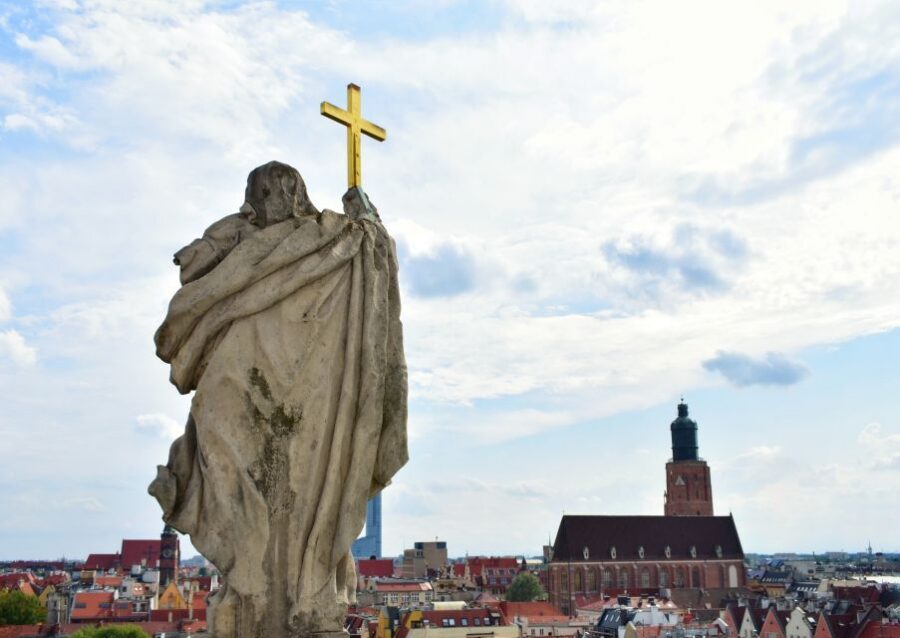
After the museum visit, you continue independently to the Mathematical Tower. The listing gives 30 minutes for this stop, and it’s a smart chunk of time. You’ll want a few minutes to get oriented, time for the best viewpoints, and a little breathing room to take photos or just stare.
The reward is the panoramic view of Wrocław. From up there, the city’s layout makes sense in a way walking streets alone sometimes doesn’t. You’ll also get a chance to reflect on the big historical themes connected to the university:
- wartime destruction
- shifting borders
- the university’s rebirth as a proud Polish institution
Even if you only catch pieces of that story through the tour, the view gives you a physical reminder: cities and institutions change, and you’re standing in the result.
Practical tip: give yourself a moment before you rush to the rails and cameras. Look for the wider city pattern first, then zoom in on details afterward. From this height, the skyline helps you connect what you learned indoors to what exists outside now.
Price and value: what $18 buys in real terms
At about $18 per person, this tour is priced to feel fair for what you get. You’re paying for a bundle:
- admission to Aula Leopoldina
- admission to Oratorium Marianum
- admission to the Mathematical Tower
- a coordinator (English/Polish)
- an included audio guide in multiple languages
- skip-the-ticket-line entry
The value is strongest if you want more than casual exterior photos. If you’re already thinking about paying separately for tower access and the major ceremonial halls, the packaged entry becomes the logical move. Also, the audio guide helps you get meaning from the art—so you’re not just buying access, you’re buying interpretation.
For a short stop (total experience is about a guided museum visit plus the tower time), it’s a good way to spend part of a day in Wrocław without committing to an all-day museum marathon.
Who this tour fits best (and who might feel constrained)
This is a great choice if you:
- like architecture with context
- want to see Baroque interiors without needing prior knowledge
- enjoy using audio guides to understand what you’re looking at
- want an easy add-on with tower views afterward
You may feel less thrilled if you:
- prefer fully guided, turn-by-turn commentary for every minute
- need wheelchair access, since this tour is noted as not suitable for wheelchair users
The good news: for most visitors, the pacing works. You get a structured intro for the most visually complex parts, then freedom for the tower.
Practical considerations: room access and timing on event days
One important heads-up: access to certain rooms may be limited due to events hosted by the University of Wrocław. If that happens, the operator will contact you to offer an alternative time or date. If rescheduling isn’t possible, you might not be able to see all the rooms described.
That’s not a reason to panic. It’s just real-life university scheduling, and it happens everywhere academic spaces are active. If you’re planning a tight itinerary, it’s worth booking with some flexibility and keeping your day structure loose enough to handle a small change.
Timing-wise, the tour is listed as 45 minutes for the museum visit, with the tower visit typically handled independently afterward. In other words: you’re not stuck waiting for a long group schedule once you exit the main halls.
Should you book this Wrocław University tour?
I’d book it if you want your Wrocław experience to include more than streets and markets. This is one of those places where a short, well-guided visit pays off instantly: you walk into a Baroque space, you understand what shaped it, and you finish with city views that make the whole day feel connected.
If you’re very sensitive to changes in room access (because you planned around specific interiors), keep a little flexibility in your schedule and be ready for possible substitutions on the day of your visit.
Overall, the best reason to choose it is simple: you get access to the university’s signature spaces plus audio context, and the pacing doesn’t drag.
FAQ
How long is the tour?
The guided museum portion is listed as 45 minutes.
Where do I meet the coordinator?
Meet in front of the Fencer Fountain in the middle of the University complex at plac Uniwersytecki 11. The coordinator will have a red umbrella.
What parts are included with admission?
Admission is included for Aula Leopoldina, Oratorium Marianum, and the Mathematical Tower.
Is the tour guided in English?
You’ll have a coordinator/greeter who speaks English and Polish.
What languages are available for the audio guide?
The audio guide is available in German, Polish, Portuguese, Spanish, French, Italian, Ukrainian, Czech, and Russian.
Is there a skip-the-line benefit?
Yes. The experience includes skip-the-ticket-line entry.
What if some rooms are closed due to university events?
If access is limited, the operator will contact you to offer an alternative time or date. If rescheduling isn’t possible, you might not see every room described.
Is the tour suitable for wheelchair users?
No, it is not suitable for wheelchair users.
Can I cancel and get a refund?
Free cancellation is available up to 24 hours in advance for a full refund.