REVIEW · WARSAW
Warsaw History and Reality Walking Tour
Book on Viator →Operated by Mona_be_your_guide · Bookable on Viator
Mermaids, rooftops, and wartime clues. This 2.5-hour English walk in Warsaw strings together Syrenka symbolism and the city’s WWII scars, all in a compact route built for real understanding. You’re led by Mona, and the group stays small (max 10), so questions don’t get lost in the crowd.
I love the mix of famous sights and the “why does this matter” context. The University of Warsaw Library rooftop garden stop is a standout for the river-city view, and the stories around it make the architecture feel personal, not just pretty.
One thing to plan for: the walk needs good weather, and cobblestones can be slow going. Also, the rooftop garden is seasonal (open April–October), so timing matters if you’re visiting outside those months.
In This Review
- Key highlights at a glance
- Warsaw’s layers in 2.5 hours (and why it feels real)
- Meeting point at the Mermaid statue near Pattona Street
- Pomnik Syreny: why the Warsaw mermaid isn’t just a cute symbol
- University of Warsaw Library rooftop garden: the best view stop (and it’s seasonal)
- A postwar “workers first” district: how reconstruction changes the city
- St. Anne’s Church and Royal Castle Square: baroque beauty with an anchor point
- Old Town lanes: Gothic streets, tenements, and a love-story pause
- Krakowskie Przedmieście: the Royal Route, the Presidential Palace, and Chopin’s early moment
- Plac Marszalka Józefa Pilsudskiego: the Unknown Soldier and Saxon Garden relief
- Price and value check: what $114.39 buys you
- Who should book this walk (and who might not)
- Practical tips so you enjoy it more
- Should you book this Warsaw History and Reality Walking Tour?
- FAQ
- What’s the duration of the Warsaw History and Reality Walking Tour?
- Is the tour offered in English?
- How big is the group?
- Where does the tour start and end?
- Is the tour ticket mobile?
- What’s included in the price?
- Are there any additional costs like coffee?
- Is the rooftop garden always open?
- Does the tour run in bad weather?
- What’s the cancellation policy?
Key highlights at a glance
- Syrenka meets WWII reality at the Pomnik Syreny, with stories behind the mermaid and her sculpting details
- University of Warsaw Library rooftop garden with a proper river-and-city viewpoint (April–October)
- Postwar reconstruction in one focused district, designed to serve workers after the Old Town rebuild
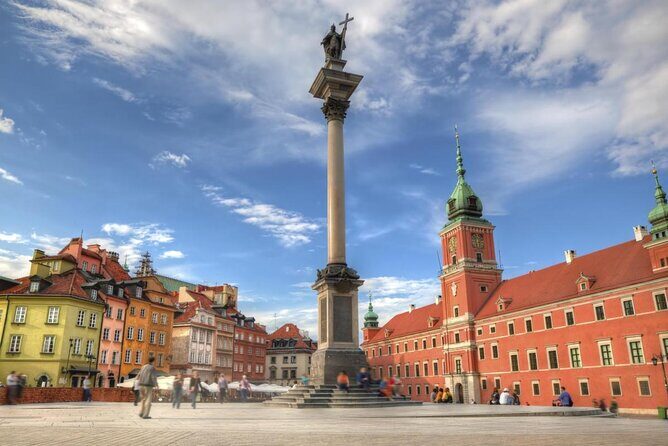
- St. Anne’s Church + Royal Castle Square connecting baroque beauty to the place around it
- Krakowskie Przedmieście Royal Route plus Presidential Palace details, including Chopin’s early public appearance
- Plac Marszalka Józefa Pilsudskiego and the Unknown Soldier memorial with the Saxon Garden nearby
Warsaw’s layers in 2.5 hours (and why it feels real)
Warsaw can be hard to read at street level. One minute you’re looking at baroque facades and romantic corners, the next minute you’re standing in a city that was rebuilt on purpose after WWII. This walk gives you a way to connect those dots without needing a full day of museum time.
You’ll cover a route that moves from symbols to stonework to squares, with pauses long enough to actually see what you’re looking at. The pacing is also friendly: around 2 hours 30 minutes total, with short stops that keep you from feeling like you’re trapped in a long lecture.
And because the group is capped at 10, Mona can steer the conversation. In the reviews, people repeatedly mention her flexibility and how she adapts to different ages and interests, which is exactly what you want on a walking tour.
You can also read our reviews of more walking tours in Warsaw


Meeting point at the Mermaid statue near Pattona Street
You start at the Mermaid’s Statue at Generała George’a Smitha Pattona, in the 00-390 area. If you like using your phone, the meeting spot is easy to find with maps once you’re pointed at the right Mermaid monument.
The end point is at the Roman Catholic Church of the Visitants on Krakowskie Przedmieście 34 (near the Cardinal Stefan Wyszyński statue). That’s a smart finish, because it drops you close to the main “Royal Route” area, where you can keep walking or grab food without backtracking.
The tour also runs close to public transportation, which helps if you need to modify plans due to weather or your energy level.
Pomnik Syreny: why the Warsaw mermaid isn’t just a cute symbol
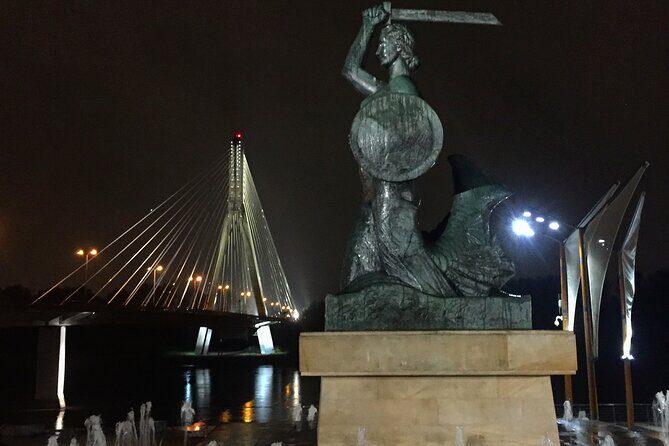
The walk begins at Pomnik Syreny, where the city’s most famous mermaid—often called the Syrenka—does more than decorate a monument. Mona explains why this creature shows up in Warsaw’s coat of arms and how that symbolism ties to local identity.
What makes this stop genuinely useful is the way it connects myth to reality. The mermaid story includes an important WWII-related thread, so you don’t just get folklore—you get a reason to care about how Warsaw carried meaning through the darkest period.
You’ll also hear about the sculptor’s model, a detail that turns a statue from “I saw it” into “I understand what I’m looking at.” It’s the kind of specificity that makes you notice other details later on.
Time on this stop: about 10 minutes.
Good to know: this is a quick “set your lens” start, not a deep museum-style dig.
University of Warsaw Library rooftop garden: the best view stop (and it’s seasonal)
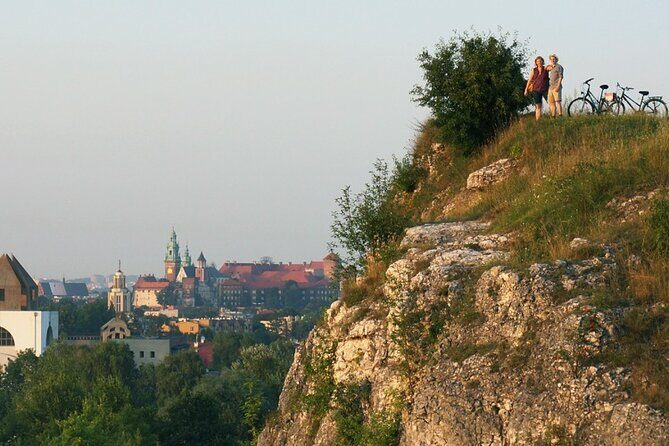
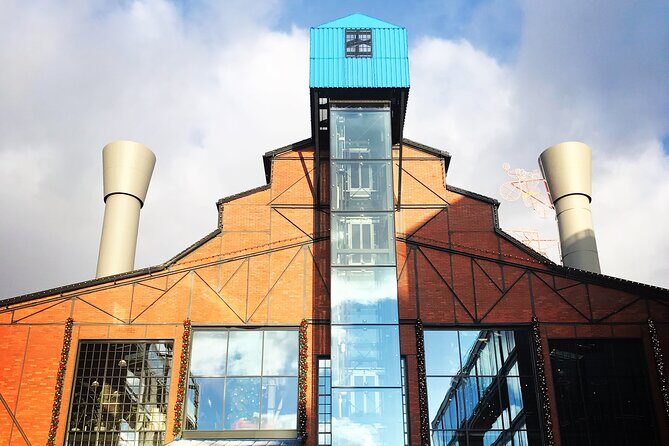
Next comes a very practical highlight: the University of Warsaw Library and its rooftop garden area. There’s an open-air space up there that’s designed to blend function and greenery while respecting the shape of the Vistula embankment.
The value here is straightforward. You get a view of the river and the city that you can’t really replicate from street level, plus you get a breather in the route. On a walking tour, that pause matters. It helps you reset your brain before you tackle the older, tighter lanes of the Old Town.
This rooftop element is also where the tour’s design shows its limits: the rooftop garden is open April through October. If you’re visiting outside those months, you still experience the stop, but you should expect that the garden portion may not be available.
The tour includes the entrance ticket for the viewing terrace, so you’re not scrambling to figure out tickets at the last second.
Time on this stop: about 40 minutes, which is generous for a walking tour.
Why I like it for you: it’s both scenic and explanatory, which is the sweet spot.
A postwar “workers first” district: how reconstruction changes the city
After the rooftop perspective, the tour shifts gears into a more sober idea: how Warsaw rebuilt itself after WWII. You’ll see the first district in Warsaw that was rebuilt after the war, intended to serve the workers who worked on reconstructing the Old Town.
This is a key part of understanding Warsaw. People often think reconstruction only means rebuilding monuments. Here, you learn reconstruction also means housing, jobs, and daily life—what the city needed to keep going.
Even without a big-ticket attraction, this stop helps you read the city’s layout with more respect. It explains why certain places feel the way they do, and why some streets and neighborhoods carry a “purpose-built” energy rather than centuries-only charm.
Time on this stop: short, but the payoff is conceptual. You’ll start noticing “why” behind the streets instead of only “what.”
You can also read our reviews of more historical tours in Warsaw




St. Anne’s Church and Royal Castle Square: baroque beauty with an anchor point
Then you’ll reach St. Anne’s Church (Kosciol Swietej Anny), one of Warsaw’s standout baroque churches. This is a classic “stop and look up” moment, but Mona pairs the visual with context so it stays more than just architecture appreciation.
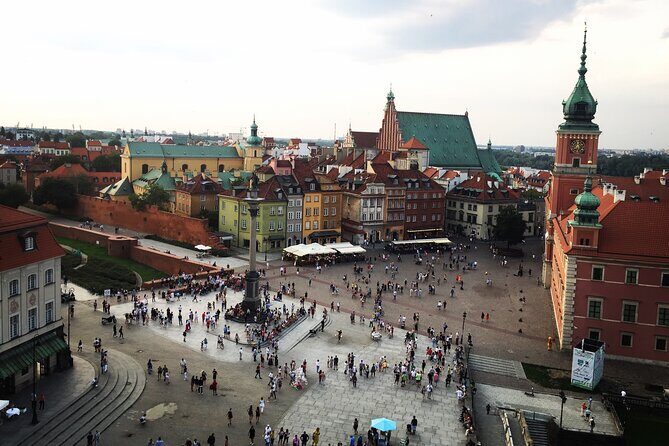
From here, the walk also brings you past the Royal Castle square area and into a view of beautifully reconstructed tenement houses around the Old Town. That matters because Warsaw’s Old Town isn’t just old—it’s also careful. Reconstruction shows up in details, and the tour helps you notice that craftsmanship.
The practical benefit: when you later wander on your own, you’ll be able to tell the difference between what looks old, what was rebuilt, and what was rebuilt to recreate a past atmosphere. That’s a skill you don’t get from a quick photo stop.
Time on this stop: about 15 minutes.
Good note: this is a strong choice if you like churches but hate long lines and museum-style crowds.
Old Town lanes: Gothic streets, tenements, and a love-story pause
The next stretch is the Old Town itself—cobblestone lanes, Gothic-style streets, and alleyways that feel designed for slow walking. You’ll spot churches and tiered burgher tenement houses reconstructed to reflect the atmosphere of the past.
This is also where the tour adds a human layer. You’ll hear about the favorite place of lovers—one of those “you could miss it” details that makes your visit feel more like living in the city for a moment instead of checking off sights.
Old Town in Warsaw can be crowded if you hit it at the wrong time. A guided pace helps because you’re not trying to force speed. You get just enough time—about 30 minutes—so you can see facades clearly without getting stuck in one spot for too long.
Time on this stop: about 30 minutes.
Watch-outs: cobblestones. Comfortable shoes turn this from “manageable” into “pleasant.”
Krakowskie Przedmieście: the Royal Route, the Presidential Palace, and Chopin’s early moment
Now you move onto Krakowskie Przedmieście, a stretch often described as the Royal Route. It’s about 2.5 miles, and the tour hits key monuments without asking you to walk the whole thing endlessly.
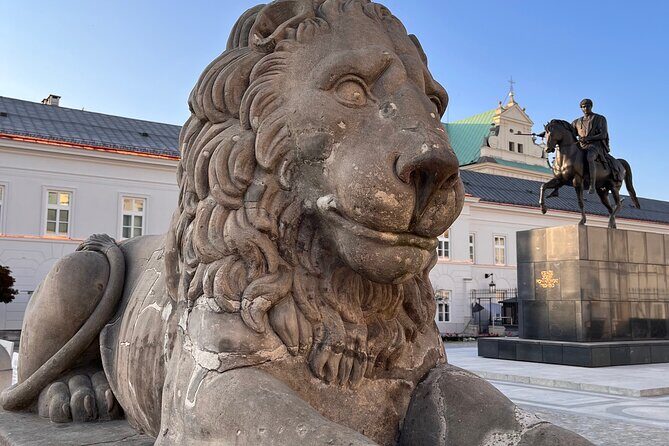
One of the biggest highlights here is the Presidential Palace. It’s neo-classic, and you’ll notice the famous four lions guarding it—sculpted by Camilio Laudini. Mona also connects the palace to music history: she points out that 8-year-old Frederic Chopin played there for the first time publicly.
This is the kind of fact you can’t easily guess from looking at a building. It gives you a timeline hook, so the palace becomes a story landmark, not just a landmark.
You’re also walking a corridor where “important buildings and monuments” cluster together, so even the simple act of moving down the street feels like progressing through chapters.
Time on this stop: about 10 minutes.
Reality check: this is enough to get oriented, not enough to satisfy if you want to linger outside every doorway. If you love architecture, plan to continue on your own after the tour ends.
Plac Marszalka Józefa Pilsudskiego: the Unknown Soldier and Saxon Garden relief
The tour finishes at Plac Marszalka Józefa Pilsudskiego, a parade square with the memorial of the Unknown Soldier. For many Varsovians, this square is a major gathering spot—meetings, concerts, and events—so the place isn’t only historical. It’s also still used.
Behind the memorial you’ll find the Saxon Garden, which gives you a nice contrast after the hard edges of squares and monuments. It’s a practical “exhale” area for your legs and your brain.
Ending here makes sense for logistics, too. You’re close to the finish church point on Krakowskie Przedmieście, so you’re well-positioned for dinner nearby or a follow-on walk.
Time on this stop: about 10 minutes.
Price and value check: what $114.39 buys you
At $114.39 per person for about 2 hours 30 minutes, you’re paying for more than movement through the city. You’re paying for a small-group format, English commentary, and a guide who clearly focuses on interpretation—not just naming things.
Also, you’re not mostly paying for admission fees you can’t avoid. Many stops are free to enter (the itinerary lists free admission for each major viewpoint area). The one paid element that’s included is the viewing terrace entrance at the University of Warsaw Library.
So the math feels fair if you want context and you value a guide who can adapt. In the reviews, people highlight Mona’s flexibility, including changing stops and offering recommendations at the end. That’s the real value: you leave with ideas for the rest of your day, not just photos.
If you’re the type who loves to wander with a map and research every detail yourself, you might skip a guided walk. But if you want a “get oriented fast” experience that still explains the deeper why, this price is easier to justify.
Who should book this walk (and who might not)
This tour suits you if:
- you’re new to Warsaw and want a solid storyline from symbols to WWII reconstruction to the Old Town feel
- you like churches, squares, and city architecture, but you also want meaning behind them
- you prefer a small group and a guide who can answer questions
It may not be your best fit if:
- you dislike walking on cobblestones and want mostly indoor stops
- you’re visiting outside April–October and your top priority is the rooftop garden portion
And one more reality check: good weather is required. If the forecast looks bad, don’t plan to force it. This kind of route works best when you can actually see details at street level.
Practical tips so you enjoy it more
- Bring comfortable walking shoes. Old Town streets are charming, and also hard on feet.
- Dress for wind and changing weather. Squares and river-adjacent areas can feel cooler than you expect.
- Wear a layer you can remove. You’ll switch between open viewing spots and street-level alleys.
- If you care about photos, arrive ready to pause. This is not a speed-run; you’ll stop often enough to capture details.
Also, Mona’s style comes through in how she guides. In reviews, people repeatedly mention her patience with mixed ages and interests, plus her ability to point people toward practical food options afterward. That’s a nice bonus if you don’t want to spend your first day hunting for dinner.
Should you book this Warsaw History and Reality Walking Tour?
If your goal is to understand Warsaw—not just look at it—this is a smart pick. You’ll get a clear sequence: the Syrenka meaning, rooftop views, WWII reconstruction context, baroque beauty, Old Town atmosphere, and the Royal Route with Chopin and the four lions.
I’d book it if you want a guide who makes the city’s story feel connected. And I’d especially book it if you like small groups, real walking, and a bit of personality in the explanations.
Skip it only if you hate walking in variable weather or you want a schedule full of indoor ticketed museums. This tour is about the streets as evidence—about how Warsaw explains itself when you look closely.
FAQ
What’s the duration of the Warsaw History and Reality Walking Tour?
It runs for about 2 hours 30 minutes.
Is the tour offered in English?
Yes, it’s offered in English.
How big is the group?
The tour has a maximum of 10 travelers.
Where does the tour start and end?
It starts at the Mermaid’s Statue on Generała George’a Smitha Pattona (00-390 Warszawa) and ends at the Roman Catholic Church of the Visitants on Krakowskie Przedmieście 34 (00-325 Warszawa), near the Cardinal Stefan Wyszyński statue.
Is the tour ticket mobile?
Yes, you’ll receive a mobile ticket.
What’s included in the price?
The included item is the entrance ticket for a viewing terrace.
Are there any additional costs like coffee?
Coffee and/or tea are not included.
Is the rooftop garden always open?
The rooftop garden is open April through October.
Does the tour run in bad weather?
This experience requires good weather. If it’s canceled due to poor weather, you’ll be offered a different date or a full refund.
What’s the cancellation policy?
You can cancel for free up to 24 hours in advance for a full refund. If you cancel less than 24 hours before the start time, the amount paid isn’t refunded.