REVIEW · WARSAW
Private Tour of Warsaw Ghetto, Jewish Cemetery, POLIN Museum
Book on Viator →Operated by Rosotravel - Things to do in Warsaw · Bookable on Viator
Warsaw’s World War II story is heavy, and this private tour keeps it personal instead of just dates and plaques. I like how the route ties together the ghetto area, the uprising memorials, and the museum so you see the full chain of events. You also get a real guide-led explanation, often with a personal Polish viewpoint (one guide named Eva is highlighted for clear storytelling and strong context).
My second big win is the way POLIN Museum fits into the visit, especially when you’re in the longer option with skip-the-line entry. One possible drawback: schedule hiccups can happen—POLIN Museum may be closed on certain weekdays (Tuesday was a surprise for one party), so it’s smart to double-check the day you book.
In This Review
- Key highlights to know before you go
- How This Private Tour Works (and what $112.59 buys you)
- Start at the Field Cathedral of the Polish Army (Długa 13/15)
- The Warsaw Ghetto walk: boundary markers and the Warsaw Uprising context
- Ghetto Heroes, Anielewicz Mound, and the emotional lift of resistance
- Umschlagplatz: seeing the deportation departure point (Stawki 10)
- Jewish Cemetery in Muranów: one of Europe’s largest, and why transport helps
- POLIN Museum: why the 5-hour option is usually the sweet spot
- A practical tip: watch for weekday closures
- Value and pacing: private guide pacing that can flex
- Who this tour fits best (and who should rethink the length)
- Should you book this private Warsaw Ghetto + POLIN tour?
- FAQ
- What sites does this private tour include?
- How long is the tour?
- Is this a private tour?
- Where does the tour start and where does it end?
- Is pickup from my hotel included?
- Do I need to buy tickets for the Jewish Cemetery and POLIN Museum?
- Does the tour include public transport to reach the Jewish Cemetery?
- Is skip-the-line access to POLIN Museum included for every option?
- What language is the tour offered in?
- Is there a lot of walking?
Key highlights to know before you go
- A fluent private guide: you’ll get commentary in your chosen language, and your guide can set the pace for your group
- Memorial-to-memorial pacing: you move from ghetto boundary traces to the uprising sites and onward to the deportation marker
- Jewish Cemetery logistics handled: transport tickets are provided in the longer options so you don’t turn the day into a transit marathon
- POLIN Museum timing matters: skip-the-line is included only for the 5-hour option, so choose length based on your priorities
- Weather + walking reality: the route is moderate, with some uneven surfaces and steps, and it runs rain or shine
How This Private Tour Works (and what $112.59 buys you)
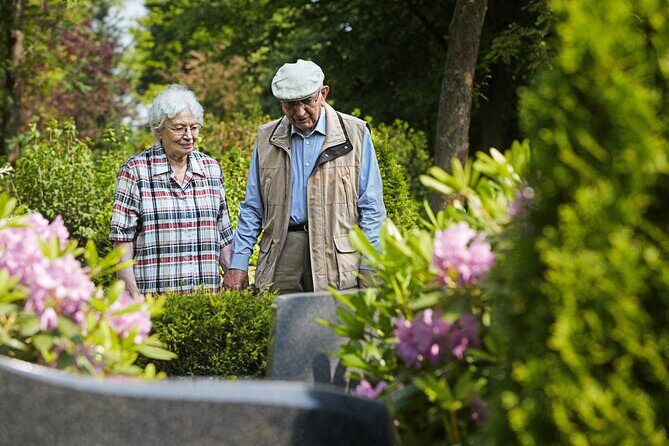
This is a private walking tour in Warsaw focused on three major stops: the former Warsaw Ghetto area, the Jewish Cemetery in Muranów, and POLIN Museum of the History of Polish Jews. The total time runs about 2 to 5 hours, and the exact mix of inclusions depends on which option you choose.
At $112.59 per person, the value isn’t just the guide—it’s the fact that the guide connects each location to the next, and you’re also dealing with real-world site logistics. You’ll get a licensed guide fluent in your selected language, plus a mobile ticket. If you’re booking from the Old Town, there’s even pickup from accommodation (within 1.5 km of the meeting point), which can remove the need to fight Warsaw transit before you start.
One practical thing: because this is private (with groups kept small, listed up to 25 per guide), you’re not trapped in a rigid herd rhythm. That matters for a day like this, where you may want a slower pace, extra pauses, or time to absorb what you’re seeing.
You can also read our reviews of more private tours in Warsaw


Start at the Field Cathedral of the Polish Army (Długa 13/15)
The tour begins at the Field Cathedral of the Polish Army on Długa 13/15. It’s a useful start point because it gives you a clear anchor in time and place before the story shifts into Warsaw under occupation.
This is also where you meet your guide next to a monument in front of the main entrance. The cathedral stop itself is short, and admission is free. The bigger reason to start here is psychological: you arrive into the right Warsaw mindset, not straight into trauma without a runway.
If you’re photo-hungry, note that this is an easier spot to orient at compared with some later memorials. Take a minute to find landmarks and get your bearings before the walking tightens.
The Warsaw Ghetto walk: boundary markers and the Warsaw Uprising context
The main walking portion takes you through the former Warsaw Ghetto, guided with commentary in your language. Expect a focused account of what happened in Warsaw during World War II and what the ghetto meant for more than just one neighborhood. The guide points out the Monument to the Warsaw Uprising area and shows traces of boundary markers—small physical clues that help the history feel real.
You’ll also hear numbers that change your perspective. The ghetto held over 400,000 Jews from Warsaw and surrounding regions, described as Europe’s largest ghetto. That scale is difficult to picture, and what I like about a guide-led walk is that you’re not left to imagine alone. The route helps you connect the geography to the human reality.
This stop is about 50 minutes, and it moves at a walking-tour pace. In winter or rain, that means you’ll want warm layers and waterproof shoes. One party experienced a very cold walk and still felt the guide did a solid job keeping the story clear.
What could be challenging? The ghetto area is outdoors and emotionally intense. If you’re someone who prefers a gentler start, you might want the longer options where the museum visit later gives you a structured space to process what you’ve heard.
Ghetto Heroes, Anielewicz Mound, and the emotional lift of resistance

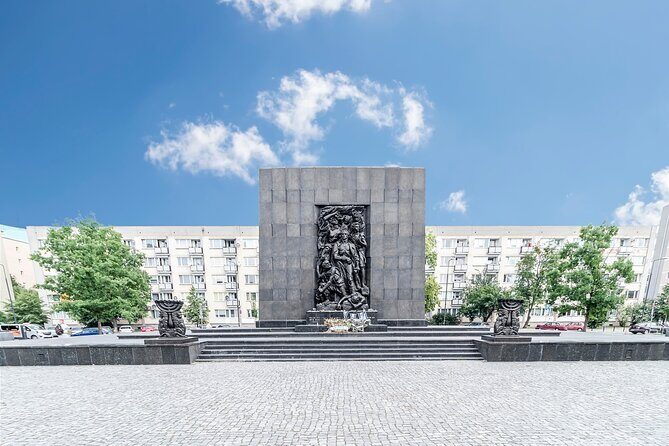
After the initial ghetto overview, the route continues toward the Monument to the Ghetto Heroes. This segment moves beyond the mechanics of persecution into the reality of hunger, disease, and death—but it also makes space for rebellion and heroism. That balance matters. It prevents the story from turning into a single-note tragedy.
You’ll pass memorials connected to the 1943 Warsaw Ghetto Uprising, and your guide also shows you the Anielewicz Mound at Mila 18. This is described as a hidden shelter tied to Jewish resistance. Even if you’ve read about the uprising before, seeing it pointed out on the ground helps your brain locate the events instead of keeping them stuck in books.
This is about 1 hour. It’s long enough to get real explanation, but not so long that you feel dragged through the emotional weight. If you need breaks, a private guide is the right format; your pace can be adjusted.
Umschlagplatz: seeing the deportation departure point (Stawki 10)

The tour ends its ghetto-side walking at the Umschlagplatz Monument, which marks the departure point for Jews transported to Treblinka Concentration Camp, where more than 300,000 Jewish people died.
This is only a short stop—about 10 minutes—but it carries enormous gravity. The value here is that you don’t just read the marker. You understand what it means in the wider chain: ghetto confinement, uprising, and then the deportation machinery.
This stop is also a natural boundary between the walking memorials and the more reflective site visits that follow. It’s the point where many people feel their thoughts slow down. If you’re the type who needs to sit with information rather than talk through it, this is a good place to let your guide finish speaking, then take a minute before moving on.
You can also read our reviews of more museum experiences in Warsaw




Jewish Cemetery in Muranów: one of Europe’s largest, and why transport helps

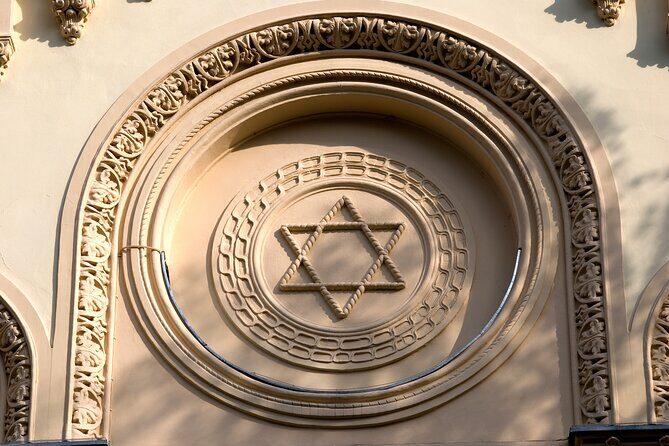
Next comes the Jewish Cemetery in Muranów, tied to the former ghetto and described as an old cemetery established in 1809. It’s listed as one of the largest in Europe, and you’ll learn it is the resting place for over 200,000 people.
Your guide will show you graves of spiritual leaders, political activists, honored creators of Jewish culture, and thousands of nameless victims. That mix is important. A cemetery like this isn’t only about the dead; it also shows who lived, worked, prayed, argued, created, and shaped culture.
One of the smarter parts of this tour is the way it handles logistics. The cemetery is described as outside the city center, so in the 3-hour and 5-hour options, the tour includes a 1-way public transport ticket to reach it. That matters because it keeps your time on history, not on figuring out transit.
In the 2-hour option, that transport ticket isn’t included and the Jewish Cemetery entrance fee with transport ticket isn’t part of the package. So if you’re choosing the shortest option, I’d treat it as a more limited experience and be ready to handle more yourself.
The walking here may include some uneven surfaces and steps. The tour is described as moderate, around 2.5–3.5 km, and the guide will adapt the pace. If you have physical limitations, one helpful detail from an actual experience: a guide can be flexible and still make the history feel complete rather than rushed.
POLIN Museum: why the 5-hour option is usually the sweet spot
POLIN Museum is a major stop, lasting about 1 hour 50 minutes in the included format described. The museum is modern and built to give you a deeper understanding of Polish Jewish life before, during, and after the war.
If you choose the 5-hour option, you get skip-the-line tickets for POLIN Museum. That’s a meaningful time-saver because it bypasses the ticket office, though it does not remove security and entry checks. If your day is tight, skip-the-line can be the difference between feeling rushed and having enough breathing room.
If you choose the shorter options, skip-the-line may not be included. In the 2-hour and 3-hour options, skip-the-line tickets are not included. The museum experience is still valuable, but you may spend more time waiting than you expected.
A practical tip: watch for weekday closures
The tour description emphasizes the museum as a top-class attraction, but one real-world caution came up: POLIN Museum was closed because it was Tuesday for one party. You can’t fix that once you arrive, so I’d strongly recommend you check the museum’s open hours for your exact visit day before you lock anything in.
Value and pacing: private guide pacing that can flex

This is where the private format pays off.
With a private guide, you can move through a serious subject without feeling like you’re being dragged. It’s also built for small groups—listed as 1–25 guests per guide—so the day can feel more like conversation with history than a lecture with a stopwatch.
One of the best values you’re buying is responsiveness. Your guide can adjust pace for uneven surfaces, steps, and weather. The tour runs rain or shine, and winter can be brutal. That’s not a reason to skip; it’s a reason to dress like Warsaw weather is in charge.
There’s also the matter of time. Your planned duration depends on the option you pick, but the experience can run longer for your group. That can be good if your guide has room to answer questions and follow your curiosity. It can also mean you should plan a buffer for dinner afterward.
Who this tour fits best (and who should rethink the length)
This tour is a strong choice if you want:
- a guided Warsaw Ghetto story that connects the geography to the events
- an on-foot route that points out memorials and physical traces, not just general explanations
- a museum visit at POLIN that adds culture and history before and after the war
- a private guide who can tailor pacing if you walk slower
It may be less ideal if:
- you want only a quick hit and don’t want to deal with outdoor walking plus transit to the cemetery
- you’re very time-constrained and haven’t confirmed POLIN Museum opening days
- you’re sensitive to emotionally intense sites and need a gentler pace than a 2–5 hour historical route
Should you book this private Warsaw Ghetto + POLIN tour?
Book it if you want a day that feels structured, respectful, and guided from start to finish. The best reason is simple: you get the human explanation you need for a difficult history, plus the museum piece that broadens the story beyond the war years.
Choose a longer option if you can. The 5-hour version is usually the best fit because it includes skip-the-line access to POLIN Museum and keeps more of the day smoother, especially when you add the cemetery logistics. If you pick the shorter route, be realistic about what you may need to arrange yourself (like cemetery transport and possible POLIN wait time).
One last decision rule: pick your day carefully. If POLIN Museum is closed on the weekday you’re traveling, the entire balance of the day changes fast. A little schedule homework now saves disappointment later.
FAQ
What sites does this private tour include?
You visit the former Warsaw Ghetto area with key memorial stops, the Jewish Cemetery in Muranów (including general admission), and POLIN Museum of the History of Polish Jews.
How long is the tour?
The experience runs about 2 to 5 hours, depending on the option you select.
Is this a private tour?
Yes. It’s listed as a private walking tour, with only your group participating. Group size is kept small, listed up to 1–25 per guide.
Where does the tour start and where does it end?
It starts at the Field Cathedral of the Polish Army (Długa 13/15, 00-238 Warsaw) and ends at the Umschlagplatz Monument (Stawki 10, 00-178 Warsaw).
Is pickup from my hotel included?
Pickup is available from accommodation within Old Town and within 1.5 km of the meeting point. If you’re outside that, pickup isn’t included.
Do I need to buy tickets for the Jewish Cemetery and POLIN Museum?
The package includes general admission tickets to the Jewish Cemetery depending on the selected option. For POLIN Museum, skip-the-line tickets are included only for the 5-hour option.
Does the tour include public transport to reach the Jewish Cemetery?
In the 3-hour and 5-hour options, the tour provides a 1-way public transport ticket to reach the Jewish Cemetery. In the 2-hour option, that transport ticket is not included.
Is skip-the-line access to POLIN Museum included for every option?
No. Skip-the-line tickets to POLIN Museum are included only for the 5-hour option. They are not included in the 2-hour and 3-hour options.
What language is the tour offered in?
The tour is offered in English, with commentary provided in your selected language when you book.
Is there a lot of walking?
It’s described as a moderate 2.5–3.5 km walking tour, including some uneven surfaces or steps. The guide will adapt the pace, and the tour runs rain or shine.