REVIEW · WARSAW
Warsaw: Cold War Museum Entry Ticket
Book on GetYourGuide →Operated by Cold War Museum · Bookable on GetYourGuide
Cold War history can feel distant. Here it hits your senses fast, with original objects, interactive screens, and VR missions in one ticket.
I love the Polish perspective and how the museum builds the story from a Warsaw viewpoint, not just the usual East-vs-West talking points. I also like the mix of hands-on tech—touch screens, multimedia tables, and VR—that turns a heavy subject into something you can follow without needing a PhD.
One thing to consider: this is not set up for everyone. If you use a wheelchair, this museum isn’t suitable.
In This Review
- Key things I’d prioritize at the Cold War Museum
- Entering a Warsaw Cold War story near Old Market Square
- What the museum is really trying to teach you (Polish perspective)
- The exhibits: original devices, maps, uniforms, and a story you can follow
- Touch screens, multimedia tables, and a Cold War knowledge quiz
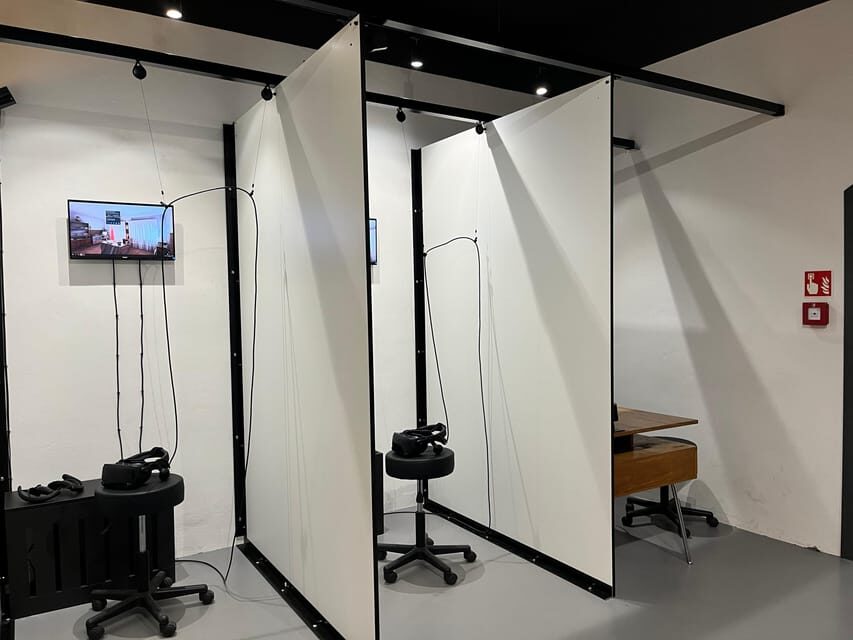
- VR agent missions: three games that turn you into a participant
- Space flight history and the space-station hologram
- Meet the autonomous robot guide and use it like a tool
- Cinema and the “whole period” approach
- The building’s history: where the past gets personal
- Price and value: why $12 can feel like a lot (in a good way)
- Practical tips so you enjoy it more
- Who should book this Cold War Museum ticket
- Should you book the Cold War Museum Entry Ticket?
- FAQ
- Where is the Cold War Museum located?
- How do I enter the museum?
- What is included with the entry ticket?
- Are the VR games included?
- Is there a knowledge quiz?
- Do I need a human guide?
- What languages are available?
- Are dogs allowed?
- Is smoking or food allowed inside?
- Is it wheelchair accessible?
- Closing thought
Key things I’d prioritize at the Cold War Museum
- Polish perspective on the whole Cold War, presented as a single, connected narrative
- 50+ multimedia moments, from touch screens to multimedia tables and a cinema
- Three VR games that put you in the role of a Cold War agent
- A hologram of a space station plus the history of space flights
- An autonomous robot guide that helps you move through the experience
Entering a Warsaw Cold War story near Old Market Square
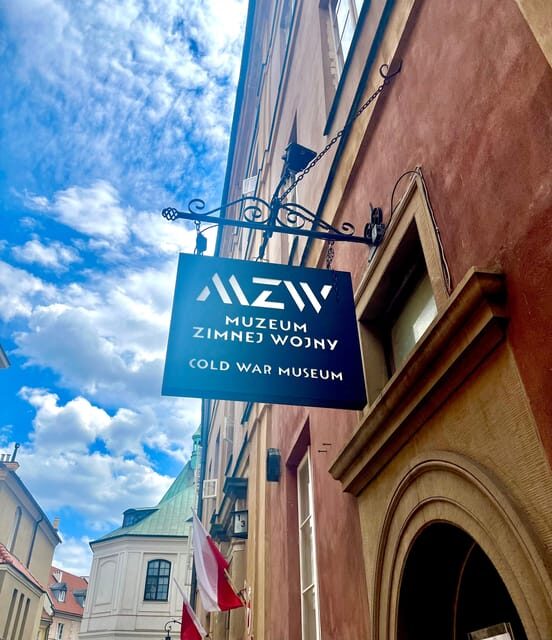
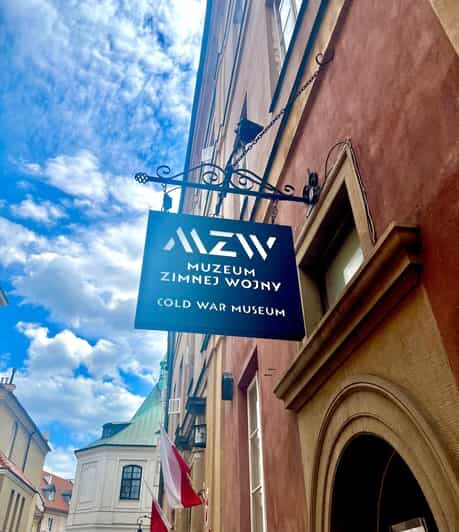
You’ll find the Cold War Museum (Muzeum Zimnej Wojny) about 40 meters from Old Market Square. It’s the kind of location that lets you pair this with a walking day in the center of Warsaw. Show your ticket at the entrance and you can jump into the exhibitions without fuss.
What makes this stop feel different is that it doesn’t treat the Cold War like a distant history lesson. The museum blends exhibition content with the weight of the place itself, using the building and its past as part of the message. That sets the tone from minute one: this is a rivalry with real consequences, not just spy costumes and black-and-white photos.
A few more Warsaw tours and experiences worth a look


What the museum is really trying to teach you (Polish perspective)
This museum is the only institution in Poland that depicts the rivalry between the two blocs during the Cold War period from a Polish perspective. That matters, because the Cold War often gets flattened into a story told elsewhere. Here, you’re guided toward how Poland experienced the standoff—politically, socially, and emotionally.
The exhibition covers the entire Cold War period and includes more countries than you might expect, since the narrative focuses on the struggle involving all sides involved in the conflict. You’ll also notice that a big share of the story is shaped around three major Cold War-era figures tied closely to the late 20th century: President Ronald Reagan, John Paul II, and General Ryszard Kukliński.
That doesn’t mean the museum ignores other voices. It means the museum chooses a specific way to make the period understandable: it frames events through messages, commitment, and actions associated with those individuals. If you like history that has clear anchors—names you can remember and themes you can connect—this approach tends to work well.
The exhibits: original devices, maps, uniforms, and a story you can follow
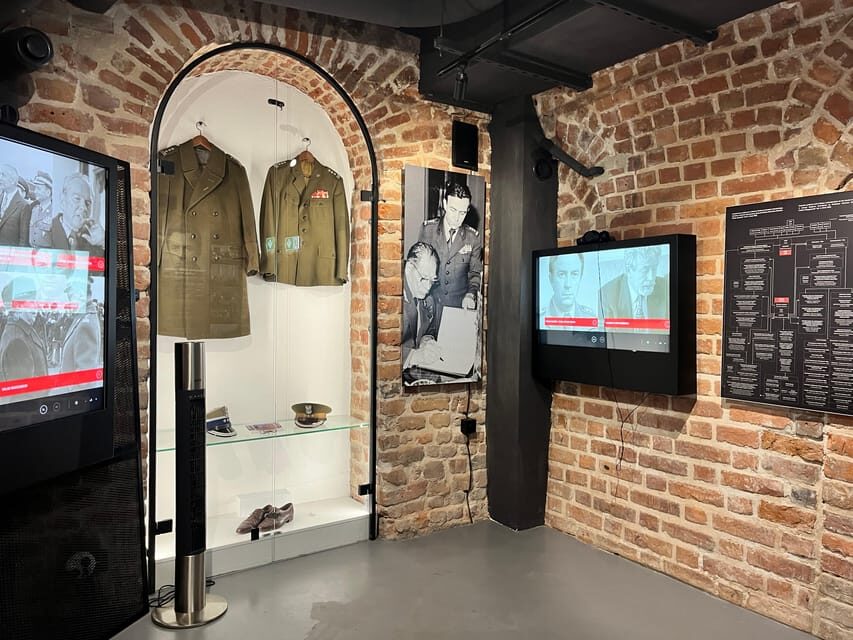
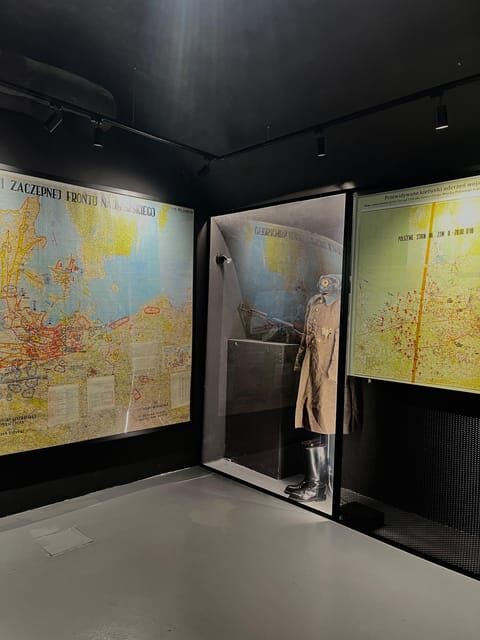
The highlights aren’t just decorative. You’re set up to see original devices, maps, and uniforms, which gives the Cold War a physical presence. In a topic full of slogans and ideology, actual objects are grounding. They help you picture what people used, wore, and relied on—not just what politicians said.
You also get a strong sense of the museum’s pacing: it’s meant to keep you moving through the period, rather than letting you get stuck in one decade. The content is spread across the whole timeline, so you’re constantly recalibrating your understanding. One section sets context, the next adds detail, and the next shifts focus to how events changed.
If you prefer museums where you read long wall texts for hours, this might feel more active than you’re used to. But that’s part of the design: it keeps the story going with interactive pieces instead of making you carry the full load with your eyes.
Touch screens, multimedia tables, and a Cold War knowledge quiz
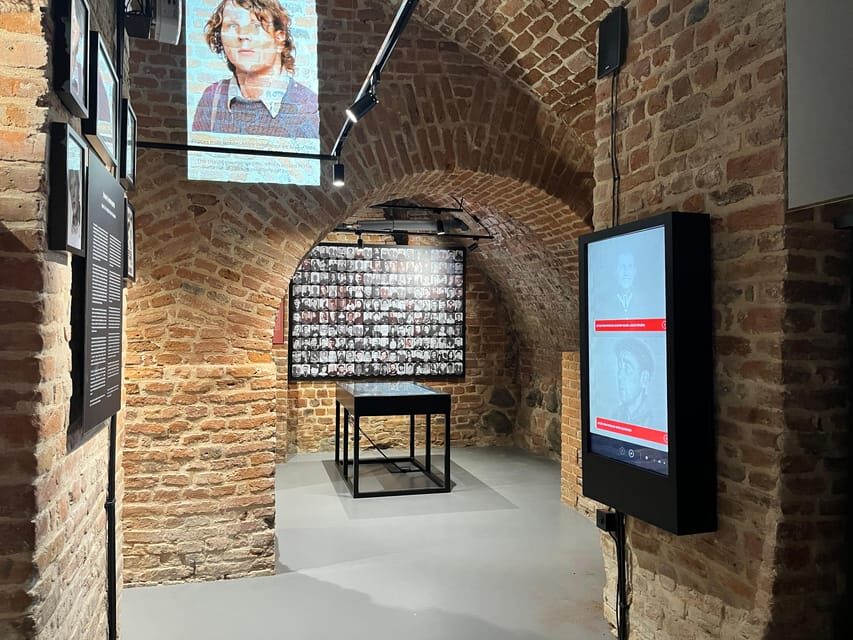
The museum uses more than 50 pieces of multimedia, and you’ll notice a clear emphasis on interaction: touch screens, multimedia tables, and even cinema. This is one of the best ways to make the Cold War feel approachable without simplifying it into nonsense.
The museum also includes a multimedia knowledge quiz about the Cold War. That’s not just a gimmick. In practice, a quiz helps you check whether you’re tracking the big themes as you go. You get quick feedback and a reason to pay attention to the details you might otherwise skim.
How you should use it: don’t treat it like speed-running trivia. Use it as a checkpoint. If you miss questions, that’s a cue to revisit the sections that fed that information. In a museum like this, small course corrections are useful.
VR agent missions: three games that turn you into a participant
One of the most praised parts of the museum is the chance to play three VR games. This is where the Cold War stops being abstract.
You get the feeling of taking on the role of a Cold War-era secret agent and working through missions connected to the conflict. The museum experience is built so these games don’t just entertain you; they connect the era’s anxiety, tactics, and stakes to something you can do in the moment.
A practical tip: VR can be mentally tiring even when it’s fun. If you’re the type who gets motion discomfort, pace yourself and take short breaks between screens. The rest of the museum still works even if you slow down on the tech side.
You can also read our reviews of more museum experiences in Warsaw



Space flight history and the space-station hologram
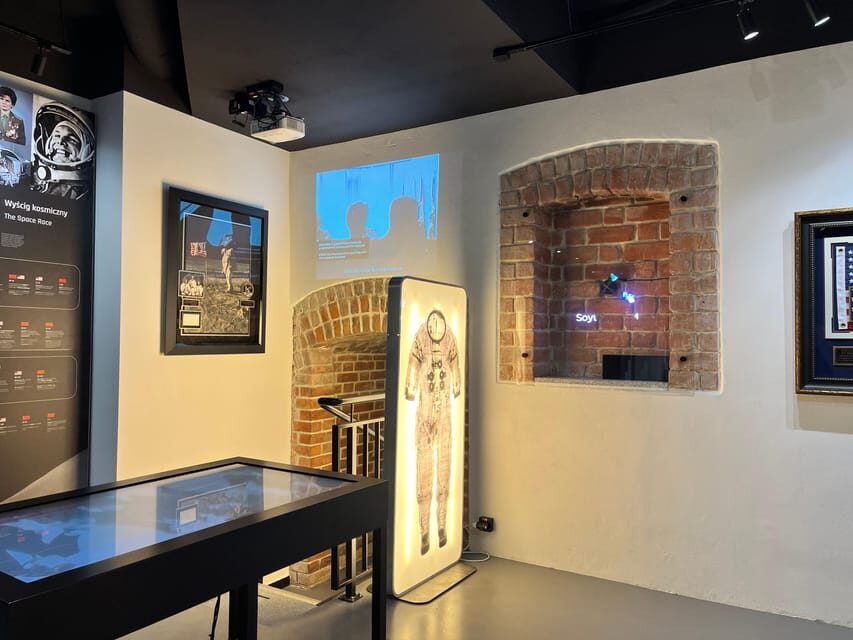
The museum doesn’t limit itself to spies and propaganda. It also covers the history of space flights, and one standout attraction is a hologram of a space station.
That’s an important theme in Cold War culture: competition wasn’t only about military power and political influence. It also played out through science, technology, and public imagination. Seeing the space side represented with modern visual tools helps you understand how the rivalry affected everyday hopes and global perception.
If you like the Cold War as a story of innovation and pressure at the same time, this section is a nice pivot point. It keeps the museum from becoming one-note.
Meet the autonomous robot guide and use it like a tool
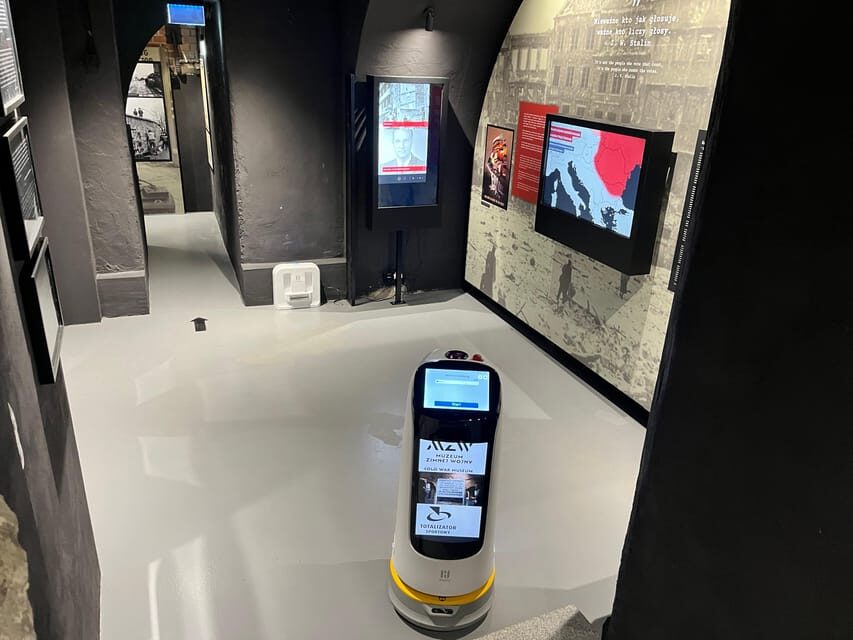
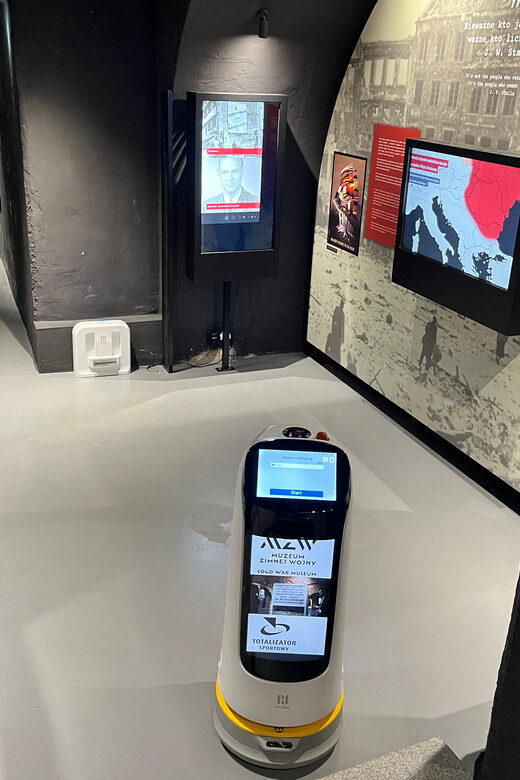
The Cold War Museum is notable for being the first and only museum in Poland with a robot that acts as an autonomous guide. In a museum full of digital elements, the robot adds a different kind of structure.
Instead of only relying on screens, the robot can help you orient your path through the experience. Think of it like a moving signpost: it won’t replace your attention, but it can guide you toward the parts that make the story click.
One bonus: because the robot is part of the exhibition design, you don’t feel like you need a human guide to keep everything straight. You can move at your own pace while still getting direction.
Cinema and the “whole period” approach
There’s also a cinema component in the exhibition mix. That matters because the Cold War is big. When the museum offers a film element, it’s easier to reset your brain and absorb context without constant reading or interaction.
The museum’s overall goal is to cover the full period, not just cherry-pick famous moments. That’s ambitious, and the multimedia design is doing the heavy lifting for you—turning a sweeping era into something you can digest step by step.
The building’s history: where the past gets personal
This is the part that lingers, even after you’ve moved on to the fun tech.
The museum’s setting is tied to the era of the Polish People’s Republic, when this address housed a communist militia station. The museum narrative connects the place to the story of Grzegorz Przemyk, a high school graduate who was beaten to death during martial law.
That connection turns the museum from educational into emotional. It’s not only about the Cold War as an international chess match; it shows how power structures can injure ordinary lives. This is where the museum’s tone becomes more than informational. It asks you to recognize victims, aggressors, and survivors as real people, not just labels in a timeline.
If you’re visiting with kids or teens, this section is especially important to plan for. You may want to be ready to talk about the difference between propaganda, power, and human consequences.
Price and value: why $12 can feel like a lot (in a good way)
At around $12 per person, this ticket pricing can be a great deal for Warsaw—especially because it’s not a single exhibition room. Your admission gives access to the exhibitions plus all attractions within the exhibition, including the VR games, hologram experience, quiz, touch-screen areas, and the autonomous robot guide.
The value argument here is simple: you’re paying for an experience that blends multiple mediums. If you enjoy interactive museums, you’ll feel like you got more than your money’s worth. If you mostly want quiet, traditional displays, the tech might feel like extra layers rather than core value.
For most people, though, the mix is the point. It makes the Cold War feel like a lived story rather than a static textbook page.
Practical tips so you enjoy it more
A few things will help your visit go smoothly:
- Plan for a tech-heavy experience. Expect touch screens, multimedia tables, VR goggles, and a robot guide. If you love hands-on exhibits, you’ll likely enjoy the flow.
- Go in with curiosity, not only with dates. The museum is built around themes and figures like Reagan, John Paul II, and Ryszard Kukliński, so let yourself remember names and ideas, not just years.
- Know what not to bring. Smoking, food and drinks, vaping, and alcohol or drugs aren’t allowed.
- Pets are welcome. It’s one of the few Warsaw museums where four-legged visitors are also welcome.
- Accessibility note. It isn’t suitable for wheelchair users.
Who should book this Cold War Museum ticket
This ticket fits best if you:
- Like museums that use modern interaction (touch screens, tables, VR).
- Want the Cold War told from a Polish point of view, not a generic version.
- Are curious about the personal cost of political systems, especially where the museum links to Grzegorz Przemyk and martial law.
- Enjoy experiences that mix education with guided structure, like the autonomous robot guide.
If you’re strongly opposed to VR or you want a quiet, purely traditional museum visit, you might find the tone too modern. Still, the objects—maps, uniforms, original devices—give you a tangible option even if you skip VR pacing.
Should you book the Cold War Museum Entry Ticket?
I’d book it if you want a Warsaw museum that feels current and interactive while still serious about the Cold War’s human impact. For $12, you get access to a full Cold War narrative, plus the stuff people usually travel for in a museum today: VR missions, touch-screen learning, and a space-themed hologram.
Skip the booking only if mobility access is a dealbreaker (it isn’t suitable for wheelchair users) or if you know you won’t enjoy VR-style exhibits. Otherwise, this is a strong “one ticket, lots to do” kind of stop—especially because the museum doesn’t just show history. It frames what history cost.
FAQ
Where is the Cold War Museum located?
The Cold War Museum (Muzeum Zimnej Wojny) is about 40 meters from Old Market Square in Warsaw.
How do I enter the museum?
You’ll show your ticket at the entrance of the Cold War Museum.
What is included with the entry ticket?
Admission to the exhibitions, access to all attractions within the exhibition, and an autonomous robot guide are included.
Are the VR games included?
Yes. Access to all attractions within the exhibition includes the VR experience, including three VR games.
Is there a knowledge quiz?
Yes. The museum includes a multimedia knowledge quiz about the Cold War.
Do I need a human guide?
A guide is not included. The experience includes an autonomous robot guide, and a host/greeter is available in English and Polish.
What languages are available?
English and Polish.
Are dogs allowed?
Yes. This is one of the few Warsaw museums where four-legged visitors are welcome.
Is smoking or food allowed inside?
No. Smoking, food and drinks, vaping, and alcohol or drugs are not allowed.
Is it wheelchair accessible?
No. It is not suitable for wheelchair users.
Closing thought
If you want to understand how the Cold War looked from Warsaw—political, emotional, and high-tech—this museum ticket is one of the most practical ways to do it in a single visit.