REVIEW · KRAKOW
Nowa Huta Tour Krakow: Ideal Communist City Small Group Walk
Book on GetYourGuide →Operated by Krakow Urban Tours · Bookable on GetYourGuide
Some neighborhoods teach history with plaques. Nowa Huta teaches it with walls. This small-group walk in Krakow walks you through a district designed to stage the communist ideal, then shows how real people bent the plan after Communism fell.
I love the way the tour links street-level details to bigger ideas—from the Central Square blueprint to the everyday market scenes—so you don’t just see architecture, you understand why it was built and what people did with it. I also like the mix of stops: Soviet-style landmarks, practical local life, and a final pause in the neighborhood café so you’re not stuck in the past the whole time. One thing to consider: it’s a walking tour, so if you’re sensitive to long stretches on uneven sidewalks, plan for comfortable shoes and a steady pace.
Guides can make or break this kind of tour. On past departures, guides such as Anna and Barbara stood out for keeping the stories clear, human, and question-friendly in a small group.
In This Review
- Key points to decide fast
- Entering Nowa Huta: a communist city plan that got rewritten
- Tram to Nowa Huta and the exact starting mood at Plac Centralny
- Central Square to the communist museum: architecture as propaganda
- The Lenin ghost, a vodka shot, and a tank you can see with your own eyes
- The market stop: where Nowa Huta reads like real life
- Zapiekanka and local bar culture that puts flavor on the timeline
- The Lord’s Ark church: a symbol of freedom built by residents
- Nowa Huta after Communism: how the neighborhood feels today
- Price and value for $112: what you actually get
- Who should book this Nowa Huta walk (and who might skip it)
- Should you book the Nowa Huta Tour in Krakow?
- FAQ
- How long is the Nowa Huta Tour in Krakow?
- Is the tour guide available in English?
- Where do I meet the guide?
- What’s included in the price?
- Does the tour include vodka tasting?
- What should I bring?
- What key sights are part of the tour?
- Is there free cancellation?
- Can I reserve without paying right away?
Key points to decide fast

- Plac Centralny (Central Square) sets the whole theme of planned communist power and public life.
- You’ll get a guided interpretation of Soviet urban design tricks, not just photo spots.
- The route includes lived-in details like a market where locals socialize and shop.
- You’ll stop for a vodka tasting and a local zapiekanka snack.
- The Lord’s Ark church is a powerful contrast: freedom built by residents by hand.
- A Russian tank left after the war and the district’s protection system make the ideology feel physical.
Entering Nowa Huta: a communist city plan that got rewritten
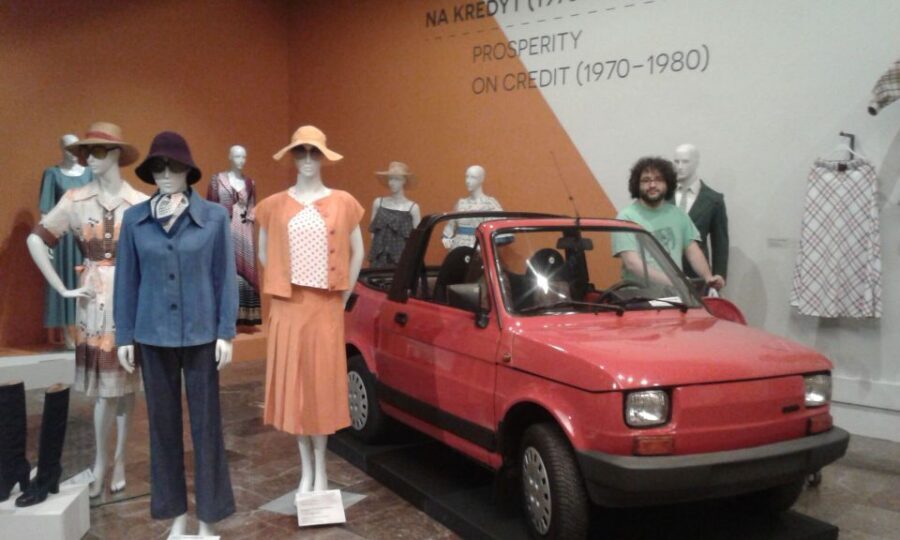
Nowa Huta sits in Krakow’s eastern area and feels like a whole chapter of 20th-century Europe laid out in concrete. The big idea behind the district was simple and ambitious: build a model communist city, then let daily life prove the ideology. What makes this tour worth your time is that it doesn’t stop at “this is what it looked like.” You learn what the planners were trying to control—space, sightlines, movement, symbols—and then you see how people adapted it into something else.
As you walk, you’ll notice the way the neighborhood is organized. It’s meant to feel monumental. It’s meant to guide you. And once you learn the intent, ordinary corners start to make sense. That’s the tour’s real value: you come away able to look at the district and read it, like turning a page that was printed in a language you didn’t know you could learn.
Expect a 4-hour format with a live English guide and tram transport to the communist district and back. Practically, that means you’re not spending the whole day commuting, and you’re not stuck waiting around either. It also keeps the pace walkable while still hitting enough key sights to feel like you covered the story arc.
You can also read our reviews of more walking tours in Krakow

Tram to Nowa Huta and the exact starting mood at Plac Centralny
The tour begins at 1 Dluga Street (ul. Dluga 1), right by the corner of Dluga and Basztowa, outside the bookshop Pod Globusem. Your guide holds a Krakow Urban Tours sign, so it’s hard to miss.
From there, you hop on a tram to reach the district. That matters more than you might think. Nowa Huta is different from central Krakow in feel, and the tram ride helps you shift from tourist city mode into “planned city” mode. It also sets you up to start with the district’s center of gravity rather than wandering randomly.
Then you land at Plac Centralny (Central Square), described as the heart of the former communist city. This is where the tour’s theme clicks. You’ll see an enormous public space that was part of the post–World War II plan, and you’ll also start noticing how power gets staged in architecture: scale, openness, and the way buildings frame the area.
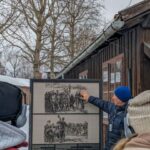
If you like tours where you can ask questions without feeling rushed, you’ll likely enjoy this format. Small groups make it easier to go beyond the standard script, and the guides on past departures have been praised for turning the walk into a conversation rather than a lecture.
Central Square to the communist museum: architecture as propaganda
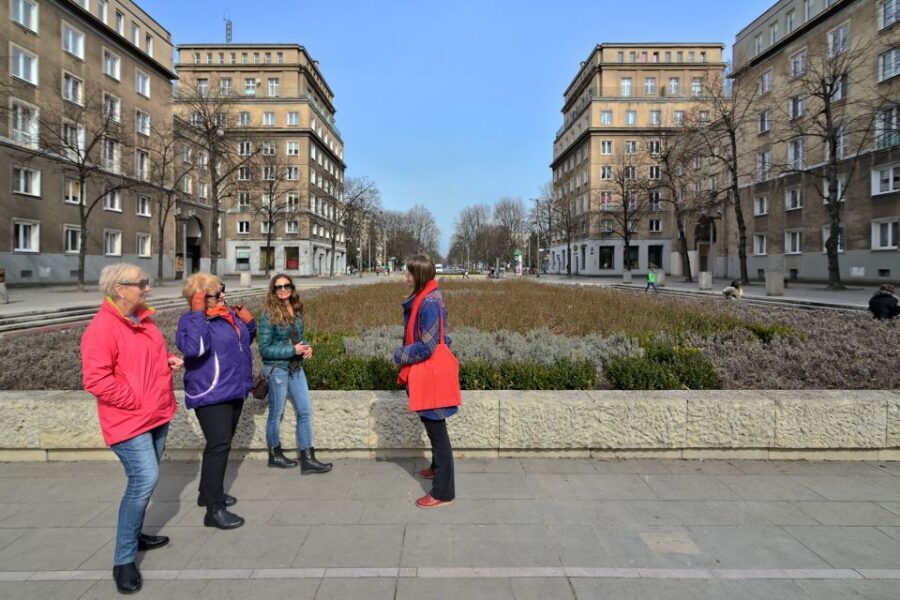
After Plac Centralny, the tour focuses on one of the district’s main landmark areas—planned right after WWII but functioning like a kind of architectural museum today. The point isn’t only to admire buildings. It’s to show how the communist worldview got written into the built environment, then later absorbed multiple styles and ideas as time went on.
You’ll also visit the spot connected to the former huge Lenin monument—a detail that brings the ideology into sharper focus. When you hear what it meant and why it was removed or faded from public view, the square stops being just an impressive place. It becomes a timeline you can stand inside.
Here’s a practical way to enjoy this section: look up while you walk. Soviet-era planning often controls sightlines—where you look, what you’re forced to notice, and what you’re meant to feel small next to. Once your guide points out those choices, you’ll see them everywhere.
There’s also a ticketed stop here: entrance to the communist museum. Having a museum break in the middle of an outdoor story helps keep the narrative clear. Your brain gets a chance to “reset” with context instead of only taking in visuals.
The Lenin ghost, a vodka shot, and a tank you can see with your own eyes
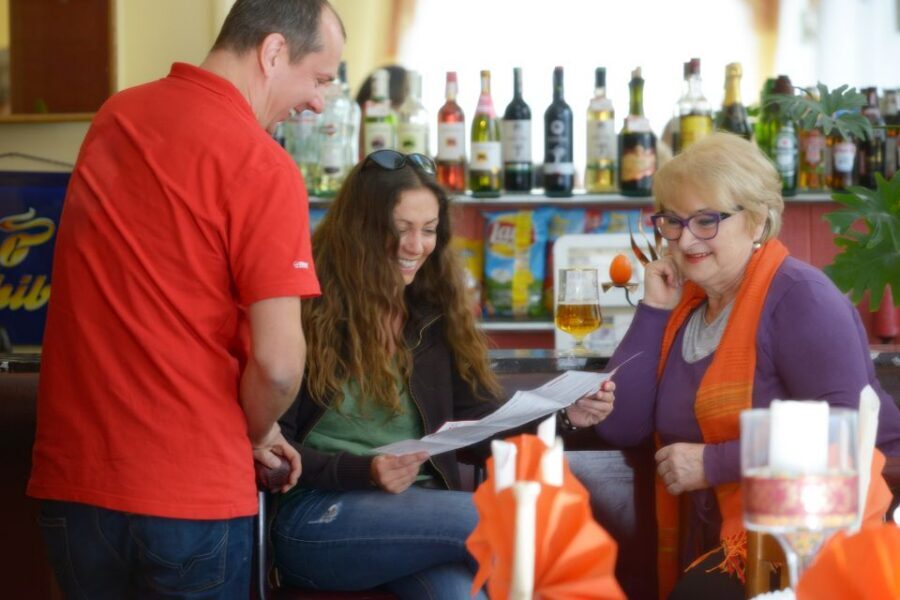
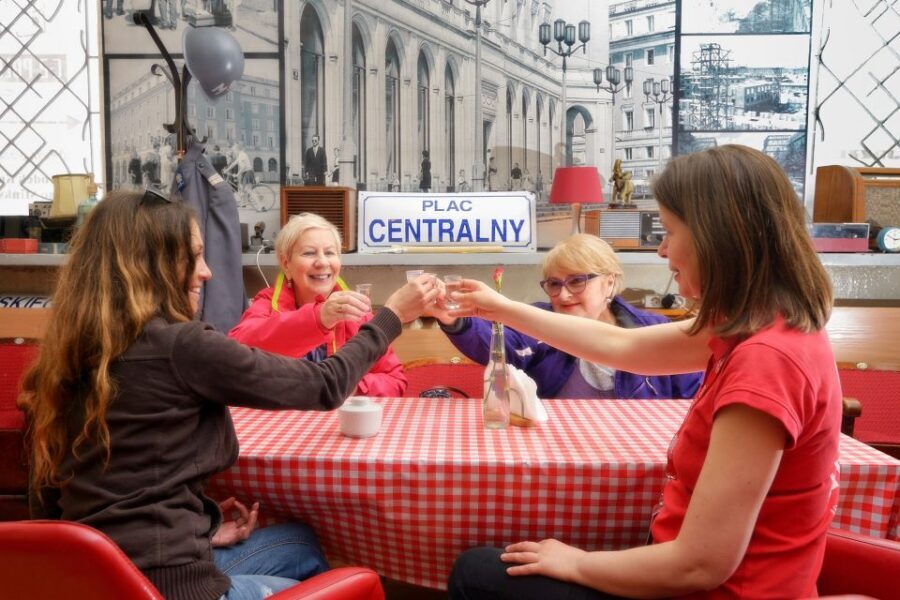
One of the tour’s smarter tricks is that it mixes symbols with everyday routines. After the ideological landmarks, you’ll head to a local spot for a vodka tasting—a detail that turns the communist-era story from abstract to familiar. Even if you’re not a big drinker, it’s usually a small tasting linked to the tour’s theme, and it helps you understand social life as part of the system.
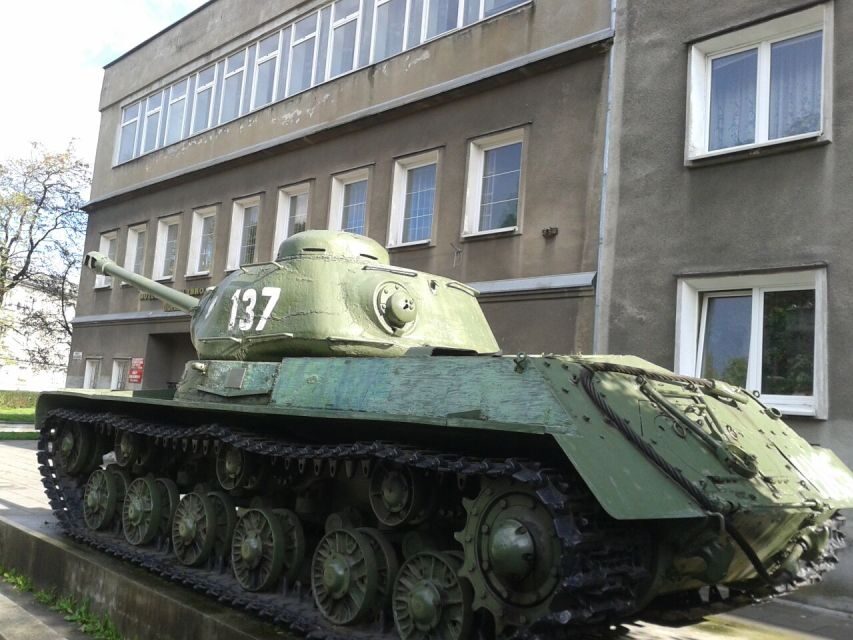
Next comes a visual punch: a Russian tank left after the war. It’s the kind of object that’s hard to photograph “well,” because it’s not just an image—it’s a leftover piece of history that refuses to disappear. Seeing it in context gives the guided explanation more weight.
Your guide also shares what’s described as a huge protection system invented by the communist architects. I like this stop because it reminds you that planning wasn’t only about aesthetics. It was about survival, control, and engineering a certain kind of future. Even if you don’t remember every technical detail, the big idea sticks: the city was designed to protect the plan, not just house people.
If you’re traveling with kids or teens, you may especially appreciate this tour’s hands-on feel. One past guest noted that a bunker visit during the experience was great for both children and adults. That’s a useful hint: this isn’t only “lecture and monuments.” It has tactile, curiosity-driven moments.
The market stop: where Nowa Huta reads like real life
The tour includes a market where the locals spend time socializing, buying groceries, and also selling clothes and homemade sweets. This is a key moment because it shifts the story away from ideology and into daily behavior.
Communist planning often tried to standardize life. But markets are messy. People show up with needs, opinions, and favorite vendors. You’ll get that contrast as you move through the market lanes and hear how the area’s meaning changed over time.
Practical tip: keep your camera handy, but don’t rush photos. This section is at its best when you slow down enough to watch the rhythm. Even without buying anything, you’ll learn a lot just by noticing how people interact with each other and with the space.
You can also read our reviews of more city tours in Krakow

Zapiekanka and local bar culture that puts flavor on the timeline
You’ll snack on zapiekanka, described as a typical communist treat, in a local bar. It’s not a “food tour” by itself, but the snack works because it plugs into the tour’s theme. Food becomes part of the same story as architecture and politics.
Zapiekanka also acts as a pacing tool. After earlier stops with a lot of information, you get a short break where the guide can keep talking while you eat. It’s a nice balance—structured, but not stiff.
If you’re the type who thinks you’ll remember a history lesson better with a snack in hand, you’re the target audience for this tour.
The Lord’s Ark church: a symbol of freedom built by residents
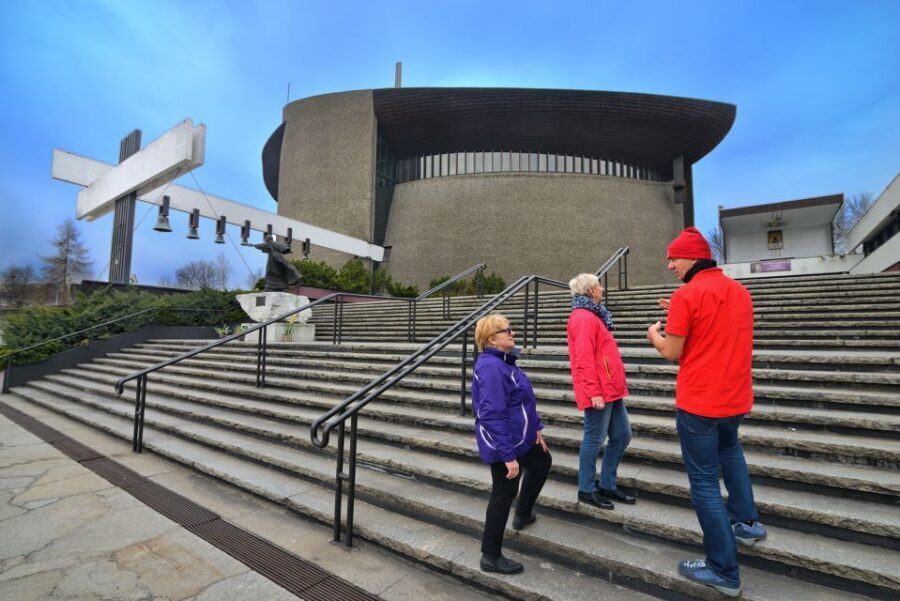
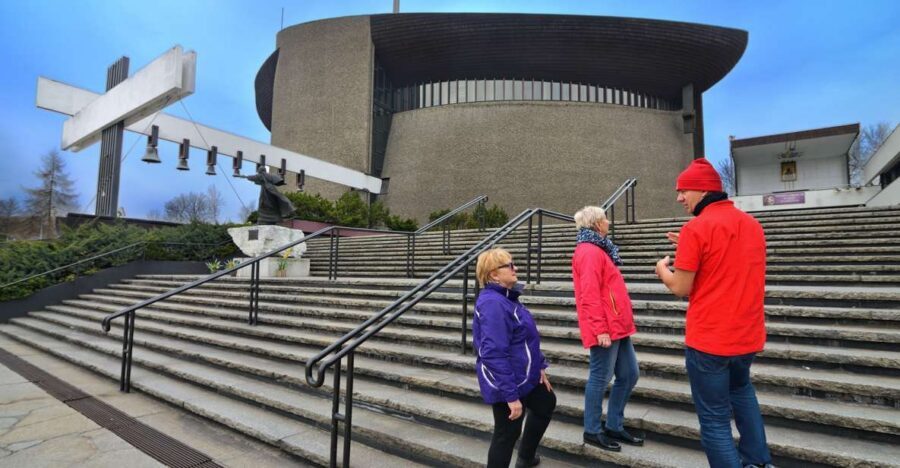
One of the most meaningful stops on this walk is the Lord’s Ark—a huge church known as a symbol tied to the long fight for freedom and democracy. The story here is powerful because it’s about agency. This church was built by residents completely by hand.
That “built by residents” detail matters. It reframes the whole district. Yes, Nowa Huta was designed as a showcase of communist ideals. But this place represents another kind of power: local determination, community effort, and the decision to create a space for faith and resistance.
Architecturally, you’ll want to give yourself a few minutes to look around. Big churches can be overwhelming, but on a guided tour you’ll usually get a clear explanation of why the design feels the way it does and how it connects to the broader political struggle.
When the tour reaches this point, you’ll likely feel the contrast more than you expected. That’s the best sign. It means the guide’s story choices are landing.
Nowa Huta after Communism: how the neighborhood feels today
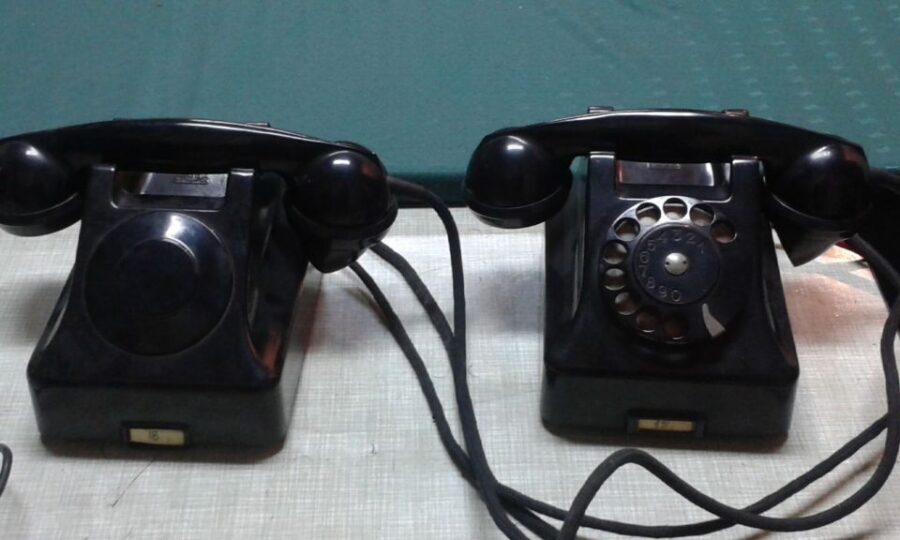
To end, the experience includes a pause at a neighborhood café, letting you see Nowa Huta as it is today rather than as a planned set from decades ago. This part is more than a convenience stop. It’s a reality check.
You’ll likely notice that the district isn’t frozen in time. People live there. They work there. They socialize there. You’re seeing the aftermath of massive political change in the ordinary way a neighborhood functions—through daily routines, not just historical narratives.
I like ending with something calm because it gives you space to process everything you learned earlier. Your brain stops treating the tour like a checklist and starts turning it into a coherent understanding.
Price and value for $112: what you actually get
This tour costs $112 per person for a 4-hour small-group experience. The value is real because it bundles costs that would add up fast on your own:
- Tram transport to and from the district
- Entrance ticket to the communist museum
- Vodka tasting in a communist-era restaurant/bar setting
- A snack of zapiekanka
So you’re not paying extra for each individual attraction. You’re also paying for interpretation—someone helping you read Soviet planning choices in real time, then linking them to human behavior and later change.
There’s also an added purpose: some of the proceeds help support local conservation, heritage, and culture. I take this seriously. It doesn’t guarantee everything is perfect, but it’s a good sign you’re paying into the community side of tourism, not just into a guide’s time.
Who should book this Nowa Huta walk (and who might skip it)
This tour is ideal if you want more than a generic Krakow highlights loop. You’ll enjoy it if you like:
- architecture tied to ideology and real-world outcomes
- stories that connect politics to everyday life
- a structured route that still makes room for questions
It’s also a strong pick if you’re curious about how Poland’s communist past didn’t simply end—it transformed and left traces you can still see.
Consider skipping if you hate walking or if you need a mostly indoor experience. This one is outdoor-heavy, and the details come from seeing the space, not just hearing about it. Bring comfortable shoes, and you’ll be fine.
Should you book the Nowa Huta Tour in Krakow?
If you’re coming to Krakow and want one experience that feels genuinely different—something you can’t replicate from a brochure—book this Nowa Huta tour. The combination of Plac Centralny, the communist museum visit, the vodka tasting, the Russian tank stop, the Lord’s Ark, and the market scene makes it a full story, not a collection of random sights.
I’d especially recommend it for first-time visitors to Poland who want their context straight: you’ll walk away understanding how Soviet city planning worked on paper, what it looked like in stone and steel, and how locals reshaped it afterward. Just do yourself a favor and wear shoes you can walk in for four hours, because Nowa Huta is easier to understand when you move through it.
FAQ
How long is the Nowa Huta Tour in Krakow?
The tour runs for 4 hours.
Is the tour guide available in English?
Yes, the tour is conducted with a live guide in English.
Where do I meet the guide?
Meet at 1 Dluga Street (ul. Dluga 1), at the corner of Dluga and Basztowa, by the entrance of the bookshop Pod Globusem. The guide will be holding a Krakow Urban Tours sign.
What’s included in the price?
It includes tram transport to the communist district and back, an entrance ticket to the communist museum, a vodka tasting in a communist restaurant, and a snack of zapiekanka.
Does the tour include vodka tasting?
Yes, there is a vodka tasting in a communist restaurant as part of the tour.
What should I bring?
Bring comfortable shoes for the walking portion.
What key sights are part of the tour?
You’ll see the Central Square area (Plac Centralny), a spot connected to the former Lenin monument, a Russian tank left after the war, a market, and the Lord’s Ark church, among other stops.
Is there free cancellation?
Yes. You can cancel up to 24 hours in advance for a full refund.
Can I reserve without paying right away?
Yes. You can reserve now & pay later, keeping your travel plans flexible.