REVIEW · GDANSK
Gdańsk Old Town Private Walking Tour with Legends and Facts
Book on Viator →Operated by Rosotravel Tours Gdansk · Bookable on Viator
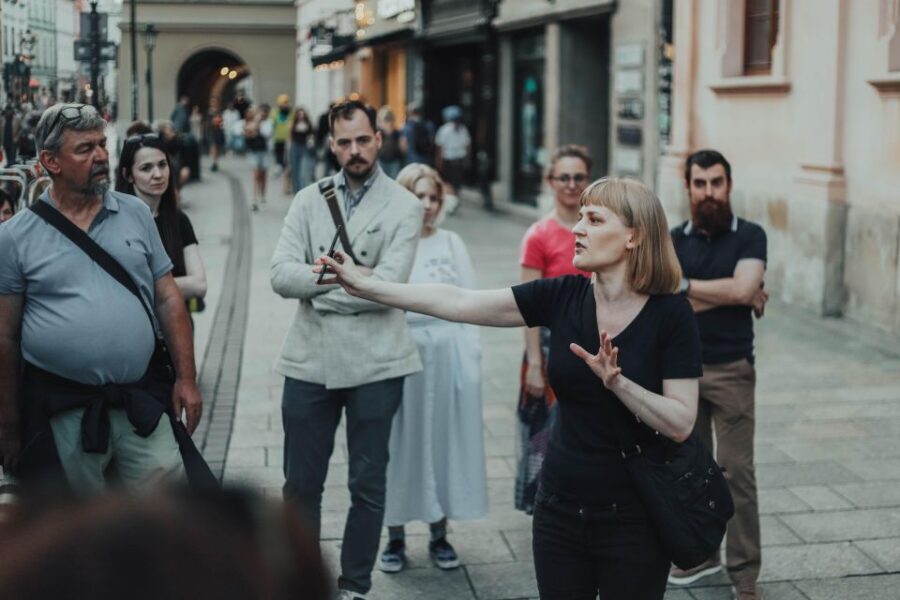
Gdańsk tells stories in every corner. This private walking tour strings together medieval gates, Hanseatic-era monuments, and Solidarity history with a guide who keeps the pace human and the facts clear. You start at the Highland Gate area and end right back where you meet, while your route links Old Town landmarks to the modern museum stops that explain how this city changed.
Two things I really like: you get to see multiple major sights in one day (so you’re not bouncing around on your own), and the private format means you can ask questions and steer your attention to what you care about most. One consideration: the overall time can stretch anywhere from 2 to 6 hours, and a couple of indoor stops are ticketed or time-sensitive, so plan for a day that’s a little flexible rather than tightly scheduled.
In This Review
- Key Moments You’ll Notice Fast
- Where the Walk Starts: Highland Gate to Brama Wyzynna
- Dluga Street to Long Market: Town Hall, Golden Gate, and Neptune’s Fountain
- Artus Court at the Museum Gdańska Stop (Dwor Artusa)
- Motlawa River Embankment Views Near Green Gate
- St. Mary’s Basilica Inside: Brick Gothic Scale and a Timing Trick
- Wyspa Spichrzow: Warehouses, Trade Stories, and the Baltic Symphony Hall
- St. Bridget’s Church: Solidarity Under Martial Law, Amber Details
- Main Town Shift: Monument to 1970 Shipyard Workers and the European Solidarity Centre
- Price and Time Value for a Private Guide (2 to 6 Hours)
- Who Should Book This Walk (and Who Might Want a Different Plan)
- Should You Book This Gdańsk Legends-and-Facts Tour?
- FAQ
- FAQ
- How long is the Gdańsk Old Town private walking tour?
- Is this tour private or shared?
- What’s the price per person?
- What language is the tour offered in?
- Where do we meet for the tour?
- Is pickup available?
- Are site tickets included?
- Can I cancel for free?
- Do I get any information before the tour?
Key Moments You’ll Notice Fast
- City-wall start at Upland Gate (Brama Wyzynna) sets context before you hit the postcard streets
- Long Market + Neptune’s Fountain area packs iconic architecture into a compact walk
- Artus Court (Dwor Artusa) explains the merchant culture behind Gdańsk’s power
- St. Mary’s Basilica interior gives you brick-gothic scale, organ, and chapel details
- Solidarity landmarks tie shipyard memory to the European Solidarity Centre museum
Where the Walk Starts: Highland Gate to Brama Wyzynna
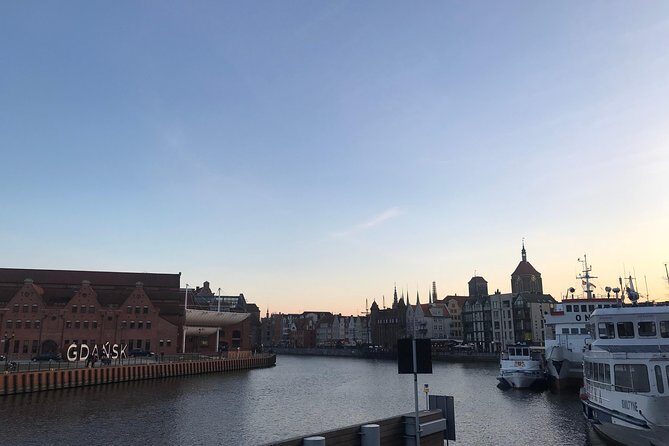
I like the way this tour begins with geography, not randomness. You meet at Highland Gate (Wały Jagiellońskie 2A), a sensible starting point near public transportation, then you head in through the medieval city wall area at Upland Gate (Brama Wyzynna). Since the gate area is free, you can use those first minutes to get your bearings without worrying about time or ticket hassles.
The practical value here is simple: once you understand where the old defenses sat, the rest of the Old Town makes more sense. You’ll notice why streets and gates were placed where they were, and your guide can connect stories to real locations instead of sounding like a textbook.
This also helps if it’s your first visit. Gdańsk has a lot of detail—brick patterns, street widths, and small civic buildings—and starting with the wall gives you a mental map early.
You can also read our reviews of more walking tours in Gdansk


Dluga Street to Long Market: Town Hall, Golden Gate, and Neptune’s Fountain
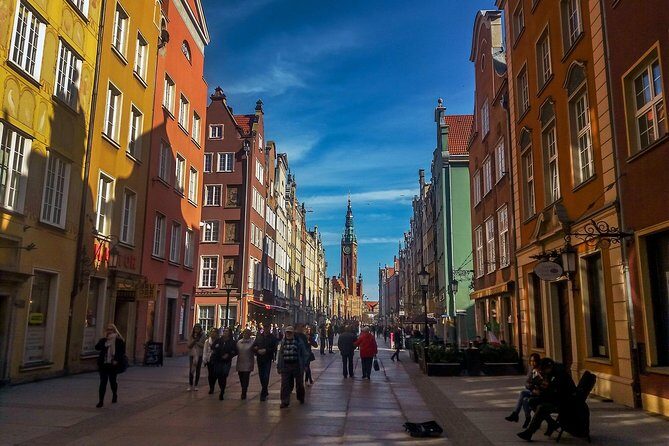
After you pass the Golden Gate area (Langgasser Tor / Golden Gate), the walk settles into the heart of Old Town along Dluga Street toward the Long Market. This section is where Gdańsk starts to feel like the Gdańsk you’ve seen in photos—but with more texture up close.
You’ll see major stops clustered together: the Gdansk Town Hall, the Golden House, and Neptune’s Fountain. The guide’s job isn’t just to point and name. Expect explanations that connect those monuments to the city’s mercantile power and civic identity—why these buildings mattered, and what kind of wealth and ambition they reflected.
Two small tips that make a difference here:
- Wear shoes that handle uneven cobbles, because you’ll be on your feet a while.
- If you care about photos, watch for angles where the street opens toward the fountain and Town Hall rather than photographing straight-on from the busiest sidewalks.
This part is a big reason I’d recommend a private format. You can slow down when something grabs you—like a sculptural detail on a façade—without feeling rushed.
Artus Court at the Museum Gdańska Stop (Dwor Artusa)
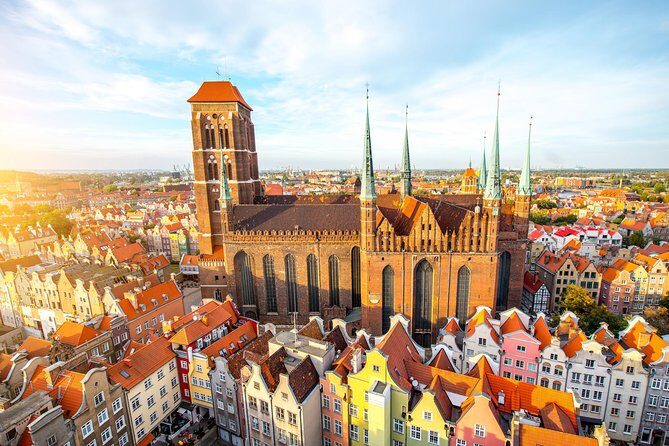
One of the smartest stops on this route is Artus Court, now part of the Gdańsk History Museum (Muzeum Gdanska). This location matters because it was tied to a merchant meeting culture—people weren’t just trading goods; they were building networks and civic influence.
Your stop here is short (around 20 minutes), so it’s not the place for a long museum day. Instead, it works as a “why this city looked like it did” moment. You’ll get quick context about how local history and arts connect back to that merchant era.
The drawback to keep in mind is time pressure. If your group loves museums, you may want extra time elsewhere after the walk. But if you’re trying to understand Gdańsk’s story without turning your day into a schedule of ticket lines, this works well.
Motlawa River Embankment Views Near Green Gate
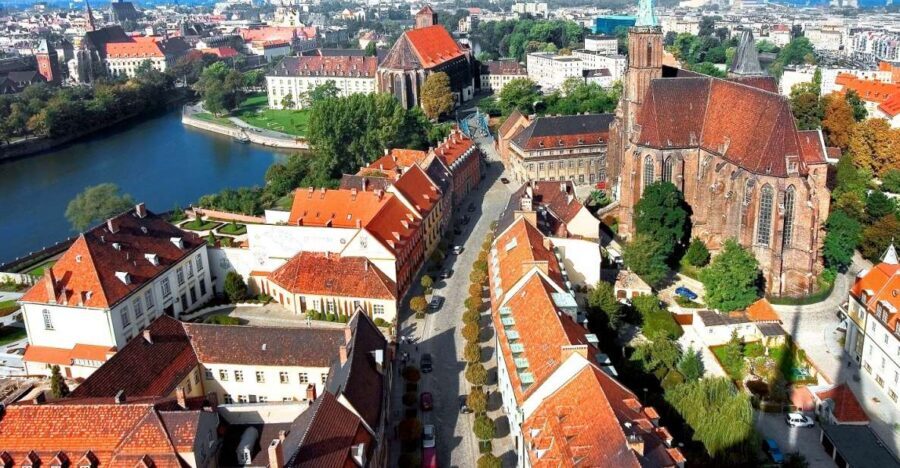
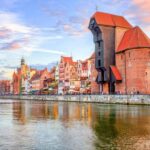
Then you shift from civic buildings to water—and the change of scene is helpful. Following your private guide along the Motlawa River embankment (Dlugie Pobrzeże) toward the Green Gate, you’ll get a scenic view that shows how the city’s layout relates to trade routes.
This is a quick stop (about 10 minutes). Also, an important logistics note: the admission ticket for this particular stop is not included, so if anything is ticketed on the spot, you’ll want a little buffer in your plan.
For your comfort, I’d treat this as weather-dependent. In cooler months, the wind off the river can be noticeable. Bring a layer so you can actually enjoy the view instead of rushing through it.
St. Mary’s Basilica Inside: Brick Gothic Scale and a Timing Trick
St. Mary’s Basilica is the kind of place that makes you stop walking. It’s one of the largest brick churches in the world, and the interior scale is the main show: an ornate altar, an organ, and a royal chapel.
This stop is free for entry, and it’s timed as part of the walk so you’re not just looking at the church exterior from the street. Your guide can also help you focus on what to look for, especially the details that make brick architecture feel so expressive instead of repetitive.
Then you finish this portion near the Great Armoury, a strong example of Renaissance architecture. This is one of those “city power, both spiritual and civic” contrasts. You go from the church’s grandeur to a building that reflects military readiness and elite status.
One practical note from guide-style expectations: some tours are timed so you arrive at St. Mary’s Basilica in time for the clock show. It’s not guaranteed as a promise, but it’s a common timing goal your guide may plan around.
You can also read our reviews of more private tours in Gdansk



Wyspa Spichrzow: Warehouses, Trade Stories, and the Baltic Symphony Hall
Next comes a change in terrain and feel: you’ll visit the islands on the Motlawa River, including Wyspa Spichrzow. This is one of the most interesting transitions on the route because you’re moving away from the tight Old Town streets and into the story of trade infrastructure.
Expect a walk through the redeveloped island with old brick structures and warehouse ruins. Your guide should connect those buildings to how Gdańsk worked as a trading hub—what people stored, why the river mattered, and how commerce shaped the city’s physical form.
This stop runs longer (about 1 hour), and the admission ticket is included. You’ll also see the Baltic Symphony Hall in Olowianka Old Town—another red brick reminder that architecture here didn’t just serve defense and trade. It also became cultural identity.
If you’re deciding how much to rest during the day, this is a great place to pace yourself. It’s long enough to be meaningful, but not so long that it drains your energy before the deeper history stops.
St. Bridget’s Church: Solidarity Under Martial Law, Amber Details
St. Bridget’s Church (Kosciol sw. Brygidy) is the stop that can turn a fun walk into something you remember for years. This church is known as a sanctuary for leaders of Solidarnosc under martial law, and the message is visible right on the doors.
The large church doors include Solidarity scenes from August 1980 through December 1981, when martial law was imposed. That timeline detail matters because it frames the story as lived events, not distant dates. It also makes the visit emotionally direct.
Beyond the door scenes, you’ll see religious artefacts and a remarkable amber altar made from raw amber associated with this region. The mix is striking: political struggle history in one place, and a very local material craft in another.
This is not a quick photo stop. It runs about 2 hours, and the admission ticket is included. If you like history but you also like time to absorb what you’re seeing, this is a good match.
Main Town Shift: Monument to 1970 Shipyard Workers and the European Solidarity Centre
As the route extends beyond Old Town, it gives you the full emotional arc of modern Gdańsk. You’ll see the Monument to the Fallen Shipyard Workers of 1970, commemorating workers who died in anti-communist riots. It’s a short stop (about 30 minutes), but it sets the stakes.
Then comes the bigger museum moment: the European Solidarity Centre. This modern museum explains Solidarity riots and the trade union movement that helped bring about the end of communist government in Poland. For history geeks, it’s a must-do. For everyone else, it’s still the clearest way to understand why this city is tied to the broader story of political change in Europe.
The visit is about 30 minutes, and the admission ticket is included. That’s a manageable length. You’ll leave with a framework you can carry into the rest of your trip, whether you continue to other parts of Poland or just want to make sense of what you saw in the Old Town.
Price and Time Value for a Private Guide (2 to 6 Hours)
The price is $107.89 per person for a private walking tour. The first thing I look at with tours like this is not just cost—it’s how many major stops you get without repeating yourself. Here, you’re stacking: multiple Old Town landmarks, an interior basilica moment, a longer river-island walk, and then Solidarity history through both an outdoor monument and a modern museum.
Duration is flexible, listed as 2 to 6 hours (approx.). That range can be good news or bad news depending on your plans. If you’re comfortable with a guided day that can slow down for questions, it’s ideal. If you have a hard departure time, you’ll want to align your expectations before you go.
One value detail that matters in practice: pickup is available only within 1.5 km of the Old Town meeting point. If you’re not within that area, the guide meets you at the Highland Gate starting location. Since this is a walk-heavy itinerary, that rule can influence how smoothly your day starts.
You’ll also get a mobile ticket, confirmation at booking, and a reminder email the day before with important info. Those small items sound boring, but they reduce stress when you’re trying to enjoy your day.
Who Should Book This Walk (and Who Might Want a Different Plan)
This tour is a great fit if:
- You’re in Gdańsk for the first time and want an efficient overview of both medieval and modern eras
- You care about how architecture connects to trade, civic life, and political history
- You want a guide you can question as you go, rather than reading plaques on your own
It may feel less ideal if you want a purely “museum day” with long indoor exploration at a slow rhythm. This route balances many stops, which means each one is purposeful rather than leisurely.
If your group likes personality, pay attention to guide style. In past tour experiences led by guides such as Kaja, Marek, Thomas, and Marta, the common themes are humor, strong preparation, and flexibility with pacing. That matters because Gdańsk can be a mix of intense history and quick street turns, and the right guide keeps it fun instead of tiring.
Should You Book This Gdańsk Legends-and-Facts Tour?
I’d book this if you want a private, story-driven day that connects Old Town monuments to the Solidarity-era meaning of the city. The value is strong because you get a lot of top sights with minimal guesswork, and the private format turns questions into part of the experience, not an afterthought.
Book it with one caveat: choose a day when you can handle 2 to 6 hours of walking and indoor time without rushing. If you’re flexible, you’ll get the most out of the basilica, the river-island section, and the Solidarity-focused museum stops.
If you’re the type who wants to understand why Gdańsk became important—commercially, politically, and culturally—this is the kind of tour that gives you that “now I get it” feeling.
FAQ
FAQ
How long is the Gdańsk Old Town private walking tour?
It’s listed as 2 to 6 hours (approx.), depending on how your guided day runs.
Is this tour private or shared?
It’s a private tour/activity, so only your group participates.
What’s the price per person?
The price is $107.89 per person.
What language is the tour offered in?
The tour is offered in English.
Where do we meet for the tour?
The meeting point is Highland Gate, Wały Jagiellońskie 2A, 80-887 Gdańsk, Poland, and the tour ends back at the meeting point.
Is pickup available?
Pickup is available only in the Gdańsk Old Town area. Your guide meets you at your accommodation if it’s within 1.5 km of the meeting point; otherwise, the guide meets you at Highland Gate.
Are site tickets included?
Many stops are free, and some tickets are included. Motlawa River embankment is marked as ticket not included, while Wyspa Spichrzow, St. Bridget’s Church, and the European Solidarity Centre are marked as ticket included.
Can I cancel for free?
Yes. Free cancellation is available, and you can cancel up to 24 hours in advance for a full refund.
Do I get any information before the tour?
You’ll receive confirmation at booking, and you should check your email the day before the tour for important details.