REVIEW · GDANSK
Gdansk Old Town Half-Day Private Walking Tour
Book on GetYourGuide →Operated by PT Team · Bookable on GetYourGuide
Gdańsk has a way of grabbing you fast. This half-day private walking tour turns the Old Town into a story you can follow step by step, from the Renaissance Golden Gate to the Motława waterfront.
I especially like two parts: the way your guide connects buildings to what merchants and sailors actually did in Gdańsk, and the stop at an amber workshop, where you see the polishing process up close. One thing to consider: entry fees to major sights (like church towers) aren’t included, so you’ll want a little extra cash or to decide which viewpoints are worth it for you.
In This Review
- Key Highlights You’ll Care About
- Entering Old Town Through the Golden Gate
- Długa Street and the Town Hall: Architecture With a Trade Story
- Arthur’s Court Museum: Where Merchants Met, Not Just Merchants Traded
- Neptun Fountain: The Sea Symbol That Shows Up Everywhere
- Basilica of St. Mary’s: Gothic Brick Power and Tower Views
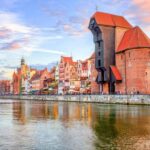
- Old Crane (Zuraw): Medieval Engineering You Can Understand
- Motława River Banks and the Green Gate: Slow Down for the Waterfront
- Amber Workshop: Watching Raw Amber Become Jewelry
- How Much Time You Really Have (4 Hours Feels Just Right)
- Price and Value: What $17 Buys You Here
- Languages, Guide Style, and the Small Things That Matter
- Who Should Book This Tour (and Who Might Skip It)
- Should You Book This Gdańsk Old Town Half-Day Tour?
- FAQ
- FAQ
- How long is the Gdańsk Old Town half-day private walking tour?
- Where does the tour start?
- Is the amber workshop included?
- Are entry fees included for attractions?
- What languages are available for the guide?
- Is this tour private?
- Can I pay later?
- Is there free cancellation?
Key Highlights You’ll Care About
- Golden Gate → Długa Street: Your route starts at a historic city gate and follows the Royal Route through the most photogenic stretch of Old Town.
- Arthur’s Court at the center of trade: A 14th-century setting tied to merchant groups and social organizations.
- Neptune Fountain + Town Hall energy: You get the city’s iconic monuments early, so the walk stays fun and visual.
- Basilica of St. Mary’s and tower views: You’ll understand why this Gothic brick church is such a big deal in Northern Europe.
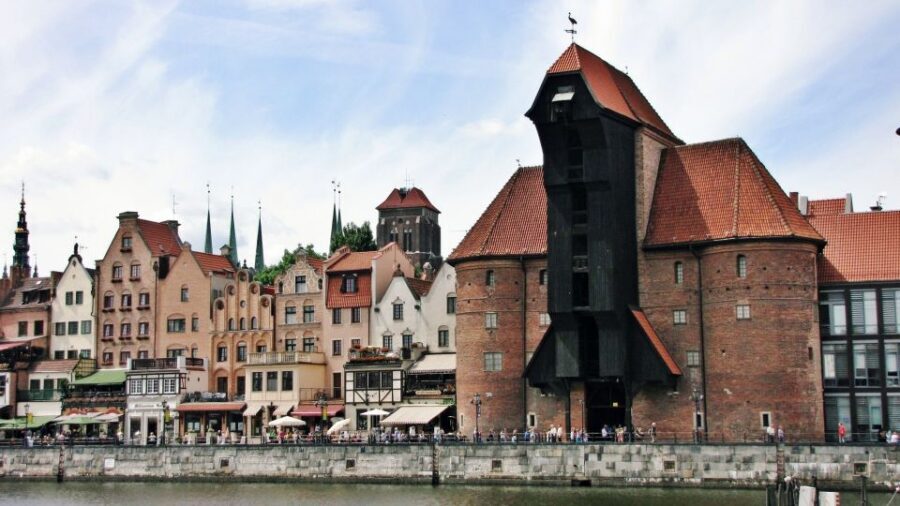
- Old Crane (the port’s signature machine): You’ll see medieval engineering that’s still one of Gdańsk’s most recognizable landmarks.
- Amber polishing demo: You’ll watch how raw Baltic amber becomes jewelry and decorative items.
Entering Old Town Through the Golden Gate
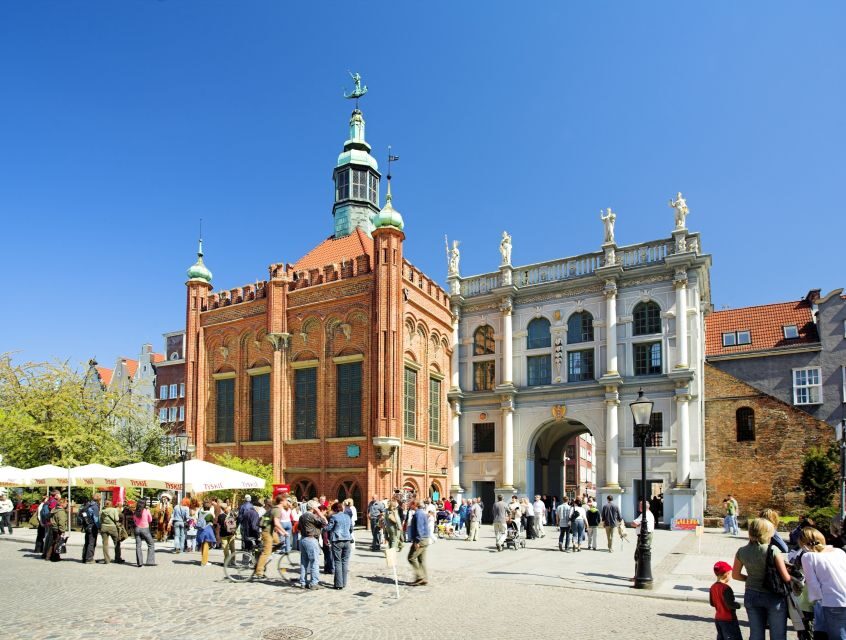
You start at the Golden Gate, a Renaissance city gate that instantly tells you you’re not just strolling in an old neighborhood—you’re walking along a former boundary of power. Your guide sets the tone right away, explaining what the gate meant and how Gdańsk grew into one of the big trading cities on the Baltic.
From there, you’ll move into the historic heart of the city along Długa Street, also called the Royal Route. This is the stretch where Gdańsk’s personality shows: tall facades, colorful burgher houses, and architectural styles that mix Renaissance flair with merchant-era seriousness. It’s the kind of street where the details matter, and a good guide keeps you from getting lost in the looks without learning anything.
If you’re the type who enjoys “why this building looks like that,” this tour is built for you. If you’re mostly in sightseeing mode, you’ll still get plenty of iconic photo stops without feeling rushed.
You can also read our reviews of more walking tours in Gdansk


Długa Street and the Town Hall: Architecture With a Trade Story
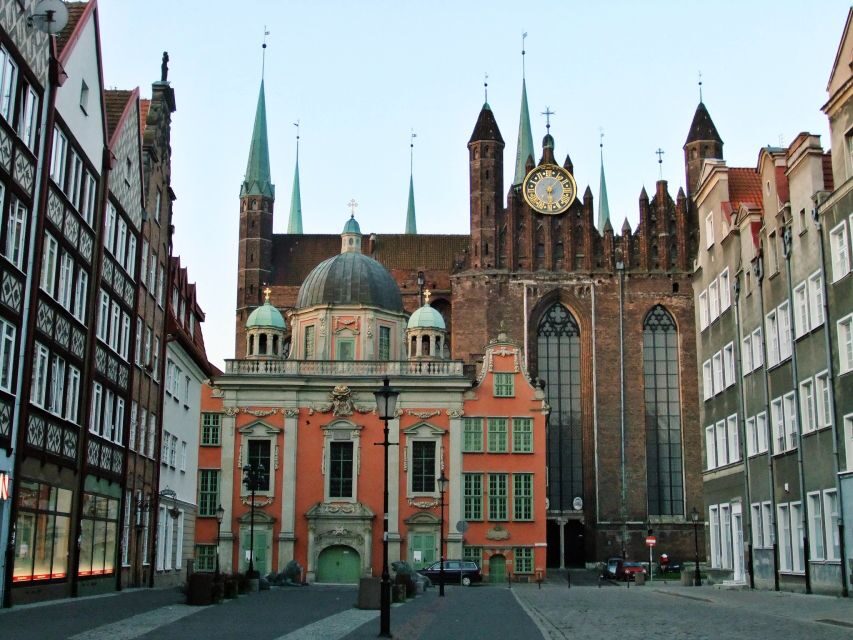
Walking Długa Street is one of the best ways to get your bearings in Gdańsk Old Town. It’s prominent for a reason: it’s lined with buildings that reflect the wealth and status of the people who lived and worked here.
As you go, you’ll notice how the city layout mirrors its trading past. Your guide points out the colorful burgher houses and the Renaissance buildings, then ties them to the merchant families who were powerful enough to shape the streetscape. The flamboyant Town Hall is a natural highlight on this route, and your guide helps you understand why this civic building feels so expressive compared to more plain administrative spaces.
A practical tip: if you want great photos, don’t just aim for the postcard angles. Look for doorways, window patterns, and the way the buildings step along the street. The tour pace gives you time to stop when something catches your eye, not just at the big monuments.
Arthur’s Court Museum: Where Merchants Met, Not Just Merchants Traded
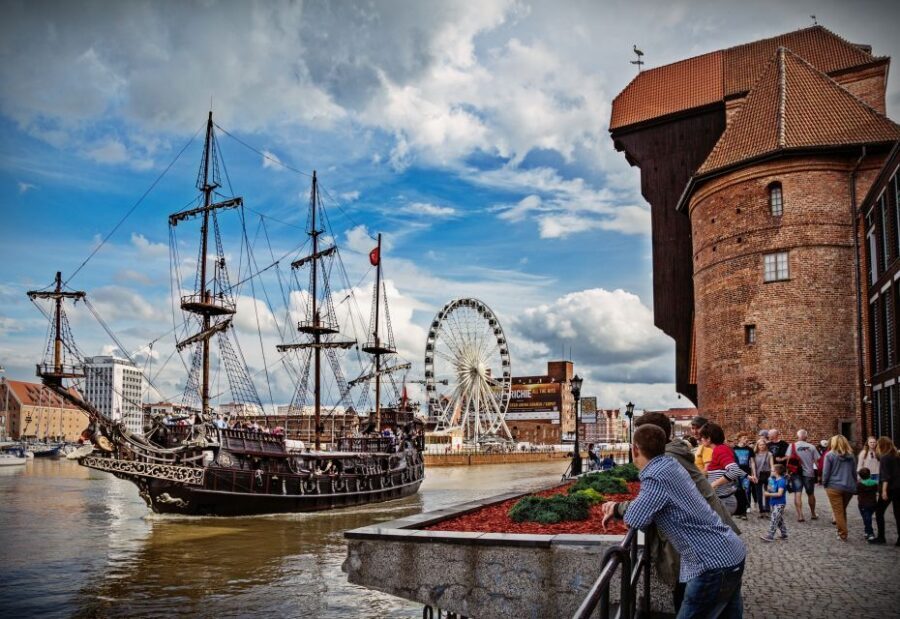
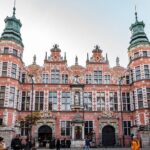
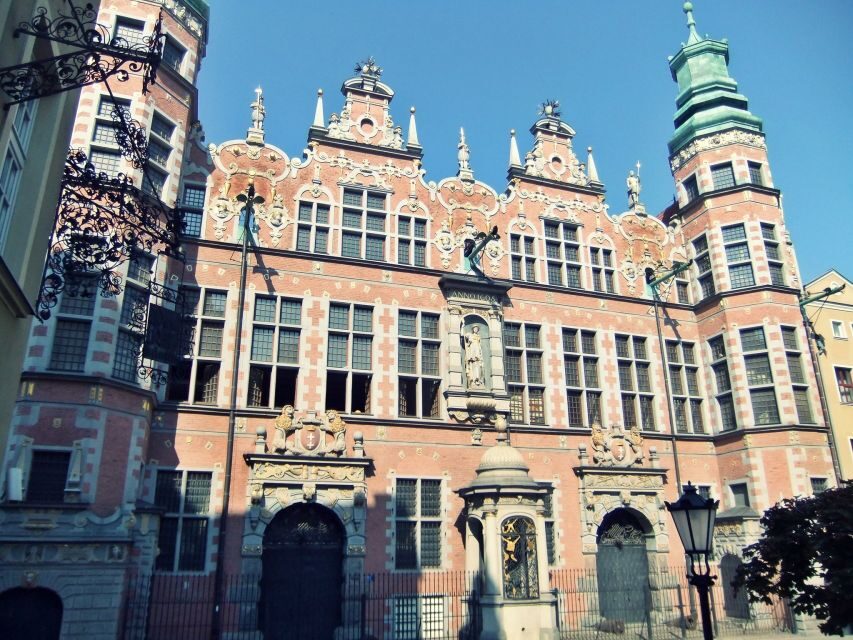
One of my favorite stops is Arthur’s Court, a date-back-to-the-14th-century complex that served as a meeting place for merchant fraternities and social organizations. This is where Gdańsk starts to feel more human. Instead of imagining trade as a series of ship arrivals, you picture the conversations, networks, and group meetings that made trade possible.
Your guide uses the setting to explain how these groups worked and why they mattered. Even if you don’t go deep into museum-level details, the point lands: this was a social engine for merchants, not a random historic interior.
Drawback to consider: this is a stop where you may see more interior context and less “wide open views.” If you’re chasing panorama photos nonstop, you might feel it’s less visually dramatic than the waterfront. Still, it’s one of the most valuable learning moments on the route.
Neptun Fountain: The Sea Symbol That Shows Up Everywhere
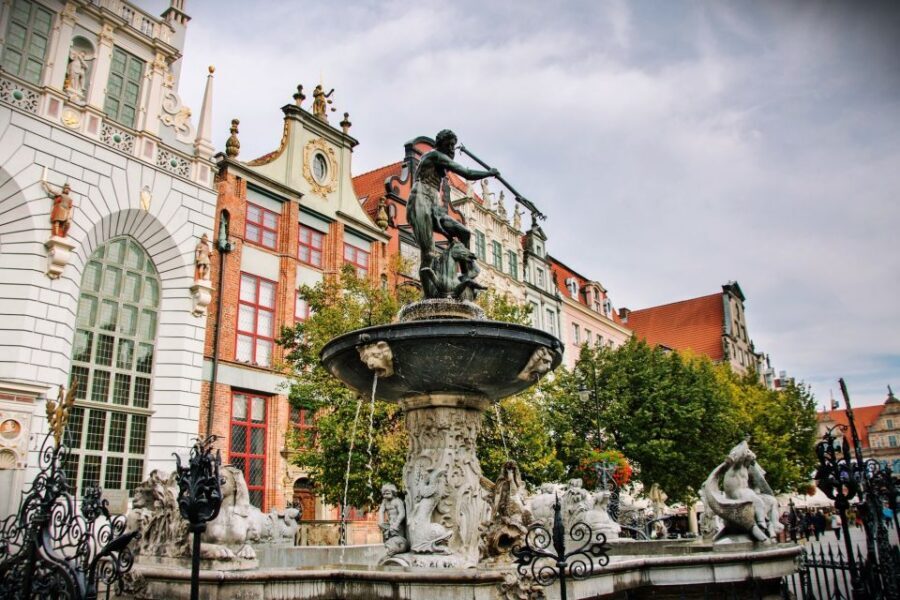
Gdańsk is a city of the sea, and the tour makes that connection early by stopping for a photo with the Neptune Fountain. This monument is one of the city’s most famous symbols, and it’s tied directly to the maritime identity of Gdańsk.
It’s a quick stop, but it matters. A waterfront city doesn’t just build ships; it builds meaning. Neptune is a reminder that Gdańsk’s culture and economy weren’t separate—the sea shaped both.
If you like monument photos, aim for a clean angle and take your time. The fountain is a recognizable landmark, and having it in the middle of the walk helps you stay oriented.
Basilica of St. Mary’s: Gothic Brick Power and Tower Views
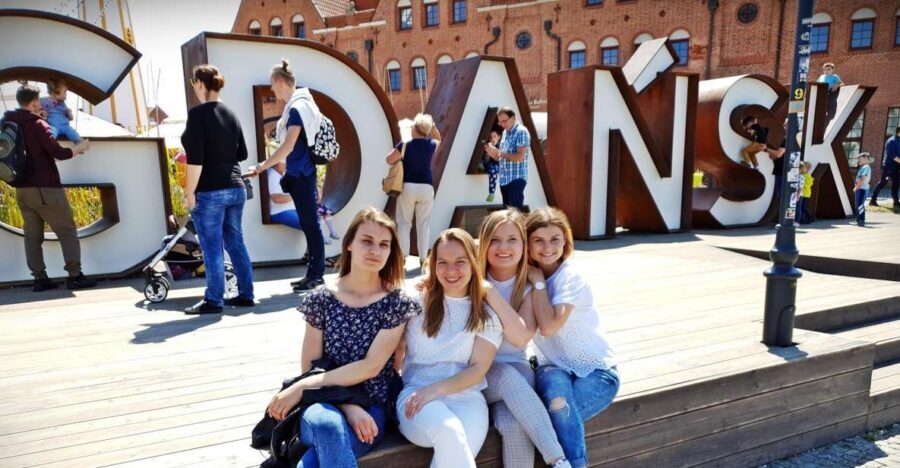
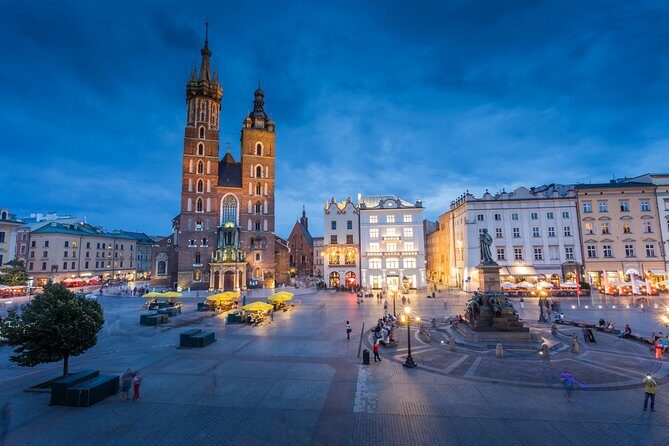
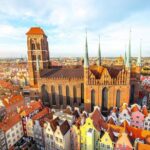
Next up is the Basilica of St. Mary’s, described as the biggest Gothic brick church in Europe. Even if you only spend a short time here, the scale hits. This is the kind of church that feels like it was built to last through centuries of rebuilding and change.
Your guide also sets expectations for the views from the tower. The tour mention here is important: tower access typically involves entry fees, which aren’t included. So you’ll need to decide on the spot if the climb is worth it for you.
Possible drawback: if you’re not keen on stair climbing, you might prefer staying with exterior viewpoints and letting the guide focus on the architecture instead. The good news is you’re still getting context even if you skip the tower.
You can also read our reviews of more private tours in Gdansk


Old Crane (Zuraw): Medieval Engineering You Can Understand
Then you reach Old Crane, also known by its historic name associated with the port. This 15th-century crane is one of Gdańsk’s most recognizable landmarks, and it’s tied to a very practical job: installing masts on ships.
What I like about this stop is that it connects a physical object to a specific maritime task. You’re not just looking at a “cool old structure.” You’re seeing medieval engineering that made ship handling possible—and in a port city, that’s a big deal.
Your guide brings it to life by explaining how the crane relates to Gdańsk’s shipping and maritime heritage. Even if your focus is photography, this is still worth the time because the crane has that rare quality of being both visually iconic and conceptually easy to grasp.
Motława River Banks and the Green Gate: Slow Down for the Waterfront
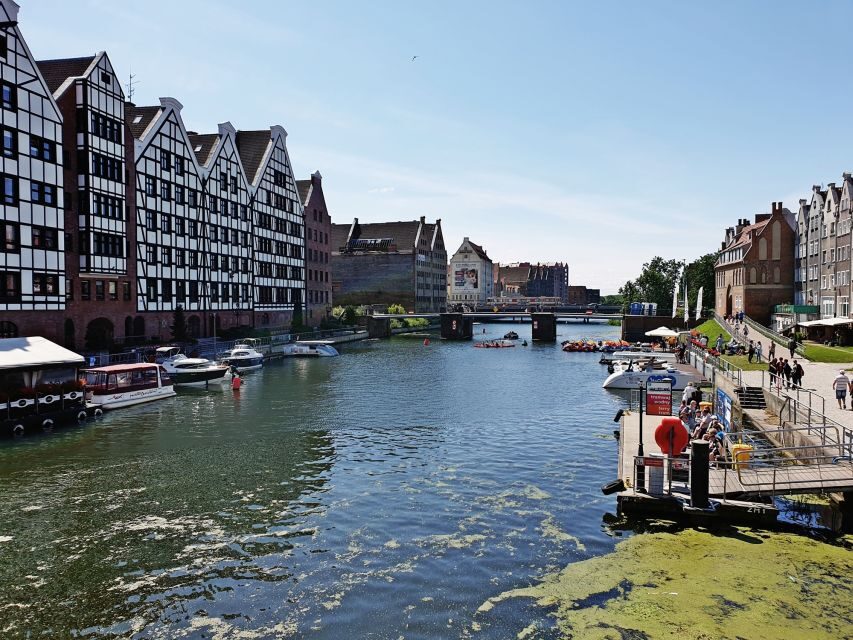
After the Old Crane, you’ll walk along the Motława River, lined with beautifully restored medieval buildings. This section changes the mood of the tour. The streets get wider in your mind, and the city starts to feel like it’s arranged around water, trade, and movement.
The Green Gate appears here as another key historic marker. Your guide uses the waterfront walk to connect the “what you see” with the “how the city functioned.” And along the way, you’ll have time to take in the atmosphere—especially if you stop for a coffee at one of the riverside spots.
This is also where you’ll feel the value of a private tour. You can pause for a view without worrying about the group getting impatient. It’s a good stretch for people who like taking breaks and people-watching without losing the thread of the story.
Amber Workshop: Watching Raw Amber Become Jewelry
Now for the most distinctive part of the tour: the amber workshop visit with an amber polishing demonstration. This is where you learn what happens between “a pretty fossil-like stone” and a finished piece of jewelry or decorative item.
Your guide will explain how amber is processed, and you’ll see the demonstration firsthand. The big takeaway is that amber work takes patience and skill. This isn’t a magic trick. It’s careful shaping and polishing that turns rough material into something bright enough to be worn or displayed.
If you’ve ever wondered why Baltic amber is such a signature product from this region, this stop gives you a practical answer. You’ll leave with a better sense of why it became valuable—and why artisans kept refining the process.
One consideration: you might be tempted to buy something at the workshop area. That’s normal, but don’t feel pressured. If you want to shop, use the demonstration as your checklist: pay attention to workmanship and finish, not just color.
How Much Time You Really Have (4 Hours Feels Just Right)
This tour runs about 4 hours, which is enough time to hit the major Old Town landmarks and still include the amber workshop without turning the day into a marathon.
Here’s the rhythm you should expect:
- Old Town walk with several big stops (gate, Royal Route, monuments)
- One deeper historical stop (Arthur’s Court)
- A major landmark church moment (Basilica of St. Mary’s)
- A port engineering highlight (Old Crane)
- A calmer waterfront segment (Motława and Green Gate)
- A hands-on style workshop demonstration (amber polishing)
The only pacing downside: there are multiple “icon stops,” and if you linger too long at one, you might feel time squeeze later. That’s where a private guide helps—if you prefer more photos or more explanation, you can adjust on the fly.
Price and Value: What $17 Buys You Here
At $17 per person for a 4-hour private walking experience, the value is solid—especially because the price includes the city guide and the amber polishing demonstration.
What you should budget for separately is entry fees if you choose to go inside certain attractions or access tower viewpoints. That’s not a dealbreaker, but it’s smart to plan ahead so you don’t feel surprised mid-tour.
For me, the best value piece is not just that you’ll see monuments. It’s that you’ll understand why they’re meaningful: merchants meeting at Arthur’s Court, maritime symbolism at Neptune, port mechanics at Old Crane, and the craft behind amber.
Languages, Guide Style, and the Small Things That Matter
This tour offers live guidance in Spanish, English, German, Polish, Russian, French, Italian, and Portuguese. So if language matters for you, you can pick what makes it easiest to absorb details.
From what I’ve seen with guide performance in Gdańsk, the difference often comes down to pacing and clarity. The tour’s feedback highlights Piotr Ruta for strong knowledge and flexibility, and also notes Marius as punctual with an engaging style. That’s a good sign for a walking tour, where you don’t want to feel like you’re just following someone down a sidewalk—you want the story delivered in a way you can track.
Practical caution: your meeting point may vary depending on the option booked. If you’re trying to coordinate a specific spot, confirm details before you arrive. One mismatch can send one person to the wrong place, and then you’re the one losing time.
Who Should Book This Tour (and Who Might Skip It)
Book it if:
- You want to walk the highlights of Gdańsk Old Town without figuring out the story yourself.
- You care about maritime heritage and merchant history, not just “famous buildings.”
- You like hands-on craft learning, even if it’s short and focused—like the amber polishing demonstration.
You might skip or shorten your plans if:
- You only want a quick photo loop and don’t care about explanations.
- You’re not interested in amber or workshop-style stops.
- You dislike walking for extended stretches and want a mostly in-vehicle tour.
Should You Book This Gdańsk Old Town Half-Day Tour?
If you want a tour that mixes major landmarks with real context and ends with something practical you can watch and learn, yes, this is worth booking. For the price, you’re not just paying for time—you’re paying for interpretation and a guided stop at the amber workshop.
The main reason to hesitate is entry fees and tower decisions. If you’re happy to spend a bit extra only when it’s truly your priority, you’ll be fine.
FAQ
FAQ
How long is the Gdańsk Old Town half-day private walking tour?
It lasts about 4 hours.
Where does the tour start?
You start at the Golden Gate, and the exact meeting point can vary depending on the option you book.
Is the amber workshop included?
Yes. The tour includes an amber workshop visit with an amber polishing demonstration.
Are entry fees included for attractions?
No. Entry fees are not included.
What languages are available for the guide?
You can get a guide in Spanish, English, German, Polish, Russian, French, Italian, or Portuguese.
Is this tour private?
Yes, it’s listed as a private group.
Can I pay later?
Yes. It offers reserve now & pay later, so you can book without paying today.
Is there free cancellation?
Yes. You can cancel up to 24 hours in advance for a full refund.