REVIEW · GDANSK
Undercover City Games: Gdynia
Book on Viator →Operated by Undercover City Games · Bookable on Viator
Gdynia turns into a puzzle map in just two hours. I love that Undercover City Games mixes big-name sights with quick street missions, so you’re moving but not exhausted. I also like that it’s in English with a phone-based flow, which makes it easy to jump in. One drawback to plan for: a couple of stops involve museums with admission not included, so your budget can creep up if you want to go inside everything.
If you’re traveling with teens, this style often lands better than another straight walking tour. You get a clear start and finish at Fountainskwer Kościuszki, and the route keeps coming back to open areas where you can reset your energy. The game format is a plus, but it’s not ideal for anyone with serious walking limits, since the route includes several stops over a short window.
In This Review
- Key Points Before You Go
- A Short Game Route Through Gdynia’s Landmarks
- Price and Value: What $25.72 Buys You
- Where It Starts: Fountainskwer Kościuszki as Your Reset Point
- How the Game Feels on the Ground (Mobile Ticket Included)
- Stop 1: ORP Blyskawica (Okret Muzeum) and the Case of the Maritime First Impression
- Stop 2: Musical Theatre of Danuta Baduszkowa (A Culture Stop, Not a Classroom)
- Stop 3: Swietojanska Street (Free Mission Time on a Real City Block)
- Stop 4: Plaza SrodmieScie (Another Free Break With Big Flexibility)
- Stop 5: Dar Pomorza (Oddzial Centralnego Muzeum Morskiego) and the Museum-Entry Decision
- Stop 6: Kosciuszki Square (15 Minutes of Finish-Line Energy)
- What You’ll Get Beyond the Stops: The Real Point of the Game
- The Walking Pace and Who Should Consider (or Skip) This
- Weather Matters: Plan for a Flexible Day
- Group Size: Why a Cap of 100 Can Feel Better
- Should You Book Undercover City Games: Gdynia?
- FAQ
- How long is Undercover City Games: Gdynia?
- What is the meeting point for the tour?
- Where does the tour end?
- Is the experience offered in English?
- Is admission included for all stops?
- How big is the group?
- Do I need a mobile ticket?
- Is the activity suitable for people with mobility issues?
- Is service animal access allowed?
- What happens if the weather is poor?
Key Points Before You Go

- Two-hour format: enough time to feel like you did something, not enough time to drag.
- English-friendly: the experience is offered in English and works well for mixed-language groups.
- Museum admission varies: some stops include free exterior time, while others list admission as not included.
- Start and end together: you begin at Fountainskwer Kościuszki and finish back there.
- Limited group size: capped at a maximum of 100 travelers, which helps keep it from feeling chaotic.
A Short Game Route Through Gdynia’s Landmarks
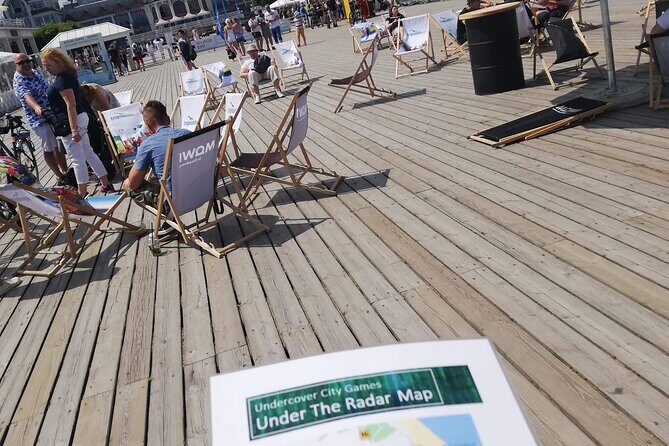
Undercover City Games: Gdynia is built for people who like their sightseeing with a job attached. Instead of listening to explanations the whole time, you’re working through a set of stops and clues that point you around the city. In practice, it feels like a light challenge that keeps your brain awake while your feet do the moving.
The biggest win for me is the pacing. You’re not covering an entire day of attractions—you’re getting a focused sampling of Gdynia’s character in about two hours. That makes it a strong first-day option when you’re still learning where things are.
The second win is variety. You hit maritime landmarks, a cultural venue, and open-air city spaces like streets, a plaza, and a square. That mix matters because it gives you both photo moments and quick breaks without turning the whole experience into a museum shuffle.
You can also read our reviews of more city tours in Gdansk


Price and Value: What $25.72 Buys You
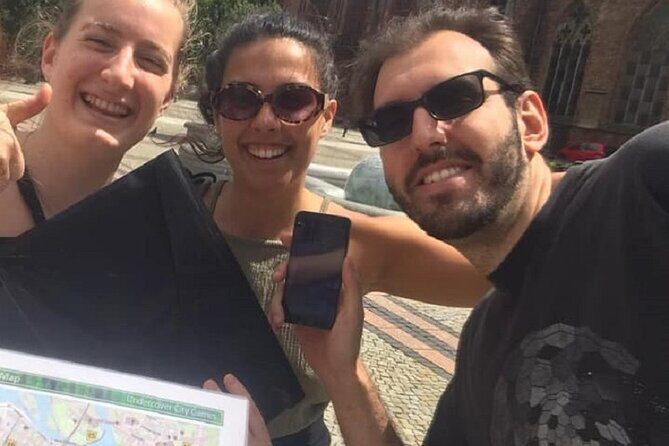
At $25.72 per person, the value is less about paying for entrances and more about paying for a guided-feeling route. The tour’s structure gives you momentum: you know where to go next, how long the stop windows are, and when you’ll be wrapping up back at the start.
Here’s the practical catch: several stops list admission as not included. So if you plan to go inside each museum or ship facility, you may spend more than the base ticket. If you’re happy treating some locations as exterior/photo stops, you can keep costs tight.
Also, this is typically booked about 12 days in advance on average. That tells me it’s not a last-minute-only activity. If you’re traveling at a busy time, grab your slot early so you’re not hunting around for the right date.
Where It Starts: Fountainskwer Kościuszki as Your Reset Point
Your meeting point is Fountainskwer Kościuszki, Gdynia, and the experience ends back at that same spot. I like this setup because you don’t have to worry about finishing somewhere random where you need to backtrack or re-orient.
It also helps with logistics for families and groups. If someone needs a restroom break or a snack, you’re close to a familiar location you can use as a mental anchor. For a short, game-style outing, that matters more than people think.
Because it’s near public transportation, you can also plug it into a day of other sights. You’re not stuck with an all-day commitment just to reach your starting point.
How the Game Feels on the Ground (Mobile Ticket Included)
This is handled via a mobile ticket and is offered in English. Based on the way people talk about the experience, it runs through an app on your phone, and you’ll likely interact with prompts as you go from one stop to the next.
That phone-based element is part of why the format works for teens. It gives you something to do besides stare at buildings and wait for the next instruction. It turns the route into a challenge you can solve at your own speed within each stop window.
One more real-life note: you’ll want your phone charged. Not because the tour data says you need it for everything, but because game-style activities work best when you’re not fighting battery life mid-mission.
Stop 1: ORP Blyskawica (Okret Muzeum) and the Case of the Maritime First Impression

The first stop is Okret Muzeum ORP Blyskawica. It’s listed as about 5 minutes, and admission is not included—so plan to treat this as either a quick look or a choice point: pay to go in, or observe from outside and move on with the game.
The ship name matters. ORP Blyskawica is the kind of place where you can get a real sense of maritime life even if you don’t go deep inside. Starting here is smart because it sets a theme right away. Within minutes, you’re in a different mental category than typical city sights.
Drawback to consider: because admission isn’t included, the stop can feel like a tease if you were hoping every stop would be fully covered. If you’re traveling on a tight budget, decide early which museums are worth entrance fees and which ones you’ll view quickly.




Stop 2: Musical Theatre of Danuta Baduszkowa (A Culture Stop, Not a Classroom)
Next up is Musical Theatre of Danuta Baduszkowa in Gdynia, also about 5 minutes, with admission not included. This is a culture stop designed to break up the maritime theme and give the route a different texture.
The short time window works here. You’re not asked to sit through anything long. You’re there for the stop itself—its presence in the city, its exterior, and whatever the game prompts you to notice while you pass through.
If you’re the kind of traveler who loves architecture and public buildings, this stop gives you something to look at without demanding a ticket. If you were hoping for a full performance experience, you’ll probably need to plan that separately.
Stop 3: Swietojanska Street (Free Mission Time on a Real City Block)
Stop 3 is Swietojanska Street, around 10 minutes, and it’s listed as free. This is the part of the route that feels most like normal city wandering—shopfronts, street life, and a stretch where you can slow down and still feel like you’re making progress.
Free street time is valuable because it keeps the tour from turning into a string of paid entrances. You can enjoy it even if you skip indoor admission at the ship or museum stops.
This is also where I’d suggest you use the “game eyes” approach. Don’t just walk. Look for details that match the prompts. Street missions reward curiosity more than speed.
Stop 4: Plaza SrodmieScie (Another Free Break With Big Flexibility)
Then you move to Plaza SrodmieScie, again about 10 minutes, also listed as free. In a short two-hour game, a plaza stop is a gift: open space makes it easier to regroup, take photos without squeezing through crowds, and reset your bearings.
If you’re traveling with a group that includes mixed interests—history fans, teens, people who just want views—this kind of open stop usually keeps everyone calmer. It gives you breathing room while the game continues.
The main consideration is just time. Even though it’s free, it’s still part of a timed route, so don’t plan to linger too long. Treat it like a quick win, then move on.
Stop 5: Dar Pomorza (Oddzial Centralnego Muzeum Morskiego) and the Museum-Entry Decision
Stop 5 is Dar Pomorza – Oddzial Centralnego Muzeum Morskiego, about 5 minutes, with admission not included. Like the ORP Blyskawica stop, this is another maritime anchor—except here you’re faced with the same money question.
If you’re someone who likes ships and maritime museums, this could be one of your best value-add stops. But if you’re skipping entrances, it becomes a short exterior pass that still fits the game flow.
I like having two maritime stops so close together. Even if you don’t go inside, you get a clearer sense of why Gdynia’s waterfront identity matters. It turns a theme into something you can actually compare.
Stop 6: Kosciuszki Square (15 Minutes of Finish-Line Energy)
Your final stop is Kosciuszki Square, about 15 minutes, listed as free, and then the activity ends back at the meeting point. This is your longest segment in the route, which makes sense: it’s the decompression moment and the natural place to collect yourself before heading out.
Fifteen minutes is enough time to take a few photos, finish any last game prompts, and not feel rushed. If you’ve walked faster than you planned earlier, this stop can balance the day out.
I also find squares are where you can judge the tour’s pacing. If you finish here feeling good—no sprinting, no stress—that’s a sign the route design is working for you.
What You’ll Get Beyond the Stops: The Real Point of the Game
The stops are the map, but the experience is the way you move through them. The game format forces you to pay attention in small chunks. That tends to make the city feel more memorable than a standard list of attractions, especially for people who zone out during long explanations.
This style is especially friendly for groups. When everyone is working on different clues, you get more shared laughs and less “are we there yet?” energy. That kind of interaction is a big part of why people recommend this for families with teens.
It’s also a nice option if you like the idea of culture but don’t want to commit to a full museum session. You can pick and choose how deep to go at the stops where admission isn’t included.
The Walking Pace and Who Should Consider (or Skip) This
This is not billed as a wheelchair-level or very slow sightseeing stroll. It’s marked as not recommended for anyone with serious problems walking. I’d treat that as a clear signal to consider the route a moderate walk with multiple short stops.
On the other hand, it’s “most travelers can participate.” Service animals are allowed, and the route is near public transportation. So if you’re generally mobile and just need to avoid anything extreme, you should be fine.
If you’re traveling with older adults or someone who gets tired quickly, I’d plan extra buffer time. Even though each stop is short, the rhythm adds up.
Weather Matters: Plan for a Flexible Day
This experience requires good weather. If conditions are poor, you’ll be offered a different date or a full refund. For a two-hour outdoor-focused route with multiple stops, that makes sense.
My practical advice: don’t schedule this as your only backup activity. Put it on a day where you can shift plans without stress. If the sky clears later, you’ll still have options.
Group Size: Why a Cap of 100 Can Feel Better
The maximum is 100 travelers. That number is big enough that the tour can run regularly, but small enough that it usually doesn’t turn into a giant stampede.
In a clue-based city game, crowding can slow you down. A cap helps with flow, especially at tighter spots like theater or ship-adjacent areas where people may gather to read prompts.
Should You Book Undercover City Games: Gdynia?
I think this is a smart booking if you want a short, engaging way to see Gdynia without turning the day into a long guided lecture. The English mobile format is a plus, the route keeps you moving, and the free street/plaza/square stops help keep costs from ballooning.
You should book if:
- You’re traveling with teens and want them to stay interested.
- You like doing a bit of problem-solving while you explore.
- You want a two-hour plan that doesn’t eat your entire day.
- You’re okay making selective museum choices since admission isn’t included for some stops.
You might skip or choose another option if:
- Walking is difficult for you, even with short stops.
- You expect every location to be fully included with entry tickets.
- You hate phone-based activities and prefer purely guided or purely passive sightseeing.
If you want a fun, manageable way to get bearings fast and connect maritime Gdynia with city streets, this one fits the bill.
FAQ
How long is Undercover City Games: Gdynia?
It lasts about 2 hours.
What is the meeting point for the tour?
The experience starts at Fountainskwer Kościuszki, Gdynia, Poland.
Where does the tour end?
It ends back at the same meeting point.
Is the experience offered in English?
Yes, it’s offered in English.
Is admission included for all stops?
No. Some stops list admission as not included (like the ship and theatre stops), while street/plaza/square stops are listed as free.
How big is the group?
There’s a maximum of 100 travelers.
Do I need a mobile ticket?
Yes, the experience uses a mobile ticket.
Is the activity suitable for people with mobility issues?
It’s not recommended for anyone with serious problems walking.
Is service animal access allowed?
Yes, service animals are allowed.
What happens if the weather is poor?
The experience requires good weather. If canceled due to poor weather, you’ll be offered a different date or a full refund.