REVIEW · GDANSK
Gdansk Old Town 2-Hour Walking Tour
Book on GetYourGuide →Operated by Tours in Gdansk - Local Tour Operator · Bookable on GetYourGuide
Gdańsk hits the highlights fast. This 2-hour private walk keeps you moving through the most photogenic core of the Old Town, with St. Mary’s Church and Neptune Fountain as anchor stops. I really like how the route strings together Gothic, Renaissance, and Mannerist buildings without making you slog through long detours, and I also like that the guide ties each landmark to the city’s trade and power story.
One thing to consider: the walk is compact and tightly focused on the Old Town center, so if you want a wider sweep or more time in each square, two hours can feel like just scratching the surface. Audio and pacing can also matter on street tours, so pick a position where you can clearly hear the guide.
In This Review
- Key points to know before you go
- Why a 2-hour Gdańsk Old Town walk is the smart move
- Entering through Brama Wyżynna: the best way to start in the Old Town
- Golden Gate and the city’s fortifications: from defense to direction
- Torture Chamber: history that doesn’t try to be comfortable
- Upland Gate and the Royal Way: how the city presented itself
- Long Market and Town Hall: Neptune Fountain and civic pride
- Motława River and The Crane: Hansa trade in brick and iron
- St. Mary’s Church and Amber Galleries: a visual break that still teaches
- Ending at the Great Armoury: Renaissance drama in the final minutes
- Price and value: what you’re paying for at $167 per group
- Pace and group setup: private means you control the flow
- Practical advice for getting more from each stop
- Should you book this Gdańsk Old Town 2-hour walking tour?
- FAQ
- FAQ
- How long is the Gdańsk Old Town walking tour?
- Where does the tour start?
- What is included in the price?
- Is the tour group private?
- What languages are available?
- Are there any extra entrance fees?
- Can I choose my own start time?
- Is there a cancellation option if plans change?
Key points to know before you go
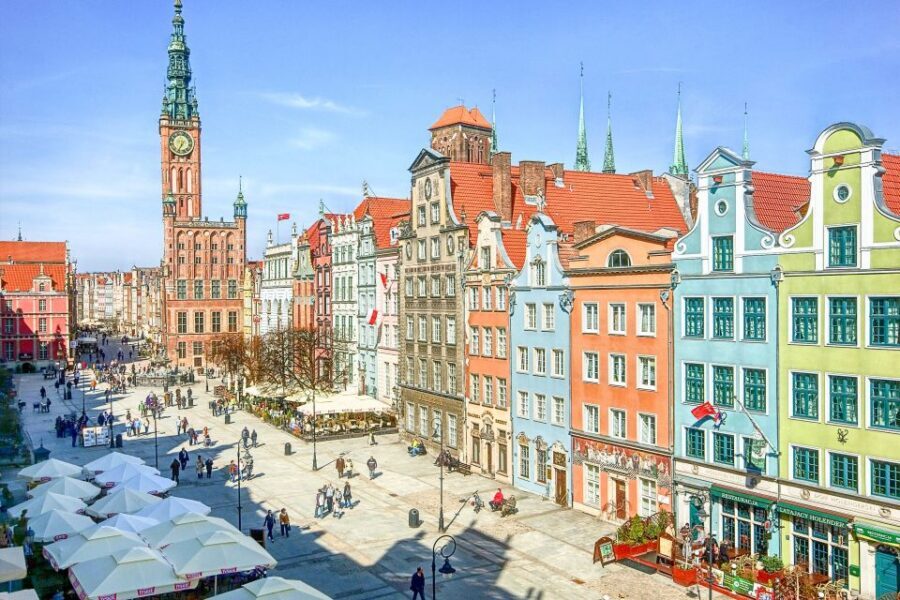
- Golden Gate start: begin right at a former fortification entrance and work inward
- Torture Chamber stop: a quick but heavy checkpoint on the city’s harsher side
- Neptune Fountain focus: the Town Hall area gets explained in context
- Motława River + The Crane: see why Hansa-era trade shaped Gdańsk
- St. Mary’s Street and Amber Galleries: a fun visual break along the way
- Renaissance finish at the Great Armoury: end with one of the city’s most impressive façades
Why a 2-hour Gdańsk Old Town walk is the smart move
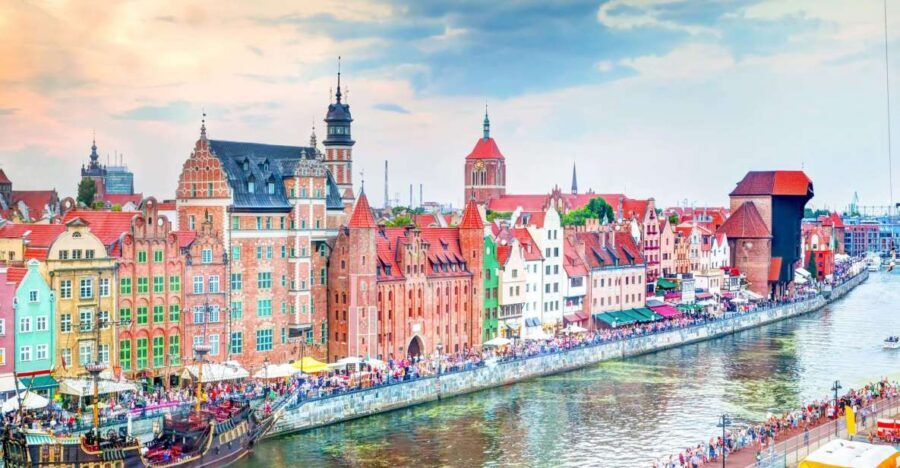
Gdańsk can feel like a lot—beautiful streets, complicated history, and plenty of tempting cafés. This tour works because it’s built for decision-makers. You get a concentrated look at the Old Town’s most recognizable architecture and public spaces in about two hours, guided by someone who can connect the dots while you’re still standing in front of the buildings.
What you’ll like most is the variety that happens in a short distance. You pass medieval fortifications, Hansa-era trading power, and big Renaissance statements like the Great Armoury. Along the way, the guide’s stories give you a sense of why these places were here and how the city got rebuilt into what you see today.
You can also read our reviews of more walking tours in Gdansk


Entering through Brama Wyżynna: the best way to start in the Old Town
You meet at Brama Wyżynna / Upland Gate, at the entrance to the Pomerania Tourist Information (Pomorskie Centrum Informacji Turystycznej). This is a practical choice. Starting near a main Old Town entry point means you’re not wandering to find your bearings—you’re already at the edge of the story.
There’s also a short visitor center moment before you head out. You’ll likely use that time to get oriented about the walk and the landmarks coming next. On a tight schedule, that early grounding is valuable because you’ll understand what to look for instead of just taking photos.
Golden Gate and the city’s fortifications: from defense to direction
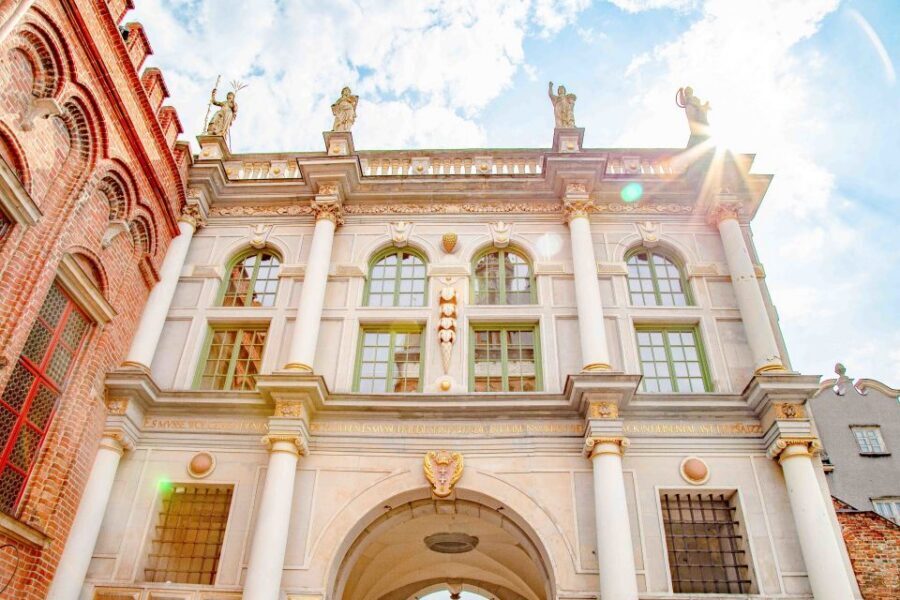
Your first landmark stop is the Golden Gate (Brama Złota), once part of Gdańsk’s old city fortifications. Gates are underrated in walking tours because they’re more than dramatic walls. They’re instructions for how a city protected itself, where authority was placed, and how people moved in and out.
Expect the guide to frame the gate as a threshold. From there, you’re pushed forward into the Old Town core at a smooth walking pace, with each next stop making the last one feel more connected.
If you’re the type who likes to understand symbolism—where power was posted, where traffic funneled, why certain streets matter—this start works well.
Torture Chamber: history that doesn’t try to be comfortable
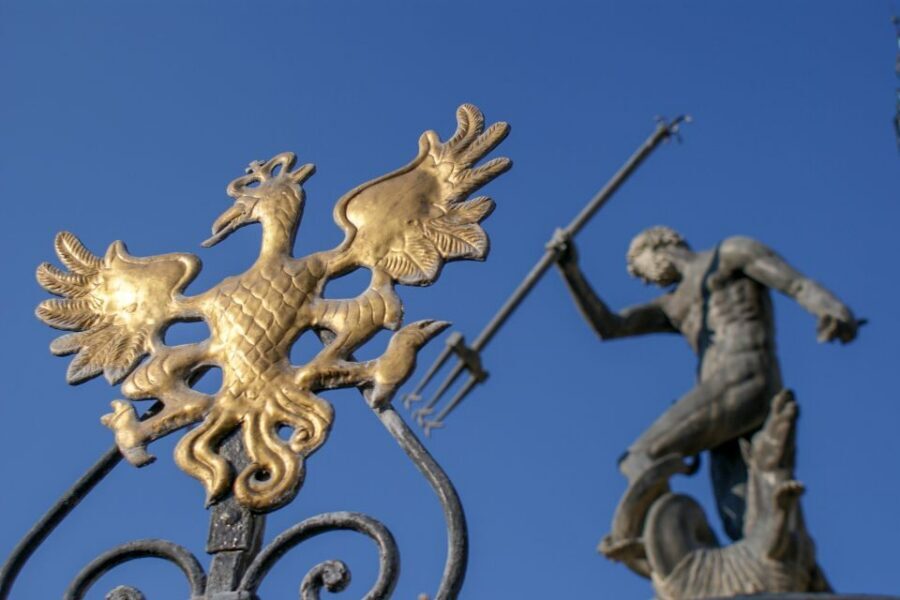
Next comes the Torture Chamber, where executions were carried out until the middle of the 19th century. This isn’t a stop meant for drama. It’s a reality-check stop, and it’s brief enough to keep the mood from overwhelming the rest of the walk.
The value here is context. Gdańsk’s Old Town is often viewed through pretty façades and amber-colored shops. Standing near a place like the Torture Chamber reminds you that cities also ran on fear and enforcement. The guide’s anecdotes can help you connect that grim function to the broader narrative of governance and trade.
If you prefer lighter touring themes, you might mentally prepare for this one. It’s still part of seeing the whole city instead of only the postcard version.
Upland Gate and the Royal Way: how the city presented itself
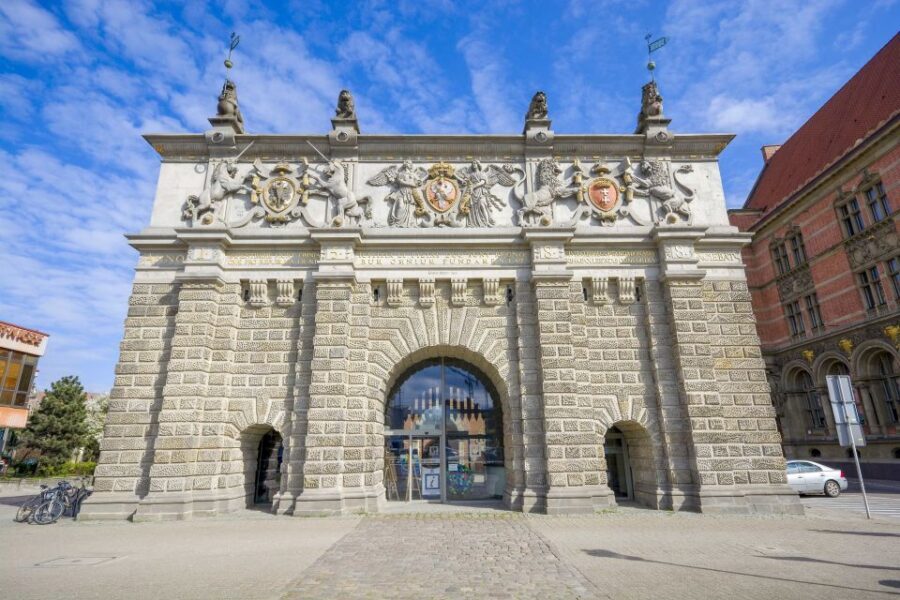
After the fortification story, you’ll reach the 16th-century Upland Gate, described as the main entry point into the Old Town. The guide will explain how the king of Poland would arrive in the city from Warsaw.
This is where the tour begins to feel less like a list of buildings and more like a route with political meaning. You’re not just walking anywhere—you’re following a path that mattered to official processions. That changes how you look at the street plan and the placement of key sites like the market area ahead.
If you like when a guide helps you visualize movement through time, this segment is a highlight.
A few more Gdansk tours and experiences worth a look



Long Market and Town Hall: Neptune Fountain and civic pride
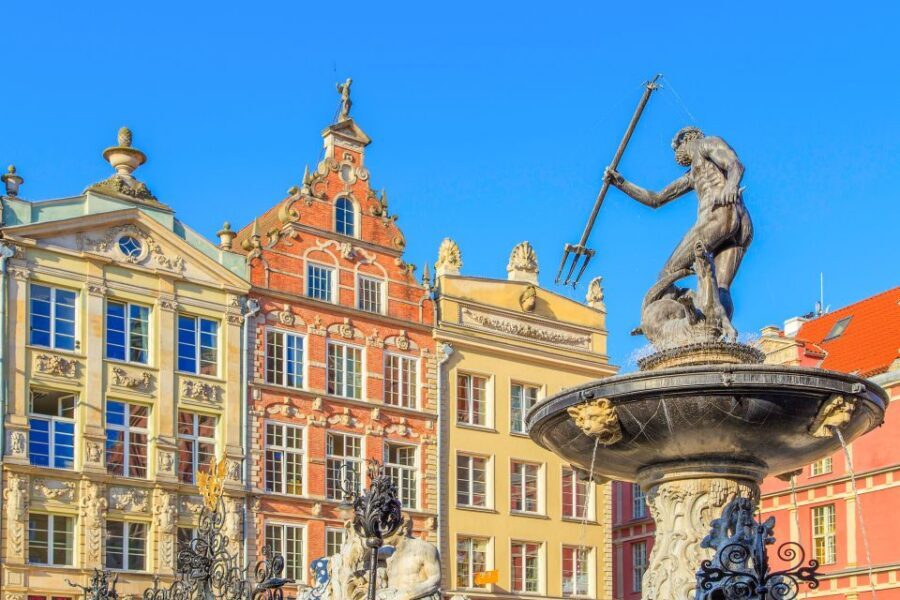
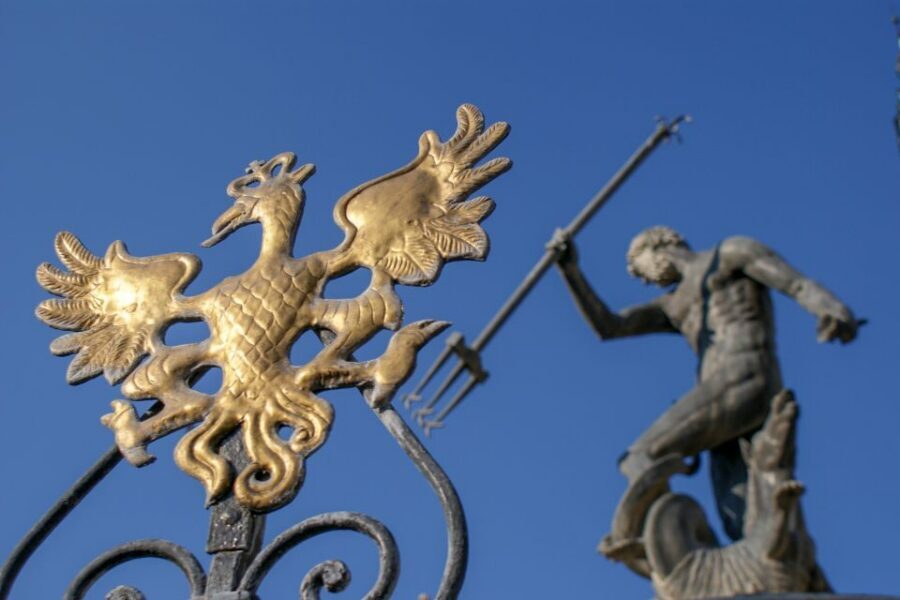
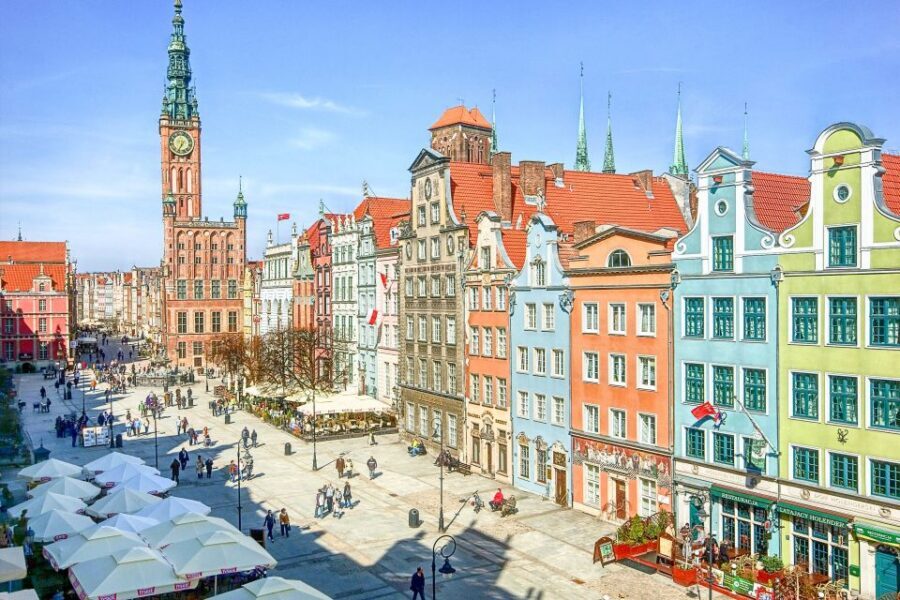
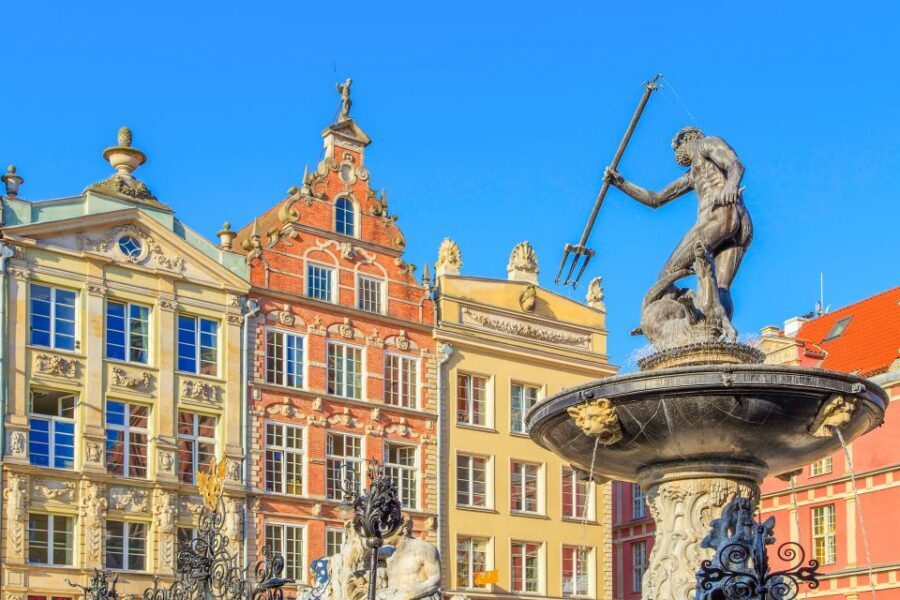
From the Upland Gate, the tour follows the Royal Way to Long Market, then to the Town Hall area. The focal point of Long Market is the Neptune Fountain, featuring the sea god, and this is one of the stops where a good guide really earns their keep.
Expect anecdotes tied to what you’re seeing: why the fountain is there, what it signals about the city’s relationship with the sea, and how it fits into the civic center. The Town Hall stop adds another layer. It’s easier to understand why the area looks “important” when someone explains what power was supposed to look like here.
Practical tip: Long Market is open and crowded at many times of day. If you’re photographing, arrive with patience. The tour timing gives you a guided window, but you may still need to step aside to get a clean shot.
Motława River and The Crane: Hansa trade in brick and iron
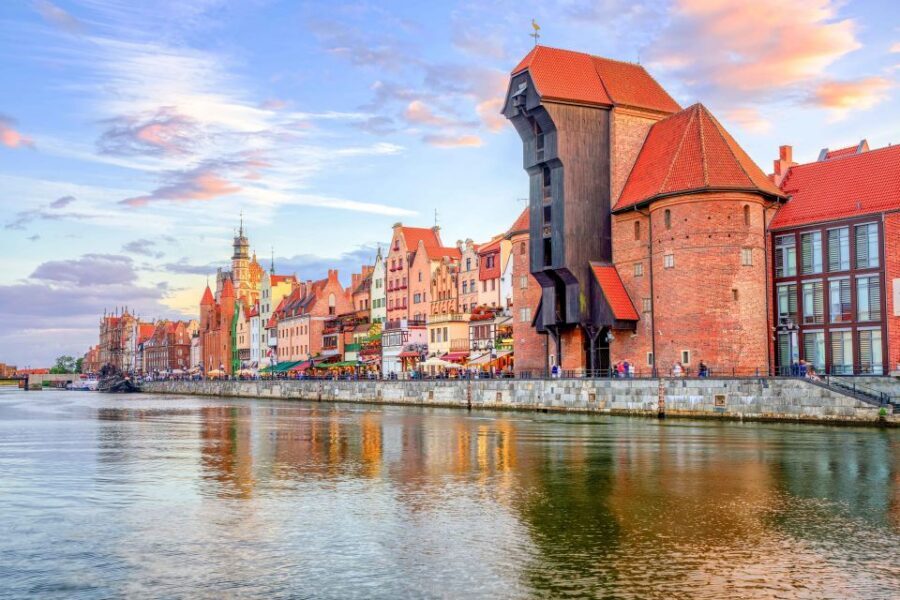
A short stroll brings you to the banks of the Motława River, before visiting The Crane. This is described as the biggest harbor construction of the Hansa Association, and it’s a strong reminder that Gdańsk’s identity is not only artistic—it’s commercial.
Why this stop matters: people often think of Hanseatic trade as abstract history. But when you stand near a major port structure, the story becomes physical. You can connect the city’s wealth, the shipping rhythms, and the built environment that supported commerce.
Expect the guide to connect the crane to the broader idea of a “golden age of trade.” Even if you’re not a history nut, the sheer size of the structures and the river setting make the explanation feel grounded.
St. Mary’s Church and Amber Galleries: a visual break that still teaches
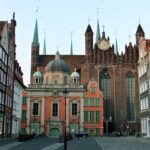
As you continue, you pass St. Mary’s Church, thought to be the largest brick church in the world. Whether you focus on the scale from outside or want a look inside, this is one of the architectural anchors of the walk.
You’ll also stroll down St. Mary’s Street to admire the Amber Galleries. This is where the tour becomes more than history—it becomes experience. Amber is strongly tied to the Baltic region, and the street atmosphere helps you feel Gdańsk’s blend of commerce and culture.
About the church entrance: there’s an optional entrance to St. Mary’s Cathedral for EUR 1 per person. If you’re choosing, consider your priorities:
- If you like interiors and details, add it.
- If you’re more exterior-focused and prefer keeping the pace, it’s fine to pass.
Either way, the guide’s explanation can help you “read” the church façade instead of just admiring it.
Ending at the Great Armoury: Renaissance drama in the final minutes
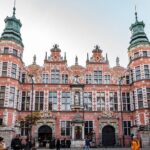
The tour finishes at the Great Armoury, described as one of the finest examples of Renaissance architecture in Gdańsk. Ending here is smart, because the Great Armoury’s style gives you an immediate visual payoff after the medieval and market-area stops.
Renaissance buildings tend to feel different in proportion—more clarity in lines and more confident statement-making. When you end on that kind of architecture, you leave with a distinct last image instead of fading out with another church façade.
It’s also a good landing point for your next choice: you can keep walking independently through nearby streets, or slow down for a coffee with the sense that you already saw the “big story beats.”
Price and value: what you’re paying for at $167 per group
The price is $167 per group up to 10 people for the full 2-hour guided walk. That’s a private-group cost structure, so the value depends on how you’ll use the guide.
Here’s where it tends to make sense:
- You’re traveling as a small group (family or friends) and want shared commentary without splitting into multiple tours.
- You want the guide to slow down or focus on questions—especially around the Torture Chamber, Neptune Fountain, or Hanseatic trade sites.
- You want efficiency. A compact route means you spend your time where the landmarks are instead of navigating.
If you’re solo and paying as a single-person group, it can feel pricey. But if you’re splitting with even a couple of companions, the cost per person becomes much easier to justify for a guided Old Town highlight package.
Also note: the tour includes the private guide. The only clearly listed extra is the optional St. Mary’s Cathedral entrance (EUR 1 per person).
Pace and group setup: private means you control the flow
This is a private group experience, offered in English, German, and Polish. Private touring is especially useful in Old Towns, where streets can get tight and you want the guide to manage movement smoothly.
That said, the route is built to fit into a limited time window, and street tours often mean standing still for photos and listening in between. One potential downside is that some people prefer more time inside each major landmark or a longer walk that spreads beyond the central Old Town core.
If you’re the kind of traveler who gets restless after long stretches of narration, plan for it: bring water, keep comfortable shoes on, and don’t be shy about focusing the guide’s attention on what you care about most.
Practical advice for getting more from each stop
Use these small strategies to make the two hours feel longer in the best way:
- Plan your walking energy. The route is compact, but it still adds up. Comfortable shoes matter more than you think on uneven Old Town streets.
- Ask one “why” question per big stop. Neptune Fountain and The Crane are perfect for this. You’ll get meaning fast.
- Decide early about St. Mary’s Cathedral. If you think you want the interior, you’ll benefit from being mentally ready rather than making the decision at the last minute.
- Photograph with intention. Neptune Fountain and St. Mary’s Church are high-demand photo areas. Give yourself a few tries, not one rushed shot.
Should you book this Gdańsk Old Town 2-hour walking tour?
I’d book it if you want a focused Old Town experience that checks the main boxes quickly: fortifications at the Golden Gate, the darker institutional past at the Torture Chamber, the civic iconography around Long Market and the Town Hall, and the trade story through The Crane on the Motława River. Add in the Amber Galleries and the ending at the Great Armoury, and you get a satisfying arc in just two hours.
I’d think twice if you want a longer, broader exploration that goes beyond the Old Town center, or if you know you dislike street tours that require sustained listening. In that case, this can still be a great start, but you may want to pair it with extra self-guided time afterward.
FAQ
FAQ
How long is the Gdańsk Old Town walking tour?
The tour lasts 2 hours.
Where does the tour start?
Meet at Brama Wyżynna / Upland Gate, at the entrance to Pomerania Tourist Information (Pomorskie Centrum Informacji Turystycznej).
What is included in the price?
A private guide is included.
Is the tour group private?
Yes. It’s a private group, with pricing listed per group up to 10 people.
What languages are available?
The live guide is available in English, German, and Polish.
Are there any extra entrance fees?
St. Mary’s Cathedral has an optional entrance fee of EUR 1 per person.
Can I choose my own start time?
Starting times depend on availability, and you can check availability to see the available times.
Is there a cancellation option if plans change?
Free cancellation is available up to 24 hours in advance for a full refund.