REVIEW · KRAKOW
Krakow Walking Tour with Audioguide on Your Smartphone
Book on Viator →Operated by TouringBee · Bookable on Viator
Krakow’s Old Town tells stories on your phone. This self-guided walk strings together famous medieval sights and meaningful Jewish-history landmarks, with 26 historian-narrated audio tracks you can play on demand. I like that it’s truly self-paced, so you can stop for photos, regroup at corners, and move when you feel like it.
One thing to plan for: you provide your own headphones, and if you’re cold or your battery runs low, the phone job gets harder. That said, you can pause and restart whenever you want, so you’re not stuck with one fixed rhythm.
In This Review
- Key points before you hit the pavement
- Starting at Kraków Barbican: the perfect prelude
- What I like here
- St. Florian’s Gate and Ulica Florianska: your Royal Route warm-up
- Practical tip that matters
- St. Mary’s Basilica and Market Square: where Krakow shows off
- If you want a calmer moment
- Climbing the Town Hall Tower: views and museum stops
- Consideration
- Collegium Maius and Collegium Iuridicum: university Krakow
- Why this section is worth it
- Bishop Erasmus Ciolek Palace and Kanonicza Street: art, clergy, and old streets
- Small drawback to plan for
- Wawel Cathedral and Wawel Castle: royal power on a hill
- Entrance reality check
- Kazimierz begins at Tempel Synagogue: Moorish Revival and modern use
- Okrąglak and zapiekanki: daily life, not only monuments
- Who this suits
- Jan Karski Monument: a pause for conscience
- Szeroka Street and the Old Synagogue: community life across centuries
- Consideration
- Square of Ghettos Heroes: memory in plain sight
- How the smartphone audio experience actually works (and why it helps)
- Small advice that saves time
- Value: why $8.27 can still feel like a win
- Should you book this Kraków walking tour?
- FAQ
- Is this tour available in English?
- How long is the Krakow Walking Tour with audioguide?
- Do I need a human guide?
- Where does the tour start and end?
- Are entrance fees included?
- Do I need to bring headphones?
- What devices and apps are supported?
- Is offline navigation available?
Key points before you hit the pavement
- 26 audio recordings by a professional historian, so the talk matches the sights, not just generic facts
- Offline map + route on GPS, which helps you keep moving without constantly hunting for street names
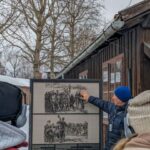
- Illustrations to spot landmarks, useful at turns where everything looks similar
- No human guide on-site, so your timing is yours from start to finish
- Smartphone souvenir photos are built into the experience, which makes the walk feel more personal
- Walking route only needs no paid entry fee, but interiors can still have tickets you’ll pay separately
Starting at Kraków Barbican: the perfect prelude
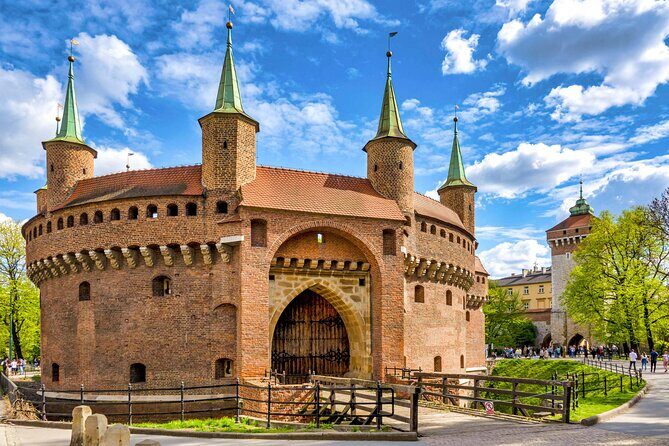
You’ll begin at the Kraków Barbican (Basztowa 30-547 Kraków). It’s a strong start: this medieval circular fortification, with thick brick walls and seven turrets, gives you the right mental picture for why Krakow was once walled and defended. If you’ve never seen the city’s “military past” in physical form, the Barbican makes it instantly real.
Because there’s no guide waiting for you, the audioguide is doing the heavy lifting right away. When you press play, you get the context while your eyes are on the architecture. That’s one of the smartest parts of this format. You don’t have to remember facts later—you’re collecting them while standing where they happened.
You can also read our reviews of more walking tours in Krakow

What I like here
I like the way the Barbican sets the tone for the rest of the day. It’s also a calm opening before you hit the busiest stretches of the Old Town.
St. Florian’s Gate and Ulica Florianska: your Royal Route warm-up
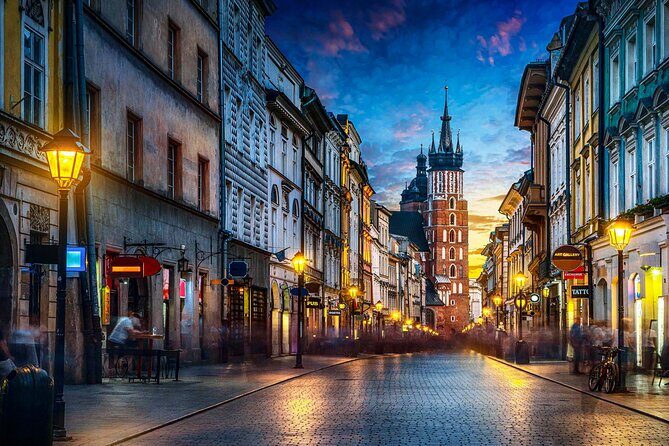
Next comes St. Florian’s Gate, one of Krakow’s most iconic medieval towers. You’ll learn it’s from the 14th century, originally part of the defensive system, and you’ll notice the mix of medieval structure with a Baroque-style roof. It’s tall—about 33.5 meters—and that height is useful as a navigation landmark even before you get the audio facts.
Right after the gate, you walk Ulica Florianska (Florianska Street). This is the classic “Old Town spine” between the gate and the Main Market area. You’ll pass townhouses, shops, and cafés, but the guide helps you read the street like a timeline: medieval layouts on the outside, modern life moving through it on the inside.
Practical tip that matters
Don’t rush this section. It’s easy to treat it like a simple corridor. If you slow down and listen, the gate-to-market route makes more sense as a historic procession path—something the audio framing is built for.
St. Mary’s Basilica and Market Square: where Krakow shows off
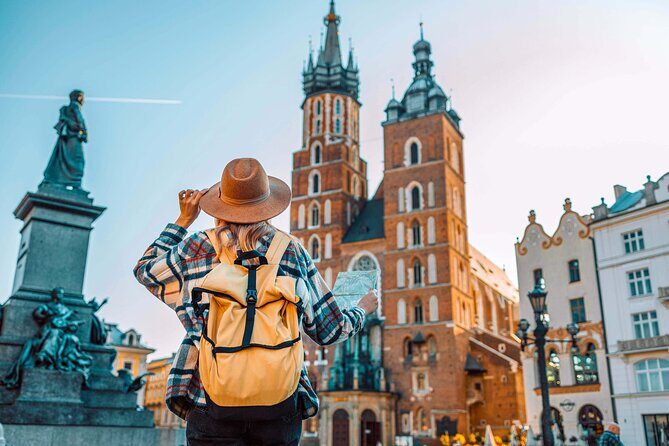
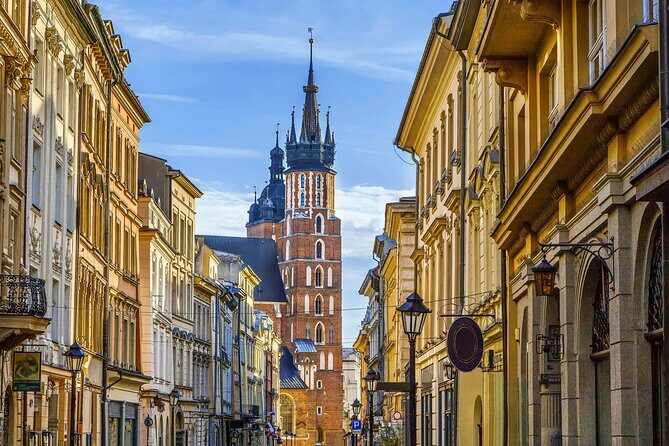
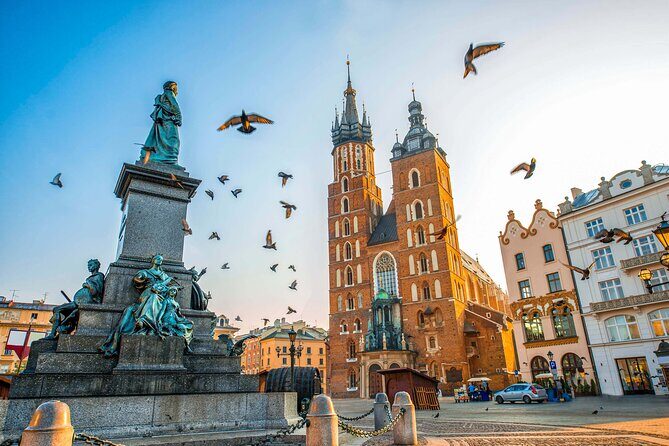
Then you’ll reach St. Mary’s Basilica in the Main Market Square. The twin-towered look is famous for a reason: the basilica is Gothic, dating to the 14th century, and it’s especially known for the inside—particularly the wooden altarpiece by Veit Stoss. Even if you don’t go in right away, the exterior and the square setting help you understand why this place became a civic anchor.
The audio guide also points out the towers: the taller Bugle Tower (with a trumpet call played every hour) and the shorter Bell Tower. Listening while you stand there is oddly satisfying—you start to feel how sound and skyline worked together.
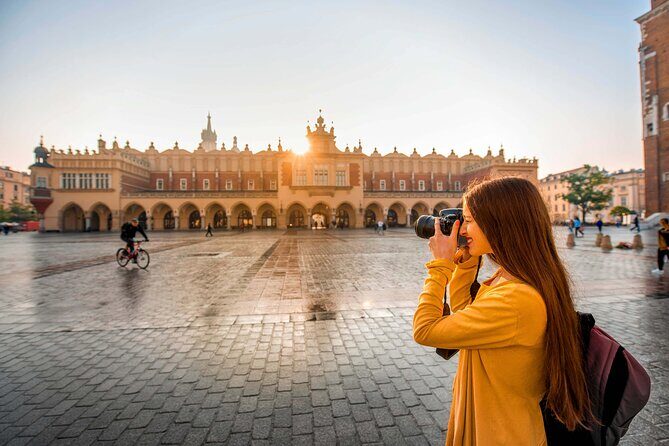
From there, you move into Market Square, Krakow’s beating heart. This is one of Europe’s large medieval town squares, ringed by landmark buildings including the Cloth Hall, the basilica, and the Town Hall Tower. You’ll have street performers and cafés around you, so it’s never quiet. But that noise can work in your favor: you’re watching history live in the same space where it used to host markets and public events.
A few more Krakow tours and experiences worth a look

If you want a calmer moment
Keep an eye out for a natural gap in foot traffic—half an hour after lunch can be lively, but earlier or later often feels smoother. Since the tour is self-guided, you can wait for a break and start again without derailing the route.
Climbing the Town Hall Tower: views and museum stops
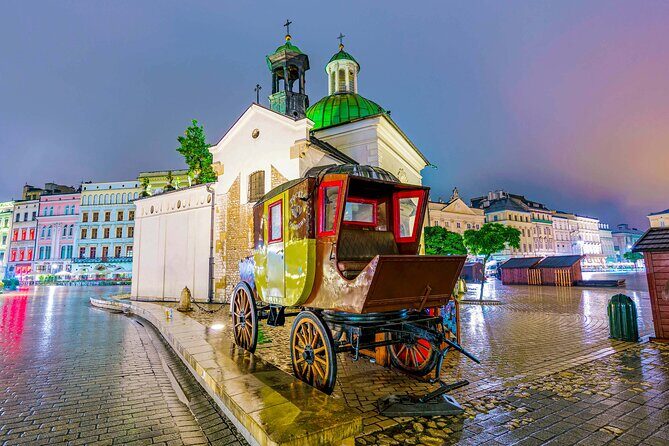
The route brings you up to the Town Hall Tower (70 meters tall). This is the last surviving part of the original 14th-century town hall complex, and the audio notes how the climb ties into Krakow’s civic life—not just the postcard view.
If you choose to go up and look at the city from above, you’ll connect the dots between the Old Town streets you just walked and the larger layout of the area. The tower also includes exhibitions about Krakow’s history, which gives your walk a more “structured” feeling compared with the outdoor stretches.
Consideration
Climbing means stairs and time. The tour runs about 2 hours 30 minutes total (approx.), so if you want to move quickly, prioritize outdoor listening first and decide on the tower only if you feel like trading speed for height.
Collegium Maius and Collegium Iuridicum: university Krakow
Now you shift from medieval gates and civic squares to Jagiellonian University—the academic side of Krakow. The first big stop is Collegium Maius, described as the oldest building of the university, founded in the 14th century. You’ll be guided through its courtyards and medieval arcades, and you’ll get a sense of why this place feels like an active museum for students and visitors.
Then the route continues to Collegium Iuridicum. The guide frames it as part of one of Europe’s oldest universities, founded in 1364. You’ll learn the institution has educated major minds, including Nicolaus Copernicus. Even when you’re not inside a lecture hall, the focus on architecture and academic tradition makes the area feel different from the commercial Old Town around Market Square.
Why this section is worth it
This is one of the most distinctive pieces of the route because it breaks the typical “church and castle loop.” If you like seeing how power and ideas shaped a city, this part pays off.
Bishop Erasmus Ciolek Palace and Kanonicza Street: art, clergy, and old streets
Next, you’ll visit the Palace of Bishop Erasmus Ciolek. This early 16th-century Renaissance palace now houses a branch of the National Museum. The audio points you toward what to look for: opulent rooms, Polish art collections, and the way the building itself reflects ecclesiastical influence.
After that, you walk Ulica Kanonicza (Kanonicza Street). This cobblestone street is calmer in tone than the Market Square zone. The guide emphasizes that it’s historically tied to clergy and scholars, and you’ll see preserved Renaissance and Baroque townhouses along the way. It’s a good “slow street” moment—like stepping into an older, less commercial lane.
Small drawback to plan for
Old Town walking means uneven surfaces. If you’re wearing flimsy shoes, you’ll feel it here more than in the wider streets.
Wawel Cathedral and Wawel Castle: royal power on a hill
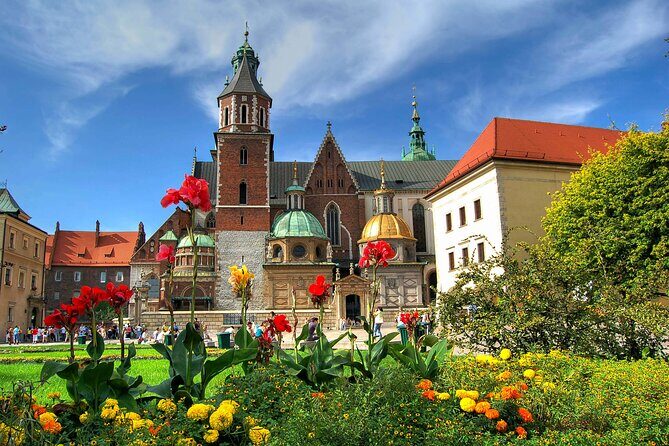
Then the route climbs into the big finale zone: Wawel Hill. First is Wawel Cathedral—a Gothic masterpiece dating to the 14th century. The audio stresses its role in coronations, weddings, and funerals of Polish kings and queens. Inside, you’ll be pointed toward notable features like the Sigismund Bell and the Royal Tombs, along with the cathedral museum and sacred artifacts.
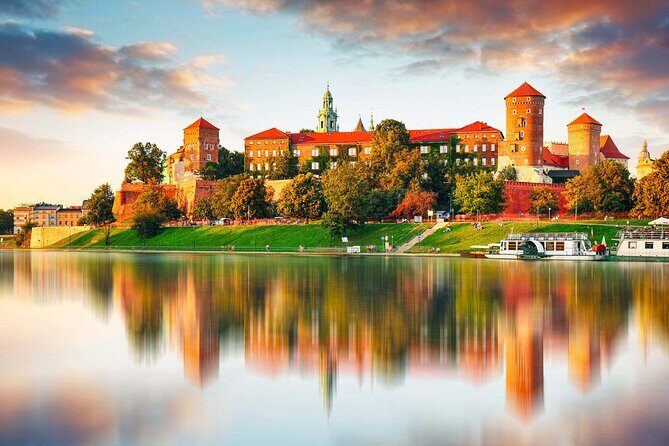
From the cathedral you move to Wawel Castle, a UNESCO World Heritage site. The guide sets expectations for what you’ll see: state rooms, Renaissance courtyards, Royal Apartments, and the Crown Treasury and Armory. You’ll also get the view angle—Wawel looks out toward the Vistula River, and the audio makes the geography feel part of the story, not just a background.
Entrance reality check
The route is built as a walking experience, and it says no routes require an entry fee. Still, the listed places are big-ticket interiors. If you want to go inside specific rooms, you should expect that entrance fees are not included in the tour price.
Kazimierz begins at Tempel Synagogue: Moorish Revival and modern use
After the royal hill, your route shifts into Kazimierz, Krakow’s Jewish district. A key first stop is the Tempel Synagogue, built in 1862 and known for Moorish Revival design cues. The audioguide highlights the decorated interior, including gilded stuccoes, intricate woodwork, and stained glass.
The guide also notes that the synagogue now hosts concerts, cultural events, and religious services. That matters: it’s not just history behind glass. It’s a living building with a present-day role, and the audio helps you understand that continuity.
Okrąglak and zapiekanki: daily life, not only monuments
Next up is Okrąglak, the circular market hall in Kazimierz. You’ll learn it was built in the early 20th century and still keeps that market atmosphere. This is the part of the day where the audioguide turns from major architecture to everyday culture.
The big practical draw is food. The guide points out that Okrąglak is popular for zapiekanki, open-faced Polish sandwiches. Even if you just grab a bite and move on, it’s a smart reset after more heavy-hitting sites.
Who this suits
If you like tours that include one or two “normal life” stops—places locals actually use—this section feels balanced.
Jan Karski Monument: a pause for conscience
Then you’ll reach the Statue of Jan Karski near Planty Park. The audio frames him as a WWII resistance fighter and diplomat whose reports informed the Allies about the Holocaust. The statue is described as Karski seated with a book, which makes the moment less dramatic and more reflective.
This is one of those stops where you might feel like slowing down, turning the volume up, and letting it land. The route is designed to keep moving, but this is the spot where a short pause feels right.
Szeroka Street and the Old Synagogue: community life across centuries
From there, you walk Szeroka Street, described as the cultural and historical heart of Kazimierz. The guide emphasizes Jewish heritage and highlights landmarks such as the Old Synagogue, the Remuh Synagogue, and the adjacent cemetery area.
Then the route focuses on the Old Synagogue, dating back to the 15th century and noted as one of the oldest surviving synagogues in Poland. The audio points to what you’ll find inside now: a museum setting with artifacts, historical documents, and exhibitions about Jewish traditions and community life.
Consideration
This part can feel emotionally heavy, especially if you’re sensitive to historical topics. The self-guided format helps—you can linger longer, or you can take a break when you need it.
Square of Ghettos Heroes: memory in plain sight
The final Kazimierz stop is the Square of Ghettos Heroes in Podgórze. The audioguide describes it as the heart of the Krakow Ghetto during WWII, and it points out the memorial design: 70 empty metal chairs representing the absence of thousands of Jews who lived there.
There’s also mention of a small memorial plaque and exhibits recounting stories of bravery and loss. This isn’t a quick photo-op. If you want the route to end well, spend a few extra minutes here even if you’re tempted to hurry to dinner.
How the smartphone audio experience actually works (and why it helps)
This isn’t a guided tour with a person leading you. It’s a smartphone audioguide you run yourself.
Here’s what you should expect:
- You’ll download the tour’s app for iPhone and Android.
- You’ll activate your purchase, then follow the route on the app map.
- You get an offline map plus GPS-style navigation.
- You receive illustrations to help you identify landmarks.
- You can use pause and restart whenever you want.
- You bring your own headphones (not included).
That “pause/restart” freedom is the main advantage of this setup. If the architecture is calling your name, you can linger. If you missed a turn, you can reset without feeling rushed by a group.
Small advice that saves time
In cold or wet weather, phone screens work fine but batteries can drop faster. Also, the best way to avoid navigation frustration is to be ready before you start—download the route and check GPS early.
Value: why $8.27 can still feel like a win
The price is listed at $8.27 per person for about 2 hours 30 minutes. For that, you’re paying for audio content, route support, and a guided narrative spine across major areas of Krakow.
You’re not paying for a human guide. You’re not paying for museum or castle tickets either. But for the overall “how do I connect these places into a meaningful walk?” part, the audio historian work and offline navigation are the value engine.
If you’re the type who enjoys learning while walking (and you don’t mind carrying a phone), this is a low-cost way to get structure without losing control.
Should you book this Kraków walking tour?
Book it if you want:
- A self-paced walk through Old Town and Kazimierz
- Historian narration that gives you context at each stop
- Offline route support and landmark illustrations
- A tour that covers both big landmarks like Wawel and smaller streets like Kanonicza and Szeroka
Skip it or consider another format if:
- You strongly prefer a live guide answering questions on the spot
- You don’t want to rely on your own phone, headphones, and battery
- You’re visiting with limited mobility for stairs or uneven cobblestones
One more reality check: this route is meant for walking in the streets. On cold days—especially with wind—you’ll enjoy it more with warm layers and a phone battery you trust.
FAQ
Is this tour available in English?
Yes. The experience is offered in English.
How long is the Krakow Walking Tour with audioguide?
It’s about 2 hours 30 minutes (approx.).
Do I need a human guide?
No. This is a self-guided tour with no human guide at the meeting point.
Where does the tour start and end?
It starts at Kraków Barbican, Basztowa, 30-547 Kraków, Poland and ends back at the same meeting point.
Are entrance fees included?
No. Entrance fee/tickets are not included. The walking routes themselves are described as not requiring an entry fee.
Do I need to bring headphones?
Yes. Smartphones and headphones are not included, so you’ll need your own headphones.
What devices and apps are supported?
The audio guide app works on iPhone and Android.
Is offline navigation available?
Yes. You get an offline map with the route for easy GPS navigation.