REVIEW · GDANSK
Dumpling Trip in Gdansk
Book on Viator →Operated by Rosotravel Tours Gdansk · Bookable on Viator
Food tours are never boring in Gdańsk. This one focuses on Poland’s most famous dumplings, pierogi, with time to try a range of fillings across four central-city stops. I love that it’s structured like a tasting route, not a long lecture, and you get historical and cultural context from the guide as you walk. One consideration: this is a proper eating plan, and if you start too hungry-less than ideal for your schedule—you’ll feel the “we feed you a lot” rule fast.
My favorite part is the variety: you’ll sample classic pierogi and also the less-predictable ones with fruit, cream, duck, or game-style fillings. The walk also helps you see old-town Gdańsk at street level, including alleys and picture-ready corners, while you’re hunting your next bite. The only drawback is simple math: at 3 hours and change, you’ll want comfortable shoes and an appetite that can handle multiple stops without slowing down.
kFiaciarnia Krewetka is where the route kicks off, and the guide takes you from there through the most central areas of the city. In one set of experiences, the guide change still worked out because Karina (a name that shows up) was praised for making the walk feel fun and easy. That’s the vibe here: practical, food-first, with just enough story to make each bite make sense.
In This Review
- Key Highlights You’ll Feel on the Street
- Pierogi in Gdańsk: What This 3-Hour Walking Tasting Really Gives You
- Meeting Up in Gdańsk Old Town Without Guesswork
- Starting at kFiaciarnia Krewetka: Your First Bite Sets the Tone
- The Big Pierogi Lesson: Singular vs. Plural, and Why It Matters
- Four Venues, Many Fillings: What You’ll Taste Along the Route
- Old Town Walking That Feels Like Part of the Meal
- What “Big Portions” Means for Your Schedule and Your Stomach
- Guide Power: Why the Stories Make the Food Stick
- English-Friendly and Easy to Join
- Price and Value: Is $195.51 Worth It?
- Who This Dumpling Trip Suits Best
- Should You Book the Dumpling Trip in Gdańsk?
- FAQ
- How long is the Dumpling Trip in Gdańsk?
- Where does the tour start?
- How many places will we visit for pierogi?
- What pierogi flavors should I expect to try?
- Is the tour in English?
- How much does the tour cost?
- Is the tour ticket digital?
- Is there an admission ticket fee?
- Is transport included?
- What is the cancellation policy?
Key Highlights You’ll Feel on the Street

- Four pierogi venues in about 3 hours, all in the central city area
- A filling sampler that covers sauerkraut-and-mushroom styles plus berry-and-cream and even duck or game options
- Old Town walking route, built around seeing Gdańsk’s streets while you eat
- Guide-led tips on where and what to eat next, so you can keep the momentum after the tour
- An eating plan that rewards skipping lunch, because pierogi quantity is part of the culture
- English-guided group experience with a private setup for just your group
Pierogi in Gdańsk: What This 3-Hour Walking Tasting Really Gives You
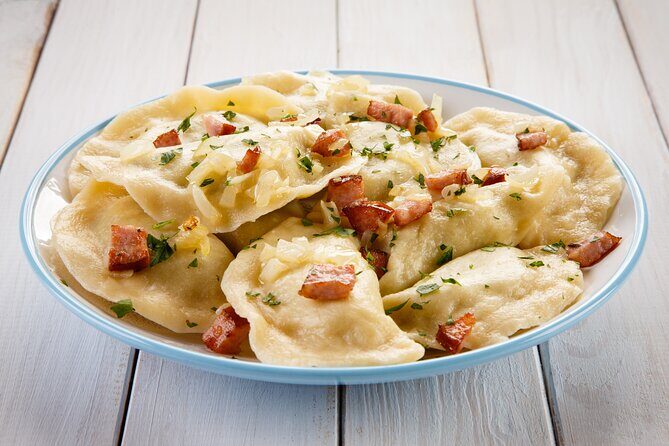
If you’re even mildly curious about Polish food, pierogi are the quickest way to understand the country’s comfort-food brain. This tour takes the idea of dumplings and turns it into a guided sampler: you don’t just try one type and move on. You eat your way through a range of fillings, then you walk it off through old-town streets.
What makes it work is the pacing. You’re not stuck in one room with a lineup of samples; you’re moving between four venues, which keeps the experience lively and helps you stay oriented in Gdańsk. And because the guide adds historical and cultural information along the way, the dumplings don’t feel random—they connect to traditions you can actually remember.
The other smart part is the promise of choice. You’re meant to find your favorite filling, whether that’s the savory classics or the sweeter-leaning options like berries and cream.
You can also read our reviews of more tours and experiences in Gdansk.



Meeting Up in Gdańsk Old Town Without Guesswork
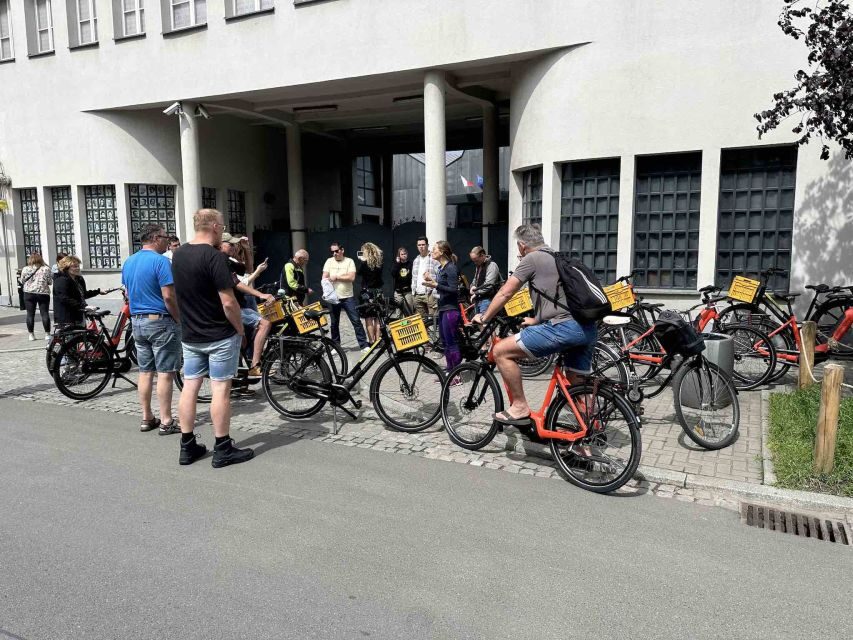
You start in the old-town area at the scheduled time (1:00 pm). The tour information lists a main meeting point as Karmelicka 1, 80-851 Gdańsk, and it also specifies the guide meeting at kFiaciarnia Krewetka, Podwale Grodzkie 8/9. That’s not a contradiction as much as it is a reminder to follow your confirmation message for the exact spot you’re expected to stand.
For the smoothest start, show up a few minutes early, especially if you’re coming by tram or foot. The good news: the tour is described as near public transportation, so you’re not forced into a complicated last-mile plan.
This is also set up as a private tour/activity for your group only. That usually means less awkwardness and more flexibility with questions—handy if you want to ask what to order after you’ve tasted everything.
Starting at kFiaciarnia Krewetka: Your First Bite Sets the Tone
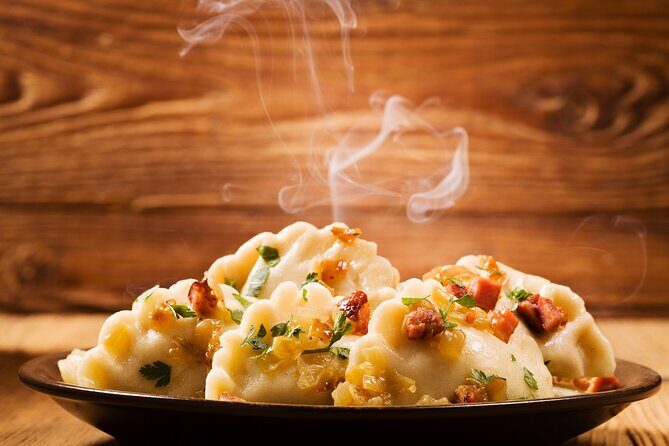
The route begins at kFiaciarnia Krewetka. Even before you count the flavors, this matters because it anchors the trip in a real place, not just a meeting point that later disappears.
From there, the walking portion feeds into the food experience. The guide leads you through old-town Gdańsk—those packed little alleys, the colorful streets, and the overall atmosphere that makes the city feel old without being dusty. It’s the kind of backdrop that turns dumpling tasting into something you can actually picture later.
This first stop is your warm-up, and it’s meant to get you thinking like a dumpling person. You start noticing the differences: what the dough feels like, how the filling holds its flavor, and whether you prefer savory over sweet (or, in classic Polish fashion, whether you end up enjoying both).
The Big Pierogi Lesson: Singular vs. Plural, and Why It Matters

One of the more useful tidbits you’ll hear is a language detail: pierogi is plural. The singular form, pieróg, isn’t used in the same way, partly because pierogi are typically served in sets—more than one dumpling per serving.
That sounds tiny, but it changes how you approach the tour. You’re not just eating a single item. You’re sampling what Gdańsk’s pierogi culture actually looks like in real life: people order, share, and keep eating until they’re satisfied.
And that language point also lines up with the practical advice you’re given about meals. Poland’s host rule is basically: serve enough food to make a table collapse. So the smart move is to treat this tour like your meal, not a snack.
Four Venues, Many Fillings: What You’ll Taste Along the Route
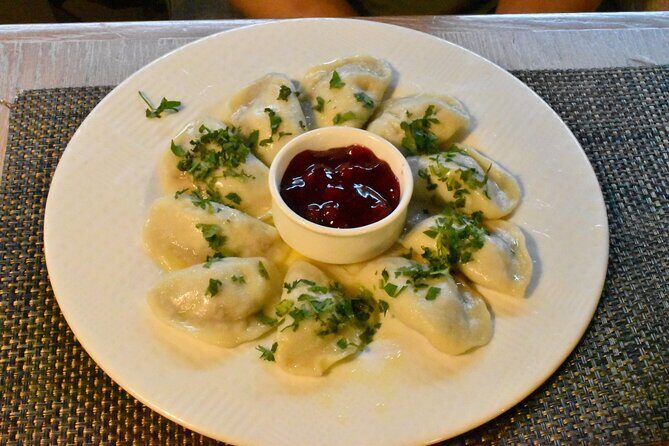
The tour is designed around four delicious venues over about 3 hours, all within the central city area. The walk is intentionally planned so you get a range of pierogi styles, not just repeats of the same filling under different names.
Here are the types you can expect to encounter during the tasting:
- Traditional pierogi filled with forcemeat, plus options that include sauerkraut and mushrooms
- Pierogi with berries and cream, a combination that surprises a lot of people who expected only savory flavors
- Pierogi with duck or game fillings, so you’re not stuck in the usual comfort zone
What I like about this selection is that it covers the basic pierogi idea from multiple angles. Savory fillings teach you the grounded flavors—meatiness, fermented tang, and earthy mushroom depth. Fruit-and-cream teaches you that Polish dumplings can go sweet without feeling like a totally different dish. Duck and game-style options show that pierogi aren’t only “everyday” food; they can also reflect richer traditions.
Also, because you’re tasting at multiple places, you’ll start noticing how each venue handles seasoning and texture. That’s valuable even after the tour, because it helps you order with confidence if you come back.



Old Town Walking That Feels Like Part of the Meal
This isn’t a sit-and-eat tour with a map app in the background. The route is built around old-town Gdańsk, so you’re seeing the city while your guide keeps the story connected to what you’re eating.
You’ll get the sense of Gdańsk as a Baltic city—lots of streets that fold into each other, corners that look good in any weather, and a historic atmosphere that’s easier to understand when you’re walking through it rather than staring at it from a bus window. The tour description specifically frames the stroll as a way to learn the history of the city in the best locations to try true Polish dishes.
One of the biggest advantages of pairing food with walking is timing. If you’re on a tight schedule—like a cruise stop—this kind of format lets you do sightseeing and dining in one block. You’re not doubling your day by hopping between separate activities.
And yes, the walk is part of the fun. In at least one experience, the pairing of the city route plus the dumplings was called out as exactly what worked when time in town was short.
What “Big Portions” Means for Your Schedule and Your Stomach
Here’s the blunt, helpful part: you should go in planning to eat. The tour directly warns you to eat breakfast and skip lunch, or you might not have room for everything. That’s not just a marketing line. It’s the cultural reality of hosting with serious generosity.
So I recommend you treat this like a main event:
- Have breakfast, but keep it light enough that you’re not stuffed
- Avoid lunch beforehand, even if you think you’ll just take a little bite
- Bring water if you know you get thirsty during long walks
The payoff is huge. If you’re properly fueled, you’ll actually enjoy comparing fillings instead of thinking only about comfort. And if you skip lunch like you’re advised, you’ll make it through the four-venue plan without hitting that dumpling wall.
Guide Power: Why the Stories Make the Food Stick

A food tour lives or dies on the guide, and the guide is a major part of this one. You’re promised historical and cultural information, plus insider tips on the best eateries. That’s useful because it turns your taste discoveries into a practical next step.
In particular, Karina is a name that shows up in a highly positive review tied to a last-minute guide change. The key point for you is what people praised: the experience stayed fun, and the guide helped make the walk feel like it had a purpose beyond eating.
If you’re someone who likes to understand what you’re ordering—why a filling exists, how it connects to local traditions—this tour format will land well. If you’re only chasing calories, you’ll still eat well. But the guide approach is what makes the dumplings memorable instead of forgettable.
English-Friendly and Easy to Join
The tour is offered in English, which matters a lot if you want the cultural context without relying on guessing. You’re also told that most travelers can participate, and the meeting-point area is described as near public transportation.
Group setup is also straightforward: it’s private for your group only. Even if you’re traveling with friends, that matters because you won’t be shuffled into a huge crowd.
Mobile ticketing is included as a feature, which typically means less time hunting down paper and more time showing up and starting the walk.
Price and Value: Is $195.51 Worth It?
At $195.51 per person, this isn’t the cheapest way to eat pierogi. But it’s also not priced like a quick casual bite either. The value comes from three things working together: a guided route, multiple tasting stops, and time spent walking through a key part of the city.
Here’s how I’d judge whether it’s worth it for you:
- If you want a guided sampler with insider context, you’re paying for the planning and the expertise.
- If you’re on a short schedule (say, a quick stop in town), you’re buying convenience: sightseeing plus food in one package.
- If you’re the type who likes to order confidently later, the guide tips can save you time and trial-and-error.
If your travel budget is tight and you only want one pierogi meal, you might do better eating on your own. But if you want the experience to feel intentional—four venues, a thoughtful route, and cultural notes—this price can make sense fast.
Who This Dumpling Trip Suits Best
This tour is a great match if you’re:
- A food-first traveler who wants to compare flavors, not just taste one
- Visiting Gdańsk for a short time and want to cover both pierogi and the Old Town streets
- Traveling with people who can handle a walking pace and don’t mind eating more than once during the day
It’s also a smart choice for first-timers to Polish food. Pierogi are recognizable enough that you won’t feel lost, but varied enough that you’ll still be surprised.
Should You Book the Dumpling Trip in Gdańsk?
Book it if you want pierogi as a real experience: multiple fillings, guided stories, and a route that doubles as old-town orientation. The best sign is the built-in advice about skipping lunch—you’ll know the tour expects you to actually eat, so it’s not a tiny “taste and go” setup.
Skip it only if you hate walking, already feel stuffed easily, or you’re hunting the absolute cheapest food option in town. Otherwise, this is exactly the kind of practical, friendly tour that helps you understand a place through the way locals feed you.
If you book, do one thing right: come hungry enough for a proper set of dumplings. Then let the variety do its work.
FAQ
How long is the Dumpling Trip in Gdańsk?
It lasts about 3 hours 10 minutes (approx.).
Where does the tour start?
The tour start point is listed as Karmelicka 1, 80-851 Gdańsk, Poland. The guide also meets at kFiaciarnia Krewetka, Podwale Grodzkie 8/9, Gdańsk.
How many places will we visit for pierogi?
You’ll visit four different places over the course of about three hours.
What pierogi flavors should I expect to try?
The tour includes traditional fillings such as forcemeat, sauerkraut, and mushrooms, plus options like berries and cream, and dumplings filled with duck or game.
Is the tour in English?
Yes, the tour is offered in English.
How much does the tour cost?
The price is $195.51 per person.
Is the tour ticket digital?
Yes, it includes a mobile ticket.
Is there an admission ticket fee?
The tour information lists an admission ticket as free.
Is transport included?
Transport can be arranged on your request.
What is the cancellation policy?
Free cancellation is available up to 24 hours in advance for a full refund. Cancellation changes made less than 24 hours before the start time are not refundable.