REVIEW · KRAKOW
Krakow: Schindler’s Factory & Ghetto Guided Tour
Book on GetYourGuide →Operated by EVENTS MANAGEMENT Sp z o.o. · Bookable on GetYourGuide
Ghetto streets meet a survivor story. This 3-hour Krakow tour pairs Schindler’s Factory with a guided walk through Podgórze, where you’ll see physical reminders of Nazi-occupied life. It’s a focused way to turn names and dates into real places you can stand in and picture.
I especially like the way the museum visit is structured around what Krakow looked like under Nazi occupation, then followed by an outdoor walk that keeps tightening the story. Two things I really appreciate are the professional guidance and the practical headset setup that carries commentary clearly as you move. One caution: the subject matter is heavy, and you’ll also be walking around a historic district for the full 3 hours.
In This Review
- Key things that make this tour worth your time
- Where you meet, what you get, and why the start matters
- Inside Schindler’s Factory: Krakow Under Nazi Occupation
- How guides turn a museum visit into a story you remember
- The Podgórze ghetto walk: what you’ll see and what it means
- Pod Orłem pharmacy: a small stop with a big lesson
- Heroes’ Square and the Empty Chair Monument (68 chairs)
- Price and value: is $58 a fair deal?
- Timing, start times, and how to plan without stress
- Tickets are personalized: bring the right ID
- Languages and audio: what you’ll hear and how you’ll hear it
- Who this tour is best for in Krakow
- Should you book Schindler’s Factory & Ghetto Guided Tour?
- FAQ
- Where does the tour meet?
- How long is the tour?
- What is included in the price?
- What is not included?
- Can I skip the ticket line?
- What languages are available?
- What ID do I need for Schindler’s Factory?
- Are start times fixed?
Key things that make this tour worth your time
- Schindler’s Factory guided visit with expert commentary so you’re not just reading signs
- Headsets for clear audio—a big deal in a museum and on busy streets
- A walk through Podgórze’s ghetto landscape including wall remnants and former dwellings
- Specific stops with strong meaning like the Pod Orłem pharmacy and the Empty Chair Monument
- Guides who bring the chain of events to life using chronological structure and real anecdotes
Where you meet, what you get, and why the start matters
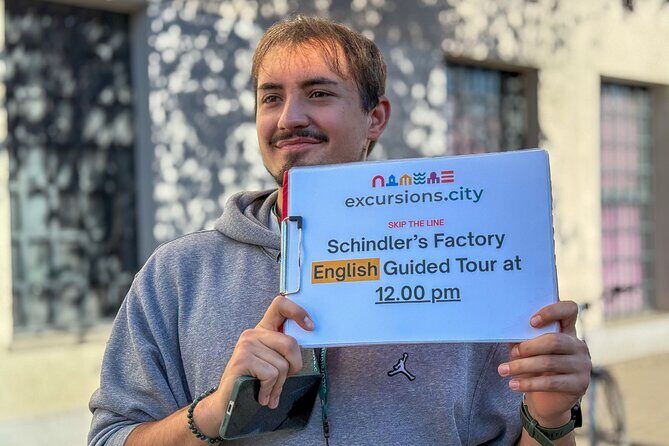
You’ll meet your guide at the main entrance of Schindler’s Factory Museum, in front of the building, with the excursions.city sign. There’s no hotel pickup, so plan to arrive on your own with enough time to get oriented before the group starts.
This tour is built around one smart idea: start with the museum first, then walk the neighborhood while it’s still fresh in your mind. That order helps you connect the exhibition themes—how Nazi occupation worked day to day—to the physical traces you’ll see outside.
You’ll also get tickets to the Schindler’s Factory Museum included, plus a walking tour and a professional guide. And yes, the tour notes say you can skip the ticket line, which is a simple comfort in a popular museum.
You can also read our reviews of more guided tours in Krakow
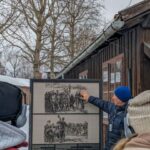

Inside Schindler’s Factory: Krakow Under Nazi Occupation
At Schindler’s Factory, the tour centers on the exhibition Krakow Under Nazi Occupation. This is the heart of the experience, because it sets the context for everything you’ll walk past later in Podgórze.
The tour explains the story of Oskar Schindler, a German entrepreneur who helped numerous Jews during the war. Even if you already know his name, the value here is in the way the museum presents the broader situation in Krakow under Nazi rule, so Schindler’s actions make more sense as part of a system—dangerous, constrained, and relentlessly cruel.
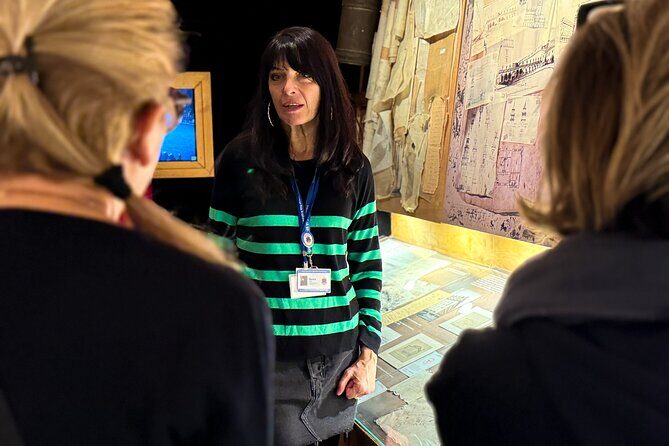
One thing I’d call out from the strong feedback this tour receives: the museum portion uses a chronological approach, which keeps the story moving forward instead of turning into a random stack of information. You also get live interpretation from the guide (with audio support), which helps you make sense of details as you go.
Expect a guided museum experience rather than a quick “see the highlights and run” visit. Since the total duration is about 3 hours, it’s best to come ready to focus and listen, not to treat this like casual sightseeing.
How guides turn a museum visit into a story you remember
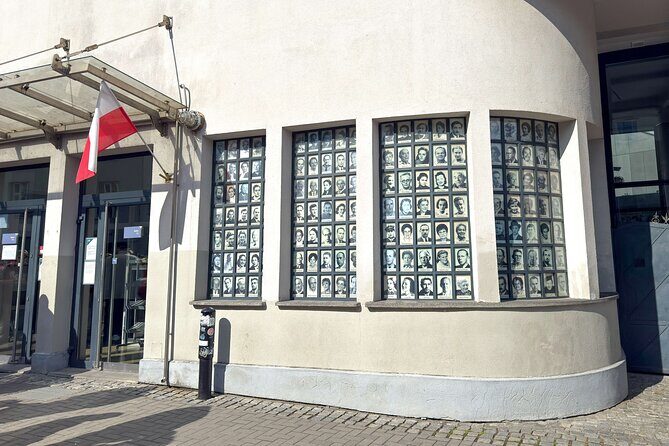
In reviews tied to this tour, guide performance shows up again and again. Names you may hear include Hannah, Helen, Helena, and Frau Weßling—and the key point is consistency: guides are described as very knowledgeable and engaging, with personal anecdotes that make the historical material feel human rather than distant.
What I like about this is practical. A museum can be overwhelming if you’re reading every label. A good guide does the sorting for you—pointing out what matters, connecting events, and helping you understand why particular details exist inside the exhibition.
Also, pay attention to the setup: multiple comments specifically praise the headphone system used to relay commentary. That’s not a small detail. In a museum, it means you can keep your eyes on the displays while you hear clear narration, even if the group shifts or other visitors crowd the space.
If you’re choosing between tours in Krakow, this is where the difference often lives: interpretation quality. Here, it’s clearly treated as a core part of the experience.
The Podgórze ghetto walk: what you’ll see and what it means
After the museum, you’ll head into the streets of Podgórze. This is where the tour shifts from museum storytelling to place-based understanding. You’re walking a real neighborhood where surviving traces of wartime life still sit in the urban fabric.
The walk includes:
- sections of the still-standing ghetto wall
- dwellings where thousands of displaced Jews once lived
- the Pod Orłem pharmacy
- the Empty Chair Monument at Heroes’ Square (with a symbolic array of 68 chairs)
Why this works so well is simple: the museum gives you the “how” and “why,” and the streets give you the “where.” When you stand near a wall remnant or a building footprint that once held displaced residents, the occupation stops being abstract. You start picturing how people moved, where they couldn’t go, and how tightly their world was controlled.
A possible drawback to consider: the topic is emotionally demanding, and the walk keeps you outside for a good stretch. If you prefer lighter, more detached sightseeing, this one may feel intense. But if you want context that’s grounded in real locations, this is the payoff.
Pod Orłem pharmacy: a small stop with a big lesson
Among the outdoor stops, Pod Orłem pharmacy stands out because it’s a concrete reminder that wartime life wasn’t only about camps and documents. Nazi occupation changed daily routines—where people went, what places functioned, and how the city operated under pressure.
This is also a stop where a guide matters a lot. A pharmacy might sound like just another building from the street. With interpretation, it becomes part of the story: a place that helps you imagine the friction of occupation in everyday terms.
The practical takeaway for you: slow down at this stop. Don’t treat it as a photo break. Let the guide’s explanation anchor it, then look at the building like it’s a prop in a real-life scene.


Heroes’ Square and the Empty Chair Monument (68 chairs)
The emotional climax for many people is the Empty Chair Monument at Heroes’ Square, built around 68 chairs. Chairs are a powerful choice because they suggest absence without needing a caption to make you understand the point.
By the time you reach this monument, you’ve already learned the structure of occupation at the factory and walked through parts of Podgórze tied to confinement and displacement. So the chairs hit harder. You’re not just looking at art—you’re reading a statement with your whole body standing in the right place.
I’d treat this stop as a pause, not a sprint. Stand, listen, and give yourself a moment. If you rush, you’ll miss why it matters.
Price and value: is $58 a fair deal?
At $58 per person for about 3 hours, this tour sits in the mid-range for guided history in Krakow. What makes it feel like solid value is that the price doesn’t just buy narration—it includes:
- Museum tickets to Schindler’s Factory
- A walking tour
- A professional live guide
- Skip-the-ticket-line access
In other words, you’re paying for two experiences stitched together—an organized museum visit plus an outdoor ghetto route—handled by one guide team. For many visitors, that reduces stress because you don’t have to plan the sequence or figure out how to connect what you see indoors to what’s outside.
Would I recommend it if you’re an independent museum wanderer? Maybe not. If you love self-guided reading and you’re comfortable building your own route through Podgórze, you could do it on your own. But if you want someone to connect the dots while you walk, $58 starts to look like a smart trade for time and understanding.
Timing, start times, and how to plan without stress
The tour runs for about 3 hours, and you can check availability to see starting times. One note to keep in mind: times are listed as approximate, and due to Schindler’s Factory Museum scheduling, the exact start time isn’t guaranteed.
That’s important for planning around it—especially if you’ve booked dinner or another timed ticket right after. Give yourself buffer time. Also, because the museum portion uses personalized tickets, don’t plan to show up last minute.
Tickets are personalized: bring the right ID
A key operational detail (and it matters for entry) is that the museum’s tickets are personalized. You need to provide full names of all participants when reserving, and you should bring a passport or ID for museum entry.
If you travel with a group and the names on your booking don’t match your documents, you could run into issues. So double-check spelling exactly. It’s not glamorous, but it’s the kind of detail that saves your day.
Languages and audio: what you’ll hear and how you’ll hear it
The tour offers live guiding in German, Italian, French, Spanish, and English. Even if your group mixes languages, the audio support helps keep the narration clear.
This matters because Schindler’s Factory is a museum where people naturally get distracted by exhibits and other visitors. Headsets help you stay oriented. And the reviews clearly point to the headphone system as a standout feature—so don’t ignore it or assume it’s optional.
If you’re the type who hates straining to hear, this setup is a real comfort.
Who this tour is best for in Krakow
This is a strong fit if:
- you want a guided museum visit rather than self-reading
- you like history that’s tied to specific places
- you want the Podgórze walk to make the museum themes concrete
- you prefer tours where guides use structure (chronology) and can answer your questions
It may be less ideal if:
- you’re sensitive to intense war-related topics
- you need a very light, casual sightseeing pace
- you dislike walking through older neighborhoods for a few hours
Should you book Schindler’s Factory & Ghetto Guided Tour?
I’d book this tour if you want the clearest connection between the story of Oskar Schindler and the lived reality of Nazi-occupied Krakow in Podgórze. The museum part gives you the framework, and the street walk gives you the physical context—especially with stops like the Pod Orłem pharmacy and the Empty Chair Monument with its 68 chairs.
If you do book, come with one mindset: listen first, look second, then let it all sink in. And bring your ID, because this is one of those tours where paperwork detail matters as much as the interpretation.
If you tell me your travel dates (and whether you prefer English), I can help you think through the best start time to reduce timing headaches.
FAQ
Where does the tour meet?
You meet the guide in front of the main entrance to Schindler’s Factory Museum, with the excursions.city sign.
How long is the tour?
The duration is 3 hours.
What is included in the price?
Included are tickets to the Schindler’s Factory Museum, a walking tour, and a professional tour guide.
What is not included?
Hotel pickup and drop-off, plus food and drinks, are not included.
Can I skip the ticket line?
Yes, the tour includes skip-the-ticket-line access.
What languages are available?
The live tour guide languages listed are German, Italian, French, Spanish, and English.
What ID do I need for Schindler’s Factory?
You’ll need to provide full names when reserving and bring a passport or ID for entry to Schindler’s Factory Museum.
Are start times fixed?
Times are approximate and may change due to Schindler’s Factory Museum scheduling. You can choose a preferred time, but the exact time is not guaranteed.