REVIEW · KRAKOW
Krakow: City Sightseeing Tour by Electric Buggy Golf Cart
Book on GetYourGuide →Operated by Krakow City Tours · Bookable on GetYourGuide
Krakow feels different when it moves by itself. This heated electric golf cart tour is a smooth way to connect medieval streets to WWII landmarks, without the hassle of constant stopping and starting. I really like the multilingual audio guide plus the driver’s on-the-street explanations, and I found the vehicle options make winter and rainy days much easier. The one thing to plan around: it’s 90 minutes, and entrance tickets aren’t included, so you may still want a longer follow-up stop for anything you want to go inside.
I also like that the route is built like a story. You go from the medieval capital vibe—churches, palaces, fortifications—into Kazimierz’s Jewish-quarter atmosphere, then over to Podgórze’s WWII sites and the Schindler’s Factory area. It’s also designed for a small group, which keeps questions from getting lost.
One possible drawback: because the tour covers a lot of ground, the stops are best for seeing, photographing, and understanding what you’re looking at—not for long self-guided wandering or museum time.
In This Review
- Key things to love about this electric buggy tour
- Why an electric golf cart makes sense for Krakow
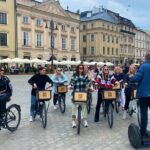
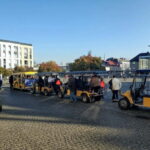
- Meeting up and what the cart experience really feels like
- Medieval Krakow by street-level story: kings, fortifications, and churches
- Kazimierz: navigating the Jewish quarter from market square to synagogues
- Crossing the Vistula into Podgórze: a WWII-focused ride with key named stops
- Schindler’s Factory area: connecting Krakow streets to Schindler’s List
- Audio guide languages and how to use them well
- Price and value: is $25 for 90 minutes a good deal?
- Who should book this electric buggy tour
- Should you book? My honest call
- FAQ
- How long is the Krakow City Sightseeing Tour by electric buggy golf cart?
- What is the price per person?
- What languages are available for the audio guide?
- Is there a live guide or driver during the tour?
- Does the tour include entrance tickets?
- Does the tour provide weather protection?
- Is this tour wheelchair accessible?
- Can I cancel if my plans change?
Key things to love about this electric buggy tour
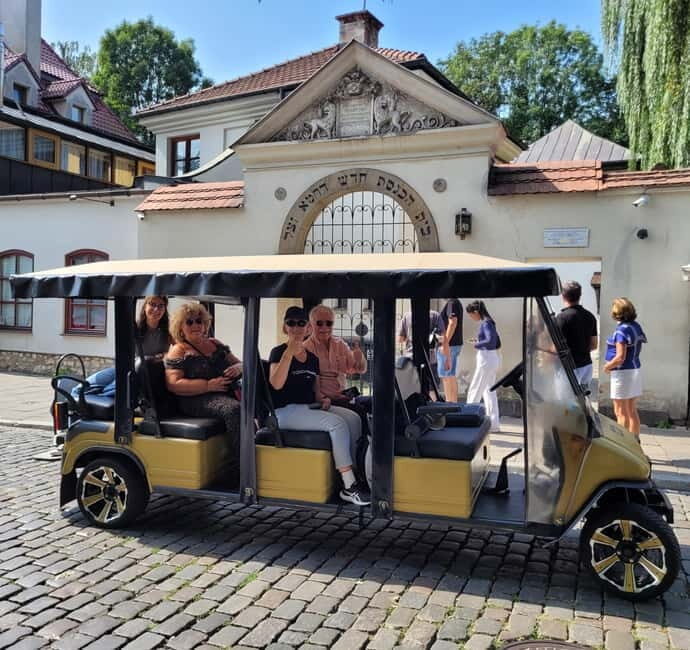
- Heated, covered eco carts that handle sun, rain, and cold better than walking
- Multilingual audio guide in many languages, including Hebrew and Arabic
- A route that stitches together medieval Krakow, Kazimierz, Podgórze, and Schindler’s Factory
- Time for photos without turning the ride into a nonstop drive-by
- Small group feel, with a driver ready to answer questions
- Pet friendly, with room for a stroller or wheelchair
Why an electric golf cart makes sense for Krakow
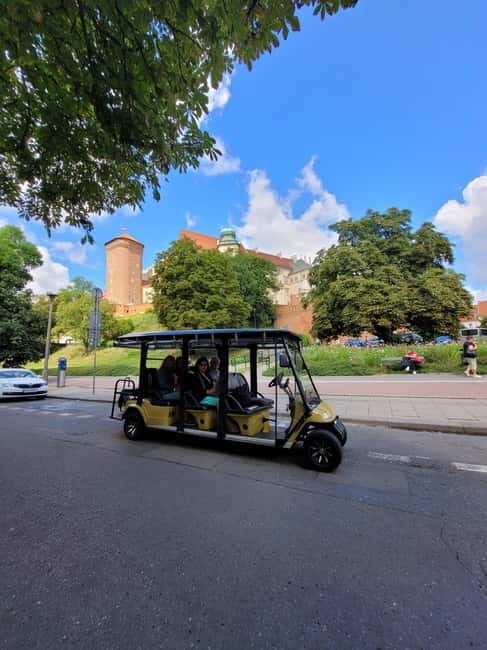
Krakow can be a lot on foot, especially if you’re pairing it with other sightseeing in the same day. This tour uses electric golf-cart-style vehicles, so you get the mobility to cover big chunks of the city while still slowing down at key places.
What I find especially useful is the pace. In 90 minutes, you get a framework for where things are—medieval center, Kazimierz, the Vistula crossing, and the WWII-related districts—so the rest of your time in Krakow makes more sense. If you’re trying to get your bearings fast, a route like this does that without turning your day into a sprint.
You can also read our reviews of more city tours in Krakow
Meeting up and what the cart experience really feels like
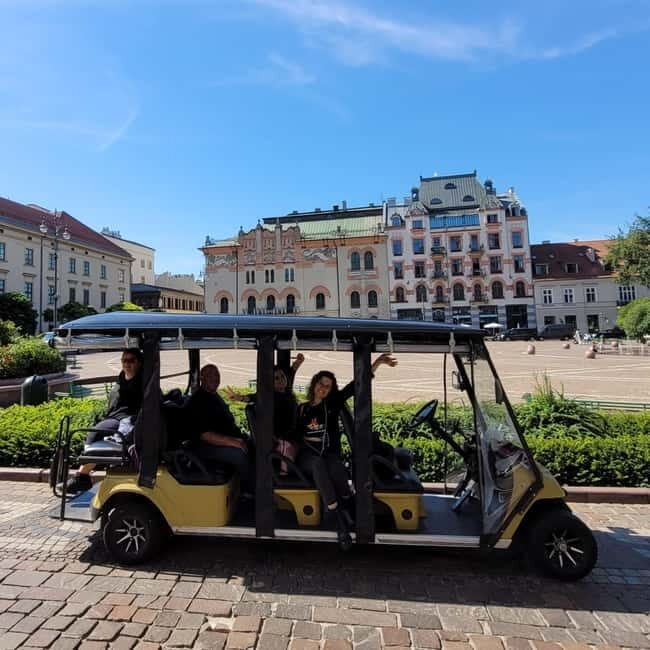
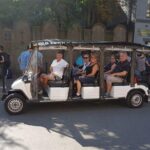
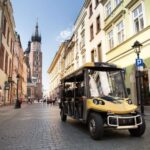
Your tour starts with a pick-up point that can vary by option booked. Once you’re in, the cart setup is designed for real weather: there are rain curtains and a roof, plus an heating system for winter and air conditioning for warmer conditions.
That matters more than it sounds. Krakow’s weather can switch from cold to drizzly to bright, and this tour doesn’t punish you for dressing for the wrong moment. You also get comfortable seats and space for a stroller or wheelchair, and the vehicles are described as wheelchair accessible.
You’ll also want to remember this is not a long bus ride where you sit passively. The vehicle setup is meant for short stops and views out the sides and front, with time to take pictures when you arrive at major points.
Medieval Krakow by street-level story: kings, fortifications, and churches
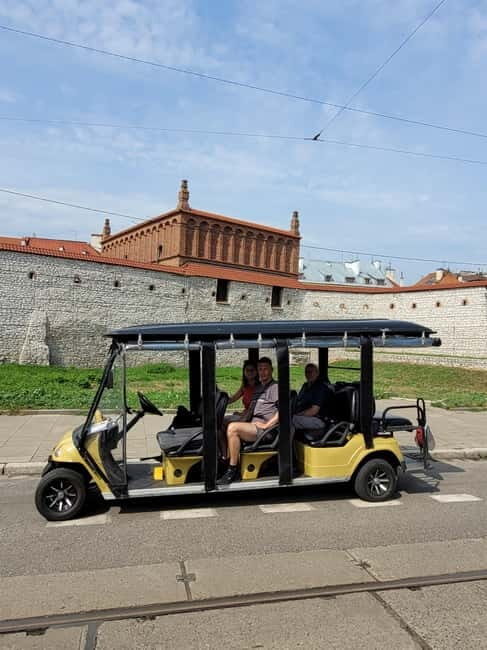
This tour frames “old Krakow” as something you can actually see. You ride through the streets of the medieval capital and the seat of Polish kings, taking in medieval fortifications and a mix of churches, palaces, and architecture across different styles.
For me, the value here is context. It’s one thing to stand in front of a building and another to understand how the city’s role as a royal and defensive center shaped what you see. Even without museum-style time, you come away with a mental map of the medieval layout.
If you’re the type who likes to connect the dots—why a district looks a certain way, how streets relate to power and defense—this portion is a great warm-up. If you’re hoping for an in-depth stop at each site, you’ll likely feel the 90-minute limit. In other words, it’s a strong overview, not a replacement for deeper visits.
Kazimierz: navigating the Jewish quarter from market square to synagogues
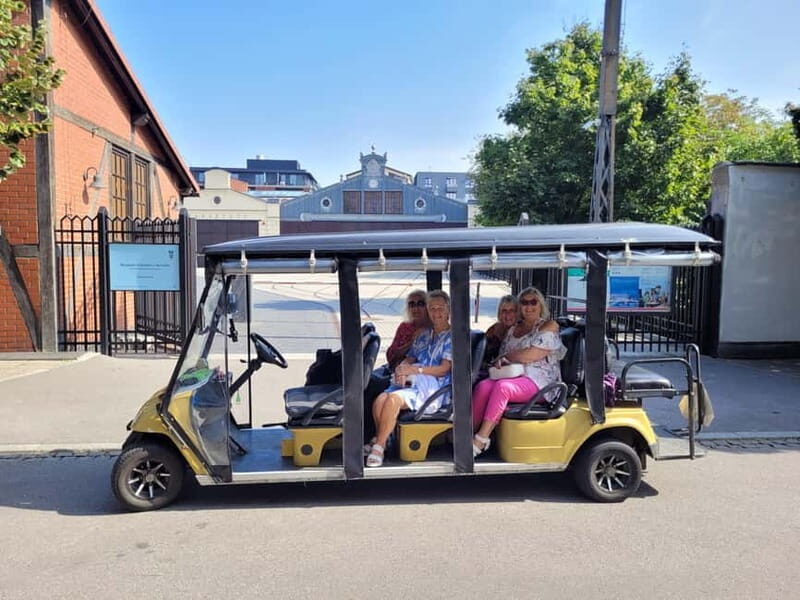
Then the route shifts into Kazimierz, the Jewish quarter in the former separate town founded in the 14th century. This isn’t presented as a vague “historical neighborhood.” You’re guided through specific landmarks and areas that help you understand what Kazimierz used to be as a living town.
You’ll see the former market square and town hall, plus Jewish synagogues and the oldest tram depot. That lineup is important because it covers more than religious buildings. It points to daily life—trade, civic space, and the rhythms that made the district more than just a chapter in history.
One practical tip: use the photo time for angles you can’t easily recreate later from a walking-only perspective. From a cart, your viewpoint can line up streets and building fronts in a way that’s harder when you’re weaving through pedestrians. It’s also a good moment to pause and compare what the audio guide tells you with what you visually notice—rooflines, street layout, and the way buildings cluster around public space.
If you care about 20th-century WWII history (and especially if you’re planning Schindler-related stops afterward), Kazimierz is a solid bridge. It sets the stage before the tour moves into the tragic disruption that followed.
Crossing the Vistula into Podgórze: a WWII-focused ride with key named stops
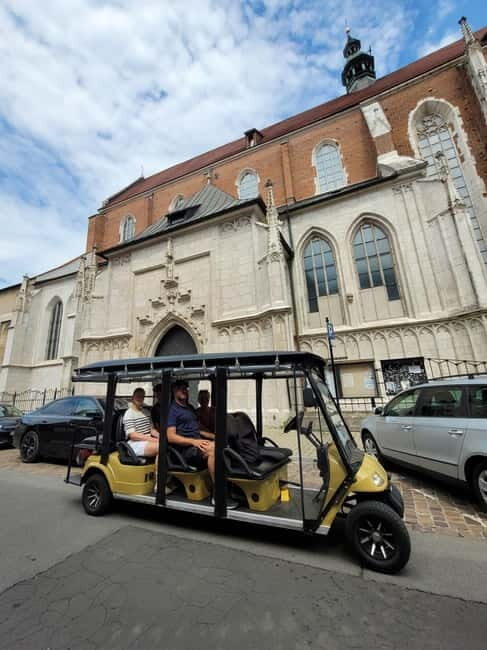
A big highlight is the Vistula crossing. The tour includes a drive over the oldest bridge over Poland’s largest river, and that gives you a sense of how the city’s geography mattered to growth and later events.
On the Podgórze side, you’re taken through the former 19th-century town area. Here the tour becomes explicitly WWII-focused: the Nazis created a ghetto for the Jewish population in this area, and you’ll see named sites tied to the most painful parts of that period.
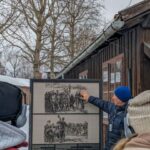
Two stops you should pay attention to are Ghetto Heroes Square and the pharmacy under the eagle. The tour also mentions a memorial made of 70 metal chairs in honor of the people from this area. Even if you don’t linger for long, these are the kinds of places where the audio narration and driver context can change what you notice—signage, street corners, and how the city’s layout shaped lives during that time.
A consideration here: because the focus is heavy, you might want to mentally pace yourself. Don’t pack this tour right before something emotionally demanding; or if you do, at least plan a breather afterward—coffee, a short walk, or a quiet moment in a calmer part of town.

Schindler’s Factory area: connecting Krakow streets to Schindler’s List
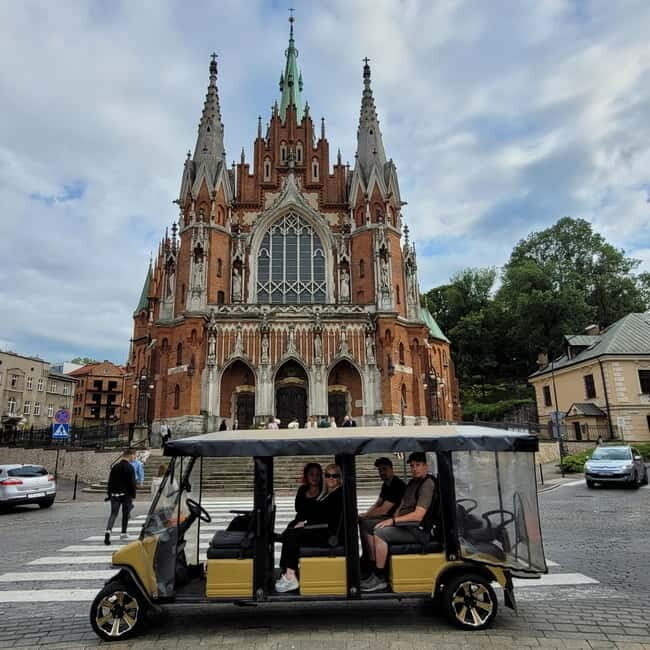
After Podgórze, you’ll drive through the former industrial area to see buildings connected to Oskar Schindler’s enamelware factory. This is where the tour ties location to story in a way that many people find memorable.
You’ll hear how the story of Schindler and his employees was presented in the film Schindler’s List, directed by Steven Spielberg. The tour notes that the film won 7 Oscars from the American Film Academy, which helps explain why this place became internationally known.
From a practical standpoint, this stop works because it links your past knowledge (movie awareness, photos, famous scenes) to the real physical setting in Krakow. Even if you’re not doing an indoor museum experience, seeing the industrial landscape and factory-related buildings helps you understand why this area mattered.
One small advice: if you feel you want more time after this section, plan for it. The tour does not include entrance tickets, so treat this as the interpretive layer. Then, if a museum or site visit is your style, you’ll know exactly what you want to return to.
Audio guide languages and how to use them well
You’ll listen to an audio guide in your chosen language during the ride. The language list is broad and includes Arabic, Czech, Danish, Dutch, English, Finnish, French, German, Hungarian, Italian, Norwegian, Polish, Portuguese, Russian, Slovak, Spanish, Swedish, Ukrainian, and Hebrew.
That’s handy because Krakow has a lot of WWII material, and precision matters when the subject is sensitive. Choosing your own language can help you follow details without straining, especially when names, locations, and dates come up in the narration.
Also note: there is a live tour component described as English and Polish. In practice, the driver is expected to answer questions and offer advice. If you want to maximize value, write down one or two questions in your head before the ride ends—like where to go next for a deeper visit or what to prioritize if you only have one more day.
Price and value: is $25 for 90 minutes a good deal?
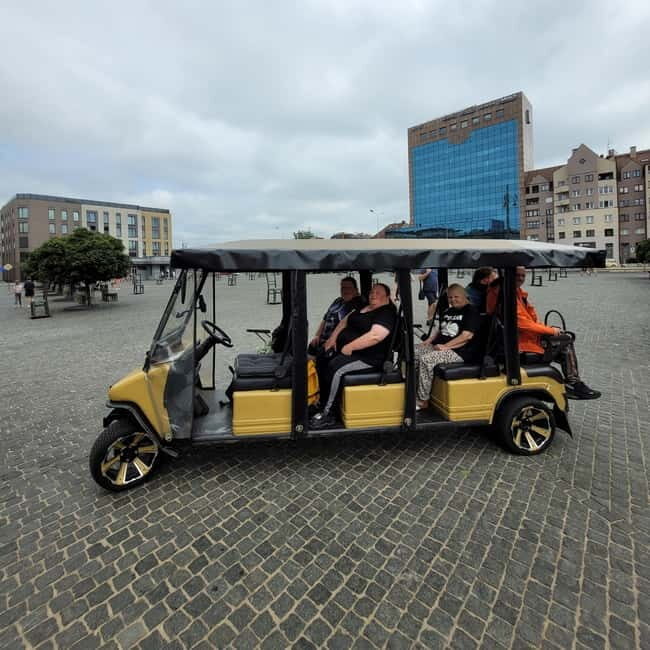
At $25 per person for a 90-minute tour, this lands in the “smart first overview” category. You’re paying for more than transportation: you’re paying for a guided, multilingual route that connects multiple major districts—medieval center, Kazimierz, Podgórze, and the Schindler-related area—plus a weather-friendly vehicle and time for pictures.
The best value comes if you have limited time in Krakow. If you only have one half-day and you want structure, this tour can give you the city roadmap you’d otherwise build by trial and error. It’s also cost-effective compared to piecing together several separate guided components, especially with the audio guide included.
Where you may feel the cost tradeoff: entrance tickets and food/drinks aren’t included. So if you were imagining this as a full museum-style experience, it isn’t. Think of it as a guided ride with stops and context, not a ticketed attraction bundle.
In plain terms: pay attention to the word “tour” here. It’s meant to shape your understanding of what you’re seeing, so you can spend your money and time more wisely afterward.
Who should book this electric buggy tour
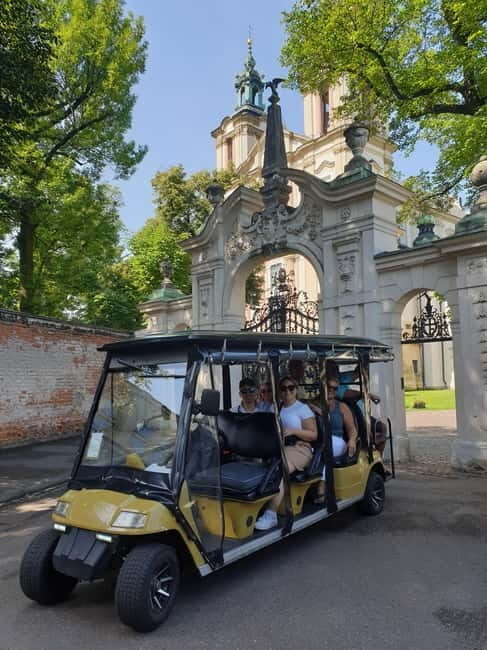
This tour is a strong fit if you:
- Want to get oriented quickly across several Krakow neighborhoods
- Prefer a comfortable ride over long walks, especially in cold or rainy weather
- Like history that connects place names to what happened there
- Value having audio in your language while also being able to ask questions on the spot
- Travel as a small group, or want a private-group option
It may be less ideal if you:
- Want long stays at individual sites or museums
- Prefer fully independent sightseeing with no narration or guided structure
- Are only interested in one district and don’t care about the broader WWII context and geography
The cart setup also makes it a practical choice for people who need a gentler pace—there’s wheelchair accessibility and space for a stroller or wheelchair mentioned, and the vehicle design is meant to protect from sun and rain.
Should you book? My honest call
I’d book this if you want a one-and-a-half-hour route that connects medieval Krakow to the WWII story tied to Kazimierz, Podgórze, and Schindler’s Factory. It’s a good balance of motion and meaning: you see a lot, you get context, and you’re not stuck battling weather on foot.
Skip it if your main goal is deep, ticketed exploration inside specific sites. For this kind of tour, the sweet spot is using it as a fast guide to what matters, then returning later for the parts that grab you most.
If you’re standing at the start of your trip and trying to decide what to do first, this is the type of booking that helps everything else click.
FAQ
How long is the Krakow City Sightseeing Tour by electric buggy golf cart?
The tour lasts 90 minutes.
What is the price per person?
It is priced at $25 per person.
What languages are available for the audio guide?
The audio guide includes Arabic, Czech, Danish, Dutch, English, Finnish, French, German, Hungarian, Italian, Norwegian, Polish, Portuguese, Russian, Slovak, Spanish, Swedish, Ukrainian, Hebrew.
Is there a live guide or driver during the tour?
Yes. The tour is described as having a live tour guide (English, Polish), and the drivers are expected to answer your questions and provide advice.
Does the tour include entrance tickets?
No. Entrance tickets are not included.
Does the tour provide weather protection?
Yes. The electric golf carts have rain curtains and a roof, plus heating for winter and air conditioning for warmer conditions.
Is this tour wheelchair accessible?
Yes. It is described as wheelchair accessible, and the vehicles include space for a stroller or wheelchair.
Can I cancel if my plans change?
You can cancel up to 24 hours in advance for a full refund.