REVIEW · KRAKOW
Jewish Krakow Private Tour. Personalities, Art and Food
Book on Viator →Operated by Your Jewish Heritage Guide · Bookable on Viator
Krakow gets personal fast on this Jewish heritage tour. You’ll connect medieval streets, major landmarks like Wawel, and two important synagogues—while the guide ties in Jewish and gentile personalities and real-world religious and street art. It’s a focused way to see Kazimierz without turning your brain into a Wikipedia page.
I especially like how the tour mixes the famous stops with quieter, more intimate spaces, like the synagogues’ interiors and exteriors. I also like the guide’s storytelling approach—answering questions and making room for what you care about, not just what’s on the route.
One consideration: only the Old and Remuh Synagogues have entrance fees included. Wawel Royal Castle and Krakow’s main square time are covered as sights, but any paid entry fees there are not included.
In This Review
- Key highlights worth your attention
- Why this Jewish Krakow route feels different in 4 hours
- Rynek Główny: your “map in words” for medieval Jewish Krakow
- Wawel Royal Castle: a quick connection to the Jewish story
- Remuh Synagogue: modern Jewish art you can actually spot
- Old Synagogue: chief rabbis and the story behind the walls
- The Kazimierz walking rhythm: art on walls and life in courtyards
- About food: stories, suggestions, and optional tastings
- Timing, pace, and where you end in Podgórze
- Price and value: what $60 buys you in Krakow
- Who this tour suits best (and who should think twice)
- Should you book the Jewish Krakow Private Tour with a focus on art and food?
- FAQ
- How long is the Jewish Krakow private tour?
- Is this tour private or group-based?
- What are the included entrance fees?
- Where does the tour start and end?
- Is pickup available?
- What language is the tour offered in?
- What is the cancellation policy?
Key highlights worth your attention
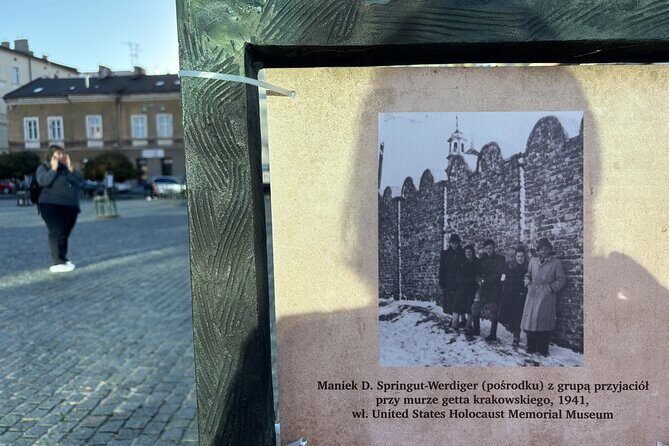
- Remuh Synagogue: you’ll see how the tour frames its interior and exterior through modern Jewish art
- Old Synagogue + Krakow rabbis: the story focuses on what’s behind the walls, not just the building
- Wawel’s Jewish connections: a fast stop that explains why this royal site matters to Jewish Krakow
- Rynek Główny orientation: a short reset on medieval Krakow and the community’s early presence
- Private, small-group feel: only your group participates, so questions and pace can stay flexible
- Art + food context: the tour includes art-based storytelling and practical food ideas (coffee/tea isn’t included)
Why this Jewish Krakow route feels different in 4 hours
This is the kind of tour that helps you see a city, not just read it. In four hours, you cover a clear arc: start at Krakow’s main historical stage, connect to a royal landmark, then shift into Kazimierz—the old Jewish quarter—where synagogue life and Jewish art become the center of gravity.
What makes it work is the balance. You’re not stuck only on big names and major monuments, and you’re not stuck only inside religious sites either. The guide brings together personalities from the Jewish community and also the gentile world around it, which helps you understand how Krakow functioned as a real neighborhood, with relationships, not just dates.
And yes, art matters here. You’ll be pointed toward both religious art you can actually see, and street art that helps explain how memory and identity show up on walls. That mix is what keeps the tour from feeling like a straight lecture.
You can also read our reviews of more food & drink experiences in Krakow

Rynek Główny: your “map in words” for medieval Jewish Krakow
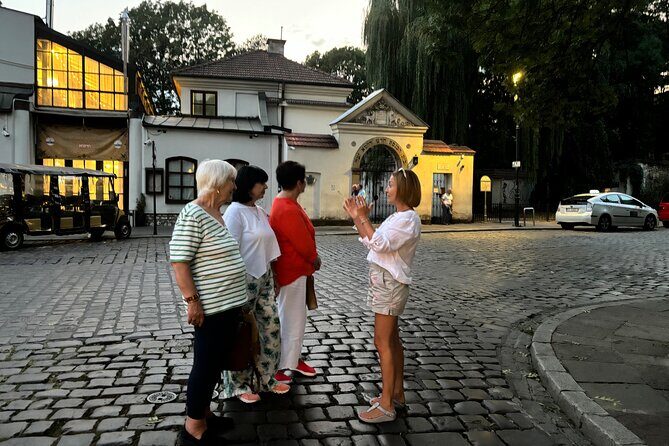
The tour opens in the heart of Krakow at the Rynek Główny Central Square area, with an introduction to the city’s general history and how the Jewish community fits into medieval Old Town life. The timing is short—about 20 minutes—so the goal isn’t to cover everything. It’s to give you the mental scaffold to understand what you’ll see next.
Why I like starting here: it gives context. Once you know where Krakow’s core activity happened, later stops in Kazimierz stop feeling like a separate world. You start connecting the city’s center to the Jewish quarter through story and geography.
What to watch for: because this stop is mostly an orientation, you’ll get the most out of it if you ask questions as you go. If you’re the type who likes to know the why behind the what, this is the perfect moment to ask how Krakow’s community life developed over time.
Also, quick practical note: the ticket for Rynek Główny itself isn’t included, and admission isn’t part of this stop’s package. In other words, you’re paying for guidance and time, not a covered museum ticket.
Wawel Royal Castle: a quick connection to the Jewish story
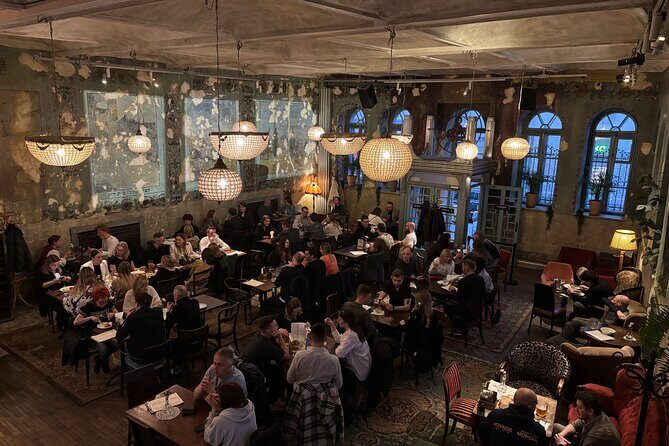
Next comes Wawel Royal Castle, with about 15 minutes on the landmark. This stop is brief by design, and that’s okay if you’re realistic about what a 4-hour walking tour can cover.
The value here is the connection. Instead of treating Wawel like a stand-alone “royal site,” the guide ties it to Jewish community threads—explaining why Jewish history belongs in the same story as Krakow’s broader civic and cultural history.
Potential drawback: because admission fees are not included here, you may want to check whether you’re planning to enter any paid areas beyond what’s covered by time outside/around the site. If you only care about seeing the exteriors and hearing the context, you can keep this stop simple.
Remuh Synagogue: modern Jewish art you can actually spot
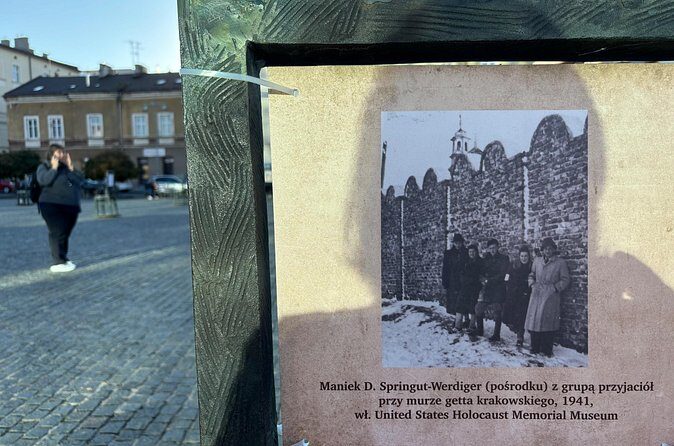
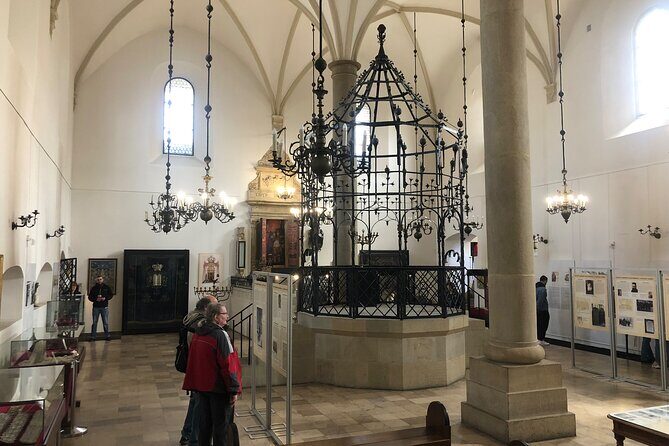
Then you move into one of the most meaningful parts of the tour: Remuh Synagogue (Synagoga Remuh). You get around 20 minutes, and this time the entrance fee is included.
This is where the art framing becomes concrete. The tour focuses on the synagogue’s interior and exterior, using what you see to talk about modern Jewish art—how later styles, ideas, and visual language show up in religious spaces. That matters because it counters the common mistake people make in their heads: thinking Jewish art only belongs in old manuscripts or far-off museums. Here, it’s tied to a living setting you can stand in.
What to expect during the visit: you’ll have time to look, then listen to how the guide interprets the symbolism and the design choices. It’s not just “look at the pretty place.” You’re meant to notice details and connect them to community life.
Practical tip: expect this stop to feel calmer than the big squares and castle area. If you’re someone who likes slow observation, Remuh is where you get it.
Old Synagogue: chief rabbis and the story behind the walls
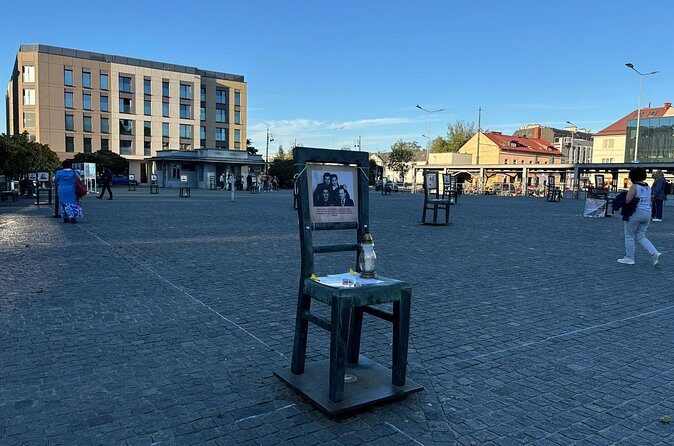
After Remuh, you head to the Old Synagogue, with another 20 minutes and entrance fees included.
This stop’s focus is very specific: the history of the synagogue and Krakow’s chief rabbis. If you want names and authority in the story—not just architecture and generalities—this is the part that tends to click.
It’s also a smart pairing. Remuh gives you a modern art lens; the Old Synagogue gives you leadership and tradition. Together, they show continuity and change without turning the tour into a timeline slideshow.
What I think you’ll like: the guide’s ability to connect the religious function of the synagogue to broader Krakow life. Even if you’re not a “synagogue person,” the chief rabbis angle usually makes the place feel human—real leadership responding to real community needs.
A few more Krakow tours and experiences worth a look




The Kazimierz walking rhythm: art on walls and life in courtyards
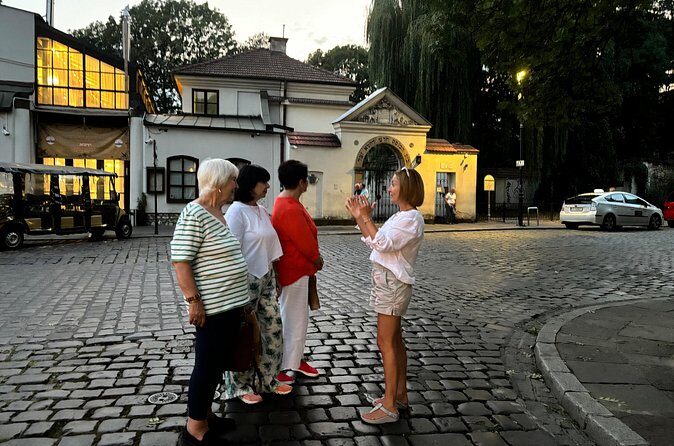
Even though the itinerary lists four named stops, your walking time through the area matters. Kazimierz has those small, cobbled lanes and courtyards where the city looks lived-in rather than staged. That’s the tone this tour leans into.
You’ll also encounter the art side of Krakow—both religious art tied to places you enter and street art that helps explain how memory remains visible in public space. The guide’s approach links what you’re seeing now to what the city carried through later eras.
This is also where the “personalities” theme shows its muscle. Instead of teaching you Jewish history as a set of distant events, the tour frames it through people—Jewish and gentile—who left marks in the city’s culture and physical environment.
About food: stories, suggestions, and optional tastings
This tour is branded around Personalities, Art and Food, and the food angle shows up mainly through conversation and practical direction. Coffee and/or tea are not included, so don’t assume the route builds in a free café stop.
In practice, the food part tends to work like this: the guide points you toward Jewish-Polish flavors and local restaurants you can visit either during the tour (if time allows) or right after. If you choose not to do tastings in the moment, you can still follow up on the places and dishes referenced during the walk.
Who this helps: you’ll get better results than random restaurant wandering, because you know what you’re looking for—Jewish-Polish and Ashkenazi influences in Krakow’s eating culture, explained in context.
Timing, pace, and where you end in Podgórze
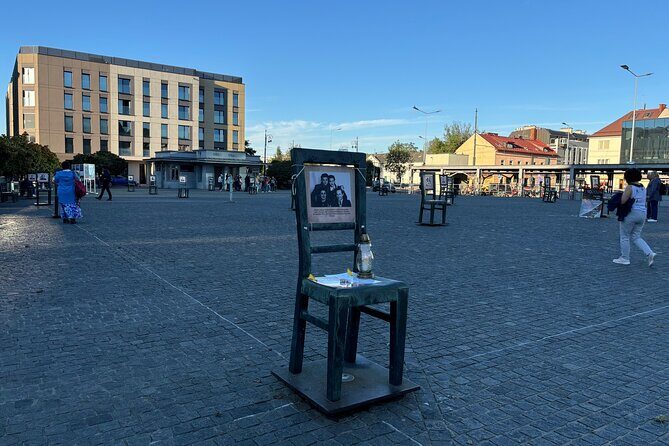
This is a 4-hour walking tour, offered in English, and it runs through a wide daily window (7:00 AM to 9:00 PM in the listed schedule). The exact pacing depends on your group and questions, but the stop durations are built to keep you moving without feeling rushed.
Start and end points matter here:
- You start near the Adam Mickiewicz Monument by Rynek Główny
- You end in Podgórze
Why that’s a plus: ending in Podgórze can set you up for later sightseeing in that area, or for an easy return toward your hotel. It also helps the tour feel like more than a back-and-forth loop.
Moderate physical fitness is suggested, so comfortable walking shoes are the smart call. Expect cobblestones and real streets, not a smooth sidewalk fantasy.
Price and value: what $60 buys you in Krakow
At $60.01 per person for about 4 hours, this tour sits in a price zone that usually makes sense when you compare what you’re getting:
- Private format: only your group participates, so you’re not stuck waiting for other people’s questions.
- Two included synagogue entrances: Old Synagogue and Remuh Synagogue admissions are included.
- Guide-led context: you’re paying for interpretation—tying Jewish community story to art and landmarks like Wawel and Rynek.
The main extra costs to plan for are the places where admission fees are not included—specifically Wawel Royal Castle and the Rynek Główny stop’s admission is not part of the package. Coffee/tea isn’t included either.
Group discounts are listed, so if you’re traveling with friends or family and can book as a unit, it may become a better value deal than a standard group tour.
Who this tour suits best (and who should think twice)
This tour is a strong fit if you:
- want a private guide who can answer your questions
- like learning through stories about people, not only through dates
- care about how religious and street art connect to identity
- want meaningful time inside Remuh and the Old Synagogue without having to plan the visits yourself
It may be less ideal if you:
- want a long, museum-style deep dive into one site only (this tour stays intentionally time-boxed)
- expect included access to Wawel’s paid areas beyond what your guide covers during the scheduled stop time
- want a tour that includes coffee or guaranteed food tastings (coffee/tea aren’t included, and any tastings depend on time)
Should you book the Jewish Krakow Private Tour with a focus on art and food?
I’d book it if your goal is to understand Krakow’s Jewish heritage in a way that feels connected to the streets you’re walking. The synagogues with included admission do real heavy lifting, and the guide’s focus on personalities plus art makes the city stick in your mind.
Make your decision based on three quick checks:
- Do you want both landmarks and the Kazimierz synagogue experience in one compact route?
- Are you comfortable with the idea that some site entries (like Wawel) may cost extra?
- Do you like food as context and suggestions, not just a guaranteed buffet of tastings?
If you said yes to those, this is one of the best ways to spend a half day in Krakow—practical, human, and anchored in places you can return to afterward with a better eye.
FAQ
How long is the Jewish Krakow private tour?
It runs for about 4 hours.
Is this tour private or group-based?
It’s a private tour, so only your group participates.
What are the included entrance fees?
Entrance fees for the Old Synagogue and Remuh Synagogue are included.
Where does the tour start and end?
It starts at the Adam Mickiewicz Monument, Kraków (near Rynek Główny) and ends in Podgórze, Kraków.
Is pickup available?
Yes. Pickup is offered if you provide your hotel name, or you can arrange pickup from another point in the Old Town, Kazimierz, or Podgorze.
What language is the tour offered in?
The tour is offered in English.
What is the cancellation policy?
You can cancel for a full refund up to 24 hours before the experience starts. If you cancel less than 24 hours before, the amount paid isn’t refunded.