REVIEW · KRAKOW
Krakow: Plaszow Concentration Camp Guided Walking Tour
Book on GetYourGuide →Operated by excursions.city · Bookable on GetYourGuide
Plaszów isn’t a site you rush through. This 2-hour walking tour through Plaszów Concentration Camp turns open ground into a clear, respectful story—using the few surviving traces to explain how the Nazi system worked. You’ll also connect the camp to Oskar Schindler and the broader cultural memory of the Holocaust, including where Schindler’s List filmed in the area.
I love that the tour is paced for reflection, not speed. I also love how the guide ties specific places you can stand on—like the roll-call square and major memorials—back to real camp organization, including the role of Oskar Schindler and how he tried to save people registered through Plaszów.
One consideration: this is mostly open-air walking. With few physical structures left, the experience depends heavily on your guide and on having basic weather tolerance.
In This Review
- Key things you’ll notice (and why they matter)
- Starting at Apteka Pod Orlem: how the tour gets you oriented fast
- Grey House area, pre-burial hall ruins, and cemetery traces you can actually recognize
- Roll-call square and memorial moments where the pace slows on purpose
- Where gravestones became paving: small details with heavy meaning
- Schindler’s List filming locations and Oskar Schindler’s real-life rescue efforts
- How Plaszów evolved from forced labor to concentration and transit camp
- Why you really want a guide at Plaszów’s few physical remains
- Price and value: $29 for a 2-hour, high-context experience
- Getting the most out of the walk: weather, footwear, and emotional readiness
- Best fit: who should book this Plaszów tour
- Should you book the Kraków Plaszów Concentration Camp guided walking tour?
- FAQ
- How long is the Plaszów Concentration Camp guided walking tour?
- Where do I meet the guide?
- What languages are offered on this tour?
- Is public transportation included?
- Is the tour wheelchair accessible?
- Do I need to arrive early?
- Can I cancel and get a full refund?
Key things you’ll notice (and why they matter)
- A guided “map” of what’s left: grey-house area, ruins of a pre-burial hall, and traces of the Jewish cemeteries
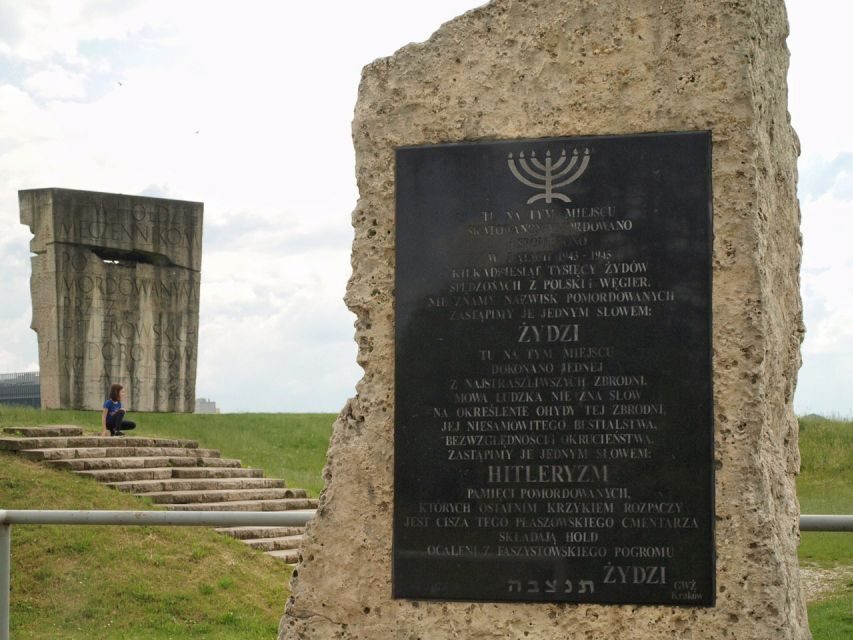
- Memorial stops built into the route: including the Monument of Torn-Out Hearts and other remembrance points
- Camp layout explained in plain language: living, hospital, administrative, and industrial sections
- Schindler’s role made concrete: work permits, later transfer to Brunnlitz, and over a thousand lives saved
- Schindler’s List context included: where parts of the film were shot around Plaszów
Starting at Apteka Pod Orlem: how the tour gets you oriented fast
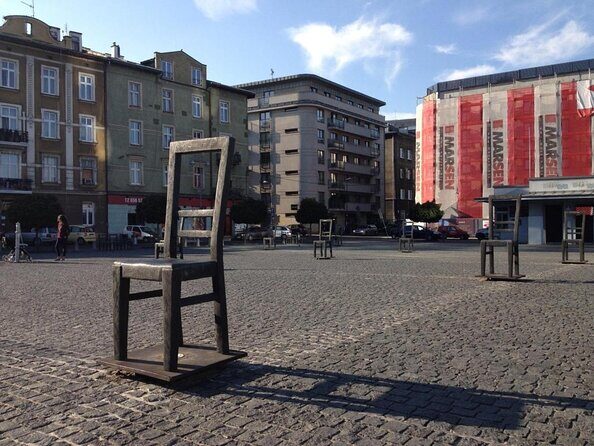
The tour meets in front of the entrance of Apteka Pod Orlem. Look for the guide holding an excursions.city sign, and aim to arrive about 10 minutes early so you don’t miss the group departure. You also get a single tram ticket included, which helps if you’re combining this stop with other Kraków sights.
The first minutes matter here, because Plaszów doesn’t feel like a museum courtyard. It feels like ground—quiet, open, and partly unreadable to the eye. A good guide helps you get your bearings fast and understand what you’re looking at, even when nothing dramatic stands in front of you.
You can also read our reviews of more walking tours in Krakow

Grey House area, pre-burial hall ruins, and cemetery traces you can actually recognize
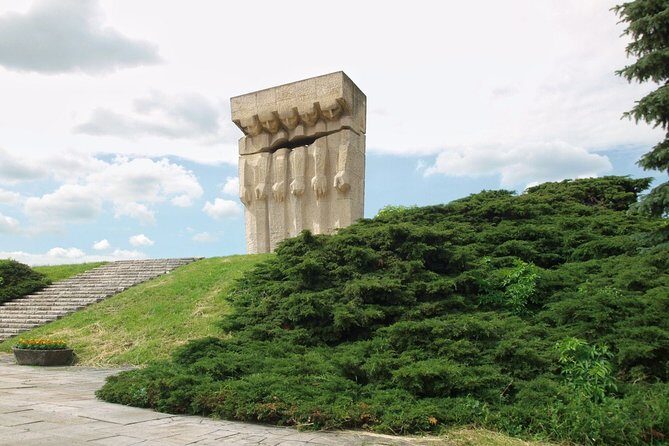
One of the tour’s strongest features is that it teaches you how to read absence. The walk pieces together what survives: the Grey House, the ruins of the pre-burial hall, traces of the Jewish cemeteries, and other reminders of how the camp was built over earlier sacred ground.
These stops work because they’re tied to function, not just location. You’re not just told names; you’re shown how the space fit into camp life, labor, punishment, and the machinery of deportation. That’s especially important at Plaszów, where so much has been erased that a self-guided walk can turn into guessing.
Roll-call square and memorial moments where the pace slows on purpose
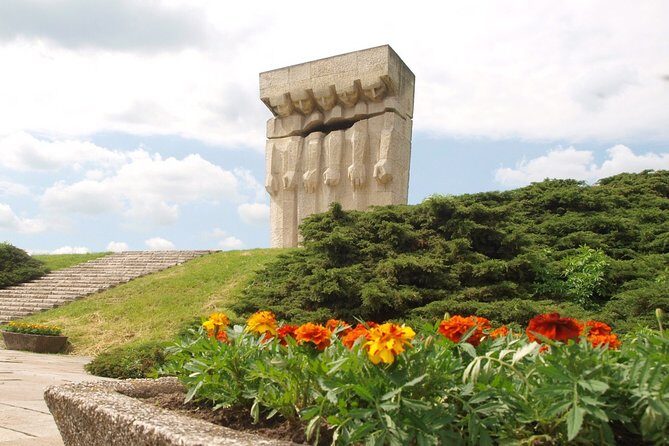
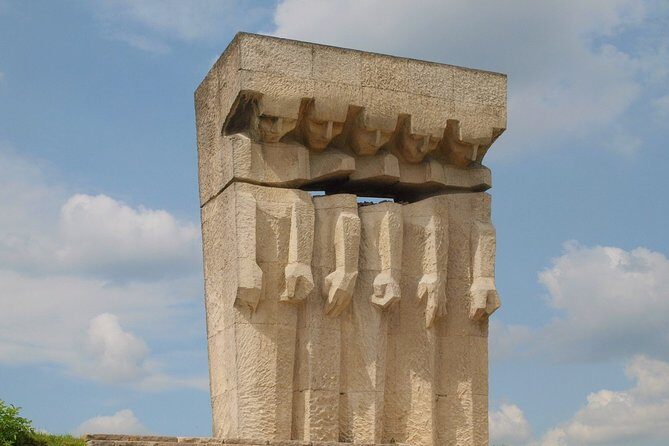
The route includes the roll-call square, plus major memorials where you’re meant to stop and take in what the place represents. The tour highlights the Monument of Torn-Out Hearts, along with other remembrance points tied to executions and the camp’s human cost.
This is one of those tours where your body understands the pacing before your mind does. There’s less rushing between photo stops and more time to absorb scale and meaning. You’ll likely notice that the guide builds the story in a way that leaves room for silence—because that silence is part of the respect.
Where gravestones became paving: small details with heavy meaning
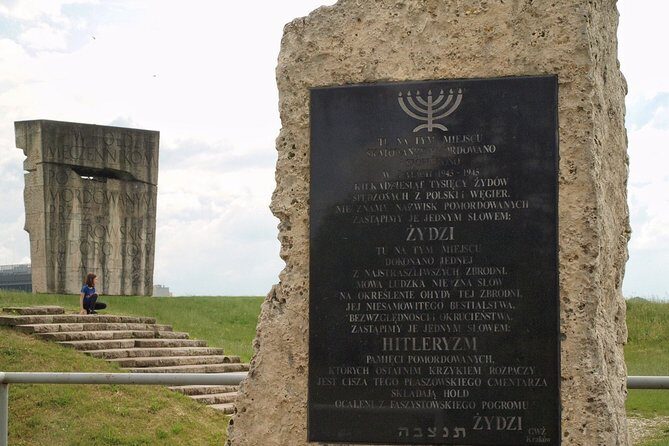
A particularly haunting element of the walk concerns paths where fragments of gravestones were used to pave roads. This isn’t a random detail. It’s a way the tour connects the occupation’s brutality to the physical transformation of a place that had once held Jewish life and memory.
Even if you’ve read about these topics before, seeing how the guide points out surviving traces helps the information land differently. It turns general facts into something you can stand next to, and it helps explain why Plaszów is often approached as a site of memory rather than spectacle.
Schindler’s List filming locations and Oskar Schindler’s real-life rescue efforts
Plaszów’s story is inseparable from Oskar Schindler, and the tour makes that connection clear. You’ll hear how his enamelware business led him to seek work permits for Jewish prisoners registered through Plaszów, shielding them from further transports. Later, he organized their transfer to his wartime plant in Brunnlitz, saving over a thousand lives.
The tour also connects Plaszów to the film Schindler’s List by explaining where it was filmed in this area. That matters because it changes how you watch or recall the movie. It’s not just a film reference; it becomes part of the landscape of memory—and a reminder that historical places have been interpreted by later generations.
You can also read our reviews of more guided tours in Krakow

How Plaszów evolved from forced labor to concentration and transit camp
The tour doesn’t treat Plaszów like a single moment in time. It outlines how the camp changed roles as the war shifted.
Created by the Nazi German occupiers in October 1942 on the grounds of two Jewish cemeteries in Kraków, Plaszów began as a forced-labor camp for Jews from the liquidated Krakow ghetto. From July 1943, it also included a penal-labor section holding Poles. In January 1944, it was redesignated a concentration camp, and later that year it also functioned as a transit camp for Hungarian Jews being sent onward to Auschwitz.
The numbers given on the tour underline the scale: more than 35,000 people imprisoned over its existence, and around 6,000 murdered. Executions took place at several sites within the camp, and today mass graves and memorials mark parts of that history.
You don’t walk through a story that feels neat or orderly. You walk through shifting purposes of one system, and the guide helps you see how that system tightened over time.
Why you really want a guide at Plaszów’s few physical remains
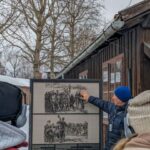
Plaszów can feel like a memory test without guidance. The grounds are open, and there aren’t many intact buildings to point to. That’s exactly why an expert local guide changes everything: you get context for small traces that would otherwise be easy to miss.
The way guides handle the subject is also a big part of the experience. In past departures, I’ve seen strong emphasis on clear, sensitive explanations and answering questions with real depth. Some guides associated with this tour include names like Anna, Dominika, Krysztof, Phil, Bartolomiew, and Barbara—each of them noted for being friendly, thoughtful, and careful with how the history is presented.
And yes, the pace often feels designed for understanding rather than ticking boxes. One advantage of a shorter walking format like this is that it can feel more controlled and personal, and you can keep asking questions without feeling like you’re being shooed along.
Price and value: $29 for a 2-hour, high-context experience
At $29 per person for a 2-hour guided walk, this isn’t the cheapest thing on a Kraków day—but it’s not overpriced for what you get. The ticket includes an expert local guide and a single tram ticket, which quietly removes a small hassle from planning.
More importantly, you’re paying for interpretation. With so little intact, you don’t just buy access to a location—you buy help turning that location into meaning. That’s where the guide value shows up: pointing out what matters, explaining how camp sections worked, and connecting Schindler’s actions back to the places you’re standing on.
If you’re already planning Holocaust-related sights in Kraków, this tour can be a strong add-on. It gives a different texture than places with more preserved structures, because Plaszów is open ground and memory.
Getting the most out of the walk: weather, footwear, and emotional readiness
This is a mostly outdoor route. You may want a little luck with the weather, and it helps to dress for changeable Kraków conditions. Comfortable shoes are a must, since you’ll be on foot for the full 2 hours.
Emotionally, set expectations before you start. This isn’t a tour that tries to lighten the mood, and it shouldn’t. The value here is respect, context, and remembrance. If you know you’ll struggle with heavy topics on a tight schedule, you might want to space your Holocaust visits out rather than packing them back-to-back.
Best fit: who should book this Plaszów tour
This tour is ideal if you want Holocaust history that’s place-based and explained clearly, without turning into a rush. It also fits well if you’re the kind of person who likes WW2 context, film-to-history connections, and understanding how camps functioned day to day.
You’ll likely enjoy it most if:
- you want a guided route that emphasizes reflection
- you’re curious about Oskar Schindler beyond the movie
- you like history explained through physical traces, not just boards
If what you’re seeking is a site filled with intact buildings and classic museum cues, you might find Plaszów more challenging to navigate on your own. In that case, the guided format becomes even more important.
Should you book the Kraków Plaszów Concentration Camp guided walking tour?
I’d book it if you can handle an open-air, memory-forward visit and you value a guide who can explain what you’re seeing without sensationalizing it. The combination of major memorials, camp organization details, Schindler’s real actions, and Schindler’s List filming context makes this more than a quick stop.
It’s also a good call because the experience is short. A 2-hour duration gives you structure without dragging the emotional weight across the whole day.
If you want a softer, fully indoor experience with preserved buildings and displays, you may prefer another format in the area. But if you’re ready to walk, listen, and remember, this Plaszów tour is one of the most meaningful ways to understand the site in Kraków.
FAQ
How long is the Plaszów Concentration Camp guided walking tour?
The tour lasts 2 hours.
Where do I meet the guide?
Meet your guide in front of the entrance of Apteka Pod Orlem, and look for the guide with the excursions.city sign.
What languages are offered on this tour?
The live guide is available in Spanish, Italian, French, English, German, and Russian.
Is public transportation included?
Yes. The tour includes a single tram ticket.
Is the tour wheelchair accessible?
Yes, the tour is listed as wheelchair accessible.
Do I need to arrive early?
Yes. Arrive about 10 minutes before the tour begins. Once the group has departed, latecomers can’t join and tickets can’t be refunded.
Can I cancel and get a full refund?
You can cancel up to 24 hours in advance for a full refund.
If you want, tell me your travel dates and whether you’re pairing this with Auschwitz or the Jewish Quarter, and I’ll help you shape a smart Kraków routing plan around this 2-hour stop.