REVIEW · KRAKOW
Krakow: Plaszow Concentration Camp Guided Walking Tour
Book on Viator →Operated by excursions.city · Bookable on Viator
Plaszów is where names become geography. This guided walk connects Ghettos Heroes Square with the surviving remains of Plaszów concentration camp, and keeps the story tied to how Nazis organized, transported, and exploited people. It’s a focused 2-hour route designed to help you make sense of a site where many original details are gone.
What I love most is how the guide turns scattered traces into a clear layout—like the Grey House, the roll-call square, and the ruins of the pre-burial hall. I also like the way the tour holds onto the human thread through Oskar Schindler, including how work permits and transfers to Brunnlitz helped save more than a thousand lives.
One possible drawback: this is heavy subject matter and it’s a walking tour with a moderate fitness requirement. If you’re not up for emotional strain, plan extra time afterward, and consider taking breaks when you need them.
In This Review
- Key highlights you should know
- Ghettos Heroes Square and Plac Zgody: the ghetto’s control center
- Plaszów concentration camp: forced labor, then a concentration camp, then transit
- Reading what remains: Grey House, pre-burial hall ruins, and roll-call space
- Oskar Schindler at Plaszów: work permits and the Brunnlitz transfer
- Timing and route flow: a 2-hour walk that still makes sense
- Who should book this tour in Kraków
- Value and price: what $30.04 actually buys you
- Should you book the Plaszów guided walking tour?
- FAQ
- Where is the tour starting point?
- Where does the tour end?
- How long is the walking tour?
- How much does the tour cost?
- What language is the tour offered in?
- What is the group size limit?
- Do I get a mobile ticket?
- Is admission included for the stops?
- What physical fitness level do I need?
- What is the cancellation policy?
Key highlights you should know
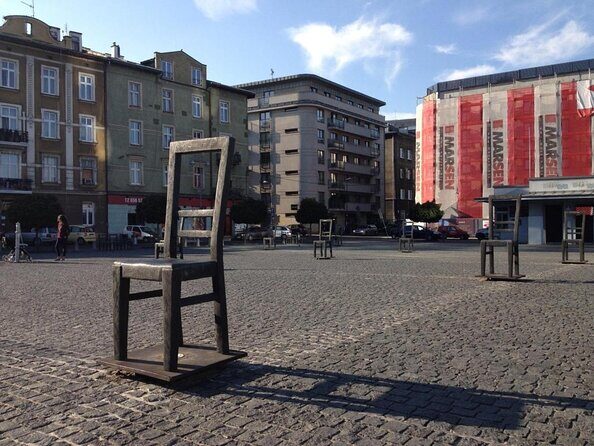
- Ghettos Heroes Square (Plac Zgody): the ghetto’s control and transport hub, remembered by its postwar name
- Plaszów’s changing role: from forced labor site to concentration camp to transit camp
- Surviving camp features: Grey House, roll-call square, and areas marked by pre-burial hall ruins
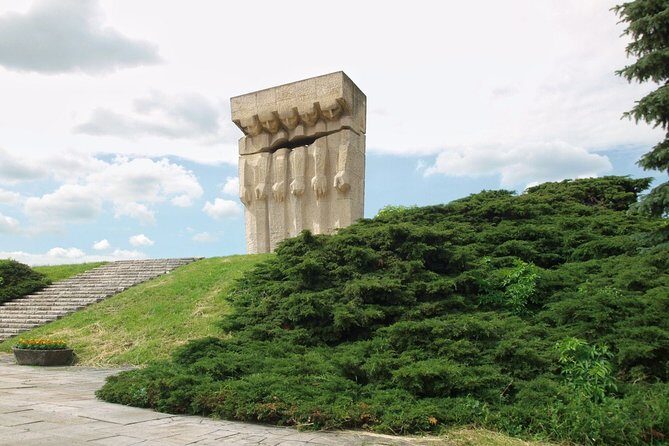
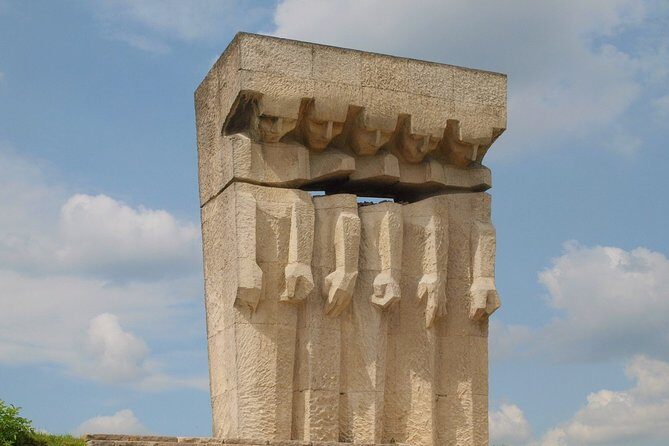
- Memorial stops included: including the Monument of Torn-Out Hearts
- Schindler’s practical impact: work permits via Plaszów registration, then transfers to Brunnlitz
- Small group feel: capped at 25 people, with guides who slow down to explain what you’re seeing
Ghettos Heroes Square and Plac Zgody: the ghetto’s control center
The tour starts at Apteka pod Orłem at Plac Bohaterów Getta, in the area known in the past as Plac Zgody. This square mattered because it was the logistical heart of the Kraków ghetto: a place tied to control, registration, and departures for transports. In other words, it wasn’t just a location on a map—it was where the machinery of persecution became paperwork and movement.
You’ll get a short orientation moment here (about 15 minutes), which is the right length. It’s enough to get your bearings before you head toward Plaszów, but it doesn’t drown you in details. If you’re worried about feeling lost later, this stop helps you understand why Plaszów fits into the larger Nazi system.
After the war, Plac Zgody was renamed Ghetto Heroes Square. That renaming matters to how you read the space: you’re not just looking at old infrastructure; you’re seeing how memory gets built into the city.
You can also read our reviews of more walking tours in Krakow

Plaszów concentration camp: forced labor, then a concentration camp, then transit
The second part of the tour centers on Plaszów concentration camp, created in October 1942 on the grounds of two Jewish cemeteries in Kraków. That detail is important, because it shows how the Nazis used existing land and stripped it of sacred meaning. The site began as a forced-labor camp for Jews from the liquidated Kraków ghetto.
From July 1943 onward, Plaszów also included a penal-labor section holding Poles. Then in January 1944, it was redesignated as a concentration camp. Later that same year, Plaszów also functioned as a transit camp for Hungarian Jews being sent onward to Auschwitz.
These shifts aren’t just dates on a timeline. They explain why the camp’s organization could feel confusing at ground level. As the camp’s purpose changed, so did how people were processed, housed, worked, and sent away.
You’ll also hear numbers that help you grasp scale: more than 35,000 imprisoned over its existence, and around 6,000 murdered. Executions took place at several sites within the camp area, and today you’ll see mass graves and memorials marking parts of that reality.
This stop is about an hour. It’s long enough for the guide to connect facts to the physical space you’re standing in, but short enough that you can still move on without the tour dragging.
Reading what remains: Grey House, pre-burial hall ruins, and roll-call space
At Plaszów, so much has been erased that you’re left with fragments. That’s why the third segment works so well: it’s not a “show you the camp” checklist. The guide pieces the story together from what survives—then you learn how to look for clues in the ground-level layout.
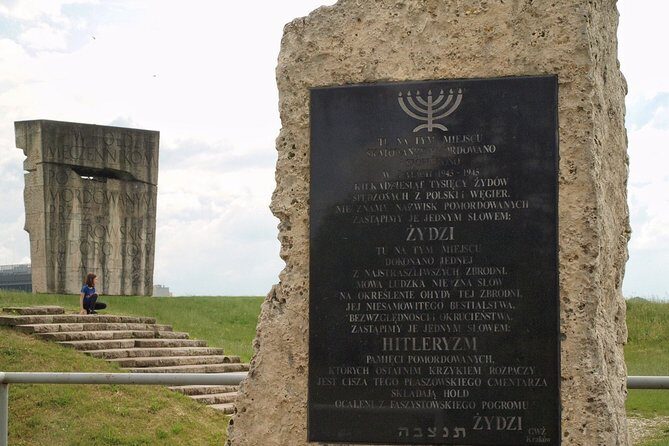
You’ll hear about the Grey House, the ruins of the pre-burial hall, and traces of the Jewish cemeteries that were there before the camp. You’ll also learn about the roll-call square—where thousands were forced into order through routine and counting. And you’ll learn why some paths exist: fragments of gravestones were used to pave roads. That’s a detail that’s both factual and gut-wrenching, because it turns memory into building material.
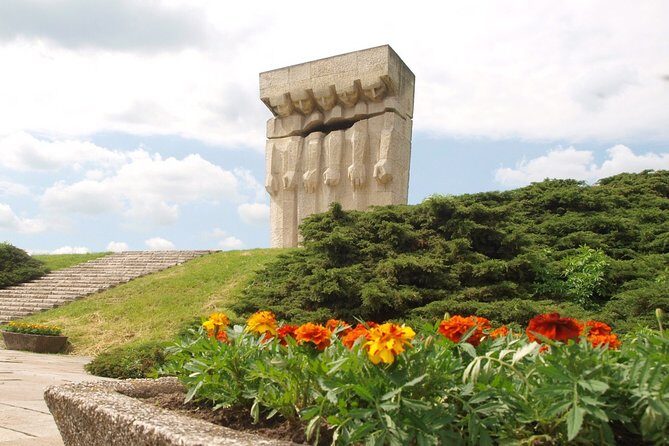
This is also where the tour includes reflection at major memorials, including the Monument of Torn-Out Hearts. These moments aren’t just photo stops. They’re placed to help you shift from “where were people held” to “what should we remember here.”
Expect about 45 minutes for this camp-remains and memorial portion. It’s a good chunk of time for understanding camp organization into living, hospital, administrative, and industrial sections—because once you know the categories, the site starts to make more sense.
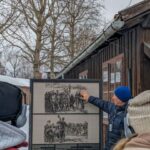
I found it especially useful that guides like Phil, Barbara, and Bartholomew (names you may hear associated with groups) have a habit of slowing down at key points and using pictures to explain what you’re not seeing anymore. On a place like this, that technique matters.
Oskar Schindler at Plaszów: work permits and the Brunnlitz transfer
One of the biggest reasons this tour gets recommended for people who know Kraków through film is its handling of Oskar Schindler. The story is tied directly to Plaszów, not treated as a separate side quest.
Here’s how the tour frames it: Schindler’s enamelware enterprise sought work permits for Jewish prisoners who were registered through Plaszów. In practical terms, that shielding helped keep people from being sent on further transports at that moment.
Then, later, Schindler organized their transfer to his wartime plant in Brunnlitz. The guide ties this to the result: saving over a thousand lives. You’re not just hearing about a famous name—you’re learning how the system of registrations could be used as a pressure point for survival.
If you only know Schindler’s story in broad strokes, this portion is the bridge to understanding how paperwork, bureaucracy, and registered status could mean life or death. It also gives you a more complete picture of what “resistance” could look like inside an extreme system—small changes with enormous consequences.
Timing and route flow: a 2-hour walk that still makes sense
The overall tour runs for about 2 hours. The structure is simple: a short start at Ghettos Heroes Square, then the core Plaszów visit, then a final guided focus on remaining features and memorials.
That matters because Plaszów can feel overwhelming if you arrive without context. Breaking it into chunks helps you process. It also means you’re not spending your whole trip staring at a few points with no explanation.
Logistically, it’s built around public transit too. The meeting and end points are in areas you can reach by tram/bus, and some guides may use a tram between the square and Plaszów to reduce raw walking time. Either way, you’ll be on foot for the camp portions, so comfortable shoes are not optional—you’ll want them.
You’ll end around Henryka Kamieńskiego 57 (near a bus stop on Kamienskiego street). That’s a nice touch for planning the rest of your day: you’re not necessarily forced to backtrack through the same route to find your next stop.
Finally, plan to arrive 10 minutes early. Once the group leaves, you can’t join late and the ticket can’t be refunded.
You can also read our reviews of more guided tours in Krakow

Who should book this tour in Kraków
This is a strong fit if you want guided clarity on Plaszów’s layout and purpose. You’re getting a story that walks you from the ghetto’s transport machinery to the camp system itself—so the “why” stays attached to what you’re seeing.
It also works well if you’re coming to Kraków with Schindler’s List in your head. The tour doesn’t rely on the film. It uses the film as a starting point for orientation, then grounds you in the real sites: Grey House details, roll-call space, and the memorial areas like the Monument of Torn-Out Hearts.
The group size is capped at 25, which helps with pacing and questions. You also get a single language option (English), which makes the experience smoother if you’re comfortable in English and want the guide’s full focus.
One more fit check: you should have a moderate physical fitness level. Even if you’re not “athletic,” being able to handle walking and standing for extended stretches will make the tour feel more manageable.
Value and price: what $30.04 actually buys you
At $30.04 per person for around 2 hours, this tour sits in the “good value” zone for guided Holocaust-site visits. Admission for the key stops is listed as free, which means your fee is mainly paying for the guide’s interpretation and the act of connecting scattered remains into a coherent story.
That might not sound like much on paper, but on Plaszów, context is everything. Without it, you can end up staring at fragments and guessing. With it, you’re learning how specific spaces were used—living, hospital, administrative, industrial—and why certain physical traces matter.
Booking trend also suggests it’s in demand: it’s typically booked about 39 days in advance on average. If you’re traveling in peak season or on a tight schedule, don’t wait until the last minute.
Should you book the Plaszów guided walking tour?
Yes, if you want a structured, English-guided route that helps you understand Plaszów beyond names and dates. The strongest reason to book is the combination of (1) camp organization explained through what survives and (2) the Schindler thread grounded in Plaszów registration and transfers to Brunnlitz.
Skip it only if you know you want a fully self-directed experience, or if you’re not up for an emotionally heavy walk. Otherwise, this is a solid way to spend a couple of hours in Kraków with your head and your heart both fully engaged.
FAQ
Where is the tour starting point?
The tour starts at Apteka pod Orłem, Plac Bohaterów Getta 18, 33-332 Kraków, Poland.
Where does the tour end?
The tour ends at Henryka Kamieńskiego 57, 30-644 Kraków, Poland (near the bus stop on Kamienskiego street).
How long is the walking tour?
The tour is about 2 hours.
How much does the tour cost?
The price is $30.04 per person.
What language is the tour offered in?
The tour is offered in English.
What is the group size limit?
The tour has a maximum group size of 25 travelers.
Do I get a mobile ticket?
Yes, the tour includes a mobile ticket.
Is admission included for the stops?
Admission tickets for the stops listed are marked as free.
What physical fitness level do I need?
You should have a moderate physical fitness level, since it is a walking tour.
What is the cancellation policy?
You can cancel for free up to 24 hours in advance for a full refund. If you cancel less than 24 hours before the start time, the amount paid is not refunded.